
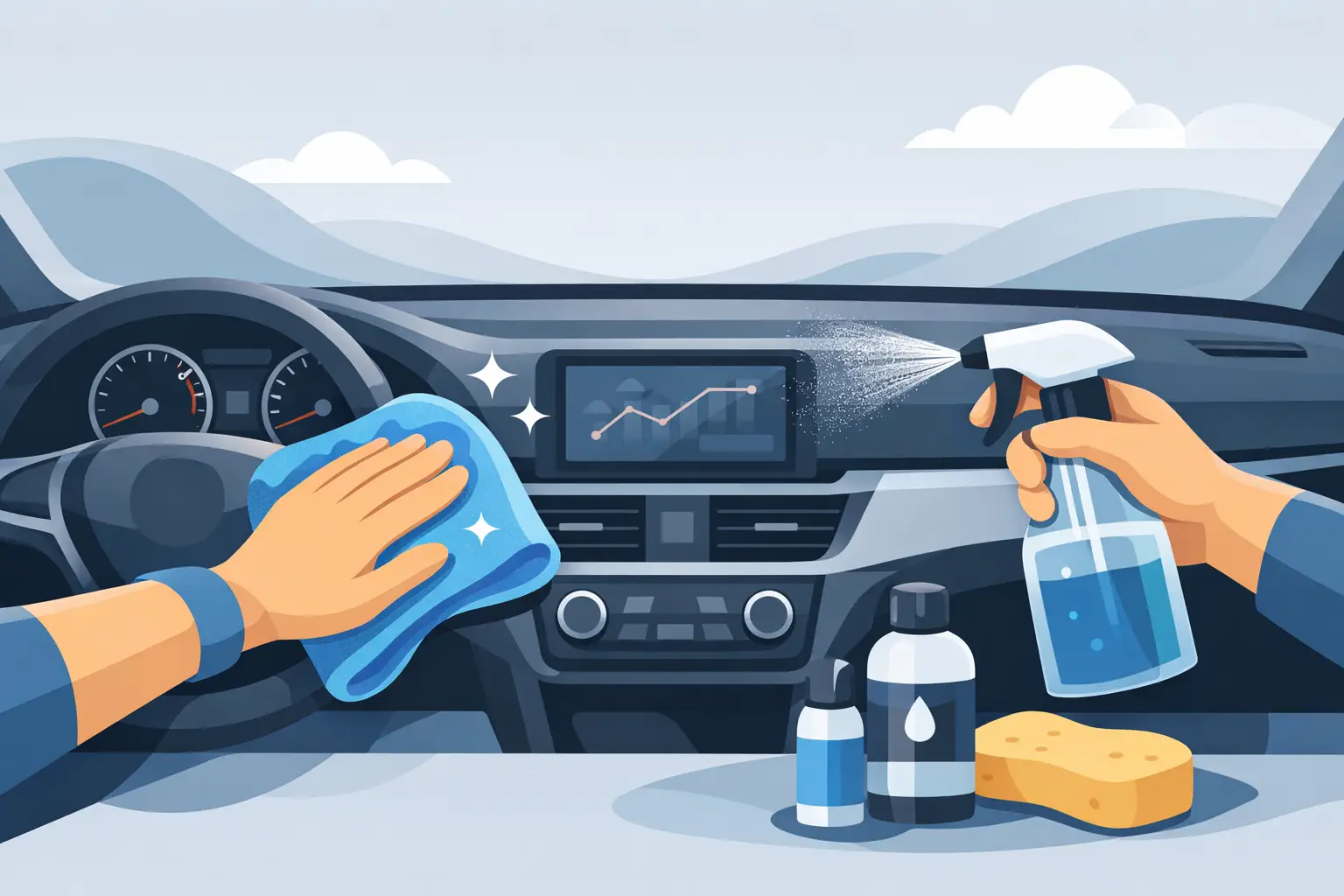
A dashboard can make the whole car feel clean or dirty in seconds. You can have a freshly washed exterior, spotless windows, and clean mats, but if the dash is dusty, sticky, or faded, the interior still looks neglected. This guide to dashboard cleaning and care is built for everyday drivers who want a simple way to keep their vehicle looking better without wasting time or money.
Why dashboard care matters more than people think
Your dashboard deals with constant abuse. Sunlight bakes it through the windshield, dust settles into every seam, oils from your hands build up around buttons and screens, and spilled coffee or food residue can leave sticky spots that attract even more dirt.
That wear adds up fast. A neglected dashboard does not just look bad. It can dry out, fade, crack, and lose its finish over time. If you drive every day, especially for commuting, family trips, or rideshare work, regular care helps your interior hold up better and stay easier to clean.
There is also a comfort factor. A clean dash makes the whole cabin feel fresher and more cared for. If you are driving clients, coworkers, or kids around, that visible cleanliness matters.
The right way to start dashboard cleaning
The biggest mistake people make is spraying product directly onto the dashboard and wiping it around. That usually pushes dust into corners, leaves streaks on screens, and can overload seams, vents, and controls with cleaner.
Start dry first. Use a soft microfiber towel or a soft detailing brush to lift loose dust before adding any cleaner. This step matters because dry dust can act like grit. If you rub it around with a wet cloth right away, you can leave fine scratches on glossy trim or instrument panels.
Once the loose dust is gone, use a light interior cleaner on the towel instead of the dash itself. Wipe section by section. Small areas are easier to control, and you are less likely to miss buildup around cup holders, radio controls, or the edge where the dashboard meets the windshield.
If your dashboard has textured plastic, take a little extra time. Dirt settles into that grain and can make the surface look permanently faded when it is really just dirty.
Guide to dashboard cleaning and care by material
Not every dashboard should be treated the same. That is where many do-it-yourself jobs go wrong.
Most standard dashboards are vinyl or plastic, and these are usually the easiest to clean. They respond well to a gentle interior cleaner and a microfiber towel. The goal is to remove dirt without leaving a greasy shine. A glossy finish might look clean for a day, but it often attracts more dust and can create glare on the windshield.
If your vehicle has leather-trimmed dash sections, be more selective. Leather needs a cleaner made for leather, followed by a conditioner if the material is drying out. Too much product can leave it slippery or uneven, so light application is better.
Soft-touch surfaces need care too. These materials can wear faster if you scrub aggressively or use harsh all-purpose cleaners. If the finish starts peeling or getting tacky, the damage can be hard to reverse.
Screens, gauge covers, and piano-black trim are the most delicate parts. They show every fingerprint and scratch. Use a clean, soft microfiber towel with very light pressure. Avoid ammonia-based glass cleaners on screens unless the manufacturer says they are safe.
What to avoid when cleaning your dashboard
A lot of interior damage comes from using the wrong product, not from age alone. Household cleaners are a common problem. Some contain chemicals that are too harsh for automotive plastics and coatings.
Heavy silicone dressings are another issue. They can make the dashboard look extra shiny at first, but they often leave a slick film, attract dust, and create windshield glare in bright sunlight. For most drivers, a clean, natural-looking finish is the better result.
Too much water is also a bad idea. Oversaturating a towel or flooding tight areas around buttons, vents, touchscreens, and stitching can cause problems. Interior surfaces need controlled cleaning, not soaking.
And if something is stuck on the dashboard, do not attack it with a rough brush or hard scrubbing pad. That can permanently mark the surface. Let a safe cleaner dwell for a short time, then wipe gently and repeat if needed.
How often should you clean your dashboard?
It depends on how you use your car. A commuter vehicle parked outside every day in direct sun will usually need more frequent upkeep than a weekend car kept in a garage. A family vehicle with snacks, spills, and constant use also builds up grime faster than a lightly used car.
For most people, a quick dust wipe once a week and a more thorough dashboard cleaning every few weeks is enough to stay ahead of buildup. If you drive for rideshare or regularly transport customers, you may want to freshen the dash more often because the front interior is always in view.
This is where consistency beats deep cleaning. A five-minute wipe-down done regularly is easier and cheaper than waiting until the dashboard is coated in dust, fingerprints, and dried residue.
Protection matters as much as cleaning
Cleaning removes the dirt. Protection helps slow the next round of wear.
A good interior protectant can help reduce UV damage, fading, and drying, especially on vehicles that spend a lot of time parked outdoors. The key is choosing one that leaves a clean finish rather than an oily one. You want protection that makes maintenance easier, not a product that turns the dashboard into a dust magnet.
Sunshades help too. They are simple, affordable, and worth using in hot weather. Even a basic windshield shade can cut heat buildup and reduce the stress that sunlight puts on your dashboard.
Regular interior service also helps more than people realize. If your vehicle already comes in for washes, vacuuming, mat cleaning, or detailing, adding dashboard care as part of routine upkeep keeps the cabin from slipping into that worn, dull look.
When DIY works and when professional help makes sense
If your dashboard just has normal dust, fingerprints, and light grime, cleaning it yourself is usually straightforward. With the right towel and a safe cleaner, most drivers can keep it under control.
But there are times when professional detailing is the smarter move. If the dashboard has heavy buildup in vents and seams, sticky residue, staining around controls, or an uneven finish from old products, getting it cleaned properly can save frustration. The same goes for vehicles used hard every day, such as family SUVs, work cars, and rideshare vehicles.
A professional interior detail is also helpful if you are getting ready to sell your car or just want the whole cabin reset at once. Dashboard cleaning looks better when it is done along with vacuuming, mat washing, console cleaning, and full interior wipe-downs. One clean section in an otherwise dirty cabin never looks quite right.
For drivers who want convenience and value, that is usually the real deciding factor. Doing it yourself costs less in the short term, but professional care saves time and often gets better results on neglected interiors. It depends on the condition of the vehicle and how much effort you want to put in.
A simple routine that actually lasts
The best guide to dashboard cleaning and care is not about buying a shelf full of products. It is about building a routine you will actually keep. Dust first, wipe with a safe cleaner, treat delicate surfaces gently, and use protection that does not leave greasy residue.
If you stay on top of it, your dashboard keeps its color, its finish, and that clean look that makes the whole vehicle feel better maintained. And if your interior already needs more than a quick wipe, getting it professionally cleaned can be the fastest way back to a fresh, presentable cabin.
A clean dashboard is one of those small details that changes how your whole car feels every time you get in, and that makes it worth keeping up with.


 6600 Finch Ave W, Etobicoke, ON M9V 3Z6
 647-703-8515
 MON – SUN 8 AM to 7 PM