
You're probably reading this after opening your car door in a GTA plaza parking lot and getting hit with that wave of trapped heat that makes the steering wheel feel like a frying pan. In July, even a quick grocery run can turn the cabin into a greenhouse. In February, it's the opposite problem. Low sun glare, slush spray, salt haze on the glass, and a cabin that never quite feels clean.
That's why car window tinting keeps coming up in conversations between drivers. Some people want the sleek look. Others just want less glare on the 401, a bit more privacy in traffic, and a cabin that feels easier to live with through Ontario's weather swings. Tint can help with all of that, but only if you choose the right film, get it installed properly, and stay on the right side of the law.
This guide breaks it down like a car friend would. No mystery-shop talk. No fake performance claims. Just practical advice for Ontario drivers who want a smart, legal, tidy result that still looks sharp.
Table of Contents
- Why Your Car Needs More Than Just AC
- Decoding the Different Types of Tint Film
- The Perks and Pitfalls of Tinting Your Ride
- Staying Legal on Ontario Roads
- DIY Tinting vs Professional Installation
- Choosing Your Installer and Prepping Your Car
- Tint Maintenance and Common Questions
Why Your Car Needs More Than Just AC
A strong AC system helps once you're moving. It doesn't do much for the sun already pouring through the glass while the car sits outside your office, condo, or GO station lot. That's the part many drivers miss. Air conditioning treats the symptom. Tint helps manage the source.
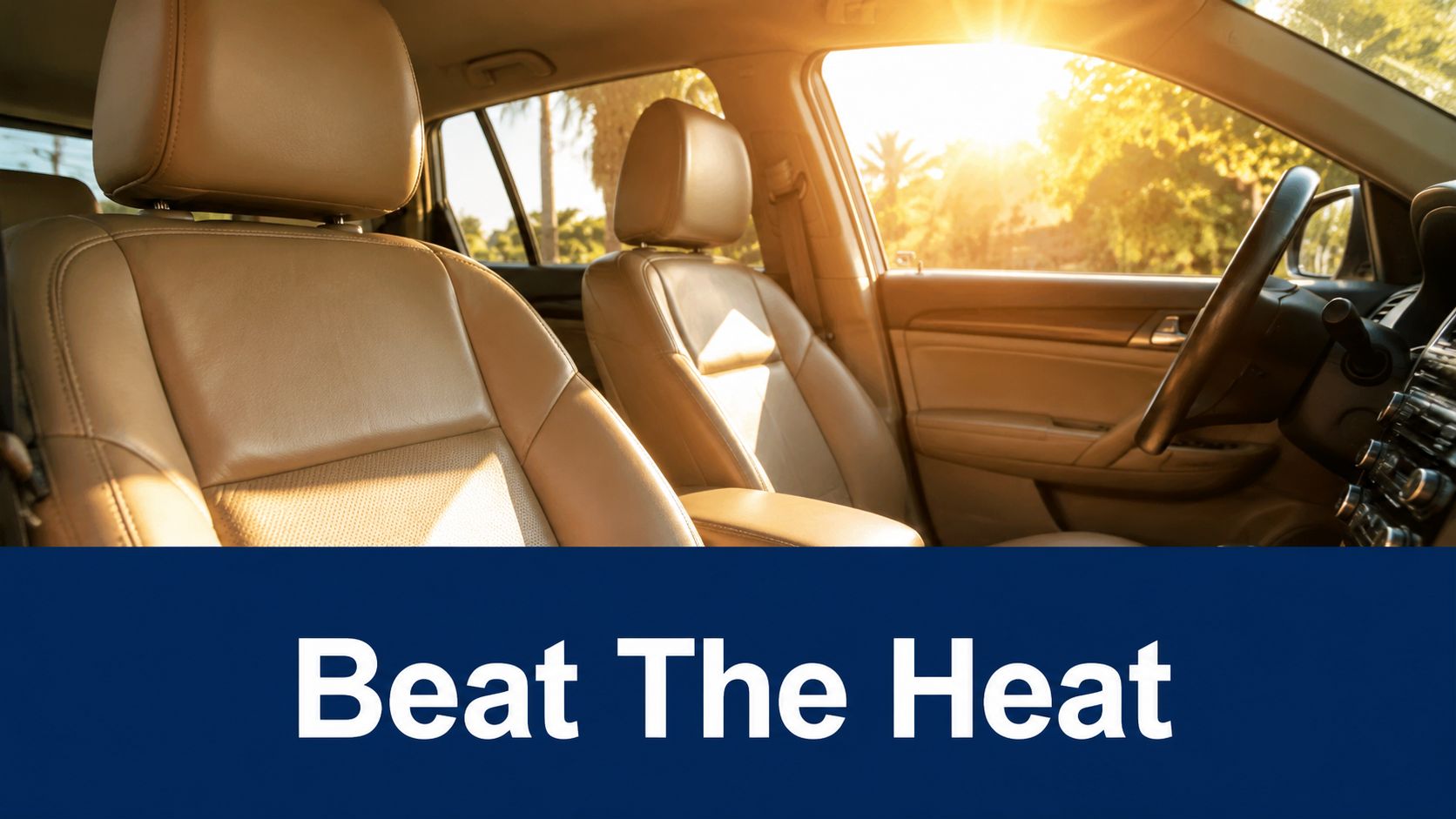
A tinted car often feels easier to live with day after day. Your cabin doesn't feel as harsh when you first get in. Bright afternoon glare feels less annoying. People can't casually stare at every bag, charger, or coffee tumbler inside when you're parked at the plaza. It's a comfort upgrade, but it's also a use-your-car-with-less-mental-friction upgrade.
More than a style mod
Some drivers still think tint is mostly cosmetic, like swapping wheels or adding a lip kit. That's part of it, sure. A good film can clean up the whole look of a car, especially on white, black, grey, and silver paint. But the practical side is what usually wins people over.
Consider the choice between a plain T-shirt and a proper jacket on a windy day. Both technically cover you. Only one transforms the experience.
Practical rule: If your main complaint is heat, glare, or cabin exposure, tint solves a different problem than AC, and that's why the two work best together.
Ontario drivers also deal with conditions that make glass feel like a weak point year-round. Summer sun can be brutal in open lots. Winter roads cover windows with grime, salty mist, and streaking residue. That's one reason shops that care about vehicle presentation often talk about the whole customer journey, not just one repair or add-on. If you're interested in how strong service operations improve trust and retention in automotive businesses, this resource for better auto repair business gives a useful outside perspective.
Where tint earns its keep in the GTA
A few everyday examples make it clearer:
- Downtown parking: Your car sits surrounded by glass towers with sunlight bouncing around all afternoon.
- Highway commuting: Morning and evening glare gets old fast, especially in winter when the sun stays low.
- Family hauling: Kids in the back seat are happier when the cabin feels calmer and less glaring.
- Keeping a clean look: Tint pairs nicely with a freshly washed vehicle because it makes the whole profile look more finished.
A smart tint job doesn't need to scream for attention. Usually, the best one is the one you stop noticing because the car feels better every time you drive it.
Decoding the Different Types of Tint Film
Not all tint is the same. Two cars can look almost identical from the outside and still have very different films on the glass. One might be a budget option chosen for appearance. The other might be a premium film picked for comfort, clarity, and durability.
Think of tint like sunglasses
The easiest way to understand tint is to compare it to sunglasses.
A cheap pair darkens your view. That's about it. A better pair cuts glare more cleanly, looks clearer, and feels nicer to wear for hours. A top-tier pair costs more, but your eyes notice the difference right away.
Tint films follow a similar ladder.
- Dyed film is the entry-level option. It gives the darkened look people want and helps with privacy. It's usually the film people consider when budget comes first.
- Metallized film adds reflective particles that help with heat control. It can work well, but some drivers avoid it because they don't want the more reflective appearance or possible interference with electronics.
- Carbon film is the middle ground many enthusiasts like. It usually gives a richer, non-shiny finish and feels more premium than basic dyed film.
- Ceramic film is the high-end choice. Drivers often choose it when they care about comfort, visibility, and overall refinement more than making the glass darker.
Car Window Tint Film Comparison
| Film Type | Heat Rejection | UV Protection | Clarity | Avg. Cost | Lifespan |
|---|---|---|---|---|---|
| Dyed | Basic | Basic to good | Good at first | Lower | Shorter than premium films |
| Metallized | Better than dyed | Good | Can look slightly more reflective | Mid-range | Durable when well installed |
| Carbon | Strong | Strong | Good, with a rich finish | Mid to upper-mid | Good long-term option |
| Ceramic | Excellent | Strong | Excellent | Premium | Usually the longest-lasting feel and performance |
This table is deliberately qualitative because film performance varies by brand, installer, and product line. That's where many buyers get confused. They compare “tint” as if it's one product, when it's really a category.
Which one fits your daily drive
If your goal is mainly appearance and a bit of privacy, dyed film may be enough. If you drive long distances, park outside often, or keep cars for years, carbon or ceramic usually makes more sense.
A quick way to understand this is:
- Budget-first driver: Dyed
- Balanced daily driver: Carbon
- Tech-focused or comfort-focused owner: Ceramic
- Specific reflective look wanted: Metallized, if you're comfortable with the trade-offs
Some films make the cabin feel calmer without making the car look dramatically darker. That surprises people the first time they sit behind high-quality glass.
There's also a seasonal angle in Ontario. In summer, better films can make the cabin feel less punishing after the car sits outside. In winter, good optical clarity matters because road spray, salt haze, and darkness already make visibility tougher. That's why I usually tell friends not to shop by darkness alone. Shop by how you want the car to feel when you're driving it.
One more practical note. Ask installers for the exact film line, not just the brand. A shop can carry a respected brand and still offer multiple tiers within it. Saying “we use premium film” isn't enough. You want to know whether you're buying the economy line, the mid-tier line, or the premium ceramic line.
The Perks and Pitfalls of Tinting Your Ride
Window tint has a lot going for it, but it isn't magic. It improves your driving experience in several ways, and it also introduces decisions you can't afford to wing.
Why drivers love it
The biggest win is daily comfort. A good tint setup can make the cabin feel less harsh, especially when sunlight hits the side glass for long stretches. If you spend a lot of time in traffic, that matters more than people expect.
Privacy is another obvious perk. You're not turning the car into a vault, but you are making it harder for random eyes to scan the interior at stoplights or in parking lots. That works nicely alongside broader theft-prevention habits, and if you're interested in the bigger picture beyond tint alone, this essential UK car security guide offers practical habits that apply well anywhere.
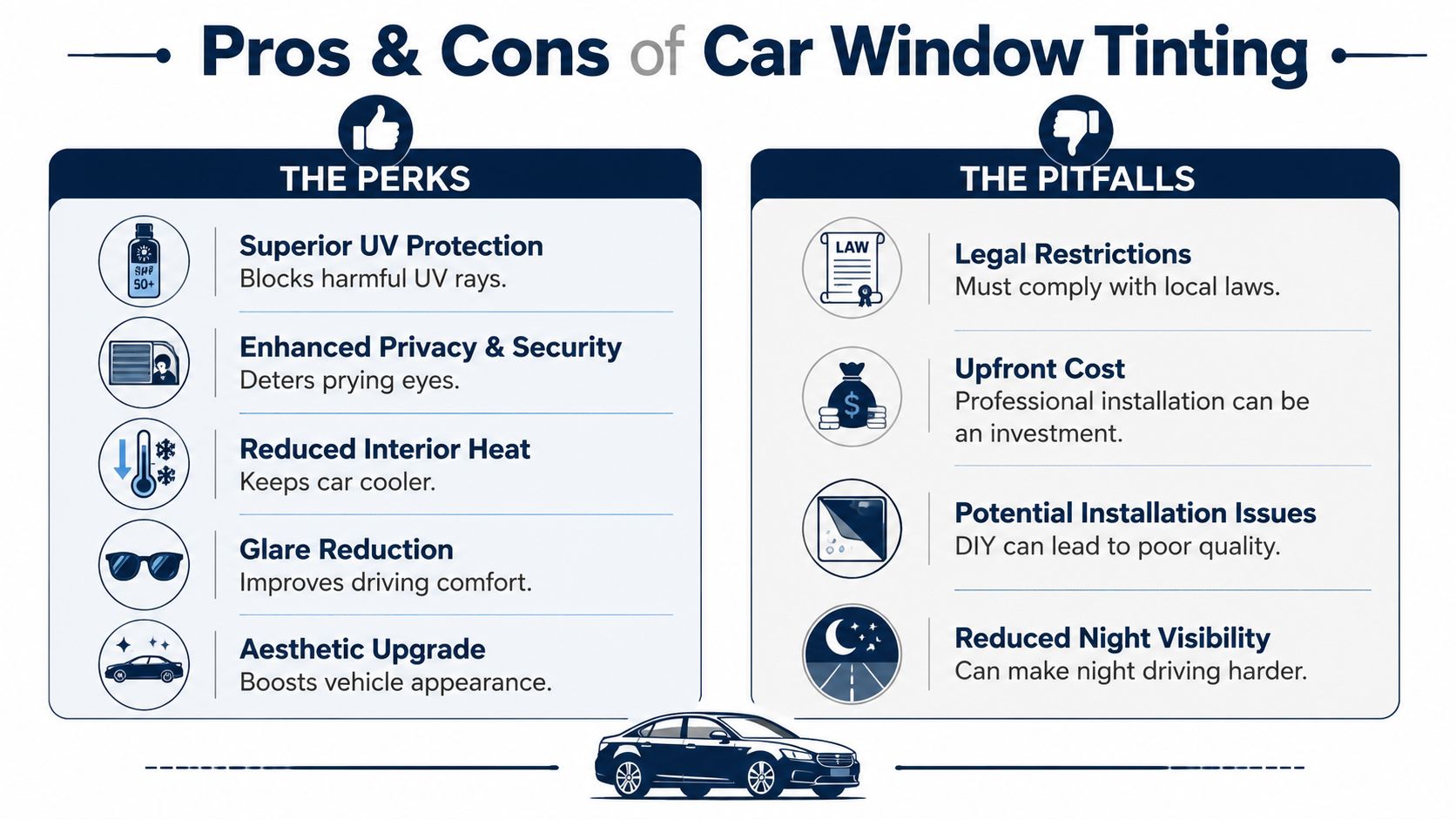
Other upsides show up slowly. The interior often looks better longer because the cabin isn't under full direct glare all the time. The car also takes on a more finished appearance. Even a stock vehicle can look more deliberate with well-chosen tint.
Where people get burned
The first problem is choosing tint by darkness instead of by purpose. A very dark film might look great in a shop bay or on social media, but it can feel annoying at night, in rain, or in underground parking. Ontario drivers see enough murky weather already.
The second problem is poor installation. Dust nibs, edge lift, creases, trapped contamination, and peeling corners turn a nice upgrade into a constant irritation. Once you notice one bubble, you'll see it every time you shoulder-check.
Common pitfalls usually look like this:
- Chasing the cheapest quote: Low pricing can mean lower-grade film or rushed prep.
- Ignoring visibility at night: What looks stylish at noon may feel awkward on an unlit side street.
- Forgetting the legal side: Illegal tint can lead to tickets and wasted money removing and redoing the job.
- DIY overconfidence: Flat YouTube glass isn't the same as a real rear window with curves and defroster lines.
Worth remembering: Great tint should disappear into the driving experience. If you keep noticing flaws, the job wasn't done well.
Tint is one of those upgrades where the highs are excellent and the lows are irritating. The difference usually comes down to film choice, install quality, and whether the driver was realistic about how the car is used.
Staying Legal on Ontario Roads
Much confusion arises among drivers, partly because tint law gets discussed online with total confidence and not nearly enough precision. People also quote rules from other provinces, other states, or old forum posts as if they all apply the same way.
What VLT actually means
Visible Light Transmission, usually shortened to VLT, is the amount of light that passes through the glass and film. Higher VLT means more light gets through. Lower VLT means the window looks darker.
That sounds simple, but the confusion starts when drivers focus only on the film and forget the glass itself also affects the final result. A film can seem light on paper and still create a darker combined effect once it's applied to factory glass.
The easy legal mindset
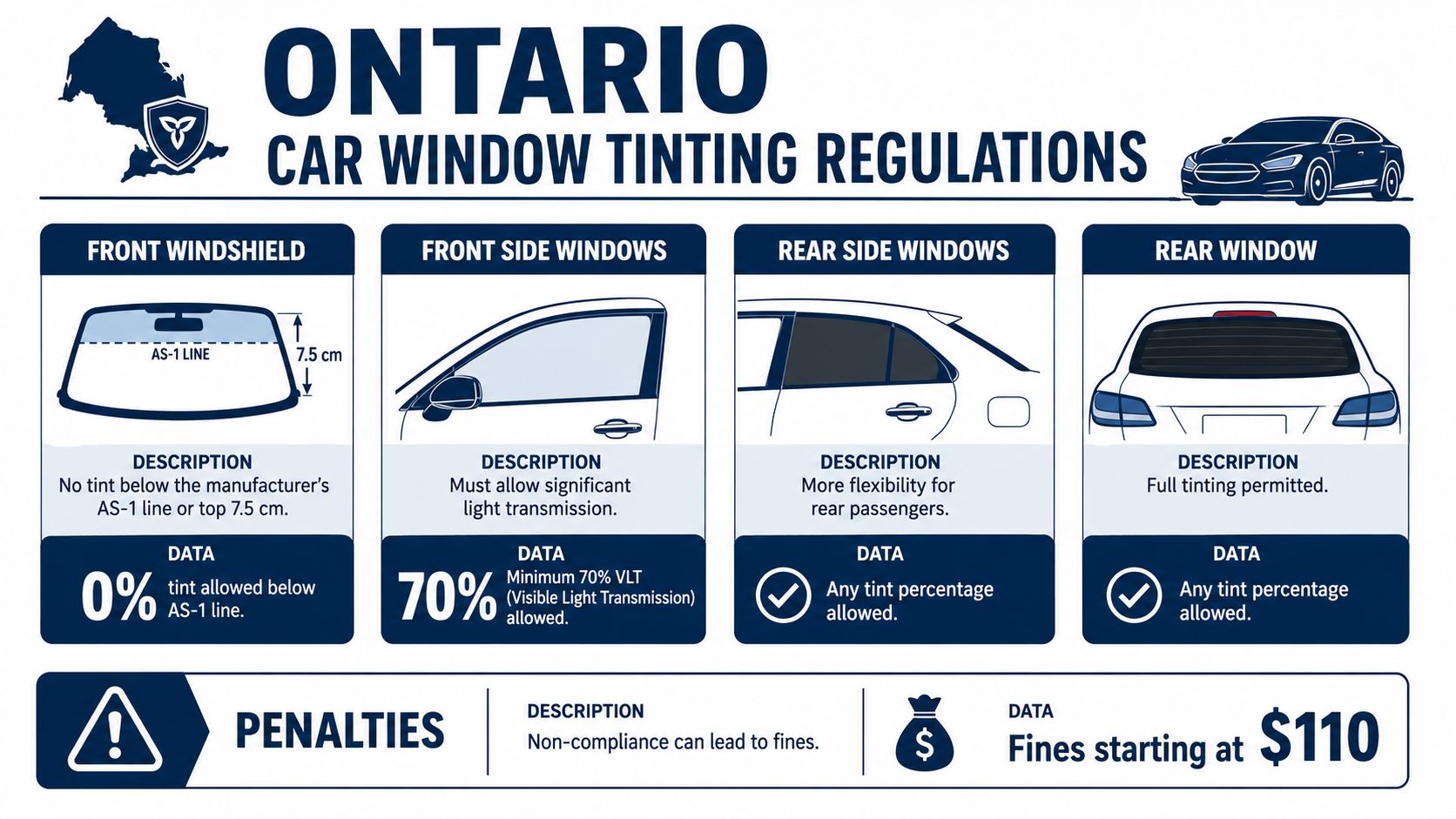
For Ontario drivers, the safest approach is to treat front glass as the danger zone and to avoid anything that makes visibility or inspection questionable. Ask the installer plainly whether the finished result on your specific vehicle will be road-legal. Not “usually legal.” Not a reference to common practice. Your specific car.
Here's the practical checklist I'd use:
- Front windshield: Be very cautious. Anything extending into the main viewing area is where people run into trouble.
- Front side windows: These deserve the most careful decision-making because they affect visibility and are the first place law enforcement notices.
- Rear side and rear glass: Drivers often have more flexibility here, but that doesn't mean every dark option is wise for night driving.
- Reflective finishes: If the film looks mirrored or unusually shiny, ask extra questions before agreeing to it.
The safest buyer is the one who asks for the film specification, asks whether the shop measures the finished glass, and asks for the legal explanation in writing on the invoice or work order.
A useful comparison from California
Even though Ontario drivers need Ontario-specific guidance from their installer and local rules, California offers a useful example of how strict and technical tint law can get. In California, front-side window tinting is restricted so the combined glass-and-film setup must allow at least 70% Visible Light Transmission, and the aftermarket film itself must have a minimum 88% VLT to meet federal glazing safety standards, as outlined by the Desert Sun overview of California's window tint rules. That's why even a film marketed as “clear” can still be illegal once the total system is considered.
California also prohibits reflective or mirrored finishes on all windows, restricts tint colours to non-red and non-amber hues, allows a non-reflective windshield strip only on the top 4 inches or above the AS-1 line, and requires medical-exemption front-window films to maintain 88% transparency with certified installation paperwork, according to this California tint law summary from Car Audio SD. The reason I bring that up isn't to import California law into Ontario. It's to show how easy it is to get into trouble when you assume “light tint” automatically means “legal tint.”
Don't buy tint based on what looked fine on your friend's car. Different factory glass, different film, and different enforcement realities can produce a totally different outcome.
If a shop sounds vague when you ask legal questions, that's your signal to keep shopping.
DIY Tinting vs Professional Installation
DIY tint has a strong appeal. You see a kit online, watch a clean fifteen-minute video, and start thinking, “How hard can it be?” Then real life shows up with dust, curved glass, shrinking film, awkward corners, and one tiny crease that ruins the whole panel.
Why DIY looks easier online than it is
The internet gives you the highlight reel. It rarely shows the second attempt, the wasted sheet, the speck trapped dead-centre in the driver's line of sight, or the frustration of trimming around a tight edge without overcutting.
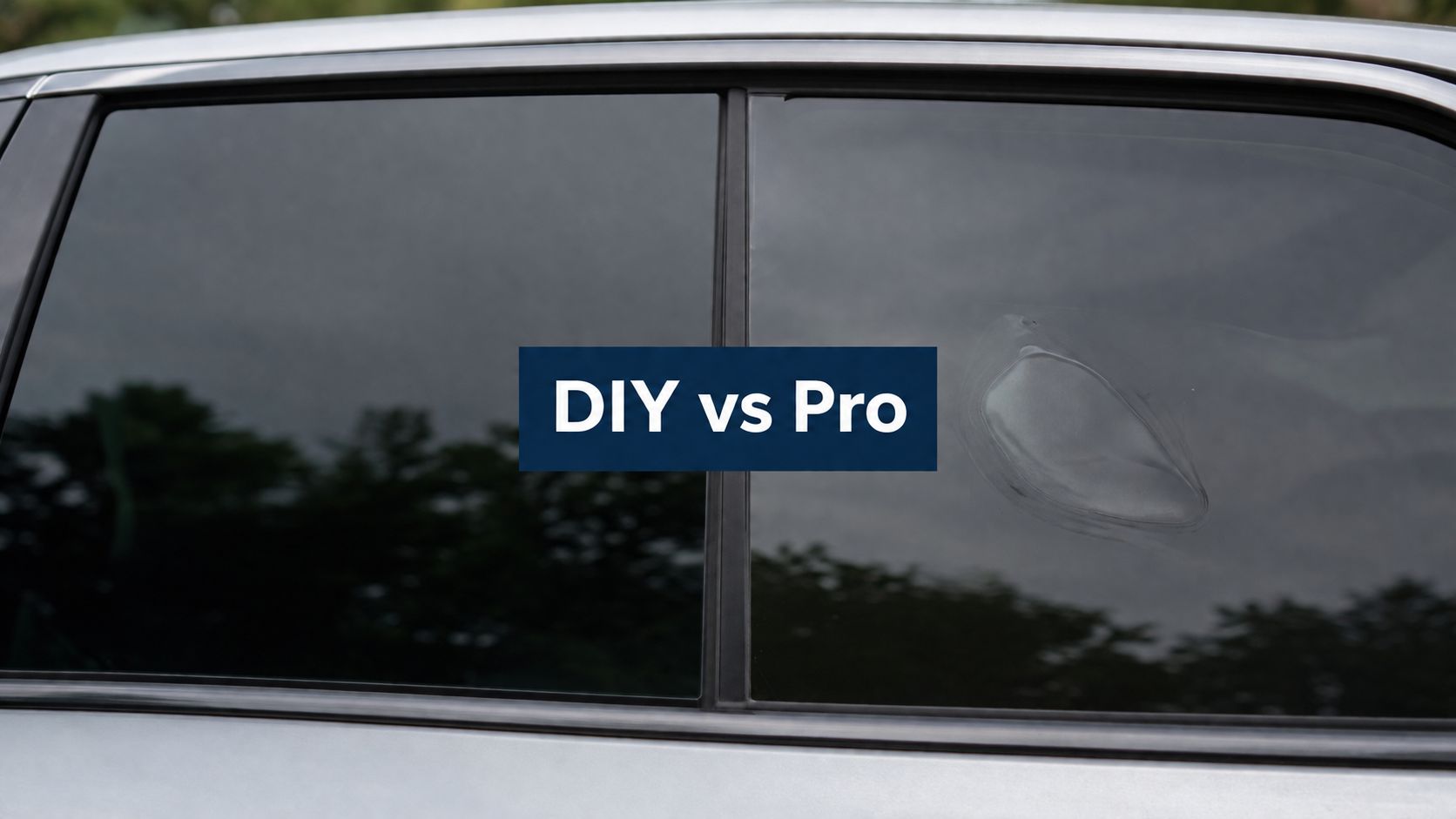
Rear windows are where many DIY jobs go sideways. They're curved, they often have defroster lines, and they're large enough to trap contamination easily. Side windows can fool you too. A tiny bit of lint, pet hair, or leftover residue suddenly becomes impossible to ignore once the film is squeegeed down.
DIY also asks for a good workspace. That matters more in Ontario than people think. If you're applying film in a driveway during pollen season, in wind, or in a chilly garage, you're already fighting the environment before you even touch the glass.
What you pay for with a pro
A professional installer brings three things most DIY attempts struggle to match.
First, prep quality. The glass has to be surgically clean. Not “looks clean.” It needs to be clean at the edges, seals, and corners.
Second, film handling. Skilled installers know how to shrink, place, and finish film without creating the creases and fingers that make amateur jobs obvious.
Third, accountability. If a reputable shop offers a workmanship warranty, you're buying peace of mind. If something lifts, hazes oddly, or fails early, you've got someone to call.
A pro install usually makes more sense if any of these sound like you:
- You care about finish quality: You'll notice flaws immediately.
- Your vehicle has a tricky rear window: Curved glass punishes inexperience.
- You plan to keep the car for years: It's worth doing once and doing properly.
- You don't have a controlled workspace: Dust and temperature can sabotage the job before it starts.
A clean-looking tint job is usually the result of patient prep, not magic hands.
DIY can still work for some owners, especially if the goal is temporary experimentation or you enjoy hands-on projects. But for most daily drivers, professional installation is the cheaper route once you count wasted material, redos, and the annoyance factor.
Choosing Your Installer and Prepping Your Car
Not every tint shop is equal. Some do careful, tidy work and stand behind it. Others rush cars through, talk vaguely about “premium film,” and disappear when edges start lifting.
Questions worth asking before you book
A good phone call tells you a lot. Ask direct questions and listen for direct answers.
- What film lines do you carry: Brand matters, but the exact product line matters more.
- Do you offer a workmanship warranty: You want clarity on bubbling, peeling, and edge issues.
- How do you handle legal compliance: A solid shop should explain this comfortably.
- Can I see recent examples of your work: Look for clean edges and consistent shade.
- How long should I wait before washing or rolling windows down: Their aftercare answer should sound confident and specific.
Customer experience matters too. Shops that answer clearly, confirm details properly, and set expectations well usually run tighter operations. That's true in automotive services across the board, and this piece on how businesses can learn to capture every booking is a good reminder that responsiveness often reflects how organised the actual service will be.
Why clean glass matters more than most people realise
Tint film doesn't hide dirt. It preserves it under pressure.
That's why prep starts before the installer even touches the car. If your vehicle has winter film on the windows, salt residue around the seals, dog nose prints in the rear, or grime baked onto the glass, get it cleaned properly first. A clean vehicle gives the installer a better starting point and lowers the chance of contamination sneaking into the film.

For Ontario drivers, this matters after winter especially. Salt mist and road grime love to settle in the edges and rubber channels around the glass. If those areas are neglected, they can undo the benefits of a careful install in a hurry.
My simple prep checklist looks like this:
- Wash the exterior glass well.
- Clean interior glass thoroughly, especially fingerprints and film residue.
- Vacuum loose dust from door tops and seals if needed.
- Remove dashboard clutter that gets in the installer's way.
- Don't show up with a muddy, neglected car and expect perfect results.
A good tint job starts before the tint shop opens the door.
Tint Maintenance and Common Questions
Fresh tint needs a bit of patience. Right after installation, the film can look slightly hazy or show small water pockets as it cures. That doesn't automatically mean something went wrong.
How to keep the film looking clean
The golden rule is simple. Be gentle early, and be gentle often.
Use these habits:
- Keep the windows up at first: Let the film settle before rolling the glass down.
- Use ammonia-free cleaner: Harsh chemicals can shorten the life of the film.
- Choose a microfibre cloth: Paper towels and rough cloths can mark the surface.
- Clean with light pressure: You're wiping film, not scrubbing tile grout.
- Watch the edges: Don't dig fingernails or tools into corners.
If you see tiny moisture spots in the first little while, don't panic. Many settle as the film cures. Big defects, obvious contamination, or lifting edges are different. Those deserve a call to the installer.
Quick answers to common questions
Can I tint a leased car?
Usually, yes, if the film is legal and professionally installed. Check your lease terms before making permanent changes.
Will tint damage rear defroster lines?
A proper installer knows how to work around them. Removal is where defroster lines are more likely to get damaged if done carelessly.
How long does window tint last?
That depends on the film quality, installation quality, and how the car is used and maintained. Premium films generally age more gracefully than budget ones.
Is darker always better?
No. Darker can reduce visibility, especially at night or during storms. The best tint is the one that suits your driving, not just your Instagram feed.
Can I wash the car after tinting?
Yes, but follow the installer's timing advice. Exterior washing is one thing. Aggressive cleaning against fresh interior film is another.
If you want your tint job to start with the right prep and your vehicle looking spotless before and after the install, book a wash or detailing service with Nanak Car Wash. A properly cleaned car gives tint installers a better surface to work with, and it helps you protect that fresh, finished look once the film is on.


 6600 Finch Ave W, Etobicoke, ON M9V 3Z6
 647-703-8515
 MON – SUN 8 AM to 7 PM