
The winter floor mats are full of white salt marks. The cargo carpet has collected pet hair, the front footwell smells faintly damp, and every attempt to “just shampoo it” seems to create another problem. Too much water leaves the cabin wet, while too little cleaning action leaves the original grime behind.
Effective carpet shampooing isn't about soaking the carpet until it looks temporarily darker. It starts with identifying the soil, choosing suitable chemistry, controlling dilution and dwell time, extracting dissolved contamination, and drying the hidden areas under mats and along seat edges. That sequence matters even more in the GTA, where road salt is repeatedly tracked into vehicle cabins through winter.
The workflow below moves from inspection to final handover. Use it as a DIY carpet shampooing checklist, or use it as a quality standard when you book professional detailing. The aim isn't just a cleaner-looking carpet. It's a cabin that's properly rinsed, safely dried, and less likely to bring back the same salt, pet and odour problems.
Table of Contents
- 1. Inspect the Carpet and Pre-Treat Before Shampooing
- 2. Get the Carpet Shampoo Dilution Right
- 3. Choose Hot-Water Extraction or Low-Moisture Foam
- 4. Agitate with the Right Brush
- 5. Apply Pre-Spray and Respect Dwell Time
- 6. Extract Slowly and Control Moisture
- 7. Treat Salt, Pet Hair and Odours Separately
- 8. Dry, Inspect and Follow the Carpet-Care Checklist
- 9. Choose the Fastest Maintenance Option That Fits
- 9-Point Carpet Shampooing Comparison
- Leave the Carpet Cleaner Than You Found It
1. Inspect the Carpet and Pre-Treat Before Shampooing
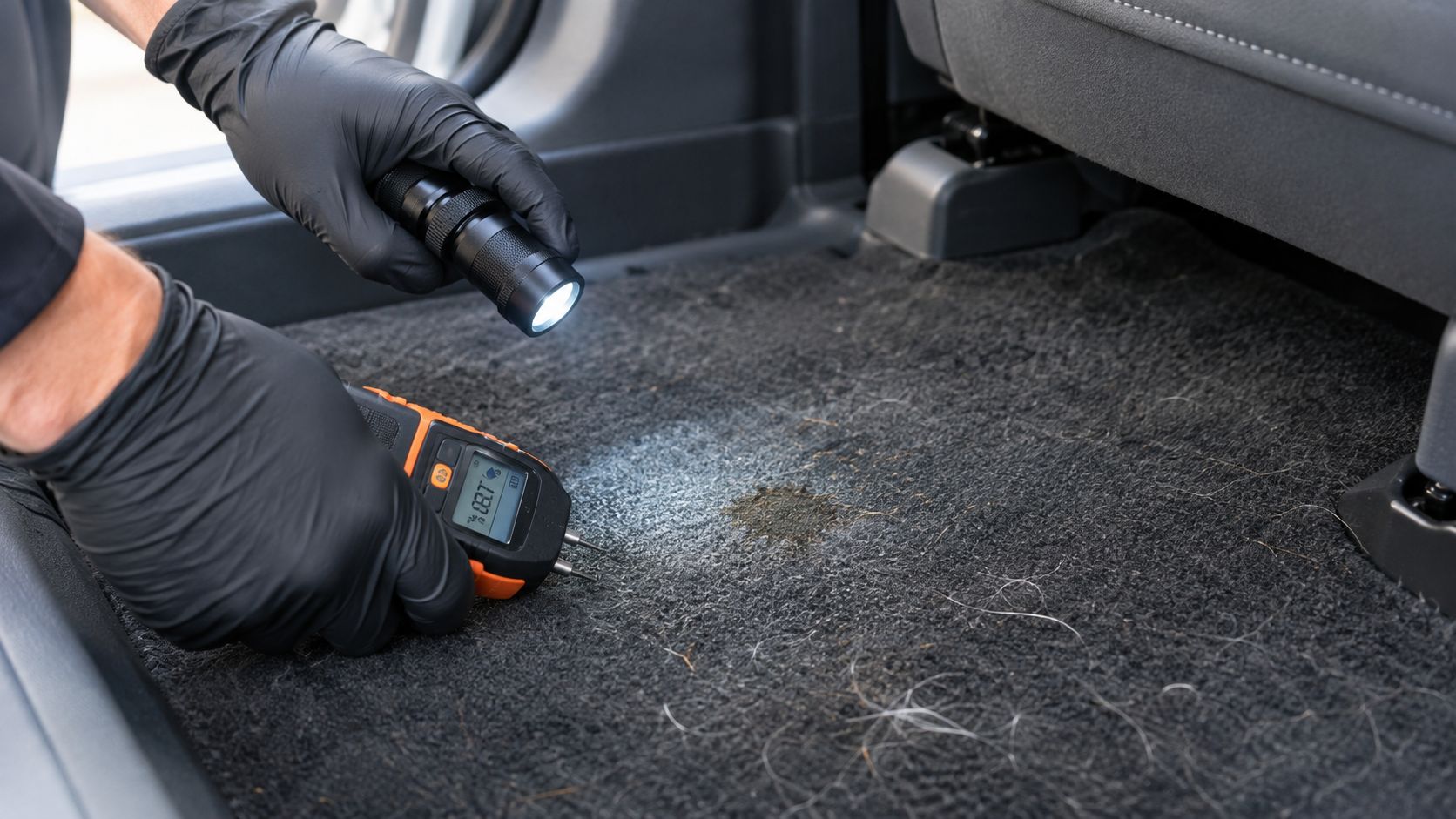
Start with the carpet dry. Lift the mats, slide the seats as far as practical, and use a bright flashlight to inspect traffic lanes, seat rails, seams, pedals and the carpet beneath the cargo area. A dark ring may be ordinary tracked soil, while a white crust points toward winter salt. Pet hair, spilled drinks and persistent odours need different preparation.
Ontario's winter contamination is repetitive, not occasional. The province is estimated to use roughly 1.5 to 3 million tonnes of road salt each winter, and Toronto is commonly cited at about 130,000 to 150,000 tonnes annually, according to the Transportation Association of Canada corrosion research. Salt gets into cabins on shoes, mats and damp fabric, where residue can attract moisture and contribute to staining, odour and fibre wear.
Match the preparation to the contamination
- Salt residue: Remove loose crystals first, then choose a product suitable for mineral contamination and plan for thorough rinsing.
- Pet hair: Loosen and lift hair mechanically before applying liquid. Wet hair tends to cling more stubbornly to fibres.
- Odour or mildew: Find the source before adding fragrance. A musty smell may involve damp underlay or hidden contamination.
- Unknown carpet construction: Check the vehicle manufacturer's care guidance and test any product in an inconspicuous area.
A moisture meter can help identify unusually damp areas, but it isn't a substitute for touch, visual inspection and careful extraction. Record recurring stains and explain them clearly to the customer. Some marks may lighten without disappearing, especially where dye, backing or padding has been affected.
2. Get the Carpet Shampoo Dilution Right
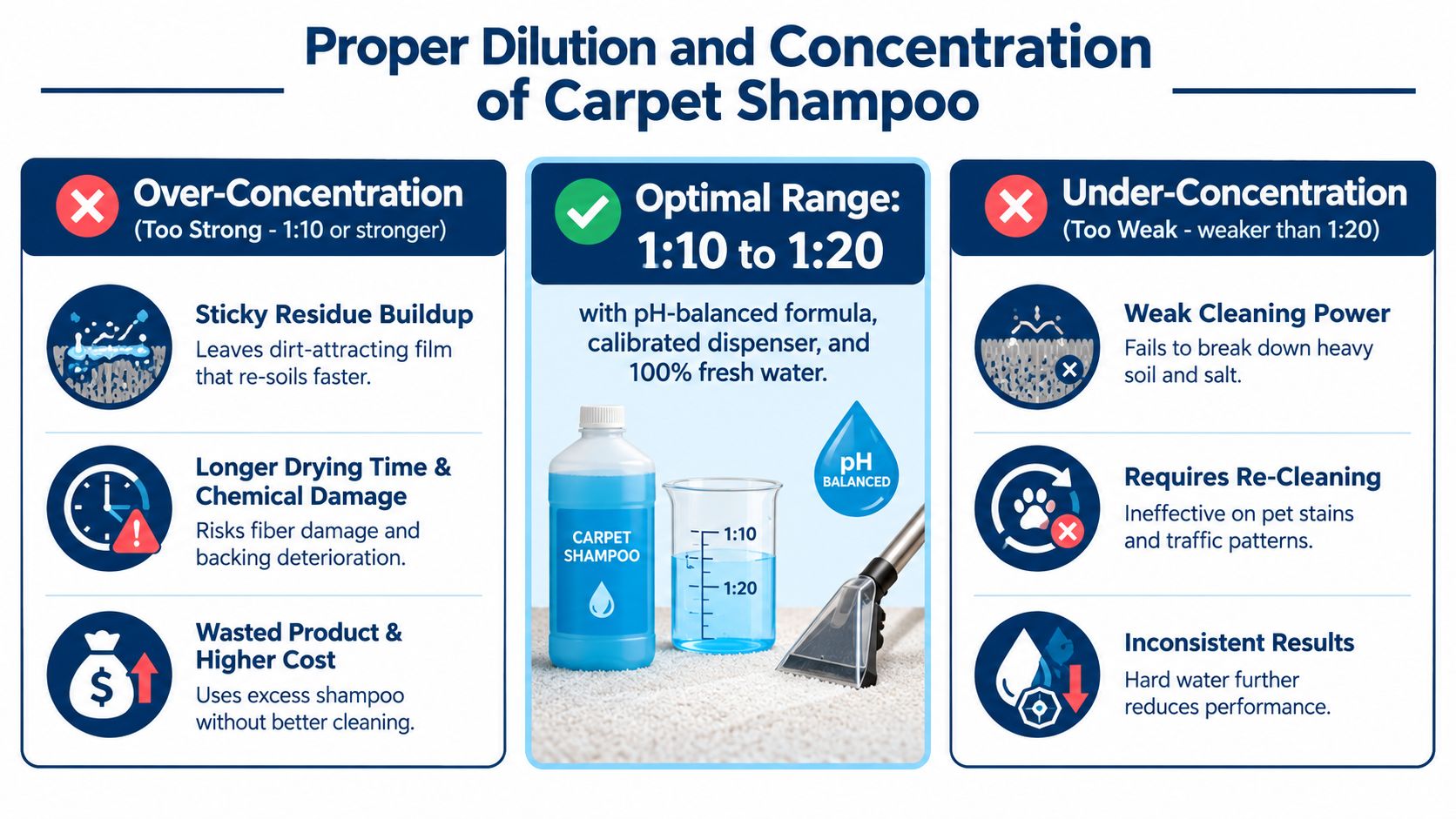
The bottle's dilution instruction is the starting point, not a suggestion to ignore. Concentrated shampoo can leave a sticky film that attracts fresh soil, stiffens fibres and forces you to spend more time rinsing. Excess moisture creates a separate risk, especially when the underlay stays damp after the visible surface feels dry.
Use a calibrated dispenser or measuring container. A repeatable mix is more valuable than a strong mix that changes from vehicle to vehicle. Lightly soiled commuter carpet may need a gentler solution, while a delivery vehicle with heavy traffic soil may require a product and concentration intended for deeper cleaning. Always follow the product's directions and verify that the formula is suitable for automotive carpet.
Practical rule: More shampoo isn't the same as more cleaning. Better results come from compatible chemistry, adequate dwell time, controlled agitation and complete recovery.
Test the diluted solution on an entry mat or hidden patch. Look for colour transfer, texture changes or unusual wetting before treating the most visible area. If you use a professional product such as Bandana Rx 109 Shampoo, follow its label and equipment guidance rather than borrowing a ratio from another formula.
Keep a simple mixing record
A detailing operation should note the product, dilution approach, vehicle type, soil level and result. That record helps staff repeat successful work and avoid guessing on the next appointment. It also gives customers a clearer explanation when a carpet needs a second visit for a severe stain or odour.
Water quality can affect cleaning performance because mineral content may influence residue and rinse behaviour. Fresh solution, clean recovery tanks and properly maintained equipment matter just as much as the bottle chosen. If the carpet is only lightly soiled, don't compensate for weak vacuuming by increasing chemical strength.
3. Choose Hot-Water Extraction or Low-Moisture Foam
Start with the contamination and the vehicle's drying limits. Hot-water extraction fits carpet carrying winter salt, pet contamination or embedded traffic soil. It rinses dissolved material from the fibres and backing, but it also leaves more moisture to recover and manage.
Low-moisture foam works better for a light traffic film or a vehicle that must return to service quickly. The smaller liquid load can shorten downtime, yet it may leave dissolved salt or odour sources in the backing. Use it for controlled maintenance, not for a saturated or persistently odorous carpet.
Match the method to the job:
- Heavy winter salt: Choose rinse-and-extract cleaning so mineral residue is removed rather than redistributed.
- Pet hair and deep soil: Remove hair while the carpet is dry, then extract if the carpet and backing tolerate moisture.
- Light traffic film: Apply low-moisture foam when the carpet is sound and a quicker return matters.
- Fleet maintenance: Extract problem zones and use low-moisture cleaning on cleaner areas, provided the product directions support that workflow.
Test the chosen process in a concealed area. Work with foam in manageable sections, then remove it according to the product instructions. With wet extraction, set expectations before starting. Drying depends on the vehicle, weather, ventilation and contamination level. Air blowers improve airflow, but they cannot compensate for excessive solution.
Wet work also requires protected electrical connections and care around components that should stay dry. DIY cleaning makes sense for a localised, manageable spill. Professional equipment or service is the better choice when the entire cabin needs rinsing and you cannot provide strong suction and airflow.
4. Agitate with the Right Brush
Agitation breaks the bond between soil and fibre, but aggressive scrubbing can distort carpet, roughen a looped surface or drive hair and grit deeper. Start with the least aggressive tool that can do the job. A soft brush suits delicate or low-pile carpet, while a firmer brush may be acceptable on durable, heavily trafficked areas after testing.
Luxury vehicles may contain sensitive carpet blends that need light, controlled movements. A high-mileage commuter car can often tolerate more deliberate back-and-forth action, but pressure should still come from the tool's controlled movement rather than force from the operator.
Work with the carpet, not against it
Brush in the direction of the pile where appropriate, then use short crosswise movements only when the material allows. Keep seams and edges under control. Tight-loop and low-pile carpet generally needs less pressure because harsh brushing can change its appearance without removing more soil.
Loose pet hair deserves separate treatment. Use a suitable rubberised tool, hair-removal brush or vacuum attachment before wet cleaning. If you wet the hair first, you'll often make the extraction stage slower and less effective.
Allow the pre-spray to soften the soil before agitation. Test the brush and pressure on a concealed patch, especially where the carpet has faded or the backing feels weak. Salt-laden winter carpet should be brushed methodically after dry debris removal, with particular attention to the driver's footwell and mat edges. The objective is to release contamination for extraction, not to prove how hard you can scrub.
5. Apply Pre-Spray and Respect Dwell Time
Pre-spray gives the chemistry time to loosen soil before agitation or extraction. Apply it evenly to one manageable section at a time. Spraying too much in one place can saturate the backing before the equipment is ready to recover it.
Choose treatment according to the contamination. A suitable mineral-focused product can help with winter salt, an automotive-safe enzyme treatment may be appropriate for certain pet contamination, and a soil-breaking pre-spray can address traffic lanes. Don't use a product just because it smells strong. Fragrance can hide an odour temporarily while leaving its source untouched.
Give chemistry time to work, but never leave a wet section unattended.
Use a timer instead of guessing. Follow the product's pH, application and dwell instructions, and stop if the carpet is becoming saturated. Dwell time can be productive because you can work on adjacent door panels, vents or consoles while the solution acts. It becomes counterproductive when the product dries on the fibre or moisture travels into areas you can't extract properly.
Control the section size
Small sections make coverage easier to judge and prevent one area from drying before treatment. They also let you compare the result as you work. If a stain isn't responding, pause and reassess its type rather than repeatedly adding stronger chemistry.
Some marks are permanent colour loss, fibre damage or residue below the visible surface. Tell the customer what the process can reasonably improve. Honest expectations protect the carpet and prevent the common mistake of escalating chemistry when the need is deeper extraction or specialist odour treatment.
6. Extract Slowly and Control Moisture
Extraction is where a promising shampoo job either succeeds or fails. The machine must remove dissolved soil, cleaning solution and as much moisture as practical from both the carpet surface and the backing. One quick visible pass isn't enough if the recovery tank is still pulling contaminated liquid.
Work in overlapping passes. Move slowly enough for the extractor to recover liquid, then make additional recovery passes without continuously adding solution. Pay close attention to seams, seat edges, footwell corners and the carpet beneath mats. These areas hold moisture and are easy to miss during a rushed handover.
Protect the next use of the vehicle
A fleet vehicle needs to be ready for the next driver, not merely attractive under detailing lights. Dealership and rental vehicles also need careful moisture checks before storage or display. Ride-hailing drivers may value reduced downtime, but rushing the extraction stage can leave damp odours that create a bigger interruption later.
- Overlap each pass: Cover the previous path so soil isn't left in narrow strips.
- Separate wet and dry work: Add solution only when needed, then focus on recovery.
- Reach hidden zones: Blow air beneath mats and into gaps around seat rails and trim.
- Maintain suction: Clean filters, hoses and recovery components according to equipment guidance.
Check the carpet and underlay before returning the vehicle. If the backing feels wet, keep extracting and increase airflow. Damp padding can undo an otherwise impressive clean by bringing back odour and creating a poor customer experience.
7. Treat Salt, Pet Hair and Odours Separately
A useful troubleshooting matrix starts with one question: what is causing the problem? Salt is a mineral residue, pet hair is a dry mechanical contamination, and odour is usually a source problem. One shampoo cannot solve all three equally well.
Winter fleet vehicles may need focused work in the driver's footwell, while a pet owner's SUV often needs attention in the cargo area, around seat edges and beneath removable mats. Delivery vehicles can develop odours from repeated food, drink or moisture exposure. Rental vehicles need a careful inspection between users because contamination may be localised and easy to miss.
Severe odour can extend into padding or concealed areas. If the smell persists after a proper source treatment and drying cycle, explain that one service may not be enough. Avoid universal guarantees, unlabelled chemical mixtures and products that aren't approved for automotive carpet. The right response is targeted, documented and proportionate to the contamination.
8. Dry, Inspect and Follow the Carpet-Care Checklist
A vehicle can look clean and still be too wet to release. Treat drying as the final quality check: remove as much water as possible, circulate air, open windows when conditions permit, and use fans or dehumidification where practical. Health Canada's guidance recommends maximizing water removal and ventilation, with a goal of carpets drying within 24 hours, as explained in its carpet-cleaning and indoor-air-quality guidance.
Ontario humidity, cold weather, dense underlay and heavy contamination can extend that time. Check beneath mats, along seat edges and in seams before closing the vehicle or handing it back. A surface that feels nearly dry can conceal moisture underneath.
Release check
- Remove loose debris and hair: Vacuum and mechanically lift dry contamination before wet work.
- Inspect and test: Confirm the carpet type, salt, stains, odours and moisture-sensitive areas.
- Pre-treat selectively: Choose automotive-safe chemistry for the identified soil.
- Control dwell time: Follow the product directions and stop before the carpet becomes saturated.
- Agitate appropriately: Adjust brush softness and pressure to the carpet.
- Extract thoroughly: Use overlapping wet and recovery passes, especially in traffic lanes.
- Dry concealed areas: Blow beneath mats, into seams and around seat edges.
- Verify the handover: Check moisture, odour, mat placement and the customer's instructions.
Schedule cleaning when occupancy is low and keep air moving through the cabin. Leave removable mats out separately where safe, and tell the driver what to do if the carpet remains damp. Record recurring problem areas so the next service can target them instead of repeating a broad, moisture-heavy treatment.
For serious water exposure, follow this step-by-step carpet drying guide as a reference. Vehicle electronics, soaked padding and widespread moisture call for specialist equipment or professional restoration rather than repeated DIY shampooing.
9. Choose the Fastest Maintenance Option That Fits
Choose the cleaning method by soil load, drying time and the vehicle's schedule. DIY spot work suits light, localised soil when you have automotive-safe products and can dry the carpet fully. Salt across the cabin, embedded pet hair, odour in the padding or a vehicle needed back at work quickly usually justify professional equipment or service.
Professional pricing varies with vehicle size and soil level. In Toronto, independent guidance lists deep carpet and seat shampooing with hot-water extraction at roughly $80 to $180 as a standalone service. The same guide shows spot work around $80 to $100 and full extraction around $120 to $220 or more, depending on vehicle class. Use the figures as planning benchmarks, not a quote, as shown in this Toronto car-detailing price guide.
Use this quick decision path:
- Light localised soil: Handle spots yourself if you can limit the solution and complete drying.
- Heavy salt or stains: Book interior detailing when rinsing, extraction and air movement exceed your home setup.
- Pet-heavy SUV: Confirm that the service covers carpet shampooing, hair removal, cargo-area treatment and any vehicle-size or pet-hair surcharge.
- Frequent washing: A full-service wash can suit routine vacuuming and interior surface cleaning, but it will not replace periodic extraction for embedded soil.
- Recurring use: Compare monthly memberships, prepaid multi-wash tickets and combination deals against your actual cleaning frequency.
For Ontario vehicles facing repeated salt, pet contamination or odour, a recurring plan can reduce neglected buildup, provided it includes the interior work you need. Nanak Car Wash lists express and full-service washes, appointment-based interior and exterior detailing, member interior cleaning, Unlimited Wash Club passes, prepaid options and combo deals. Its detailing services include carpet and seat shampooing, salt and stain removal, vent and crevice blowout, and leather cleaning. Confirm current packages, pricing, surcharges, participating locations and availability directly with Nanak Car Wash before booking.
9-Point Carpet Shampooing Comparison
| 🔄 Implementation complexity | 🛠️ Resource requirements | ⭐ Expected outcome | ⚡ Speed / efficiency | 📊 Ideal use cases | 💡 Key advantages & tips |
|---|---|---|---|---|---|
| Pre-Treatment and Soil Inspection Before Shampooing, moderate | Flashlight, moisture meter, inspection time, targeted pre-sprays | ⭐⭐⭐⭐, more accurate stain targeting, fewer reworks | ⚡ Moderate, adds prep time but saves rework | Vehicles with pet hair, winter salt, visible traffic patterns | 💡 Test spots, document findings, train staff to identify stain types |
| Proper Dilution and Concentration of Carpet Shampoo, moderate–high | Calibrated dispensers/ratio pumps, pH‑balanced shampoos, fresh water | ⭐⭐⭐⭐⭐, optimal cleaning with minimal residue | ⚡ High, improves drying and reduces repeat cleaning | All services where consistent results matter; multi-location shops | 💡 Use calibrated pumps, log dilutions, test on entry mats |
| Hot‑Water Extraction vs Low‑Moisture Foam, variable (high for extraction) | Extraction units, heaters, dryers or foam machines and low‑moisture products | ⭐⭐⭐⭐ (extraction) / ⭐⭐⭐ (foam), depth vs refresh | ⚡ Foam: fast; Extraction: slower drying | Heavy soil/pet/salt → extraction; quick refreshes → foam | 💡 Combine methods when needed; use blowers after extraction |
| Agitation Techniques and Brush Selection, moderate | Soft/medium/stiff brushes, rotary heads, training | ⭐⭐⭐⭐, better soil lift when matched to pile | ⚡ Moderate, manual work can be time‑consuming on heavy soil | Delicate carpets, high‑traffic areas, seams and spots | 💡 Match brush to pile, brush with the nap, avoid over‑agitation |
| Dwell Time and Pre‑Spray Application, low–moderate | Pre‑sprays (enzyme/mineral), timer, sectioning tools | ⭐⭐⭐⭐, improves stain and odour removal chemically | ⚡ Mixed, adds wait time but enables multitasking | Heavy stains, pet soils, salt‑affected carpets | 💡 Use a timer, apply evenly in sections, follow product dwell guidance |
| Extraction and Moisture Control After Shampooing, moderate–high | High‑suction extractors, air blowers, maintained hoses/filters | ⭐⭐⭐⭐⭐, reduces residue, odours and mould risk | ⚡ High (when done properly), shortens usable downtime | Fleets, dealerships, winter‑wet interiors, post‑shampoo jobs | 💡 Make overlapping passes, check seams, maintain extraction gear |
| Targeted Treatments for Salt, Pet Hair and Odours, high | Enzyme cleaners, salt rinses, mechanical hair removal tools | ⭐⭐⭐⭐, effective if source is correctly diagnosed | ⚡ Lower, multiple steps and tools can extend service time | Pet owners, winter salt exposure, odour‑source problems | 💡 Treat the source (not mask), vacuum hair before wet work, set expectations |
| Drying, Final Checks and the Carpet‑Care Checklist, low–moderate | Air movers/blowers, moisture meter, checklist, customer instructions | ⭐⭐⭐⭐, better QC; fewer callbacks for damp/odour issues | ⚡ Moderate, may extend appointment but prevents rework | Final handover, fleets, rentals, post‑service verification | 💡 Only replace mats when dry, blow under mats, provide customer care notes |
| Choose the Fastest Maintenance Option That Fits, low decision complexity | Memberships, appointment system, service tiers, prepaid options | ⭐⭐⭐⭐, saves owner time when matched to needs | ⚡ Very high (with appropriate plan), professionals quickest for deep issues | Busy drivers, frequent washers, vehicles with heavy contamination | 💡 DIY for light soil; use pro/detailing for deep stains, confirm pricing/locations |
Leave the Carpet Cleaner Than You Found It
The best carpet shampooing tips are process controls, not magic formulas. Diagnose the soil before wetting anything. Remove loose debris and pet hair while the carpet is dry. Choose treatment for the actual contamination, measure dilution, respect dwell time, agitate gently and extract until the recovery work is complete.
Drying deserves equal status. Blow air beneath mats, into seams and around seat edges. Don't seal a damp interior with mats in place and windows closed. Check the carpet, underlay, odour and mat placement before handing the vehicle back, then record any recurring problem areas so the next service starts with useful information instead of guesswork.
GTA drivers face repeated winter exposure. The historical corrosion research cited by the Transportation Research Board recorded Toronto atmospheric corrosion at 5,108 mg/dm² over a 19-month exposure study, a reminder that local winter conditions are aggressive, even though that measurement concerns atmospheric corrosion rather than carpet performance. The practical interior lesson is simpler: salt contamination keeps returning, so occasional deep cleaning works best alongside regular vacuuming, prompt spot treatment and sensible mat care.
DIY remains a good option for a small, manageable problem. Professional detailing earns its place when the carpet needs substantial rinsing and extraction, when pet hair has worked into multiple surfaces, when odours persist, or when downtime matters more than doing the job by hand. Ontario's established cleaning sector reflects the lasting need for this kind of maintenance. Statistics Canada reported 1,506 carpet and upholstery cleaning business locations across Canada in December 2023, so specialised cleaning is a normal service category rather than an unusual last resort, as shown in the Transportation Research Board and Canadian cleaning-market context.
Use the saved checklist before every DIY clean or booking: inspect, dry-vacuum, pre-treat, dilute correctly, agitate with control, extract thoroughly, dry hidden areas and verify the result. If the vehicle sees daily salt, pets, deliveries or rideshare use, compare one-time detailing with a recurring wash or prepaid option. Visit Nanak's site to verify current membership terms, packages, pricing and participating locations before you commit.
Nanak Car Wash offers express and full-service washes, interior cleaning, appointment-based detailing, carpet and seat shampooing, salt and stain removal, and recurring options such as memberships and prepaid bundles. Visit Nanak Car Wash to compare the current options for your vehicle and book the level of carpet care that matches its salt, pet or odour problems.



 6600 Finch Ave W, Etobicoke, ON M9V 3Z6
 647-703-8515
 MON – SUN 8 AM to 7 PM