
A 2024 UC Berkeley Labor Center study found California gig rideshare drivers had median employee-equivalent earnings of $5.97 per hour after expenses, according to the San Diego Voice & Viewpoint report. That's the trap in one number. The app can show a lively night while your tank, tires, brakes, and resale value take their cut. Say you finish a Friday in Toronto grinning at the gross total, then fill up on the way home and watch a chunk of it vanish. That's not bad luck. That's Uber driver expenses doing their real job, turning engaged-hour bragging rights into a much thinner amount per online hour.
Table of Contents
- Why the App Total Is Not Your Pay
- Typical Uber Driver Expenses by Category
- How Costs Change the Hourly Number
- Tax Deductions Versus Money Already Spent
- Weekly Examples for Three Kinds of Cars
- Habits That Shrink the Weekly Bill
- Check the Shift Then Lock in Cleaning
Why the App Total Is Not Your Pay
Say it's Friday night at Pearson and you're sitting in the airport queue, heater running, watching planes land. A trip finally pings. The fare into the core looks healthy, you drop the passenger near King Street, and then you drive empty kilometres hunting for the next request because you're now in the wrong spot at the wrong minute.
That empty drive is where the app total starts lying to you. You still burned fuel getting to the pickup, idling in the queue, and repositioning afterward. You still put kilometres on tires that don't care whether a passenger was aboard.
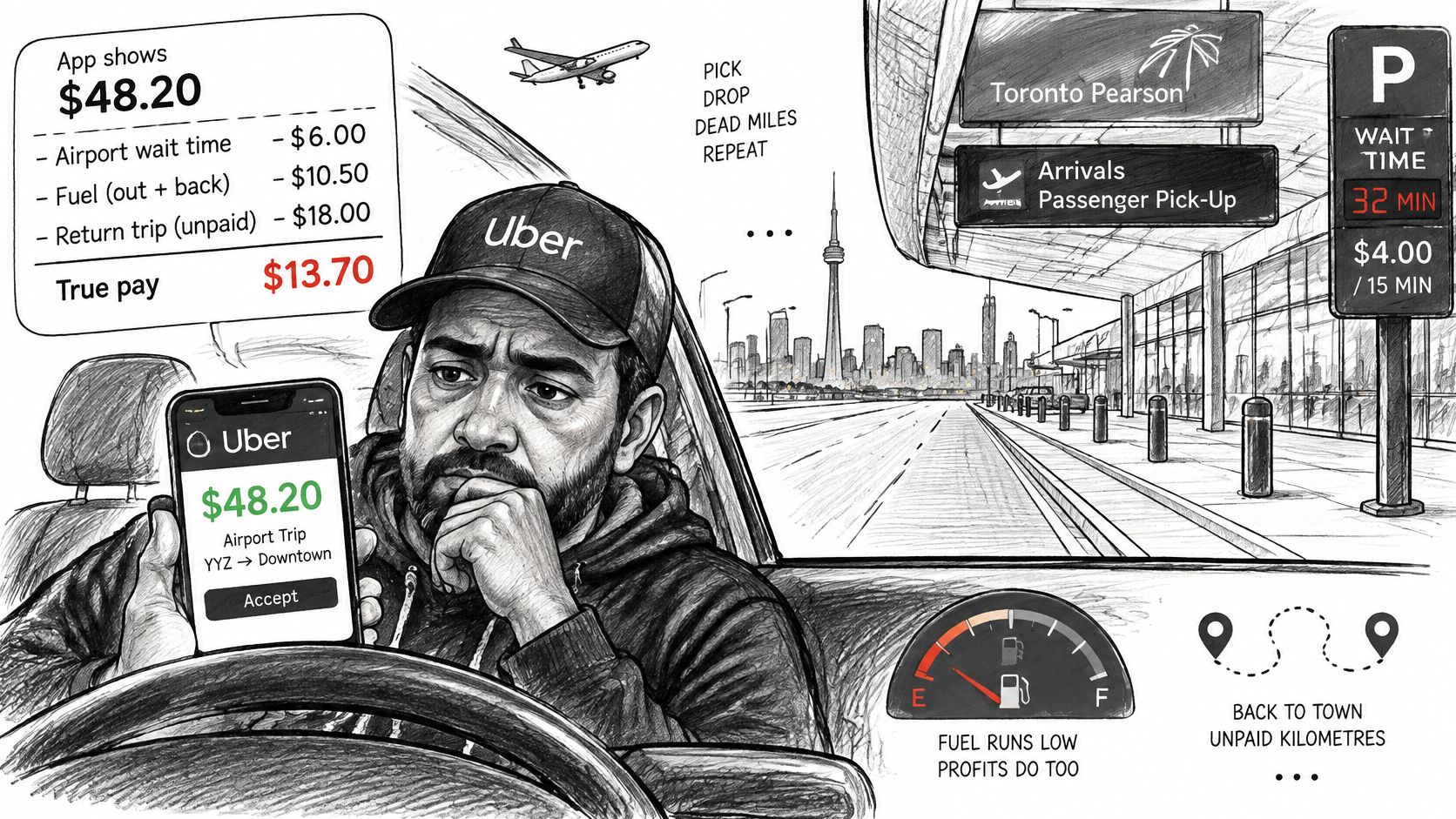
The meter stops, the car doesn't
Think of engaged time like a taxi meter. It runs with a passenger in the car. Your engine, insurance, tires, and brakes don't take the same break when the meter stops. Circling a condo tower, waiting outside a bar, and crawling back toward demand all wear the car without adding a fare.
Dispatch rule: If the wheels are turning for the app, the cost belongs to the shift, even if no passenger paid for that kilometre.
The buckets are simple enough. Fuel, maintenance, cleaning, insurance, and depreciation do most of the damage, with phone data, parking, and tolls nibbling at the edges. Add them up per online hour, not per engaged hour, and the picture changes fast.
Before you read another earnings screenshot online, pull last month's fuel receipts and your odometer readings. Put them beside your app total. That gap, not the gross figure, is your starting point.
Typical Uber Driver Expenses by Category
A winter shift can look profitable until the next fuel stop, a tyre bill, and a salt-stained back seat show up. For a high-mileage city driver, each cost has a different rhythm: some hit the card today, while others reduce what the car will be worth later.
| Expense | What it covers | When you feel it | Cash or hidden |
|---|---|---|---|
| Fuel | Gas or charging for trips, pickups, and empty repositioning | Every fill or charge | Cash |
| Maintenance and tires | Oil, brakes, tires, and unplanned repairs | Small services monthly, big bills in spikes | Cash |
| Cleaning | Exterior wash, interior vacuum, spills, salt, and odours | Per visit, often several times a week | Cash |
| Insurance | Personal policy plus any rideshare or commercial endorsement | Monthly or annual premium | Cash |
| Depreciation | Loss of resale value from kilometres and age | Mostly at sale or trade-in | Hidden |
| Phone, parking, and tolls | Data plan, mounts, airport or lot fees, and toll roads | Monthly plan plus trip-by-trip fees | Cash |
Fuel and maintenance
Rush-hour traffic, winter idling, short trips, and a larger engine can all push up fuel use per kilometre. A car that sips fuel on the 401 at midnight may burn more while crawling downtown with the defroster running.
Maintenance comes in uneven bursts. Oil changes are easy to anticipate; tires, brakes, suspension work, and surprise repairs are less tidy. After a rough season of potholes, salt, and high mileage, a quiet month may mean a larger bill is still ahead. Set aside money as you drive, or an earlier shift's repair can land on a later month's credit card.
Cleaning and insurance
A quick exterior rinse and an interior clean solve different problems. Salt and road film build up outside; spills, muddy boots, pet hair, and food messes demand attention inside. If you're cleaning several times a week, those visits belong in the shift's costs, not in the “miscellaneous” pile.
Insurance deserves a close read, too. A personal policy may not cover carrying paying passengers, and some insurers require a rideshare or commercial endorsement. Before you assume you're covered between pings, check your own policy wording and ask your insurer whether it requires a rideshare or commercial endorsement. For broader context, read a driver's guide to accident coverage.
The costs you don't see weekly
Depreciation has no weekly receipt. Each kilometre adds wear that can lower the car's resale value, with the loss becoming obvious when you sell or trade it in. Airport runs and empty repositioning count, too.
Phone data, a sturdy mount, parking while you wait, and tolls each take a small bite. Track the cash costs and keep a separate allowance for wear. Dividing those amounts by the kilometres driven gives you a cost-per-kilometre view, so you can compare the shift's running costs without mistaking a quiet repair month for a cheap one.
How Costs Change the Hourly Number
A full app screen can look generous until the empty kilometres and unpaid minutes catch up. For a Toronto driver, gross pay per engaged hour can be far higher than what remains after vehicle expenses. The gap shows why the fare total alone cannot tell you what a shift earned.
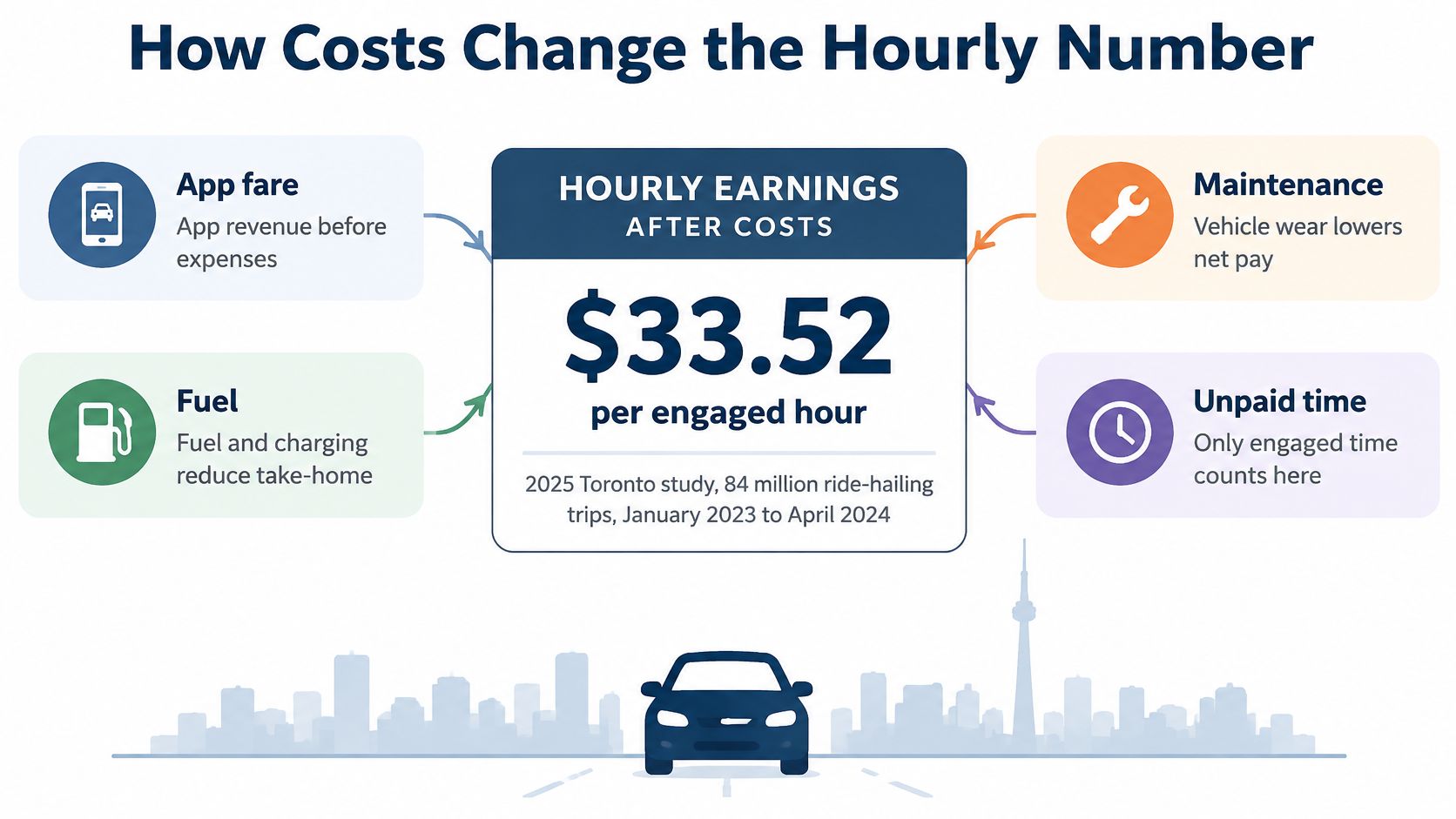
Engaged is not online
Engaged time covers the paid slice, when a trip is underway. Deadheading to Pearson, circling for a pickup in Liberty Village, and waiting in a queue still use time and add kilometres, even when the app is not counting them as engaged.
Say two drivers gross the same amount per engaged hour. One stays near steady demand in Scarborough, turning trips over with short gaps. The other waits, repositions, then drives empty back from the suburbs. The second driver spreads vehicle costs across more unpaid time, so the same headline rate leaves less per hour online.
Winter driving, congestion, airport queues, and low-demand periods can widen that gap. Each may add time or kilometres without adding fares at the same pace. Track what remains after vehicle costs, then divide it by every hour you were online. That is your net per online hour, not the more flattering engaged-hour figure.
Tax Deductions Versus Money Already Spent
A deductible expense isn't money back in your wallet. Say you pay for fuel, a brake job, and a deep interior clean in February. You've spent real cash in February. A deduction only lowers your taxable income later, when you file. It softens the tax bill. It doesn't reimburse the pump.
That distinction matters because plenty of drivers chase more hours thinking write-offs will rescue a weak week. They won't. You've already bought the fuel, worn the tires, and lost resale value before any refund conversation begins.
The kilometre log runs the show
For a self-employed platform driver in Canada, keep a full-year log. Your business kilometres divided by total kilometres gives you a business-use percentage, and that percentage is what you apply to eligible motor vehicle costs.
- Fuel and charging: Only the business-use share tied to earning income
- Insurance and maintenance: The same percentage applied to eligible vehicle costs
- Parking and tolls: Amounts tied to trips, kept with receipts
- Car washes and rust protection: Eligible when the vehicle is used to earn income
Capital cost allowance is the tax version of depreciation. The class and rate depend on the vehicle, so follow current CRA guidance for your car instead of copying a percentage from a forum post. Guessing here can cost you at reassessment time.
Your log needs four fields every time. Record the date, start and end odometer, purpose, and whether the trip was personal. Commuting-style personal trips stay out. If you drove your kid to hockey, say so in the log that day instead of trying to reconstruct it in April from memory and optimism.
A weekly habit that survives December
Build it into the shift. 1. Photograph every receipt the day it happens. 2. Record your odometer at the start and end of each online session. 3. Tag personal trips the same day. 4. Total your business kilometres once a month.
If the shoebox method has already failed you, use a system to keep digital and paper receipts organized before tax season turns into archaeology. A messy December shoebox is how legitimate Uber driver expenses get dropped, because you can't prove what you paid.
The log supports your return. It doesn't make a money-losing week profitable. Keep those two ideas separate and you'll make better decisions about whether Saturday night is worth your tires.
Weekly Examples for Three Kinds of Cars
Same city, same rough schedule, three different cars. Each driver below works about 30 to 35 hours online in a week, with engaged time well under that because of deadheading, queues, and waiting for passengers who swear they're coming right down.
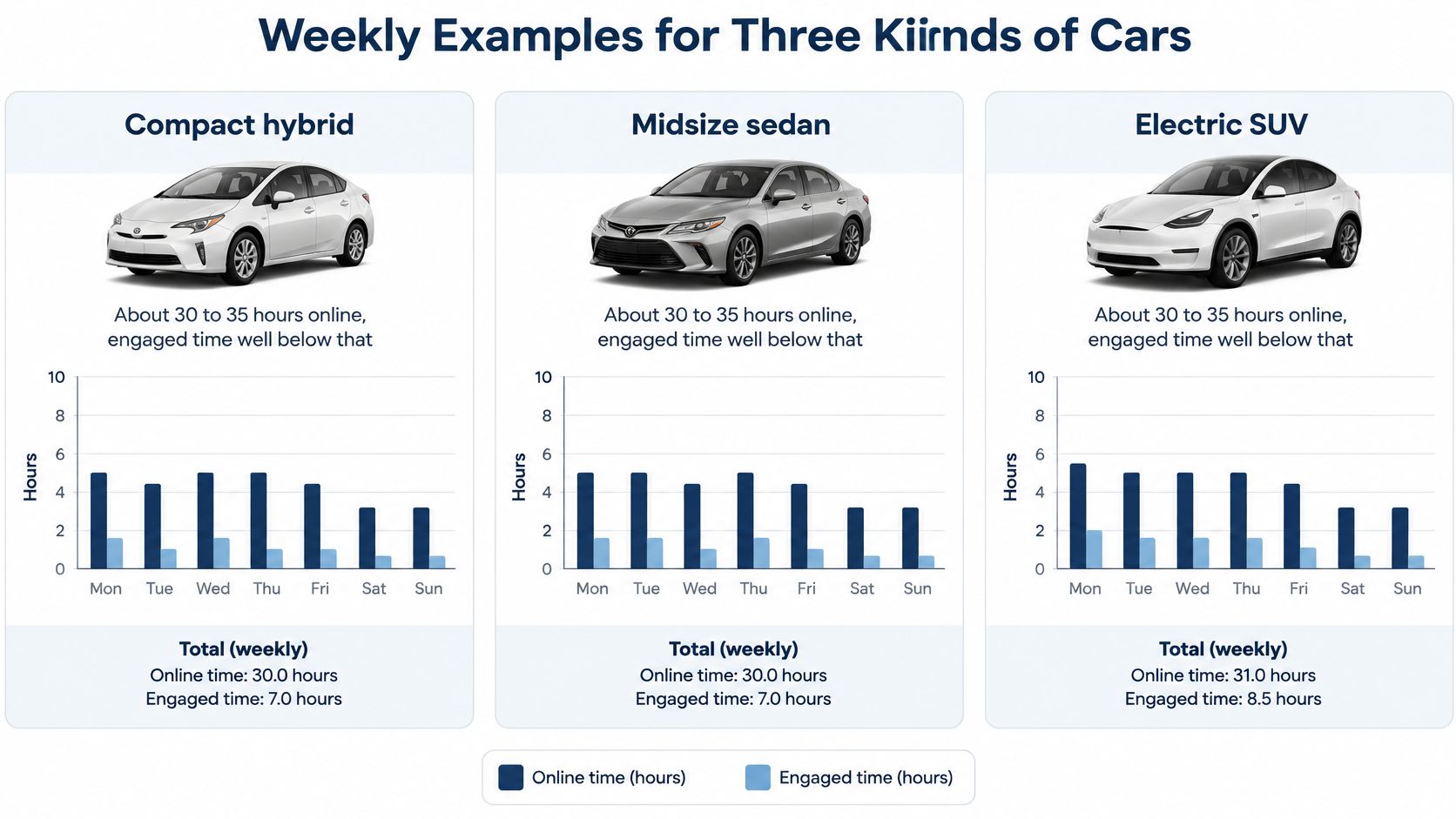
The compact that minds its business
Say you run a small compact on evening shifts around North York and Etobicoke. Fuel is your friend because the car sips instead of gulps, and depreciation hurts less because there was less value to lose in the first place. You still pay for cleaning after road salt, slushy boots, and the occasional spilled drink in the back seat. Small car, same mess.
Your break-even question is plain. After fuel, a maintenance reserve, this week's share of insurance, and cleaning, what gross per online hour do you need just to stand still?
The hybrid with a catch
Now put a hybrid in stop-and-go traffic along Eglinton. It shines exactly where a gas-only car wastes money, idling and creeping between lights. Your fuel line drops and the week feels smarter.
Then the payment shows up. If you bought it new and financed it, a higher purchase price can erase the fuel saving before you've finished your coffee. The hybrid wins on consumption. It doesn't automatically win on the week.
The SUV that earns the hard way
An SUV gives passengers room and gives you a bigger bill. It's thirstier, its tires wear with more weight on them, and cleaning takes longer because there's more cabin to vacuum. Add pet hair or a family airport run with luggage and snacks, and your interior reset stops being a five-minute job.
| Cost line per week | Compact car | Hybrid | SUV or crossover |
|---|---|---|---|
| Online hours | 30 to 35 | 30 to 35 | 30 to 35 |
| Engaged hours | Online hours minus waiting and deadheading | Online hours minus waiting and deadheading | Online hours minus waiting and deadheading |
| Fuel | Your litres per 100 km times weekly km times pump price | Your litres per 100 km times weekly km times pump price | Your litres per 100 km times weekly km times pump price |
| Insurance | Monthly premium divided by weeks worked | Monthly premium divided by weeks worked | Monthly premium divided by weeks worked |
| Maintenance reserve | Your per-km reserve times weekly km | Your per-km reserve times weekly km | Your per-km reserve times weekly km |
| Cleaning | Weekly wash and vacuum receipts | Weekly wash and vacuum receipts | Weekly wash and vacuum receipts |
| Depreciation or payment | Weekly payment or per-km value loss | Weekly payment or per-km value loss | Weekly payment or per-km value loss |
| Break-even gross per online hour | Total weekly costs divided by online hours | Total weekly costs divided by online hours | Total weekly costs divided by online hours |
Break-even formula: Add the week's fuel, insurance, maintenance reserve, cleaning, and depreciation or payment, then divide by online hours.
Treat the table as a planning illustration, not a quote for your car. Your litres per 100 kilometres, payment, insurance bill, and cleaning receipts will move every row. Copy the three columns, fill them with your real fuel spend, and you'll know whether you need different hours or a different vehicle.
Habits That Shrink the Weekly Bill
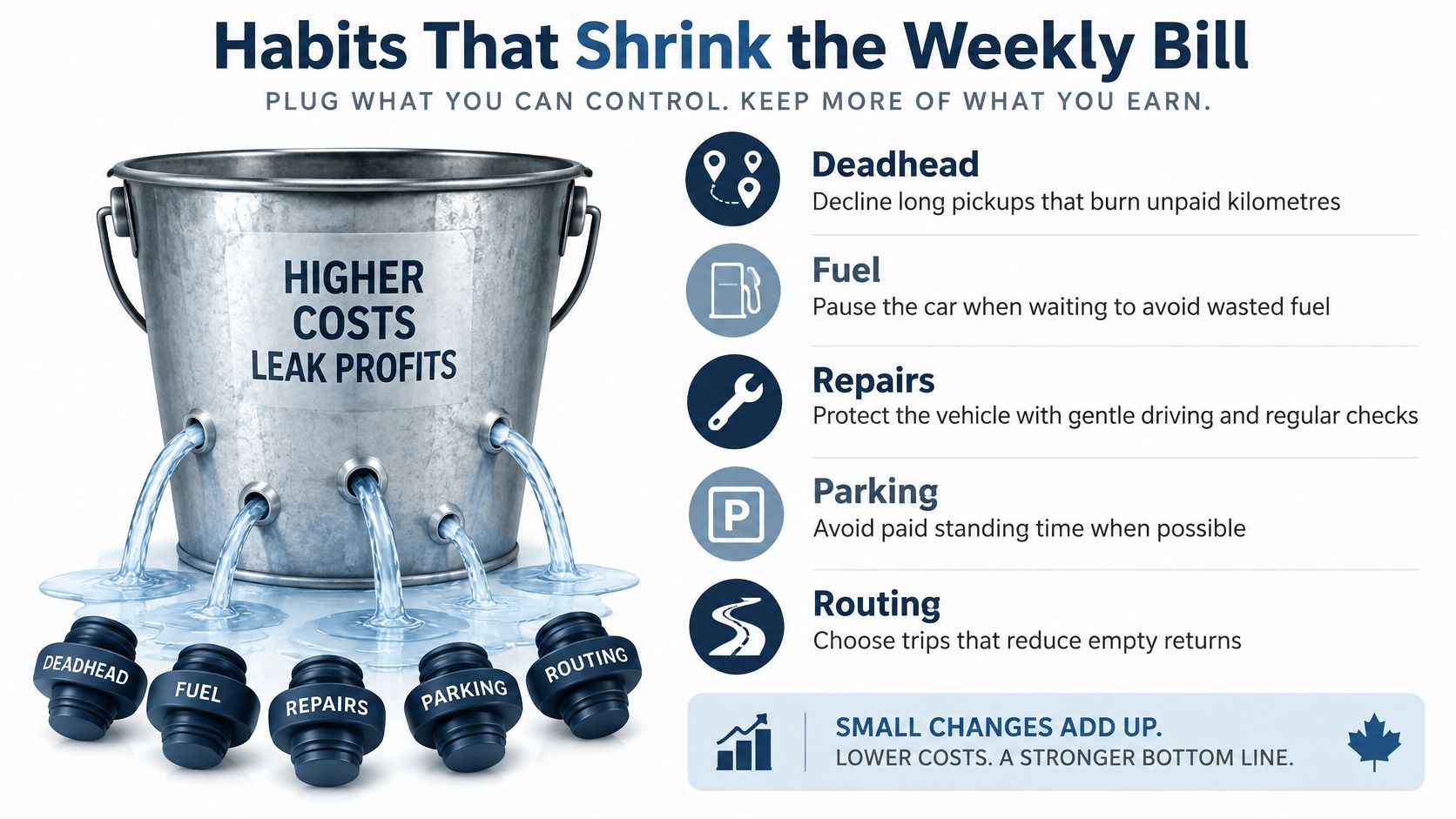
Think of your week as a leaky bucket. You can't plug every hole, and you shouldn't try. Plug the ones you control this month, starting with the biggest leak of all, deadhead kilometres.
Stop paying to chase work
Decline long pickups that burn unpaid kilometres for a short fare at the other end. If you're repositioning across town with no demand in sight, pause the app and make that drive a decision instead of a habit. A trip that drops you far from your next likely request has a second, invisible price tag.
- Long pickups: Compare unpaid pickup distance against the fare before you accept
- Dead zones: Leave early instead of circling and hoping
- Trip chaining: Favour drop-offs near your next busy area
- Homebound runs: Use destination tools when heading back anyway
Fuel, tires, and small noises
Keep tires at the recommended pressure, because soft tires waste fuel and wear unevenly. In an airport queue, shut the car down when lot rules allow it instead of idling through a long wait. Batch your own errands so personal kilometres don't hitch a ride on a work shift and muddy your numbers.
Fix small noises before they become a tow on the Don Valley Parkway. Set aside a per-kilometre reserve every week so winter tires arrive as a planned purchase, not a financial ambush. If you want that reserve to survive contact with real life, a step-by-step budgeting guide can help you give the car its own bucket instead of raiding grocery money.
Cleaning on a rhythm, not in a panic
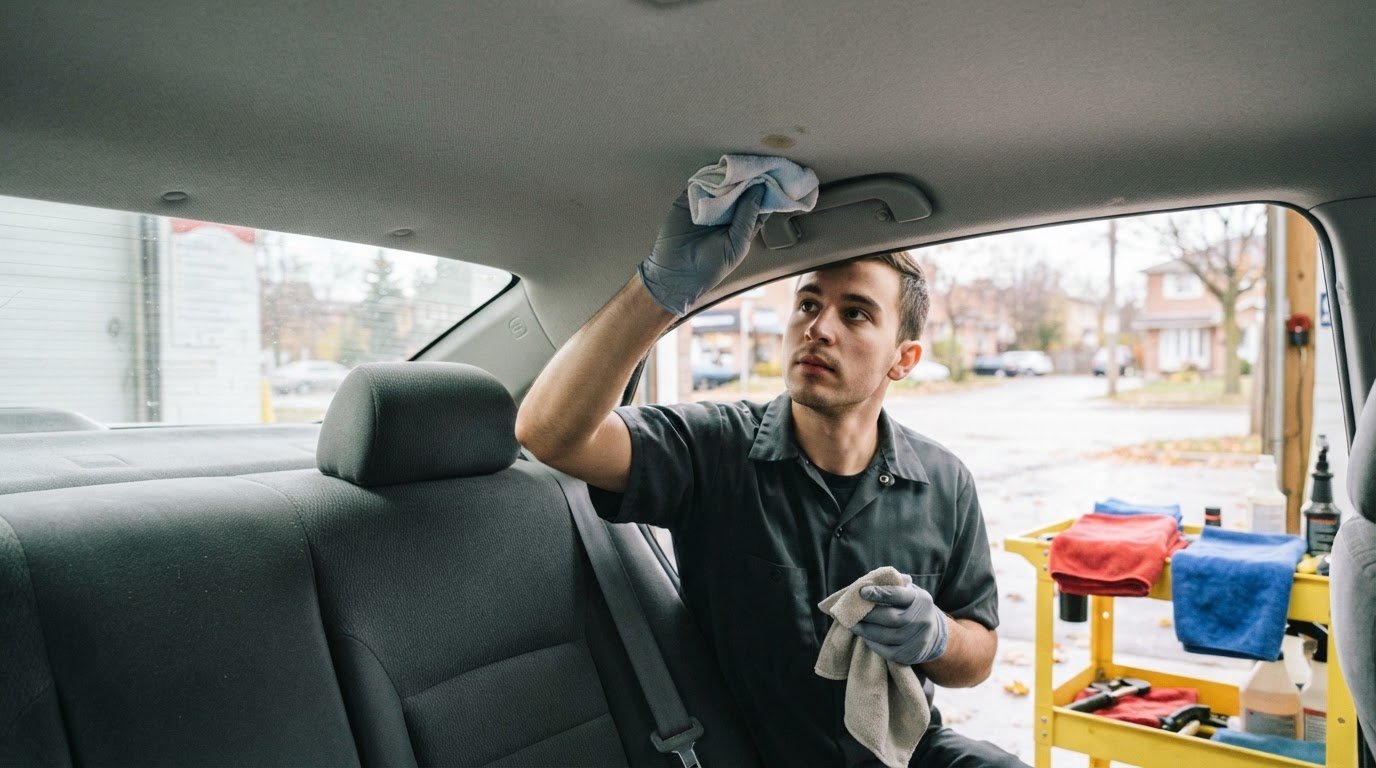
Random expensive details are the cleaning version of surge pricing. Replace them with a rhythm. Run a quick exterior wash when road salt builds up, vacuum after spills, and save the deeper interior work for when odours or stains start threatening your rating.
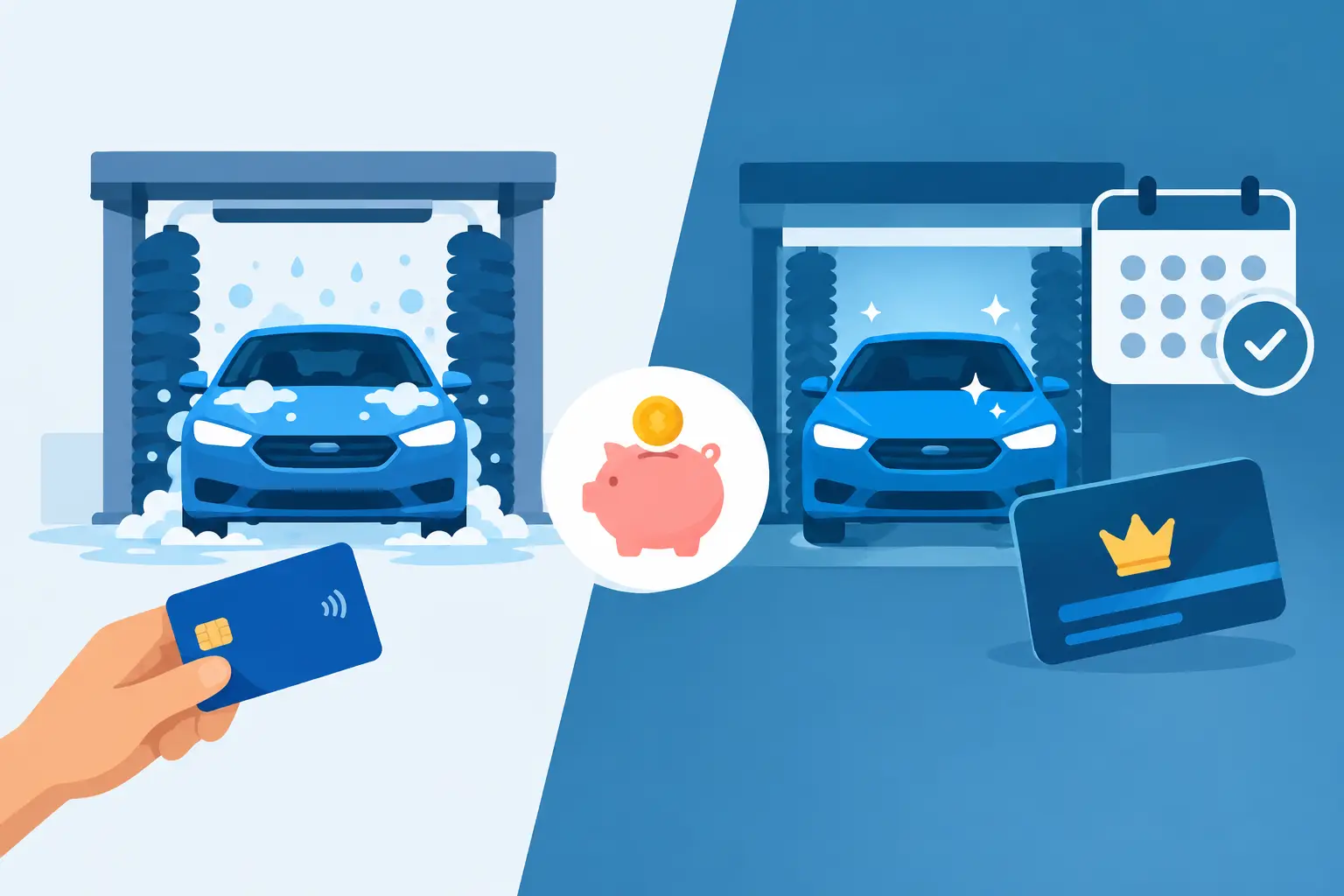
Prepaid wash bundles and monthly memberships turn that jumpy cost into a flat number, the way a transit pass beats buying single tickets every day. The catch is honest arithmetic. A membership only saves you money if you already wash often enough to beat the per-visit price. Count last month's washes before you sign anything.
Check the Shift Then Lock in Cleaning
Run one Sunday check before you decide next week needs more hours. Take last week's gross, all your online hours, fuel spent, one maintenance reserve, and what cleaning cost. Use the planning worksheet columns to record the figures while they're still in your banking app.
If the amount left per online hour is thin, more hours just repeat the leak. Your next move is fewer empty kilometres or a different vehicle. If the number works, lock down the controllable pieces so ratings and rust don't nibble it back.
Cleaning is the easiest line to flatten for Greater Toronto Area drivers. At Nanak Car Wash, the Unlimited Wash Club basic plan is $29.99 plus tax and includes a foam bath and rinse, with discounted interior cleaning. The best-seller membership at $46.99 plus tax adds sealer wax, triple foam wax, underbody wash, and hot wax, which earns its keep against Ontario salt. Free vacuums at participating express locations cover the quick interior reset between visits.
Match the plan to how often your car already gets filthy, not how often you wish it stayed clean. Put that flat fee inside your Sunday check and Uber driver expenses stop ambushing you one salty wash at a time.
Your car takes the salt, spills, and slush so your rating doesn't have to, and Nanak Car Wash can turn that cleanup into one predictable monthly cost with the Unlimited Wash Club and free vacuums at participating express locations. Run your Sunday numbers, pick the plan that matches your real wash frequency, and visit Nanak Car Wash to lock in a cleaning routine that keeps your next shift profitable.



 6600 Finch Ave W, Etobicoke, ON M9V 3Z6

 647-703-8515
 MON – SUN 8 AM to 7 PM