
Forget the popular advice that you should hunt for the single best car wax, buy the most expensive tin, and admire the beading on Sunday. On salted Greater Toronto Area roads, that routine loses. The finish that survives is usually a polymer sealant on properly cleaned paint, kept fresh with frequent rinsing. Carnauba can look warmer for a few glorious weeks. A spray can save a dull panel before guests arrive. Neither one protects frame rails, brake lines or door cavities, and neither one should be sold to you as rust insurance.
Buy for the drive you've got. A garaged car that sees summer evenings needs a different product from a delivery sedan parked outside through freeze and thaw. The honest question isn't which label smells nicest. It's how soon salt, sun, grit and the next wash will strip the film you just paid for.
Table of Contents
- The Best Car Wax Depends on the Drive
- Carnauba Synthetic and Sealant in Plain Language
- Durability Under Salt Sun and Daily Miles
- How to Apply Wax So the Shine Stays
- When Paint Wax Cannot Stop Winter Rust
- Match the Finish to Your Car and Book the Next Step
The Best Car Wax Depends on the Drive
No single paste wins for every car. That's not hedging, it's arithmetic. Carnauba gives warm-season depth to a car that's washed often and rewaxed before the gloss dies. A polymer sealant suits salted highways and high mileage because it lasts much longer. A spray detailer belongs between real applications, not instead of them. If you only remember one rule, pick by how soon the car will meet salt, strong sun and repeated washes, not by the artwork on the container.
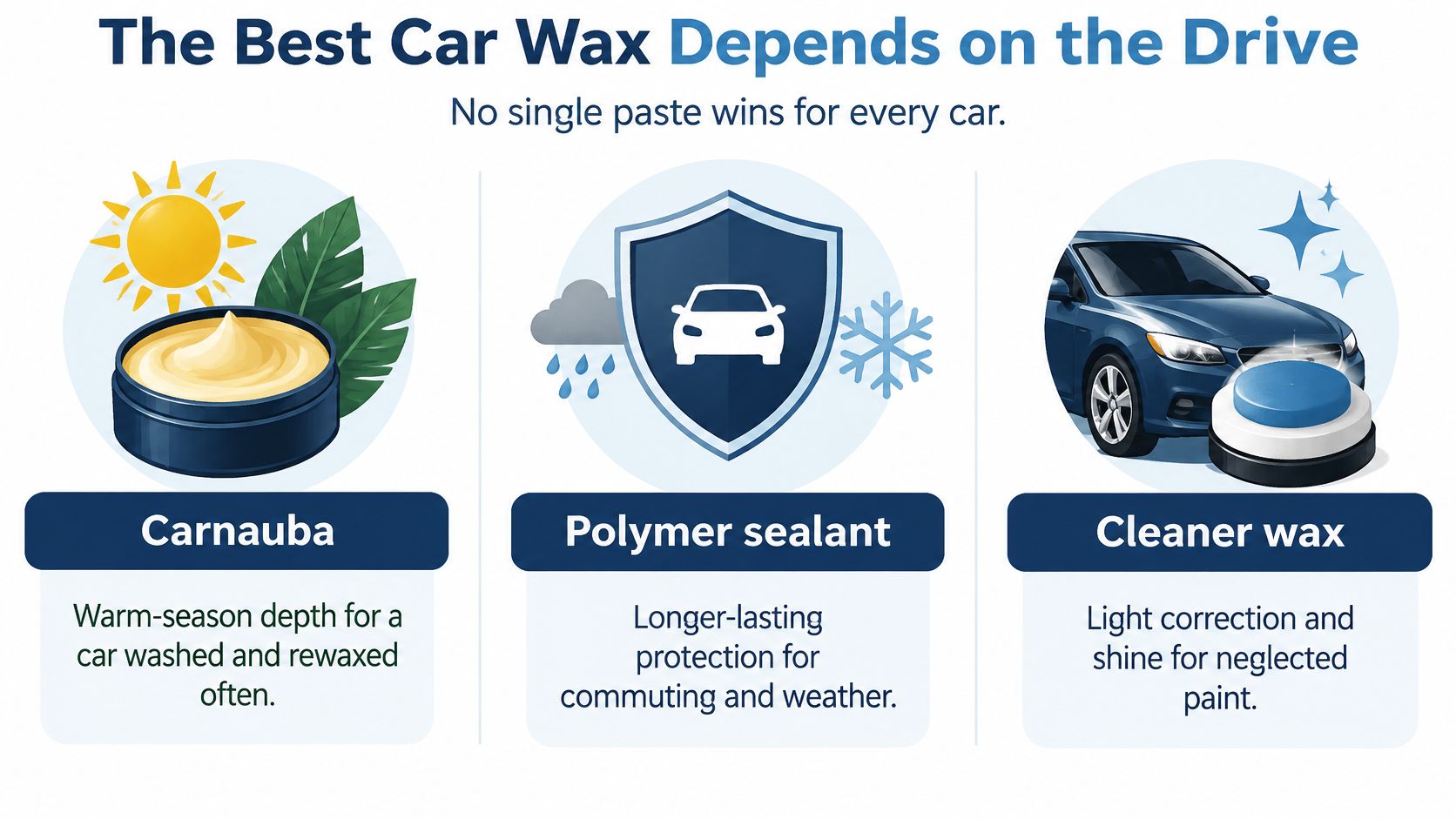
Best Car Wax Type by Climate and Use
| Type | Look | Normal life | Winter life | Best use |
|---|---|---|---|---|
| Carnauba paste | Warm, deep gloss | 4–8 weeks | 3–5 weeks | Mild weather, weekend and show cars rewaxed often |
| Synthetic wax | Bright, easy gloss | Shorter than a sealant's 3–6 months | Shorter than a sealant | Daily drivers who will reapply on a short cycle |
| Polymer sealant | Slick, glassy protection | 3–6 months | About 4–5 months if paint is clean and dry | Salt, highway miles, ride-hail and fleets |
| Spray detailer wax | Light top-up shine | Weeks, not a base coat | Very short | Between full wax or sealant jobs only |
| Ceramic coating | Harder film, not a wax | Installer rated, not a wax interval | Installer rated, not a wax interval | Owners wanting a pro-installed layer rather than a weekend wax |
That table should narrow the shelf fast. A show-minded owner who enjoys waxing can buy carnauba for colour depth and accept the short calendar. A commuter who knows they'll skip the next application should buy the sealant and stop pretending the fall coat will behave like a winter coat.
The Contrarian Pick for Most GTA Cars
For a typical daily driver, the best car wax choice is usually not a traditional wax at all. It's a polymer sealant, because the longer interval gives you room for real life. You'll miss a wash during a storm week. You'll park outside at work. You'll drive through grey slush that looks harmless until it dries white along the rocker panels.
Practical rule: If you won't rewax about monthly in salt season, don't build your winter plan around carnauba.
Synthetic wax sits in the middle. It's generally easier to spread and remove than a traditional paste, and it can suit an owner who works on a short cycle. It still isn't the economical answer for a ride-hail car that needs protection to survive constant grit and washing.
A cleaner wax has a narrower job. On neglected paint, it can combine light cleaning with shine, which is useful when the finish looks tired but doesn't yet need machine polishing. Don't ask it to provide long winter durability. And don't let a ceramic coating confuse the comparison. A coating belongs in a separate conversation about preparation, installation and cost, not in a contest against products you wipe on in an afternoon.
Carnauba Synthetic and Sealant in Plain Language
Carnauba comes from palm leaves and is usually blended with solvents and oils so you can spread it at room temperature. It sits on the clear coat as a sacrificial layer. Sun, detergent, road spray and friction gradually remove it. While it's fresh, it deepens colour and gives dark paint that warm, wet look people chase with products such as a traditional carnauba paste.
The romance is real. So is the workload. Carnauba rewards owners who wash gently, dry carefully and enjoy renewing the finish. If the tub will sit untouched until the gloss looks tired, you've bought the wrong chemistry.
Synthetic Wax and Polymer Sealant Aren't Twins
Synthetic wax uses man-made ingredients to mimic carnauba's gloss with easier wipe-off and a somewhat tougher film. Sellers sometimes blur the language, so read past the word premium. Ask what forms the film, how you apply it and when you're expected to renew it. A familiar liquid wax such as Meguiar's Gold Class may be pleasant to use, but pleasant application doesn't turn a short-cycle product into seasonal armour.
A paint sealant uses polymers or resins that cross-link into a slicker, more chemical-resistant film. The reflection looks cooler and glassier, with less of carnauba's buttery warmth. That's a worthwhile trade when the goal is contaminant release through months of commuting. Tunnel sealers and spray sealants can approximate that effect in a thinner maintenance coat, but a quick tunnel application shouldn't be confused with a careful hand application on decontaminated paint.
- Carnauba: Natural wax blended for spreadability, chosen mainly for warm colour and depth.
- Synthetic wax: Man-made film formers that aim for easy use and brighter gloss on a shorter cycle.
- Polymer sealant: Cross-linked protection chosen for slickness, chemical resistance and a longer renewal interval.
- Ceramic coating: Different silica-based chemistry, often professionally installed, so it shouldn't be scored as a wax.
What These Films Can and Cannot Do
A sound wax or sealant can slow the dulling effect of ultraviolet exposure, improve water behaviour and help road film release during the next wash. That last benefit matters more than theatrical beads. If salt residue rinses away with less scrubbing, you'll clean the car more often and drag less grit across the clear coat.
None of these films fills deep scratches in any lasting sense. None restores heavily oxidized single-stage paint. None armours bare metal inside a chip, and none reaches the hidden seams where corrosion can begin unseen. Products with fillers may darken fine defects until washing removes the effect, which is cosmetic camouflage rather than repair.
Judge a product by film type and recoat interval. That's sharper advice than chasing claims about exotic ingredients. The label should tell you whether you're buying a short-lived beauty layer, a practical synthetic wax or a sealant built to stay useful after the first month has stopped flattering it.
Durability Under Salt Sun and Daily Miles
A sealant is the practical choice for a salted-road commuter. Carnauba typically needs renewal every 4–8 weeks in normal driving and about 3–5 weeks in winter. A polymer sealant typically lasts 3–6 months, with 4–5 months a realistic winter interval when the paint starts clean and dry.
Those are working ranges, not promises. Frequent washing, high mileage and salt-heavy roads shorten protection's useful life. For Ontario winter driving, keep a sealant layer fresh and rinse the car often. Wax protects paint, not underbody steel.
How Soon to Renew Protection
| Situation | Product | Renew when | Why the clock moves |
|---|---|---|---|
| Normal driving, mild season | Carnauba | Every 4–8 weeks | Weather and washing wear down the film |
| Salt season, daily driving | Carnauba | About every 3–5 weeks | Winter exposure shortens its useful life |
| Clean, dry paint, mixed driving | Polymer sealant | Every 3–6 months | Its film generally lasts longer |
| Winter, properly prepped paint | Polymer sealant | About 4–5 months | Salt and frequent washing take their toll |
| High miles, ride-hail or fleet in salt | Sealant, checked monthly | After heavy salt weeks if water behaviour changes | Frequent exposure calls for closer checks |
A fair-weather weekend car can wear carnauba through late spring and get another coat before fall storage. A commuter collecting salt spray every day needs a shorter renewal cycle. Pick the product that fits the driving, not the fantasy of applying protection once and forgetting it.
Turn the Ranges Into a Calendar
For a daily commuter, winter carnauba can mean a fresh coat roughly every month. If that schedule is too demanding, choose a sealant and check it after heavy salt weeks. High-mileage drivers, ride-hailing operators and fleets should check protection regularly because frequent exposure and washing can wear it down quickly.
Do not wait for the paint to look completely unprotected. Water behaviour can still look respectable while road film becomes harder to release. Treat a change in beading or sheeting as a prompt to inspect, not as a precise measurement of how much protection remains.
Three Field Tests Beat Label Promises
- Check the hood after rain: Look for reasonably consistent beading or sheeting, not broad dull patches where water lies flat.
- Rinse before judging dirt: Road film should release with water and a properly lubricated wash, without aggressive scrubbing.
- Inspect horizontal panels: The roof, hood and trunk take direct sun and collect standing moisture, so check them for uneven gloss.
Salt and grit can shorten the useful life of any film. Dry-wiping a salty panel drags abrasive residue across the paint; dirty wash media and harsh washing can also wear protection down. A thick coat applied over dust or baked onto hot paint is harder to remove, not more durable.
For a sealant to last near its typical range, the paint needs to be clean and dry when it goes on. Frequent rinsing helps clear salt and road film before they build up. It does not replace rust protection underneath the vehicle.
How to Apply Wax So the Shine Stays
Technique matters more than buying three competing tubs. Most disappointing wax jobs fail before the applicator touches paint because the car was still carrying grit, bonded film or trapped water. Work through the wet stages patiently, then use less product than your instincts suggest.
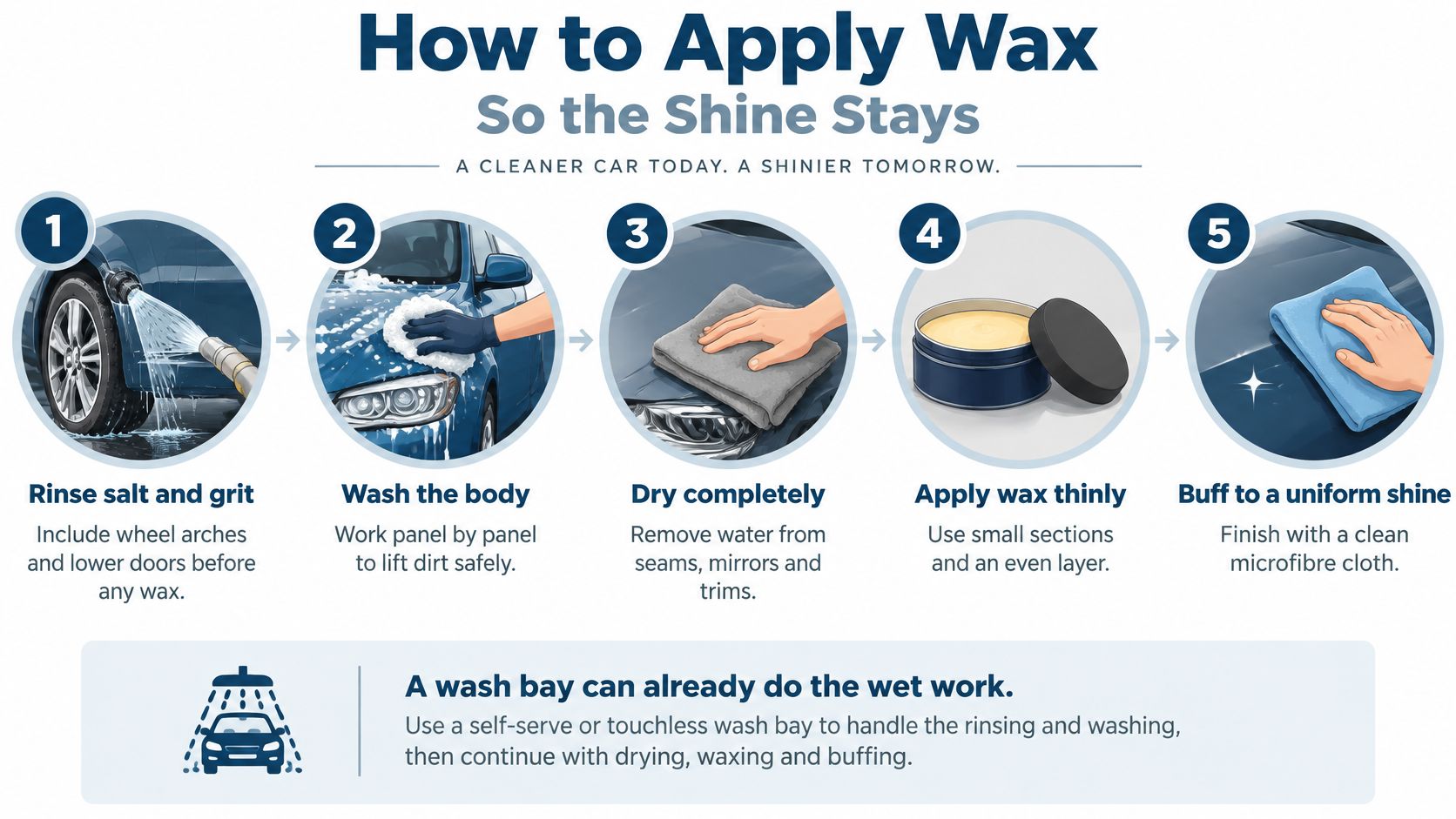
The One-Afternoon Routine
- Rinse salt and grit first: Flush wheel arches, lower doors, rocker panels and panel edges before soap touches the car.
- Wash with automotive soap: Use two buckets or a clean mitt and plenty of lubrication. Skip dish liquid, which is made for greasy cookware rather than automotive paint protection.
- Dry every seam: Blow or wipe water from badges, mirrors, fuel doors and trim. Trapped water can creep out later and leave haze under the fresh film.
- Decontaminate rough paint: If the surface still feels gritty after washing, use an appropriate clay or contamination-removal step before waxing.
- Apply a thin coat in shade: Work one small panel at a time with a foam applicator and follow the product's flash time. Thick wax mainly creates extra buffing.
- Buff with clean microfibre: Turn the towel as it loads with residue and keep a second dry towel for the final pass.
- Respect the cure window: Keep the car dry before its next rain exposure or tunnel wash long enough for the film to set as directed.
- Recheck after the first week: Note the application date and inspect water behaviour so renewal becomes a calendar decision rather than a guess.
At Nanak Car Wash, we use specialized soaps and waxes designed specifically for automotive surfaces. A professional wash can reset a salty car before you apply a home coat, especially when your driveway routine can't comfortably handle the initial rinse and wash. That reset doesn't excuse waxing over bonded contamination, so still run your hand over the clean, dry paint and check for roughness.
Mistakes That Waste the Product
Don't wax hot panels. Heat makes application uneven and removal smeary. Don't stack sealant over dusty carnauba and call the result layering. Don't use a spray wax as step five and expect base-coat durability.
A thin, even film on clean paint beats a heroic layer smeared over road film every time.
A tunnel sealer or spray sealant can top up shine and help release road film between full jobs. It's thinner and shorter-lived than a hand-applied sealant, so treat it as maintenance. Machine buffing belongs in a detailing appointment when oxidation or visible swirling is already present, because polishing removes defects wax merely sits over.
Your success check is simple. Gloss should look even, trim shouldn't carry white residue and dirt should release easily at the next rinse. If the finish looks spectacular for one afternoon but washes like bare paint a week later, the problem is preparation, film choice or both.
When Paint Wax Cannot Stop Winter Rust
A polished hood cannot protect steel hidden under a car. Buying a tougher wax while salty slush sits in the wheel arches, seams and underbody is solving the wrong problem.
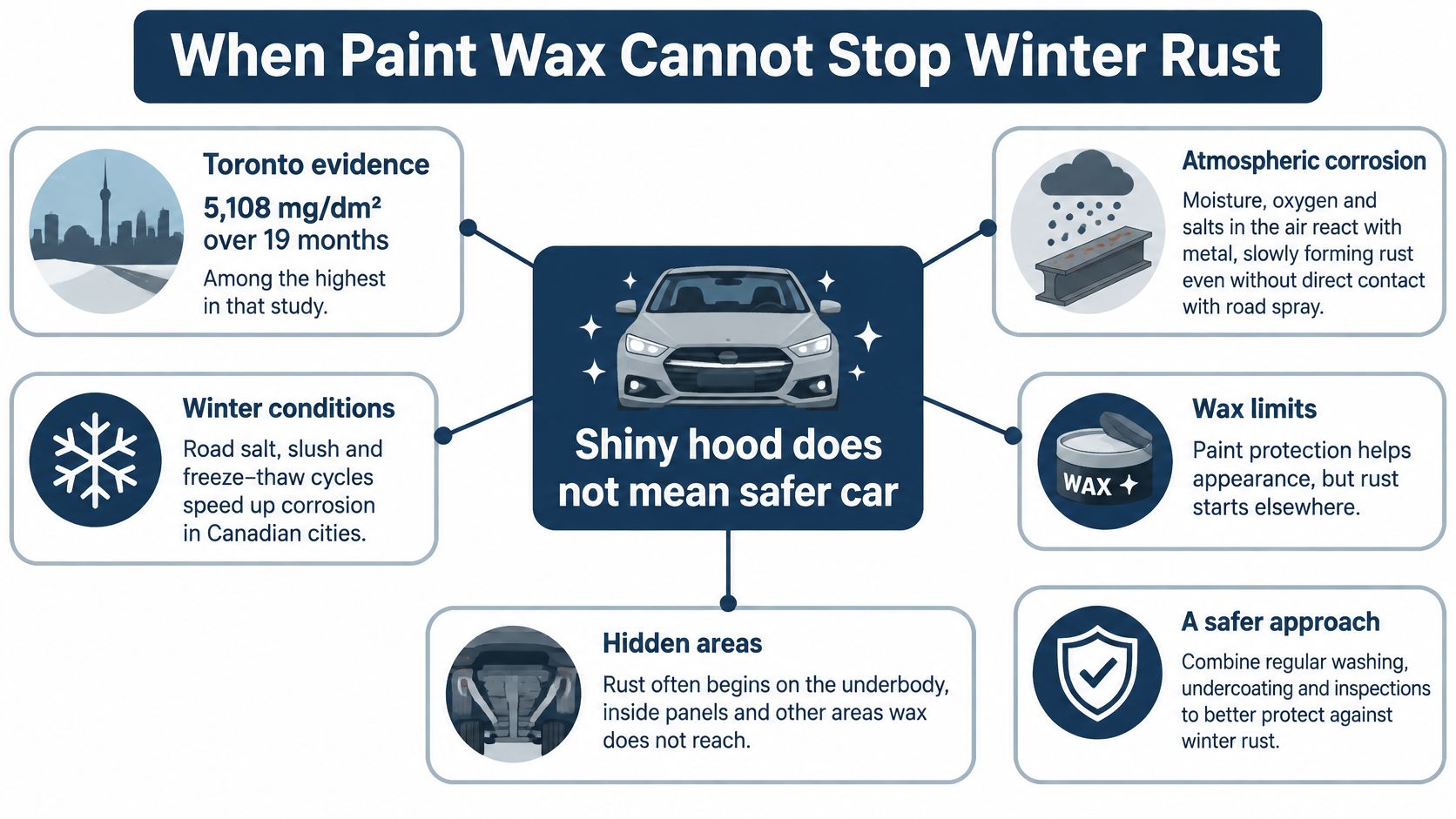
Salt and moisture accelerate corrosion wherever they linger. Wax or sealant helps painted panels shed grime and stay easier to clean, but it cannot reach inside door cavities, coat frame rails or protect every folded seam. For salted roads, the useful combination is a sealant-level paint layer kept fresh with frequent rinsing. No wax protects underbody steel.
Separate Paint Appearance From Corrosion Control
Use the right protection for each area:
- Painted panels: Wax or sealant helps preserve gloss and makes road film easier to remove.
- Wheel arches and rockers: Rinse promptly after salt exposure. These areas collect salty spray.
- Underbody and cavities: Use separate cleaning and a dedicated corrosion-control treatment where appropriate.
Choose the service based on the problem. Dull clear coat and stubborn road film call for paint care. Bubbling rockers, orange staining at seams or rust in a spare-wheel well call for corrosion control. Outdoor parking, an older vehicle and repeated freeze-thaw driving all make that distinction more pressing.
Put a Price on the Separate Job
Nanak Car Wash's rust proofing team consists of certified professionals who use a unique chemical compound to protect vehicles. Rust proofing starts at $119.95 for a small car and $129.95 for medium and full-sized cars. It addresses a different part of the vehicle than wax does.
The best car wax can be a modest one if salty slush keeps reaching the underbody.
Judge wax by the finish it protects: gloss, consistent water behaviour and how readily the car cleans up. Structural corrosion is a separate problem, and another coat of paint wax will not solve it.
Match the Finish to Your Car and Book the Next Step
The right choice becomes obvious when you stop shopping by brand mythology and consider the car's week. Where does it park? How often does it cross salted pavement? Will anyone renew the product on schedule?

According to Environment and Climate Change Canada road salt data, 135 Ontario organizations used 1,679,395 tonnes of road salt during the 2023–2024 winter season and treated 104,187 kilometres of roadway. Exposure is therefore an ordinary commuting condition across the region, not a rare rural inconvenience. Salt dissolved in road moisture also helps moisture remain on metal and painted surfaces, which is why protection belongs with washing rather than after months of neglect.
Which Finish Fits the Vehicle
| Driver and car | Main paint risk | Pick | Skip |
|---|---|---|---|
| Garaged weekend car, mild months | Dull colour, light UV | Carnauba for depth | A year-long coating claim |
| GTA commuter on salted roads | Bonded salt film | Polymer sealant plus frequent rinses | Carnauba as a one-time fall coat |
| Ride-hail, delivery or small fleet | High miles and grit | Sealant with monthly checks | Elaborate show wax you will not redo |
| Dark paint parked outdoors | Swirls and water spots | Clean first, then sealant | Waxing over contamination |
Four GTA Cases, Four Clear Picks
A commuter crossing those salted kilometres needs contaminant release more than show-car warmth. Choose a polymer sealant and frequent rinses. A carnauba schedule only works if the owner will maintain it through the least inviting weeks of winter, which many people quite reasonably won't.
A dark car parked outdoors needs decontamination before protection, followed by a slick sealant and soft wash media. Dark paint advertises swirls and water spots, so aggressive seasonal polishing is a poor substitute for gentle washing. Clean the surface properly, protect it, then avoid grinding winter residue into it.
A garaged weekend car is carnauba's natural home. Use it for colour depth during mild months, then switch to a sealant before the first sustained freeze if the car will be driven on treated roads. That seasonal handoff gives you the look when conditions flatter it and durability when they don't.
Ride-hail, delivery and small fleet vehicles should treat protection as a monthly maintenance check, even when a sealant is the base layer. Inspect water behaviour, rinse away salt promptly and renew weakened panels before road film becomes bonded. Trucks, SUVs and vans need particular attention on lower doors and rockers, not just a photogenic hood.
Book the Reset, Then Write the Date Down
Start by putting the renewal date on your calendar. Then book an express wash as the reset before a home coat. Our express packages start at $14.99 plus tax and include presoak soap, foam bath, rinse, drying agent and air blowers. You can add a Quick Express Wax for $25 to a full-service wash when you want a convenient top-up.
If protection should run on a schedule, the membership plan starting at $46.99 plus tax is listed as the best seller and includes sealer wax, triple foam wax, underbody wash and hot wax. That structure suits drivers who need repeated washing during and immediately after salt season, including commuters, delivery drivers and fleets.
Make the final decision in one line. If the car is outside, salted and driven daily, buy durability. If it's clean, garaged and shown, buy carnauba depth. Judge success by how easily the car comes clean next week, not by how dramatic the paint looked in the first hour after buffing.
Ready to give your paint a cleaner starting point and protection matched to Ontario driving? Visit Nanak Car Wash to choose an express or full-service wash, add the right wax service, or set up a membership that keeps salt-season maintenance on schedule. Bring us the daily driver, work truck or weekend favourite, and leave with a finish that's easier to wash and ready for its next renewal date.




 6600 Finch Ave W, Etobicoke, ON M9V 3Z6

 647-703-8515
 MON – SUN 8 AM to 7 PM