
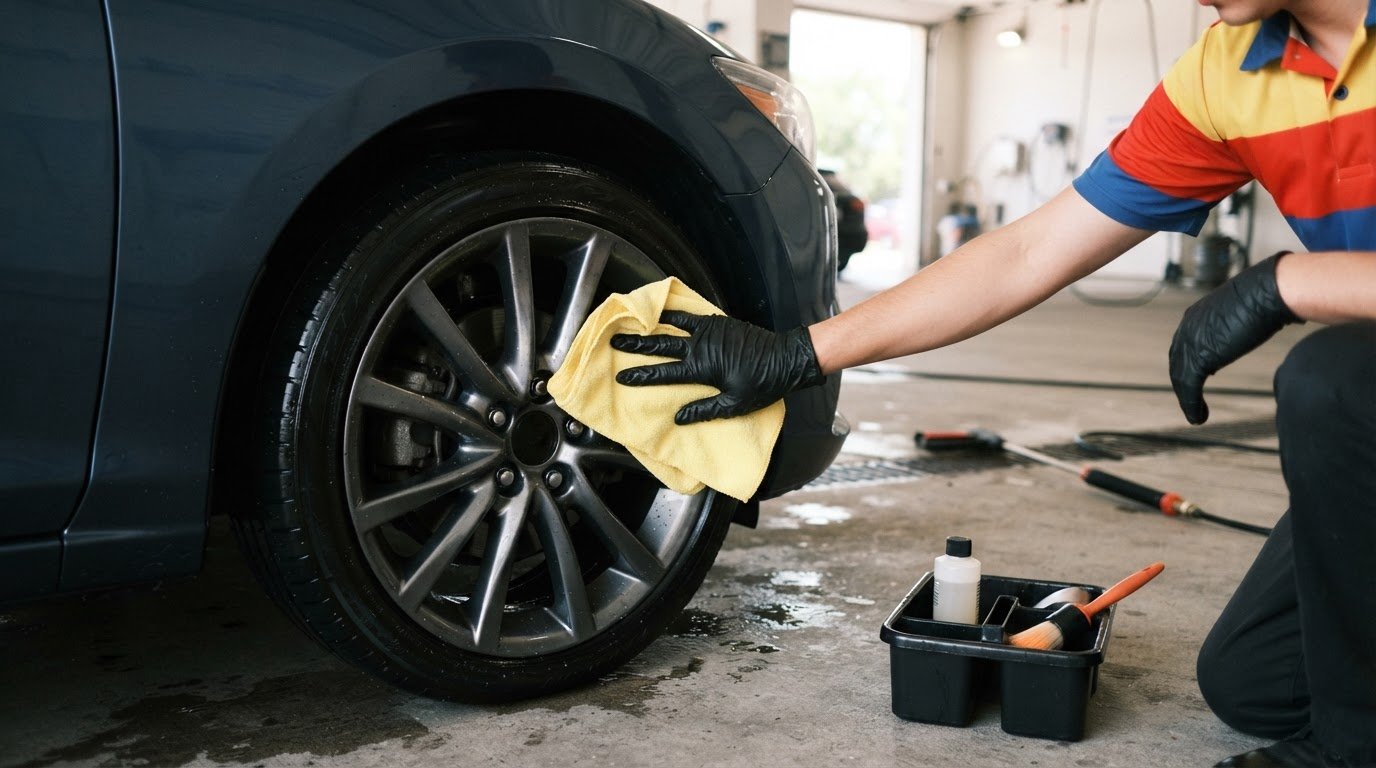
A pressure washer isn’t automatically too harsh for your rims. You can use one with a gentle setting and keep the nozzle at a safe distance. To learn how to clean a car’s wheels and tires without water spots, use a suitable wheel cleaner, rinse thoroughly, and dry the wheels with a soft, clean towel. Cleaning every 1-2 weeks helps keep brake dust and road grime from building up.
It makes sense to worry about damaging a wheel’s finish or leaving spots behind. The right cleaner matters: choose a non-acidic, pH-balanced product, and use polish made for the wheel material when needed. Work on one wheel at a time, follow the cleaner’s directions, and don’t let it dry on the surface.
This guide walks through the supplies and steps, from choosing a cleaner and scrubbing safely to rinsing and drying. You’ll also learn when tire dressing is appropriate and why it belongs on the tire sidewall, not the tread. A careful routine keeps the job straightforward and leaves your wheels cleaner without unnecessary risk.
Key Takeaways
- Choose a cleaner made for wheels and tires, and follow its directions, including how long it can stay on the surface.
- Avoid household products such as bleach or toilet cleaner; the wrong formula can discolour tires or affect wheel finishes.
- Use a soft-bristle brush to loosen grime, and work on one wheel at a time so the cleaner doesn’t dry before rinsing.
- Match polish to the wheel material, especially for chrome or aluminium finishes.
- Apply tire dressing only after the tire is clean and dry, and keep it off the tread.
How Often Should I Clean My Car Wheels?
Clean your wheels every 1-2 weeks to keep brake dust and road grime from building up. Choose a cleaner made for wheels and tires, then match it to your wheel’s finish before applying it.
Acidic cleaners and unsuitable household products can damage some wheel finishes, discolour tires, or leave stains. A gentle, pH-balanced wheel cleaner is a safer choice for routine care.
- Set a regular cleaning routine. A 1-2 week interval is a practical starting point for keeping grime manageable. Inspect your wheels during each wash: heavy brake dust or visible road film may call for cleaning sooner. After driving on dirty roads, check for fresh buildup rather than waiting for the next scheduled wash. Regular attention helps you spot residue before it becomes harder to remove.
- Choose a product labelled for wheels and tires. These cleaners are designed for the surfaces they’re meant to clean, unlike general household products. Check the container for the intended materials and directions before use. A product suitable for one wheel finish may not suit another, so don’t assume a cleaner safe for one vehicle works on every set of wheels.
- Prefer a non-acidic, pH-balanced formula for routine cleaning. Acidic products can be too harsh for some finishes, while household cleaners may contain ingredients that discolour tires or stain wheels. Don’t substitute toilet cleaner or straight bleach for wheel cleaner. Whitewall tires have specific cleaning products; use one intended for that purpose instead of applying bleach directly.
- Match polish to the wheel material. Aluminium and chrome-plated wheels need polish made for their material, while chrome should be cleaned before polishing to help reduce scratching. Painted or clear-coated steel wheels are compatible with standard auto polish. Read the product label and identify the finish first. For example, don’t use chrome polish on an aluminium wheel simply because both surfaces look shiny.
- Check compatibility before using a stronger degreaser. Purple Power may be too abrasive for some wheel finishes, so confirm that its label allows use on your wheel material. If the product doesn’t identify your finish, choose a wheel cleaner that does. Test any suitable cleaner on a small, inconspicuous area first, then follow its directions across the wheel.
Comparing household cleaners and tire-specific products
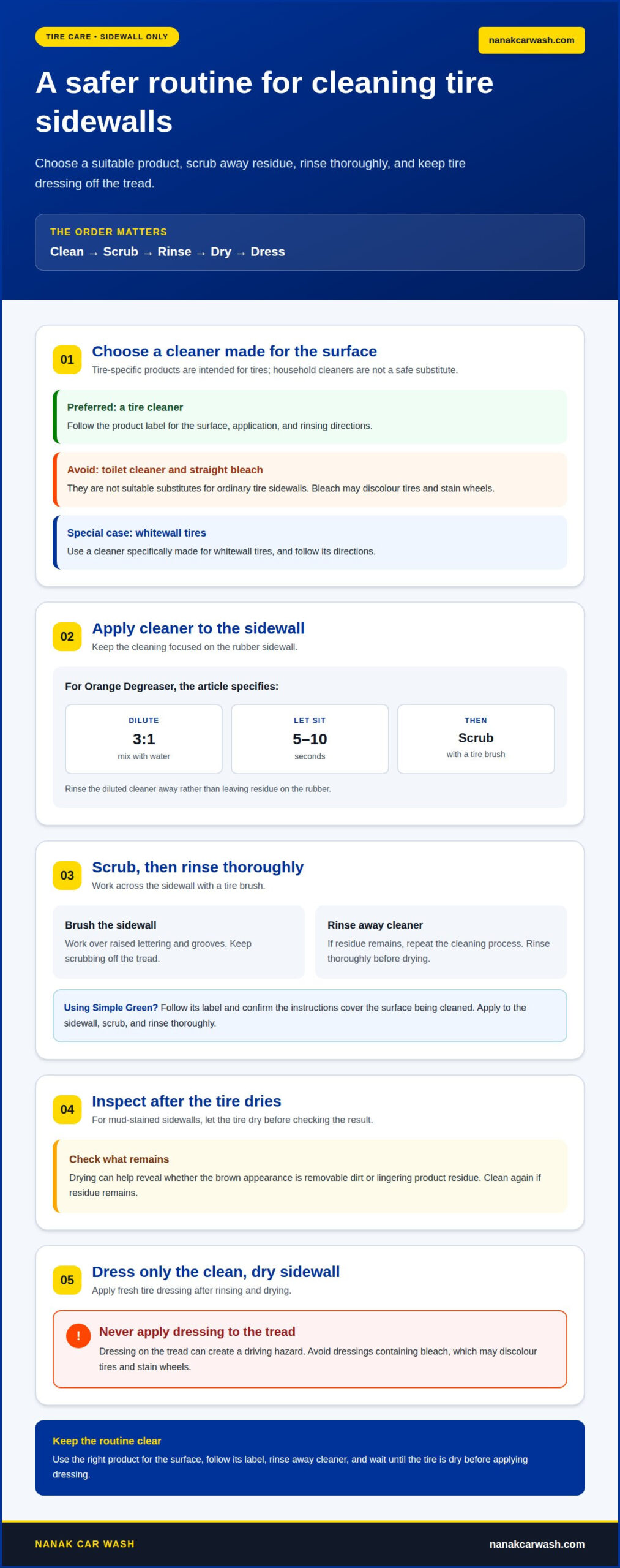
- To clean tires and remove old dressing, spray a tire cleaning product onto the sidewall, scrub with a tire brush, rinse, and let the tire dry. Repeat the cleaning process if residue remains. Apply fresh dressing only after the surface is clean and dry, so leftover grime doesn’t get trapped underneath.
- Choose a cleaner made for tires and wheels instead of toilet cleaner. Tire-specific products are designed for these surfaces, while toilet cleaners aren’t intended for tires. Avoid straight bleach on ordinary tire sidewalls. Cleaners designed specifically for whitewall tires are a separate option; follow their product directions.
- Use Orange Degreaser only as a diluted tire-cleaning option. Mix it with water at a 3:1 ratio before applying it to the tire. Let the diluted product sit for 5 to 10 seconds, then scrub with a tire brush. Rinse away the cleaner instead of leaving residue on the rubber.
- For mud-stained sidewalls, apply the cleaner, scrub, rinse, and inspect the tire after it dries. This sequence helps reveal whether the brown appearance came from removable dirt or lingering product residue. Use a tire brush to work across the raised lettering and grooves, but keep the scrubbing focused on the sidewall.
- If you use Simple Green, follow the directions on its label and confirm the instructions cover the surface you’re cleaning. Don’t assume a household or general-purpose cleaner suits every tire. Apply it to the sidewall, scrub with a tire brush, and rinse thoroughly before deciding whether another cleaning pass is needed.
- Apply tire dressing only after rinsing and drying the tire. Spread it over the sidewall as directed, and keep it off the tread. Dressing on the tread can create a driving hazard. Avoid dressings containing bleach, which may discolour tires and stain wheels.
- Keep the tools and products separate from household cleaning supplies. Use a tire brush for the rubber, and follow each cleaner’s label for dilution, application, and rinsing. After the final rinse, allow the tire to dry before applying dressing. That order helps prevent dressing from mixing with mud or cleaner.
Drying wheels to prevent water spots
In Canada, keep soapy water, brake dust, and oily residue from flowing into storm drains. Wash where runoff can soak into a suitable surface, and follow local municipal guidance for car washing.
The basic sequence is simple: rinse, clean, rinse again, then dry each wheel with a soft, clean microfiber towel. Dry the tire before applying dressing.
- Finish cleaning one wheel before moving to the next. Rinse away all cleaner and loosened grime, including residue around spokes, lug nuts, and the rim edge. A thorough rinse matters because cleaner left behind can dry onto the finish. Check the wheel from more than one angle to spot suds tucked into narrow areas.
- Use a gentle stream of clean water for the final rinse. Direct water across the whole wheel, rather than rinsing only the face. Pay attention to spoke openings and the area around the valve stem, where foam can linger. Continue until runoff is clear and no cleaner remains visible on the wheel.
- Start drying promptly after rinsing. Water left on the surface can dry and leave spots, especially when droplets collect in creases. Use a soft, clean microfiber towel to help prevent scratches. Keep a separate clean section of the towel available as the first area becomes damp or picks up residue.
- Wipe the wheel face in controlled passes. Move from the top spokes toward the lower edge, then dry around the lug nuts and rim lip. Press gently instead of scrubbing. For tight gaps, fold the microfiber towel to make a clean edge that can reach between spokes without dragging grit across the finish.
- Dry the tire separately with a clean towel. Wipe the sidewall, including raised letters and grooves where water can remain. Let the tire dry fully before applying dressing. Applying dressing to a wet or dirty surface can leave an uneven finish, so don’t rush this step after rinsing.
- Inspect each wheel before packing away your supplies. Look for droplets on the spokes, around the lug nuts, and along the outer rim. Use a dry section of microfiber to remove any remaining moisture. If a water spot has already formed, re-wet that area and dry it instead of rubbing a dry, gritty surface.
- Keep runoff in mind during the final rinse and towel cleanup. Don’t direct dirty water toward a storm drain; choose a washing area that limits runoff into drains. Once the wheels and tires are dry, wash or set aside used towels so collected brake dust doesn’t transfer to clean paint later.
Cleaning wheels after washing the vehicle
Choose mild, above-freezing conditions and a shaded work area; avoid hot wheels and direct sun. No exact temperature is needed: the goal is to keep cleaner from drying too quickly.
-
Wash the Vehicle Before Cleaning Wheels
Wash the vehicle’s body first, then move to the wheels. This order keeps brake dust and road grime from splashing onto clean paint. Before starting, check that the bodywork is rinsed and that your wheel-cleaning tools are separate. Don’t bring a brush used on dirty wheels back to the freshly washed body.
-
Choose Suitable Washing Conditions
Work in shade on a mild day, with the wheels cool to the touch. Direct sunlight and hot surfaces can make wheel cleaner dry before rinsing, while freezing conditions can make washing difficult. If the weather changes or the surface heats up, pause and resume when you can clean and rinse without products drying on the wheel.
- Prepare one wheel at a time. Rinse it thoroughly before applying cleaner, removing loose grit that could drag across the finish during scrubbing. Read the product directions for application and maximum dwell time. Keep track of that time, and don’t let the cleaner dry while you work on another wheel.
- Apply wheel cleaner from side to side, then scrub with a soft-bristle brush. Work around the spokes, rim edge, and lug nuts without pressing hard. Use a tire brush on the tire, not the wheel face. Separate tools help prevent grit from the rubber or wheel from scratching another surface.
- Rinse the wheel fully before moving on. A gentle pressure-washer setting can help remove loosened dirt; keep the nozzle at a safe distance from the rim. Avoid concentrating the spray on one spot. Check behind spokes and around the valve stem for leftover suds, then repeat the process on the next wheel.
- Finish by drying the wheel with a soft, clean microfiber towel. Dry the tire separately, and inspect creases, spoke openings, and the area around lug nuts for trapped water. If you see cleaner or foam remaining, rinse it away before drying. This final check helps limit residue and water spots.
What supplies are needed to clean car wheels and tires?
- Set out clean water and a bucket before starting. Use the bucket to hold rinse water or dilute a product when its label directs. Keep it close so you can move between tasks without searching for supplies. If the water becomes visibly dirty, replace it before using it to rinse another wheel. That helps keep loosened grime from returning to a clean surface.
- Choose a wheel cleaner labelled for your wheel finish. A product made for wheels and tires is a better choice than an unrelated household cleaner. Check the label for compatible materials and instructions for application and rinsing. If you’re learning how to clean a car’s wheels and tires, make the product label your guide, not the appearance of the wheel alone.
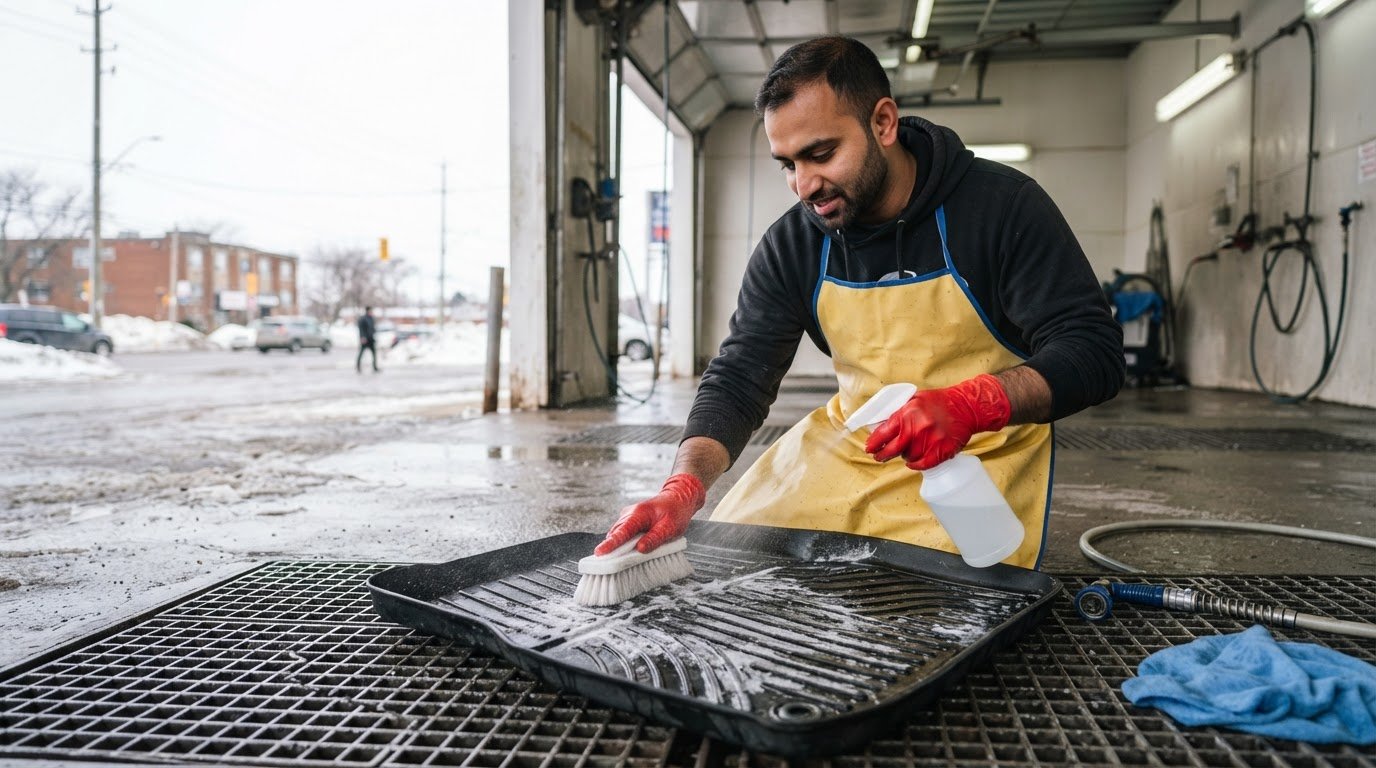
- Use a dedicated tire brush for the rubber sidewalls. Its bristles can reach raised lettering and textured areas where dirt collects. Keep it separate from the brush used on the rim. For the wheel face, choose a soft-bristle brush suited to reaching around spokes without dragging grime from the tire across the finish.
- Keep a clean cloth ready for wiping and drying. A soft microfiber towel is suitable for wheel surfaces; a 100% cotton cloth is another option for wiping tires clean. Turn to a fresh section as the cloth picks up residue. A cloth carrying grit can scratch a surface, so set it aside when it becomes dirty.
- Separate rim protectant from tire dressing. Rim protectant is for the wheel, while tire dressing belongs on the tire sidewall. Follow each product’s directions, and keep dressing off the tread. Apply it only after the tire is clean and dry. Keeping these products distinct makes each step in how to clean a car’s wheels and tires easier to manage.
- Arrange supplies by task before you begin. Put wheel cleaner, the rim brush, and a wheel cloth together; keep the tire brush and dressing separate. This setup reduces mix-ups during cleaning. For example, don’t use a cloth that has wiped brake dust to apply protectant or polish to a clean surface.
- Read each label before using cleaner, polish, or protectant. Check the intended material and whether the product requires dilution or a particular application method. Keep products in their original containers to avoid confusing wheel cleaner with chrome polish or tire dressing. A clear setup helps you follow each product’s directions and clean without unnecessary tool swaps.
Nanak Car Wash
Nanak Car Wash is a practical next step when you’d rather leave routine vehicle cleaning to a professional. After learning how to care for wheels and tires at home, choose an option that fits the level of cleaning you need. An Express Car Wash or Full-Service Car Wash suits a regular vehicle wash, while Car Detailing Packages offer a more comprehensive cleaning option. The Unlimited Wash Club is available for customers who wash frequently.
These services can help keep your vehicle looking clean without building a wheel-care routine around every wash. For targeted wheel and tire upkeep, use the material-specific cleaning steps in this guide as your reference. For a broader vehicle-cleaning option, contact Nanak Car Wash to discuss its available services.
Make Wheel Care Part of Your Routine
Clean wheels can change how the whole vehicle looks. Make wheel care part of your regular vehicle-maintenance routine, and adjust your approach when road grime or seasonal conditions leave more buildup than usual. Knowing how to clean a car’s wheels and tires gives you a practical way to care for your vehicle between professional cleanings.
If you’d rather have help with the vehicle’s overall appearance, choose the level of cleaning that suits your needs. Nanak Car Wash offers Express Car Wash and Full-Service Car Wash options, along with Car Detailing Packages for more comprehensive cleaning. Each gives you a convenient next step when you’re ready to leave the cleaning to a professional.
Contact Nanak Car Wash today to discuss a suitable cleaning option. A clean vehicle feels good to drive, and your next wash is a simple place to start.
Frequently Asked Questions
Can I Pressure Wash My Rims?
Yes, use a gentle pressure-washer setting and keep the nozzle at a safe distance. Move the spray across the rim instead of concentrating it on one spot. Rinse away cleaner and grime from the spokes and outer edge, then inspect the finish. If the wheel has visible chips or damage, avoid directing a concentrated stream at those areas and use a controlled rinse instead.
How Do I Keep My Rims Looking Shiny and New?
Keep the finish clean and use polish made for its material. For chrome, clean the surface before polishing; for aluminium, choose an aluminium-specific polish. A suitable protective layer, such as a ceramic coating, can reduce future maintenance. Check your rims during regular washes for new residue or damage, and remove hubcaps to wash them separately with soap and water.
What About Really Neglected Wheels?
Start with one wheel and assess its finish before choosing a cleaner or polish. Let a wheel cleaner work only for the time stated on its label, then rinse and inspect the result. If a chrome wheel has rust, No. 0000 steel wool is recommended for removal. Work carefully, since an unsuitable abrasive can scratch a finish. Hubcaps should be removed and cleaned separately.
How do you clean alloy, chrome, and painted wheels safely?
Identify the finish first, then match the product to it. Use polish made for aluminium on alloy wheels, and chrome-specific polish on chrome after cleaning. Painted or clear-coated steel wheels are compatible with standard auto polish. Don’t use one polish across every wheel simply because the finishes look similar. A small, inconspicuous test area can help reveal a product’s effect before broader application.
What wheel cleaner is safe for different wheel finishes?
Choose a non-acidic, pH-balanced wheel cleaner for routine care, and read its label for compatible surfaces. A product made for wheels and tires is a better choice than a household cleaner. For specialized finishes, follow the cleaner’s stated material guidance. Avoid assuming that a cleaner suitable for painted wheels is also suitable for chrome or aluminium.
How do you remove brake dust and stubborn grime from wheels?
Use a wheel cleaner suitable for the wheel finish, then work the product around spokes, lug nuts, and the rim edge with a soft-bristle brush. Rinse thoroughly and inspect the areas where grime collects. Clean one wheel at a time so the product doesn’t dry before rinsing. For stubborn residue, repeat the label-directed cleaning process rather than reaching for a harsher household product.
How often should car wheels and tires be cleaned?
Clean them every 1-2 weeks as a practical routine, and inspect them sooner after driving on dirty roads. Brake dust and road film can build up between washes, so let visible grime guide an earlier clean. Regular attention also gives you a chance to notice changes in the finish or residue around spokes before applying polish or protectant.
How do you apply tire dressing without sling or damage?
Apply tire dressing only to a clean, dry sidewall, and follow the product label. Keep it off the tread, where dressing can be dangerous while driving. Avoid dressings containing bleach because they may discolour tires and stain wheels. Before driving, make sure the tire surface is dry and free of visible excess product, following any drying directions on the container.


 6600 Finch Ave W, Etobicoke, ON M9V 3Z6

 647-703-8515
 MON – SUN 8 AM to 7 PM