
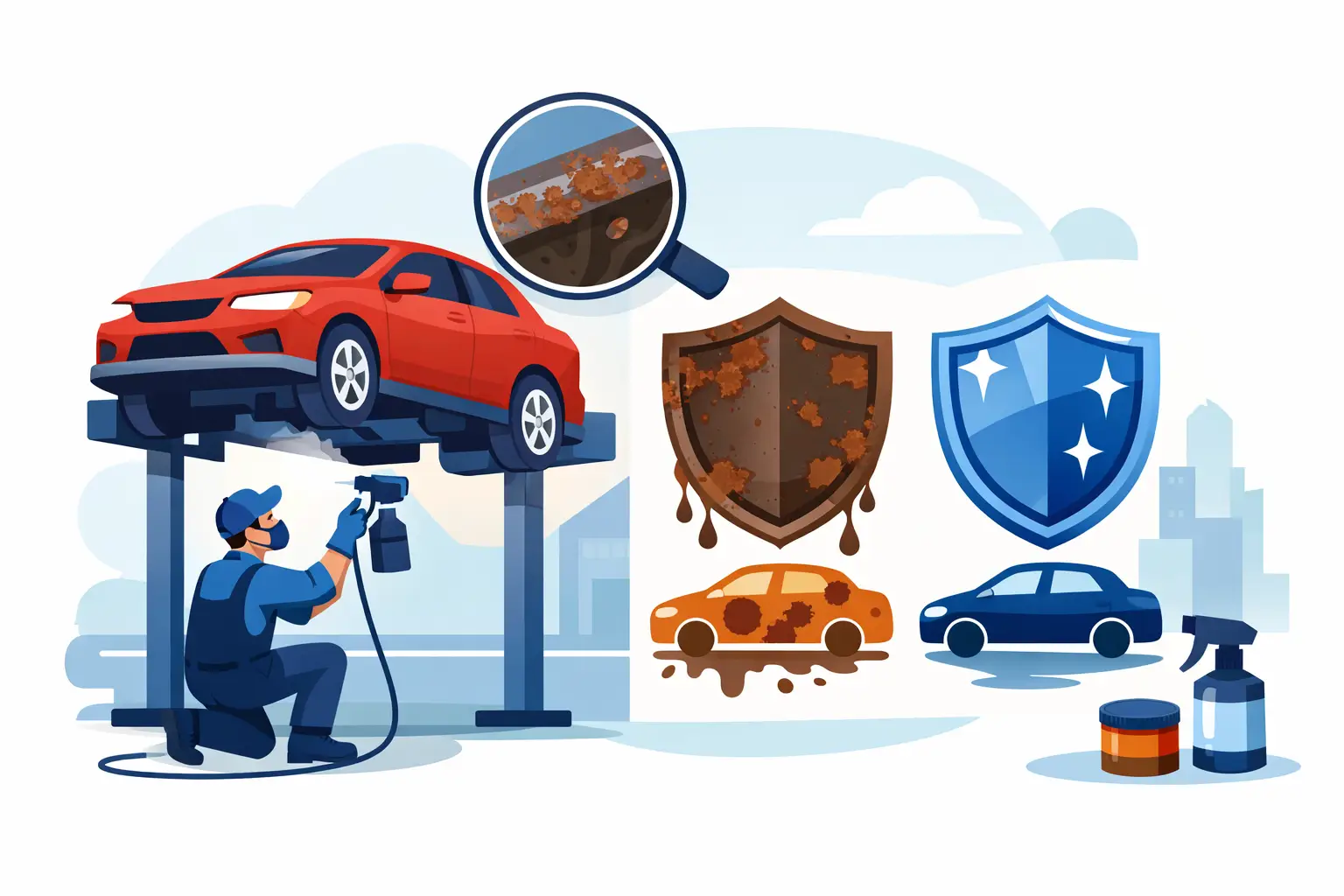
Road salt does not wait. One winter of slush, wet roads, and packed snow under your car can start the kind of damage you do not notice until it is expensive. That is why a car rust proofing service makes sense for everyday drivers who want to keep their vehicle in better shape for longer, not just make it look clean for a week.
If you drive to work, run errands, carry kids, or put serious miles on your vehicle for rideshare or delivery work, rust is not a small issue. It can eat away at the underbody, wheel wells, door edges, and other hidden spots while the paint still looks fine. By the time you see bubbling or flaking on the outside, the problem has usually been building underneath for a while.
What a car rust proofing service actually does
A good car rust proofing service is built to protect the metal areas of your vehicle that deal with moisture, salt, and road grime every day. The goal is simple – create a protective barrier so water and corrosive material do not sit directly on metal surfaces long enough to cause oxidation.
Most drivers think rust starts on old cars only. That is not always true. Newer vehicles have better factory protection than many older models, but factory coatings still wear down. Chips, scratches, clogged drain points, and normal underbody exposure all give rust a chance to start.
Professional rust proofing is different from a basic wash or a quick spray. It targets vulnerable areas, including the undercarriage and hidden cavities where moisture tends to collect. That matters because rust usually starts where you do not see it first.
Why rust protection matters for daily drivers
For most people, a vehicle is not a weekend toy. It is how you get to work, school, appointments, and grocery runs. If you plan to keep your car for years, rust proofing is one of the more practical maintenance steps you can take.
Rust lowers resale value, weakens body panels, and can lead to repair bills that are hard to justify on an otherwise solid vehicle. A small rust spot might look cosmetic at first, but corrosion can spread into seams, brake line areas, suspension mounting points, and structural sections over time.
There is also the everyday value side of it. People spend money on oil changes, tires, and brakes because those things protect the life of the vehicle. Rust proofing belongs in the same conversation, especially in places where winter roads are heavily treated and wet conditions are common.
When a car rust proofing service is worth it
The short answer is that it depends on how and where you drive. If your vehicle sees snow, salt, mud, rain, gravel, or a lot of highway mileage, rust proofing is easier to justify. If you keep the car parked indoors most of the time and drive very little, the urgency may be lower, but it still may make sense as preventive care.
It is usually a smart move for newer vehicles you want to keep long term. Protecting clean metal is easier than trying to stop corrosion after it spreads. Used vehicles can also benefit, but the service works best when surface conditions are checked first and any existing rust is handled honestly.
That honesty matters. Rust proofing is protection, not magic. If a vehicle already has advanced corrosion, no coating will reverse that damage. A trustworthy service will tell you what can be protected, what should be treated first, and what expectations are realistic.
The best time to get rust proofing done
Many drivers wait until deep winter, but earlier is usually better. Fall is a strong time to schedule service because it gives your vehicle a protective layer before salt and slush show up in full force. That said, rust proofing can still help at other times of year if the vehicle is properly cleaned and prepared.
Preparation is a big part of the result. Dirt, old grime, and trapped moisture can get in the way of proper adhesion and coverage. That is why combining underbody cleaning with rust protection often makes practical sense. Clean first, protect second.
If you wash your car regularly, you are already doing part of the job. Routine washing helps remove salt and buildup, while rust proofing adds longer-term defense in places a basic wash cannot fully protect.
Areas where rust usually starts
Rust is sneaky because it starts in the spots most drivers rarely inspect. Wheel wells are common trouble zones because they take constant spray from water, slush, and road grit. The undercarriage is another major area because it handles direct exposure all season long.
Door bottoms, rocker panels, trunk seams, hood edges, and inside body cavities can also hold moisture. Once drain paths get blocked or protective coatings wear thin, corrosion has an easier path. That is why a complete car rust proofing service should focus on more than what is visible from standing height.
If you already see paint bubbles, rough edges, or orange-brown staining around seams, that is a sign to get the vehicle inspected sooner rather than later. Small signs are easier to manage than widespread damage.
What to expect from a professional service
A professional rust proofing appointment should feel straightforward. The vehicle is inspected, cleaned if needed, and treated in the areas that need protection most. The exact method can vary by product and package, but the goal stays the same – get reliable coverage where corrosion is most likely to begin.
For busy drivers, convenience matters too. Nobody wants a process that feels confusing or overpriced. The right service should be clear about what is included, how long it takes, and whether follow-up treatment is recommended. Simple pricing and easy scheduling make a big difference when car care has to fit into a real workweek.
That is also why many customers prefer getting protection from a place that already handles regular wash and care services. It is easier to stay on top of your vehicle when cleaning, detailing, and protection are all available in one stop.
Car rust proofing service vs. regular washing
A lot of customers ask whether frequent washing is enough on its own. Washing absolutely helps, especially in winter, because it removes salt, grime, and buildup before they sit too long on the vehicle. But washing and rust proofing do different jobs.
Washing removes contaminants from surfaces. Rust proofing adds a protective barrier to vulnerable metal areas. One is active cleaning. The other is preventive protection. You get the best results when both are part of the plan.
That matters for high-use vehicles in particular. Commuters, family SUVs, work trucks, rideshare cars, and fleet units all benefit from staying clean and protected at the same time. A shiny exterior is nice, but preserving the body and undercarriage is where long-term value shows up.
Is it worth paying for every year?
For many drivers, yes. Annual treatment often makes sense because road conditions, weather exposure, and normal wear keep working against your vehicle. Protective coatings do not last forever, and repeated seasonal exposure can wear them down.
Still, not every vehicle needs the exact same schedule. A newer daily driver that sees winter roads regularly may benefit from yearly service. A lightly used vehicle may have more flexibility. The smartest choice is based on usage, storage, and condition, not guesswork.
If cost is part of the decision, think of rust proofing the same way you think about preventive maintenance in general. Spending a manageable amount now can help you avoid larger body repairs later. That is a practical value decision, not an extra luxury.
Choosing the right place for rust proofing
Look for a provider that keeps the process simple, explains the service clearly, and understands real-world vehicle use. You want honest recommendations, fair pricing, and a team that treats protection as part of everyday car care, not a hard sell with vague promises.
That is especially important if you are already maintaining your vehicle on a budget. Good service should feel accessible. It should help you protect the car you rely on without pushing unnecessary add-ons.
At Nanak Car Wash, that practical approach matters because drivers want fast service, visible results, and pricing that makes sense. Rust protection works best when it fits into regular vehicle care, right alongside washing and detailing, instead of becoming a big once-in-a-while project.
A clean car feels better to drive, but a protected car is easier to keep on the road for the long haul. If your vehicle deals with rough weather, wet roads, or winter salt, getting ahead of rust now is usually a lot cheaper than catching up later.

 6600 Finch Ave W, Etobicoke, ON M9V 3Z6
 647-703-8515
 MON – SUN 8 AM to 7 PM