
In the GTA, tinting a standard sedan typically costs between $400 and $600 for good-quality film, but the full market runs from about $250 to over $800 depending on the vehicle and film type. If you drive a sedan and want a clean, long-lasting result, that's the range most Ontario drivers should budget around before tax.
That's usually the moment people start doing mental math in the parking lot. You're sitting in traffic on the DVP or crawling along the Gardiner, the sun is cooking the cabin, the glare is bouncing off every mirror, and the car beside you can see straight into your back seat at the next light. Tint sounds simple until you start getting quotes that are all over the place.
Some shops throw out a low starting price that only applies to basic film on a small car. Others quote a premium ceramic package that sounds great until you realise it doesn't include the windshield strip, old tint removal, or a clear explanation of warranty coverage. That's where the true auto tinting cost conversation starts. Not with the cheapest sticker price, but with what you get, what stays looking good, and what can cost you more later.
Table of Contents
- Your Guide to Auto Tinting Costs in the GTA
- Breaking Down the Cost of Window Tinting
- Professional Install vs DIY Kits The Real Cost
- How to Get an Accurate Tinting Quote in the GTA
- Ontario Tint Laws What You Must Know to Avoid Fines
- Beyond the Price Tag Lifetime Value and Warranty
- Conclusion Smart Ways to Save on Your Auto Tinting
Your Guide to Auto Tinting Costs in the GTA
A driver in Toronto usually starts with one of two complaints. The cabin feels like an oven by afternoon, or the car feels too exposed in city traffic. Tint fixes both, but people still get tripped up because “how much does tint cost?” doesn't have one clean answer.
The GTA market is wide. A small coupe with an entry-level film can sit at the lower end, while a larger SUV with premium ceramic film lands much higher. That's normal. More glass means more material and more labour, and better film technology costs more because the product itself costs more.
What matters is whether the quote matches the job. A fair quote should reflect your car's size, the exact film type, the windows being covered, and whether the shop is doing clean prep work instead of rushing through an install bay.
What drivers usually care about most
For most customers, the decision comes down to four things:
- Heat and glare: If your commute involves long sun exposure, film quality matters more than people think.
- Privacy: Rear-seat privacy is often the first priority for families and rideshare drivers.
- Looks: A balanced tint can sharpen the whole car. A bad shade choice can make it look cheap.
- Longevity: No one wants bubbling edges or a purple rear window six months later.
Practical rule: If one quote is dramatically lower than the rest, ask what film brand it uses and what the warranty excludes. That's usually where the story changes.
A good tint job should feel boring after it's done. No drama, no peeling corners, no haze that makes night driving miserable. That's the standard you should expect.
Breaking Down the Cost of Window Tinting
Price isn't random in this trade. It usually moves for two reasons. Vehicle size and film technology.
What GTA pricing actually looks like
In Toronto, professional tinting in 2026 is reported at $25 to $150 per window, while a standard sedan with mid-range film is around $400, and full-car pricing can range from $250 for a coupe or sedan with Prime HP to $580 for Prime XR+ ceramic. For larger vehicles, a Truck/SUV ranges from $350 for Prime HP to $599 for Prime XR+, and high-end 3M ceramic tint for a full car is commonly $500 to $600, with HST extra. Front windshield tint starts at $350, and a sun strip runs $65 to $120 depending on film grade, according to Toronto tint pricing from Elite Tint.
Across Ontario cities including Mississauga and Hamilton, the broader market is even wider. A standard sedan is commonly quoted at $200 to $800, with Mississauga examples breaking down to Dyed tint at $100 to $250, Carbon tint at $200 to $400, and Ceramic tint at $400 to $800+. Larger SUVs and trucks often run $300 to $800, and premium brand jobs can climb further when coverage includes more glass and features like a sunroof, based on Ontario pricing examples collected by Tint World Burlington.
That spread is exactly why cheap quotes need context. “Sedan tint for one low price” tells you almost nothing unless you know the film category and what windows are included.
Window Tint Film Comparison Cost vs Performance
| Film Type | Average Cost (Sedan) | Pros | Cons |
|---|---|---|---|
| Dyed | $100 to $250 | Lowest entry price, darker look, fine for appearance-focused jobs | Limited heat rejection, tends to be the least durable |
| Carbon | $200 to $400 | Better durability, stronger all-round value, good middle ground | Costs more than dyed, still not the top performer |
| Ceramic | $400 to $800+ | Best premium option for comfort, clarity, and long-term performance | Highest upfront cost |
What works and what doesn't
Dyed film works when budget is tight and the goal is mostly appearance or modest privacy. It doesn't work well for drivers who expect strong heat management over a long ownership period.
Carbon film is where a lot of practical buyers land. It gives you a better ownership experience without immediately jumping to the highest price bracket.
Ceramic film works best for people who keep their vehicles, spend serious time on the road, or hate that trapped summer heat feeling. It's also the category where shoppers most often say, after the install, “I should've done this sooner.”
If you're comparing two ceramic quotes, don't assume they're equal. Ceramic is a category, not a guarantee of identical quality.
One more reality from the shop floor. Curved rear glass, tighter seals, frameless windows, and larger side windows all add labour. That doesn't always show up on a flashy Instagram post, but it shows up on the invoice because it changes install time.
Professional Install vs DIY Kits The Real Cost
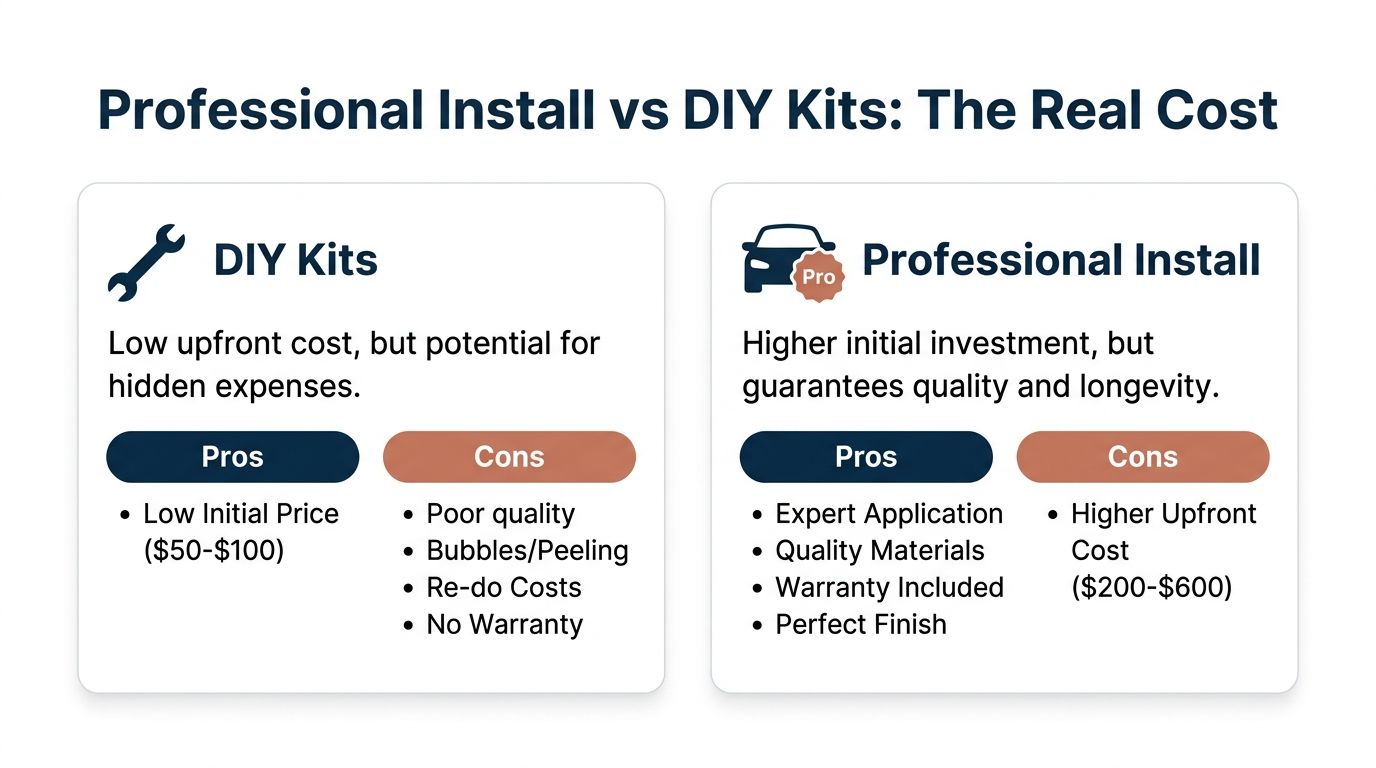
The DIY kit looks cheap until you try to install it on a rear window with curves, defroster lines, and zero room for mistakes.
Why cheap kits get expensive fast
Most DIY problems start before the film even touches the glass. Dust in the air, dirty seals, poor cutting, and uneven shrinking all show up once sunlight hits the window. Then the complaints start. Bubbles. Fingers. Peeling corners. A back window that looks passable from ten feet away and awful from the driver's seat.
The hidden cost is usually one of these:
- Wasted time: A first attempt can eat up an entire day.
- Thrown-away material: One bad cut can ruin a sheet.
- Redo labour: If it fails, you're buying film again.
- Removal headaches: Old adhesive and damaged film make the next install harder.
A bad DIY job also creates another problem people don't think about. Some professional shops don't enjoy cleaning up bargain-film adhesive because it turns a normal install into a messier correction job.
What you're paying for with a pro install
A professional install isn't just “someone else doing the same thing.” It's a controlled process. Clean glass prep, better film handling, proper shrinking, cleaner edges, and fewer contaminants trapped under the film.
You're also paying for judgment. A good installer knows when a seal needs extra care, when a rear window needs more precise shaping, and when a customer's requested shade is going to be a poor fit for daily driving.
A clean tint job should disappear into the car. You shouldn't notice dust specks, rough edges, or a hazy rear glass every time you check your mirror.
Professionals also give you something a DIY kit can't. Accountability. If the film fails because of a defect or install issue, you've got someone to return to. With a kit, the warranty on paper often doesn't cover the genuine frustration of taking it all back off and starting over.
If your goal is the lowest possible upfront spend, DIY can still tempt you. If your goal is value over time, a proper install usually wins.
How to Get an Accurate Tinting Quote in the GTA
Most bad tint quotes start with a vague question and end with a vague answer. “How much to tint my car?” sounds simple, but it leaves too much room for assumptions.
The details a shop actually needs
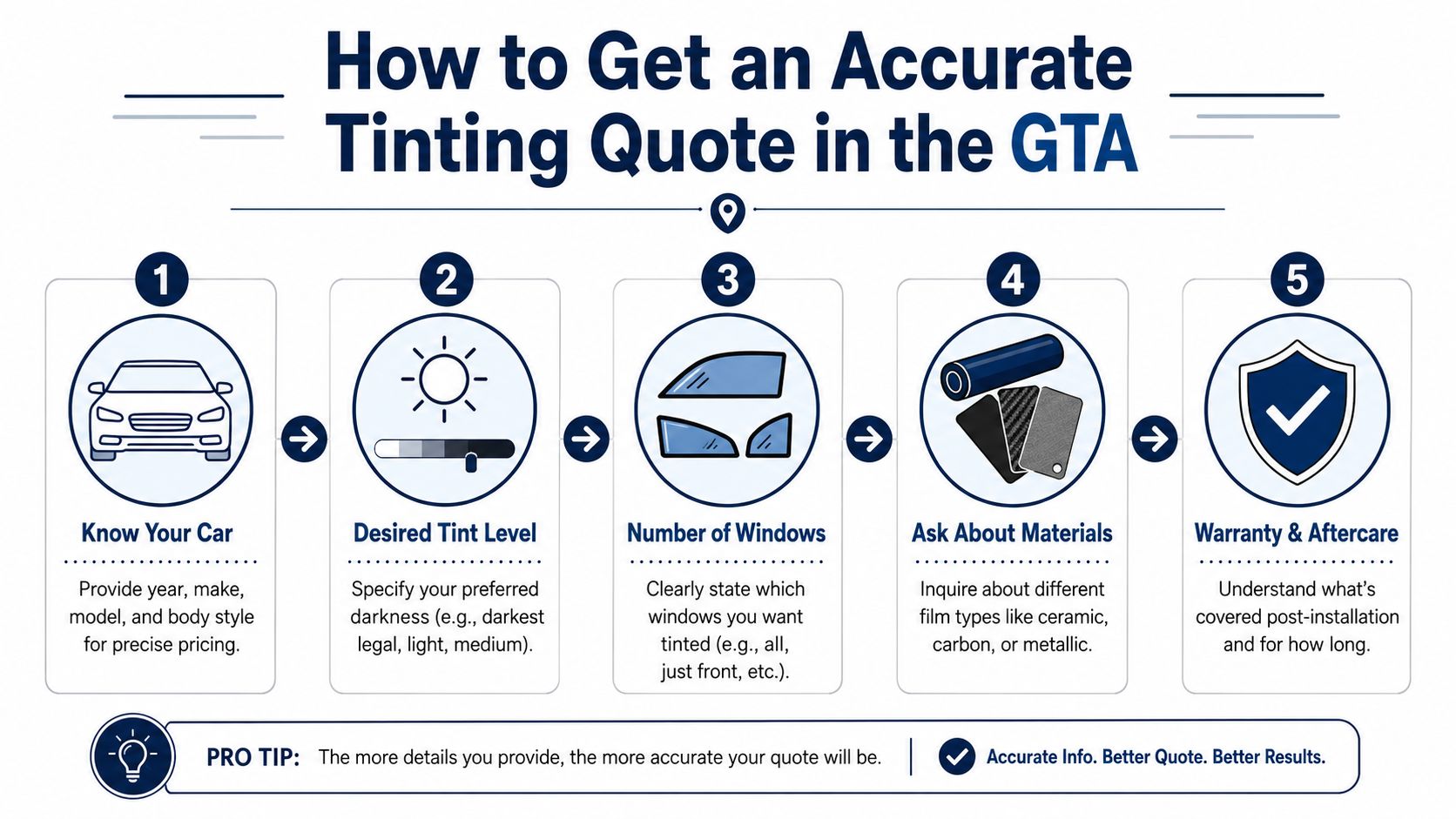
If you want a quote that holds up when you arrive, give the shop the details that affect labour and material use.
- Year, make, and model: A newer Civic, an older BMW, and a Tesla all bring different glass shapes and install difficulty.
- Body style: Sedan, coupe, hatchback, SUV, pickup. This changes film usage.
- Windows requested: Side and rear only, full vehicle, windshield, or sun strip.
- Existing tint: If there's old film on the car, say it early.
- Your priority: Privacy, heat reduction, appearance, or balanced value.
This saves time on both sides. It also cuts down on the classic “that price was only for basic film” misunderstanding.
Questions that prevent surprise charges
When you call or message a shop, ask questions that make the quote comparable.
What film brand are you using?
Brand matters because not all films within the same category perform the same way.Is the film dyed, carbon, or ceramic?
This is the biggest driver of the final price.Which windows are included?
Never assume “full tint” means the same thing at every shop.Is old tint removal included?
If not, the final bill can jump.What does the warranty cover?
You want plain language, not sales language.Do you add HST on top?
Some people compare quotes that aren't structured the same way.
A solid quote should be specific enough that you can compare one shop against another without guessing. If a shop avoids details, that's useful information too.
Ask for the quote in writing. It keeps everyone honest and makes it easier to compare film type, coverage, and warranty terms side by side.
One last tip from practical experience. If you're torn between two film levels, ask to see both on actual vehicles outdoors. Showroom lighting flatters everything.
Ontario Tint Laws What You Must Know to Avoid Fines
The legal side matters because the cheapest illegal tint can become the most expensive tint you buy.
What to confirm before the film goes on
Ontario drivers should confirm the legal limits that apply to their vehicle before choosing shade, especially for the front side windows and windshield area. The back half of the vehicle is where people often assume they have unlimited freedom, but visibility and enforcement can still become issues depending on how the vehicle is set up and how dark the result is.
Shops that know Ontario well usually guide customers away from combinations that attract the wrong kind of attention. That's not the shop being difficult. That's the shop trying to stop you from paying twice.
The trouble with illegal tint isn't just the initial penalty. The total cost of ownership changes when a driver has to deal with a ticket, time off for removal, and then another appointment to redo the car legally.
Where drivers get into trouble
Drivers usually run into problems in a few predictable ways:
- Going too dark on the front doors: This is the area most likely to create issues.
- Treating the windshield like another side window: Windshield tint choices need extra caution.
- Copying a friend's setup: What looks fine on one car may not be appropriate on another.
- Prioritising appearance over night visibility: Darker isn't always better once rain and winter arrive.
A legal-looking tint from outside can still feel too dark from inside on a wet November night. That's why practical shops talk about both compliance and drivability, not just shade.
The smartest tint choice is one you don't have to explain at the roadside and don't regret on a dark, rainy drive home.
If you're spending good money on a professional install, make legality part of the buying decision, not an afterthought. It's one of the clearest examples of how auto tinting cost goes beyond the invoice.
Beyond the Price Tag Lifetime Value and Warranty
Here, buyers either save money or slowly waste it.
Ontario pricing shows the gap clearly. Professional sedan tinting often lands around $250 to $400, while premium ceramic films rise to $350 to $600+. Lower-cost dyed films sit around $150 to $250, and ceramic is positioned as the long-term value play because it offers stronger durability and up to 98% UV block, according to Ontario window tint cost guidance from Westside Pro.
Cheap now vs cheaper over time
A cheap tint can still be the wrong bargain if the car is parked outside, driven daily, or kept for years. The lower upfront spend feels good once. Living with fading film, heat that still pushes through the glass, or a finish that ages poorly is the part people forget to price in.
Ceramic makes the most sense for owners who care about cabin comfort, interior preservation, and keeping the car. Dyed film makes more sense when the goal is basic privacy or a visual upgrade on a tighter budget. Neither choice is automatically wrong. The mistake is buying one while expecting the performance of the other.
There's also a business side to this trade that customers don't always see. Shops need proper coverage when they're handling vehicles, moving them, and working around customer property. If you're curious how that risk is managed behind the scenes, this garage liability insurance guide gives useful context for what reputable operators have to think about.
What a warranty usually means in practice
“Lifetime warranty” sounds simple until you ask what it covers. In practice, reputable warranties usually focus on film or install defects. Think bubbling, peeling, adhesive failure, or abnormal colour change.
What it usually doesn't mean is blanket protection against everything that can happen to the window.
- Normal damage isn't a defect: Scratches from hard objects or careless cleaning usually aren't warranty issues.
- Glass-related issues matter: If there's pre-existing damage or old defroster-line trouble, that can affect what's covered.
- Shops differ on labour terms: Some handle replacements one way, others another. Ask before booking.
A good warranty matters, but clear expectations matter more. The best result is still a quality film, installed properly, cared for properly, with paperwork you can readily understand.
Conclusion Smart Ways to Save on Your Auto Tinting
Saving money on tint doesn't mean hunting for the lowest number on Google Maps. It means spending carefully enough that you don't pay for the same job twice.
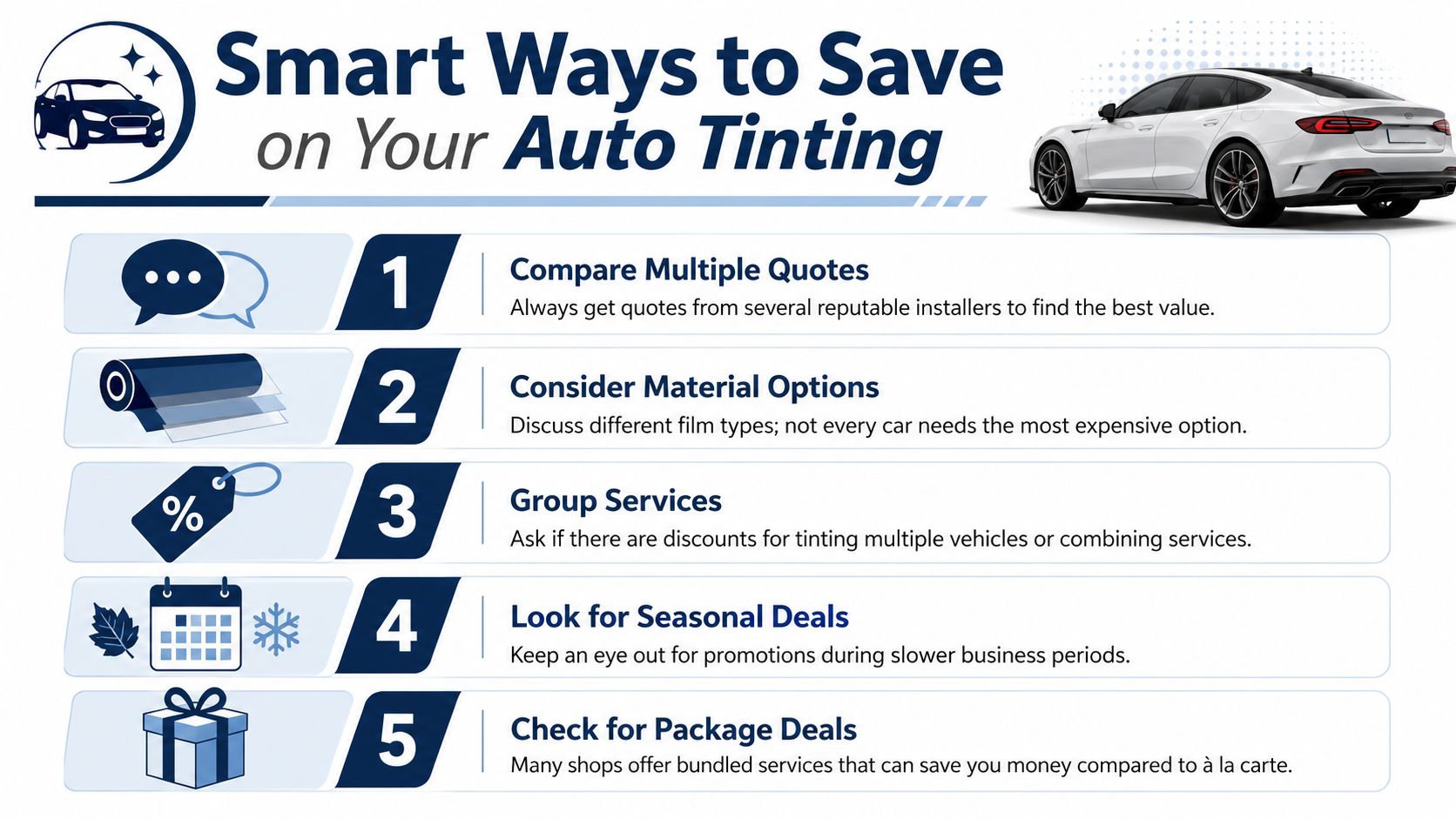
How to spend less without buying twice
The best savings usually come from better decisions, not bargain-bin film.
- Compare like with like: Match quotes by film type, windows included, and warranty terms. A lower quote with weaker film isn't automatically cheaper.
- Be honest about your needs: If you mainly want rear privacy, you may not need the most premium package on every piece of glass.
- Ask about package timing: Some shops are more flexible during slower periods or when booking multiple services together.
- Don't ignore legal fit: The cost of removal and redoing illegal tint wipes out any “deal.”
- Keep the tint in good shape: Use gentle cleaning methods and treat the film like a finish, not bare glass.
A lot of GTA drivers end up happiest with a balanced job rather than the most extreme one. Good visibility, clean appearance, practical privacy, and a film tier that matches how long they plan to keep the car. That's usually the sweet spot.
If you're deciding where to put your money, use this simple filter:
| Priority | Best practical direction |
|---|---|
| Lowest upfront spend | Dyed film on the windows you care about most |
| Best all-round value | Carbon or a solid mid-tier package |
| Long-term comfort and interior protection | Ceramic film from a reputable installer |
The right auto tinting cost is the one that fits your car, your driving habits, and Ontario reality. Not just the price on day one, but the comfort you feel in August, the visibility you still have in winter, and whether the film still looks right down the road.
If you want to keep that freshly tinted look working with the rest of your vehicle care, Nanak Car Wash is a practical local option in the GTA for ongoing exterior washes, interior cleaning, detailing, and rust proofing. A good tint job looks even better when the glass is clean, the interior is maintained, and road film and salt aren't left sitting on the vehicle week after week.


 6600 Finch Ave W, Etobicoke, ON M9V 3Z6
 647-703-8515
 MON – SUN 8 AM to 7 PM