

You know the look. A few days of GTA winter driving, and your car stops being a colour and starts being a texture. Salt haze on the doors. Grey spray baked onto the rear hatch. Slush packed into the wheel wells. The windshield is clean for about ten minutes, then another film creeps in from the 401.
That's why the drive through car wash isn't some lazy shortcut around here. It's part of basic vehicle upkeep. In Southern Ontario, clean and protected usually beat spotless and neglected.
Table of Contents
- Why a Drive-Through Wash Is Your Best Friend in the GTA
- The Drive-Through Car Wash Experience Explained
- The Great Debate Pros and Cons of Automated Washes
- What to Expect at a Nanak Car Wash Location
- Maximizing Protection for Your Vehicle
- A Smart Guide for Ride-Hail Drivers and Fleet Managers
- Your Pre-Wash Checklist and Final Verdict
Why a Drive-Through Wash Is Your Best Friend in the GTA
It is late January, the 401 is throwing up grey spray, and the side of your car is already chalked white again two days after the last clean. In the GTA, that is normal. A proper hand wash still has its place, but for most of the year, a drive-through wash is the realistic way to stay ahead of salt, grime, and the mess that builds up between storms.
That matters because local winter dirt is more than cosmetic. Ontario roads get treated heavily, and that mix of salt, sand, slush, and oily traffic film sticks to the exact areas that are hardest to clean at home. Condo drivers, street parkers, commuters, ride-hail drivers, and small fleets all run into the same problem. The car gets dirty faster than they have time, space, or weather to wash it properly by hand.
The winter reality
In southern Ontario, the trouble spots are predictable:
- Lower body panels: Salt residue cakes onto rocker panels and lower doors.
- Wheel arches: Packed slush holds moisture and grit in tight spaces.
- Undercarriage: The buildup you cannot see is often the buildup that sits longest.
- Rear glass and tailgate: SUVs, hatchbacks, and crossovers get blasted with road spray.
The underbody is the big one.
A lot of GTA drivers focus on what they can see from the curb, but winter damage usually starts lower. If a wash package includes an undercarriage rinse, that is often the feature worth paying for during salt season. It will not replace a full detail or rust-proofing plan, but it does help cut down the grime load your vehicle carries week after week.
A drive through car wash fits GTA life because it turns washing into a repeatable habit. You can stop in after a snowy commute, after a thaw, or after a few days of heavy highway driving and knock the worst of it off before it hardens into that crust every Ontario driver knows.
Why convenience wins here
The best wash routine is the one you will keep. For most daily drivers, that means a wash that is:
- Fast enough to fit into a normal week
- Consistent enough that you know what you are getting
- Flexible enough to match winter salt, spring grit, and summer dust
- Close enough that using it does not become another chore
That is why drive-through washes matter so much in the GTA, especially at busy local spots such as Nanak Car Wash. They give drivers a realistic way to keep up with conditions that are hard on paint, wheels, and underbodies without waiting for the rare warm Saturday when a hand wash is practical. Regular washing is not perfection. It is damage control, and in an Ontario winter, that is often the smart move.
The Drive-Through Car Wash Experience Explained
You pull in after a slushy run on the Gardiner, the rocker panels are grey, the rear hatch is wearing half the 401, and you want the salt off before it bakes on. A drive-through wash is built for that job, but the result depends on knowing what each step is doing and which add-ons are worth paying for.
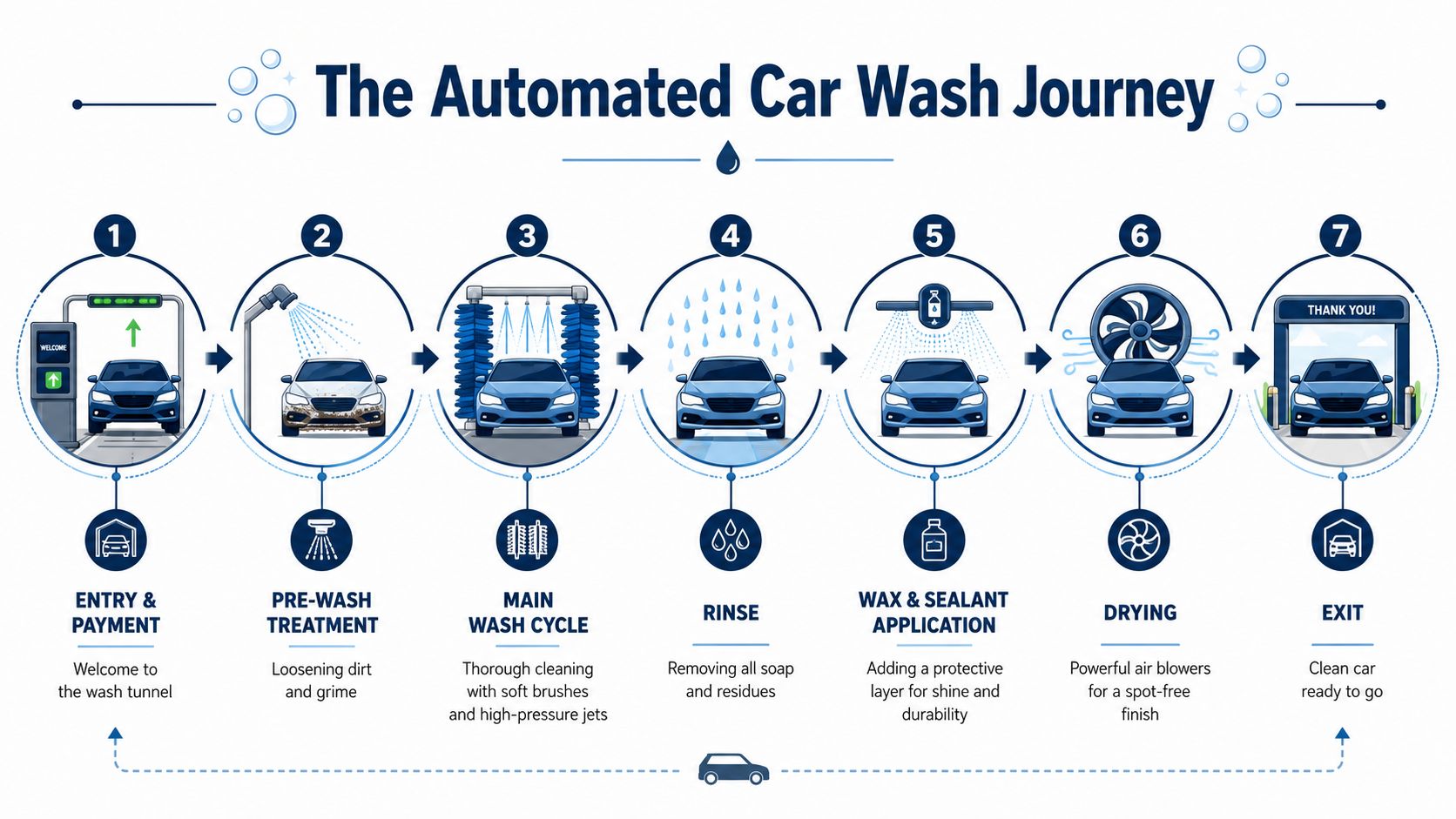
From pay station to conveyor
Most drive-through washes are quick enough to fit between errands or on the way home from work. The exact cycle depends on the equipment and the package, but the process is usually straightforward once you have done it once or twice.
The sequence usually goes like this:
Entry and payment
You pick a basic wash or a package with extras such as underbody rinse, wheel cleaning, wax, or tire shine.Vehicle alignment
The system guides you onto the track or into position. Follow the light, screen, or attendant's instructions, then put the vehicle where the wash wants it. Usually that means neutral for a conveyor wash or parked for an in-bay automatic.Pre-soak
In this stage, the wash starts to earn its money in the GTA. Pre-soak loosens salt film, wet sand, and oily road grime before the main cleaning stage starts.
What the stages actually do
Drivers often focus on the foam because it is the part they can see. The essential work occurs in the order of the wash.
A decent automated wash starts by softening and flushing away the heaviest grime. After that, the system uses either soft-cloth contact cleaning, touchless high-pressure spray, or a combination of both. That order matters. If the first pass does not break down winter buildup, the rest of the cycle is just working around dirt that should have been loosened earlier.
A standard wash usually includes:
- Detergent application
- Contact cleaning or touchless pressure wash
- Rinse
- Drying
Higher-tier packages usually add wheel treatment, sealant, and undercarriage rinse. For Ontario drivers, the underbody option is usually the practical upgrade. Salt packs itself into places you do not see from standing height, especially after highway driving and freeze-thaw weeks when the roads stay wet and filthy.
If your car spends a lot of time on the DVP, the QEW, or Highway 407 in winter, the underbody rinse is often the add-on that makes the most sense.
The last part of the wash is rinse aid, any wax or sealant you selected, and the dryer. The dryer will remove most standing water, but it will not get everything. Mirrors, plate recesses, window trim, and hatch seams still hold water, especially on SUVs and crossovers.
That is normal.
A drive through car wash works best when you treat it as routine maintenance, not a miracle fix. It is a fast, repeatable way to cut down salt and grime before they sit too long, and for GTA driving, that is usually the whole point.
The Great Debate Pros and Cons of Automated Washes
Automated washes start arguments faster than oil brands. One camp says they're the only realistic way to keep a car clean in winter. The other camp says every tunnel is a paint-destroying horror show. The truth sits in the middle, where it usually does.
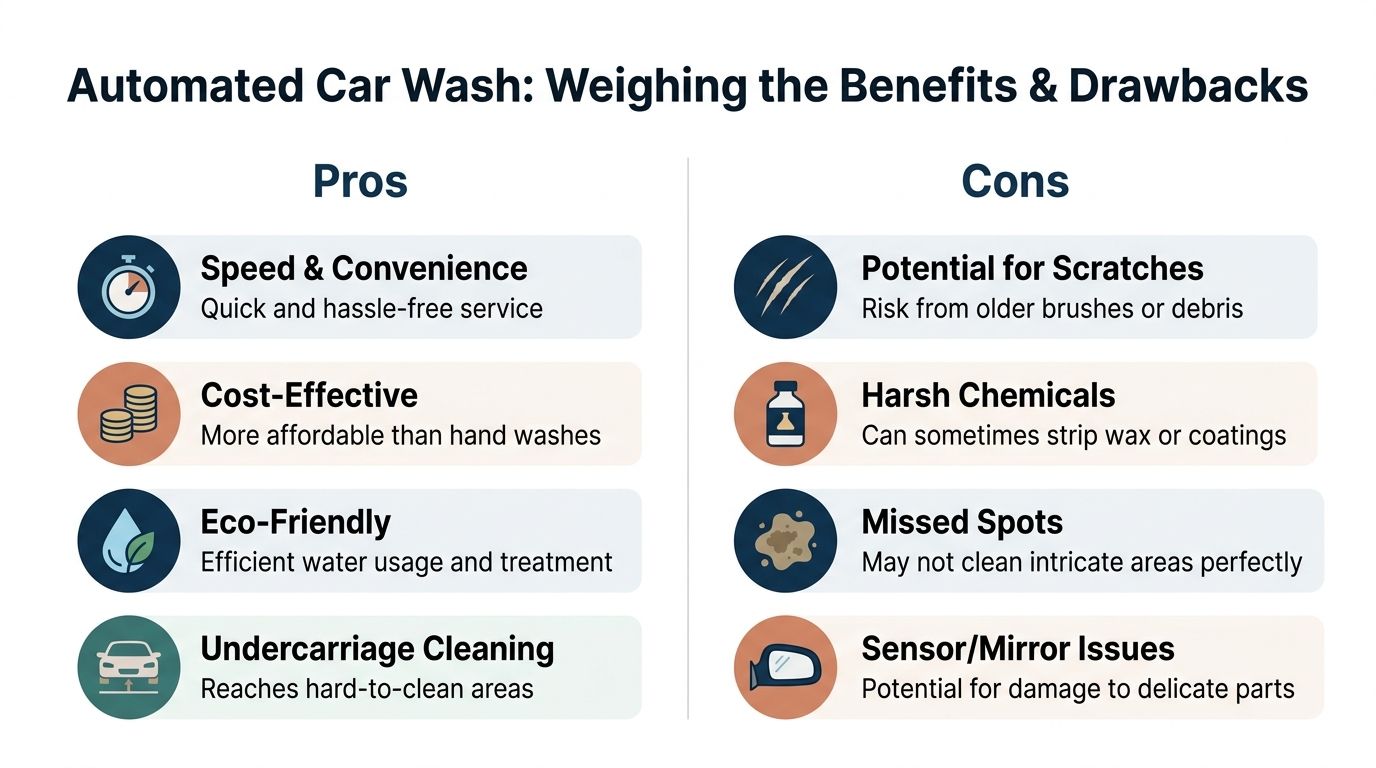
Where automated washes make sense
For most GTA drivers, the upsides are obvious the first week snow turns the roads into salty soup.
| Benefit | Why it matters in the GTA |
|---|---|
| Speed | You can clean a daily driver without setting aside half a day |
| Access to underbody cleaning | Useful when winter roads coat the chassis |
| Consistency | You get the same process every visit |
| Less mess at home | No driveway runoff, frozen hose, or numb hands |
Professional facilities also make more sense than driveway washing if you care about wastewater handling. The City of Toronto's guidance on washing cars outdoors is clear that outdoor washing where wastewater reaches catch basins is a problem because soaps and contaminants can enter the storm system. That doesn't answer every tunnel-specific compliance question, but it does explain why a proper commercial setup is a safer bet than letting dirty suds run down your driveway.
Where they fall short
Automated washes are convenient, not surgical.
- Intricate areas can still hold grime: Badge edges, plate recesses, and some mirror housings often need extra attention.
- Older brush systems deserve caution: Worn equipment or trapped debris can be rougher on paint.
- Some chemicals are stronger than enthusiasts prefer: If you baby a ceramic-coated weekend car, you may want a gentler maintenance routine between deep cleans.
- Drying is never perfect: Water likes to hide in trim, mirror caps, and tailgate seams.
That doesn't make automated washing bad. It just means you should match the method to the vehicle.
The myth that all tunnels are bad
Online advice often gets lazy. Blanket warnings don't separate old-school brush tunnels from modern touchless or railless setups.
Community discussion around the GTA has highlighted that some newer drive-through options are chosen specifically because they're better suited to low-profile vehicles and sensitive trim, pushing back on the old “never use them” line, as reflected in this AutoDetailing discussion about drive-through washes. That nuance matters.
A modern wash isn't automatically safe, and it isn't automatically unsafe. The equipment type matters. The condition of that equipment matters even more.
If you drive a lowered car, a vehicle with delicate aero pieces, or something with trim you don't want dragged by older machinery, look for touchless or railless systems and ask questions before rolling in. If you drive a winter daily with steel wheels and road salt up to the door handles, a good automated wash is usually a very sensible trade.
What to Expect at a Nanak Car Wash Location
Some wash operators only do a quick exterior blast. Others try to be everything at once and end up scattered. Nanak sits in a more useful middle ground for GTA drivers because the offering is broad without being confusing.

The company has been operating since 2004, serves multiple GTA-area communities, and combines express exterior washes, full-service washes, detailing, and rust proofing under one roof. That kind of consolidation is useful when you don't want to bounce between one place for a wash, another for interior cleanup, and a third for rust protection.
Services that cover the usual GTA needs
The express exterior side starts at $9.99 + tax and includes the baseline tunnel process: presoak soap, foam bath, rinse, drying agent, and air blowers. Higher packages add the sort of upgrades that are relevant in Ontario, such as underbody wash, triple foam wax, hot wax, sealer wax, and lava foam.
The full-service side starts at $29.99 + tax and adds interior work. That includes exterior washing and hand drying with interior vacuuming, dashboard and window cleaning, with higher tiers extending to door panels, consoles, cup holders, and tire dressing. For busy households, that's the difference between “car looks better” and “car feels reset.”
A few details stand out from an operator's point of view:
- 100% fresh water use: Stated on the site.
- Memberships with no activation or cancellation fees: Helpful for regular users who don't want contract drama.
- Secure electronic payment and prepaid bundles: Easier to manage for repeat visits.
- Detailing by appointment: Useful when winter salt has worked its way into carpets and seams.
- Rust proofing available on site: Practical in a region where underbody exposure is a constant issue.
Package comparison at a glance
| Feature | Express Exterior (Starts at $9.99) | Full-Service (Starts at $29.99) |
|---|---|---|
| Exterior wash | Yes | Yes |
| Presoak soap and foam bath | Yes | Yes |
| Air blower drying | Yes | Yes |
| Hand dry | No | Yes |
| Interior vacuum | No | Yes |
| Dashboard and window cleaning | No | Yes |
| Available upgrades | Underbody wash, waxes, drying enhancements | Additional interior cleaning, dressings, higher service tiers |
| Best fit | Fast maintenance washes | Drivers who want cabin and exterior cleaned in one stop |
The strongest part of this model is convenience. You can handle routine washing, heavier interior cleanup, and longer-term protection without building your weekend around three separate appointments.
Maximizing Protection for Your Vehicle
A GTA winter wash routine has one job. Keep salt, grit, and standing moisture from turning a decent daily driver into a tired-looking one by spring.
That means choosing protection based on how and where the car lives. A downtown street-parked sedan needs a different wash strategy than a garage-kept weekend car in Markham or a highway commuter running the 401 every day. In Southern Ontario, the underside and lower body panels usually take the worst beating, so the best upgrade is often the one you never see in a parking lot photo.
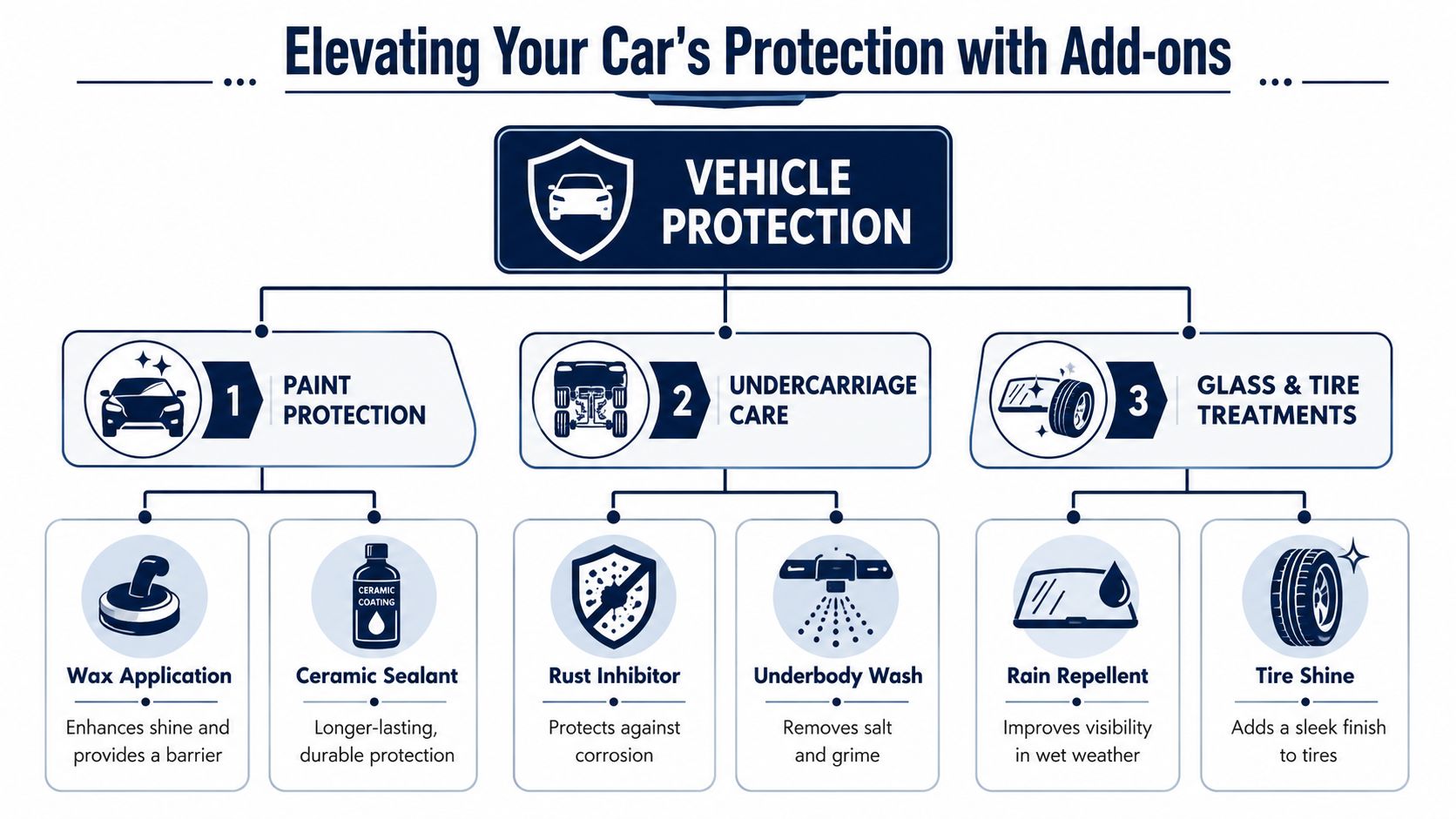
Add-ons that are worth paying for
Some extras help. Some are just there to raise the ticket.
- Underbody wash: Money well spent from late fall through early spring. Road salt collects where you cannot see it, especially around suspension components, pinch welds, and the rear underside.
- Sealer or hot wax: This gives grime less to stick to and makes the next wash easier. It will not replace proper paint correction or a real ceramic coating, but it helps on a regularly driven car.
- Rust proofing: Worth considering for vehicles that stay outside, do long highway runs, or are kept for many years. For GTA drivers, that includes a lot of family SUVs, work vans, and commuter cars.
- Tire and trim treatment: Mostly cosmetic, but it does restore some life to faded trim after months of salt spray and slush.
The goal is barrier protection. Good protection buys time between washes and reduces how aggressively winter grime bonds to the paint and lower body.
Why the final rinse matters
Rinse quality changes the final result more than many drivers realize. A car can come out clean and still look disappointing if mineral-heavy water dries on the surface.
Many higher-tier automated washes use deionized water in the final rinse to cut down on spotting. The rinse and drying process shown in this video explains how that works and also discusses blower drying performance: https://www.youtube.com/watch?v=0a-c2VVhcGk
That matters most on black, dark blue, charcoal, and other dark finishes. Those colours show every mineral mark, every drip from the mirror cap, and every missed patch around the hatch.
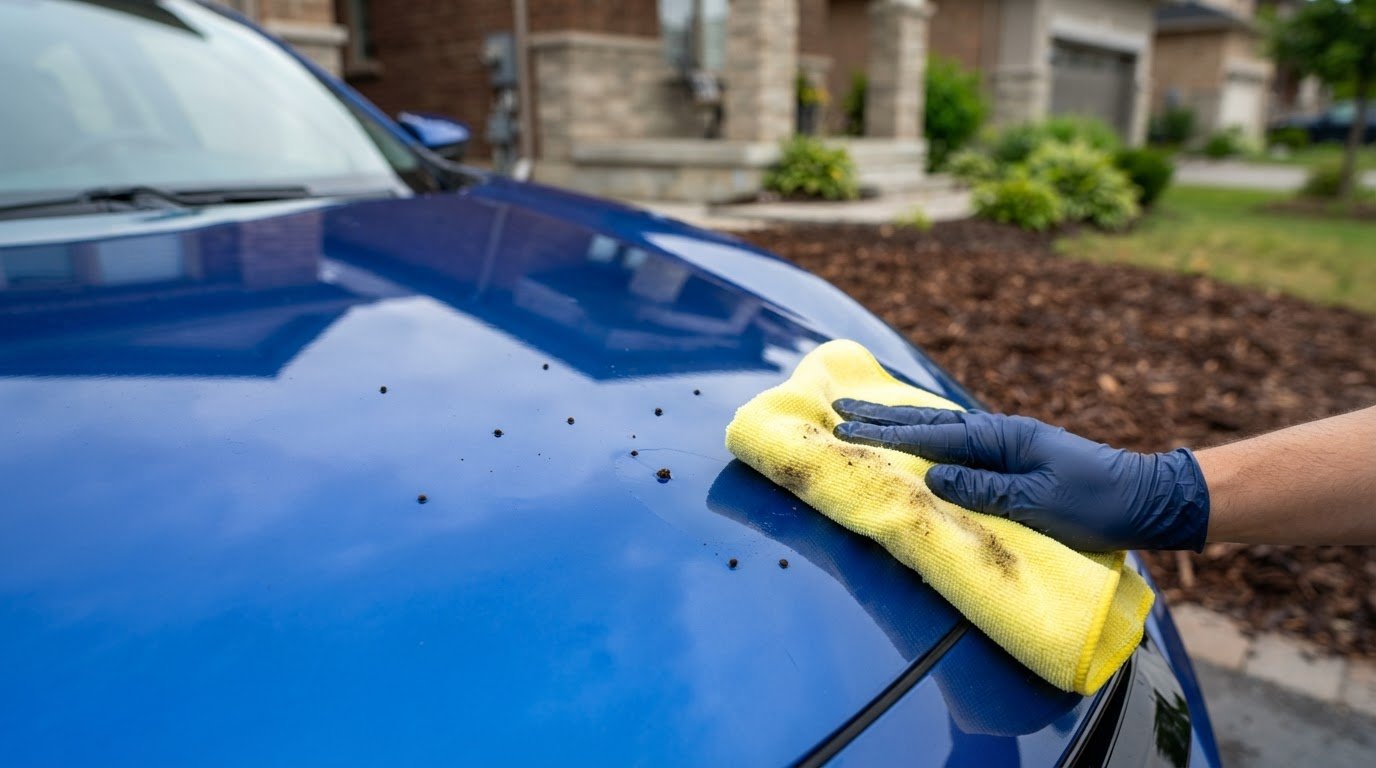
Dryers help, but they do not catch everything. Expect leftover water around mirrors, badges, door handles, fuel doors, and trunk seams. I still recommend keeping a clean microfiber towel in the car, especially in cold weather, so you can wipe those spots before they leave streaks or freeze in place.
Dark paint exposes weak rinse quality fast.
If you care about the finished look, spend for the better rinse and protection stages before you spend for cosmetic extras. That is usually the better value at a place like Nanak, where a quick maintenance wash can be upgraded into something that holds up against GTA road film.
One more practical point for drivers who carry passengers or clients. A clean cabin should smell clean, not overloaded with cheap fragrance. If you want subtler ideas, this Australian car scents guide is a useful reference.
A Smart Guide for Ride-Hail Drivers and Fleet Managers
A clean vehicle means something different when it earns money. For a ride-hail driver, delivery operator, contractor, or small fleet manager, washing isn't vanity. It's presentation, habit, and asset care rolled together.
The broader market supports that reality. Canada's car wash and auto detailing industry is projected to include 3,929 businesses in 2026 and has grown at a 3.6% compound annual rate from 2021 to 2026, according to IBISWorld's Canadian industry data. That steady growth lines up with what regular users already know. Frequent cleaning has become a normal operating expense for people who keep vehicles on the road all day.
Why frequent washing is a business tool
For professional drivers, the most useful wash setup usually has three traits:
- Fast in and out
- Repeatable quality
- Membership or bundle pricing
A quick exterior wash keeps the vehicle presentable between longer interior resets. A fuller service helps when passenger traffic, coffee spills, salt stains, or delivery grime start piling up. What matters isn't chasing concours-level perfection. It's avoiding the neglected look.
If you carry passengers, scent matters too, but it has to be subtle. Overpowering vent clips can make a clean interior feel cheap. If you want ideas that lean more refined than gas-station vanilla, this Australian car scents guide has useful pointers on choosing a lighter in-car fragrance profile.
How to build a routine that doesn't waste time
The best operators standardise the process. They don't decide from scratch every week.
- Daily drivers in heavy use: Prioritise fast exterior cleaning whenever salt film or road spray gets obvious.
- Passenger-facing vehicles: Pair regular exterior visits with scheduled interior touch-ups.
- Small fleets: Use one provider for wash, interior work, and protection services where possible.
- Winter-heavy schedules: Don't wait for visible filth to become extreme. By that stage, the underside has already been collecting abuse for days.
For business use, convenience compounds. The easier it is to repeat the wash, the more likely the vehicle stays clean enough to represent the work properly.
Your Pre-Wash Checklist and Final Verdict
The biggest mistakes at a drive through car wash usually happen before the wash starts. A minute of prep saves hassle, and sometimes saves parts.
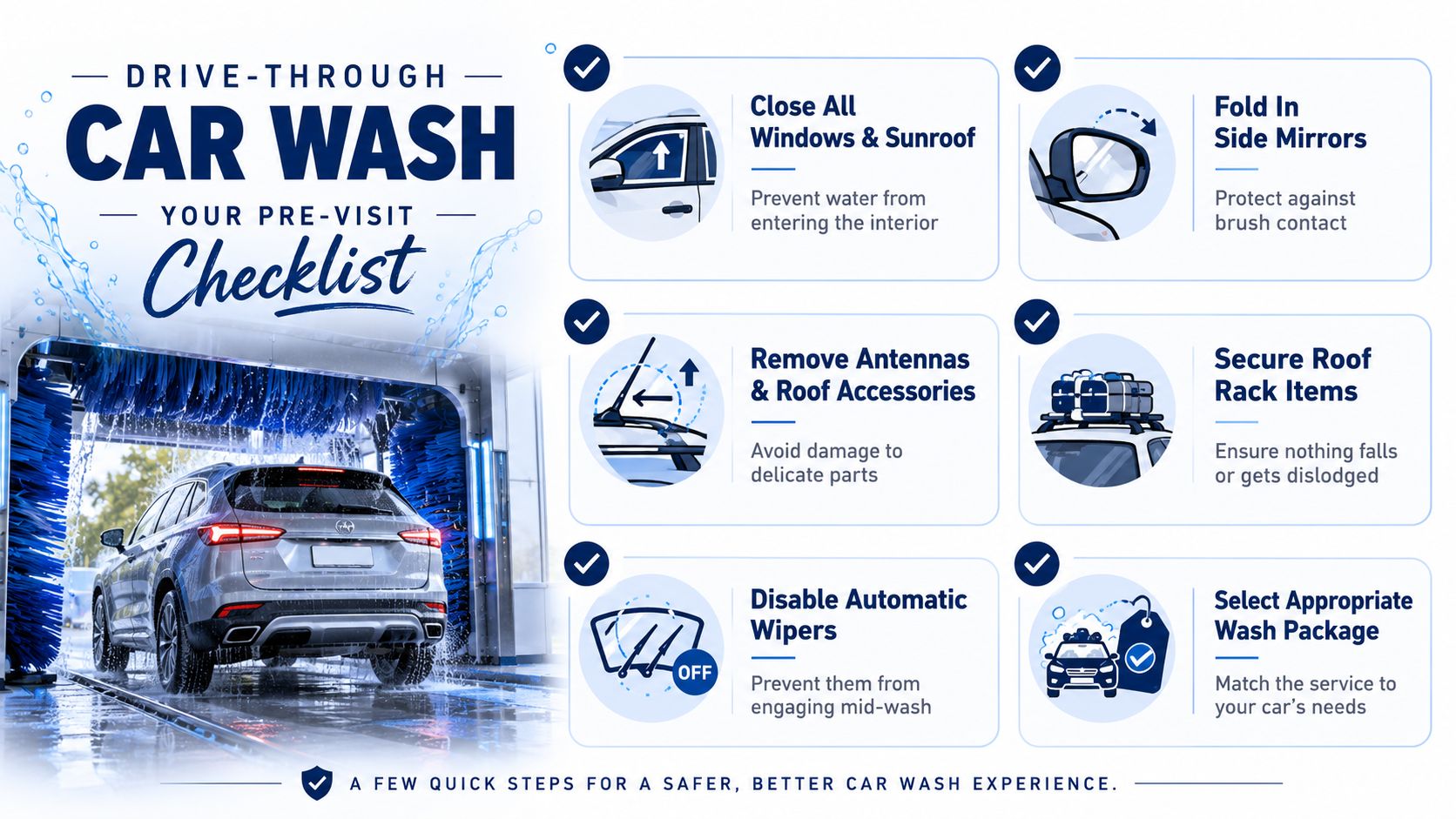
Run through this before you enter:
- Close everything fully: Windows, sunroof, and any rear vent glass need a quick double-check.
- Fold mirrors if appropriate: Especially if the site recommends it or your mirrors are more delicate.
- Remove or secure exterior add-ons: Antennas, loose roof items, and anything that can flap or snag should be handled first.
- Turn off automatic wipers: You don't want them fighting the machinery mid-cycle.
- Pick the package for the season: In winter, underbody-focused options usually make more sense than purely cosmetic upgrades.
- Know your vehicle's quirks: Lowered cars, damaged trim, and loose accessories deserve extra caution.
A good drive through car wash is one of the most practical tools a GTA driver has. It's fast, effective, and a lot more useful than waiting for ideal weather that never arrives. Modern systems are better than the old horror stories suggest, especially when you choose the right type of wash for the vehicle and the season.
For Ontario driving, regular cleaning beats occasional heroics every time.
If you want a local option that covers quick exterior washes, fuller interior service, detailing, and rust protection in one network, take a look at Nanak Car Wash. It's a practical fit for GTA drivers who need something they can use regularly, not just admire in theory.


 6600 Finch Ave W, Etobicoke, ON M9V 3Z6
 647-703-8515
 MON – SUN 8 AM to 7 PM