
You walk out to the car after a GTA snow day, knock the slush off your boots, and tell yourself you'll deal with the mess later. A week passes. Then another storm hits. By February, the mats are chalky, the carpet edges look dusty white, and every time the cabin dries out, the stains seem to come back from nowhere.
That's the part that frustrates people. Salt stains don't act like one spilled coffee. They act like a winter habit that keeps renewing itself. If you only clean what you can see, the residue you can't see usually wins the rematch.
A good salt and stain remover routine isn't about making the floor look presentable once in April. In Ontario, it's winter maintenance. Done properly, it keeps the cabin cleaner, helps materials dry properly, and reduces the amount of corrosive residue your vehicle carries around all season.
Table of Contents
- Why Salt Stains Keep Coming Back in Ontario Winters
- How to Remove Salt Stains from Car Carpets and Upholstery
- DIY Cleaning vs Professional Interior Detailing
- What Salt Damage Really Costs Your Vehicle
- Preventing Salt Stains Through Smarter Maintenance Timing
- Where to Get Salt and Stain Removal Help in the GTA
Why Salt Stains Keep Coming Back in Ontario Winters
A typical Toronto-area car doesn't get hit with salt once. It gets hit everywhere, over and over. Road spray coats the lower body. Boots drag in slush from parking lots. Wet cuffs brush the seat base. A melted pile under the mat creeps toward the carpet edge by the seat rails.
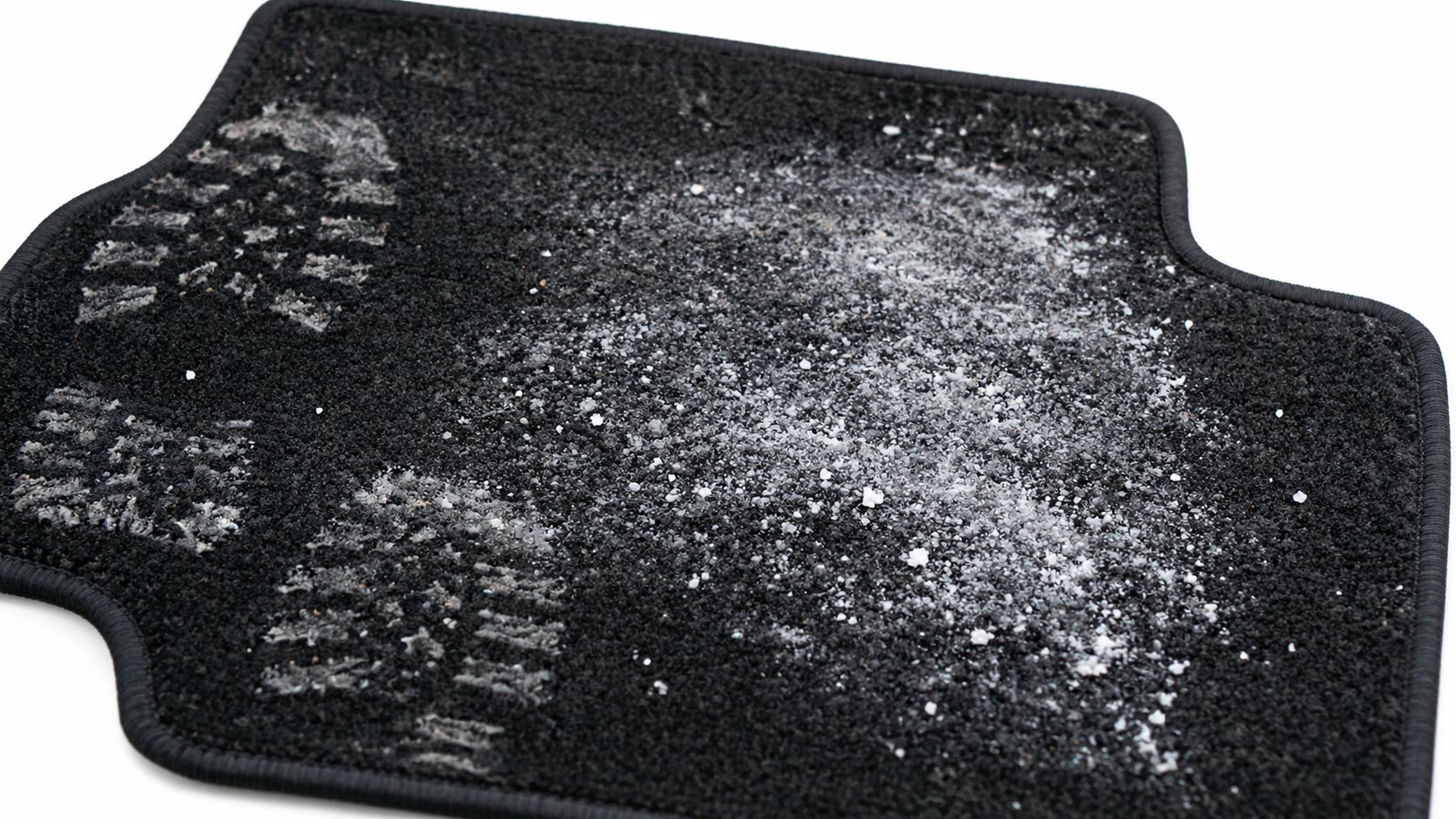
Ontario has long dealt with road salt at massive scale. A federal assessment reported Ontario road-salt loading at 592,932 tonnes, 1,123,653 tonnes, 1,716,585 tonnes, 128,744 tonnes, and 1,845,329 tonnes across tracked categories, which shows why winter salt exposure in this province is constant rather than occasional (federal road-salt assessment summary).
What you're seeing versus what's still in the fibres
The white crust isn't the whole problem. It's only the visible part left behind after moisture evaporates. Under that surface layer, salt can stay buried in carpet fibres, mat grooves, and the backing underneath.
When the cabin gets damp again, that residue can migrate back upward. Drivers notice this after a warmer day, a wet commute, or a parking garage melt. They clean once, things look better, then the ghost of the stain returns.
Salt stains often look “back” because the residue was loosened on top but never fully removed from deeper material.
Why spring-only cleaning usually feels disappointing
The biggest mistake is treating salt as a one-time end-of-season mess. In reality, winter keeps feeding the contamination loop. You carry in more salt, trap more moisture, then compress it into the same spots with your heels.
A few common GTA patterns make this worse:
- Short trips: The cabin never gets warm enough to dry the footwells properly.
- Rubber mats left full of meltwater: Salt brine sits in one place and seeps around the edges.
- Rear footwells ignored: Kids, passengers, and work crews often leave the back carpet worse than the front.
- Wet cloth seats near the lower bolsters: Salt transfer from jackets and pants leaves light residue where people rarely look.
That's why a proper salt and stain remover plan works better as a repeat winter routine. Clean the visible film, yes. But more, interrupt the cycle before the buildup turns into a season-long crust problem.
How to Remove Salt Stains from Car Carpets and Upholstery
The order matters more than the product. If you spray first and vacuum later, you turn loose salt into gritty slurry and push it deeper. That's how a small white patch becomes a larger damp patch that takes forever to dry.
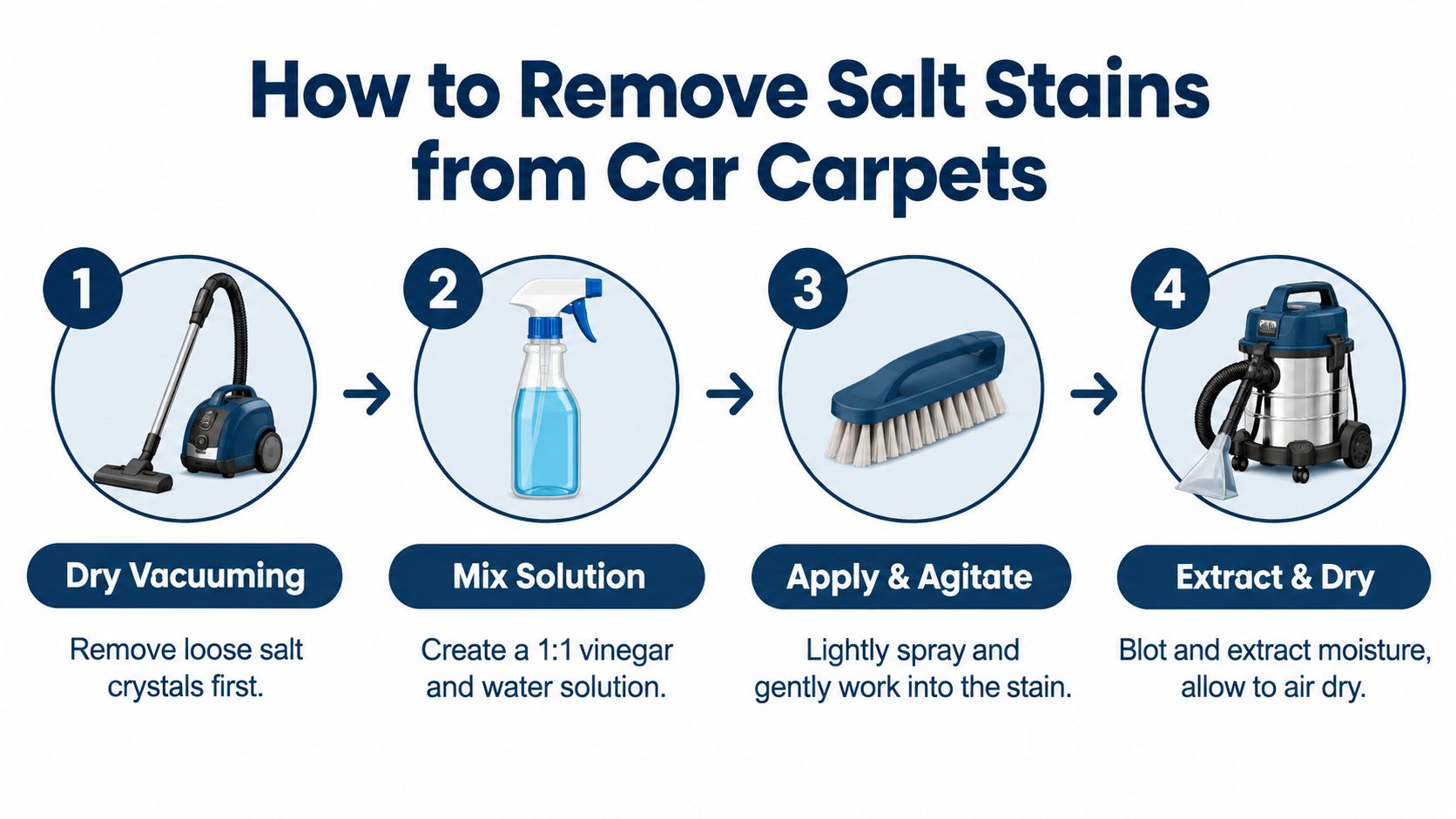
For Ontario salt stains, a practical workflow used in GTA car-care guidance is to dry-vacuum loose crystals first, then apply a 1:1 white vinegar-to-water solution lightly, let it dwell for 3 to 5 minutes, agitate with a soft brush, blot with microfiber, then fully extract and dry (Ontario salt-stain removal workflow).
The proper sequence
Vacuum first, while everything is dry
Use a crevice tool along seat brackets, sill edges, and mat channels. The goal is to remove loose crystals before any liquid touches them.Mist, don't soak
Mix white vinegar and water at 1:1. Spray lightly so the carpet is damp, not saturated. If liquid reaches the padding easily, drying gets much harder.Let it sit briefly
Give it 3 to 5 minutes. That's enough time to loosen residue without leaving the area wet for too long.Agitate gently
Use a soft interior brush. Short strokes work better than aggressive scrubbing. Hard scrubbing can rough up carpet fibres and spread the stain ring.Blot and extract
Microfibre towels pull up loosened residue from the surface. A wet/dry extractor or carpet extractor does the cleanup because it removes moisture and dissolved salt together.Dry completely
Leave the doors open in a dry space if possible, or use moving air. If the area stays damp, residue can wick back and the stain can reappear.
Practical rule: If the towel keeps showing residue, stop adding more solution and start extracting. More liquid isn't always more cleaning.
Carpets, cloth seats, and rubber mats need different treatment
Carpeted footwells can usually handle the vinegar workflow well, as long as you keep moisture under control. Focus on heel pads, seat-front edges, and the strip of carpet under the pedals.
Cloth seats need more restraint. Salt on seat edges often comes from wet pants and coats, not direct boot traffic. Use less solution, lighter brushing, and faster drying. Seat foam holds moisture longer than people think.
Rubber mats are simpler but often dirtier. Pull them out of the vehicle. Rinse, brush the grooves, wipe them dry, and don't put them back while the underside is still wet.
What doesn't work well
Some methods make the job worse:
- Flooding the area: This pushes contamination deeper and creates drying problems.
- Scrubbing hard with a stiff brush: You can fray fibres and spread the stain boundary.
- Cleaning over wet slush: Salt mixed with meltwater smears into everything.
- Putting mats back immediately: You trap moisture under them and restart the cycle.
If the stain lightens but keeps returning, that usually means hidden residue is still sitting below the surface. At that point, the issue isn't chemistry. It's extraction.
DIY Cleaning vs Professional Interior Detailing
DIY works well for light winter buildup. Professional detailing makes more sense when salt has moved past the surface and into the backing, seat foam, or hard-to-reach interior seams. The right choice depends on how bad the contamination is, how much moisture is involved, and whether you can get the cabin dry afterwards.
When DIY is enough
If the residue is recent, mostly on the mats, and limited to small white patches near the driver's heel area, home cleaning can do the job. A vacuum, spray bottle, soft brush, microfibre towels, and a wet/dry vac can handle a surprising amount if you use them in the right order.
DIY also makes sense when you can remove the mats, clean them outside, and leave the car in a garage or other dry spot long enough to air out properly.
When it's time to hand it off
If the carpet feels crunchy in several areas, the salt has reached the rear footwells, or the seats have visible winter transfer marks, a deeper extraction usually pays off. The same goes for SUVs, vans, and work vehicles. They collect more slush, hold more interior moisture, and often have more carpeted surface area than owners realise.
Professional detailing becomes the safer option when repeated DIY cleaning starts adding moisture faster than you can remove it. That's when clean-looking fabric can still hide residue underneath.
| Aspect | DIY Cleaning | Professional Detailing |
|---|---|---|
| Best for | Light surface salt, fresh residue, small areas | Deep buildup, recurring stains, widespread winter contamination |
| Tools | Household vacuum, spray bottle, soft brush, towels, wet/dry vac | Extractors, shampoo tools, vent and crevice blowout equipment, stronger drying setup |
| Moisture control | Depends on your technique and drying conditions | Usually better controlled because extraction is more thorough |
| Time required | Your own time, plus drying time | Appointment-based, but less hands-on effort for the owner |
| Risk | Easy to over-wet carpet or miss hidden residue | Lower risk of leaving contamination behind if the service includes proper extraction |
| Good fit for | Commuters with manageable buildup | Rideshare vehicles, family haulers, work vans, heavily used winter interiors |
A useful decision test
Ask one question. Am I removing salt, or am I just moving it around?
If you can vacuum dry material, lift the stain, and get the area fully dry, DIY is fine. If every cleaning leaves the cabin damp, the stain returns, or the smell changes after a thaw, book a proper interior detail instead of repeating the same half-fix.
What Salt Damage Really Costs Your Vehicle
Salt on the carpet looks cosmetic. Salt on the vehicle isn't. The bigger issue is that winter residue rarely stays in one lane. What starts in the footwell usually comes with underbody exposure, door-sill buildup, and splash contamination in the same season.
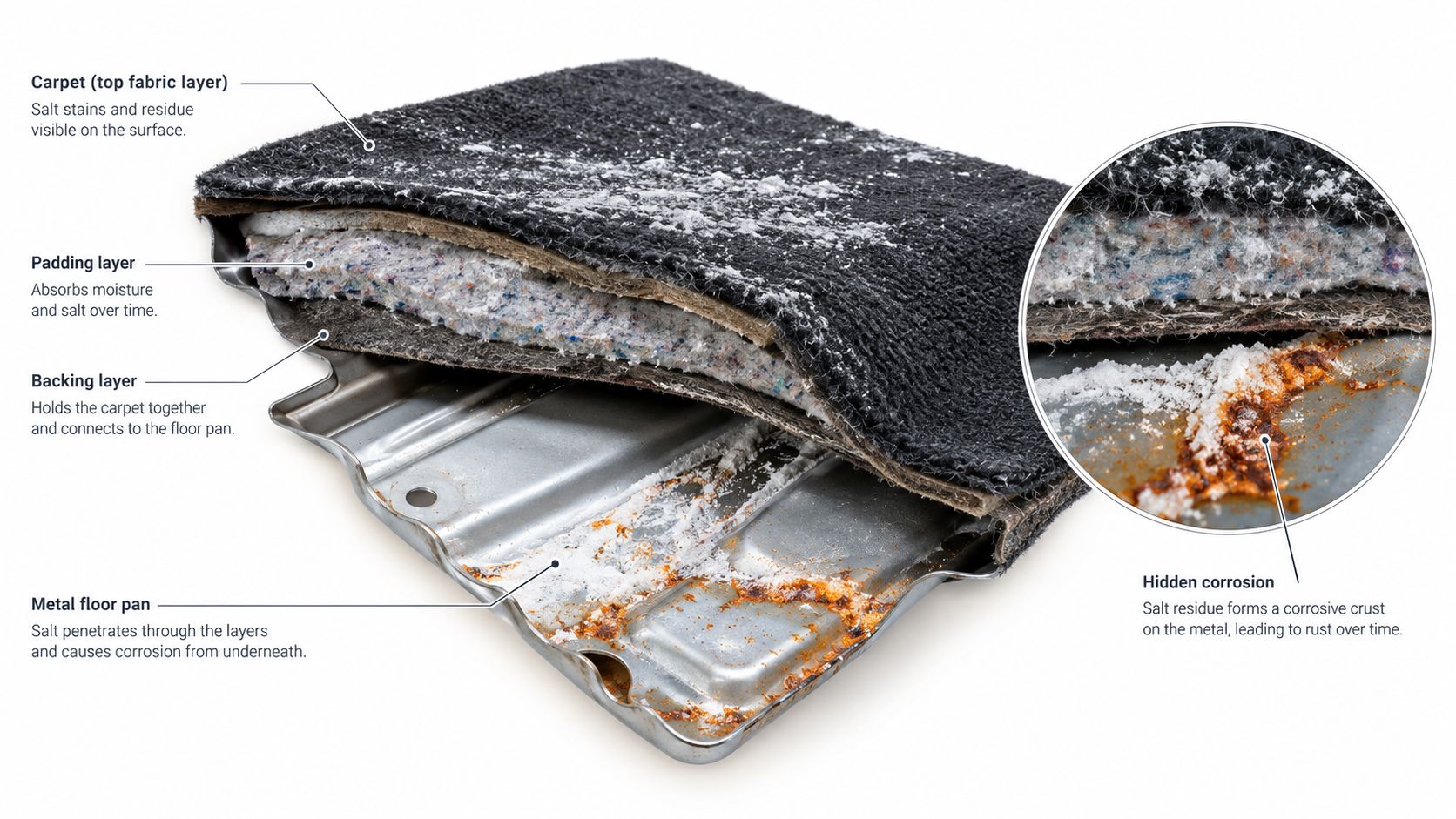
Canadian corrosion research has shown this clearly. A Transport Canada-related study reported 19-month corrosion figures of 5,108 mg/dm² in Toronto and 5,087 mg/dm² in Halifax, and another Canadian research summary stated that about 50% of vehicle corrosion can be attributed to road salts (Canadian vehicle corrosion research).
Why interior cleaning matters beyond appearance
Interior salt removal won't replace underbody washing or rust protection. It does, however, remove one more place where corrosive residue lingers for months. That matters because winter contamination doesn't stay politely on top of the mat. It spreads to metal seat mounts, sill trims, lower fasteners, and the edges where carpet meets painted and coated surfaces.
A clean-looking mat with salty carpet underneath isn't a win. It's just a better-looking trap.
The hidden cost is neglect, not just staining
Salt causes trouble in small, boring ways first:
- Metal hardware stays exposed to residue
- Carpet backing holds damp contamination
- Door-sill edges get abraded by gritty crystals
- Moisture hangs around longer in the cabin
None of that is dramatic on one snowy week. Over a full Ontario winter, it adds up.
If your vehicle spends months carrying salt inside and underneath, salt and stain remover work becomes part of preservation, not vanity.
There's also the practical side. A cabin that dries properly feels better, smells better, and is easier to keep ahead of during the next storm. Drivers often focus on what they can see. The smarter play is to remove residue before it settles into materials that are much harder to restore later.
Preventing Salt Stains Through Smarter Maintenance Timing
Waiting too long allows salt to settle. They wait until the floor turns white, until the mats feel gritty, or until a mild day reveals marks that looked invisible when everything was frozen. That delay is what gives salt time to settle, dissolve, migrate, and dry again.
The better approach is boring, regular, and far more effective. Treat winter interior care like brushing snow off the windshield. It's not occasional. It's part of driving in Ontario.
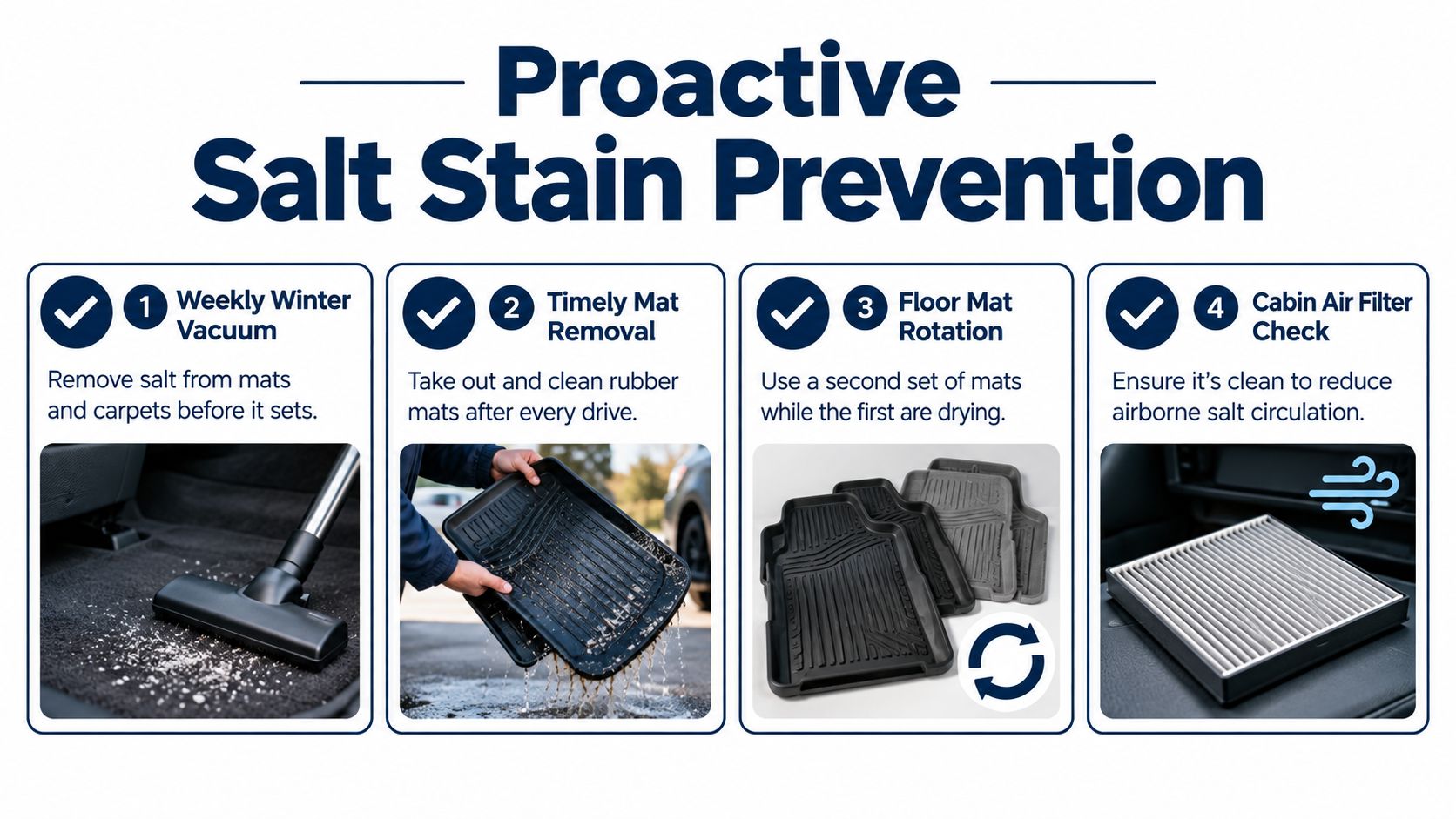
Ontario's winter salt exposure is sustained, not brief. One summary focused on Ontario and Toronto notes that the province uses roughly 1.5 to 3 million tonnes of road salt per winter and Toronto uses about 130,000 to 150,000 tonnes annually, which is why frequency matters more than one heroic spring cleanup (Ontario winter salt exposure context).
Timing beats intensity
A lighter clean done regularly usually works better than a huge soak-and-scrub session after months of buildup. You're trying to stop accumulation before it packs into the fibres.
A practical winter rhythm looks like this:
- After slushy days: Empty standing water from rubber mats and wipe them dry before the next drive.
- During active storm weeks: Vacuum loose crystals before they dissolve into the carpet.
- On milder dry days: Remove mats, let the cabin air out, and deal with any fresh white edging early.
- Before and after long highway runs: Check door sills and the front footwells. Those areas collect more splash and transfer than people expect.
Different drivers need different routines
Daily commuters can stay ahead with frequent light cleanup. They usually track in steady, predictable contamination.
Rideshare and delivery drivers need a stricter routine. More entries and exits mean more wet shoes, more rear-floor exposure, and more chances for salt to spread.
Small fleet vehicles and work vans should be cleaned on schedule, not by appearance. Those interiors often stay dirty because no single driver feels ownership of the mess.
A winter interior that looks decent can still be carrying enough residue to keep reappearing after every thaw.
If you only react when stains become obvious, you're already behind. Prevention isn't glamorous, but it's the only approach that keeps salt from becoming a permanent seasonal tenant.
Where to Get Salt and Stain Removal Help in the GTA
When home cleaning stops making progress, book a service that removes residue instead of just brightening the surface. That means asking what's included. A proper winter interior clean should deal with carpets, mats, seat edges, crevices, and moisture removal, not just a quick vacuum and wipe-down.
At this stage, the goal is simple. Get the salt out, get the cabin dry, and reset the vehicle before the next round of slush.

What to look for in a salt and stain remover service
Not every “interior clean” is the same. For winter salt, ask whether the service includes:
- Carpet and seat shampooing: Important when residue has moved past the mat surface.
- Extraction work: This is what removes dissolved contamination and moisture together.
- Vent and crevice cleaning: Salt dust and grit collect in narrow areas people miss at home.
- Drying attention: The cleaner the fabric gets, the more important proper drying becomes.
A practical provider should also tell you when the vehicle needs an appointment instead of a quick drive-up service. Deep salt removal takes time, especially if several areas need extraction.
What Nanak Car Wash offers
One local option is Nanak Car Wash, which offers interior and exterior detailing by appointment, including carpet and seat shampooing, salt and stain removal, vent and crevice blowout, and rust proofing. Its listed wash and detailing lineup also includes express exterior washes, full-service washes, prepaid bundles, monthly memberships, and multiple GTA-area locations.
That combination matters for winter maintenance because some drivers don't need a full detail every visit. Sometimes they need a quicker wash with interior upkeep in between, then a deeper appointment when the buildup gets ahead of them.
How to book smart in winter
Don't wait for April if the vehicle is already carrying months of residue. Book based on condition, not the calendar.
A few practical tips help:
- Describe the problem clearly: Say whether it's just mats, carpet edges, cloth seats, or the whole cabin.
- Mention the vehicle type: SUVs, vans, and trucks often need more time because there's more interior area and usually more winter traffic.
- Ask about turnaround: Deep interior work can take longer than a standard wash.
- Use maintenance options in between: Memberships, bundled washes, or quick vacuum access can help stop the next wave of buildup.
If the stains keep reappearing after you've already tried the basic vinegar-and-vacuum routine, that's usually the sign to move from spot cleaning to full extraction.
If your mats are crusty, the carpet keeps whitening back up, or the cabin never seems to dry properly, Nanak Car Wash offers interior detailing, carpet and seat shampooing, salt and stain removal, and rust-proofing support that fit real Ontario winter use. If you want the residue removed instead of just brushed around, book a visit with Nanak Car Wash.




 6600 Finch Ave W, Etobicoke, ON M9V 3Z6
 647-703-8515
 MON – SUN 8 AM to 7 PM