
You're probably reading this after one of two drives. Either the afternoon sun cooked the left side of your face on the 401, or you parked at a plaza in Brampton, looked at your car, and thought, “Why does it still feel like I'm driving a fishbowl?” That's usually when the search for Window tinting near me starts.
Then the confusion hits. One shop says any tint is fine. Another says ceramic only. A third throws out buzzwords and a “lifetime warranty” without showing a single clean close-up of their work. In the GTA, bad tint jobs are easy to buy and annoying to live with. The right job makes your car calmer, cooler, and easier to enjoy every day. The wrong one gives you peeling edges, hazy glass, and regret.
Table of Contents
- Your Guide to a Cooler and More Private Ride in the GTA
- Decoding the Different Types of Window Tint
- Ontario's Window Tint Laws What You Must Know
- How to Find and Vet the Best Local Tint Shops
- The Tinting Process and Crucial Aftercare Rules
- Beyond Tint Protecting Your Entire Vehicle Investment
Your Guide to a Cooler and More Private Ride in the GTA
Driving across the GTA in bright sun gets old fast. The glare off concrete, the heat building up in traffic, the awkward eye contact with everyone beside you at red lights. Tint fixes a lot of that when it's chosen properly and installed by someone who knows what they're doing.
People usually shop for tint for one reason and realise later they needed it for three. First, comfort. Second, privacy. Third, protecting the cabin so the interior doesn't age faster than it should. If you commute, do school runs, drive rideshare, or spend half your life parked outside a condo tower, tint stops feeling like a cosmetic add-on and starts feeling practical.
Practical rule: Buy tint for how you actually use your car, not for how it looks in a shop's Instagram reel.
The problem is that local search results are packed with vague promises. Every shop says “premium film.” Every shop says “professional install.” That doesn't tell you if the film is dyed or ceramic, whether the installer can trim a rear window cleanly, or if they'll disappear when you come back with peeling edges.
A proper buying decision in the GTA comes down to a few plain questions:
- What film are they using? If they can't name the type clearly, slow down.
- Is the shade practical for Ontario driving? Darker isn't always smarter.
- Can they show tight edges and clean rear glass work? That's where hacks get exposed.
- Do they talk transparently about aftercare? Good shops do. Rushed shops don't.
One more thing. I've seen plenty of drivers obsess over the film and ignore the rest of the car. That's backwards. Tint looks better on a clean, well-kept vehicle, and it makes more sense when it's part of a bigger care routine. If you protect the glass but ignore the paint, interior, and underbody, you're only doing half the job.
Decoding the Different Types of Window Tint
When visiting a tint shop, it's often assumed the main decision is dark versus light. It isn't. Instead, the primary choice is film technology. That's what decides how the tint looks over time, how it handles heat and glare, and whether you'll still like it after a few seasons.
What each film is actually doing
Think of tint like phone screen protection. The cheapest option does the bare minimum. Mid-tier products feel sturdier. Premium products cost more because they solve more problems without the usual trade-offs.
Dyed film is the entry-level option. It gives the darkened look people want and helps with privacy and glare. The catch is longevity. Cheap dyed tint is the stuff that gives the whole industry a bad name when it fades, shifts colour, or starts looking tired.
Metalized film adds a reflective element. It can improve performance compared with basic dyed film, but there's a reason some drivers avoid it. If you care about signal issues, electronics, or a more modern appearance, this isn't usually the first place I'd point you.
Carbon film is where the conversation gets more serious. It tends to appeal to drivers who want a cleaner finish, better durability, and stronger all-round value without jumping straight to top-tier pricing. If someone wants a sensible upgrade and doesn't want to cheap out, carbon is often the category worth discussing.
Ceramic film is what many drivers ask for once they've sat in a properly tinted car on a hot day. It's the premium lane. Better clarity, strong comfort benefits, and none of the “looks good for six months” nonsense that comes with bargain installs.
Cheap tint usually doesn't look terrible on day one. It looks terrible after you've lived with it.
Quick comparison before you buy
| Window Tint Type Comparison | Heat Rejection | UV Blocking | Cost | Key Feature |
|---|---|---|---|---|
| Dyed | Basic to moderate | Varies by product | Lower | Budget-friendly darkened look |
| Metalized | Moderate | Varies by product | Mid-range | Reflective construction |
| Carbon | Stronger than basic films | Stronger than entry-level options | Mid to upper-mid | Better colour stability |
| Ceramic | Strong | Strong | Higher | Premium comfort and clarity |
That table won't replace a real conversation with an installer, but it does stop you from getting trapped by fluffy sales language. If a shop says all films are basically the same, leave. They aren't.
My blunt recommendation for GTA drivers
For most daily drivers in Toronto, Mississauga, Brampton, Vaughan, and the rest of the region, I'd split it this way:
- If your budget is tight: Choose a better installer before chasing a fancier film. A clean basic job beats a sloppy “premium” one.
- If you keep your cars a while: Skip bargain dyed film unless you enjoy doing things twice.
- If you drive a lot in summer traffic: Carbon or ceramic usually makes more sense than rolling the dice on entry-level material.
- If you only care about appearance: Fine, but say that upfront so nobody sells you features you won't value.
A good shop should explain the trade-offs without acting like every customer needs the most expensive option. If they jump straight to upselling, they're selling margin, not advice.
Ontario's Window Tint Laws What You Must Know
Tint law in Ontario gets butchered online all the time. You'll see oversimplified posts, vague forum comments, and shops that talk plenty about style but go quiet when legal visibility becomes inconvenient. That's how drivers end up paying twice. Once for the install, and again when they need it redone.
The rule that matters most
The term you'll hear is VLT, or visible light transmission. That's the amount of light that still passes through the glass and film together. Lower VLT means darker glass. If a shop can't explain that in plain English, they shouldn't be advising anyone.
This visual is a useful starting point when you're sorting out what belongs where:
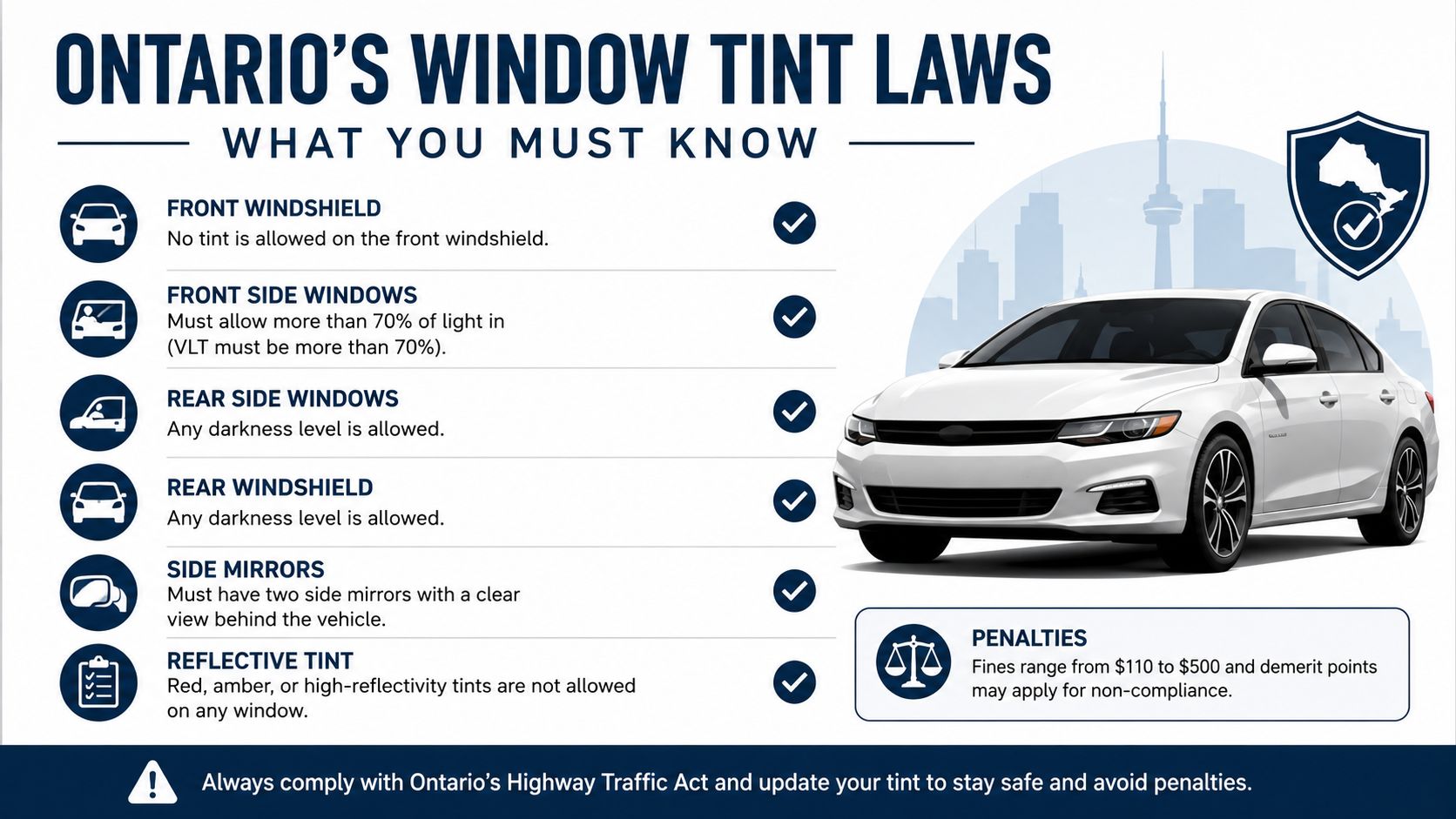
The bigger issue isn't just knowing that visibility matters. It's recognising that a lot of “window tinting near me” advice in the GTA skips the local grey areas completely and leaves drivers to figure it out after the fact.
The winter windshield problem shops ignore
Here's the part more shops should say out loud. A local review of GTA content noted that most “window tinting near me” guides miss the legal ambiguity around partial windshield tinting, especially for summer glare versus winter safety, and that many shops in Brampton and Mississauga advertise windshield tint without explaining the risk of reduced visibility during low-light Ontario winters. It also notes Ontario's lack of a clear statute prohibiting partial windshield tint if the driver has 70% VLT on the rest of the windshield. You can read that discussion in this GTA-focused tint guide from Refresh Auto Care.
That matters because Ontario winters are not Florida summers. Low sun, dirty roads, salt spray, early darkness, and glare off snow create a completely different visibility problem. A strip or partial windshield tint might feel smart in July. In January, it can be a nuisance or worse.
If a shop sells you windshield tint for summer comfort and never mentions winter visibility, they're thinking like salespeople, not drivers.
My advice is simple. Be conservative with anything on the windshield. Front visibility is not the place to get creative because a shop says “everyone does it.” Everyone does not drive your commute, your roads, or your winter schedule.
How to Find and Vet the Best Local Tint Shops
Installer skill decides whether your tint looks factory-clean or like it was cut with kitchen scissors. You can buy decent film and still get a miserable result if the person applying it is careless. In this business, the hands matter as much as the product.
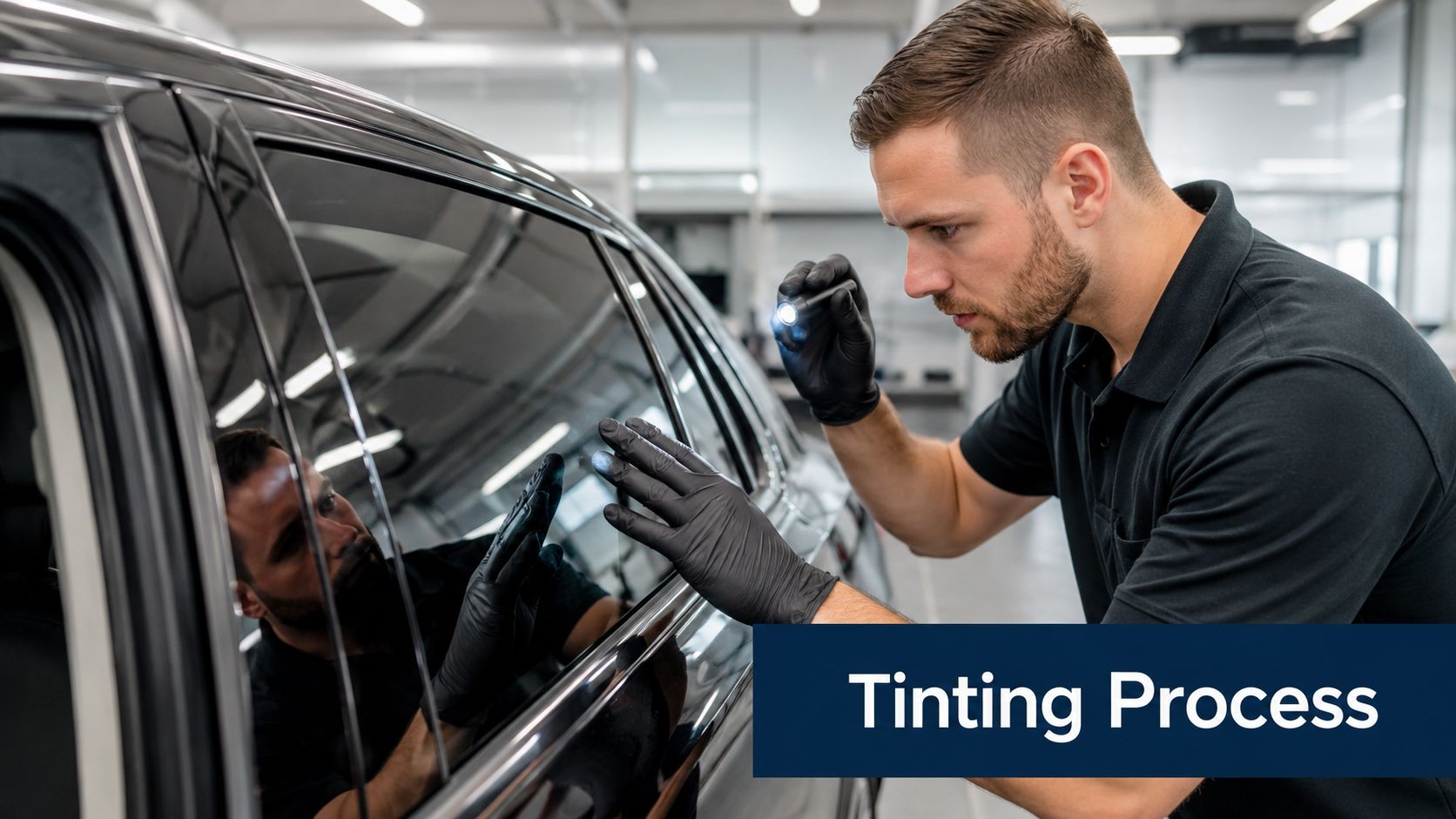
Start with the photos, not the sales pitch
Online reviews help, but photos tell a harsher truth. Don't just look at a shiny side profile from ten feet away. You want close-ups.
Check for these details:
- Edge finish: The film should sit neatly near the edge, not look hacked, jagged, or overly short.
- Rear window quality: On rear windows, poor shrinking and contamination show up fast.
- Dot matrix handling: Many installers struggle around those dotted areas near some rear windows.
- Consistency: One good car in a gallery means nothing. You want repeatable work.
If the gallery is all dark glamour shots and no close detail, assume they're hiding the actual finish.
Questions that expose a weak installer fast
A proper tint conversation shouldn't sound like a used-car negotiation. Ask direct questions and listen for direct answers.
Try these:
- What type of film are you quoting me for? Not just “premium.” Ask if it's dyed, metalized, carbon, or ceramic.
- How do you prep the glass? A serious installer talks about cleaning, contamination control, and process.
- Where is the car tinted? A controlled bay beats a dusty corner of a busy garage.
- What happens if there's a defect? You want to hear a calm, clear policy, not dodging.
- Can I see a car you've recently finished? Good shops don't panic when you ask.
A warranty sounds nice. A business that answers the phone a year later sounds better.
You should also pay attention to how they speak about your goals. A real pro asks if you want privacy, glare reduction, comfort, or appearance. A weak shop pushes the same package on every driver.
Shop red flags in the GTA
I've seen enough local shops to know the warning signs early. If two or three of these show up, move on.
- No mention of aftercare: That usually means they're rushing jobs out the door.
- No close-up examples: They know the edges won't survive inspection.
- Pushy “today only” pricing: Good craftsmanship doesn't need panic tactics.
- Messy workspace: Dust and debris have no business near tint film.
- Wild promises: If they make every package sound flawless, they're not being honest.
Some drivers also want one place that handles more than a tint referral or appointment. That can make life easier if you're trying to get the whole vehicle sorted. Nanak Car Wash offers vehicle cleaning, detailing, rust proofing, and window tint-related service options through its broader GTA car care operation, which is practical for drivers who'd rather not bounce between multiple businesses for basic upkeep and protection.
The best local shop isn't always the loudest one online. It's usually the one that answers plain questions with plain answers and shows clean work without hiding behind buzzwords.
The Tinting Process and Crucial Aftercare Rules
A proper tint job starts before the film touches the glass. In the GTA, that matters even more in winter, because low sun, salt film, and windshield glare already make visibility harder than it should be. If a shop is sloppy with prep, you will see it fast.
What appointment day should look like
Expect a clean bay, clean glass, and a technician who checks the shade and film choice with you before starting. Good installers slow down on prep because dust, lint, and dirty edges are what cause the little flaws drivers notice later. Tinting is detail work, not a side job they squeeze in between washes.
This is the result you're aiming for when the job is done right:
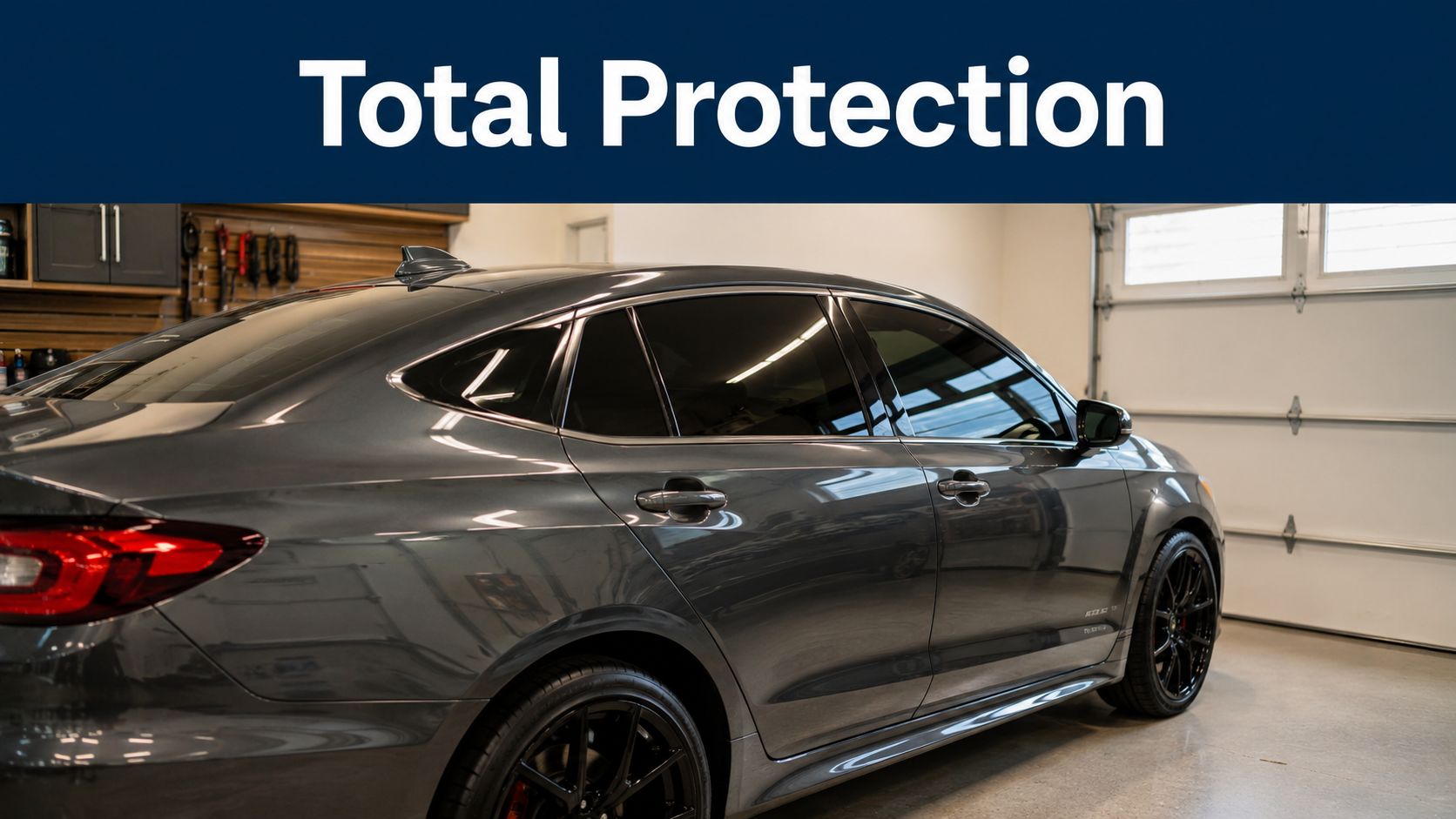
Right after installation, the film may look a bit hazy. You might also notice tiny water pockets or a slightly cloudy look. That is normal early on. What matters is whether the shop warns you in advance and gives you clear aftercare instructions instead of pretending the job is fully settled the moment you leave.
The curing phase is where people ruin good tint
Most tint problems I see are not bad film. They are bad aftercare.
Leave the windows up for the period your installer recommends. In warm weather, that is often a couple of days. In colder Ontario conditions, curing can take longer because moisture leaves the film more slowly. If you roll the windows down too soon, scrub the inside glass, or start pressing at the edges, you can turn a clean install into a callback.
Skip the internet myths and follow the shop's written instructions. If they cannot explain aftercare in plain language, that is a problem. Shops that handle customer education well usually handle the rest of the job well too. The same common-sense communication standard matters across car care businesses, which is one reason pieces about marketing for service companies often come down to trust, clarity, and follow-through.
Here's the advice I give GTA drivers:
- Keep the windows closed until the shop says it is safe.
- Wait before cleaning the inside glass.
- Use an ammonia-free cleaner once the film has fully cured.
- Wipe with a soft microfibre cloth, not paper towel.
- If you see peeling, dirt trapped under the film, or edges lifting after curing, call the shop. Do not pick at it.
Nanak Car Wash sees plenty of vehicles that need more than one quick fix, and tint is no different. A good install holds up because the prep was clean, the film was applied properly, and the owner did not rush the aftercare. Patience saves money here.
Beyond Tint Protecting Your Entire Vehicle Investment
Tint is a smart upgrade, but it shouldn't be the only protection decision you make for the car. If you care enough to shield the cabin from sun and glare, you should also care about road film on the paint, grime inside the interior, and the salt that creeps underneath the vehicle all winter.
Tint is one piece of a smarter protection plan
The nicest tinted car in the lot still looks neglected if the paint is dull, the carpets are full of salt, and the underbody has been ignored for three winters. Drivers in the GTA deal with slush, brine, filthy shoulder spray, parking garage dust, tree sap, and summer sun. A one-service mindset doesn't hold up well here.
That's why I always tell people to think in layers:
- Start with cleanliness: Clean glass and a clean cabin make every upgrade look better.
- Protect the outside too: Regular washing matters more in Ontario than many drivers admit.
- Handle the underbody: Rust doesn't care how nice your tint looks.
- Keep up with the interior: If the inside is already fading and grimy, tint alone won't save it.
This is the kind of broader vehicle-care approach more service businesses should communicate clearly. If you're curious how companies organise that kind of message online, this guide to marketing for service companies is worth a read because it explains how practical services are framed around real customer problems instead of vague hype.
Why whole-car care matters in Ontario
A lot of drivers wait until something looks bad before acting. That's expensive thinking. Prevention is usually less painful than repair, especially in a climate that batters cars for months at a time.
This gives you a quick sense of the kind of all-in-one vehicle care many GTA drivers look for:

A proper routine is boring in the best way. Wash the car regularly. Clean the interior before salt and stains settle in. Stay on top of rust protection. Then the tint becomes part of a car that feels looked after, not a cosmetic patch on a vehicle that's being slowly neglected.
If you're only hunting for “window tinting near me,” widen the question a bit. Ask who can help you keep the entire vehicle in good condition year-round. That's the better long-term move.
If you want one practical starting point for whole-car upkeep in the GTA, have a look at Nanak Car Wash. They offer wash, detailing, and rust proofing services across multiple GTA locations, which makes it easier to keep the rest of the vehicle in shape after you've handled the tint decision.


 6600 Finch Ave W, Etobicoke, ON M9V 3Z6
 647-703-8515
 MON – SUN 8 AM to 7 PM