
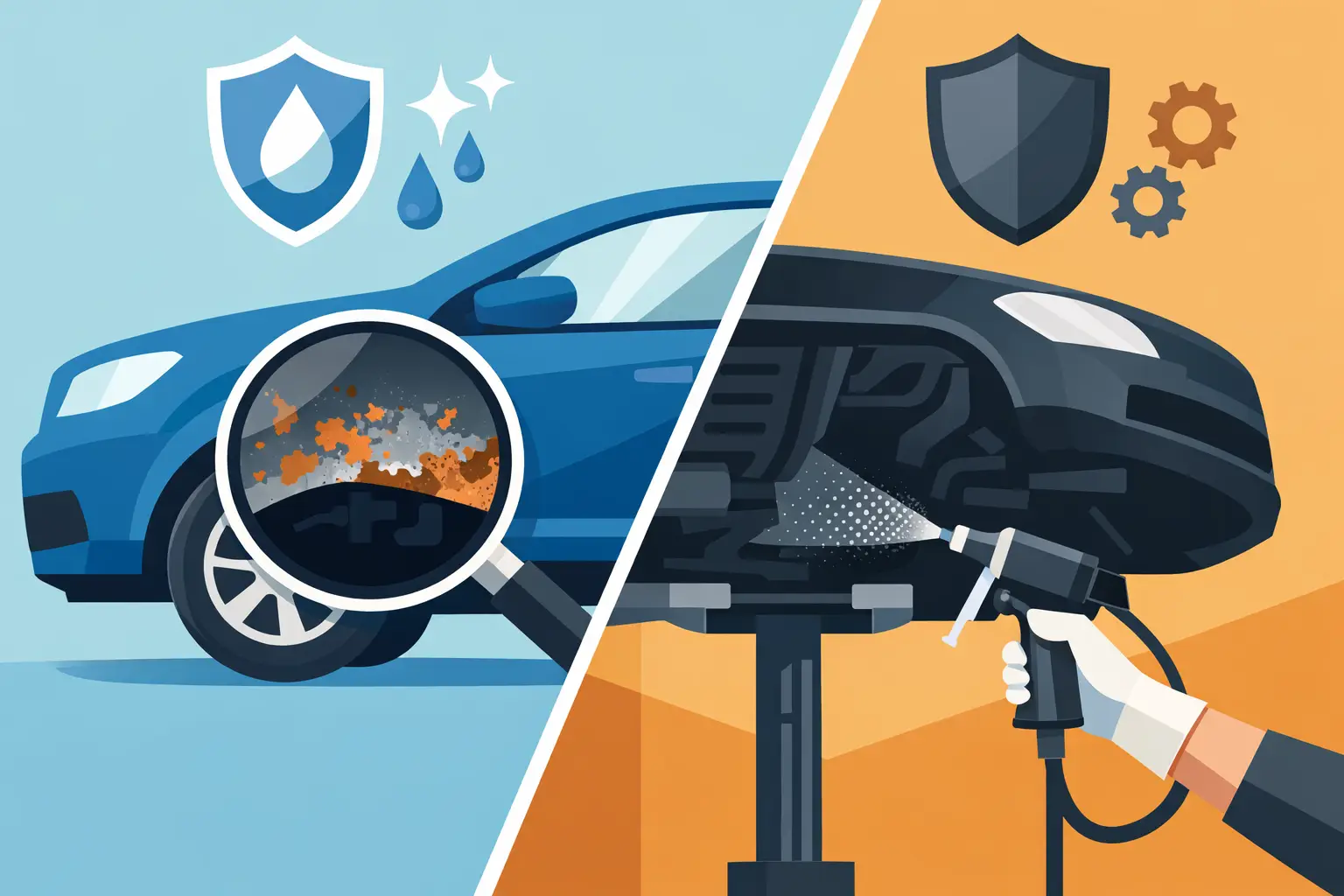
Salt gets into places you never see. A few winters of wet roads, slush, and road grime can start eating away at brake lines, rocker panels, wheel wells, and the underside of your vehicle long before the outside looks bad. That is why rust proofing vs undercoating is a question a lot of drivers ask only after they notice corrosion. By then, your options are more expensive.
If you want the simple version, rust proofing and undercoating are not the same job. They protect different parts of the vehicle, work in different ways, and make the most sense when matched to how and where you drive. For commuters, families, rideshare drivers, and anyone keeping a vehicle for more than a few years, knowing the difference can save money and help your car last longer.
Rust proofing vs undercoating: the real difference
Rust proofing is designed to stop rust from starting inside the vehicle’s hidden metal areas. That includes doors, rocker panels, seams, frame sections, and other cavities where moisture can collect and sit. The product used for rust proofing is usually a thin formula that creeps into tight spaces and coats metal from the inside.
Undercoating is different. It is typically applied to the exposed underside of the vehicle to create a protective barrier against water, salt, gravel, and road debris. Think of it as outer protection for the bottom of your car, while rust proofing is more about reaching internal areas that you cannot wash or wipe down.
A lot of people assume one replaces the other. Usually, it does not. If your goal is serious corrosion prevention, they often work better together than separately.
What rust proofing actually does
Rust proofing focuses on prevention where rust often starts quietly. Water gets into seams and cavities through tiny openings. Once moisture is trapped, corrosion can build from the inside out. That is why some vehicles look fine on the surface but still develop bubbling paint, rusted door bottoms, or weakened structural sections later on.
A proper rust proofing treatment is meant to displace moisture and leave a protective film on bare or vulnerable metal. Because the material is thinner, it can move into hard-to-reach spots. That matters in places with snow, freezing rain, and heavy road salt use, where rust is not just cosmetic. It can affect safety and repair costs.
For drivers who commute daily, park outside, or keep their car through multiple winters, rust proofing is often the first layer of defense worth paying for. It is especially useful on newer vehicles because prevention is cheaper than trying to slow down existing corrosion.
What undercoating actually does
Undercoating protects the underside from direct exposure. The bottom of your car deals with everything the road throws at it – salt spray, standing water, slush, stones, sand, and grime. Even if you wash the body often, the underbody can stay dirty and damp, especially during winter.
A good undercoating adds a thicker shield to help protect against impact and moisture. Depending on the product, it can also reduce some road noise, but protection is the main reason people choose it. This is especially helpful for wheel wells, floor pans, and exposed underbody surfaces that take constant abuse.
That said, undercoating is not magic. If rust is already active underneath, sealing over it without proper prep can make things worse by trapping corrosion instead of stopping it. The condition of the vehicle matters.
Which one is better?
It depends on what you are trying to protect.
If your concern is hidden rust inside doors, panels, and seams, rust proofing is the better fit. If your concern is road salt and debris hammering the underside every winter, undercoating has a clear role. If you are driving regularly in wet, snowy, or salty conditions, asking which one is better is often the wrong question. The better question is whether your vehicle needs one or both.
For many everyday drivers, rust proofing gives broader value because it reaches places you cannot clean manually. But undercoating adds useful protection where the vehicle gets the most direct punishment. Newer cars, work vehicles, SUVs, and high-mileage commuters often benefit from a combined approach.
Rust proofing vs undercoating for new and used vehicles
For a newer vehicle, prevention is the whole point. Starting early gives you the best chance of keeping rust from taking hold. Rust proofing on a newer car makes sense because internal cavities are still in better condition, and undercoating can help preserve the underside before years of winter exposure build up damage.
For a used vehicle, the answer depends on its current condition. If the car has only light surface rust, protection may still be worth it. If corrosion is already advanced, you need an honest assessment first. Coating over serious rust will not reverse it. In some cases, treatment still helps slow things down. In others, you may be spending money on protection when repairs should come first.
This is why a quick, cheap treatment is not always a bargain. The right service starts with knowing what the underside and inner panels look like.
When you should choose both
If you drive year-round in places with winter salt, both services usually make the most sense. The same goes for people who rack up highway miles, use their vehicle for rideshare or delivery work, or plan to keep it for many years.
Using both gives you coverage inside and outside. Rust proofing reaches the hidden areas where moisture lingers. Undercoating adds a physical barrier to exposed lower surfaces. Together, they create more complete protection than either one alone.
This does not mean every driver needs the most expensive package available. If your vehicle is older and nearing the end of its usable life, you may choose one treatment instead of both. If your car is newer or still has strong resale value, doing both can be the smarter long-term move.
What matters more than the product name
A lot of shops advertise protection, but the process matters more than the sales pitch. The vehicle should be inspected first. Existing rust should be identified honestly. Application areas should match the purpose of the treatment. And if the service needs maintenance or repeat applications, that should be explained clearly.
Cleanliness also matters. Dirt, salt, and heavy grime should not be sitting on the vehicle before treatment. Protection works better when applied to surfaces that are properly prepared. That is one reason routine washing is part of rust prevention, not separate from it.
If you rarely wash during winter, salt stays on the vehicle longer, especially underneath. Even the best protection benefits from regular maintenance washes that remove buildup before it has weeks to sit and attack metal.
How to decide without overspending
Start with your driving habits. If you mostly drive short local trips, park in a garage, and trade in vehicles often, you may not need every possible layer of protection. If you commute daily, park outside, or keep your vehicles for years, spending on corrosion prevention is usually easier to justify.
Next, think about the age and value of the vehicle. Protecting a newer car early is usually more cost-effective than trying to rescue a heavily rusted one later. If you own a family SUV, work van, pickup, or commuter car you depend on every day, rust prevention is not just about looks. It helps preserve reliability, resale value, and repair costs.
Finally, do not confuse visible shine with protection. A clean car looks better, but rust often starts where you cannot see it. The smartest move is combining regular washes with the right protective service for your vehicle’s condition.
The best choice for most drivers
For most everyday drivers, rust proofing is the more essential service, and undercoating is the stronger add-on for extra defense underneath. That is usually the practical answer in the rust proofing vs undercoating debate. One goes after hidden internal risk, while the other helps shield the underside from daily abuse.
If your car faces winters, wet roads, road salt, and constant use, treating them as competing options can miss the point. They solve different problems. A solid wash routine, honest inspection, and the right protection plan will do more for your vehicle than waiting until rust becomes visible.
At Nanak Car Wash, the value is simple: protect your vehicle before small corrosion turns into big repair bills. If you are unsure what your car needs, start with its age, condition, and how hard you drive it. The best time to protect your vehicle is when it still looks fine underneath.

 6600 Finch Ave W, Etobicoke, ON M9V 3Z6
 647-703-8515
 MON – SUN 8 AM to 7 PM