

That white crust on your rocker panels, wheel wells, and floor mats is not just ugly. If you are asking can car wash remove salt, the short answer is yes – but only if the wash actually reaches the areas where salt builds up and sits.
A basic rinse helps, but winter salt is stubborn. It sticks to paint, hides underneath the car, cakes around suspension parts, and gets tracked inside on boots. If it stays there, it can wear down your finish, stain interior surfaces, and speed up rust on the underbody. That is why salt removal is less about making the car look shiny and more about protecting what you drive every day.
Can car wash remove salt completely?
Sometimes, but it depends on the kind of wash you choose and how much buildup is already on the vehicle. A quick exterior wash can remove a good amount of loose salt from painted surfaces, glass, and trim. That is useful after a light storm or a few days of slushy commuting.
Where many drivers get disappointed is underneath. Salt does the most damage where you cannot easily see it. If the wash does not include a strong underbody rinse, a lot of the problem stays in place. The car may look clean from ten feet away, but the areas that matter for long-term protection may still be coated.
Interior salt is another separate issue. Slush and road salt get pressed into mats and carpet fibers, especially during a long winter. An exterior tunnel wash will not fix that. For those areas, you need mat cleaning, vacuuming, or deeper interior detailing.
Why salt is harder to remove than dirt
Normal dirt usually sits on the surface. Salt is different because it dissolves in water, splashes into seams, dries into residue, and keeps pulling moisture from the air. That moisture is part of what makes salt such a problem for metal parts.
This is also why timing matters. Fresh salt is easier to wash away than salt that has built up over weeks. Once it packs into wheel wells and undercarriage corners, it often takes more pressure, more water, and sometimes more than one wash to get good results.
Cold weather also works against you. If temperatures are low enough, buildup can freeze onto the vehicle. In that case, a fast rinse may not do much at all. A more thorough wash done properly is the better move.
What kind of car wash removes salt best?
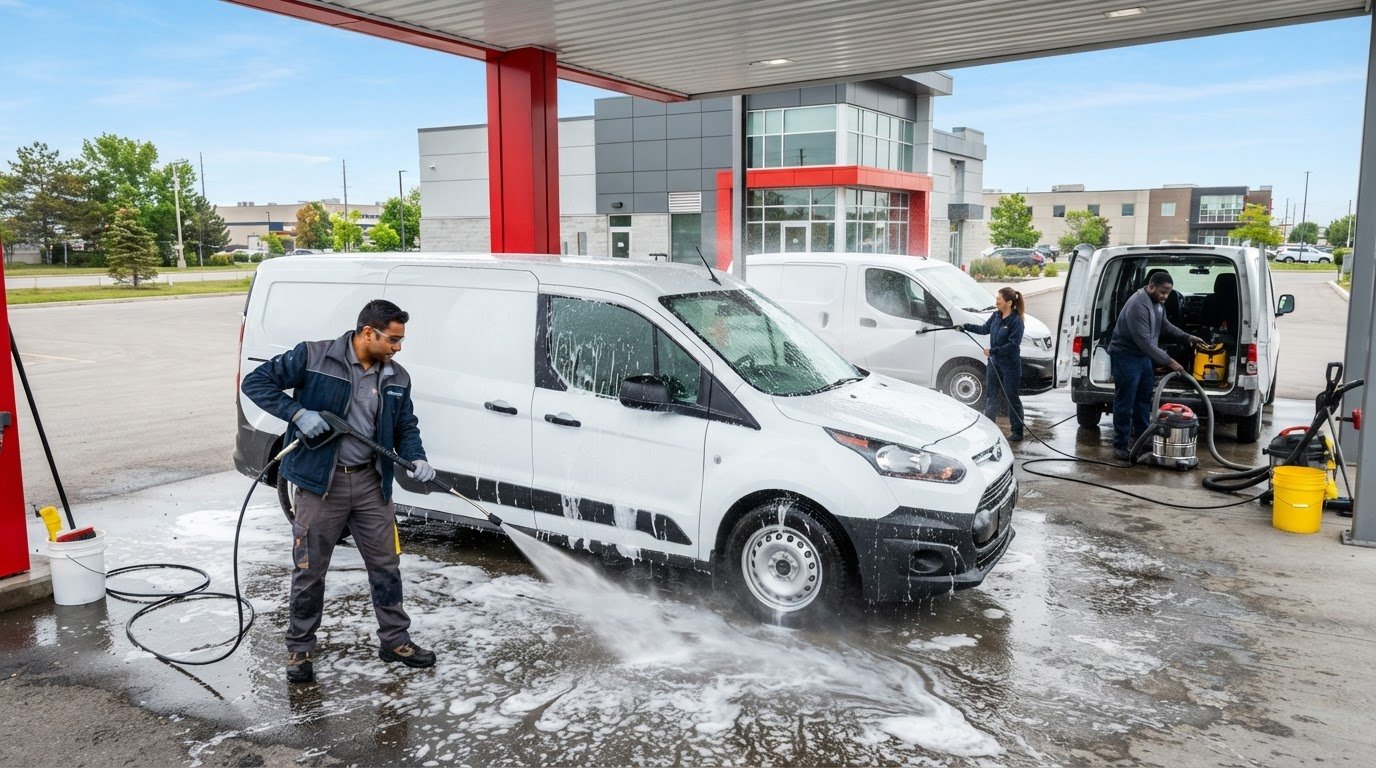
If your goal is salt removal, not just appearance, the best choice is a wash that includes undercarriage cleaning. That is the feature that matters most in winter. High-pressure water aimed at the underside helps flush out salt from places your garden hose or a basic drive-through rinse may miss.
A full-service wash can also help because staff can pay more attention to heavy buildup around lower panels, wheel arches, and other problem areas. If the vehicle has a lot of grime stuck to it, hand-finished work often gets better visible results than a bare-minimum express wash.
That does not mean express washes are useless. For regular winter maintenance, they are actually one of the easiest ways to stay ahead of salt. Frequent washing is often better than waiting too long for one perfect cleaning. For busy commuters, families, and rideshare drivers, convenience matters because the best wash plan is the one you will actually keep using.
Can car wash remove salt from the undercarriage?
Yes, a car wash can remove salt from the undercarriage if it includes an underbody spray or chassis rinse. Without that step, salt underneath the car may stay in place even after the rest of the vehicle looks clean.
This matters because the undercarriage takes the hardest hit in winter. Road spray throws salt onto brake lines, suspension components, frame areas, and metal fasteners. Over time, that exposure can lead to corrosion, especially if the vehicle is not washed regularly.
If you drive daily on salted roads, undercarriage cleaning should not be an occasional add-on. It should be part of your normal winter routine. That is where wash memberships can make real sense. If the cost of frequent washing is what causes people to delay, an unlimited plan usually saves money and keeps the car cleaner with less second-guessing.
What a regular wash gets right – and what it misses
A standard wash usually does a solid job on painted body panels, windows, headlights, and surface grime. It can knock off fresh salt spray before it hardens, which is already a big win during winter.
But there are limits. Packed salt behind wheels, residue in door jambs, buildup around mud flaps, and wet salty debris inside the cabin often need more attention. Floor mats are one of the biggest problem spots because they keep holding salty moisture long after the roads dry out.
That is why some drivers need more than one level of service. A fast exterior wash keeps up with day-to-day mess. Then, when the car starts feeling gritty inside or the lower body panels look rough, stepping up to a deeper clean is worth it.
How often should you wash salt off your car?
In heavy winter conditions, once every one to two weeks is a smart target. If roads are being salted often and you drive every day, even more frequent washing can help. You do not need to wait until the car looks terrible.
In fact, that is the mistake many people make. Salt damage starts before the vehicle looks especially dirty. A car can seem only lightly dusty on the outside while the underbody is collecting corrosive residue with every trip.
After major snowstorms, long highway drives, or sudden warm-ups when slush is flying everywhere, it is a good idea to wash sooner. Those are the days when salt gets spread the most aggressively onto every part of the vehicle.
When you need more than a wash
Some salt problems call for more than a standard exterior package. If mats are crusted white, carpet feels damp, or the interior smells musty from winter moisture, detailing is the better fix. Vacuuming, mat washing, shampooing, and wiping down hard surfaces can make a big difference in both cleanliness and comfort.
If you are thinking longer term, rust proofing also belongs in the conversation. Washing removes contamination that is already there. Rust protection helps reduce future damage. One does not replace the other. They work better together.
For drivers who plan to keep their vehicles for years, especially in snow-heavy areas, regular washing plus rust proofing is usually the more practical money move than waiting for corrosion repairs later.
Signs your car still has salt after a wash
Sometimes the car comes out cleaner but not fully cleaned. A few signs tell you salt is still hanging around. White streaks near lower panels, gritty residue around wheel wells, and crusty edges on mats are the obvious ones. Less obvious signs include squeaky dirty door jambs, buildup behind the rims, and a chalky film under the vehicle.
If you notice those areas repeatedly, the answer is not to stop washing. It means you probably need a better wash package, more frequent visits, or occasional detailing to reset the vehicle properly.
The smart winter approach
The best answer to can car wash remove salt is this: yes, if you use the right kind of wash and do it often enough. A cheap rinse that skips the underbody may improve the look of the car, but it may not do enough to protect it. On the other hand, regular washing with undercarriage cleaning, plus occasional interior care and rust protection, goes a long way.
That approach is practical, affordable, and easier to keep up with than dealing with baked-on salt later. For everyday drivers, that is really the whole point. Keep the car cleaner now, spend less fixing problems later, and make winter a little easier on the vehicle you rely on every day.
If your car has been through a few weeks of snow, slush, and salted roads, do not wait for a warm day that may never come. Get the salt off while it is still easier to remove.



 6600 Finch Ave W, Etobicoke, ON M9V 3Z6
 647-703-8515
 MON – SUN 8 AM to 7 PM