
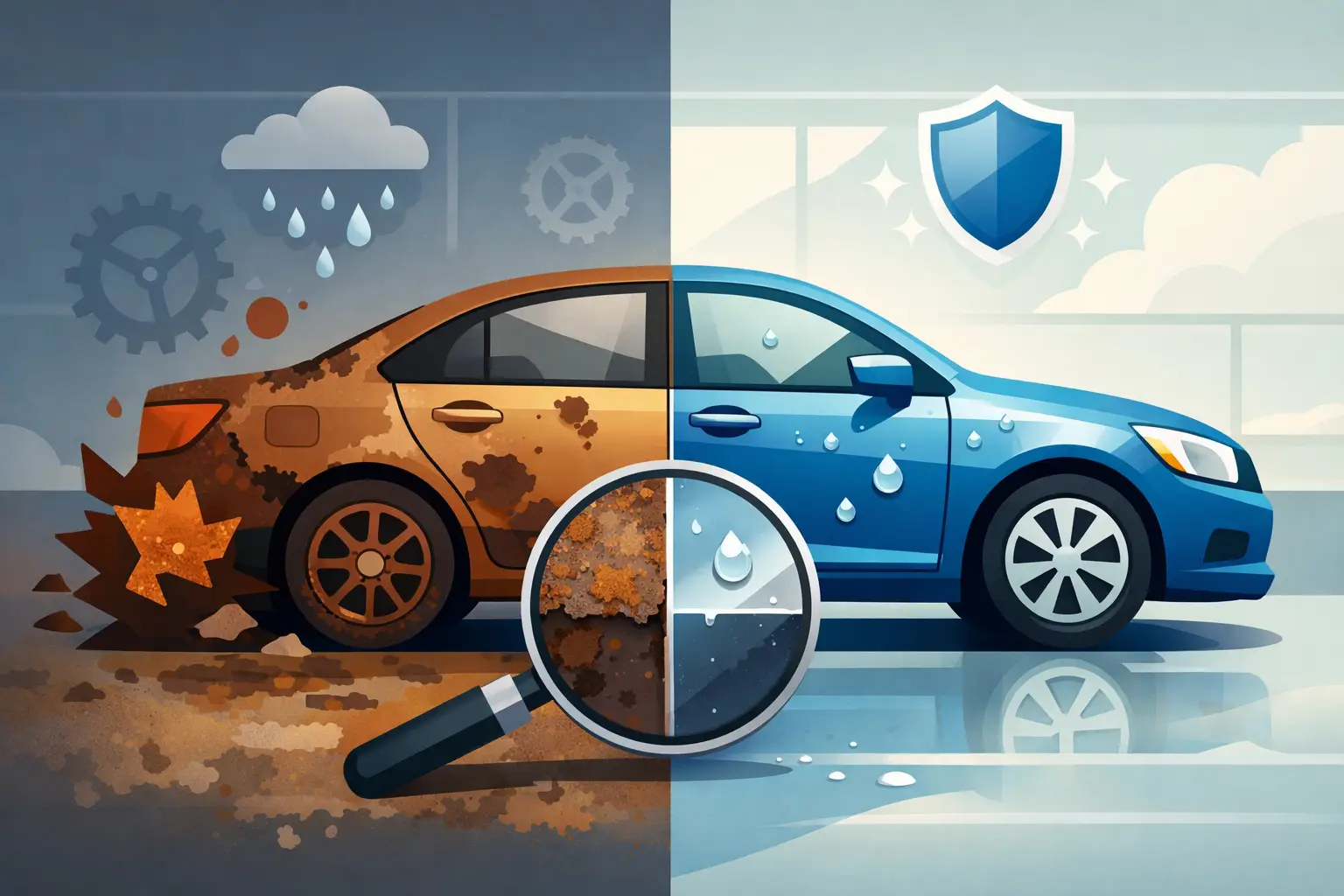
A car can look clean on the outside and still start rusting where you cannot see it. That is the part many drivers find out too late – inside door panels, under the body, around seams, and along the frame where water, salt, and grime collect. So, does rust proofing really work? Yes, it can work very well, but only when it is applied properly, maintained when needed, and matched to the way the vehicle is actually used.
If you drive through wet roads, road salt, slush, gravel, or long winters, rust proofing is not some extra cosmetic add-on. It is basic protection. For everyday drivers, families, commuters, rideshare vehicles, and work trucks, it can help slow corrosion, protect metal parts, and keep a vehicle in better condition longer.
Does rust proofing really work in real-world driving?
The short answer is yes, but not in a magic way. Rust proofing does not make a vehicle immune to corrosion forever. What it does is create a protective barrier that helps block moisture, salt, and oxygen from reaching bare or vulnerable metal surfaces. Since rust forms when metal is exposed to those conditions over time, reducing that exposure makes a real difference.
That matters even more in places with harsh winters and salted roads. Salt speeds up corrosion. Once it gets into small chips, seams, drain areas, or underbody spots, it starts eating away at metal faster than most drivers expect. Rust proofing helps slow that process down, especially on the parts of the car that take the most abuse.
A lot depends on timing and condition. A newer vehicle usually gets the biggest benefit because the metal and factory coatings are still in better shape. An older vehicle can still benefit too, especially if rust has not gone too far. But rust proofing is meant to slow rust, not reverse serious corrosion that has already spread.
What rust proofing actually protects
Most people think about rust on fenders or around wheel wells because that is what they can see. The bigger issue is often underneath the vehicle. The underbody, rocker panels, frame areas, brake and fuel line surroundings, and lower seams are constantly exposed to water, dirt, and road chemicals.
A proper rust proofing service targets those hidden and high-risk areas. Depending on the method used, it may also protect inside cavities where moisture gets trapped. That is why professional application matters. If protection only sits on easy-to-reach visible spots, it is not doing the full job.
Rust protection also helps support resale value. Buyers notice visible rust, but they also worry about what hidden corrosion might mean for long-term reliability. A vehicle that has been regularly washed, maintained, and protected usually presents better and gives buyers more confidence.
Why some people think rust proofing does not work
Usually, when drivers say rust proofing failed, one of three things happened. The vehicle was already rusting badly before treatment. The product was applied poorly or to the wrong areas. Or the owner assumed one service would protect the vehicle forever without any follow-up care.
That is where expectations need to be realistic. Rust proofing is preventive maintenance. It gives you a better chance against corrosion, but it still works best along with regular washing, especially underbody cleaning during winter and after storms. If salt sits on the car for weeks at a time, even a protected vehicle is under stress.
There is also a difference between factory corrosion protection and aftermarket rust proofing. Modern vehicles often come with improved coatings from the manufacturer, but that does not mean they are fully protected for life. Road conditions, climate, age, mileage, and daily use all affect how much added protection makes sense.
Which vehicles benefit the most?
If your vehicle faces regular exposure to moisture and road salt, rust proofing is worth serious consideration. Daily commuters, family SUVs, minivans, rideshare vehicles, pickup trucks, and commercial fleet units all see real benefit because they are on the road often and exposed to the elements year-round.
Older vehicles that are still structurally solid can also benefit because the goal is to slow further deterioration. If you plan to keep your car for several more years, preventing rust now can help you avoid more expensive body and underbody issues later.
Newer vehicles may benefit the most over the long run because protection starts before corrosion gets a foothold. If you just bought a vehicle and want to keep it looking better and lasting longer, early rust proofing usually makes more financial sense than waiting until damage starts to show.
Does rust proofing really work better than just washing your car?
Washing helps a lot, but it is not the same thing. Regular washing removes salt, mud, and grime before they sit too long on the paint and underbody. That is one of the smartest and most affordable habits any driver can have. But washing alone does not create a lasting protective coating in vulnerable areas.
Think of it this way. Washing removes the problem. Rust proofing helps block the problem from doing damage. The two work best together.
That is especially true in winter. A clean underbody gives rust fewer chances to start. Add proper rust proofing on top of that, and your vehicle has a stronger line of defense. For drivers who want practical value, not just a shiny finish, that combination makes sense.
What to look for in a rust proofing service
Not all rust proofing services are equal. The quality of the product matters, but the application process matters just as much. A good service should focus on coverage, access to vulnerable areas, and proper treatment of the underbody and internal cavities when applicable.
You also want honest guidance. If a vehicle already has significant rust damage, a trustworthy provider should say so. No one should promise that rust proofing will make heavy corrosion disappear. The goal is protection and prevention, not a fake quick fix.
Price matters too, but cheapest is not always best if the service is rushed or incomplete. A value-driven service should still be thorough. For many drivers, the best deal is the one that helps avoid larger repair costs later.
When rust proofing is worth the money
If you trade in your car every year or two and barely drive in bad weather, rust proofing may not be a top priority. But for most drivers who keep a vehicle for several years, deal with winter roads, or rely on their car every day, it usually makes sense.
The cost of prevention is often small compared with the cost of rust repair. Once corrosion spreads into body panels, suspension mounting points, or structural areas, repairs can get expensive fast. In some cases, the damage is not worth fixing at all.
That is why rust proofing tends to be a practical service, not a luxury service. It is about keeping your vehicle on the road longer, helping it hold value better, and reducing the chances of ugly and costly rust issues down the line.
The bottom line on whether rust proofing works
Does rust proofing really work? Yes, when it is done right and backed by regular vehicle care, it works. It slows corrosion, protects vulnerable areas, and gives drivers a better shot at keeping their cars cleaner, stronger, and in better shape over time.
It is not a replacement for washing. It is not a repair for severe rust. And it is not something that excuses neglect. But for everyday drivers who want affordable protection against real road conditions, it is one of the smarter maintenance choices available.
At Nanak Car Wash, that practical mindset is what matters most. Drivers want service that saves money, fits real schedules, and delivers visible value. If you are already investing in regular washes and basic vehicle care, adding rust proofing can be one more step that helps your car last longer without costing a fortune.
A little prevention now is a lot easier than dealing with rust after it spreads.

 6600 Finch Ave W, Etobicoke, ON M9V 3Z6
 647-703-8515
 MON – SUN 8 AM to 7 PM