
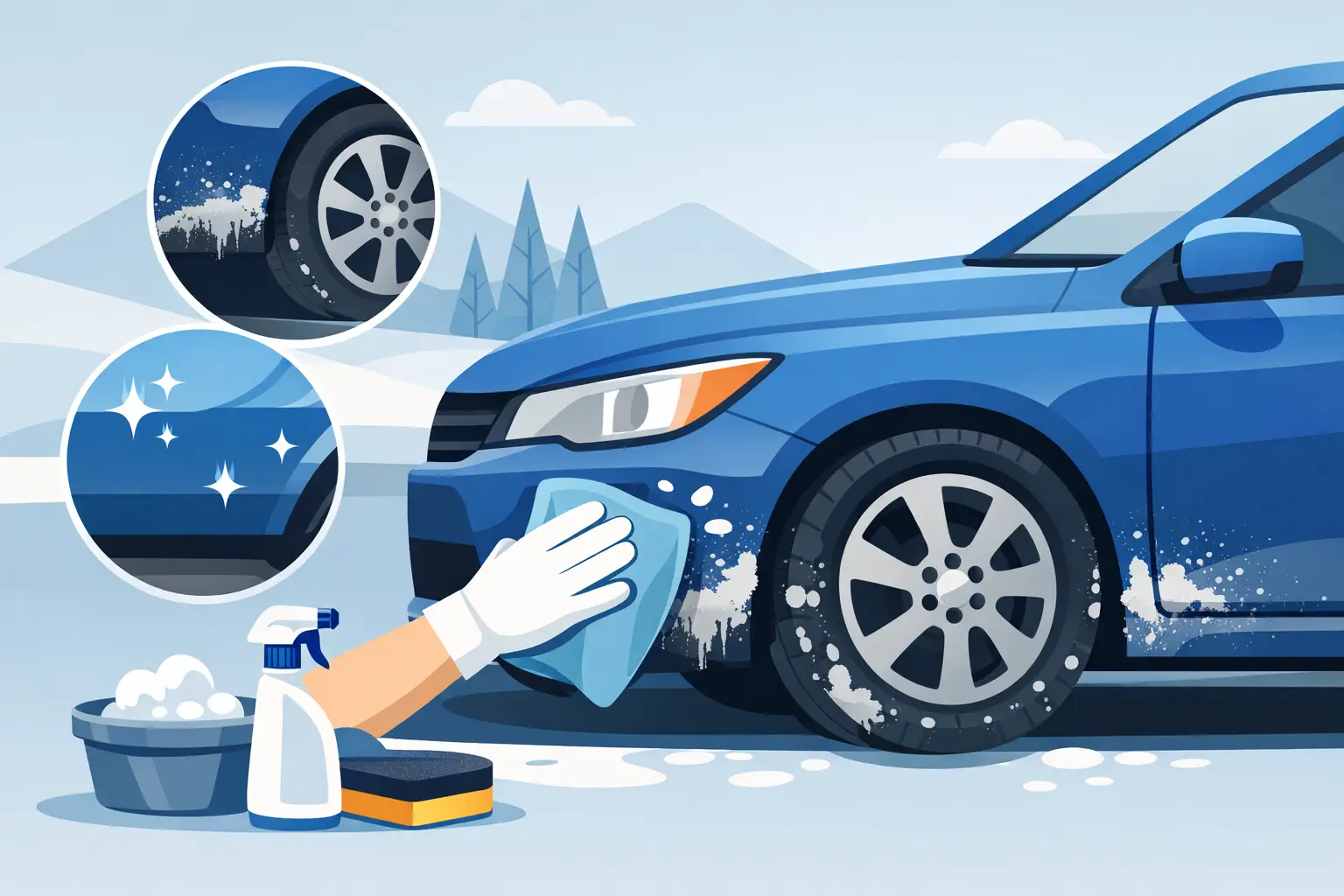
Salt stains usually show up after a long week of winter driving – white crust on the carpet, chalky marks on mats, and grime creeping up the lower panels. If you’re wondering how to remove salt stains without wasting time or damaging your interior, the good news is that the job is pretty simple when you catch it early and use the right method.
Road salt is tough on vehicles because it does two things at once. It leaves visible residue that makes your car look dirty, and it holds moisture that can wear down carpet fibers, stain fabric, and speed up corrosion around door sills and lower body panels. For commuters, families, and rideshare drivers who are in and out of the car all day, those stains build fast.
How to remove salt stains before they set in
The biggest mistake people make is scrubbing dry salt into the surface. That usually pushes the residue deeper into carpet or fabric and can leave the area looking even rougher. The better approach is to loosen the salt first, lift it out, and then dry the area properly.
Start by vacuuming the area well. You want to remove loose salt crystals, dirt, and grit before adding any moisture. Use a crevice tool around seat rails, pedals, and the edges of floor mats because salt collects in corners. If you skip this step, you risk turning sharp salt debris into muddy residue that spreads.
Next, mix a simple cleaning solution. Warm water with a small amount of white vinegar works well for most salt stains on carpet and cloth mats. A common mix is equal parts vinegar and warm water, although for lighter stains you can use less vinegar. The vinegar helps break down the mineral residue instead of just wetting it.
Spray the solution lightly onto the stained area. Don’t soak it. Too much liquid can leave the carpet damp underneath, and trapped moisture can create odor problems later. Let it sit for a minute or two, then blot with a clean microfiber towel or soft cloth. You should see the white residue start lifting.
If the stain is heavy, repeat the process instead of scrubbing aggressively. A soft interior brush can help work the solution into carpet fibers, but keep the pressure light. The goal is to loosen the salt, not grind it deeper.
Removing salt stains from floor mats
Floor mats usually take the worst hit because they get direct contact from wet boots. Rubber mats and carpet mats need different treatment.
Carpet mats
Take carpet mats out of the vehicle first. Shake them out, then vacuum both sides. Spray the vinegar and water solution over the stained spots and use a soft brush in short motions. After that, blot with a towel and repeat if needed. Once the white marks are gone, allow the mats to dry fully before putting them back in the car.
This part matters more than people think. If you reinstall damp mats, moisture gets trapped between the mat and the carpet, which can lead to odor and mildew. In winter, a quick-looking fix can turn into a bigger cleanup if you rush it.
Rubber mats
Rubber mats are easier. Rinse them first to remove loose salt and dirt, then wash with mild soap and water. If you still see a white film, wipe them down with a diluted vinegar mix and rinse again. Dry them with a towel before putting them back.
Rubber handles salt better than carpet, but the residue can still leave them looking faded and dirty. A proper rinse usually makes a big difference.
How to remove salt stains from car carpet and seats
When salt gets beyond the mats, it usually ends up on the carpet near the pedals, door openings, and front footwells. In family vehicles and work cars, you may also see it on cloth seats where jackets, gloves, or wet clothes transfer residue.
For carpet, the same basic process works: vacuum, apply a light vinegar and water solution, blot, brush gently, and dry thoroughly. For cloth seats, test a small hidden area first. Most fabric seats handle a mild solution just fine, but you never want to over-wet the foam underneath.
A towel under your cleaning hand helps control moisture while you work. Blot from the outside of the stain inward so you don’t spread it. If the stain remains after one pass, do a second light treatment instead of saturating the area.
Leather and vinyl are different. Salt usually sits on the surface instead of soaking in, so wipe it away with a damp microfiber cloth first. Then follow with a dry cloth. If needed, use a cleaner made for automotive leather or vinyl. Vinegar can be too harsh for some finished leather surfaces, so this is one of those times when it depends on the material.
Why salt stains keep coming back
Sometimes people clean the visible mark, only to have the white residue show up again after the area dries. That usually means some salt stayed buried in the fibers or padding underneath.
When that happens, repeat the cleaning process and spend more time extracting the residue with towels or a wet vacuum if you have one. Deep winter buildup may need more than one round. This is especially common in cars used for daily commuting, school drop-offs, delivery work, or rideshare driving, where snow and slush are tracked in constantly.
If your carpet feels stiff after cleaning, there may still be leftover salt in the fibers. A second treatment with light brushing usually improves that.
Preventing salt stains is cheaper than fixing heavy buildup
Once you know how to remove salt stains, the next smart move is keeping them from piling up again. Winter mess is easier to manage when you stay ahead of it instead of waiting until spring.
Use rubber mats during snow season if possible. They catch slush better and are much faster to rinse clean. Knock snow off your boots before getting in the car when you can, and give your mats a quick shake or rinse every week instead of waiting for thick white crust to form.
Regular vacuuming also helps more than most drivers expect. Salt crystals stay hidden in the carpet even when the area looks fine from a quick glance. Removing that grit early cuts down on staining and wear.
Exterior washing matters too. Salt doesn’t only stain the inside of your car. It also sticks to rocker panels, wheel wells, and the underbody, where it can do expensive long-term damage. A basic wash is good, but winter driving often calls for more frequent cleaning, especially after storms or slushy road conditions.
When a DIY cleanup is enough and when to get professional help
Light to moderate salt stains are usually manageable at home with the right method. If the residue is fresh, the interior is otherwise clean, and you can dry the area properly, a DIY job often gets solid results.
But sometimes it makes more sense to have it handled professionally. If the stains are old, spread across several areas, or tied to deep dirt and odor, home cleaning can turn into a long job with mixed results. The same goes for fleet vehicles, heavily used family cars, and rideshare vehicles that need to stay presentable without a lot of downtime.
Professional interior cleaning can save time and give you a more complete result, especially when salt has worked into carpet, mats, and fabric at the same time. If your vehicle also has heavy winter grime outside, combining interior cleanup with a full wash or detail is usually the most practical option.
At Nanak Car Wash, this is the kind of everyday vehicle care people ask for all winter long – quick cleanups, deeper interior work, and affordable options that help drivers keep up with the mess without overspending.
The best approach for winter drivers
If you drive every day, salt stains are not a one-time problem. They are part of the season. The trick is not waiting until the car looks rough. Clean small areas early, keep mats dry, and wash off buildup before it hardens into those white patches everyone notices.
A clean car feels better to drive, holds up better over time, and is easier to maintain when winter is at its worst. Handle the salt while it’s still manageable, and you’ll save yourself time, money, and a much bigger cleanup later.




 6600 Finch Ave W, Etobicoke, ON M9V 3Z6
 647-703-8515
 MON – SUN 8 AM to 7 PM