
You hear that gritty spray kick up off the 401, then the slush slaps the rocker panels, and you tell yourself you'll deal with it later. That's how most rust starts in the GTA. Not with some dramatic hole in the fender. With a normal winter commute, a damp parking garage, and salt packed into places you'll never see.
If you drive in Toronto, Brampton, Mississauga, Vaughan, Oshawa, or anywhere else that gets hammered with road salt, rust proofing a vehicle isn't cosmetic fussing. It's basic survival. A clean-looking car can still be rotting from the inside of the doors, the seams, the frame rails, and the underbody. Washes help. They don't finish the job.
Table of Contents
- The Invisible Enemy Why GTA Drivers Must Fight Rust
- Your Shield and Armour Exploring Rust Proofing Methods
- DIY Sprays vs Professional Application
- The Investment What to Expect and How Much to Budget
- Your Annual Vehicle Protection Plan
- Frequently Asked Questions About Rust Proofing
The Invisible Enemy Why GTA Drivers Must Fight Rust
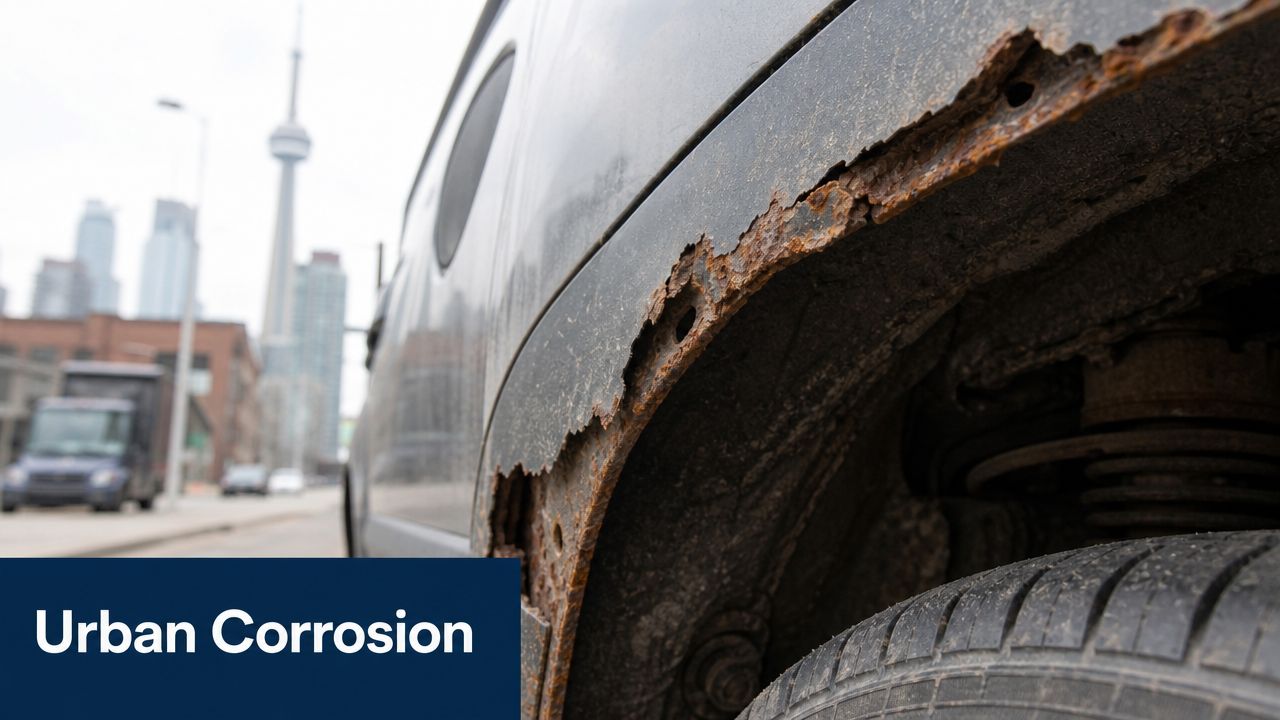
You know that sound when the DVP is wet, grey, and covered in dirty spray, and every car ahead of you is throwing salty grit underneath your vehicle. That's not harmless winter mess. That's the start of corrosion getting worked into every seam, lip, pinch weld, and cavity your hose can't touch.
Rust is termites for your car. It doesn't care if your paint still shines. It attacks where moisture sits and salt keeps the metal active. In the GTA, that cycle gets ugly fast because our winters don't stay neatly frozen. We get slush, melt, refreeze, more salt, then another wet day. That freeze-thaw rhythm keeps dragging contamination deeper into the body and undercarriage.
What GTA winters do to a vehicle
A lot of drivers wait until they see bubbling paint around a wheel arch. By then, the damage usually didn't start there. It started inside a door seam, behind a panel, or in the underbody where salt slurry sat for weeks.
In Canada, approximately 1.2 million vehicles are taken off the road due to rust damage annually, and the CAA explicitly recommends annual rustproofing because most oil-based treatments stay effective for about one year before reapplication is needed, according to CAA guidance on annual rustproofing in Canada.
That's the part too many people ignore. Rust isn't just ugly. It affects structural areas, it hurts resale, and if it keeps going long enough, it becomes a safety problem.
Rust usually starts in the places owners never inspect and most cheap services barely reach.
Why washing alone doesn't solve it
I'm a big believer in winter washes. You should absolutely wash your vehicle. But anyone telling you that regular washing replaces rust proofing a vehicle hasn't spent enough time looking underneath old Ontario cars.
A wash removes what it can reach. Rust proofing protects what the wash can't. Doors, rocker panels, frame sections, overlaps, welds, and hidden cavities don't magically clean themselves because you ran through a touchless wash on Sunday.
Keep this simple in your head:
- Salt on the surface: a wash helps.
- Salt inside seams and cavities: a wash won't reach it.
- Moisture trapped behind metal overlaps: you need a product that creeps in there.
That's why GTA drivers who want to keep a car longer than a few winters need to treat rust prevention as maintenance, not an optional add-on.
Your Shield and Armour Exploring Rust Proofing Methods
A GTA winter exposes every weak spot in a rust proofing job. Drive the 401 in February, let salty slush pack into the wheel wells, then leave the car in a warm garage. If the treatment only sits on exposed metal, the hidden cavities still get attacked.
That is why method matters more than marketing.
What actually works on an Ontario daily driver
The right chemical treatment has to travel. It needs to creep into pinch welds, seams, rocker panels, door bottoms, frame sections, and other boxed-in areas where salt water gets trapped and stays trapped. Surface coverage looks good for five minutes. Cavity protection is what keeps the vehicle alive.
For a daily-driven vehicle in the GTA, annual oil-based rust proofing remains the smartest first choice. It keeps working because it stays active and reaches places a wash and a surface spray never touch.
Dripless oil-style products can also work well, but only if the shop applies them properly and injects the product into the vehicle's internal cavities. That detail gets missed all the time. A cleaner finish on the driveway means nothing if the doors, rockers, and frame rails were barely treated.
Where the other options fit
Hard undercoatings, including tar and wax-style products, have a narrower role. They can help protect exposed underside areas when the surface is clean, dry, and the product is applied properly. They are not a substitute for cavity protection. If moisture gets sealed under a hard coating or the installer skips hidden sections, you paid for a tidy-looking underside and left critical rust zones exposed.
Electronic rust modules keep getting sold because they sound advanced. In real-world Canadian use, they have a poor reputation. Automotive guidance for Canadian drivers generally points people back to chemical rust proofing applied after purchase, not gadget-based promises or factory claims alone, as noted in CarHub's rust proofing guidance for Canadian drivers.
Rust Proofing Methods Compared
| Method | How It Works | Best For | Pros | Cons |
|---|---|---|---|---|
| Annual oil-based spray | Creeps into seams, joints, and internal cavities | GTA drivers planning to keep a vehicle through several winters | Reaches hidden rust zones, stays practical for Ontario conditions, proven approach | Needs yearly reapplication |
| Dripless oil-style treatment | Uses a less runny product, often with cavity injection | Owners who want protection with less mess on exposed surfaces | Cleaner finish, can protect cavities if applied thoroughly | Results depend heavily on access points and application quality |
| Tar or wax-based undercoating | Forms a thicker barrier on exposed underside areas | Specific underbody protection as part of a larger plan | Strong shield on open lower surfaces | Does not replace internal cavity treatment, can be oversold |
| Electronic rust module | Uses an electronic device instead of a chemical coating | Drivers sold on convenience claims | No spray residue | Weak real-world credibility |
| Paint sealant or wax | Protects painted exterior panels | Owners focused on cosmetic protection | Helps preserve paint finish | Does nothing for hidden cavities or inner structural sections |
Practical rule: If the service does not inject product into the vehicle's hidden cavities, it is incomplete rust proofing for a GTA winter.
A lot of owners mix up paint protection, undercoating, and rust proofing. They do different jobs. Paint protection helps the finish you see. Undercoating helps exposed lower areas. Rust proofing protects the enclosed spaces where salt sits out of sight.
If you are picking one method for a commuter that sees Toronto slush, highway spray, and road salt all season, choose cavity injection first. That is where vehicles are saved or lost.
DIY Sprays vs Professional Application
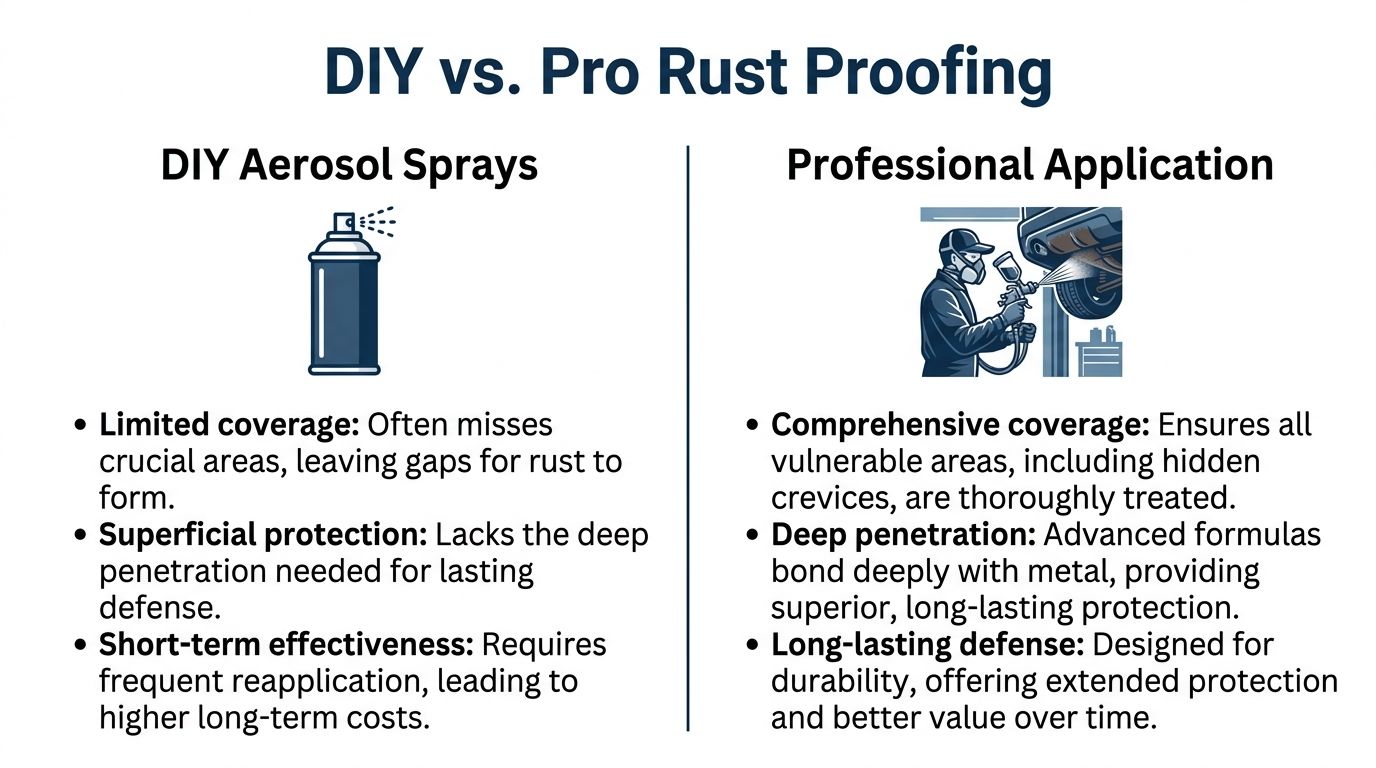
Hardware-store aerosol cans make people feel productive. That's fair. They're cheap, easy to buy, and you can blast visible metal in your driveway on a Saturday. The problem is that rust rarely starts on the easy-to-see metal you're crouched in front of.
The key question isn't whether DIY sprays put product on metal. They do. The key question is whether they put the right product in the places where Ontario salt starts destroying the vehicle. Usually, they don't.
What the can misses
A DIY can works on what your arm can reach. Wheel wells. A bit of the underbody edge. Maybe some exposed brackets. That's surface coverage, not full protection.
The biggest weakness is access. Doors, rocker panels, frame rails, and internal cavities need penetration, not a casual mist on the outside. Surface spraying looks busy. It often leaves the important hidden zones untouched.
If you're doing DIY, be honest about what it is. It's touch-up help. It isn't a complete rust prevention plan for a GTA commuter.
- Visible-only coverage: You treat what you can see, not what's boxed in.
- No cavity reach: Tight internal spaces stay vulnerable.
- Inconsistent application: Most owners don't have the tools to apply evenly into seams and channels.
What a proper shop does differently
Professional rust proofing a vehicle changes the game because the process changes. The good shops don't just fog the underside and call it a day. They use dedicated wands, pressure equipment, and cavity access points to get product deep inside the structure.
An expert demonstration of the drilling and injecting approach shows gel coating blown through drilled holes with 4 feet of coverage in doors and frame rails, which surface sprays can't replicate, according to this demonstration of internal cavity injection.
That matters more than brand hype. If the treatment reaches inside the door, inside the rocker, and through the frame sections, you've got a fighting chance. If it only darkens the outside metal, you bought appearance, not protection.
Surface spray has its place. It just shouldn't be mistaken for full rust proofing.
A proper application usually includes inspection first, then treatment of the underbody and vulnerable internal sections. If a shop uses a drill-and-plug method where needed, that isn't a red flag to me. It often means they're serious about getting protection into the cavities where corrosion starts.
The Investment What to Expect and How Much to Budget
A lot of GTA drivers ask the same question after one ugly winter on the 401. Do I pay for rust proofing every year, or do I wait until something starts flaking?
Budget for it yearly if you plan to keep the vehicle. Salt damage is expensive in boring, frustrating ways. Seized bolts. Crusty brake and suspension hardware. Rust creeping into door bottoms and rocker panels where you do not see it until the repair bill shows up.

What the money usually buys
The price gap between methods is wide, and that matters. Annual oil spray treatments usually sit in a range that regular drivers can live with. Dealer-sold coatings and one-time packages often cost far more, but high price does not mean better protection in an Ontario winter.
As noted earlier, annual oil-based rust proofing is usually the lower-cost option, while long-term tar or wax-style coatings can run much higher. My advice is simple. Pay for a method that gets into the hidden cavities, not one that gives you a polished sales pitch and a thick bill.
That is the part many drivers miss. A basic wash cleans off grime. A proper rust proofing service is paying for access, tools, and time spent getting product into doors, rockers, seams, and frame sections. In the GTA, that hidden coverage is what you are really buying.
Nanak Car Wash lists rust proofing by vehicle size at about $119.95 to $149.95 plus tax. That is in the range many local drivers expect for an annual treatment.
For business owners with vans, service vehicles, or delivery units, the math gets even clearer. A yearly rust proofing bill is easier to control than downtime and repair costs across a small fleet. If you are trying to keep multiple vehicles on schedule, fleet maintenance scheduling automation helps prevent missed treatments.
What I'd skip
Skip any package sold as “lifetime” or “permanent” if nobody clearly explains where the product goes, how cavity coverage is handled, and what maintenance still applies after the sale.
The usual traps are easy to spot:
- Dealer finance office pressure: You are already signing papers, and the add-on gets pitched fast.
- Sticker shock in reverse: A cheap DIY can look smart until rust starts inside areas the spray never reached.
- Mess anxiety: A little drip after an oil treatment bothers some owners more than rust eating the vehicle from the inside.
Spend based on method, not marketing. Around here, the right annual application usually beats the wrong one-time package.
Your Annual Vehicle Protection Plan
Rust protection only works when you treat it like a schedule. Skip years, ignore the underbody, and hope for the best, and the salt will win. That's how it goes around here.
Benchmark data from Rust Check says properly applied rustproofing can offer an 8-year warranty against corrosion perforation when combined with annual inspections and reapplications, according to their advice for Canadian vehicle owners.
When to book it
There are two practical windows. Spring is a strong choice because drier conditions help the product adhere and penetrate well. Before winter is also smart if you want protection in place before the roads turn into a salt grinder.
I don't get hung up on debating those two windows to death. The bigger mistake is doing nothing for years. If the vehicle has missed annual treatment, get it inspected and start now.
For work trucks, delivery vehicles, and company cars, consistency matters even more. If you're managing multiple units, a scheduling system helps prevent one van from getting treated while the rest get forgotten. That's where something like fleet maintenance scheduling automation becomes practical. Not because rust proofing is complicated, but because repeated maintenance gets missed when nobody owns the calendar.
The simple yearly routine
Keep the routine boring. Boring works.
- Book one rust proofing service every year: Don't let it slide because the car “still looks fine.”
- Wash the underbody regularly in winter: Especially after storms and long highway runs.
- Inspect problem zones: Wheel wells, lower door edges, rocker panels, and the undercarriage.
- Reapply on schedule: Oil-based protection isn't forever. That's by design.
- Deal with early rust directly: Protection slows corrosion. It doesn't reverse advanced rot.
A wash and a rust treatment do different jobs, and GTA drivers need both. The wash clears off the filth you can remove. The rust treatment protects the places you can't properly reach.
Frequently Asked Questions About Rust Proofing
Do brand-new cars need rust proofing
Yes, if you drive them through Ontario winters. New doesn't mean immune. Factory protection doesn't stop salt from working into seams and cavities over time.
Is it too late for an older vehicle
Not always. If the car has light rust, treatment can still help slow things down. If the underside is already badly compromised, get an honest inspection first. Don't pay to hide a serious structural problem.
Will rust proofing void my manufacturer's warranty
Ask the shop how they apply it and ask your dealer if you're concerned, especially on a newer vehicle. A proper provider should explain the process clearly, including cavity access and reapplication expectations.
I wash my car all winter. Isn't that enough
No. Washing is maintenance. It isn't internal cavity protection. It helps remove salt from accessible surfaces, but it won't replace a proper treatment in hidden metal sections.
Which method would you choose for a GTA daily driver
A professionally applied chemical treatment that reaches internal cavities. Not an electronic module. Not a surface-only quick spray pretending to be complete protection.
If your vehicle sees GTA winters, don't wait for bubbling paint to tell you what's happening underneath. Book a rust proofing service with Nanak Car Wash if you want a straightforward option that fits alongside your regular wash and detailing routine.


 6600 Finch Ave W, Etobicoke, ON M9V 3Z6
 647-703-8515
 MON – SUN 8 AM to 7 PM