
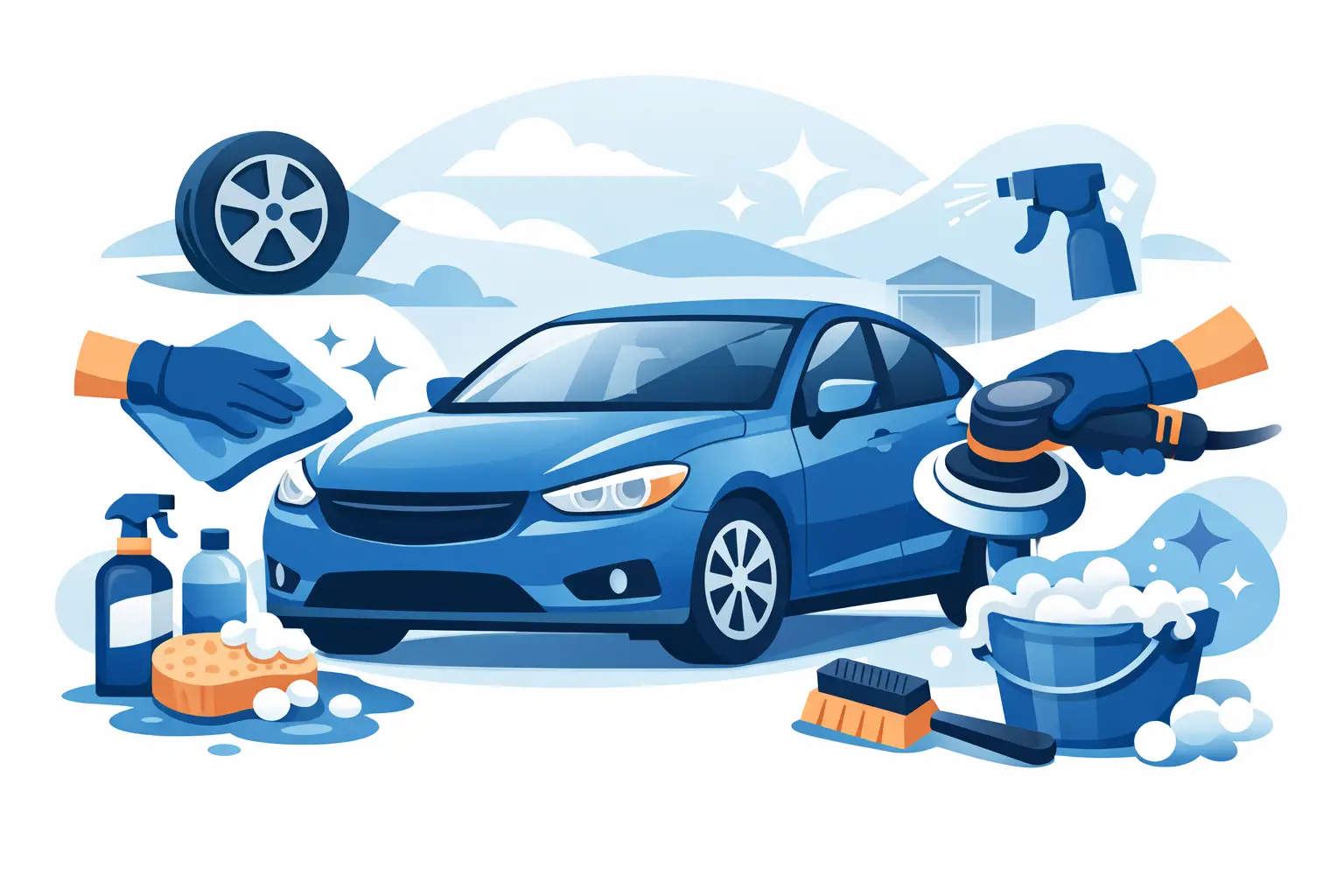
A clean car feels better to drive, holds its value better, and makes daily commutes a little less stressful. This car detailing guide for beginners breaks down what actually matters, what can wait, and how to get a noticeable result without buying a shelf full of expensive products.
Detailing is more than running a vacuum over the seats or spraying tire shine on the wheels. It is a step-by-step clean that removes dirt, protects surfaces, and helps prevent stains, salt buildup, dull paint, and lingering odors. You do not need to do every step every week. The right routine depends on how you use your vehicle, where you park, and how much time you have.
Start With the Right Expectations
A first-time detail does not need to look like a showroom restoration. The goal is to make the vehicle clean, comfortable, and protected while avoiding common mistakes, such as washing with dish soap or wiping dusty paint with a dry towel.
Set aside two to four hours for a basic interior and exterior detail. If your car has pet hair, food spills, winter salt, or years of neglected grime, expect it to take longer. In that case, a professional detail can be a smarter value than spending an entire weekend trying to correct heavy buildup yourself.
Before starting, remove personal items, garbage, loose change, car seats when practical, and floor mats. Cleaning is faster when you can reach the areas where dirt collects.
Car Detailing Guide for Beginners: What You Need
You can get solid results with a simple kit. Buy products made for automotive surfaces whenever possible. Household cleaners may be too harsh for leather, vinyl, displays, window tint, or painted trim.
For a basic detail, keep these items on hand:
- Car wash soap, two buckets, and a wash mitt
- Microfiber towels for drying, glass, and interior surfaces
- A wheel cleaner, soft wheel brush, and tire brush
- Interior cleaner and a soft detailing brush
- Glass cleaner that is safe for automotive windows
- Vacuum with crevice attachments
- Tire dressing and a paint protectant or spray wax
You do not need the most expensive brand. The better investment is quality microfiber towels and clean tools. A dirty sponge or towel can drag grit across paint and leave scratches behind.
Clean the Exterior From the Top Down
Always work in the shade when you can. Hot panels cause soap and cleaners to dry too quickly, which can leave spots and make products harder to remove. Start with cool paint and rinse the entire vehicle to loosen surface dirt.
Wash the Wheels First
Wheels are usually the dirtiest part of the car. Brake dust, road film, salt, and mud can transfer to your wash mitt if you clean them last with the same tools used on paint. Use a dedicated wheel brush and cleaner, then rinse thoroughly.
Be careful with wheels that are hot from driving. Spraying cold cleaner or water on a hot wheel is not a good idea. Let the vehicle cool down first.
Use the Two-Bucket Method
Fill one bucket with soapy water and one with clean rinse water. After washing a section, rinse the mitt in the clean bucket before loading it with soap again. This simple habit helps keep abrasive dirt off your paint.
Wash from the roof down, using straight passes instead of hard circles. The lower doors, rocker panels, rear bumper, and trunk area usually hold the most grime, so save them for last. Rinse often and do not let soap dry on the vehicle.
Dry with clean microfiber towels rather than letting the car air dry. Air drying often leaves mineral spots, especially after a fresh-water wash. Pat or gently glide the towel across the surface instead of pressing hard.
Add Quick Paint Protection
After washing, apply a spray wax, sealant, or ceramic-style protectant according to the product directions. This step makes paint slicker, improves water beading, and helps dirt release more easily during the next wash.
A quick protectant is ideal for beginners because it is easy to use and does not require machine polishing. It will not remove scratches, oxidation, or deep swirl marks. Those issues may need paint correction, which is best handled carefully because aggressive polishing can remove clear coat.
Make the Interior Feel Clean, Not Just Look Clean
Start inside with a thorough vacuum. Move the front seats forward and backward, use a crevice tool around seat rails, and vacuum under the pedals, between cushions, door pockets, and the trunk. A good vacuum job changes the entire vehicle.
Remove the floor mats and clean them separately. Rubber mats can be rinsed, scrubbed, and dried. Carpet mats should be vacuumed first, then treated for stains only where needed. Soaking carpet too heavily can leave moisture behind and create a musty smell.
Clean High-Touch Surfaces
Use an interior-safe cleaner on the steering wheel, shifter, door handles, buttons, cup holders, dashboard, and center console. These areas collect oils from hands, food residue, dust, and sunscreen. Spray cleaner onto a microfiber towel first rather than directly onto screens, switches, or gauges.
Use a soft brush around vents, seams, and controls. Work gently. You are lifting dust, not scrubbing a driveway. For infotainment screens and instrument clusters, use a clean, lightly damp microfiber towel or a product designed for screens. Rough towels and strong chemicals can leave permanent marks.
Leather seats need a product made for leather, followed by a light conditioner if the manufacturer recommends it. Do not use greasy dressings that make seats slippery. Cloth seats benefit from spot treatment and light extraction, but over-wetting them is a common beginner mistake.
Finish With Streak-Free Glass
Dirty glass is easy to overlook until sunlight or nighttime headlights hit it. Clean the inside and outside of all windows, including the windshield and rear glass. Use one towel to clean and another dry towel to buff away streaks.
For the interior windshield, work in small sections. It is awkward, but it makes a major difference in visibility. Avoid spraying cleaner directly near electronics or into defrost vents.
Common Detailing Mistakes That Cost More Later
The biggest mistake is using one towel, one sponge, or one bucket for the entire vehicle. Paint, wheels, glass, and interior trim need separate tools. Cross-contamination is how brake dust ends up rubbing against your clear coat.
Another mistake is adding shine everywhere. Glossy tire dressing can look great, but too much product may sling onto the paint or make tires look greasy. The same applies to dashboard dressing. A clean, natural finish looks better and reduces glare on the windshield.
Avoid automatic shortcuts that are too aggressive for your vehicle’s condition. A tunnel wash is convenient for regular maintenance, especially when you are short on time, but heavily soiled interiors, stains, salt, and neglected paint need more focused attention. Regular express washes combined with occasional hand-finished detailing is often the most practical balance.
Build a Routine You Can Actually Keep
Detailing works best when it is not treated as a once-a-year emergency. For most daily drivers, an exterior wash every one to two weeks keeps road grime and contaminants under control. Vacuuming and wiping high-touch areas once or twice a month keeps the interior manageable.
In winter, wash more often when roads are treated with salt. Salt can collect in wheel wells, undercarriage areas, carpets, and door jambs. In warmer months, bird droppings, tree sap, and bug residue should be removed quickly because they can damage paint if left sitting.
If you drive for rideshare work, carry kids, transport pets, or park outdoors, your car may need more frequent care. That does not mean you need a full detail every week. A quick wash, regular vacuum, and monthly wipe-down prevent the mess from becoming expensive to fix.
For drivers in Brampton, Toronto, Mississauga, Vaughan, Burlington, Cambridge, and Oshawa, professional help can make sense when time is tight or the vehicle needs a deeper reset. Nanak Car Wash offers quick wash options for regular upkeep and hand-finished detailing for the jobs that need more attention.
A beginner detail is successful when your car is cleaner than it was yesterday and easier to maintain tomorrow. Start with safe tools, clean consistently, and save the difficult restoration work for when it is truly needed.

 6600 Finch Ave W, Etobicoke, ON M9V 3Z6
 647-703-8515
 MON – SUN 8 AM to 7 PM