
Your car looked unreal the day the ceramic coating cured. Deep gloss. Tight beads. That slick, freshly detailed feel that makes you turn around for one more look in the parking lot.
Then Ontario happened.
A week of expressway grime, a dusting of salt, one unlucky bird, and now you're standing there wondering the same thing most coated-car owners in the GTA wonder: what kind of wash keeps the coating working, and what kind beats it up? That's where a proper ceramic coating car wash routine matters. The coating is durable, but the wash process decides whether it ages gracefully or gets chewed up by bad habits.
Table of Contents
- Why Your Ceramic Coating Needs a Special Car Wash
- Pre-Wash Prep The Unskippable First Date
- The Two-Bucket Tango A Guide to Safe Contact Washing
- Drying Without Disappointment Avoiding Water Spots and Scratches
- Long-Term Care and When to Call the Professionals
- Your Smart Wash Strategy with Nanak Car Wash
Why Your Ceramic Coating Needs a Special Car Wash
A ceramic coating changes how dirt and water behave on the paint. It doesn't make the car invincible. It makes the car worth washing properly.
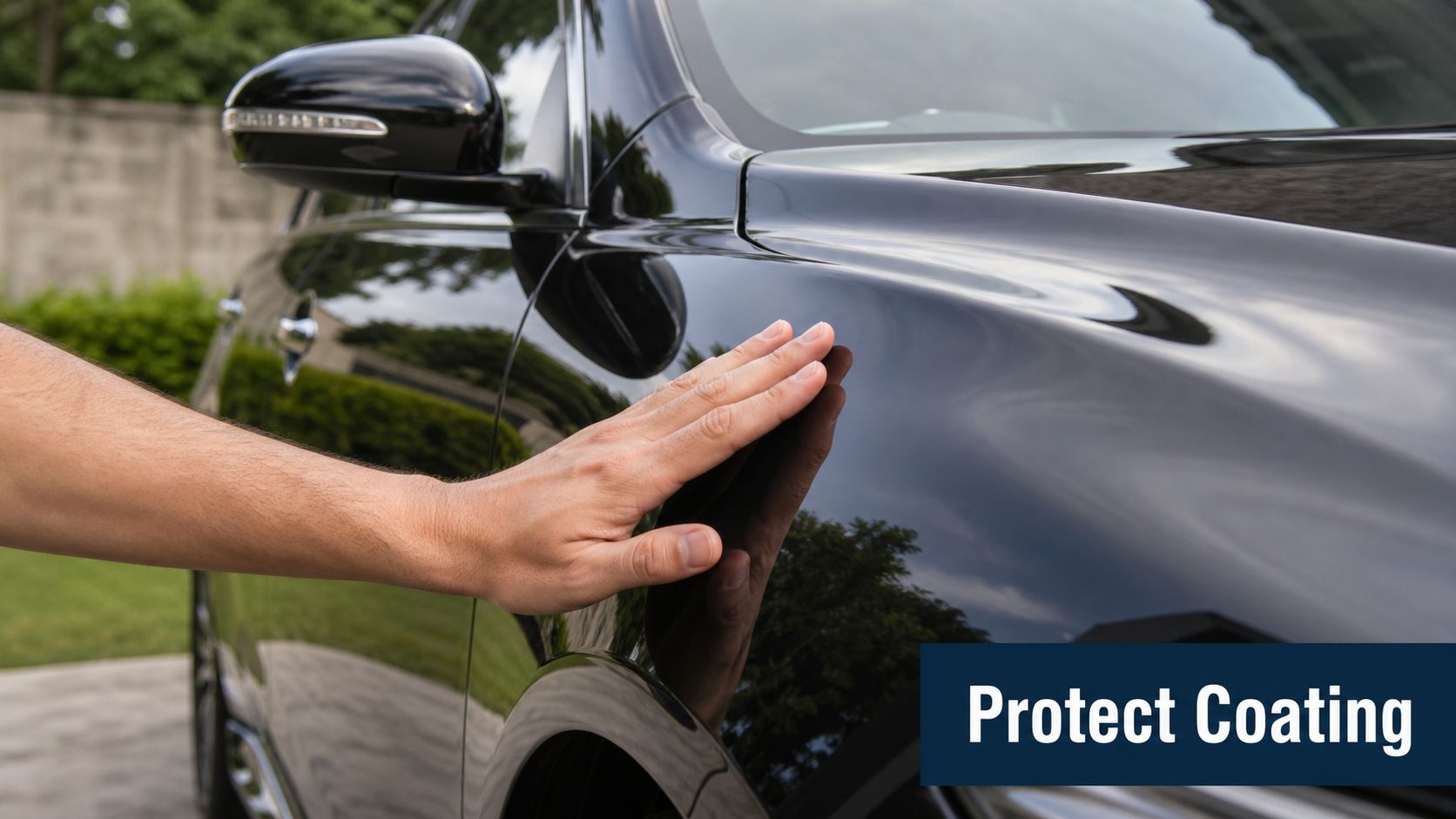
In the GTA, coatings can last between 2 and 9 years, with professional 3-year coatings starting at $599 for sedans and $799 for SUVs, but that lifespan depends on washing the vehicle every 1 to 2 weeks and avoiding automated brush-style washes, which are classified as harmful in this context, according to this GTA ceramic coating guide. That's the part many owners learn after the invoice, not before it.
The trade-off is simple. Ceramic coating gives you easier maintenance, not careless maintenance. If you keep the surface clean with the right soap, the right wash media, and a gentle routine, the coating keeps doing its job. If you run it through a brush tunnel because it's cold and you're in a hurry, those spinning strips and harsh detergents don't care what package you bought.
The real GTA problem
Ontario roads add a special layer of nonsense. Winter salt, grey road film, slush spray, and grime from daily commuting don't just make the car ugly. They load the paint with abrasive contamination.
That changes the wash equation. A bad wash on a mildly dusty summer car is one thing. A bad wash on a salt-coated February commuter is how swirl marks start showing up on black paint like a confession.
Practical rule: A ceramic coating is best treated like a hard shell with a sensitive finish. It resists contamination well, but it still hates abrasion.
A proper ceramic coating car wash routine is really a protection plan for the coating itself. You're not only cleaning the car. You're deciding whether that coating gets to live out its full useful life, or gets slowly worn down by brushes, dirty mitts, bargain chemicals, and rushed drying.
Pre-Wash Prep The Unskippable First Date
Most wash damage happens before people think they've started doing damage. They grab a mitt too soon, rub road grit across the panels, and then wonder why the finish looks tired a few months later.
The pre-wash is where you remove the worst of the contamination before your hand ever touches the paint.
Work in the right conditions
Keep the paint cool. Shade is better than direct sun. If the panels are hot, soap dries too fast, water spots show up sooner, and you end up chasing your tail.
Have your tools ready before water hits the car. That usually means a pressure washer or hose, a foam cannon or foam sprayer, a pH-neutral ceramic-safe shampoo, and separate gear for wheels if you're doing them at the same time. The less wandering around you do mid-wash, the smoother the job goes.
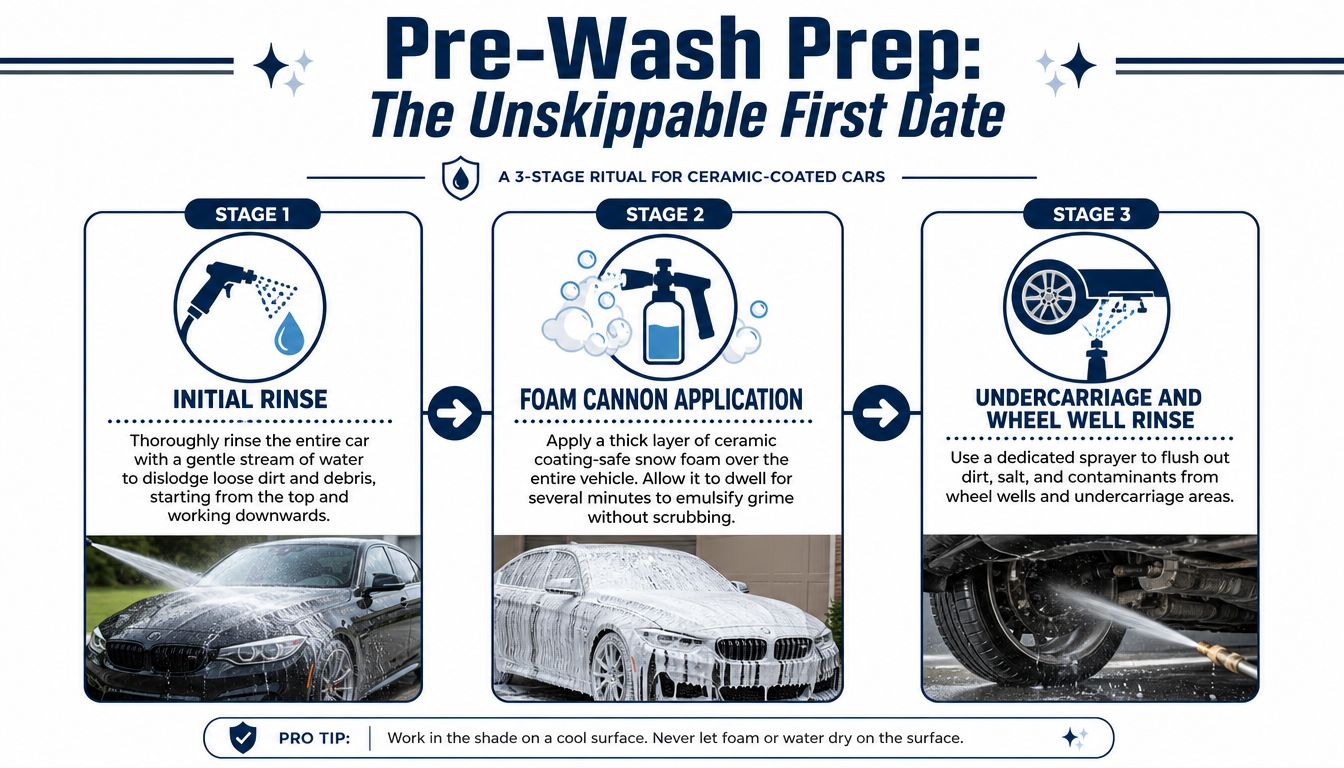
The three-stage pre-wash
The safest process follows a strict sequence. Gtechniq's wash method for ceramic-coated cars states that the expert approach starts with a pressure pre-rinse that removes 60 to 70% of loose contaminants, then a pH-neutral foam pre-wash diluted 1:10 that dwells for 5 to 10 minutes without drying, followed by the contact wash.
That sequence matters because each stage reduces friction.
Stage 1, pressure rinse
Start at the top and work downward. Focus on lower doors, behind the wheels, rocker panels, and the rear end where road film loves to collect. The goal isn't perfection. The goal is to knock off the loose grit that would otherwise get trapped in your wash mitt.Stage 2, foam pre-wash
Blanket the vehicle with foam and let chemistry do the boring work. A ceramic-safe, pH-neutral foam helps soften road grime and encapsulate contamination so it can slide away during the rinse rather than drag across the paint.Stage 3, patient dwell and rinse
Let the foam sit, but don't let it dry. Then rinse thoroughly. This part is where many DIY washes go sideways because people rush through it and head straight for contact.
Skip the pre-wash and you turn every mitt pass into sandpaper with better branding.
A lot of GTA owners also miss the dirtiest hidden areas. Wheel wells, the lower edge of the bumpers, and the undercarriage collect the salt and sludge that keep dripping back onto clean panels. Even if your main focus is the paint, flush those areas before you start touching the bodywork. It makes the rest of the wash cleaner and less annoying.
The Two-Bucket Tango A Guide to Safe Contact Washing
A GTA car can look clean after the rinse and still have enough fine grit on the paint to mark it during the hand wash. That is why the contact stage needs discipline. Ceramic coating gives you a slicker, easier-to-clean surface, but it does not give you a free pass to scrub.
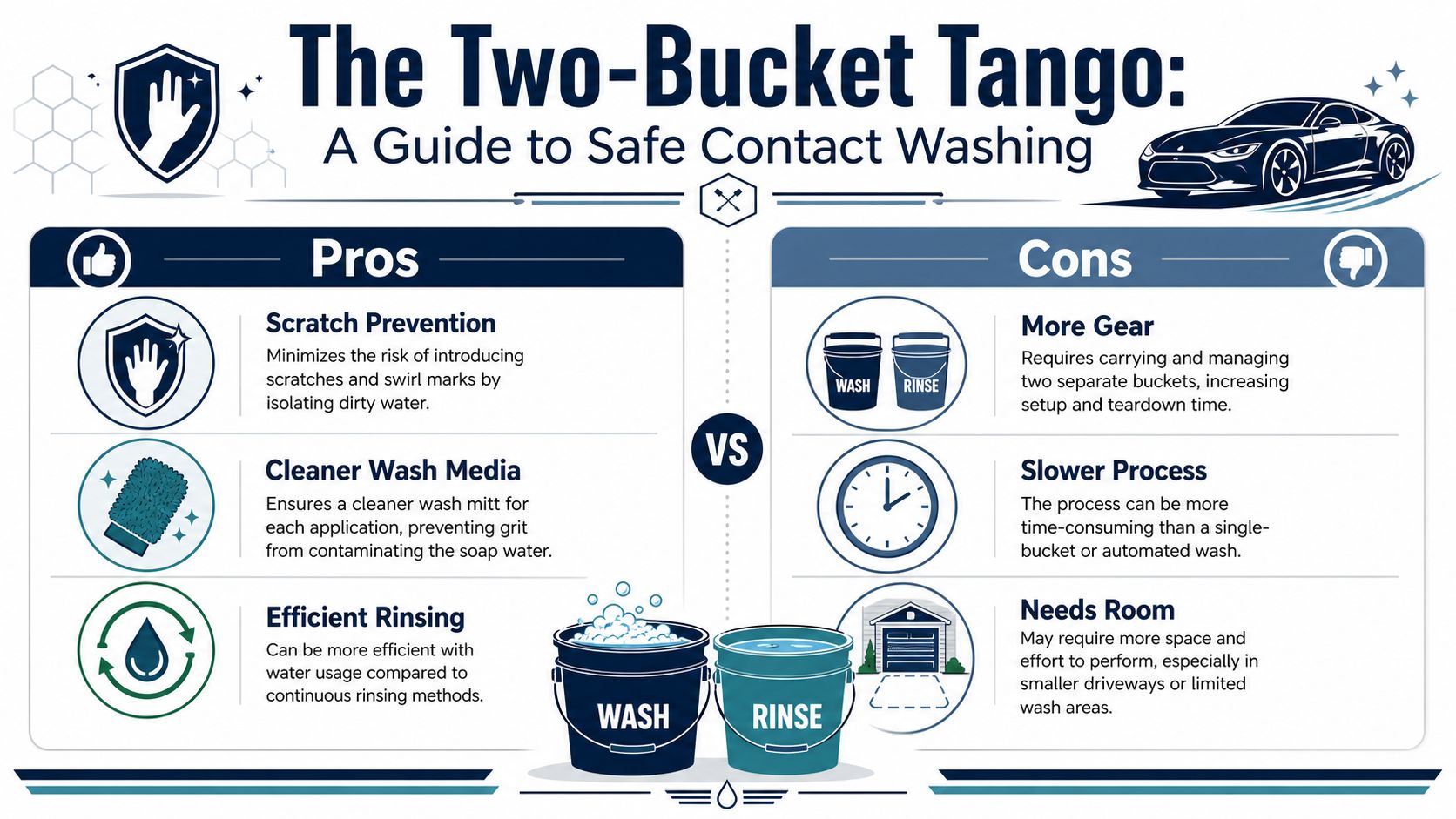
The two-bucket method is simple. One bucket carries your shampoo solution. The other carries rinse water for the mitt. After each section, rinse the mitt thoroughly before it goes back into the soap. If you use grit guards, even better. They help keep the heavy debris at the bottom instead of floating back onto the paint.
Why two buckets beat one
On Ontario roads, the problem isn't dramatic chunks of mud. It is the mix of road film, salt residue, and fine abrasive dirt that hangs on around lower panels and the rear hatch. If that grime keeps cycling through one bucket, your mitt turns into a very polite sanding block.
Industry guidance from the International Detailing Association's wash process resources supports separating rinse water from your soap solution to cut down the chance of dragging contamination back across the surface. That matters even more on a coated vehicle, where owners are usually trying to preserve gloss, slickness, and easy maintenance for as long as possible.
Here is what the method does in practice:
- Keeps dirty water out of your soap bucket: Your wash solution stays cleaner from panel to panel.
- Reduces marring risk: Less trapped grit in the mitt means fewer fine scratches.
- Makes your wash more consistent: You are not guessing whether the mitt is still safe to use.
It is not overkill. It is basic damage control for expensive paint protection.
The contact wash technique that keeps paint calm
Use a clean microfiber wash mitt with plenty of nap. Sponges tend to trap grit close to the surface, and old towels belong anywhere except your paint. On coated cars, softer wash media usually releases contamination more easily during the rinse step, which is exactly what you want.
A safe contact wash usually looks like this:
| Tool or habit | Better choice | Why it works |
|---|---|---|
| Old sponge | Microfiber mitt | Holds suds well and is gentler on coated paint |
| Circular scrubbing | Straight-line passes | Reduces obvious swirl patterns |
| Bottom-up washing | Top-down washing | Cleaner areas get touched first |
| One mitt for everything | Separate mitts or dedicated wheel tools | Keeps brake dust and grit away from paint |
Work one small section at a time. Roof, glass, bonnet, and upper doors first. Leave the lower doors, rear bumper, and areas behind the wheels until the end because that is where GTA winter grime really stacks up. If the mitt starts to feel grabby, stop and rinse the panel again. More pressure is usually the wrong answer.
Wash like you're wiping dust off piano black trim, not scrubbing a barbecue grill.
A few habits make a bigger difference than people expect:
- Reload the mitt often: Fresh shampoo gives you lubrication.
- Flip the mitt as you go: A clean side buys you a little more safety.
- Use separate tools for wheels: Brake dust has no business visiting your doors and fenders.
- Retire dropped wash media immediately: Once a mitt hits the driveway, it needs a proper wash before it touches paint again.
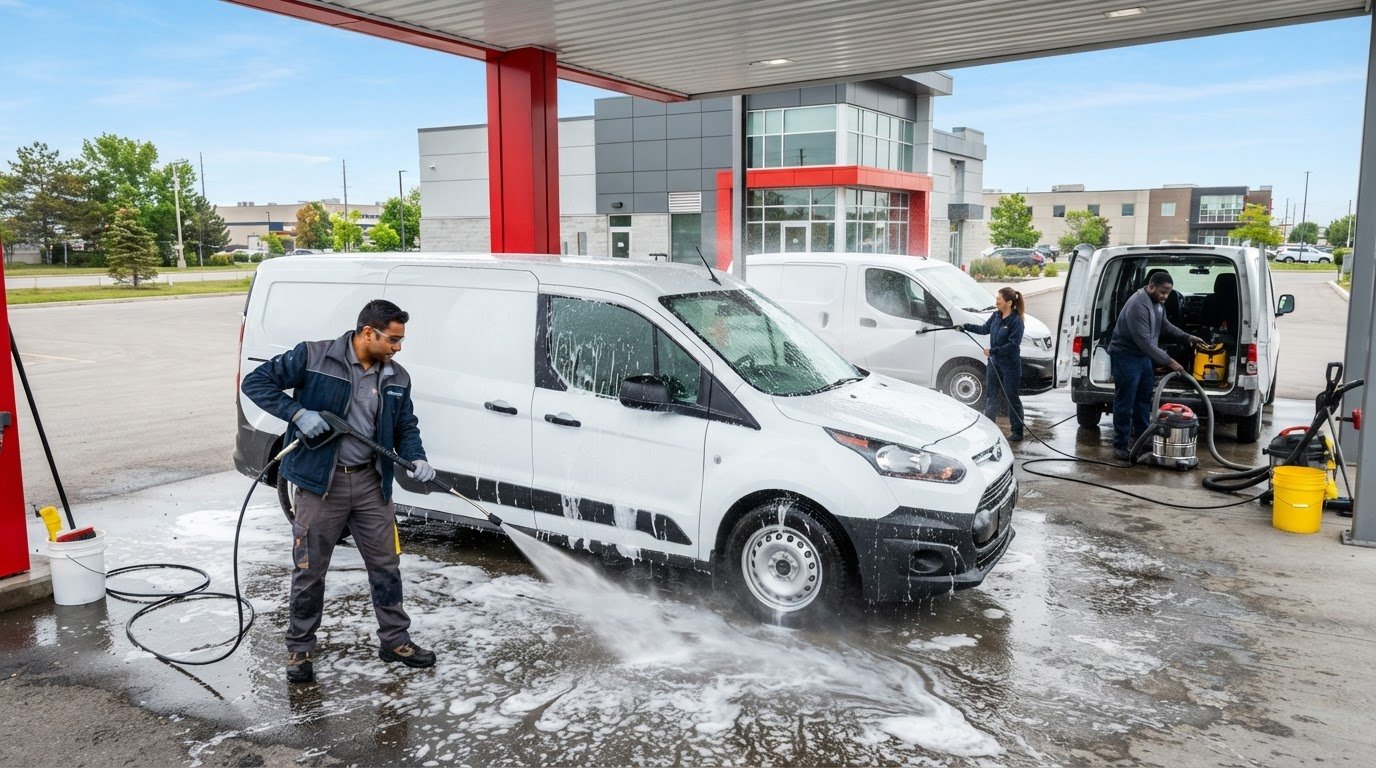
DIY owners can absolutely handle this at home if they have the time, space, and decent tools. If it is February in Mississauga, your hose is half frozen, and the driveway looks like a slush pit, that is when a proper hand wash service starts to make a lot more sense. The method stays the same either way. Clean rinse water, clean wash media, light pressure, and no shortcuts.
Drying Without Disappointment Avoiding Water Spots and Scratches
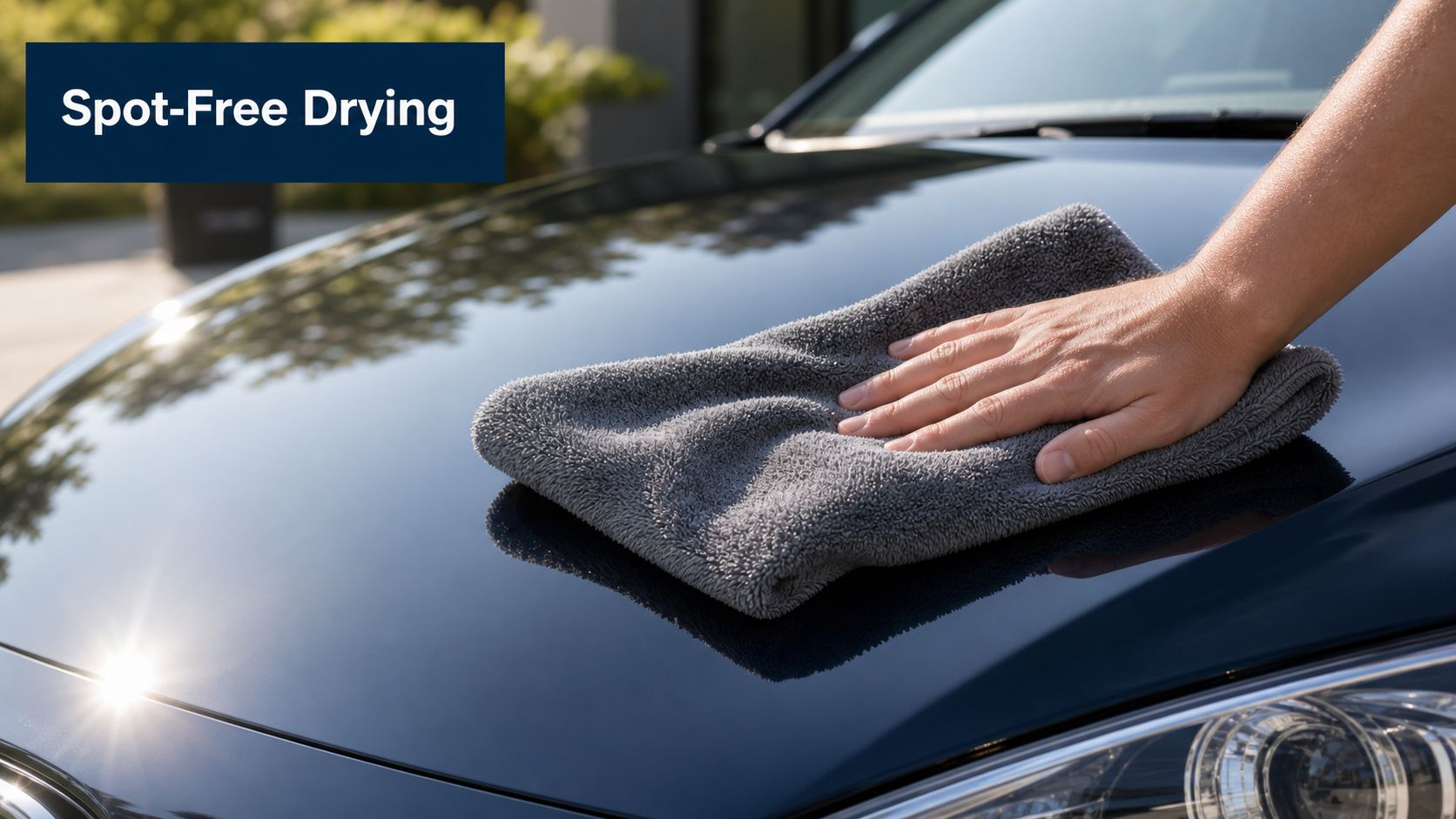
A lot of people treat drying as the easy bit. That's backwards. Drying is the point where a clean, glossy finish either stays clean and glossy, or picks up spots and light marring right before the final reveal.
Why air drying is a bad bet in Ontario
In Ontario, skipping the drying step is a major mistake. Water spots can form within 8 to 12 minutes in humid conditions, and mineral deposits from road salt can permanently etch the coating. Improper washing, including neglected drying, accounts for over 70% of premature coating failures, according to this ceramic coating maintenance video reference.
That should kill the old “I'll just let it dry on its own” habit.
Even on a coated car, water doesn't disappear without leaving evidence. It leaves minerals behind. On a hot or humid day, those marks can show up fast, especially on dark paint. Around badges, mirrors, trim edges, and panel gaps, trapped water keeps sneaking out long after you think you're done.
The safest way to finish the job
The best options are simple:
- Use a blower first: A dedicated air blower pushes water out of mirrors, grilles, fuel doors, emblems, and trim.
- Follow with a plush drying towel: Use a clean microfiber drying towel and blot or lightly pull it across the panel.
- Flip towels often: Once a towel gets saturated, switch to a dry side or grab another one.
What shouldn't touch the coating? Bath towels, chamois that have seen better decades, silicone blades, and anything that feels “close enough.” Coated paint rewards proper tools and exposes lazy shortcuts.
If your wash routine is careful but your drying towel is rough, the towel wins.
A good dry also lets you inspect the finish. You'll spot leftover grime, missed drips, or contamination while the surface is clean and the light is right. That's useful feedback. Ceramic coatings don't ask for much, but they do ask you to finish what you started.
Long-Term Care and When to Call the Professionals
By late February in the GTA, a coated car can look clean from ten feet away and still be carrying a winter's worth of trouble on the lower doors, behind the wheels, and around every trim edge. That is usually the point where owners start wondering whether the coating is fading or the car just needs better maintenance.
The answer is often simpler. Ceramic coatings usually do not fail all at once. They get masked by salt film, mineral buildup, traffic fallout, and old grime that regular washing no longer fully removes. On Ontario roads, especially after repeated freeze-thaw cycles and highway salt, that buildup comes fast.

Read the coating before it reads you
A healthy coating gives you a few clear signals. The paint feels slick after a proper wash. Rinsing is easier. Water still clears the panel quickly instead of clinging in broad, flat patches. If that behaviour drops off, do not assume the coating is dead. In my experience, it usually means the surface is loaded with contamination and needs decontamination or a maintenance service, not a funeral.
The dull, grabby feel matters more than the dramatic beading photos people chase online.
For a daily driver in Toronto, Mississauga, Brampton, or anywhere else that sees long salt season, a yearly professional maintenance visit is a smart baseline. Some cars need it sooner. Underground parking drips, hard water, frequent highway driving, and ignored winter grime shorten the interval. Professional maintenance pricing usually depends on vehicle size, condition, and how much correction or decontamination the shop has to do.
A proper maintenance appointment can include iron removal, a safe decon wash, clay or synthetic decontamination when needed, inspection under good lighting, and a topper or booster if the coating system calls for one. That is very different from a quick wash package with a fancy label.
Why many GTA wash menus create problems
A lot of wash menus use the word "ceramic" loosely. Sometimes it means a temporary spray protectant added at the end of the wash. Sometimes it is just marketing copy dressed up to sound premium. Ceramic Pro's post-wash advice makes the bigger point clearly. Aftercare still depends on proper soaps, proper technique, and avoiding abrasive wash methods.
That distinction matters in the GTA because winter pushes people toward convenience. Condo residents may not have access to a hose. Driveway washing in January is a joke. Touchless can help knock off loose salt, but it does not replace occasional hands-on maintenance or a proper professional reset when the coating starts acting clogged.
Use a simple filter before handing over the keys:
- DIY is the right call when the car is lightly dirty, you have the right products, and you can wash without rushing.
- Book a professional maintenance wash when the paint feels rough, the lower panels stay grimy after washing, or the vehicle has been through weeks of salt, slush, and highway spray.
- Skip the shop when staff cannot explain the wash method, the soap used, or whether the service relies on brushes, harsh chemicals, or a generic "ceramic" add-on.
There is no trophy for forcing every wash to be DIY. There is also no upside in paying for the wrong kind of convenience. The smart approach is to handle the easy maintenance yourself, then bring in pros when Ontario conditions, limited space, or heavy contamination make a careful wash harder to pull off.
Your Smart Wash Strategy with Nanak Car Wash
The smartest ceramic coating car wash plan in the GTA isn't purely DIY and it isn't purely convenience-based. It's a mix.
Do the safe routine at home when conditions are right. Keep the wash gentle, consistent, and boring in the best possible way. Then use professional help for the moments Ontario makes awkward, especially after long winter stretches when the underbody, wheel wells, and lower panels are carrying half the province with them.
A lot of owners lean on touchless tunnels once salt season hits. That's understandable, but it has limits. This Ontario-focused video reference notes that 68% of GTA vehicle washes occur in winter, yet touchless tunnels often don't provide the underbody rinsing coated vehicles really need in these conditions.
That's where a local operator with hand-finished service, detailing capability, and a better approach to ongoing care fits in. Nanak Car Wash offers full-service wash options, detailing, interior and exterior cleaning, and rust proofing across the GTA. For coated vehicles, the practical sweet spot is usually regular careful maintenance paired with periodic professional attention when salt buildup, time pressure, or space limitations make a proper wash harder to pull off.
Keep the strategy simple:
- Use DIY washes for maintenance: Great for keeping a healthy coating clean.
- Use full-service care when the car is filthy: Especially after rough weather and messy commuting.
- Book detailing when contamination builds up: That's the point where skill and proper tools matter more than enthusiasm.
A ceramic coating should make ownership easier, not more stressful. The trick is protecting the investment with a wash routine that respects what the coating does well, and what Ontario does badly.
If your coated vehicle needs a safer maintenance routine without the usual guesswork, book a hand-finished service with Nanak Car Wash. Their GTA locations offer full-service washes, detailing, interior cleaning, and underbody-focused care that make sense for Ontario driving, especially when winter grime and tight schedules get in the way of doing it yourself properly.


 6600 Finch Ave W, Etobicoke, ON M9V 3Z6
 647-703-8515
 MON – SUN 8 AM to 7 PM