
You get in the car, the windscreen catches the morning sun, and suddenly the dashboard tells on you. Dust in the corners. A coffee splash near the climate controls. Fingerprints on the touchscreen. Maybe a pale, chalky look on the top of the dash where the sun has been cooking it all summer.
That's normal in the GTA. It's also fixable.
At Nanak Car Wash, dashboard cleaning is one of those jobs people underestimate until the surface starts looking tired, greasy, streaky, or worse, cracked. If you've been wondering how to clean car dashboard surfaces properly without making the screen shiny, the trim blotchy, or the vents soggy, this is the method that works in Ontario conditions.
Table of Contents
- Why Your Dashboard Deserves More Than a Quick Wipe
- Assemble Your Dashboard Cleaning Toolkit
- The Professional Cleaning Method for Every Dashboard
- Protect and Condition for a Lasting Finish
- Dashboard Disasters and How to Avoid Them
- When to Trust the Professionals at Nanak Car Wash
Why Your Dashboard Deserves More Than a Quick Wipe
A lot of dashboards get the same treatment. Someone grabs the nearest rag, gives the top a fast swipe at a red light, and calls it done. Ten minutes later the dust is still sitting in the grain, the vents are untouched, and the screen looks worse than before.
That shortcut catches up with you in Ontario. In this climate, dashboards deal with brutal swings. In the Greater Toronto Area, summer temperatures regularly go past 30°C and winter lows drop below -20°C, which can make dashboards crack or fade up to 40% faster than in moderate climates according to CAA's car interior cleaning guidance. The same source notes that properly maintained interiors can add 5–10% to a car's market price in the GTA.
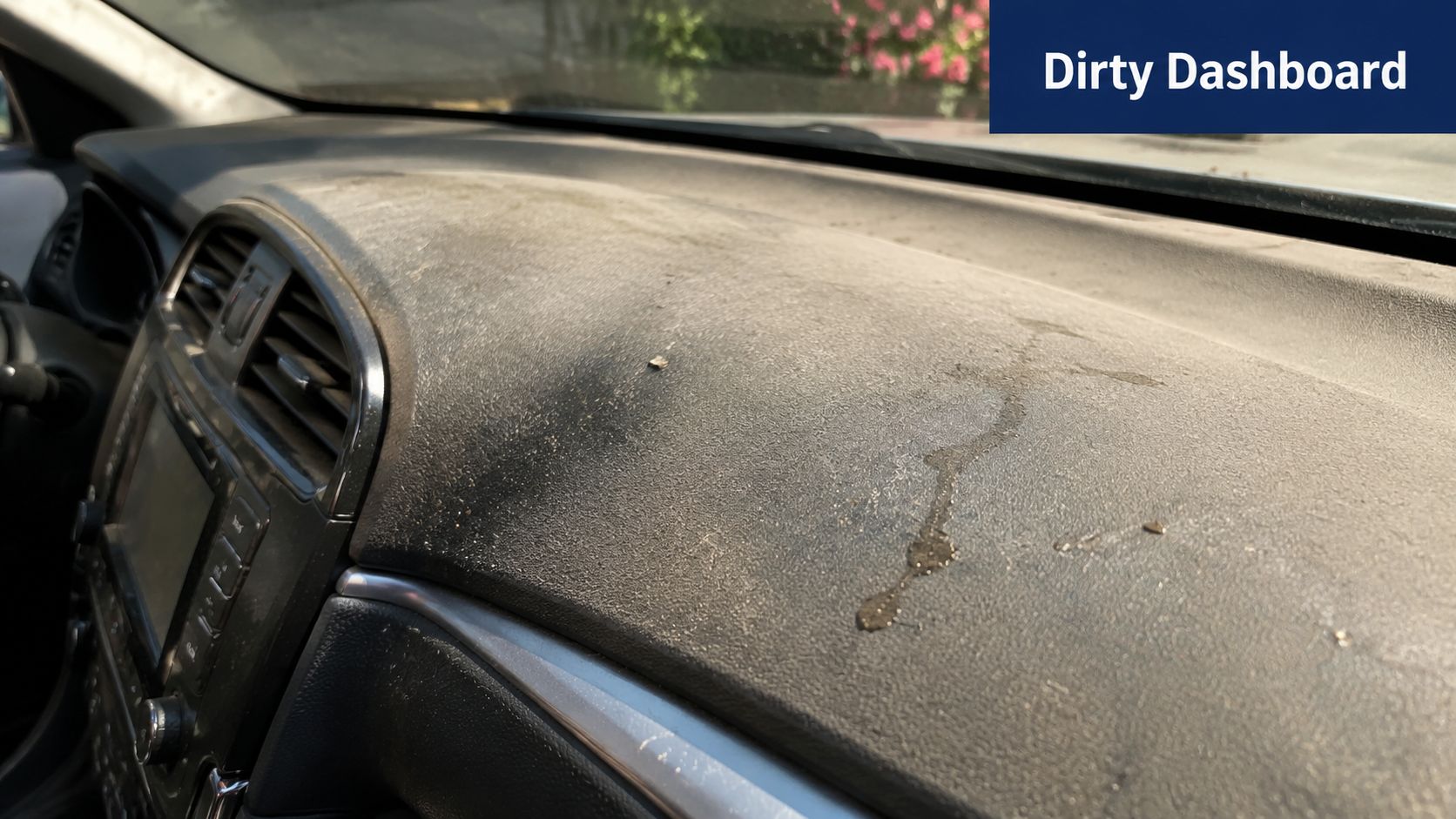
It's the command centre of the car
Your dashboard isn't just trim. It's where you read speed, fuel, warnings, navigation, camera prompts, and climate settings. If it's dusty, reflective, sticky, or scratched, the whole cabin feels neglected.
Different materials also react differently. Soft-touch plastic, vinyl, leather wrapping, piano-black trim, and touchscreen glass don't want the same cleaner or the same pressure. That's why a dashboard can look “clean” from the driver's door but still have haze, trapped grime, and wear happening underneath.
A dashboard should look clean without looking dressed up for a nightclub.
GTA conditions punish neglect fast
Cars parked outside take the hardest hit. Summer sun bakes the upper dash. Winter salt gets tracked in, then floats around as fine residue once the cabin dries out. Add stop-and-go commuting, delivery driving, and coffee-on-the-go, and the dashboard becomes the busiest, dirtiest horizontal surface in the whole interior.
A proper clean does three things at once:
- Removes grit safely so you're not grinding dust into clear plastics
- Prevents premature wear on vinyl, plastic, and leather
- Keeps resale in mind because buyers notice the interior in seconds
A quick wipe hides mess. Proper care slows damage.
Assemble Your Dashboard Cleaning Toolkit
A clean result starts with the right gear. Many dashboard problems are caused by using the wrong towel, the wrong cleaner, or far too much product before the first proper wipe even happens. I see this all the time in GTA vehicles. A glossy dressing meant for tires ends up on a dash, then the sun hits it on the Gardiner and the windshield lights up with glare.
The safe setup is straightforward. It also needs to match modern interiors, especially if your car has touchscreen controls, piano-black trim, or a soft-touch dash that shows every streak.
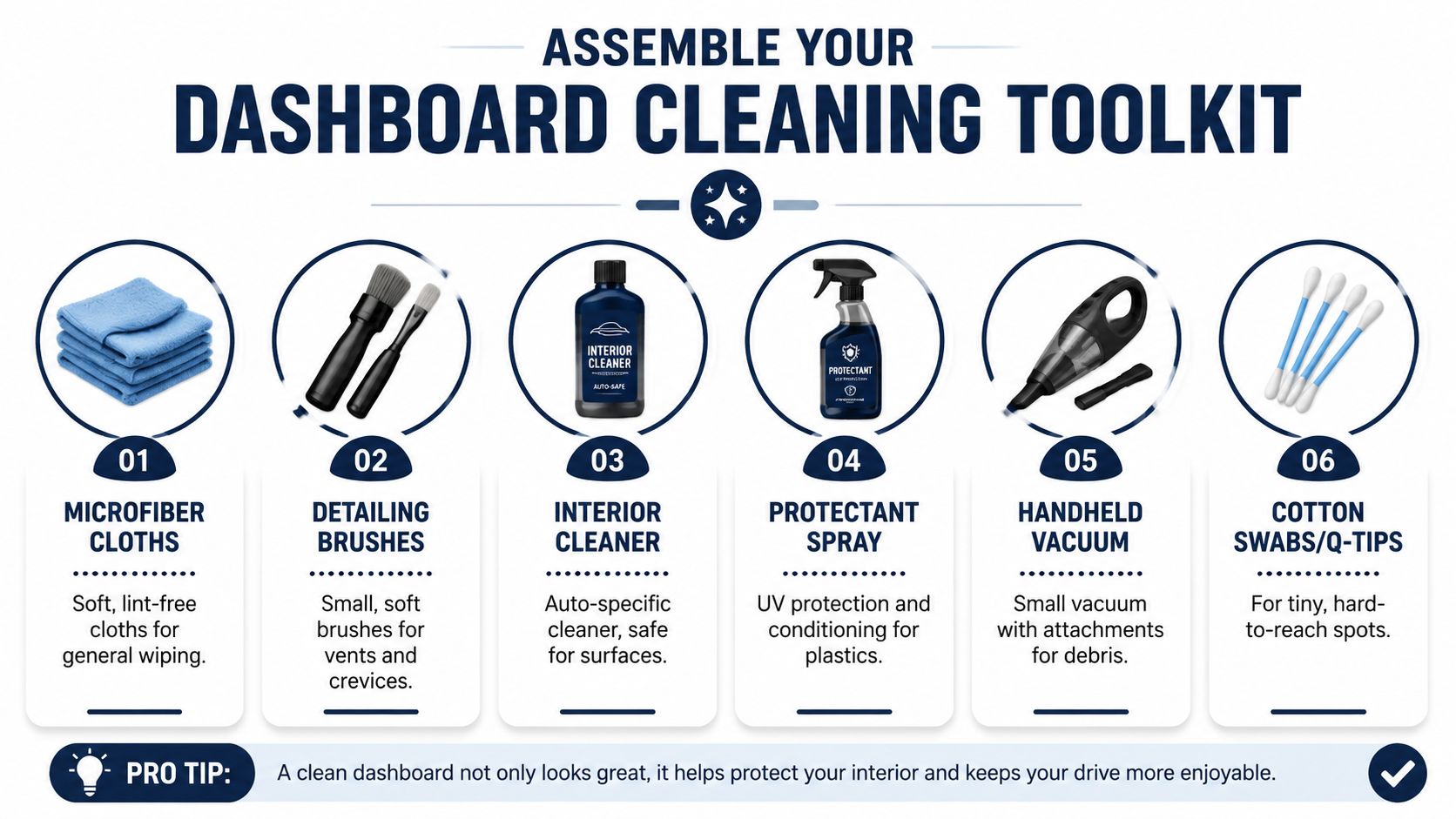
The core kit
Keep these items in one bin or small bag. That alone cuts down on bad substitutions.
- Microfibre towels: Use at least two. One applies cleaner and lifts grime. The second removes residue and levels the finish.
- pH-neutral interior cleaner: Stick with a cleaner made for interior plastics, vinyl, coated leather, and screen-safe surfaces. Harsh household products are where a lot of staining, haze, and dry-looking trim begin.
- Soft detailing brush: Useful for vents, seams, buttons, stitching lines, and textured grain where a towel skips over dirt.
- Dedicated protectant: Choose a low-gloss interior protectant with UV protection. In Ontario, that matters. Summer heat cooks the top of the dash, and high-shine dressings can create distracting windshield glare for commuters and ride-hail drivers.
- Small vacuum or crevice tool: Loose grit should come out before any liquid touches the surface.
- Cotton swabs: Handy for tight edges around buttons and trim, used gently and sparingly.
What earns a place in the kit
Each tool has a job. Microfibre handles broad, controlled wiping. A brush reaches into texture and vent slats without forcing grime around. A vacuum removes the abrasive stuff first, which matters after winter when fine salt dust settles into every corner of the cabin.
Screens need their own caution. Touchscreens and gauge lenses scratch much easier than people expect, so anything rough, fluffy, or dirty is a bad bet. Keep one towel reserved for screens and clear plastics if your dashboard has a lot of glossy panels.
Practical rule: One towel cleans. One towel finishes.
Low-gloss products also beat shiny ones for daily driving. A dashboard should look factory-clean, not wet. That finish is easier on the eyes in bright Ontario sun and less likely to leave greasy smears around touchscreen fingerprints.
What to leave on the shelf
A few common items create extra work or permanent marks:
- Paper towels: They leave lint and can scuff clear plastic panels.
- Alcohol-heavy or bleach-based cleaners: These can dry out trim, strip dressings, and leave screens looking patchy.
- Kitchen degreasers: Too aggressive for interior materials.
- One oversized towel for the whole job: Once it loads up with dirt, it stops cleaning and starts spreading grime.
- High-gloss silicone dressings: They attract dust and can create dangerous glare across the windshield.
If you want a ready-made option instead of stocking your own kit, Nanak Car Wash includes dashboard and interior cleaning in its full-service and detailing menu, alongside vacuuming and trim care.
The Professional Cleaning Method for Every Dashboard
A clean dashboard comes from control. In the shop, the difference between a dash that looks factory-fresh and one that looks streaky usually comes down to patience in the first five minutes.
Ontario cars make this harder than they should. Summer heat bakes product onto the surface, winter salt dust settles into every seam, and GTA stop-and-go driving leaves a film that plain water will not lift cleanly. The right method keeps that grime from turning into streaks, white residue, or glare across the windshield.
Start with a dry pass
Begin by removing loose dust and grit from the dashboard top, gauge hood, vent edges, and corners. Use a soft microfibre or a soft detailing brush while vacuuming nearby to catch what gets lifted.
That dry pass matters more after winter. Fine salt dust acts like an abrasive, and once moisture hits it, you get the muddy smears that take twice as long to correct.
After the loose debris is gone, lightly mist interior cleaner onto your towel, then wipe one small section at a time. Keep the towel damp, not loaded. Follow right away with a second dry towel so residue does not sit on the surface and haze over in the sun.
Spray the towel. Keep liquid off the dashboard itself.
Plastic and vinyl dashboards
Most dashboards on daily-driven cars around the GTA are a mix of textured plastic and vinyl. They clean up well, but they also show streaks fast if too much product is used.
Work in sections small enough to finish before the cleaner starts drying. Fold the towel into quarters so you always have a clean, flat side to work with. Use light pressure. If grime is stuck in the grain, switch to a soft brush, agitate gently, and wipe it away before it dries.
Three habits keep the finish even:
- Use less cleaner than you think: Extra product usually creates more buffing, not more cleaning.
- Rotate to a clean towel face often: A dirty towel spreads grime back over the dash.
- Check the windshield angle as you go: A dash can look clean from the passenger door and still show streaks from the driver's seat.
That last check matters on bright Ontario days, especially for ride-hail drivers who spend long hours facing windshield reflections.
Leather-wrapped dashboards
Leather-wrapped dashboards need a lighter hand. Heat and UV already put that material under stress, so saturation and aggressive scrubbing only speed up the tired, dry look.
Apply a leather-safe cleaner to the towel, then wipe with straight, even passes. Around stitching, speaker grilles, or the base of the windshield, use a soft brush with very light pressure. The goal is to lift dust and body oils without soaking seams or leaving a slick finish behind.
A properly cleaned leather dash should look even and matte, not shiny.
Touchscreens and glossy instrument panels
A common error at this stage is treating the screen like another piece of plastic. Modern screens, piano-black trim, and clear gauge lenses mark up easily, and the damage shows worst in direct sun.
Use a dedicated, clean microfibre just for screens and glossy panels. Keep moisture minimal. Wipe gently, support your hand so you are not pressing hard on the screen, and keep cleaner away from edges, buttons, speaker perforations, and panel gaps.
Skip any dressing or protectant that leaves an oily finish on or near the screen area. It looks glossy for a moment, then turns into fingerprints, dust, and glare. For Uber, Lyft, and delivery drivers, that glare is more than annoying. It can reflect into the windshield and become a real distraction during midday driving.
Here's the quick reference:
| Material | Best Cleaner | Primary Tool | Key Technique |
|---|---|---|---|
| Plastic and vinyl | pH-neutral interior cleaner | Microfibre towel | Work in small sections, wipe lightly, dry immediately |
| Leather | Leather-safe interior cleaner | Soft microfibre towel | Low moisture, straight passes, gentle work around seams |
| Touchscreens and glossy panels | Screen-safe cleaner with minimal moisture | Dedicated clean microfibre towel | Gentle wipe, no overspray, keep product away from edges |
A key takeaway for first-timers is simple. Identify the material first, then clean it accordingly. Most dashboard damage happens when one product and one towel get used on everything.
Protect and Condition for a Lasting Finish
A clean dashboard in the GTA can start drying out again fast. Summer sun cooks the top of the dash through the windshield, winter heat pulls moisture out of the material, and salt tracked into the cabin never helps. Protection is what keeps that freshly cleaned surface from turning faded, chalky, or dusty a week later.
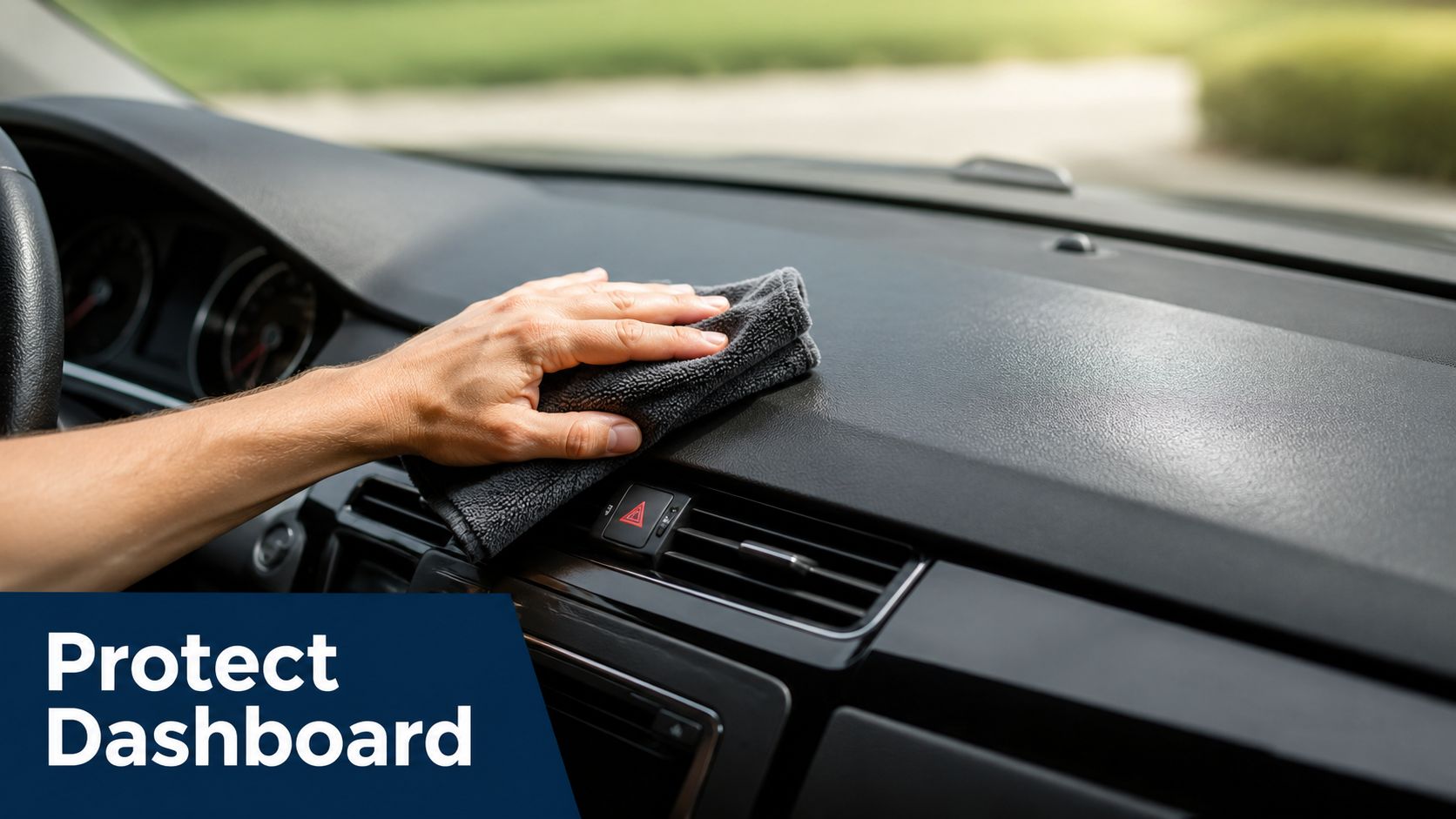
Choose the finish before you choose the product
The right finish for a dashboard is usually satin or matte. It should look clean and even, not wet or shiny.
That matters a lot in Ontario, where low winter sun and strong summer glare can bounce off a dressed dash straight into your eyes. For ride-hail and delivery drivers, a glossy protectant is more than a cosmetic mistake. It can make the screen harder to read and add windshield reflection during long daytime shifts.
Use a water-based interior protectant with UV protection and a low-sheen finish. It gives vinyl and plastic some defence against sun exposure without leaving the greasy film that attracts lint and fingerprints. On leather-trimmed dash sections, use a light automotive leather conditioner only if the manufacturer allows it. Too much product leaves residue in seams and stitching, and that residue turns grimy fast.
If the surface feels slick, use less.
How to apply protectant without streaks
Put a small amount on an applicator pad or microfibre, not directly on the dashboard. Spread a thin coat over one section at a time, especially around vents, stitched edges, and textured grain where excess product likes to hide.
Then buff it with a second dry microfibre.
That second towel matters more in humid weather because leftover residue flashes unevenly and starts collecting dust almost right away. I tell customers at Nanak Car Wash to judge the finish by touch as much as appearance. A properly protected dashboard looks natural, feels dry, and does not leave anything on your fingertips.
One more trade-off to keep in mind. The shiniest product on the shelf often gives the shortest-lived, most annoying result. A lower-gloss finish usually stays cleaner, cuts glare, and suits modern dashboards far better.
Dashboard Disasters and How to Avoid Them
A dashboard can look clean at pickup and still cause trouble by the afternoon commute. In the GTA, that usually shows up fast. Sun bakes residue onto the top of the dash, winter salt dust settles into seams, and one wrong product can turn a clear screen or gauge cover into a streaky mess.
That is why rushed shortcuts keep coming back as correction work.
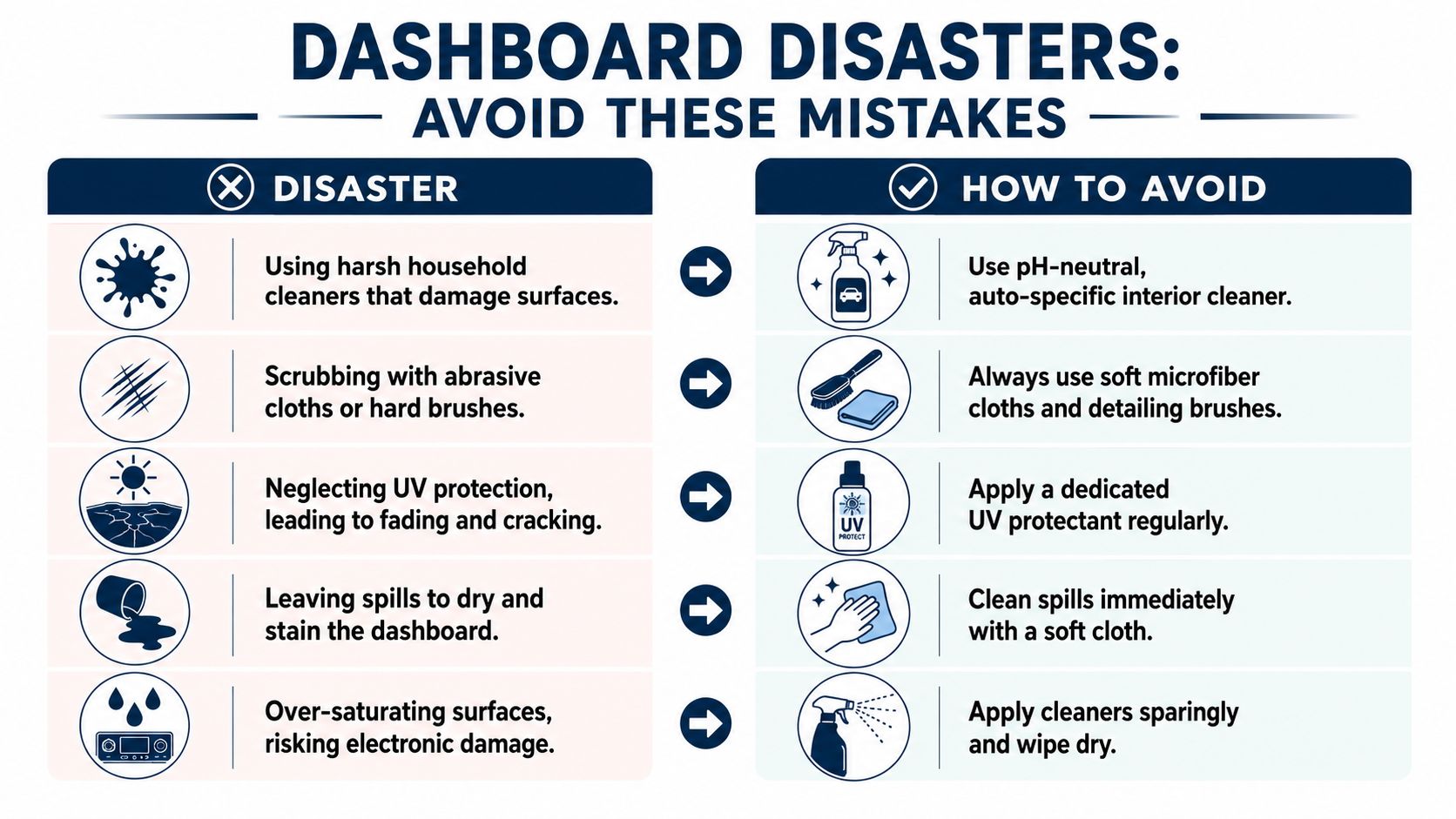
The greasy shine trap
High gloss is one of the worst finishes you can leave on a modern dashboard. It reflects hard off the windshield, makes touchscreens harder to read, and shows every fingerprint the moment the cabin warms up.
For ride-hail and delivery drivers, that is more than an appearance issue. If the map washes out in midday sun or the instrument hood throws glare back at you, the cabin feels tiring to drive in. I see this a lot after cheap dressings get applied too heavily. The dashboard looks wet for a day, then starts attracting dust and creating glare at the exact time the driver needs a clear view.
Low-sheen protection is the safer call, especially in Ontario summers.
The paper towel mistake
Paper towels are too rough for clear plastic, piano-black trim, and coated screens. They leave fine marring that only shows once sunlight hits from the side.
That creates a scuffed, cloudy look that is often mistaken for age-related wear.
Use the right material for each surface:
- For gauge covers: A plush, clean microfibre with almost no pressure
- For vents and seams: A soft detailing brush, then a towel
- For screens: A separate towel reserved for delicate surfaces only
One towel for everything is how cross-contamination starts. Grit from a dusty vent has no business touching a touchscreen.
The overspray problem
Spraying cleaner straight onto the dashboard sends product into places you do not want it. Vents, button edges, stitched trim, gauge bezels, and electronic seams all catch overspray. Then residue dries where your towel cannot fully reach, and that leftover product turns into streaks, dust grab, or white crust in textured grain.
Put the cleaner on the towel or brush first. Control improves immediately.
Spills deserve the same kind of quick response. Coffee, pop, hand lotion, and even plain water can leave marks on a warm dashboard if they sit. In winter, tracked-in salt mist can dry onto lower dash panels and leave a chalky film that keeps coming back until it is properly wiped down.
If you run a busy mobile crew or manage repeat service reminders for interior work, tools like Hyperleap AI for cleaning services can help keep that side organized while the cleaning method stays consistent in the bay.
When to Trust the Professionals at Nanak Car Wash
DIY dashboard care works well for maintenance. A weekly dust-off, a careful wipe, and the right protectant can keep most interiors looking sharp. If your car is already in decent shape, the method above will get you far.
But some dashboards aren't dealing with a light film of dust. They're dealing with winter salt residue, old dressing buildup, sticky spills in textured grain, vent grime, pet hair drifting through the cabin, or a touchscreen that's been polished with all the wrong things for months.
DIY works well when the dashboard is only mildly dirty
If the surface just needs a reset, you can usually handle it yourself with patience and the right materials. The key is restraint. Light product, small sections, clean towels, low gloss finish.
If you're managing several appointments or vehicles and want to tighten up routine customer communication around repeat cleaning visits, tools like Hyperleap AI for cleaning services are worth a look for the operational side of the business.
Call for help when the mess is bigger than a maintenance wipe
Professional help makes sense when:
- Salt has worked into vents and seams: Winter residue gets stubborn fast.
- Old dressings have left patchy shine: Stripping greasy buildup without damaging trim takes care.
- The interior has been neglected for a long time: Deep grime needs more than a quick towel pass.
- You just want it done properly: Time matters too.

For drivers in the GTA, that usually means combining dashboard work with a fuller interior clean so dust, vents, console surfaces, cup holders, and glass all get brought back to the same standard. That's especially useful after a rough winter or before selling the vehicle, when one untouched area can make the whole cabin feel tired.
If you've been searching for how to clean car dashboard surfaces and feeling stuck between “quick wipe” advice and overcomplicated detailing routines, the middle ground is simple. Clean gently. Protect sensibly. Keep screens clear. Skip the greasy shine.
If your dashboard needs more than a maintenance wipe, book a service with Nanak Car Wash for a proper interior clean, including the areas most DIY jobs miss.


 6600 Finch Ave W, Etobicoke, ON M9V 3Z6
 647-703-8515
 MON – SUN 8 AM to 7 PM