
Your car probably looks fine from ten feet away right now. Then you walk closer and see the grey film on the doors, the white crust around the wheel arches, the specks baked onto the front bumper, and the dullness that somehow showed up over one Ontario winter.
That's the moment a lot of GTA drivers realise a basic rinse didn't solve the underlying problem. It only knocked the top layer off. The stuff that shortens paint life and starts corrosion often stays behind in seams, trim edges, lower panels, and underneath the vehicle. Exterior car detailing matters because it deals with what regular washing often misses.
In Ontario, exterior detailing held 57.5% of the car detailing service market in 2025 according to GM Insights on the car detailing service market. That makes sense if you've ever owned a car through a GTA winter. Salt, slush, pollen, bug splatter, and summer sun all attack the same surfaces in different ways.
Table of Contents
- Your Car Survived Another GTA Winter Now What
- What Is Exterior Car Detailing Really
- Express Wash vs Full Service Detailing
- Beyond the Shine Essential Add-Ons for GTA Drivers
- How Often and How Much to Detail Your Car in Ontario
- Smart Detailing for Ride-Hail and Fleet Vehicles
- Your Cars Best Defence Starts at Nanak Car Wash
Your Car Survived Another GTA Winter Now What
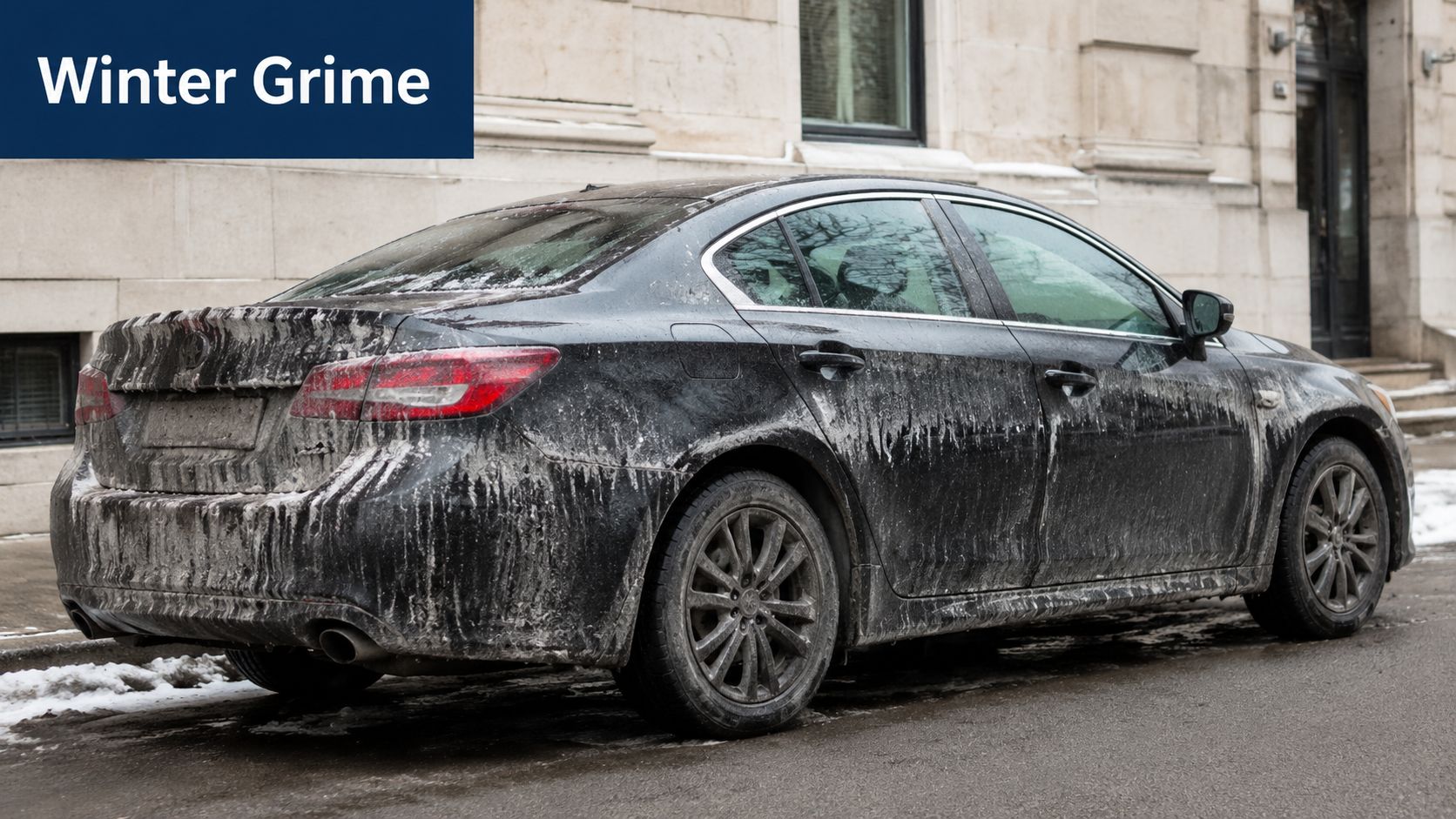
It is late March in the GTA. The snowbanks are shrinking, the sun is finally showing up, and your car still looks like it has been through a salt bath. White crust sits on the rocker panels, brake dust has baked onto the wheels, and the paint feels rough even after a rinse.
That rough, tired feel is a tell-tale sign.
A lot of drivers start with, “I need a wash.” Fair enough. But after an Ontario winter, the more useful question is, “What did winter leave behind?” Salt, road film, grime, and fallout do not all leave with a quick wash. Some of it hangs on to the paint, trim, glass, wheels, and especially the underbody.
A simple comparison helps here. Brushing snow off your coat makes you look better for the moment. Drying it properly and treating the fabric helps it last through the season. Your vehicle works the same way. A wash improves appearance. Detailing and protection deal with what keeps wearing the car down after the surface dirt is gone.
Practical rule: If the paint still feels gritty after a wash, the surface is cleaner, but it is not fully clean.
That is why GTA drivers get better results when they treat exterior care as a system of defence instead of a one-time cleanup. The wash removes loose grime. Detailing clears away the stubborn contamination winter leaves behind. Protection adds a barrier before spring rain, summer sun, and the next round of road mess show up. Rust-proofing protects the areas you cannot judge by shine alone. Each step covers a different part of the same problem.
Winter leaves more than a dirty finish
Ontario winters are hard on the whole vehicle, not just the parts you notice first in the driveway. Salt spray creeps low along the body. Slush packs into wheel wells. Fine contamination sticks to clear coat and glass. Underneath, moisture and salt can sit in places that stay hidden until corrosion starts to show.
That is where many drivers get mixed up. If the car looks better after a wash, it is easy to assume the job is done. Often, the visible dirt is gone while the bonded contamination stays put. The finish may still feel rough, water may stop beading, and protective layers from last season may be mostly spent.
Spring is the maintenance reset
Spring detailing works like changing out worn gear after a hard season. You clear off what winter left behind, check the condition underneath, and put fresh protection back where it belongs. That reset matters even more in the GTA because the car goes straight from salt and freeze-thaw cycles into pollen, rain, bird droppings, tree sap, and stronger UV.
The goal is not showroom drama. The goal is to stop winter residue from carrying into the next season and to give every exposed surface a fair chance to hold up.
Here is the simple version:
- A wash removes loose grime.
- A detail removes what is still stuck after washing.
- Wax, sealant, or coating adds a protective layer.
- Rust-proofing protects the parts shine cannot save.
This distinction makes detailing a maintenance task in the GTA, not just a vanity service.
What Is Exterior Car Detailing Really
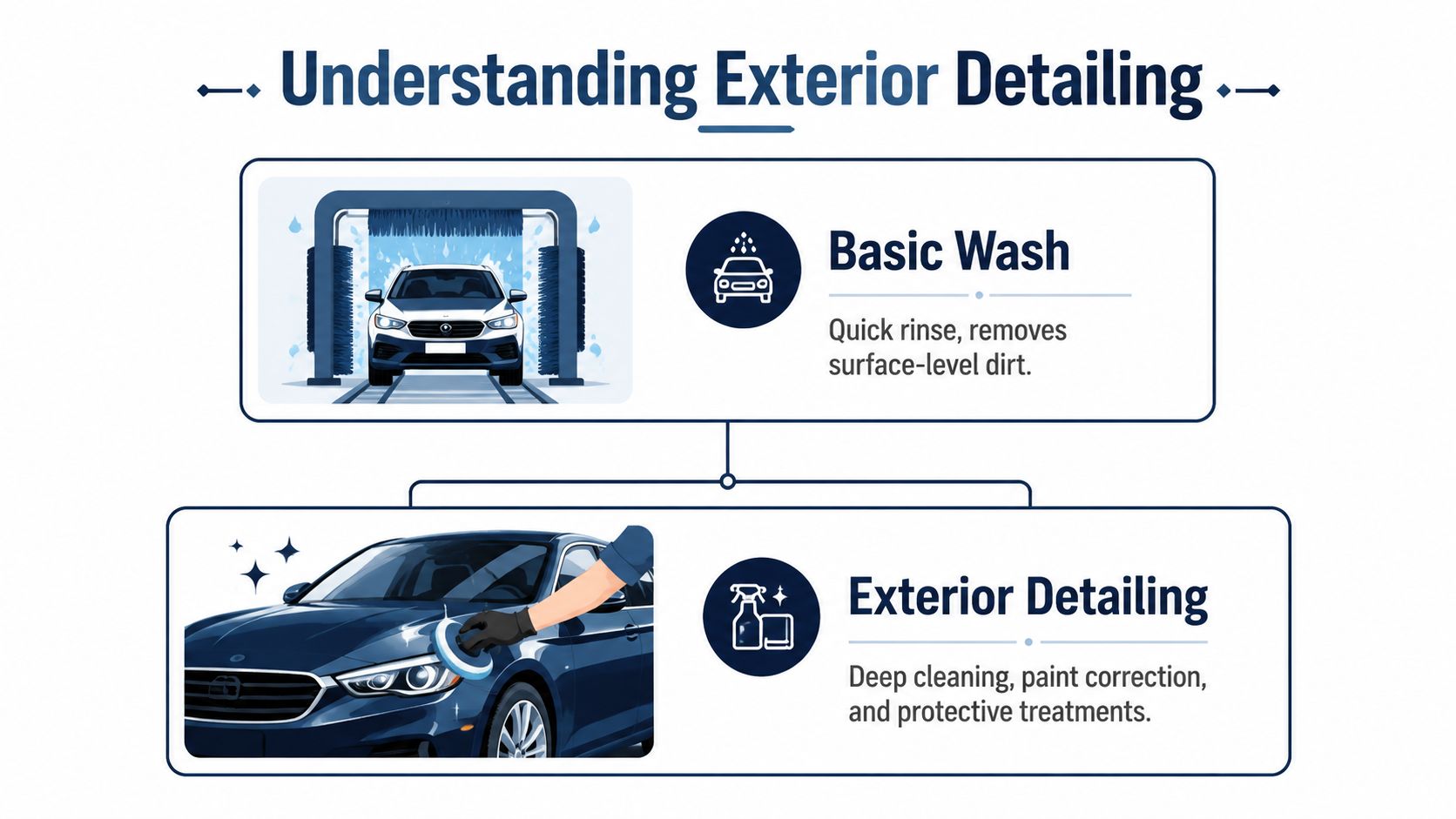
A lot of GTA drivers use the word detailing when they really mean a better wash. The difference is the goal. A wash removes day-to-day grime from the outside. Exterior detailing cleans, corrects, and protects each exposed surface so the vehicle is better prepared for what Ontario roads throw at it next.
That matters because the outside of your car does not age evenly. Paint, glass, trim, wheels, and wheel wells all collect different kinds of contamination. Salt film sticks low on the body. Brake dust bakes onto wheels. Tree sap and bug residue grab onto paint and glass. If you clean everything the same way, you usually leave contamination behind or add scratches while trying to remove it.
A proper exterior detail treats the vehicle as a protection system
Exterior detailing works best when you stop seeing it as a beauty treatment and start seeing it as maintenance. In the GTA, a good exterior program connects three jobs that support each other. Regular washing removes the mess you can see. Detailing removes what stays behind after washing. Rust-proofing protects the hidden metal areas that shine alone cannot save.
That integrated approach is what makes sense for local driving. A glossy hood means less if salt is sitting in seams, wheel wells, and underbody pockets. On the other hand, rust-proofing without regular washing leaves corrosive grime on the surfaces you touch and see every day. The strongest defense comes from treating washing, detailing, and rust protection as one system, not three unrelated services.
The three jobs in a proper exterior detail
Most of the confusion clears up once you break the process into its actual jobs.
Deep cleaning
The first job is to remove bonded contamination, not just loose dirt. That can include sap, bug residue, fallout, stubborn road film, and winter residue clinging to lower panels. Clay treatment is common here because it pulls out contamination that normal washing leaves behind. After this step, the paint should feel smooth instead of gritty.Restoring the finish
Washing cannot fix light swirls, haze, or oxidation. Polishing handles those surface defects by refining the clear coat so light reflects more evenly. That is why a detailed vehicle often looks clearer and glossier, even before protection goes on.Adding protection
Once the surface is properly cleaned and corrected, wax, sealant, or ceramic protection can bond better and last longer. Wax works like a rain jacket for your paint. It does not make the car invincible, but it gives water, grime, and seasonal fallout a harder time sticking.
Technique matters at every stage. Detail Me GTA's Toronto detailing guide recommends pH-neutral shampoo, the two-bucket method, and contactless drying such as a blower or dedicated car dryer before finishing with microfiber towels. That is how detailers lower the chance of grinding grit into the paint while cleaning it.
The goal of a proper wash is simple. Clean the paint without scratching it in the process.
Express Wash vs Full Service Detailing
Some drivers treat these like competing options. They're not. They do different jobs, and most GTA vehicles need both at different times.
An express wash is maintenance. A full exterior detail is restoration and protection. One keeps the mess under control. The other resets the finish when regular washing isn't enough.
When an express wash makes sense
Choose an express wash when the car is dirty, but the goal is simple. You want road film off, salt reduced, and the vehicle looking decent again without turning it into an appointment.
This is the right move when:
- You've had sloppy weather all week. Salt spray and grime are building up.
- You park outside. Rain, tree debris, and bird mess keep landing on the paint.
- You need frequency more than perfection. Daily drivers benefit from regular cleaning.
When a full exterior detail is the right move
Book a full exterior detail when the paint still feels rough after washing, the finish looks dull, or you want real protection put back on. This is also the better choice after winter and before the harshest seasonal swings.
A detail makes more sense if:
- The car hasn't had proper decontamination in a while
- You can see swirls, haze, or embedded grime
- You want wax, sealant, or ceramic protection applied on a properly prepared surface
Here's the simplest side-by-side view.
| Feature | Nanak Express Wash | Nanak Full Exterior Detail |
|---|---|---|
| Main goal | Frequent maintenance cleaning | Deeper cleaning, surface restoration, protection |
| Best for | Weekly or regular upkeep | Seasonal reset or neglected paint |
| Dirt handled | Surface-level road film, dust, fresh grime | Bonded contamination, dullness, leftover residue after washing |
| Time style | Quick in-and-out visit | By-appointment service |
| Protection level | May include wash extras depending on package | Intended for true finishing protection like wax or sealant |
| Ideal driver | Busy commuter, ride-hail driver, family vehicle in constant use | Owner preparing for spring, selling a car, or protecting a newer finish |
One practical way to think about it is this. An express wash is like sweeping your front step. A full detail is pressure washing, sealing, and fixing the spots winter wrecked.
Beyond the Shine Essential Add-Ons for GTA Drivers
You wash the salt off in March, the paint looks better, and it feels like the winter mess is finally behind you. Then the main GTA question starts. What did that season leave behind in the spots you cannot see?
That is where many drivers lose the plot. They treat washing, detailing, and rust-proofing like three separate jobs, even though the car experiences them as one problem. Salt hits the paint, packs into wheel wells, sticks to seams, and clings underneath the vehicle at the same time. A smart exterior care routine works like a full defence system, with each service covering an area the others cannot.
Why the underbody matters as much as the paint
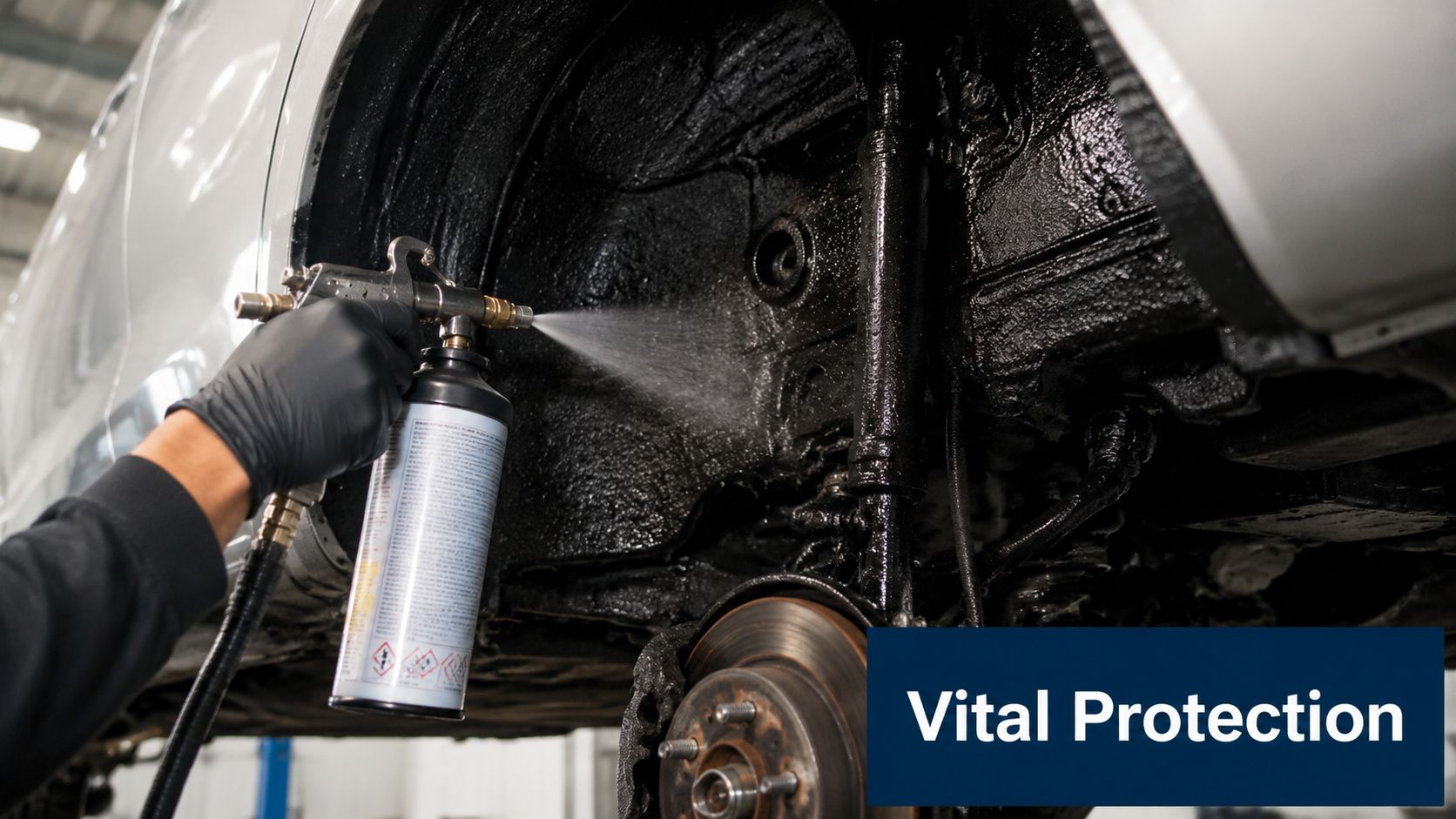
Ontario road salt does not stay where you can spot it easily. It gets thrown into the undercarriage, suspension areas, and lower body, where moisture and grime can sit for weeks. Those hidden areas rarely look urgent, which is exactly why they get ignored until repairs get expensive.
As noted in ShineTime's article referencing Ontario Ministry of Transportation data, salt-related corrosion is a major contributor to premature underbody and vehicle deterioration in the GTA. Beyond shine, proper exterior care slows the kind of damage that shortens a vehicle's usable life.
A clean hood can fool you.
The underside tells the Ontario story. After winter, an underbody rinse helps flush out corrosive residue that wax on the paint cannot reach. For GTA driving, that is basic maintenance, the same way rinsing mud out of your boots matters if you want them to last.
Wax and rust-proofing do different jobs
Drivers often bundle all protection into one vague idea, but these products do different work. Wax, sealant, and ceramic coatings protect exposed surfaces such as paint, trim, and clear coat. Rust-proofing is aimed at hidden structural areas, joints, and cavities where corrosion likes to start.
A simple way to sort it out is this:
- Wax or sealant works like a rain jacket for your paint.
- Ceramic coating adds a harder outer layer that helps with contamination and weather exposure.
- Rust-proofing helps protect the vehicle's inner metal areas and lower structure.
- Underbody rinses remove the salt and grime that keep corrosion active.
Used together, they make more sense than any one service on its own. Protecting only the paint is like polishing your front door while water keeps getting into the basement. Protecting only the underside leaves the finish exposed to fallout, road film, and seasonal grime.
That system view matters in the GTA, where one bad winter can affect the whole vehicle at once. Nanak Car Wash offers exterior wash options, detailing by appointment, and rust proofing as separate services that drivers can combine into one routine instead of handling them as disconnected errands.
How Often and How Much to Detail Your Car in Ontario
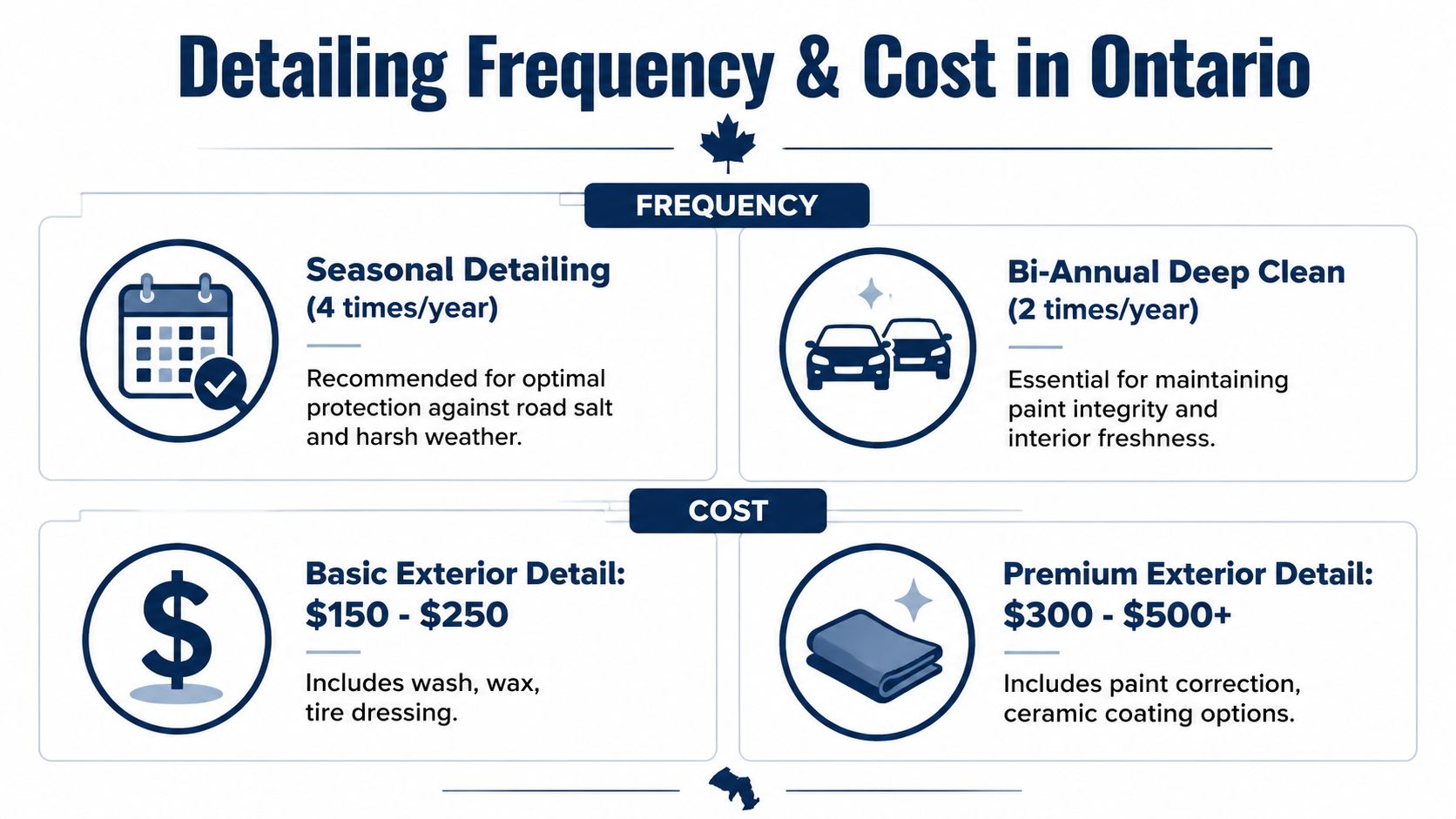
The two questions almost every driver asks are simple. How often should I do this, and what's it going to cost me?
Ontario makes both answers a little more seasonal than people expect. You're not caring for the same vehicle in January that you are in July, even if it's the same car. Winter leaves salt and grime. Spring adds pollen and leftover contamination. Summer brings UV exposure and bug splatter. Fall is your chance to prep for the next cycle.
A realistic Ontario schedule
For regular commuters in Ontario, Diamond Detail's guide to winter detailing in Ontario recommends a full exterior detail every 4 to 6 months, with more frequent attention every 4 to 8 weeks during high-contamination periods such as winter and spring. The same source identifies April to mid-May as the highest-priority window for a full exterior detail because it removes winter salt and allows fresh protection to be applied when temperatures are suitable for curing.
That timing matters. Sealants and ceramic products need the surface and surrounding temperature to cooperate.
A practical GTA rhythm looks like this:
- Spring reset after winter grime and salt
- Maintenance washes through the messy months
- Another protection-focused visit before the cold returns
For drivers parked outside, washing more often makes sense because grime sits longer on exposed paint and trim.
Seasonal note: Spring is not just a good time to clean the car. It's the most useful time to strip winter off it and put protection back on.
What exterior detailing usually costs
Ontario pricing varies by vehicle size. According to IBISWorld's Ontario car wash and auto detailing industry data, sedans range from $150 to $610 for exterior detailing, while minivans, SUVs, and pickup trucks range from $200 to $630.
Those are broad market ranges, and actual package contents differ. The point isn't that every vehicle needs the top end of that scale. The point is that size, condition, and service depth all change the final price.
Here's how to think about value instead of sticker shock:
| Vehicle type | Typical Ontario exterior detailing range |
|---|---|
| Sedan | $150 to $610 |
| Minivan, SUV, pickup | $200 to $630 |
If that feels like a lot, compare it to what neglected paint and corrosion can turn into. Detailing is cheaper when you're preserving a finish than when you're trying to rescue one. Regular washes between full details also stretch the life of your protective layer because you're not letting contamination sit and bake into it.
Smart Detailing for Ride-Hail and Fleet Vehicles
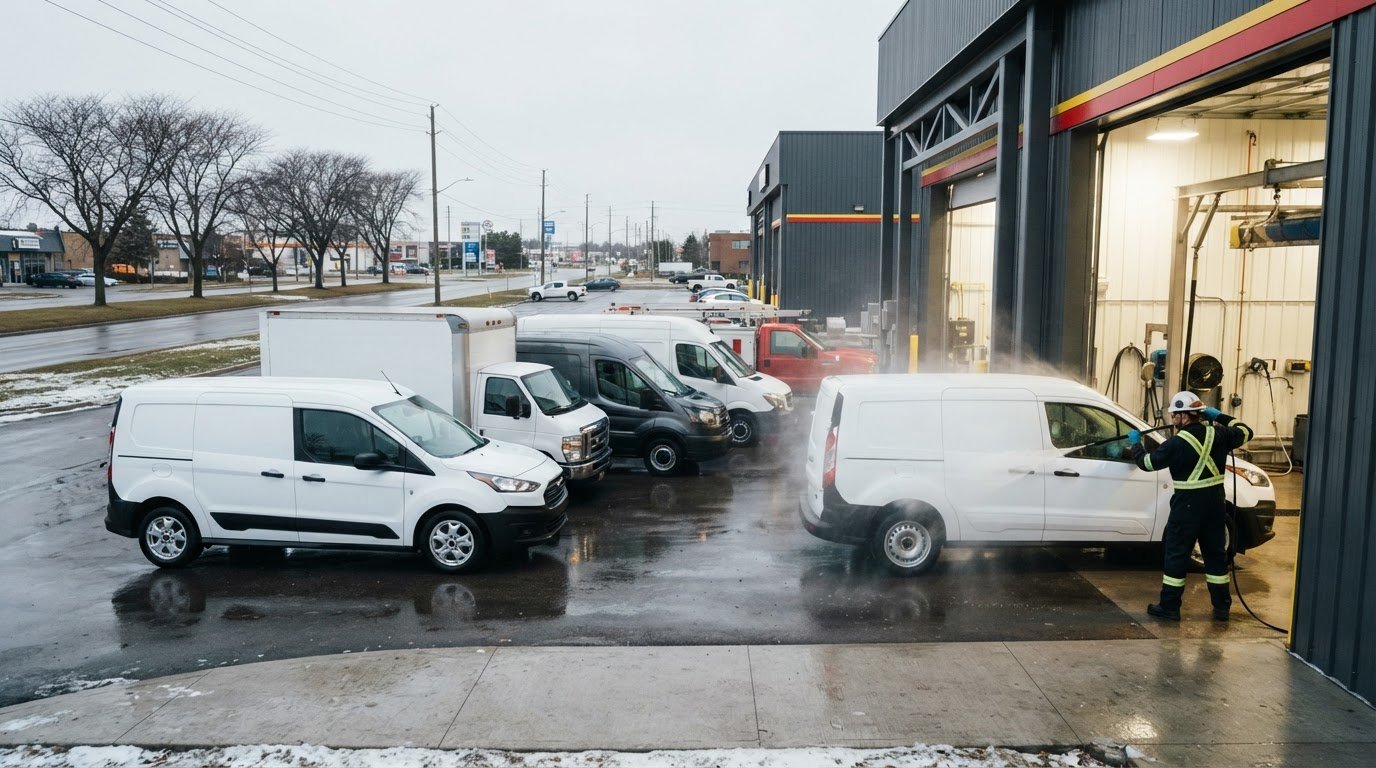
A ride-hail car can look clean at 8 a.m. and tired by lunch. One airport run in slush, a few downtown stops, and a full day of brake dust, road film, fingerprints, and salt residue start stacking up. For delivery drivers and small fleets in the GTA, that kind of use changes the job of detailing. It is no longer just about shine. It is part of keeping the vehicle presentable, protected, and earning.
High-use vehicles need a routine that works like a pit crew, not a once-a-season makeover. Quick washes handle the daily mess. Scheduled detailing resets the paint, trim, and protective layer before wear starts to show. Underbody care and rust-proofing round out the system, which matters even more when the vehicle is on the road through Ontario winter instead of parked through it.
A practical routine that keeps cars working
The goal is simple. Keep the vehicle in service while staying ahead of damage.
For a ride-hail driver, appearance affects the first impression before a passenger even opens the door. For a service van or delivery car, the exterior says something about how the business is run. Dirt, streaking, and neglected trim make a working vehicle look older than it is.
That is why a split routine makes sense:
- Frequent exterior washes to clear off film, salt, and city grime
- Scheduled full exterior details to remove bonded contamination and refresh protection
- Rust-proofing and underbody attention to defend the areas that washes and waxes cannot reach
Wax or sealant works like a rain jacket for your paint. It helps the surface shed water and grime. But a rain jacket does not protect your boots, and paint protection does not protect inner panels, seams, and the underside. Fleet vehicles do better when those layers are treated as one system instead of separate chores.
What high-mileage drivers should care about most
High-kilometre vehicles usually face two problems at the same time. They get dirty faster, and they get washed more often. If the wash method is rough or the paint is left bare too long, the finish starts showing that wear early. Black vehicles and dark SUVs make this obvious, but lighter colours are not immune.
The priority is not chasing perfection every week. It is reducing avoidable wear.
A smart plan usually focuses on:
- Consistent cleaning so grime does not sit on the surface for long
- Safer wash and drying methods that limit swirl marks
- Protection reapplied on schedule instead of waiting for water to stop beading
- Regular underbody care in salt season because more driving means more exposure
That approach is easier to manage for owners with multiple vehicles too. One car might survive neglect for a while. A small fleet turns neglect into repeat repair costs, uneven appearance, and more downtime.
If the vehicle makes money, exterior care becomes basic asset care. In the GTA, the strongest routine is usually the one that combines washing, detailing, and rust defence into one maintenance system, so the car keeps looking professional while standing up to traffic, weather, and salt.
Your Cars Best Defence Starts at Nanak Car Wash
A complete defence system for your car is easier to maintain when all the parts are handled in one place.
That matters in the GTA because our vehicles get hit from every direction. Road film sticks to the paint. Brake dust settles into wheels. Salt works its way into seams, rocker panels, and the underside. Treating exterior care as one connected routine makes the job clearer. Washing handles the dirt you can see. Detailing cleans and protects the surfaces you touch and notice every day. Rust-proofing covers the areas a wax or sealant cannot reach.
It helps to picture the car like a driver heading into a February storm. A clean exterior gives you visibility. Paint protection works like a rain jacket for the body panels. Rust-proofing is the layer that keeps the cold and moisture from creeping into the places that degrade subtly over time.
Build a routine you will actually keep
A lot of GTA drivers fall into a familiar pattern. They wash the car when it looks rough, book a detail when spring arrives, and think about rust-proofing only after they spot corrosion starting. The problem is timing. By then, grime has already sat too long or salt has already had more access than it should.
A steadier plan is easier on the vehicle and easier on you:
- Regular washes to clear off salt, grit, pollen, and traffic film
- Scheduled detailing to remove bonded contamination and renew surface protection
- Rust-proofing and underbody attention to protect the hidden metal that faces Ontario slush and brine
Each service has a different job, like tires, brakes, and headlights. You would not expect one of those parts to do everything. Exterior protection works the same way.
Convenience helps the system hold
This is the practical part many owners underestimate.
If washing happens in one place, detailing somewhere else, and rust-proofing gets pushed to another month entirely, the routine starts breaking apart. One skipped step turns into two. Then the car looks fine on top while the lower body and underside keep taking abuse.

Nanak Car Wash fits that system approach in a practical way. Drivers can handle quick wash visits, book more thorough detailing when the finish needs extra care, and arrange rust-proofing without turning vehicle protection into three separate errands. Pricing also lines up with that maintenance mindset, with express exterior washes starting at $9.99 + tax, full-service wash options starting at $29.99 + tax, and rust-proofing generally priced by vehicle size at about $119.95 to $149.95 + tax, based on the business information provided for this article.
For a daily driver in Ontario, the goal is not chasing a perfect shine every week. The goal is keeping the whole vehicle defended, top surfaces, lower panels, and hidden metal included. This is the benefit of treating washes, detailing, and rust-proofing as one system instead of three unrelated services.

 6600 Finch Ave W, Etobicoke, ON M9V 3Z6
 647-703-8515
 MON – SUN 8 AM to 7 PM