
You come back from a GTA winter, the snow finally clears, and there it is. A little bubbling along the rocker panel, a rough orange edge near a wheel well, and that ugly crust under the doors you pretended not to notice in February. That's the normal spring wake-up call around here, and if you drive in Ontario, the question isn't whether rust is starting, it's how much of it you can still stop.
The best rust prevention for cars in Ontario isn't one product. It's a layered routine, salt removal first, then a coating that belongs on a winter car, not a moisture trap. If you treat rust like a one-time job, Ontario will punish you for it.
Table of Contents
- Why Ontario Cars Rust Faster Than Almost Anywhere Else
- How Rust Actually Forms on Your Vehicle
- Comparing the Most Popular Rust Prevention Methods
- Building a Seasonal Rust Prevention Maintenance Schedule
- Special Considerations for Electric and Hybrid Vehicles
- When Frequent Washing Beats Annual Rustproofing
- How Nanak Car Wash Makes Rust Prevention Simple and Affordable
Why Ontario Cars Rust Faster Than Almost Anywhere Else
You know the car I mean. It looked fine in January, then by April the rocker panels are bubbling and the wheel arches look like they've been eaten by a cheese grater. That is Ontario winter doing what it does best.
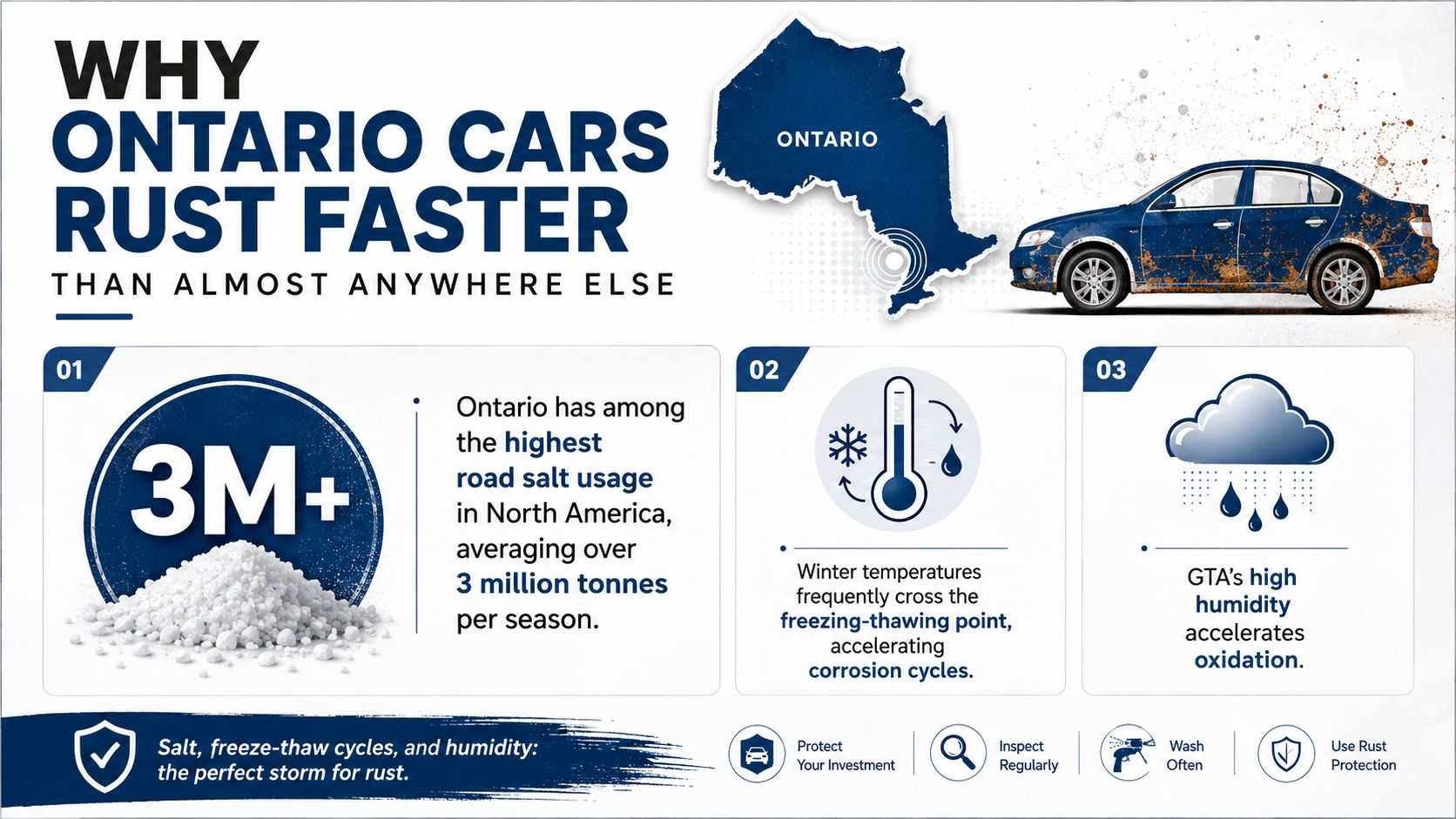
Ontario's road-salt exposure is enormous. Environment and Climate Change Canada's road-salts reporting identifies Ontario as the largest provincial user, with 1,679,395 tonnes of road salt applied in the cited year, and that volume explains why GTA cars age faster underneath than they do on top. Salt does not need visible slush to stay active. It clings in seams, wheel wells, brake line brackets, subframes, and every little boxed cavity that never gets a proper rinse. Transport Canada / TAC-linked workshop paper and Ontario rust context and Environment and Climate Change Canada road-salts data discussed alongside CAA guidance
The salt problem is built into the season
Salt does not just sit on the surface. Canadian Automobile Association guidance notes that it cakes into tight spaces, sticks to wet metal, and keeps corroding when temperatures rise above freezing. GTA weather keeps bouncing around the freezing point, so the car goes through wet, slushy, salty cycles again and again. Every cycle leaves more brine behind, and every trapped pocket gets a little harder to clean out.
The Transport Canada and TAC-linked workshop material found that adding salt under Toronto winter conditions doubled the corrosion rate on autobody steel, which is a blunt reminder that undercarriage care is required in this climate. The same body of work also reported that corrosion-inhibitor treatments reduced autobody steel corrosion by 10.5% to 77%, depending on the setup and inhibitor used. That is why a simple spring wash is too late.
If you want a comparison outside automotive care, water restoration for Central Texas RVs deals with hidden moisture damage inside structures, and road salt does something similar to cars. The ugly part is what you cannot see.
Practical rule: if salt has been on the underbody for weeks, you are not maintaining the car anymore. You are trying to slow active corrosion.
How Rust Actually Forms on Your Vehicle
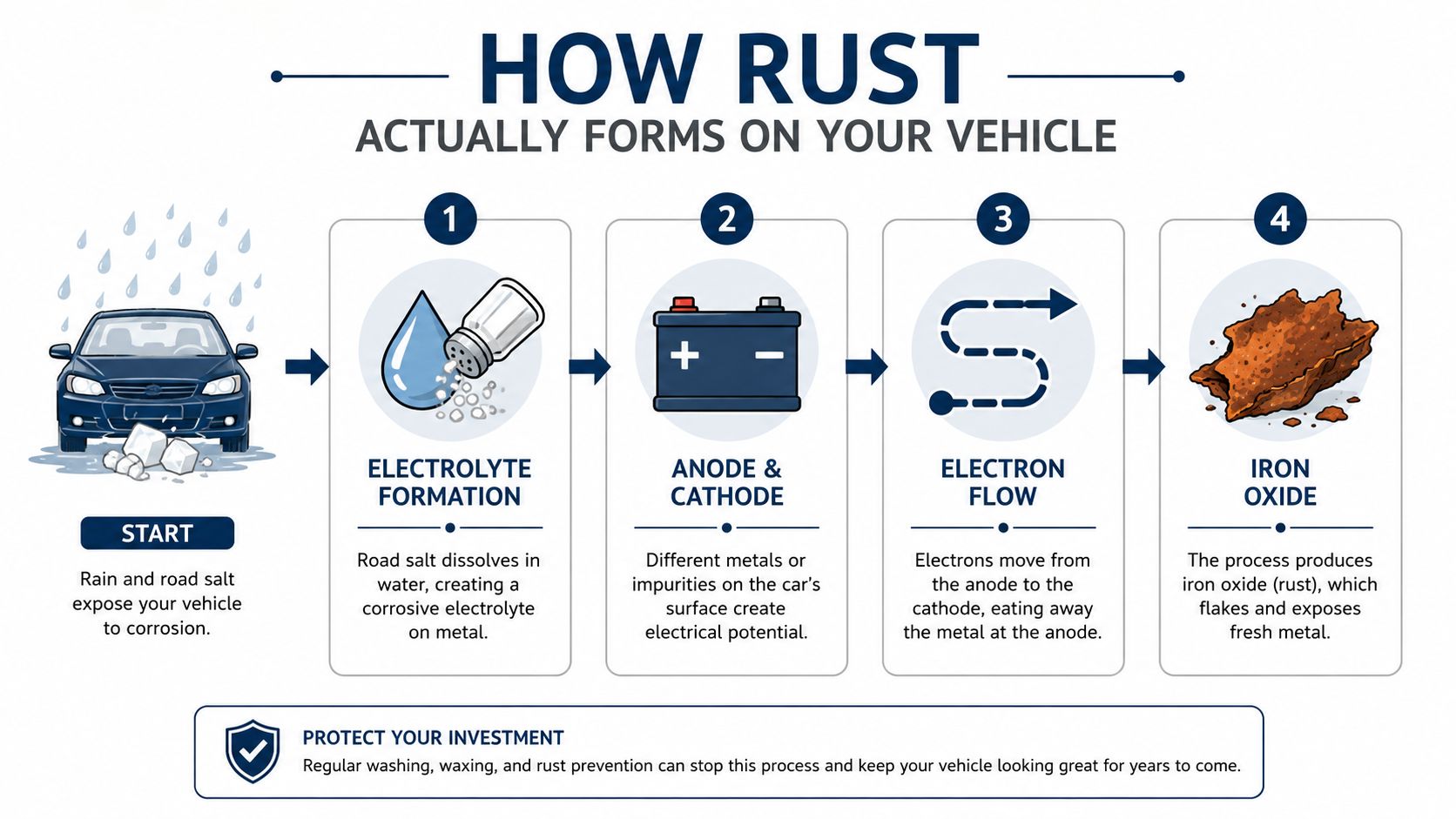
Rust is not magic and it's not just age. It's an electrochemical reaction, and Ontario gives it all the ingredients it wants. Water, salt, oxygen, bare metal, and time. That's the recipe.
Salt turns grime into a working battery
Road salt dissolves in meltwater and makes that water conductive. Once that salty film sits on steel, it acts like an electrolyte and helps the corrosion cell keep working. The metal doesn't need to be fully submerged, it just needs to stay damp enough for the reaction to continue.
That's why hidden spaces are such a problem. Seams, welds, boxed rails, and layered panels hold onto moisture longer than flat painted surfaces. A splash on the side of the car is annoying. Salt packed into a seam above a subframe is where the damage starts.
Surface rust is only the beginning
You'll usually see rust in stages. First it's a thin orange film. Then it becomes scale, which is the flaking, crusty layer that starts lifting paint and primer. After that comes perforation, where the steel is gone and the panel or structural part is no longer just ugly, it's weakened.
That progression matters because people wait too long. They think a few orange spots are cosmetic, then the same spots creep under paint and into seams. By the time there's bubbling, corrosion has already moved past the surface.
A good GTA rust strategy reflects that reality. The underbody is ground zero, because that's where salt, slush, and grit hit first and dry last. Washes remove the electrolyte. Coatings block access. If you only do one of those jobs, you're leaving the other half of the problem untouched.
Keep the steel dry, keep the salt off it, and don't trust a shiny body panel to tell you what's happening underneath.
Comparing the Most Popular Rust Prevention Methods
Most drivers shop for rust prevention like they're buying one magic answer. That's the mistake. Different methods solve different parts of the problem, and in Ontario the winning move is usually a combination, not a single product.
What each method actually does
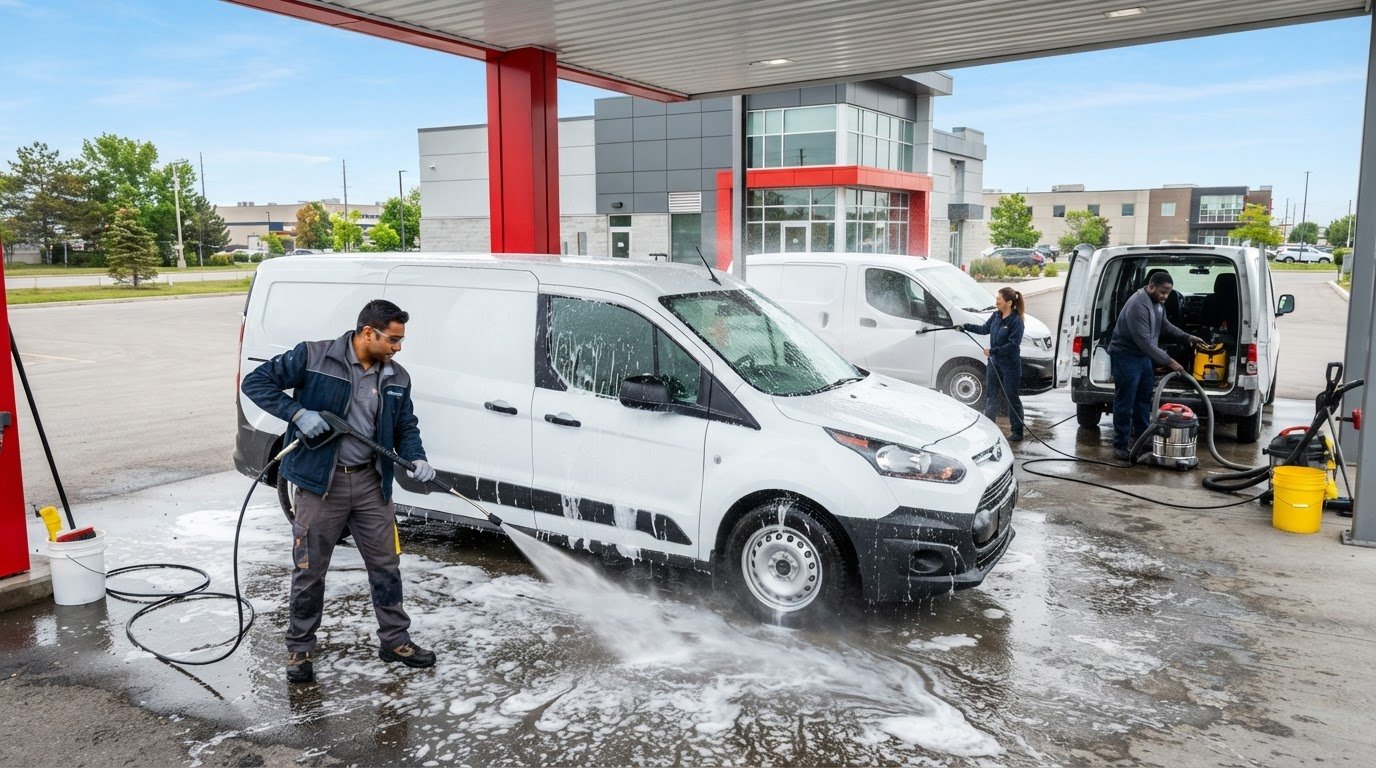
Regular exterior washing keeps grime from building up on painted panels, but it doesn't clean the places salt hides. A dedicated underbody rinse is much more useful because it targets the frame rails, suspension areas, and wheel wells where chloride contamination sticks around.
Spray-on waxes and sealants help on exposed panels, but they're not a substitute for undercarriage cleaning. Oil-based treatments and dripless sprays are stronger at creeping into seams and hidden cavities, which is why they're often chosen for older vehicles. Professional rustproofing is the broader option, usually applied to vulnerable areas where road salt and moisture linger longest.
The honest trade-offs
You should be sceptical of anything that sounds like a permanent fix. Coatings can help a lot, but they need to be the right type for the right place. A breathable barrier is better on the underbody, and cavity wax or oil belongs in hidden seams and boxed sections where you need creep, not a hard shell.
For most GTA drivers, the core issue isn't whether rustproofing works. It's whether they're paying for the wrong kind of protection while skipping the wash that keeps salt from sitting there in the first place. A dirty, salty car with a fancy coating is still a dirty, salty car.
Rule of thumb: washing and rustproofing are not duplicates. Washing removes the salt. Coatings limit what's left behind.
Rust Prevention Methods at a Glance
| Method | Typical Cost | Frequency | Best For |
|---|---|---|---|
| Regular exterior wash | Low | Weekly or as needed | General upkeep and paint cleanliness |
| Underbody rinse | Low to moderate | Repeated through winter | GTA winter salt removal |
| Spray-on wax or sealant | Moderate | Seasonal | Painted panels and easier cleanup |
| Oil or dripless rust spray | Moderate | Periodic application | Seams, cavities, older vehicles |
| Professional rustproofing | Higher | Reapply on a maintenance cycle | Drivers who want broader coverage and longer-term protection |
If you want the blunt answer, here it is. Newer cars with frequent washing habits need less aggressive treatment than neglected street-parked cars. Older vehicles, long commutes, and constant slush exposure move you up the ladder fast.
Building a Seasonal Rust Prevention Maintenance Schedule
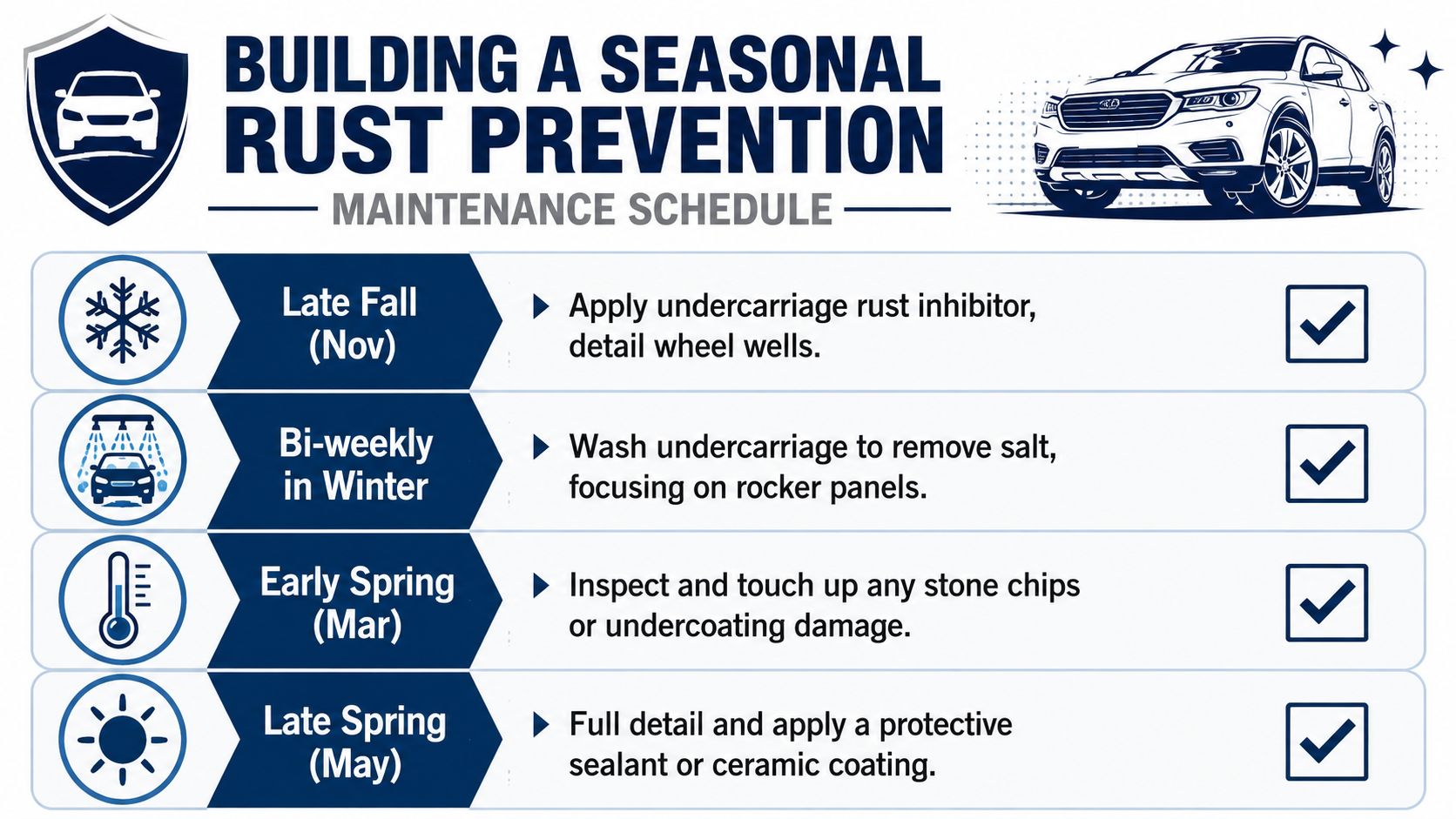
Ontario rust prevention works only when it's timed to the season. If you wait until spring, you're already behind. The schedule has to match the salt, not the calendar on your wall.
Winter is about removal, not perfection
Independent shop guidance recommends an undercarriage wash at 1,500 to 2,000 PSI with a 40° nozzle every 3 months, targeting wheel wells, suspension cradles, and frame rails. That's the minimum kind of focused cleaning that makes sense when salt is grinding away under the car. The point is to flush chloride contamination before it sits wet and keeps working. Underbody wash guidance
In practice, I'd be more aggressive than that if the car sees daily slush. In a real Ontario winter, every serious salt event deserves attention. If you're using a wash membership, lean on it instead of telling yourself a once-a-season detail will save the chassis.
Spring inspection is non-negotiable
The same guidance recommends re-inspecting every 6 months for bubbling paint, flaking primer, or white powder at plated parts. Those signs tell you the protective layer is already failing and corrosion is active. Don't wait for holes.
This is also the point where bodywork gets expensive if you ignore it. If you spot damage around an arch or rocker, get a proper estimate before it spreads. For people trying to judge bodywork charges fairly, the guide to fair body repair quotes is useful because it frames repair pricing in terms of scope and condition, not just a quick headline number.
A simple calendar that actually works
- Late fall: Wash hard before the first major salt cycle, then apply rust protection if the vehicle needs it.
- Winter: Keep rinsing the underbody after salt-heavy weeks, not just when the car looks dirty.
- Early spring: Inspect rockers, wheel wells, and plated parts for bubbling, white powder, or flaking.
- Late spring: Clean out the residue and protect the car before summer humidity leaves salt residue hidden in crevices.
That schedule is boring. It's also what keeps cars from turning into repair bills.
Special Considerations for Electric and Hybrid Vehicles
A lot of rust advice still reads like every car has a conventional engine bay and easy underbody access. That's lazy. EVs and hybrids add electrical components, high-voltage cabling, and sealed systems that need a more careful hand.
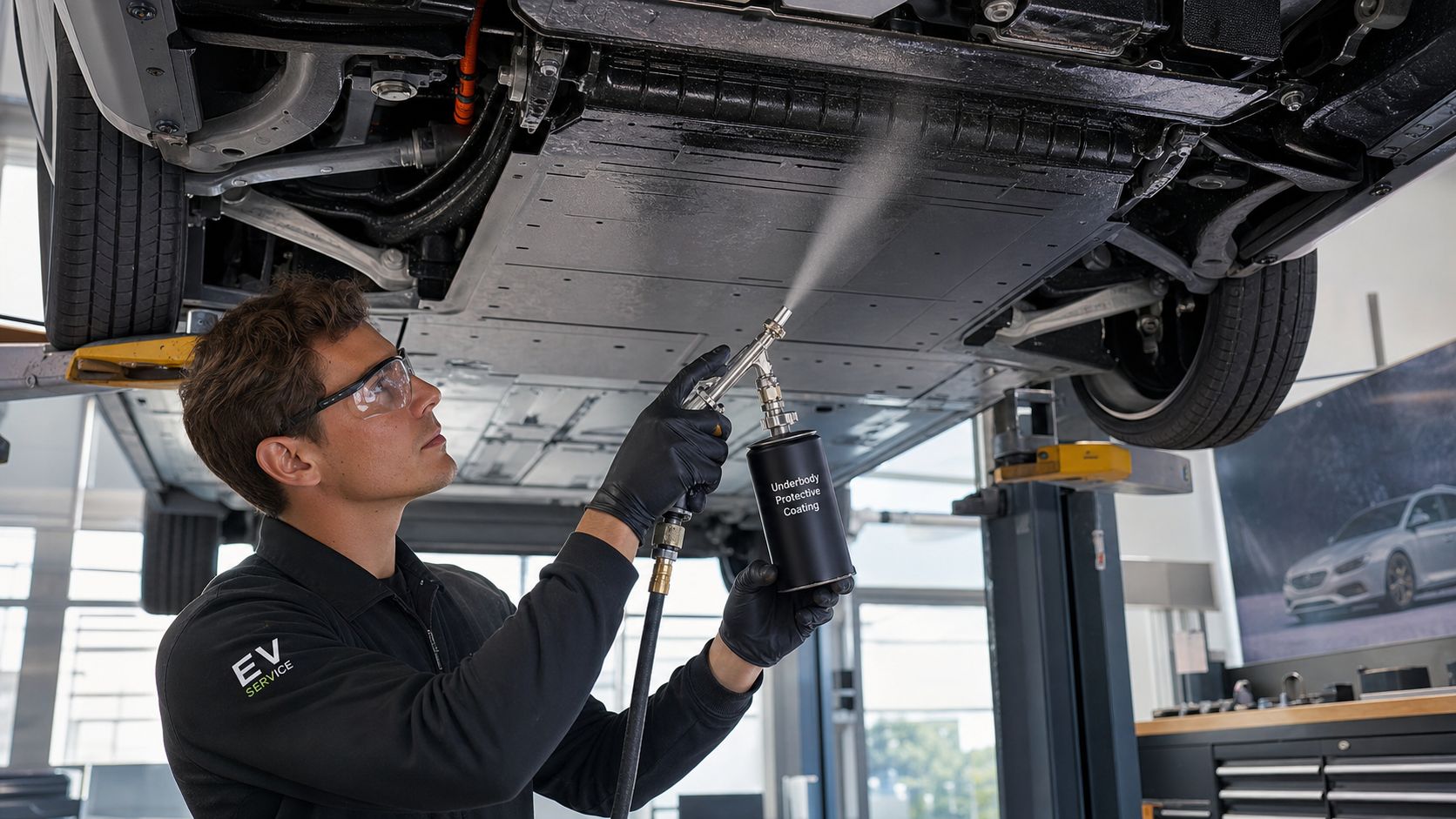
Don't spray everything and hope for the best
Recent instructional guidance explicitly warns owners not to spray directly on orange high-voltage wiring and to cover exposed cables first. That is the sort of detail too many generic rustproofing guides skip, and it matters because electrified vehicles are not just standard cars with a battery stuffed in somewhere.
The issue is not whether EVs rust. They do. Ontario salt still hits the same road-facing parts, and the chassis still needs protection. The issue is where the product goes. A coating that's fine on a steel seam can be a terrible idea on the wrong electrical surface.
EV owners need a no-spray checklist
- High-voltage orange cables: keep them protected and don't coat them casually.
- Battery pack areas: follow the vehicle maker's guidance before any underbody product goes on.
- Connectors and sealed electronics: avoid random spray coverage.
- Service records: keep proof of what was applied and where, because inspection and warranty questions can come up later.
Hybrids sit in the middle. They usually need the same salt control as an ICE car, but with the same caution around electrical systems as a full EV. That's why I'd never hand a hybrid or EV to a shop that treats rustproofing like a blind spray-and-pray job.
The better move is a technician who knows the vehicle layout, covers what should stay dry, and applies protection only where it belongs. That's the difference between smart prevention and an expensive mistake.
When Frequent Washing Beats Annual Rustproofing
Here's the uncomfortable truth. If you already wash your car often in winter, annual rustproofing might not be the main win you think it is. In some cases, your money is better spent on repeated undercarriage rinses and only selective coatings.
The reason is simple. Washing and coatings do different jobs. Washing strips away the salt, while rustproofing creates a barrier. If a driver keeps the underbody clean all winter, the marginal benefit of adding another layer depends on how old the car is, where it parks, and how often it lives in slush.
Who can lean harder on wash frequency
Street-parked cars, high-mileage commuters, and vehicles that sit in salted slush all week should still get real rust protection. Those cars are being hit constantly, and a coating adds value. But a garage-kept car that gets frequent underbody rinses isn't in the same category, especially if it's newer and already has decent factory protection.
That's where unlimited wash memberships make sense. They remove the excuse that winter cleaning is too expensive or too inconvenient. A driver who can rinse salt off regularly gets a much better return than someone who pays for one glossy coating and then leaves brine on the car for months.
If you're washing often, don't duplicate the same job with another shiny add-on. Spend where the salt actually sits.
The practical decision
If the vehicle is older, parked outside, or already showing rust at the edges, use both tools. If the vehicle is newer and washed often, start with aggressive underbody rinsing and inspect before you pay for heavier treatment. If the car is an EV or hybrid, the product choice matters just as much as the cleaning routine.
That layered approach is the point. Stop thinking in terms of “wash versus rustproofing.” Think in terms of wash frequency plus coating frequency, matched to how much Ontario winter abuse the car takes.
How Nanak Car Wash Makes Rust Prevention Simple and Affordable
Nanak Car Wash is one of the few GTA operations that bundles the pieces together instead of making you chase them across town. It offers express exterior washes with underbody rinse upgrades, full-service washes, detailing, and rust proofing, so the cleaning and protection work can happen in one place. It also runs an Unlimited Wash Club with no long-term contracts stated, which is useful if you're serious about removing salt often rather than pretending one winter wash will save the car.

The practical takeaway is straightforward. Use frequent washes to keep chloride off the underbody, then add rustproofing when the car's age, parking, and exposure justify it. That's the layered strategy that fits Ontario.
If you're trying to stay ahead of salt instead of repairing the damage later, book a wash that includes underbody cleaning and ask about rust protection while the car's still clean. Visit Nanak Car Wash to line up the kind of winter maintenance that makes sense for GTA driving, not the generic stuff that sounds good and fails in March.

 6600 Finch Ave W, Etobicoke, ON M9V 3Z6
 647-703-8515
 MON – SUN 8 AM to 7 PM