
Winter accounts for 32% of annual car wash demand, and that's exactly why the off-season idea is backwards. During active salting, the practical rule is to wash every 10 to 14 days if you want to keep salt from sitting on the car long enough to start real corrosion.
In the GTA, winter washing isn't about vanity. It's about stripping sodium chloride and other chlorides off the body and undercarriage before they sit there wet, freeze, thaw, and start eating lower panels, wheel wells, brake lines, and seams.
Table of Contents
- Why Winter Car Care Is Not What You Think
- The Corrosion Chemistry Behind Ontario Roads
- The Winter Services That Protect Your Vehicle
- DIY Versus Professional Winter Washing Compared
- Frequency, Membership Models, and Smart Spending
- Your Winter Car Care Plan for the Greater Toronto Area
Why Winter Car Care Is Not What You Think
Winter is peak car wash season, not a slow one. The stubborn part is that most drivers look at a grimy vehicle in February and think they're saving money by leaving it alone. They're usually just leaving salt on the car longer.

In the GTA, that mistake is easy to spot. Snowplows lay down brine, traffic throws it into the air, and every lane change sprays a fine film onto rocker panels, wheel wells, and the underside of the car. By the time a vehicle looks “just dirty,” the contamination isn't just sitting on the paint, it's trapped where rust starts and keeps going.
What winter grime really is
The visible mess hides the problem. Ontario winter treatment commonly uses sodium chloride, calcium chloride, and magnesium chloride, and those compounds don't just dry away harmlessly. They cling to the vehicle as a salty film, then keep working whenever moisture comes back.
If the car is coated in winter slop, it's already been exposed to corrosion chemistry, not just road dirt.
That's why winter washing should be treated like maintenance. A driver who skips a few washes isn't avoiding expense, they're stretching the time that corrosive residue stays on the car. On Toronto roads, that delay is usually the expensive part.
The pattern is simple. Roads get treated to stay passable, vehicles get covered in it, and the car that never gets cleaned becomes the one that pays later. Rust rarely starts with a dramatic failure, it starts with small neglected spots on the parts nobody sees at a glance.
The Corrosion Chemistry Behind Ontario Roads
Ontario's winter road mix is more aggressive than many drivers realise. It isn't just a dusting of rock salt, it's a combination of sodium chloride, calcium chloride, and magnesium chloride, and those compounds form a briny film that sticks to metal surfaces and keeps moisture in play. That matters because corrosion needs contact, and winter roads keep renewing that contact every time the car is driven through slush.
Why calcium chloride is such a nuisance
Calcium chloride is especially troublesome because it's hygroscopic, which means it keeps attracting moisture even after the visible residue looks dry. So a car can look parked and harmless in the driveway while the undercarriage stays damp, salty, and active underneath. That's a bad combination for brake lines, exposed fasteners, wheel wells, and any unprotected seam.
The underbody is the foundation of the car. You don't admire a house by staring at the footing, but if the footing is compromised, everything above it pays for the mistake. The same logic applies here, because surface shine means very little if the underside is holding onto corrosive film.
A standard top-side wash helps, but it doesn't finish the job on its own. Salt gets thrown low, then packed into the places that spray can't always reach well enough. That's why an underbody rinse and a longer rinse cycle matter so much in the GTA, because those are the areas where salt loves to linger.
What a proper winter wash needs to target
A winter wash that protects a vehicle should focus on the hidden zones first, not last.
- Undercarriage coverage: Salty brine collects here and keeps reacting with metal.
- Wheel wells and rocker panels: These catch the worst spray from slush and traffic.
- Brake-area contamination: Road film and salt residue can coat exposed components.
- Extended rinsing: It helps lift the brine film instead of just moving it around.
The point isn't to make the car spotless for a day. It's to interrupt the moisture-plus-salt cycle before it settles into a rust pattern. That's why winter washing in Ontario is not a cosmetic habit, it's a corrosion-control habit.
The Winter Services That Protect Your Vehicle
The right winter services do different jobs, and each one solves a specific problem. If a wash package only makes the paint look cleaner, it is doing part of the work and leaving the ugly part alone. In salted-road season, the hidden surfaces deserve most of the attention.
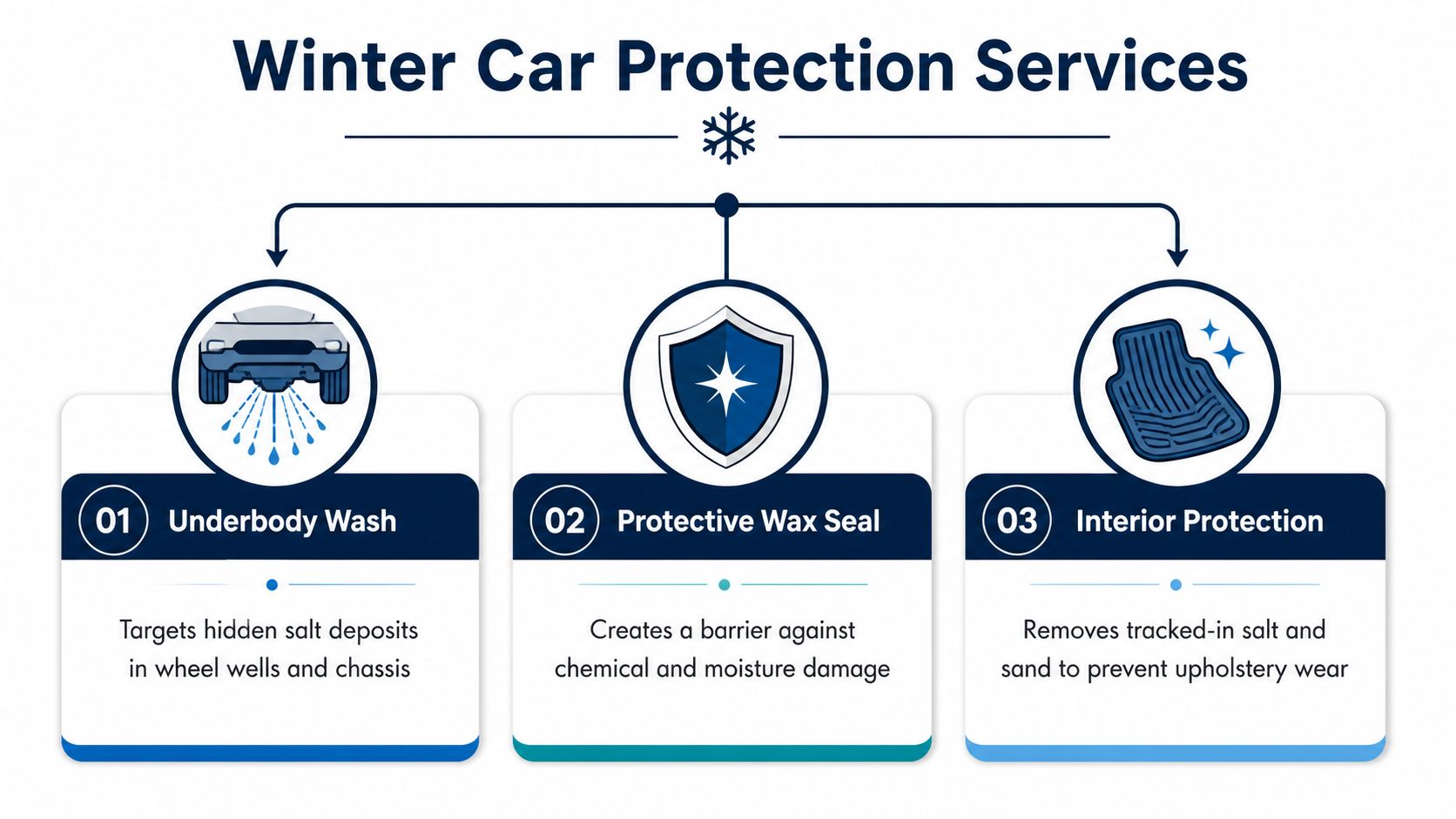
Start with the underside
An underbody wash is only as good as the equipment behind it. In the GTA, I look for whether the wash uses a fixed spray arch, rotating nozzles, or a weak splash bar that barely reaches the centerline. Express tunnels often use a lighter setup built for speed, while full-service facilities usually give the underside more contact time and better coverage on the rocker edges, suspension pockets, and rear axle area.
Pressure matters, but so does reach. Too little pressure leaves salty film behind, while a harsh blast aimed the wrong way can miss the spots that hold brine. A proper winter wash should send water where winter spray sits, not just where it is easy to see from standing height.
Add a protective barrier
Rust proofing is a separate job from washing, and that distinction matters. The service uses a dedicated chemical compound to help create a barrier on metal surfaces, which is useful when the vehicle spends its life around winter brine and repeated wetting. Washing removes contamination, rust proofing helps slow what comes next.
Wax also has a winter role, even if people treat it like an old-school shine product. A hot wax or sealer wax layer helps shed moisture and road film, which gives the car a sacrificial barrier during the ugly weeks. It will not make winter harmless, but it does give the paint and clear coat a better chance.
For rideshare drivers and small fleets, that barrier has a real cost side too. Fewer stuck-on contaminants mean less time spent scrubbing panels, less paint dulling from repeated grime removal, and fewer cosmetic touch-ups that eat into margins.
Don't ignore the inside
Winter gets inside the cabin too. Salt, slush, and grit get tracked onto mats, into carpet fibres, and across door sills, and they keep wearing surfaces long after the snow has melted. A proper winter interior service should include vacuuming, vent blowout, and cleaning that addresses salt residue before it hardens into stains.
Cabin care also protects resale value in a way drivers notice late, after the damage is already visible. White salt lines on mats, crusted door sills, and damp odors tell a buyer or lease inspector that winter upkeep was skipped. That is avoidable wear, and it is cheaper to remove while it is fresh.
Practical rule: If the outside gets an underbody rinse, the inside should get a salt check at the same visit. Waiting until spring turns a manageable cleanup into a bigger restoration job.
Nanak Car Wash offers these categories in one place, including underbody wash, rust proofing, and interior cleaning options, which is exactly the kind of consolidated setup that makes winter maintenance more likely to happen instead of getting postponed. That matters more than people think, because the best service is the one you keep using.
DIY Versus Professional Winter Washing Compared
DIY winter washing has a place, but it's a limited place. A home rinse or gas station wash can knock off fresh grime, and that's useful after an ugly commute or a messy storm. The problem is that winter protection isn't only about what comes off the paint, it's about what gets out of the undercarriage and what doesn't refreeze on the way home.
Where DIY works and where it falls short
A driveway wash gives you flexibility. It can be good for quick touch-ups, especially if the vehicle only needs light cleanup and you already have a warm garage or sheltered space to finish drying it. The weak point is access, because home methods usually don't get sustained pressure to the underside, and that's exactly where Ontario winter contamination hides.
Professional washing does more than look tidy. Commercial wash equipment can deliver a more consistent rinse across the lower body, and trained staff are better positioned to add drying steps, underbody coverage, and the right follow-up treatments. That matters when you're dealing with frozen handles, mirrors, locks, and seams after a wash.
The drying question is the ultimate test. Winter washing in Ontario is pointless if the car comes out clean, then freezes shut overnight. Door handles, locks, seals, and mirror edges need to be dried properly, and if the car can't be kept warm afterwards, the risk of a re-freeze goes up fast.
A simple decision guide
- Daily commuter: Professional washes make more sense when winter road exposure is constant.
- Rideshare or delivery driver: The cabin and exterior both need repeat attention, not occasional cleanup.
- Small fleet manager: Consistency matters more than one-off savings, because missed washes multiply across vehicles.
- Low-mileage owner with garage access: DIY can cover some light maintenance, but it still won't replace underbody treatment.
Clean water on a frozen driveway is not a corrosion strategy. It's just a cold chore unless the car dries properly.
The fair conclusion is this, DIY can help in a pinch, but professional winter washing does the heavy lifting where Ontario roads are the harshest. If you care about the underside, not just the shine, that difference is hard to ignore.
Frequency, Membership Models, and Smart Spending
Winter spending makes more sense when it becomes predictable. A driver who waits for visible grime before washing usually ends up with bigger swings in cost and worse corrosion exposure, while a driver who sets a schedule is controlling both. For GTA motorists, that schedule should match how often the car sees salted roads.
How often to wash
Ontario-specific guidance commonly points to about every 10 days in winter, or every 7 days for daily highway commuters, with a strong emphasis on the underbody, wheel wells, and rocker panels. That's a practical rhythm because winter contamination builds fast, especially on vehicles that rack up kilometres in slushy traffic. Waiting until the car looks terrible usually means waiting too long.
Memberships and prepaid bundles help because they turn winter care into a routine instead of an argument every week. Unlimited passes and multi-wash tickets reduce the mental friction, and that friction is often the main reason drivers skip a wash after a long cold day. Predictable spend is easier to stick with than “I'll do it next week.”
There's also a cash-flow case for high-mileage drivers and small operators. A ride-hail vehicle or service van that spends all day on salted roads can't really afford irregular cleaning, because the same contamination keeps returning. The smarter move is to pay for consistency instead of paying later for detailing, cleanup, and accelerated wear.
Choose the model that fits the vehicle's job
- One-time washes: Fine for occasional use, but easy to forget.
- Prepaid tickets: Useful when you want a controlled budget and regular visits.
- Monthly memberships: Best when winter exposure is constant and you need repeat protection.
- Combined service locations: Better when wash, detailing, and rust protection are available in one stop.
If you want the payment side to be simple, payment options at Splash Access is a useful example of how car wash operators can make recurring visits easier to manage without turning the process into paperwork.
The spending logic is straightforward. If winter driving is frequent, a membership usually buys more discipline than a pile of one-off receipts. That's the return, not just cheaper washes, but fewer missed washes.
Your Winter Car Care Plan for the Greater Toronto Area
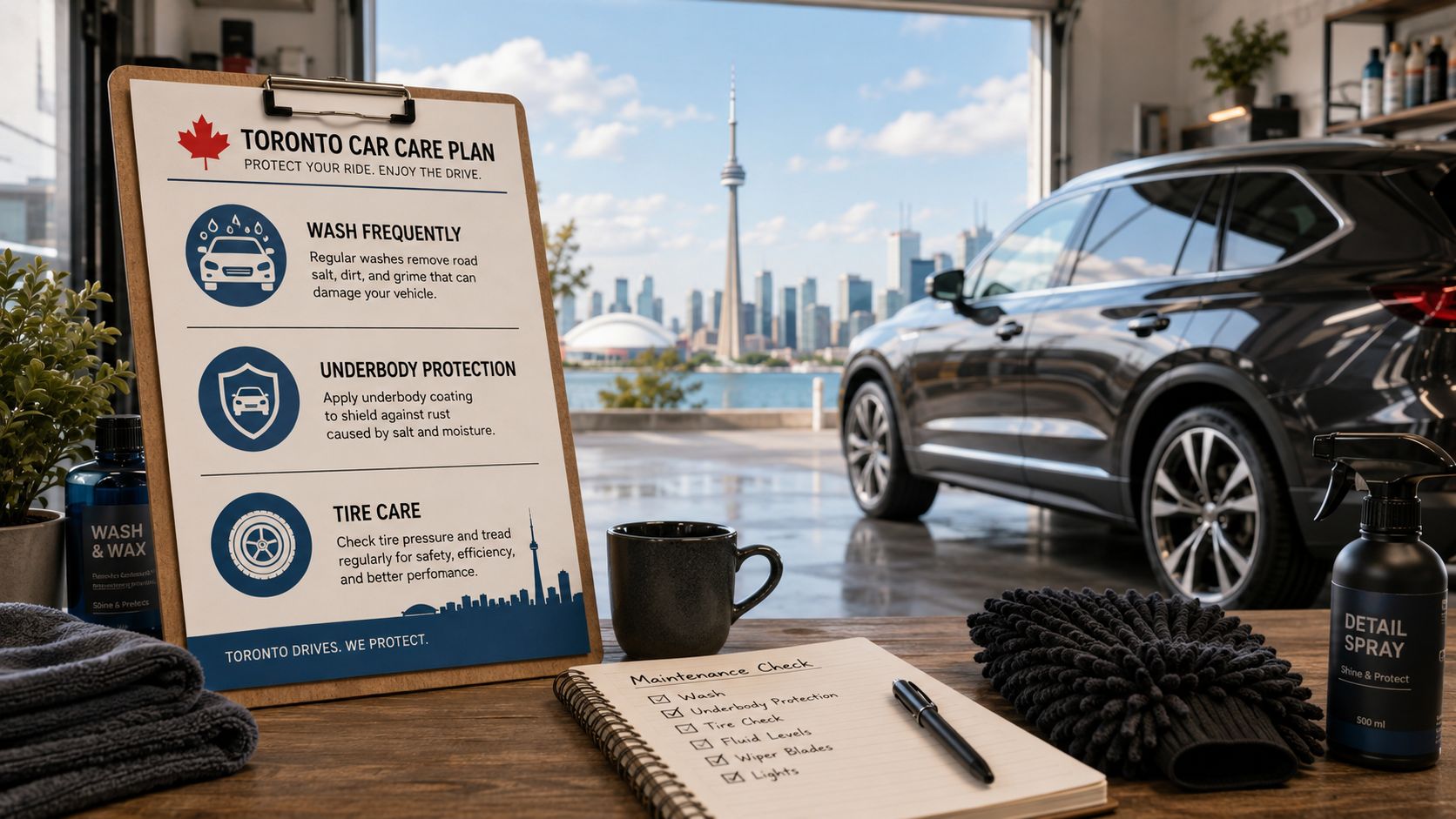
The GTA answer is not complicated, it just takes discipline. Wash often, hit the underside, and don't pretend a dirty car is a protected car. Winter is the season when deferred maintenance starts looking cheap and ends up costing more.
What to do by driver type
For individual owners, a baseline of biweekly express washes with seasonal rust proofing is a sensible routine. That keeps salt from hanging around too long and gives the car a fighting chance through repeated snow events. If the car sits outside most nights, the case for staying on schedule gets even stronger.
For ride-hail and delivery drivers, weekly express washes plus interior cleaning are the better fit. Passengers notice a clean cabin, and tracked-in salt wrecks the inside just as surely as brine attacks the outside. In this job, cleanliness is part of the product.
For fleet managers and small business operators, a scheduled calendar with monthly passes and discounted interior cleaning is the cleanest way to keep vehicles presentable and serviceable. Missed maintenance spreads quickly across a fleet, and once one van starts showing winter neglect, the rest rarely stay perfect for long.
The last check that matters
Dry the car properly. That means paying attention to handles, mirrors, locks, and seams so the vehicle doesn't freeze shut overnight after a wash. In Ontario, a clean car that can't be used in the morning is not a win.
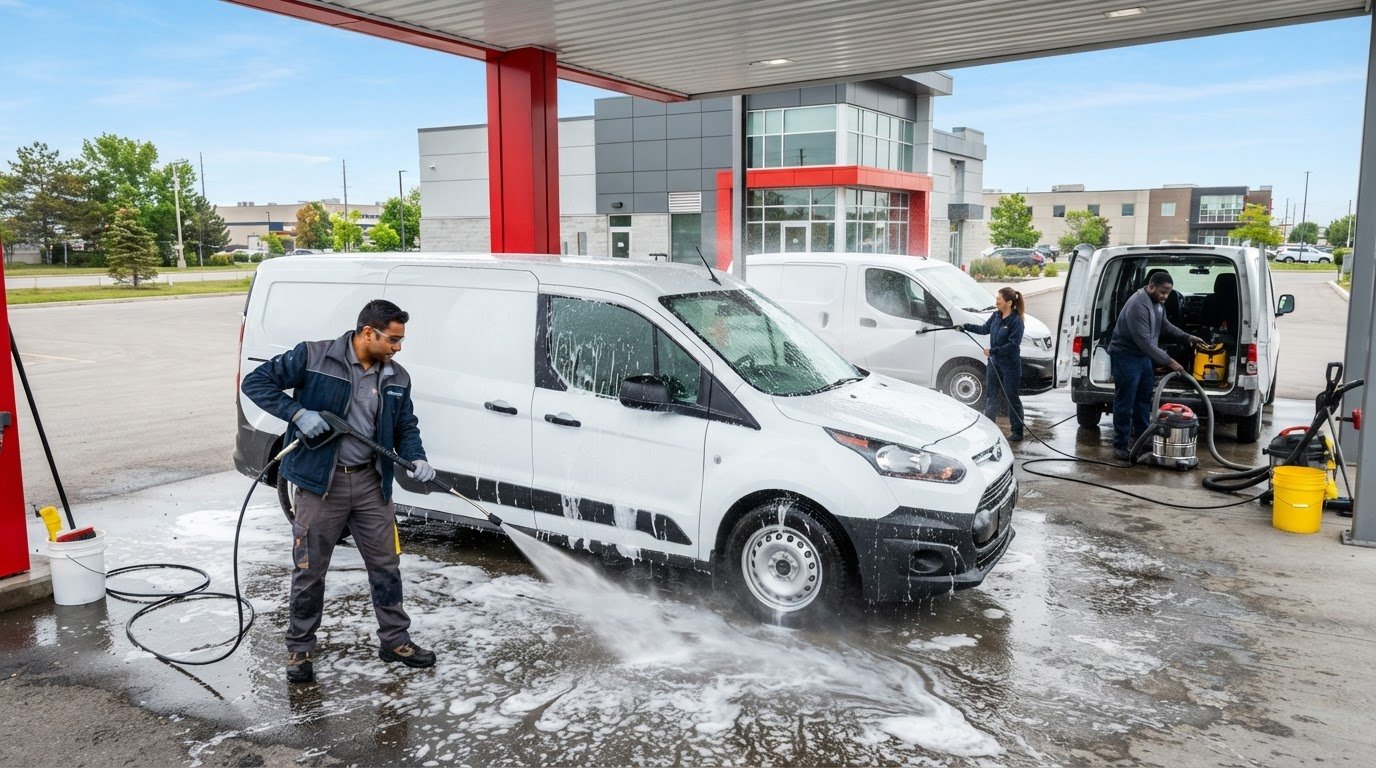
If your car lives through Toronto winters, treat the wash bay like maintenance, not a luxury stop. Nanak Car Wash offers express exterior washes, underbody wash options, interior cleaning, detailing, and rust proofing in one place, which makes it easier to stick with a winter routine that protects the vehicle. Visit them when you're ready to get the salt off, dry the car properly, and stay ahead of rust instead of chasing it later.

 6600 Finch Ave W, Etobicoke, ON M9V 3Z6
 647-703-8515
 MON – SUN 8 AM to 7 PM