
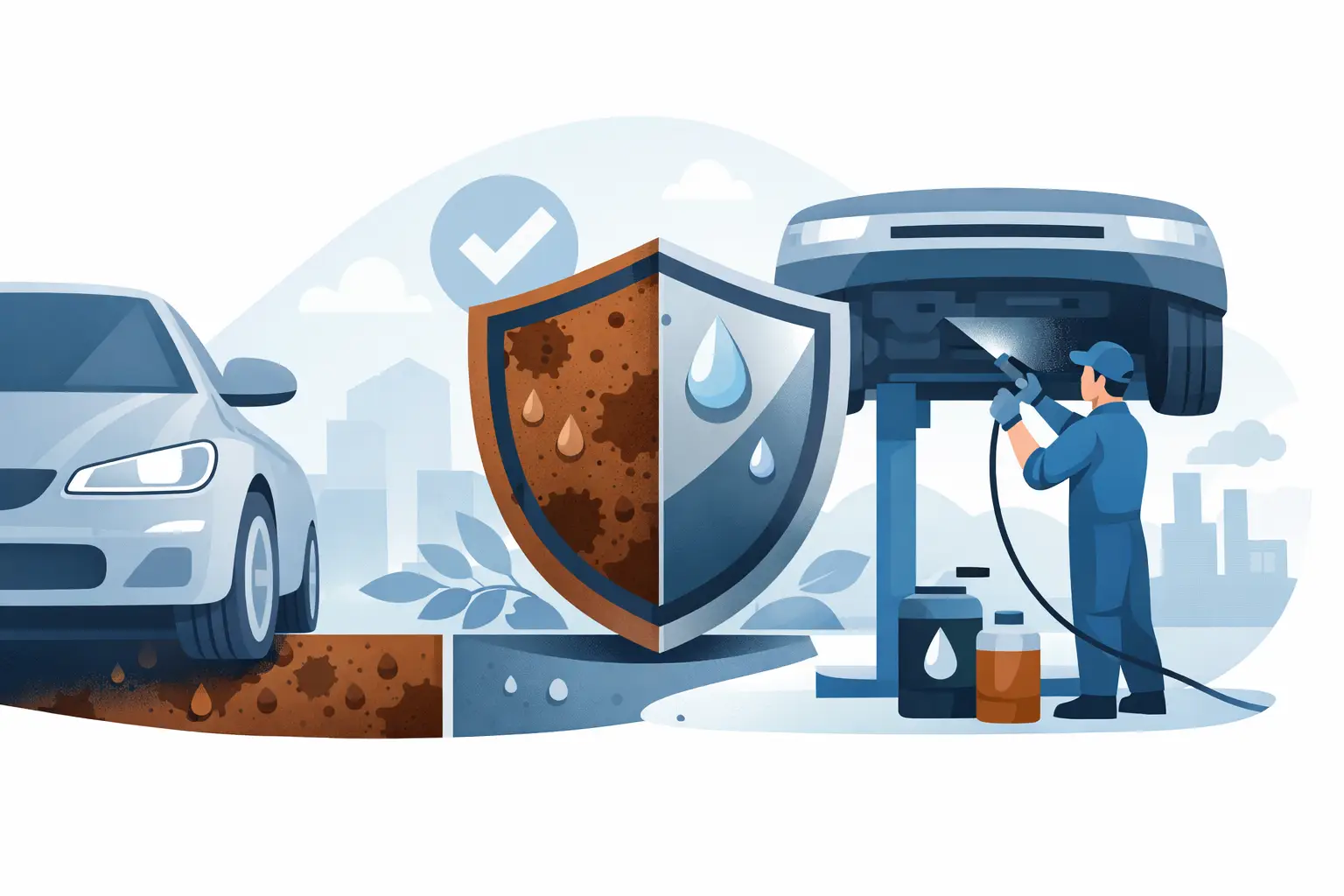
Road salt does not care whether your vehicle is brand-new, fully paid off, or used for daily rideshare trips. It collects in wheel wells, seams, suspension parts, and underbody corners where moisture can sit for months. Knowing how to choose rust proofing helps you spend money on real protection instead of a treatment that looks good on day one but misses the areas that rust first.
For drivers who face wet roads, slush, snow, and long commutes, rust protection is practical maintenance. It can help preserve your vehicle’s appearance, resale value, and underbody condition. The right choice depends on your vehicle’s age, how you drive, where you park, and how much salt it sees each winter.
Start With Your Vehicle and Driving Conditions
There is no single rust proofing package that makes sense for every driver. A newer vehicle with clean metal underneath may benefit from a preventive treatment that reaches seams, doors, rocker panels, and other enclosed areas before corrosion starts. An older vehicle may need a closer inspection first, especially if there is visible rust around the wheel wells, frame, brake lines, or suspension components.
Think about how your vehicle is used. A family SUV that sees school runs and weekend errands may need less frequent attention than a commuter vehicle that travels highways every day through winter slush. Rideshare drivers, delivery drivers, fleet vehicles, and work trucks often take more road exposure in a year than a lightly used vehicle does in several years.
Parking matters too. A heated garage can melt snow and salt off your vehicle, but it can also keep moisture active if the underbody is not rinsed regularly. Outdoor parking leaves a vehicle exposed to rain, snow, and temperature swings. Neither situation means you should skip rust proofing. It simply means regular washing and the right treatment become even more valuable.
How to Choose Rust Proofing by Product Type
Ask what product will be used and where it will be applied. The word “rust proofing” is often used for several different services, but the products work in different ways.
Oil-based or creeping sprays are designed to move into seams, spot-welds, door bottoms, rocker panels, and other tight spaces. These products stay somewhat active and can displace moisture. They are a popular option for vehicles driven through salted winter roads because they reach areas that a thick surface coating may not fully penetrate.
Wax-based products are also commonly used inside panels and cavities. They create a protective barrier and can work well when applied properly to clean, dry metal. Their performance depends on good coverage and periodic inspection, since harsh road conditions can wear protection down over time.
Rubberized or asphalt-style undercoatings create a thicker layer on exposed underbody surfaces. They can help shield clean metal from water and debris, but preparation is critical. If a coating is sprayed over existing rust, trapped dirt, or moisture, it can hide corrosion rather than stop it. This type of product is not automatically bad, but it is not the best answer for every vehicle or every rusty area.
Electronic rust protection devices are sometimes marketed as a no-mess solution. Be careful with big promises. For most everyday passenger vehicles, a properly applied spray or coating treatment combined with regular washing is the more proven, practical route.
Look for Coverage, Not Just a Low Price
A low advertised price can be a good deal, but only if you know what is included. The real value comes from coverage in the places where rust starts. Before booking, ask whether the service treats door seams, rocker panels, hood edges, trunk seams, wheel wells, underbody joints, and other vulnerable areas.
A quality shop should also explain whether access holes are used to reach enclosed panels and whether those openings are properly plugged afterward. You do not need complicated technical language. You need a clear answer about where the product goes and why.
Do not judge a job by how shiny the visible underbody looks. Some of the most useful rust protection is inside doors, panels, and seams where you cannot easily see it. A technician should take time to apply the product carefully rather than rushing through a quick exterior spray.
If a service package includes an underbody rinse or wash before treatment, that is a strong practical benefit. Salt, mud, and loose debris should be removed before protective material is applied. The vehicle may also need time to dry, depending on the product and the condition of the underbody.
Ask About Preparation and Inspection
Good rust proofing starts before the spray gun comes out. A vehicle should be checked for existing corrosion, loose undercoating, damaged splash shields, blocked drain holes, and areas where salt can build up. This is especially important for used vehicles and vehicles that have already seen several Canadian winters.
Surface rust is not always a reason to avoid treatment. In many cases, protecting the surrounding metal and slowing further moisture exposure is still worthwhile. But a reputable provider should be honest about the condition of the vehicle. Rust proofing can slow corrosion and protect healthy metal. It cannot rebuild metal that has already rusted through.
Ask whether the shop avoids sensitive components such as brakes, exhaust parts, belts, electrical connections, and areas where product buildup could cause problems. Proper application means protecting the right areas while keeping critical parts clean and functional.
Match the Treatment Schedule to Your Use
One treatment is not always a lifetime solution. Road spray, gravel, temperature changes, and regular driving can reduce protection over time. For many daily drivers in snowy, salted regions, an annual inspection and touch-up schedule makes sense. Vehicles with heavy mileage or frequent winter use may benefit from more consistent attention.
The exact schedule depends on the product and your driving habits. Ask the provider how long the treatment is expected to last, whether it needs yearly renewal, and what maintenance is recommended between appointments. Straight answers are better than a vague “lifetime” claim with no explanation of what is covered.
You can help your rust proofing work harder by washing your vehicle regularly through winter. Pay special attention to wheel wells, rocker panels, and the underbody. An express wash is useful for keeping salt from building up, while an occasional deeper clean can remove packed grime from hard-to-reach areas.
Compare the Warranty the Right Way
A warranty can add confidence, but read past the headline. Find out what it covers, what maintenance is required, whether annual inspections are necessary, and whether corrosion repair is actually included. Some warranties cover reapplication only. Others may have restrictions based on vehicle age, prior rust, missed visits, or ownership changes.
A simple, clearly explained warranty is more useful than an impressive-sounding promise full of exceptions. Keep service records, especially if you plan to sell or trade your vehicle later. Showing regular rust protection and wash maintenance can be a positive point for a buyer.
Choose a Shop That Makes the Process Clear
The best rust proofing service should feel straightforward. You should know what product is being used, what areas will be treated, how long the appointment takes, what the price includes, and when to return for an inspection. If a shop cannot explain its process in plain language, it is hard to know what you are paying for.
For drivers in Brampton, Toronto, Mississauga, Vaughan, Burlington, Cambridge, and Oshawa, winter salt makes prevention easier to justify than waiting for visible rust. Nanak Car Wash focuses on practical vehicle care, helping drivers combine regular cleaning with protection that fits their budget and vehicle use.
Do Not Wait for Rust to Become Obvious
Rust often begins where you cannot see it. By the time paint bubbles appear around a wheel arch or corrosion is visible underneath, moisture may have been working inside the panel for a long time. The best time to protect a vehicle is when the metal is still in good condition, but an older vehicle can still benefit from an honest inspection and a treatment plan that targets exposed areas.
Choose a service that explains the product, prepares the vehicle properly, covers vulnerable areas, and gives you a realistic maintenance schedule. Then keep washing away salt and road grime. A little routine care costs far less than letting small corrosion turn into major repair work.

 6600 Finch Ave W, Etobicoke, ON M9V 3Z6
 647-703-8515
 MON – SUN 8 AM to 7 PM