
You got the tint for privacy, the cabin looks cleaner, and then the first roadside stop turns into an awkward conversation through half-open glass. That's the Brampton reality. A lot of drivers want the same thing, a cooler commute, less glare, a sharper-looking car, but they buy tint like it's a cosmetic add-on instead of a regulated modification. That mistake gets expensive fast.
Table of Contents
- Why Brampton Drivers Get Tinted and What Goes Wrong
- Ontario Window Tint Laws You Must Follow
- Comparing Window Film Types for Heat and UV Protection
- Window Tinting Costs in Brampton for 2026
- Choosing a Trusted Installer and What to Expect on Installation Day
- How Detailing and Rust Proofing Complement Your Tint Investment
- Maintenance Tips and Common Tinting Questions
Why Brampton Drivers Get Tinted and What Goes Wrong
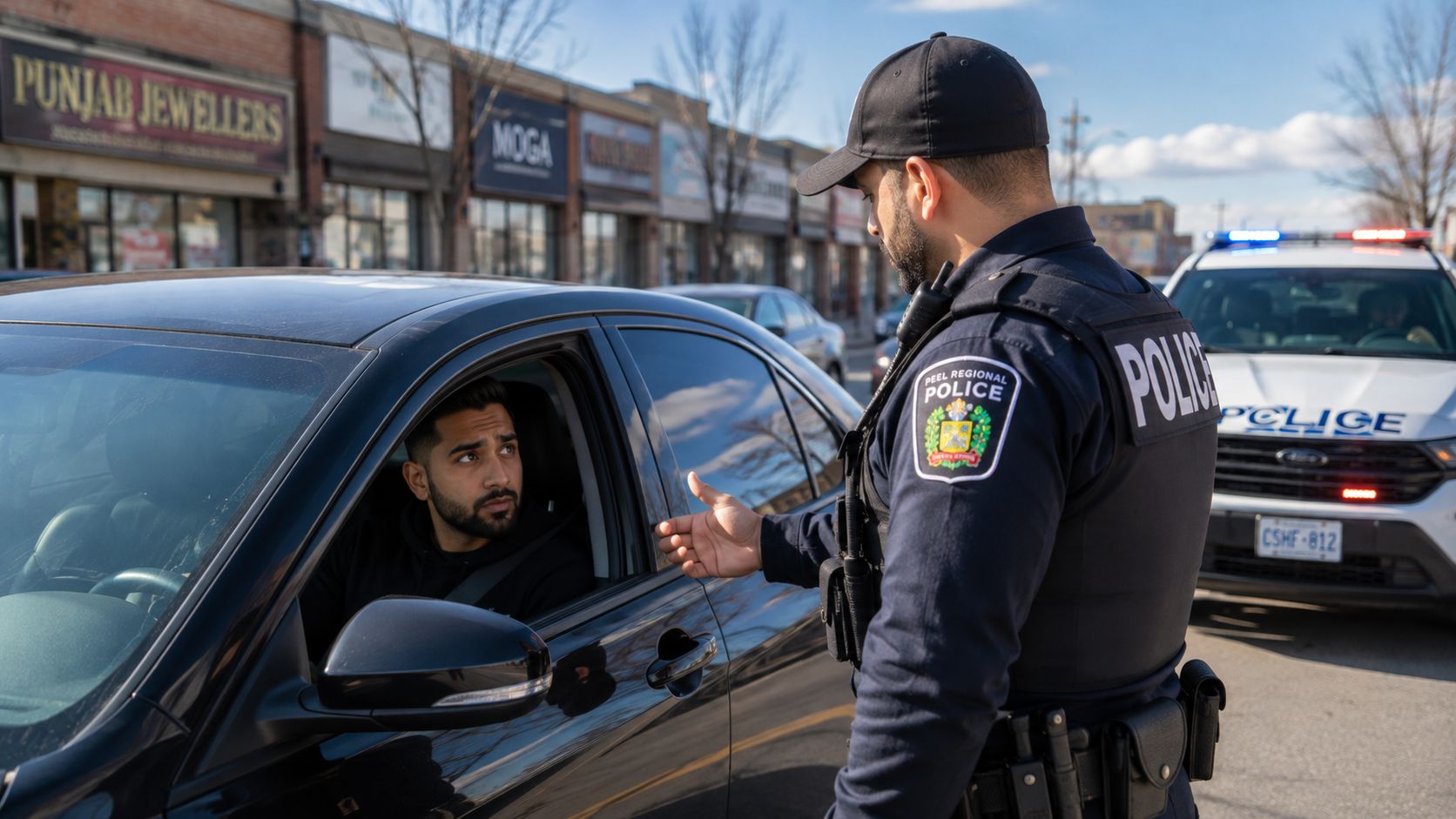
A Brampton commuter gets the windows tinted on a new sedan, loves the darker look, and figures the job is done. Then a traffic stop turns into a lesson in the difference between looking legal and being legal. That's the part too many shops skip over, and it's why people end up paying twice.
Why the demand is so high in the GTA
Drivers in Brampton aren't chasing tint just for style. They want less heat, less glare, more privacy, and a cabin that doesn't feel cooked after sitting in summer sun. That makes sense on long GTA commutes, especially for people who spend real time in stop-and-go traffic and want the car to feel calmer and cleaner.
The problem starts when the installer sells darkness instead of compliance. A film that looks perfect in the bay can still cause grief once a police officer, inspection station, or another jurisdiction gets involved. That's especially frustrating for commuters, rideshare drivers, and fleets that don't stay in one place all week.
What goes wrong when people buy the wrong tint
The biggest mistake is simple. Drivers choose tint by appearance, not by the final measured result on the car. That matters because Ontario looks at what's on the window, not what the box promised.
Practical rule: if the shop can't explain how it checks the final reading on your vehicle, keep walking.
When tint is too dark on the wrong window, the pain isn't just a ticket. You can be ordered to remove the film, which means more labour, more downtime, and a lot of wasted money. A bargain tint that has to come off is not a bargain. It's a refund you never get.
Ontario Window Tint Laws You Must Follow
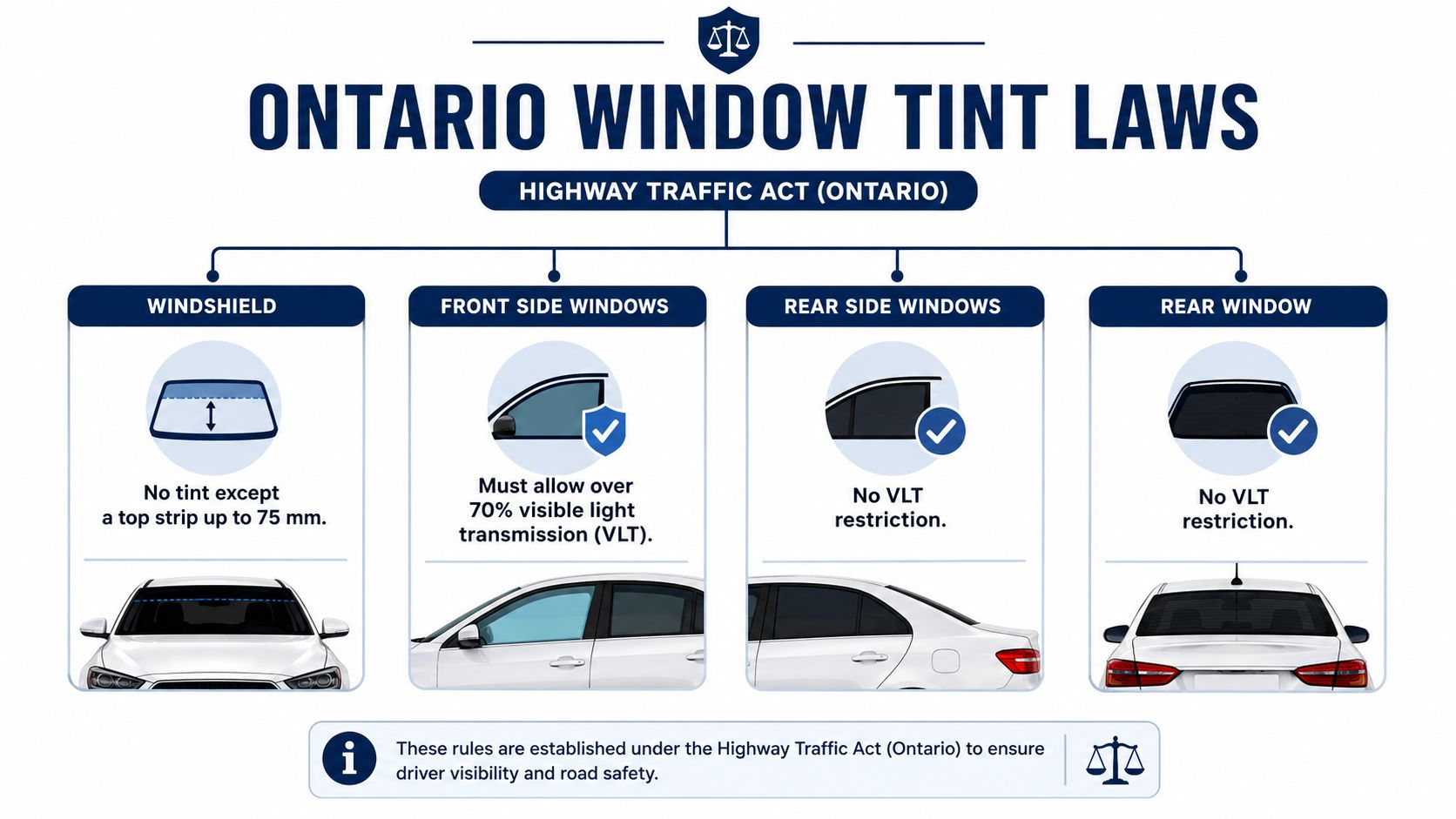
Ontario's rules are the part Brampton drivers need to respect, because there isn't a separate city standard to hide behind. The Highway Traffic Act is the anchor here, and the practical test is blunt. If aftermarket tint substantially obscures the interior on the windshield or front side windows, you're in trouble, and Ontario guidance commonly treats that as a 70% VLT minimum on the front side glass, with rear side windows and the back window allowed to be any darkness if the mirror requirement is met, according to the Brantford tinting explanation of Ontario inspection standards.
The window by window rule set
Start with the windshield. Ontario allows no tint except a top strip up to 75 mm. That's not a grey area. If a shop pushes a full windshield film on a daily driver, they're asking you to take avoidable risk.
Front side windows are the next trap. They need to transmit more than 70% of visible light, and that's a system reading, not a sticker on the film box. Factory glass already blocks some light, so a film that sounds “light enough” on paper can still pull the final result below the line once it's installed.
Rear side windows and the rear windshield are much easier to manage. If the vehicle has the proper side mirrors, Ontario doesn't set the same VLT limit there. That's why so many sensible installs keep the front conservative and let the rear carry the visual style.
Why roadside enforcement matters in Brampton
This isn't a rule you can ignore and hope for the best. In a recent regional crackdown north of Brampton, police reported more than 1,100 charges in a licence-plate and window-tint enforcement sweep, according to the regional charge report. That number matters because it shows tint compliance gets enforced in the world, not just on paper.
A clean-looking install can still fail if the measured front-window reading is too low.
The smartest move is boring and effective. Ask the installer to think in terms of final VLT, not just film shade. If they can't explain the difference between advertised film darkness and the actual reading after it's on the glass, you're in the wrong shop.
Comparing Window Film Types for Heat and UV Protection
Darkness is not the same thing as protection. That's the mistake people repeat when they compare dyed, carbon, and ceramic films by colour alone. In the world, what matters is how the film handles heat, UV, and glare once it's bonded to the glass.
What each film type really does
Dyed film is the budget pick. It changes appearance and adds privacy, but it's the weakest performer for heat control. If you're mostly chasing a cosmetic look and don't plan to keep the car forever, it can make sense, but don't expect miracles.
Carbon film sits in the middle. It gives better performance than dyed film and usually makes more sense for daily drivers who want a balance of cost and durability. It's the practical middle lane for a lot of Brampton owners.
Ceramic film is where the useful performance lives. Selected Canadian film lines show ceramic products reaching TSER values around 62%, IRR up to 97%, and UV rejection of 99% on the 3M spec sheet, while XPEL PRIME XR Plus lists TSER 52–71%, IRER 67–70%, UV rejection 99%, and glare reduction up to 95% on selected films, according to the 3M comparison sheet. The key point for Brampton is simple, a lighter legal film can still reject a lot of heat if the chemistry is right.
Dyed film is a dark shirt, ceramic is technical fabric. Both cover you, only one is built for the heat.
Window Film Types Compared
| Film Type | TSER (Heat Rejection) | UV Rejection | Durability | Best For |
|---|---|---|---|---|
| Dyed | Lower than performance films | Moderate to strong depending on product line | Shorter service life | Budget-conscious drivers who want basic privacy |
| Carbon | Better than dyed | Strong | Better daily-driver durability | Drivers who want balance without paying for top-tier film |
| Ceramic | High on selected films | 99% on selected films | Premium durability | GTA commuters, hot-weather use, long-term ownership |
The practical choice is usually ceramic for front windows if you want comfort without running afoul of the law. That's the lane where legality, glare reduction, and cabin comfort line up.
Window Tinting Costs in Brampton for 2026
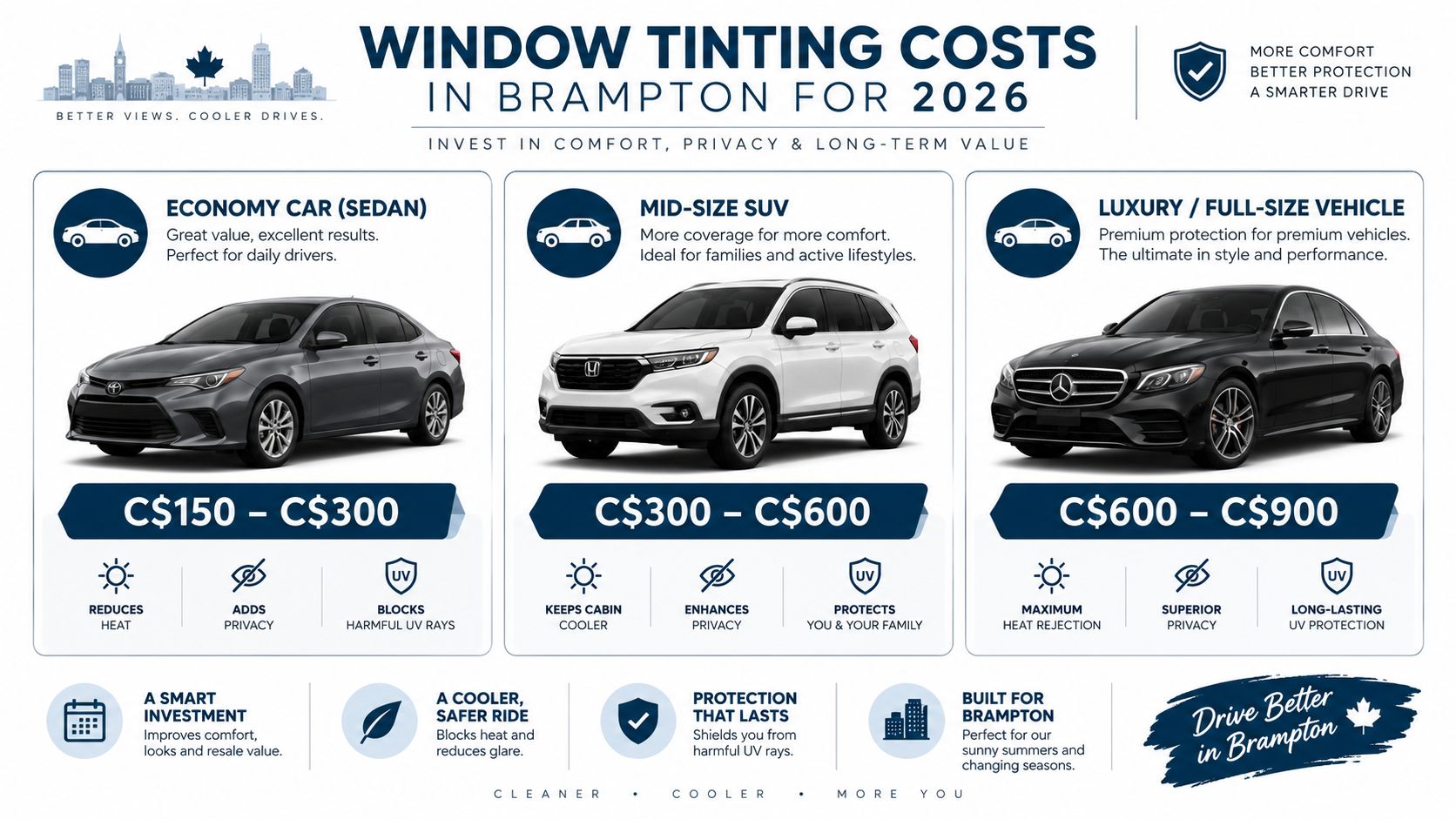
Brampton tint pricing is settled enough now that you can spot a fair quote fast. Independent local guides for 2026 place professional car window tinting at about C$150 to C$900, depending on vehicle size, film type, and add-ons, according to the Brampton pricing guide. That spread is normal. A shop claiming every tint job should cost the same is selling you shortcuts, not a proper install.
How the tiers break down
For sedan packages, the typical Brampton breakdown lands around C$150 to C$250 for dyed film, C$250 to C$400 for carbon film, and C$400 to C$600 for ceramic film, according to the same local pricing guide. The pricing guide also points to common extras such as C$50 to C$100 for a windshield strip and C$50 to C$150 for tint removal.
That pricing shows how the market works. You are paying for film chemistry, labour, clean removal, and the time needed to work around curved glass, defroster lines, or old adhesive. A cheap quote usually skips one of those pieces, and the car pays for it later.
How to spot a bad deal
Suspiciously cheap tint usually means one of three things. The film is weak, the install is rushed, or the shop plans to make money on the comeback visit. If the quote is far below the normal local range, ask what film brand is being used and whether final VLT is checked after installation.
Brampton drivers who keep their cars for years should pay attention to the long-term cost, not just the sticker price. Ceramic costs more, but it is the tier that usually makes sense if you want heat rejection, UV protection, and film that does not fade out early. In the GTA, that is the safer place to spend your money.
Choosing a Trusted Installer and What to Expect on Installation Day
A good installer doesn't just sell shade. They ask what windows you want done, what you drive, how long you keep vehicles, and whether you care more about appearance or compliance. If the conversation starts and ends with “How dark do you want it?”, that's a red flag.
What to ask before you book
Ask direct questions and don't accept fuzzy answers.
- How do you measure final VLT? A serious shop should have a meter and know that film plus factory glass is what matters.
- What's covered under warranty? You want the answer before the car goes in, not after a corner peels.
- Are you authorized for the brand you install? That matters for consistency and product support.
- Do you account for factory tint when recommending shade? If they ignore factory glass, they're guessing.
- Can you show recent work? Clean edges and even alignment tell you a lot.
What the job should look like
Installation day should feel methodical, not rushed. The car gets inspected first, then the old film comes off if needed, then the glass is cleaned, cut, and fitted with care around seals and lines. After that, the film needs time to cure, and you need to follow the aftercare instructions or you'll blame the shop for damage you caused.
If an installer promises instant perfection on every panel, they're selling confidence, not craftsmanship.
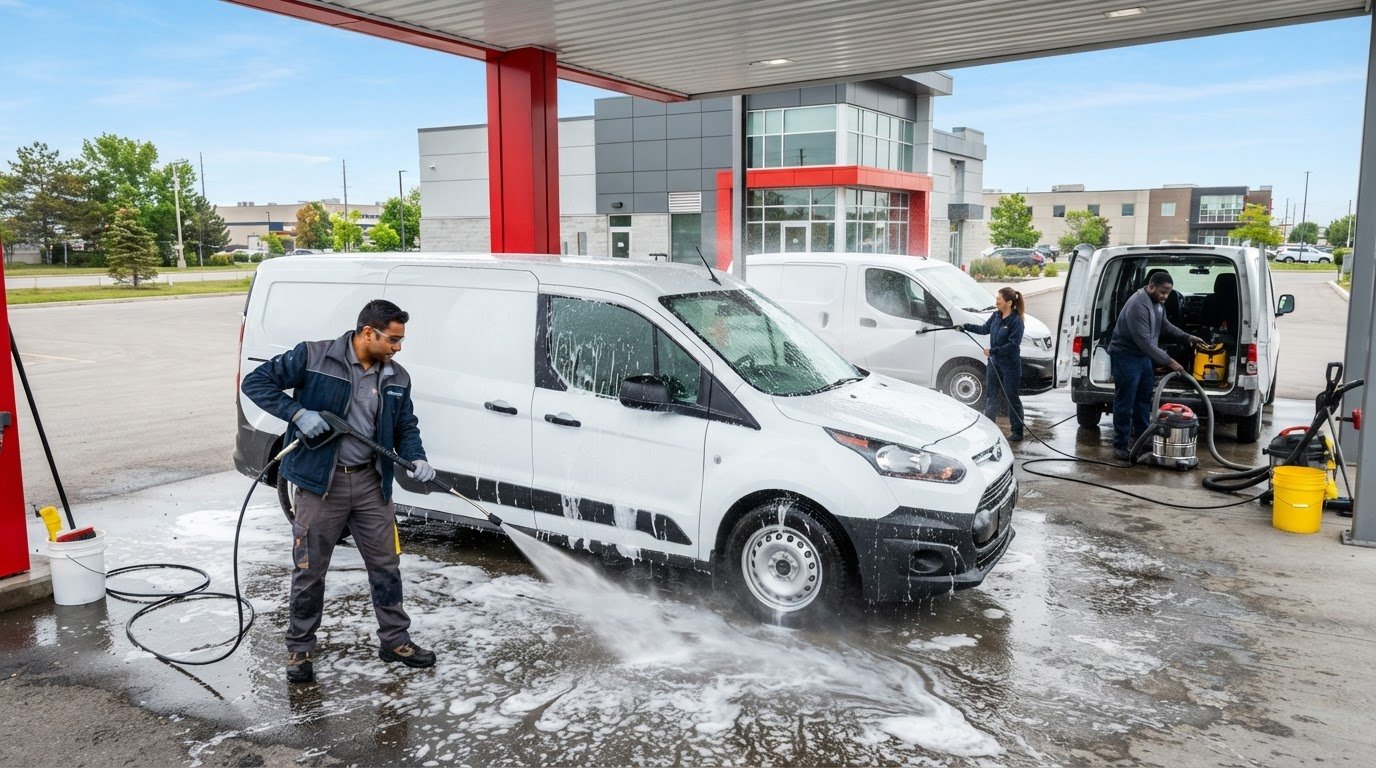
A shop worth using will also be honest about the final reading on the front windows. That's the part that keeps you out of trouble when Ontario enforcement shows up. One local option that also handles vehicle-care appointments is Nanak Car Wash, which pairs wash, detailing, and rust proofing services at its GTA locations. That kind of setup is convenient for owners who'd rather keep car care in one place, but the same compliance questions still apply before any tint work is done.
How Detailing and Rust Proofing Complement Your Tint Investment
Tint protects the cabin from light and heat. Detailing protects everything the light would've slowly damaged anyway. Once you start thinking that way, tint stops being a vanity job and becomes part of a wider vehicle-care plan.
Why the interior still needs protection
UV exposure fades seats, dries trim, and leaves the cabin looking tired long before the mechanical side of the car gives up. Detailing keeps the interior from getting dragged down by salt, stains, crumbs, and daily wear, especially if you commute through winter sludge and spring grime. Carpet shampooing, seat shampooing, leather cleaning, and salt removal all help preserve the same interior that tint is protecting from sun damage.
Rust proofing belongs in the same conversation for a simple reason. Ontario roads are hard on vehicles, and underbody contamination doesn't care how nice the glass looks. Nanak Car Wash lists rust proofing applications at roughly C$119.95 to C$149.95 plus tax, with tiered pricing by vehicle size, which makes it a realistic add-on rather than an exotic extra.
The real advantage of bundling
The smartest owners don't bounce between four shops for one car. They use one location for washes, detailing, and protection work when the service menu is set up that way. That saves time, keeps records in one place, and makes repeat maintenance easier to manage.
A tint job is only half the story if the rest of the vehicle is still getting hammered by road salt and interior wear.
This is the part a lot of Brampton drivers miss. Tint won't keep the floor mats clean, and rust proofing won't stop the dashboard from baking in direct sun. Put them together, though, and the car ages more slowly in the GTA climate.
Maintenance Tips and Common Tinting Questions
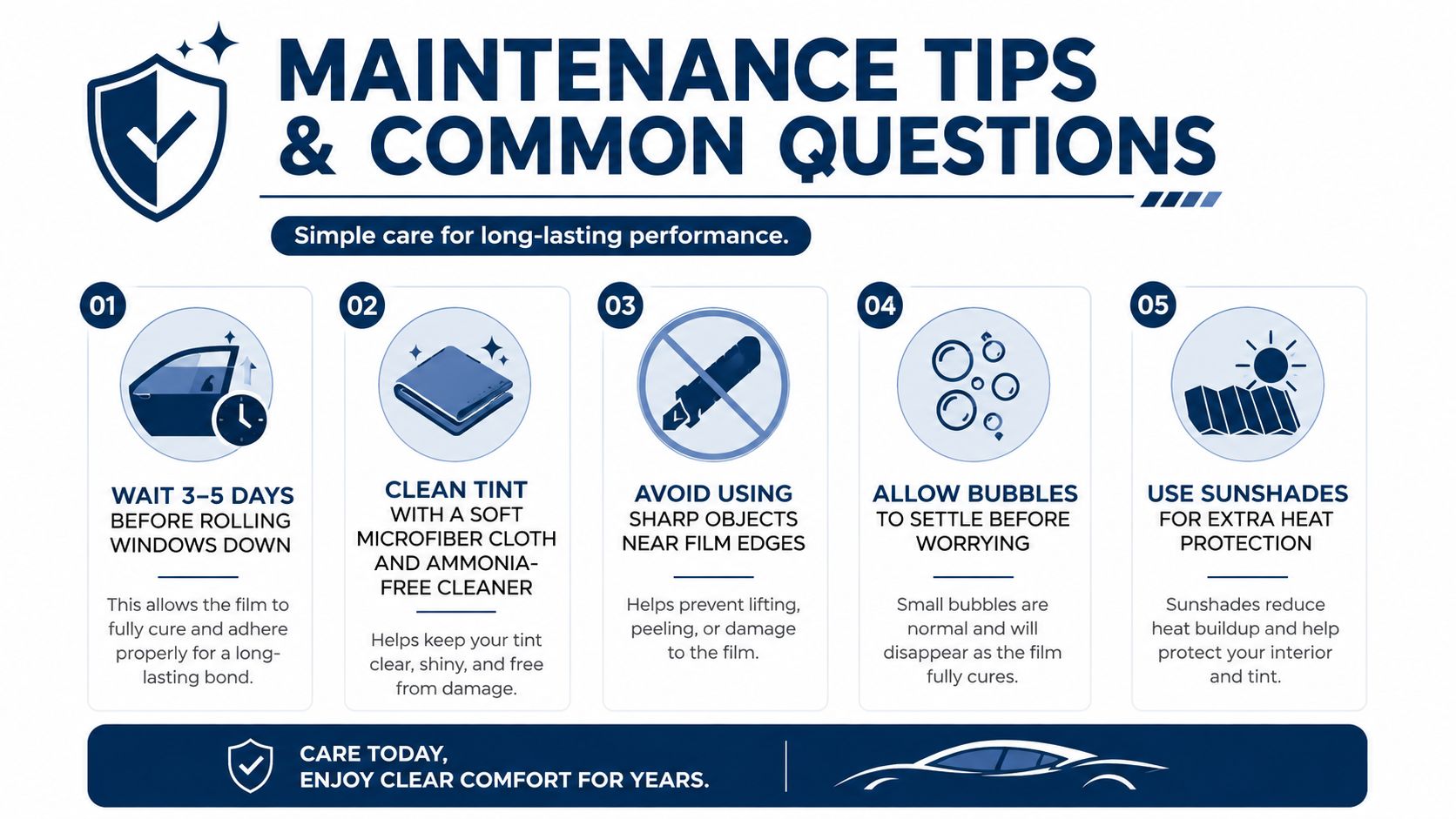
Fresh tint needs a little discipline. If you treat it like a finished kitchen counter on day one, you'll create problems that the installer never caused. The film has to settle, the adhesive has to cure, and the edges need time to bond properly.
What to do after installation
Wait before rolling the windows down. That's the rule drivers ignore most often, and it's the fastest way to lift fresh film at the edge. Clean the glass with a soft microfiber cloth and an ammonia-free cleaner only, because harsh products can shorten the life of the film.
Keep sharp objects away from the film edges, and don't panic over small bubbles right away. Some moisture and haze can settle as the film cures. If bubbling, lifting, or peeling doesn't clear as the shop said it should, use the warranty and bring the car back.
Common questions drivers ask
Tinting usually doesn't interfere with toll transponders or GPS when the film is non-metallic. That's one reason ceramic and modern carbon films are the safer pick for everyday use. If you're moving to another province, check the local tint rules before assuming your current setup will pass there.
How long will good film last in Ontario? That depends on the product, the install quality, and how well you maintain it, so don't judge it by price alone. You'll get far better life out of a properly installed film that's cleaned correctly than a cheap install that was abused from day one.
Use sunshades if you want extra heat control on parked cars, but don't use them as an excuse to run illegal front tint. The goal is a car that's comfortable, compliant, and easy to live with, not one that looks good until a ticket ruins the day.
If you want tinting, detailing, and rust protection handled at one GTA location, visit Nanak Car Wash and ask what they can do for your vehicle's current condition and your Ontario compliance needs. Bring your questions about legal front-window VLT, film type, and aftercare, and get the job done once instead of paying to fix it later.

 6600 Finch Ave W, Etobicoke, ON M9V 3Z6
 647-703-8515
 MON – SUN 8 AM to 7 PM