
You know the feeling. The car looks clean on the day you wash it, then one winter commute later the front bumper has a peppering of chips, the rocker panels have a film of salt, and the hood doesn't quite look sharp anymore. In the GTA, that usually happens because the road, the weather, and the parking situation all take turns at your paint, so the question isn't whether to protect it, it's what kind of protection fits your driving life.
Table of Contents
- What Paint Protection Actually Means for Your Car
- The Three Main Types of Protection Explained Simply
- PPF vs Ceramic vs Wax and Sealer at a Glance
- How Much Paint Protection Really Costs
- What Happens During a Protection Service Appointment
- Warning Signs Your Paint Needs Protection Sooner Than You Think
- How to Pick a Trusted Local Paint Protection Provider
- Matching Your Protection Plan to a Nanak Car Wash Service
What Paint Protection Actually Means for Your Car
The easiest way to think about paint protection is a raincoat for your clearcoat. The paint itself isn't the goal, the goal is to keep the factory finish from taking the direct hit from salt, grit, UV, road tar, bugs, and bad parking habits. If you've ever driven home after a slushy week and seen the lower doors and front end look tired before the rest of the car, you've already seen why this matters.
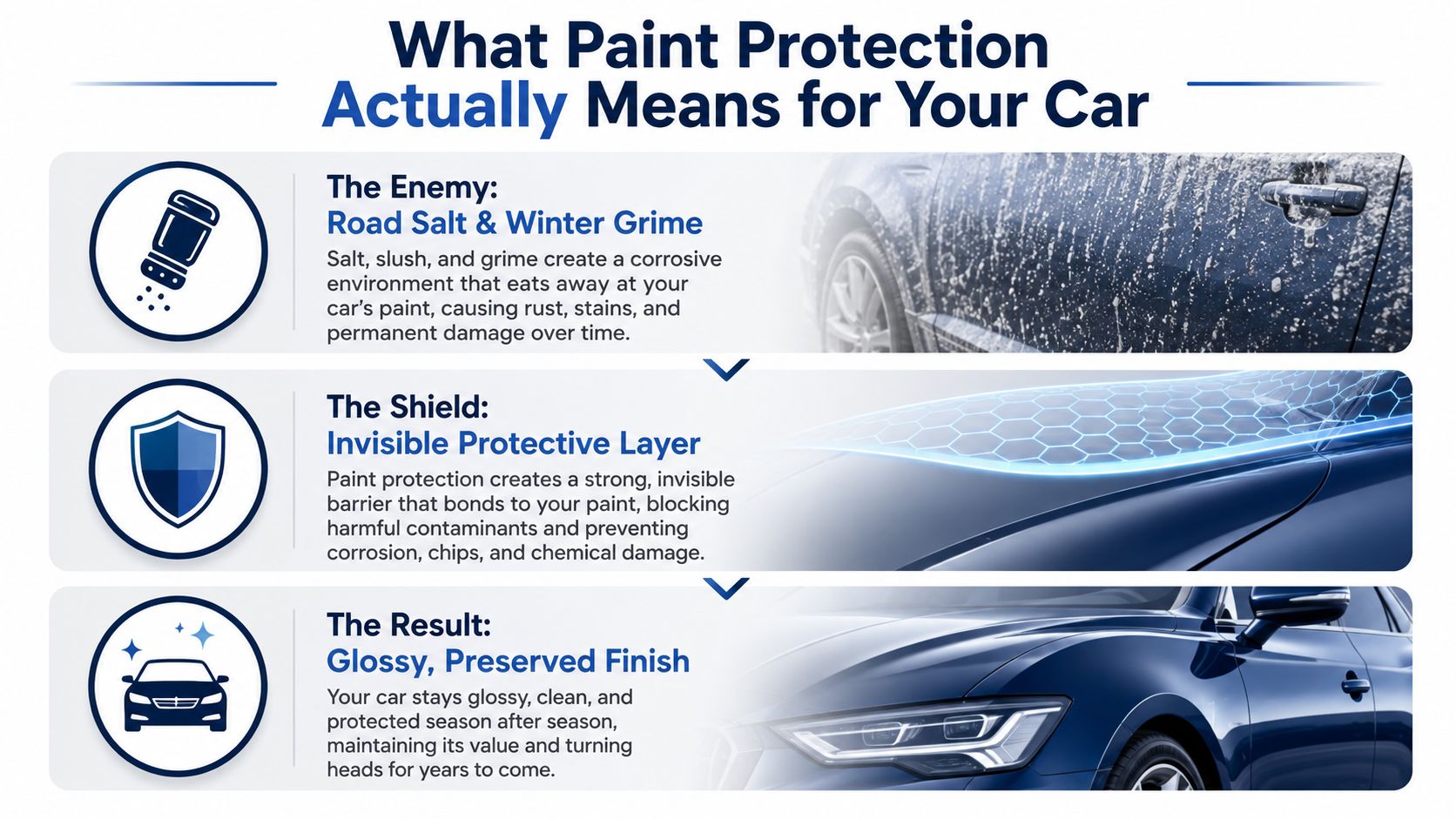
The Enemy Is Usually Daily Life
Hearing “paint protection” may bring exotic cars under spotlights to mind. In real life, it's more often a commuter car parked outside, a family SUV on winter roads, or a lease vehicle that still needs to look decent at hand-back time. The damage usually isn't dramatic in one day, it's the slow grind of abrasion, contamination, and sun exposure.
That's why a local search for paint protection near me makes sense. You're not shopping for a luxury add-on first, you're shopping for a way to reduce how hard daily driving ages the car.
Practical rule: protect the parts that get hit first, not just the parts that look pretty on delivery day.
Three Basic Jobs, Three Different Tools
Every protection product is trying to do one of three jobs. Some create a physical barrier, some create a chemical barrier, and some act like a temporary sacrificial layer that you replace often. That's the decision tree in plain English.
If you keep that simple idea in mind, the rest gets much easier. You're not choosing between “good” and “bad”. You're choosing between a stronger shield, a slicker coating, or a cheaper maintenance layer that fits your budget and your routine.
The Three Main Types of Protection Explained Simply
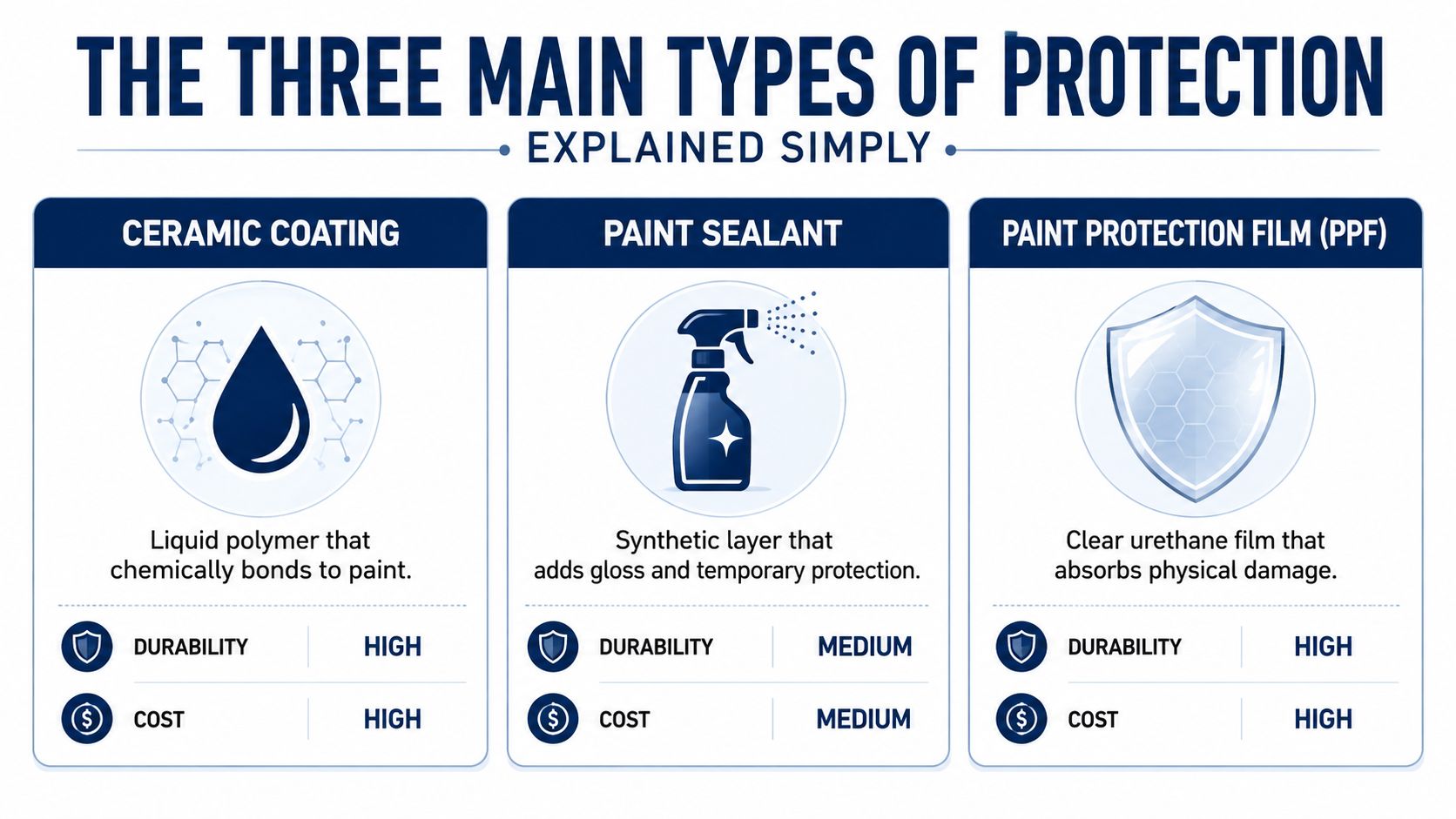
Think of the three main options like clothing for your car. PPF is the raincoat, ceramic coating is the sunscreen, and wax or sealer is the candle wax you keep renewing because it wears away first. They all have a place, but they don't solve the same problem.
PPF Is the Physical Shield
Paint protection film is a clear urethane film bonded to the car's paint, usually on high-impact areas like the front bumper, hood edge, mirrors, and rocker panels. It's the option people choose when they want the surface itself to absorb small impacts before the paint does.
A Canadian technical listing for PPF describes common film at 8 mil / 203 microns thickness, with 2,500 psi tensile strength and 350% elongation for one listed product line. Those numbers help explain why thicker TPU films are preferred for the front end, especially on vehicles that see stone strikes and winter abuse. 3M Canada's paint protection film technical listing
Ceramic Coating Is the Slick Surface Layer
Ceramic coating doesn't take rock hits the way film does. It's closer to an invisible sunscreen that hardens on top of the clearcoat and helps with gloss, water behaviour, and easier cleaning. Drivers like it when they want the car to stay cleaner-looking for longer and wash a bit easier.
That makes it a strong fit for owners who care more about maintenance and shine than impact resistance. If your car lives outside but doesn't spend all day eating gravel, this is often the more practical middle ground.
Wax or Sealer Is the Cheap Sacrificial Layer
Wax and synthetic sealers are the simplest options. They don't last like film, and they don't bond like a coating, but they do add gloss and a temporary protective layer that can be renewed as part of routine washing.
A lot of daily drivers fit here better than they want to admit. If the car is a commuter, a winter beater with pride, or a family vehicle that just needs to stay presentable, the cheaper layer plus frequent washing can make more sense than chasing a premium package.
Simple takeaway: PPF blocks impact, ceramic helps with upkeep, wax and sealer help on a budget.
PPF vs Ceramic vs Wax and Sealer at a Glance
A good comparison starts with the problem you're trying to solve. If the worry is stone chips, you're in PPF territory. If the worry is grime, water spotting, and easier washing, ceramic coating starts to make more sense. If the worry is staying ahead of winter muck without spending a lot, wax or sealer can be the honest answer.
| Feature | PPF | Ceramic Coating | Wax or Sealer |
|---|---|---|---|
| Main job | Physical impact protection | Surface slickness and chemical resistance | Short-term gloss and sacrificial protection |
| Durability | Highest of the three | Middle | Lowest |
| Repairability | Can be replaced in sections | Usually requires reapplication when worn | Reapply regularly |
| Gloss | Good, depending on install | Very good | Good right after application |
| Hydrophobic behaviour | Good | Very good | Moderate |
| UV resistance | Good as part of overall protection | Good for clearcoat help | Some help, but temporary |
| Best fit | Highway miles, chip-prone front ends, higher-value cars | Outdoor parking, wash ease, long-term maintenance | Budget-conscious owners, frequent wash routines |
A leased commuter rarely needs the same treatment as a garage-kept weekend car. The leased car may just need enough protection to keep the front end and high-touch areas looking tidy, while the weekend car might justify more careful, layered protection because it's kept for the long haul.
Mistake is assuming one product wins every category. No single option is strongest on every axis. PPF costs more and does more against impact. Ceramic helps with shine and cleanup. Wax and sealer are the easiest to live with when the budget is tight.
Pick the Tool That Matches the Car's Life
A daily driver that spends hours on the 401, then sits outdoors, needs a different answer than a car that sleeps in a garage and only comes out on nice days. That's why layered protection is common, a front-end film package where chips are worst, then a coating or sealer to make maintenance easier across the rest of the car.
If you're deciding for a family SUV, start with the panels that get hit most. If you're deciding for a garage queen, focus on gloss and washability. If you're deciding for a commuter, keep the plan simple enough that you'll maintain it.
How Much Paint Protection Really Costs
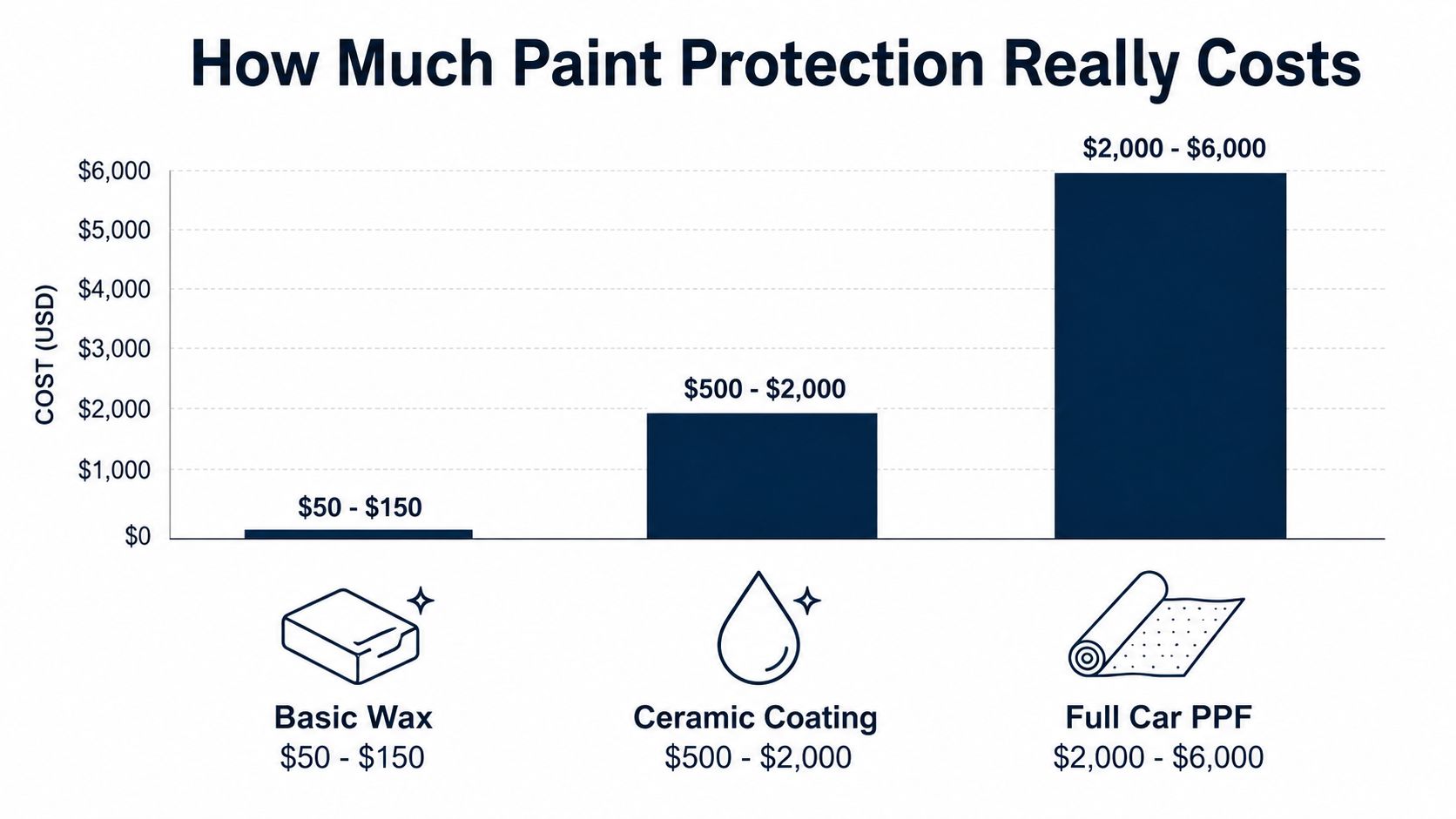
The cheapest-looking option is not always the cheapest over time. A wax upgrade costs less up front, but it needs repeating. A ceramic coating asks for more money at the start, then reduces how often you need to think about protection. PPF has the biggest entry price, but it also covers the panels that are hardest to keep looking new.
Start With the Low-Cost End
A basic wash-add-on wax is the easiest place to begin because it rides on top of a service you were probably already paying for. Hand-applied sealers sit above that in price, but they're still within reach for drivers who want better gloss and easier upkeep without making a major commitment.
That's why a lot of GTA commuters should think in terms of monthly maintenance first, not just one-time installs. If the car gets washed often and you want the paint to look cared for, a repeatable low-cost option can be the smart move.
The Bigger Ticket Items Need a Bigger Use Case
Ceramic coating usually makes sense when the owner will benefit from the easier wash routine and longer-lasting surface behaviour. PPF makes sense when the car gets hit where the coating can't help much, especially on the front end and other exposed panels.
The key question is simple. Are you trying to make washing easier, or are you trying to stop physical wear before it reaches the paint? If it's the first, coating or sealer can be enough. If it's the second, film earns its place.
Think in Ownership, Not Just Purchase Price
A protection service should be treated like part of the car's upkeep, not a vanity buy. The right question isn't “What's the cheapest thing on the menu?” It's “What stops me from paying more later because the paint looks older faster?”
For many daily drivers, the answer ends up being a mix of front-end PPF, plus a coating or regular wax support for the rest. That keeps the budget under control while targeting the panels that take the biggest beating.
What Happens During a Protection Service Appointment
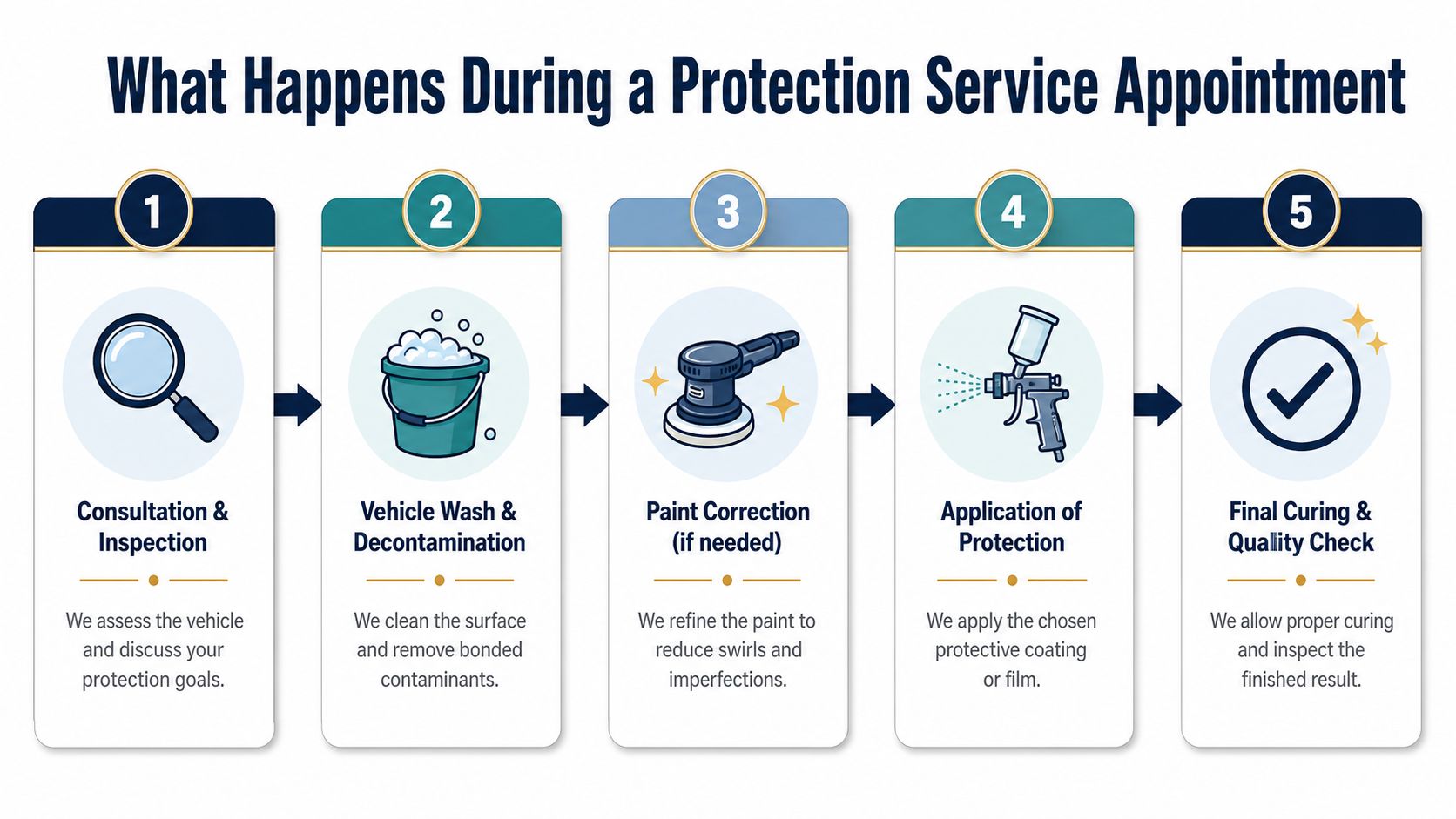
Most first-time customers worry they're booking something mysterious. In practice, it's usually a normal shop visit with a few extra prep steps, and the reason for those steps is simple. Protection doesn't stick well to dirty, gritty, or swirled paint.
The Prep Work Matters More Than Most People Think
A proper appointment usually starts with a wash and decontamination so the surface is clean enough to work on. If the paint has swirls or light defects, the shop may correct those before applying film or coating, because locking in a bad finish is a bad idea.
That's also why a controlled environment matters. Clean lighting, a dust-managed workspace, and enough time for curing all affect the final result far more than a glossy brochure does.
Ask this before you book: “Will you inspect the paint first, and what prep is included?”
What You'll Usually See at Pickup
At hand-off, the technician should show you what was covered, what care steps to follow, and what to avoid right away. With film, that means understanding the edges and the panels protected. With coatings, it means understanding the first wash and curing instructions.
Bring the car with enough fuel for a short inspection drive, clear the trunk if access is needed, and leave unnecessary personal items at home. If the shop needs the vehicle longer than a few hours, planning your day around that saves a lot of irritation.
A Regular Appointment Should Feel Routine
You shouldn't leave a protection appointment confused or guessing. A clean walk-around, a simple explanation of the product, and a clear invoice matter because they tell you what you bought.
For interior, exterior, and maintenance-based services in the GTA, a multi-service provider can also simplify this process. One example is Nanak Car Wash, which combines wash, detailing, and rust protection at multiple locations, so the owner isn't bouncing between separate shops for basic upkeep and longer-term protection. It's a practical setup for people who want routine car care handled in one place.
Warning Signs Your Paint Needs Protection Sooner Than You Think
If the paint no longer beads water like it used to, that's a clue. If the hood and bumper edges already show chips, that's another. If the car looks fine in shade but hazy in direct sun, the surface has probably started to lose the crisp look you expect from fresh clearcoat.
The Car Is Telling You What It Needs
Swirl marks under bright light often mean the finish is taking damage from washing or wiping. White oxidation on older finishes means the surface is ageing in plain sight. And if your routine changed, say you started commuting farther, parking outside more often, or driving more highway miles, the old protection plan may no longer fit.
A simple rule helps here. More exposure usually means more need for either stronger physical protection or more frequent maintenance.
Match the Response to the Symptom
- Light dullness and weak water beading: step up wash frequency and add a sealer or wax layer.
- Noticeable chip-prone areas: consider front-end PPF before the damage spreads further.
- Swirls and haze in sunlight: book correction first, then protect the finish you just restored.
- Outdoor parking and daily grime: lean toward easier-clean surfaces and a maintenance routine you'll consistently maintain.
The point isn't to overspend. It's to stop treating protection like a one-time luxury and start treating it like response to how the car is really being used.
How to Pick a Trusted Local Paint Protection Provider
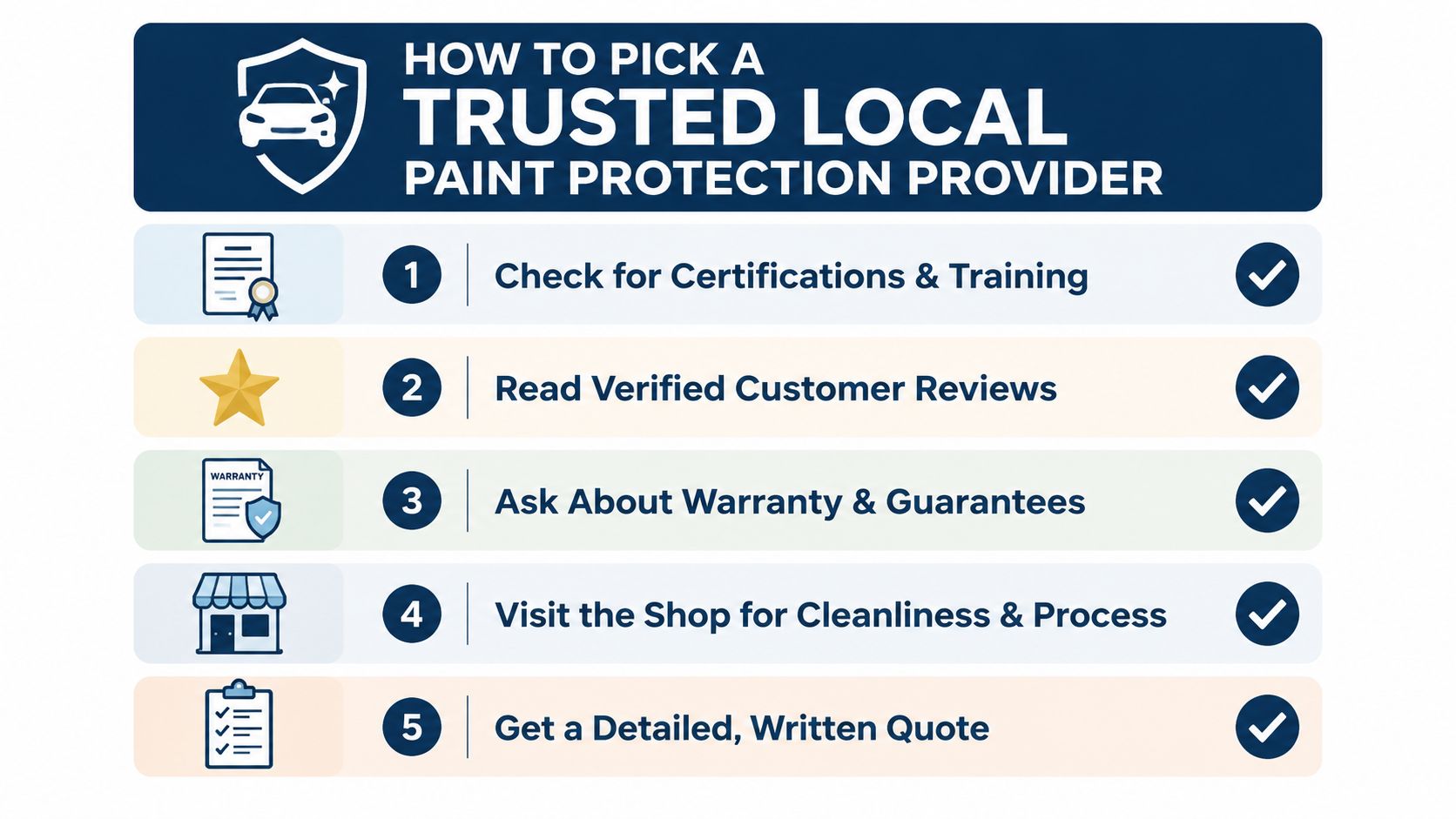
A good product installed badly is still a bad outcome. That's why the installer matters as much as the material, whether you're buying film, coating, or a basic sealant package. The goal is to find a shop that explains the work clearly and doesn't hide behind vague package names.
What to Check Before You Hand Over the Keys
Look for clear product names, not just “premium package” language. Ask how they prep the paint, whether they correct defects first, and whether the shop has controlled lighting for inspection. A written warranty and a quote that ties pricing to vehicle size or coverage area are both good signs that the shop understands the work.
You can also learn a lot by visiting the space in person. A tidy bay, good lighting, and a technician who can explain the process without getting defensive usually tell you more than a social media reel.
One Resource That Helps with the Bigger Repair Picture
If your vehicle also needs other body or accessory work, it helps to have a broader repair network in mind. Drivers sometimes use a directory like find aluminum welding shops when they need help comparing local repair options beyond detailing.
Why Multi-Location Shops Can Be Easier to Live With
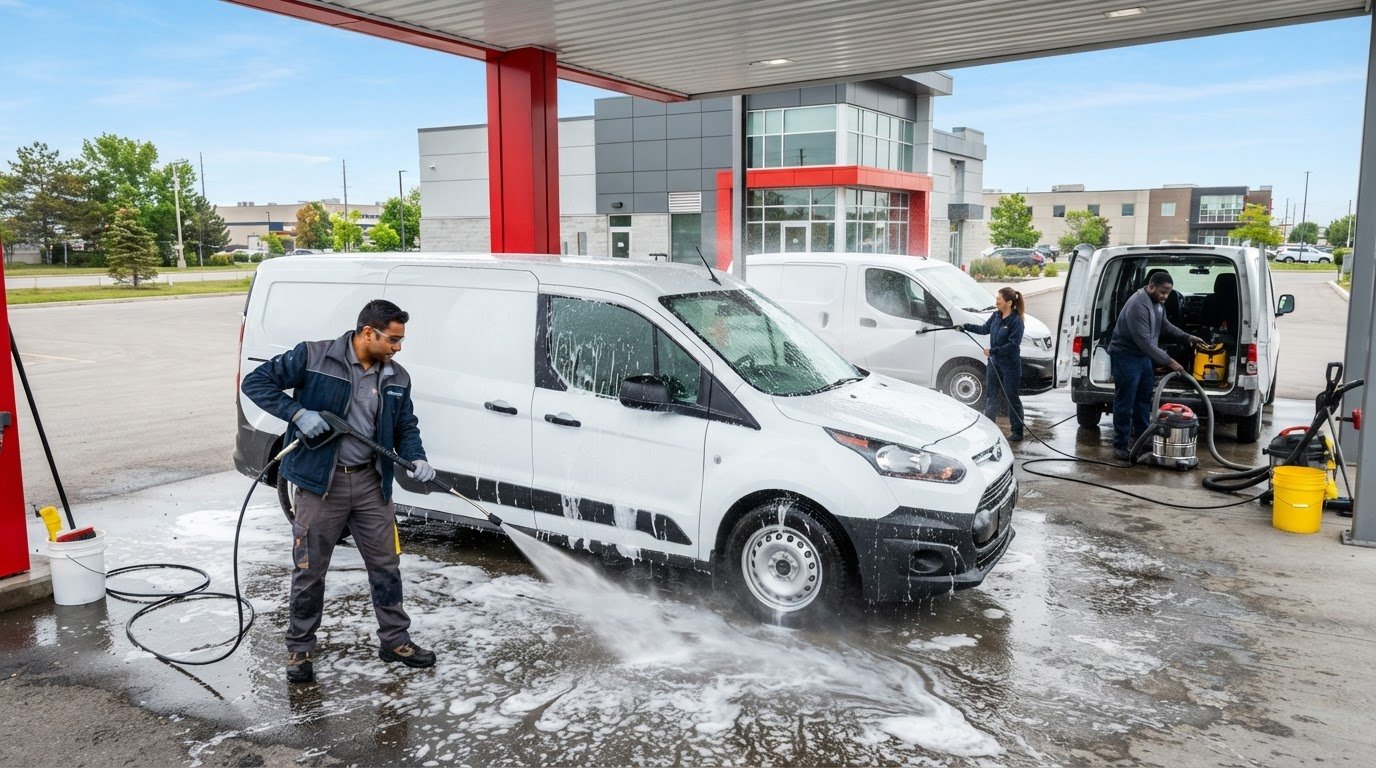
A multi-location operator can be practical because it cuts down on separate errands for washing, detailing, and corrosion care. That matters in the GTA, where people already plan around traffic, weather, and busy schedules.
For paint protection specifically, consistency is the win. If the same provider can handle a wash, a detail, and rust protection under one roof, you're more likely to keep the maintenance schedule going instead of putting it off.
Matching Your Protection Plan to a Nanak Car Wash Service
The right plan depends on what you're trying to solve. If you just want the car to look fresher week to week, an express exterior wash with add-on protection is the easiest place to start. If the interior is also overdue, the full-service wash is a better reset. If the car needs serious cleaning before any protection decision, the by-appointment detailing route makes more sense because it includes deeper care like shampooing, leather cleaning, and machine polish work.
For the person who wants simple upkeep, the express package starting from $9.99 plus tax already gives you the basics, with upgrades such as triple foam wax, hot wax, sealer wax, and an underbody wash. For a deeper reset, full-service packages starting from $29.99 plus tax add hand drying and interior cleaning. If corrosion is the main worry, the rust protection service is priced by vehicle size at roughly $119.95 to $149.95 plus tax. Nanak Car Wash also lists the Unlimited Wash Club with first-month-free offers, which is the easiest way to keep a protection routine going without rethinking it every time the weather turns.
The best next move is simple. Pick the level that matches your car's reality, not the fanciest label on the menu. If you want one place to keep the wash routine, interior upkeep, and rust protection moving in the same direction, Nanak's GTA locations give you a straightforward booking path.
If you want a practical way to keep your car cleaner, sharper, and better protected through GTA weather, visit Nanak Car Wash and choose the service that fits how you drive. Their washes, detailing, and rust protection options make it easier to keep up with paint care without turning it into a second job.

 6600 Finch Ave W, Etobicoke, ON M9V 3Z6
 647-703-8515
 MON – SUN 8 AM to 7 PM