
You know the feeling. The car looked decent in October, then one hard Ontario winter turned it into a salt-dusted chore, and by July the sun had faded every bit of gloss it used to have. In the Greater Toronto Area, that's not a rare story, it's the normal life cycle of a daily driver.
That's where ceramic coating benefits stop being a shiny-car talking point and start looking like a real maintenance decision. For GTA drivers, the question isn't whether the coating sounds impressive, it's whether it helps against road salt, UV, grime, and the endless wash-repeat cycle that comes with local driving.
Table of Contents
- Your Car's Arch-Nemesis The GTA Driving Year
- What Exactly Is a Ceramic Coating Anyway
- The Real-World Superpowers of a Coated Car
- Ceramic Coating vs Wax vs Sealant
- The Cost and Long-Term Value for GTA Drivers
- Frequently Asked Questions About Ceramic Coatings
Your Car's Arch-Nemesis The GTA Driving Year
A GTA car doesn't just get old, it gets tested. January brings slush, brine, and the gritty spray that rides up from 401 traffic. By March, the lower panels have that crusty look that no quick rinse seems to beat, and by mid-summer the paint has to survive bright sun, hot parking lots, and the dust that settles in when construction season kicks into gear.
That's why ceramic coating makes sense as a durability tool, not just a gloss upgrade. The surface challenge here isn't one problem, it's a rotating lineup. Winter road salt wants to cling, summer UV wants to dull the finish, and daily washing can become a time sink when grime keeps coming back.
The practical question is simple. If your car lives outside, commutes through traffic, and gets washed more than once a season, is there a coating that helps the paint hold up better than wax or a basic sealant? For a lot of GTA owners, that's the genuine decision beneath the marketing.
Practical rule: If your car spends a lot of time outdoors in the GTA, judge paint protection by how well it handles salt, sun, and repeated washing, not by showroom shine alone.
The local angle matters. A product can look impressive on a spotless weekend car, but the GTA punishes finishes in a very different way. A surface that sheds dirt more easily, resists chemical staining, and keeps UV damage in check has a better shot at making winter and summer less punishing on the paint.
That doesn't mean every driver needs ceramic coating. It does mean the usual “nice-to-have” framing misses the point for Ontario. In this climate, the coating is closer to a defensive layer that helps the paint survive the year with less effort from you.
What Exactly Is a Ceramic Coating Anyway
Think of ceramic coating as a microscopic protective layer that bonds to the paint instead of just sitting on top of it. That's the main thing people miss. Wax is temporary, sealant is a step up, but a ceramic coating is built to behave more like a bonded shield than a cosmetic dressing.
At a materials level, it forms a thin, chemically bonded barrier that improves corrosion resistance, wear resistance, and thermal stability according to materials-science references on ceramic coating behaviour. That basic mechanism is why detailers treat it as a protection system, not just a shine product. It's also why the paint feels different after the car is coated, water moves faster, grime has a harder time sticking, and cleaning usually becomes less frustrating.
A useful analogy is waterproof outdoor gear. Wax is like a light spray treatment that needs reapplying often. Ceramic coating is closer to high-end technical fabric protection, a more durable surface treatment that's meant to stay on the paint for a long stretch and keep doing its job through messy weather.
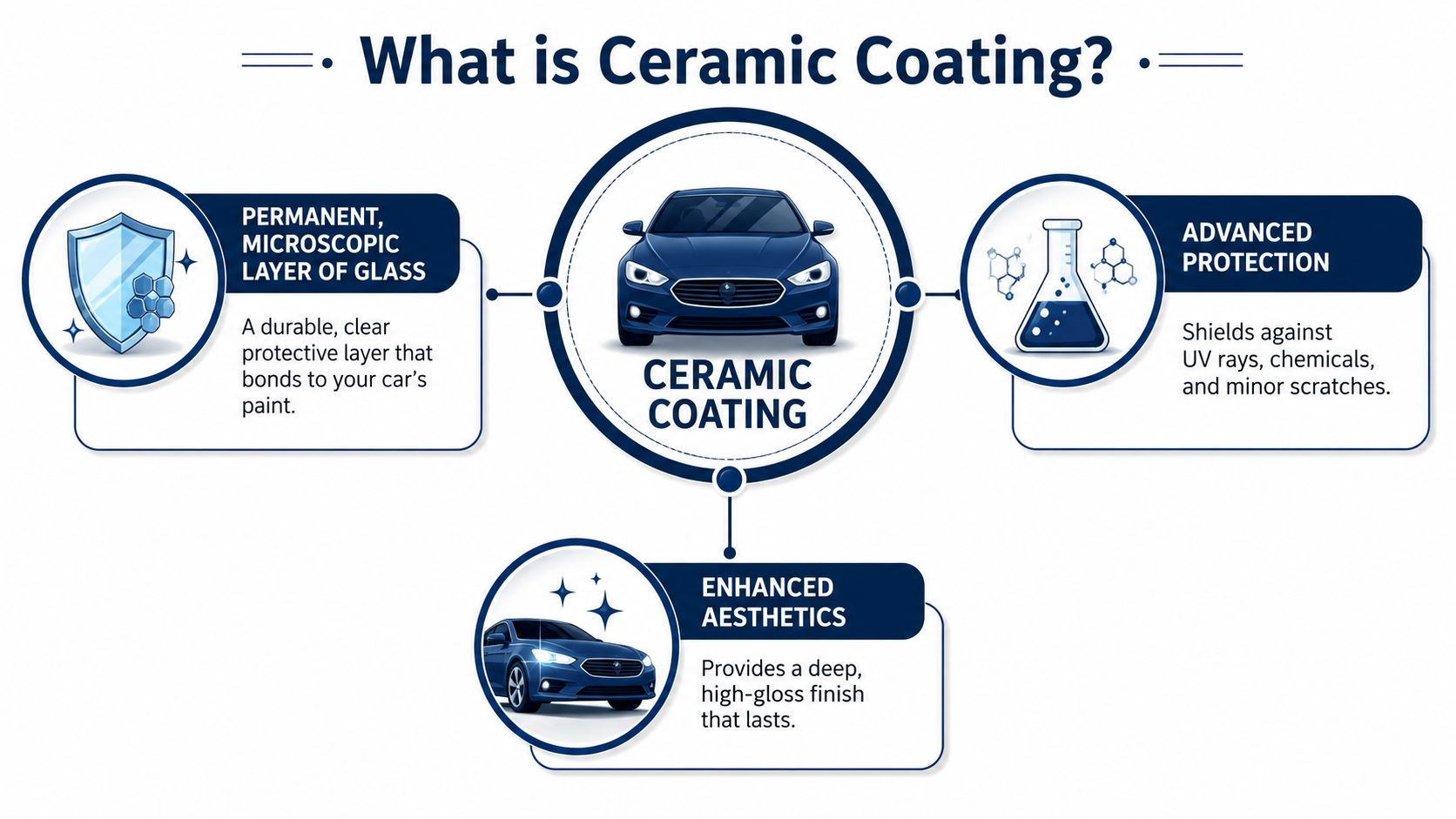
The chemistry matters because the barrier isn't there only for looks. The bonded layer helps resist the kind of environmental wear that slowly ages paint, especially on vehicles that live through winter contamination and strong sunlight. That's the reason ceramic coating keeps showing up in serious paint-protection conversations instead of being treated as a boutique detailing add-on.
One thing to keep straight, though, is what it does not do. It's not a thick armour layer, and it won't turn your paint into something rock chip proof. It's a surface protection system, one that makes the car easier to maintain and harder to damage through everyday exposure, but not invincible.
The Real-World Superpowers of a Coated Car
Water behaviour and easier cleaning
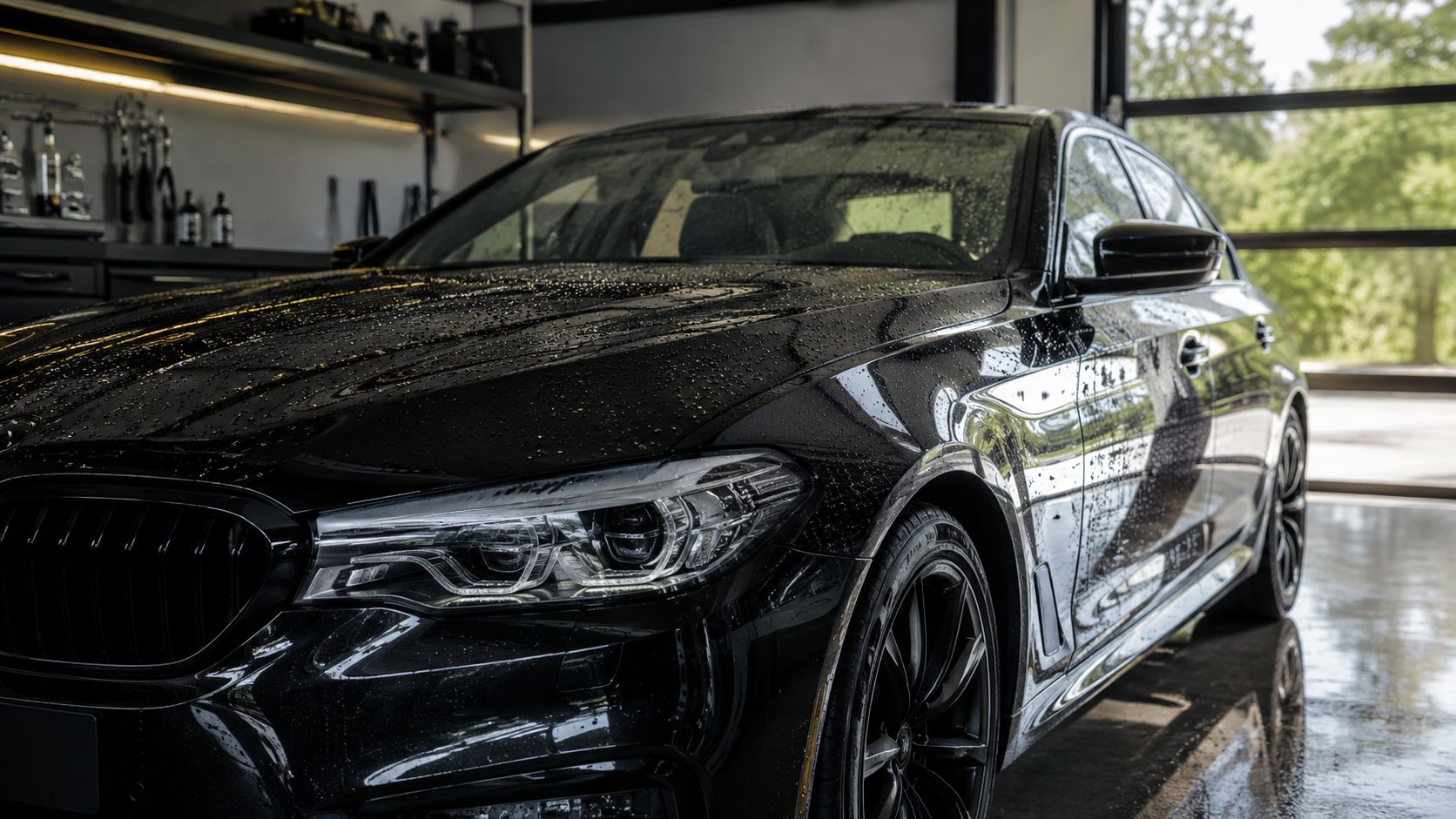
After a coating is on the paint, water stops clinging the same way. It beads up, slides off faster, and leaves less behind on the panel, so the car looks cleaner between washes and is less likely to dry with ugly water marks. That effect comes from the hydrophobic surface layer doing its job.
For a GTA driver, the practical benefit shows up in messy weather. Slush, spray, and road film do not disappear on their own, but they are easier to rinse away when the surface is less grabby. A reference guide on ceramic coating benefits says coated vehicles can take about 40% less time for routine washing and that higher-quality coatings can last about 2 to 7 years according to Detailing Finder.
Dirt still lands on the car. The difference is that it is easier to move off the surface when you wash it.
Salt, chemicals, and outdoor abuse
Ontario winters are hard on paint. Road salt sits on panels, gets packed into seams, and keeps working on the finish long after the drive is over. Technical coverage notes that ceramic coatings can resist chemical stains from road salts, bird droppings, tree sap, and other acidic contamination, which matters when the car has been sitting in freeze-thaw mess for days as noted in AZoM's overview.
Thin-film ceramic systems are also described as impervious to moisture, salt, solvents, fuels, and aggressive chemicals, with stability up to 980°C in high-performance applications as described by Cerakote EU.
That still does not make a car winter-proof. It does give the paint a better chance against the grime Ontario throws at it, especially when the vehicle spends weeks outside and keeps getting hit with salty spray. If contamination has a harder time bonding to the clear coat, cleanup is simpler and the surface is exposed to corrosive residue for less time.
Gloss and what it does not fix
A properly prepped coating also sharpens the look of the paint. The finish appears slicker and more reflective because the surface is cleaner and more even, which tends to stand out on darker cars. A lot of drivers like that visual payoff as much as the protection.
The gloss has limits, though. Ceramic coating will not hide deep scratches, and it will not stop stone chips from hitting the paint on the highway. It is a resistant layer, not an impact barrier, so its real value is in keeping the finish healthier for longer while making day-to-day upkeep easier.
Ceramic Coating vs Wax vs Sealant
The choice becomes clearer once you compare how each product behaves in real GTA driving. Wax gives a quick shine with very little commitment, sealant sits in the middle, and ceramic coating asks for more upfront work but keeps protecting the paint for much longer. In a climate where road salt, slush, sun, and long commutes all hit the same car, that difference affects how often you have to keep up with paint care.
| Feature | Ceramic Coating | Paint Sealant | Carnauba Wax |
|---|---|---|---|
| Longevity | 2 to 7 years | Usually months | Usually months |
| Protection feel | Strong resistance to salt, chemicals, and UV exposure | Moderate protection | Light protection |
| Maintenance effort | Lower once applied | Moderate | Higher, because it needs frequent reapplication |
| Water behaviour | Strong beading and easy rinse-off | Good | Good at first, then fades faster |
| Best fit | Drivers keeping the car longer and dealing with year-round exposure | Owners who want a middle ground | Drivers who want short-term shine |
Wax still has a place. A driver who mainly wants a fast cosmetic boost, and does not mind applying it again often, can still get good results from wax. It is the simplest route to a glossy finish, but that simplicity comes with a shorter protection window.
Sealant is the middle ground. It usually lasts longer than wax and gives more practical protection, which makes it a decent choice for drivers who want better durability without going all the way to a coating. It does not hold up like ceramic, but it also does not ask for as much commitment up front.
Ceramic coating changes how you think about upkeep. Instead of redoing protection every season, you are building a longer-lasting layer over the paint, which matters when winter washes, salty spray, and summer UV all keep wearing on the finish. For a GTA driver, that means less repeating the same protection routine and more keeping the paint in decent shape over time.
The other difference is consistency. Wax can look strong for a while and then fade quickly, especially after weather and washing start working on it. A properly applied ceramic coating is made to stay stable, and that is what makes it feel less like a short-term detailing habit and more like a long-term maintenance choice.
The Cost and Long-Term Value for GTA Drivers
A ceramic coating usually feels expensive at first glance. That reaction makes sense, especially if you are comparing it with wax or a basic sealant, where the purchase looks much smaller and the result seems easier to understand. The better question is whether you want a short-lived shine or a longer protection layer that keeps doing work through GTA winters, summer sun, and everyday road grime.
For Ontario drivers, the value comes down to how much wear the car faces through the year. Salt on the roads, slush in the wheel arches, and strong UV in summer all work on the finish in different ways. A ceramic coating does not stop impact damage, but it does help the paint resist chemical staining and surface contamination, which makes it a practical choice for cars that see repeated salt, rinse, dry, repeat cycles. AZoM
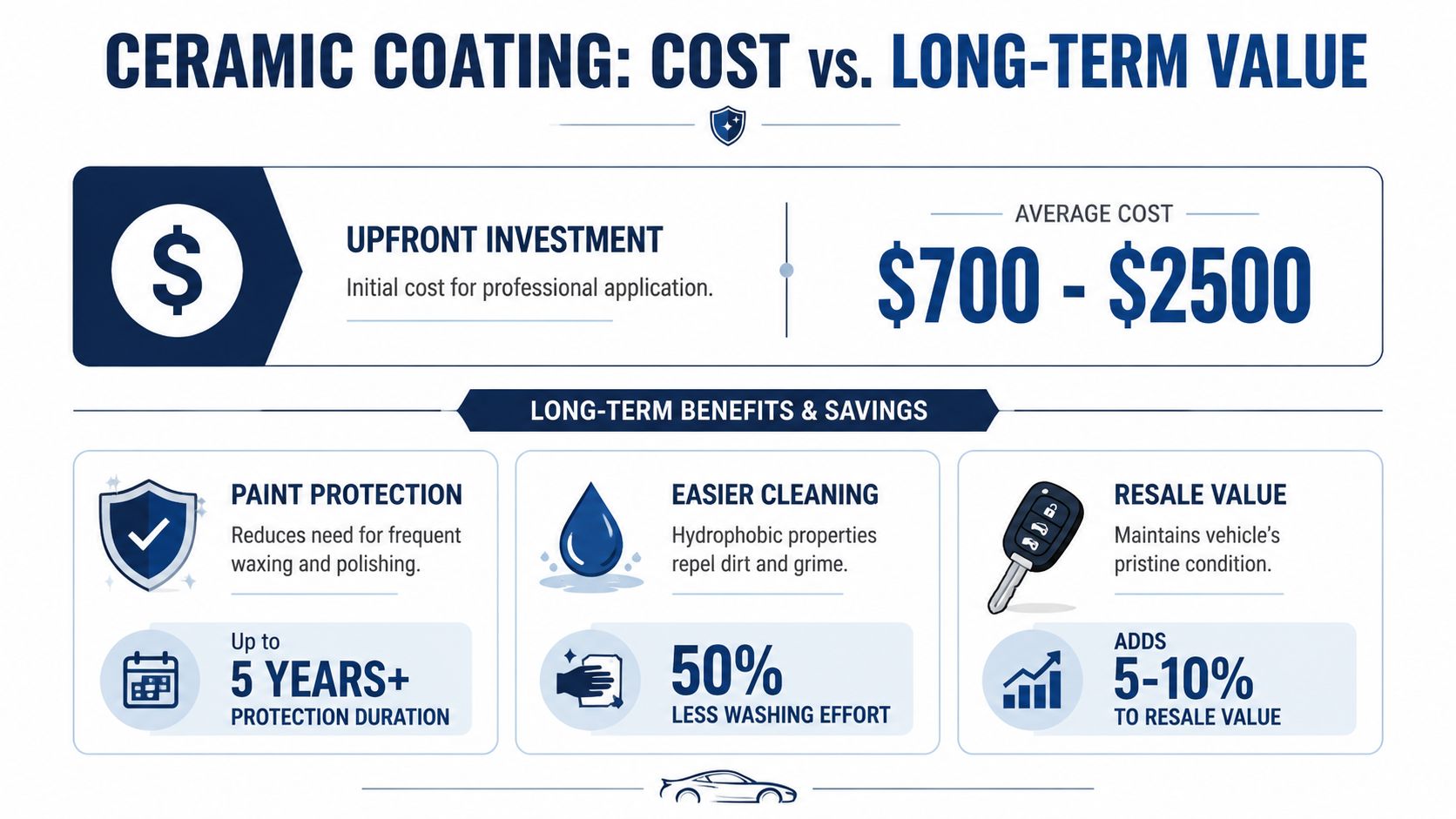
The savings are partly in effort. A coated car usually needs less frequent waxing, less scrubbing to remove grime, and less worry about the paint looking worn after a rough season. The finish also stays more consistent if the coating is applied over properly prepared paint, because a layer over dirty or poorly corrected panels does not give you the result you paid for.
Local maintenance matters too. A detailer or wash-and-detail shop in the GTA can help keep the coating working the way it should, and Nanak Car Wash offers detailing and wash services in the GTA, along with rust proofing and wash maintenance options that can fit into a broader vehicle care routine. That kind of setup is useful because a coating is only as good as the prep and care around it.
For a driver who keeps a vehicle for several seasons, the cost starts to look different. You are not only paying for shine, you are paying to reduce repeat upkeep and slow the usual wear from Ontario salt, sun, and daily contamination. If you plan to hold onto the car and want the paint to age better, the coating can make more sense than cycling through short-term products and redoing the same job again and again.
Frequently Asked Questions About Ceramic Coatings

Can I still wash the car normally
Yes, and you should. A coated car still needs regular cleaning, just usually with less effort because grime doesn't bond as strongly to the surface. For maintenance, the smart move is a gentle wash routine with coating-safe products, especially after a salty week.
Does ceramic coating prevent rust
Not on its own. Ceramic coating protects the paint surface, while rust proofing is aimed at the underbody and hidden metal areas that salt attacks hardest. If you drive through GTA winters, those two services work better as a pair than as substitutes.
Does it stop all scratches and rock chips
No. Ceramic coating helps the surface resist light wear and makes it harder for contaminants to stick, but it won't stop every scratch or block stone chips on the highway. That's why it should be viewed as a preservation layer, not an invincible shell.
Is it only for new cars
No, but the paint should be properly prepared first. A coating works best on a clean, corrected surface, because any dullness, staining, or swirls underneath can still show through. If the car already has winter damage, a proper prep step matters more than the coating itself.
Is it worth it for a GTA daily driver
If the car sits outside, sees highway slush, and gets exposed to sun and salt, the answer often comes down to convenience and preservation. The coating doesn't make car care disappear, but it does make the routine less annoying and the paint easier to keep in good shape.
If you want a cleaner way to protect your car through Ontario winters and summer sun, visit Nanak Car Wash for detailing, wash care, and rust proofing options that fit real GTA driving. A proper prep and maintenance routine makes ceramic coating work the way it should, so your car spends less time looking beat up and more time looking cared for.

 6600 Finch Ave W, Etobicoke, ON M9V 3Z6
 647-703-8515
 MON – SUN 8 AM to 7 PM