
You're cruising through the GTA, minding your own business, and then a rock from a transport truck tags the glass with that awful thwack. You glance over, see a fresh chip, and by the next red light it's already turning into a crack you can't ignore. That's the moment most drivers start searching windshield replacement near me, because once the damage is in your line of sight, the car stops feeling safe and the clock starts ticking.
The smart move is to slow the panic down and handle this like a proper car care job, not a rush purchase. The right shop, the right repair decision, the right insurance questions, and the right aftercare all matter, especially in a region where traffic, weather, and modern vehicle tech can make a simple glass job more complicated than it used to be.
Table of Contents
- That Sound The Moment Your Windshield Gives Up
- Making the Call Repair or Replace Your Damaged Windshield
- Finding and Vetting Local Windshield Installers
- The Replacement Process What to Ask and Watch For
- After the Install Immediate Care and Long-Term Safety
- Beyond the Glass Protecting Your Investment with Total Car Care
That Sound The Moment Your Windshield Gives Up
The worst part isn't even the crack. It's the sound right before it, that sharp thwack when a stone kicks up on the 401 and lands dead centre on your windshield. One second you're in traffic, the next you're watching a little starburst spread under the sunlight while you sit there with both hands on the wheel and your stomach in your throat.
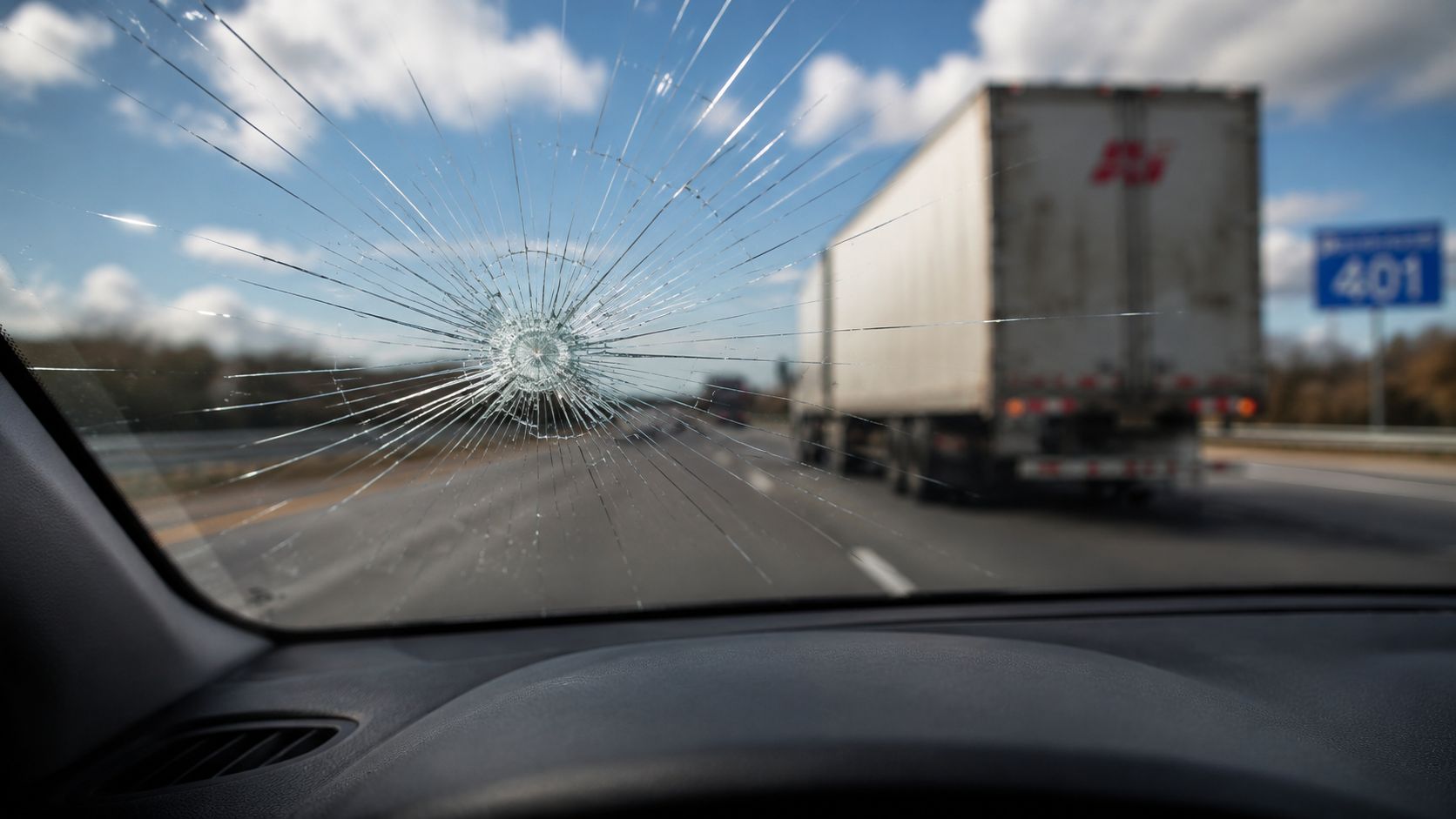
That's why this search feels so urgent. A windshield isn't just a sheet of glass, it's part of the vehicle's safety structure, and damage can interfere with visibility, roof support, and airbag performance. On a busy GTA commute, the practical problem isn't only the crack itself. It's the missed meeting, the school pickup, the ride-share shift, or the family errand that's suddenly hanging by a thread.
The good news is that this doesn't need to turn into a guessing game. The right repair path depends on where the damage sits, how deep it runs, and whether the glass is tied to camera systems or other modern tech. Once you know what actually matters, the whole process gets simpler fast.
Practical rule: don't wait for a crack to “see what happens.” In real driving, heat, vibration, potholes, and door slams all make bad glass worse.
If you're staring at damage right now, take a quick look at whether the chip is spreading, whether it's near the edge, and whether it blocks your view. That quick snapshot tells you a lot before you even call a shop. It also helps you avoid being pushed into a pricey replacement when a repair would've been enough, or, on the other hand, trying to save money on glass that really does need to come out.
Making the Call Repair or Replace Your Damaged Windshield
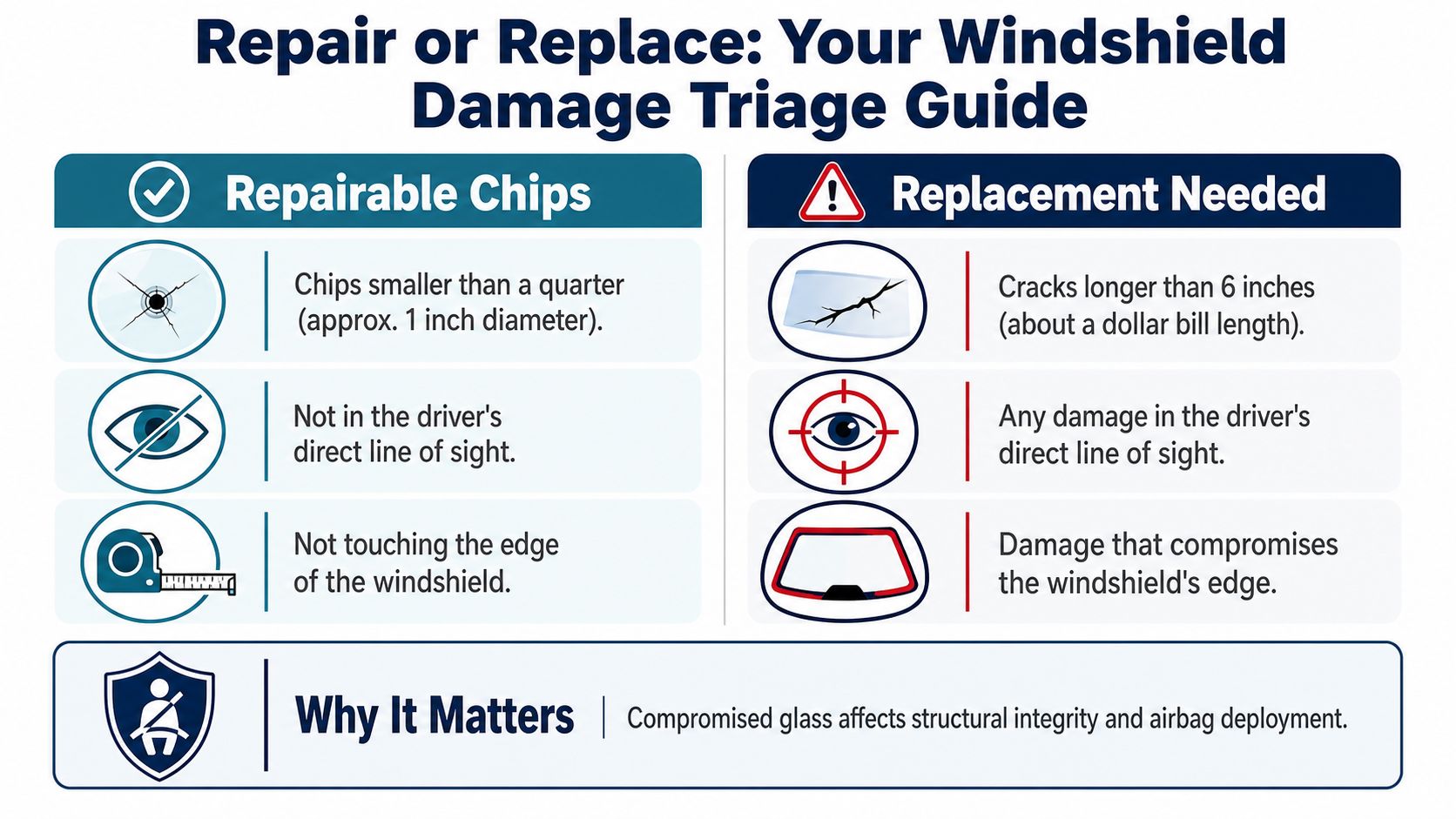
A good installer won't guess, and neither should you. The repair-versus-replace call starts with the damage itself, not with the price quote. Small chips are often repairable, but once the crack gets long, sits in your direct line of sight, or reaches the edge of the windshield, replacement becomes the safer answer.
What usually points to repair
A chip that's small, stable, and away from the driver's view is often the best candidate for repair. That's because the original glass stays in place, which means the job is quicker and usually easier on the wallet. A repair can also stop the damage from spreading when it's caught early.
What usually points to replacement
Cracks longer than a short chip, anything in the sightline, and anything that compromises the windshield's edge are the red flags. Once the edge is involved, the structural bond can be affected, and that's not something you want to gamble with on a family vehicle or daily commuter. If your windshield has ADAS hardware tied into the glass, replacement also becomes more likely because the camera and sensor setup needs to be handled correctly.
The money side matters too. For GTA drivers, a full windshield replacement can range from $400 to $2,900, depending on the vehicle and glass technology, while the install itself might take only 30 to 60 minutes, followed by at least 1 hour of no driving while the adhesive cures, according to AutoGlass Canada. That's why the “cheapest” option isn't always the cheapest once downtime and calibration enter the picture.
A small crack near the edge is never “just cosmetic” for long. The glass may still look usable, but the bond and safety margin are already working against you.
If you're dealing with insurance, a clean claims process matters just as much as the glass itself. A plain-language guide like filing an auto insurance claim can help you sort out the paperwork before you hand the car over, which is a lot easier than doing it after the fact when you're already stressed.
Finding and Vetting Local Windshield Installers
Once you know you need help, the next mistake is calling the first place that answers the phone and jumping at the lowest price. Auto glass work is one of those trades where the quote only makes sense if you know what's included. Ask about the glass brand, whether calibration is included, what warranty comes with the job, and whether the shop documents the work properly.
Mobile or in-shop service
Mobile service is convenient, especially if you're stuck at home or trying to protect a workday. In-shop service usually gives the technician more control over lighting, temperature, and space, which can help with a cleaner install and a more predictable adhesive cure. The right choice depends on your schedule, weather, and vehicle type.
| Factor | Mobile Service (At Your Location) | In-Shop Service (At the Garage) |
|---|---|---|
| Convenience | Best for busy schedules and stuck vehicles | You need to drive there or arrange a ride |
| Environment | Can be affected by weather and site conditions | More controlled workspace |
| Quality control | Good when the technician is experienced and the site is suitable | Strong when the shop has proper tools and room |
| Best for | Simple replacements and tight schedules | Complex jobs, calibration, and cautious buyers |
ADAS changes the quote
Modern glass isn't just glass. KBB notes that a windshield replacement can now exceed $1,000 when the vehicle has ADAS features like automatic braking, because the windshield often has to be recalibrated after installation, while older vehicles may still fall in the $300 to $600 range for standard aftermarket replacement. That gap is exactly why you need to ask about calibration before you agree to anything. The system can't be treated like a basic glass swap if the camera sits behind the mirror and relies on the windshield's exact position.
A provider's reputation matters too, and not just in the usual star-rating sense. Shops live and die by how they handle callbacks, missed appointments, and complaints. A tool like LocalHQ review management solution is useful because it keeps the feedback trail organised, and that makes it easier for customers to spot patterns in service quality rather than relying on one loud review.
Good sign: the estimator asks for your VIN, checks for camera-based features, and explains the difference between replacement cost and recalibration cost before the work starts.
If a shop can't clearly answer whether your vehicle needs ADAS calibration, keep looking. That's not a fancy extra. It's a safety step tied to the car's actual behaviour on the road, and it belongs in the quote from the beginning.
The Replacement Process What to Ask and Watch For
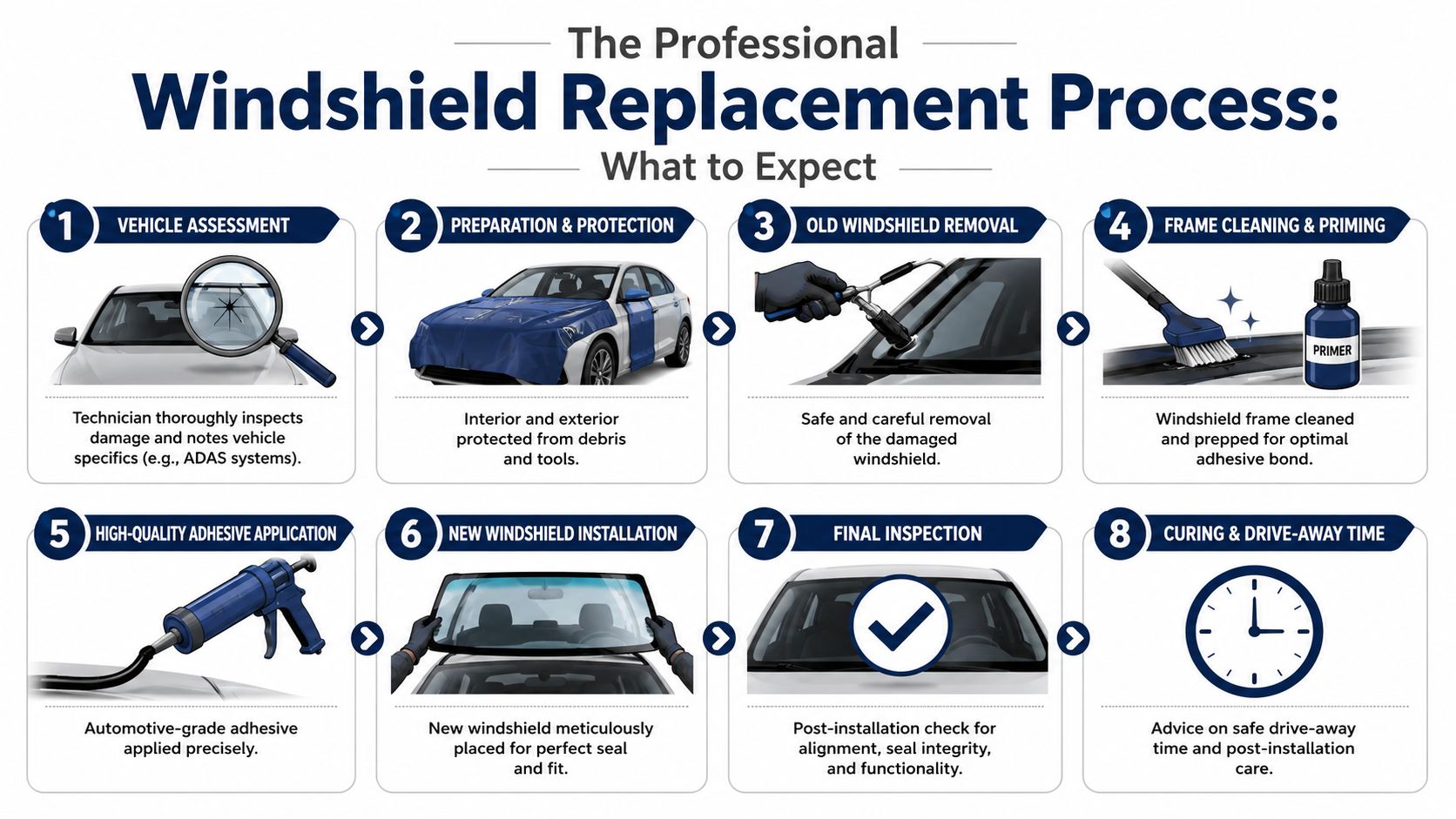
A proper windshield replacement is a structural repair, not a quick glass swap. The tech starts with damage assessment and removal of any attached components, then works through the old glass cut-out, frame cleaning, and adhesive prep before the new windshield ever goes in. The part most drivers never see is the part that matters most, the bond between the glass and the body.
What a clean install actually looks like
The old windshield should come out without torn trim, dirty edges, or careless pry marks. After that, the pinchweld, which is the metal frame that holds the glass, needs to be cleaned and treated properly before primer and urethane go down. The bead has to be continuous, because even tiny gaps or contamination can weaken the bond and cause leaks later.
The National Auto Glass Authority's overview of the replacement process explains that surface prep and the continuous urethane bead are the most failure-sensitive steps in the job, because contamination or bead gaps can reduce bond strength and compromise structural integrity, as outlined in their windshield replacement overview. That's the part worth paying attention to if you've ever had a car come back with wind noise, a drip at the top corner, or a dash warning after a rushed install.
Questions worth asking before work begins
- What is the safe drive-away time for this adhesive? It should be based on the product data, not a guess.
- How do you protect the interior and painted surfaces during removal? Good shops use covers, trim tools, and suction cups, not brute force.
- Do you document camera position and calibration needs? That matters on newer vehicles.
- Will the glass be fitted for my exact trim level and sensor package? The wrong piece can create fit and performance problems.
If the answers sound vague, that's a warning sign. A technician who knows the job will talk plainly about cure time, urethane, and fitment. A technician who rushes the explanation usually rushes the work too.
After the Install Immediate Care and Long-Term Safety
The job doesn't end when the van pulls away. The first few hours after installation are when the bond is still settling, and that's when avoidable mistakes do the most harm. If the installer tells you not to drive yet, don't treat that like a suggestion. It's tied to the adhesive, the weather, and the actual cure data for the product being used.
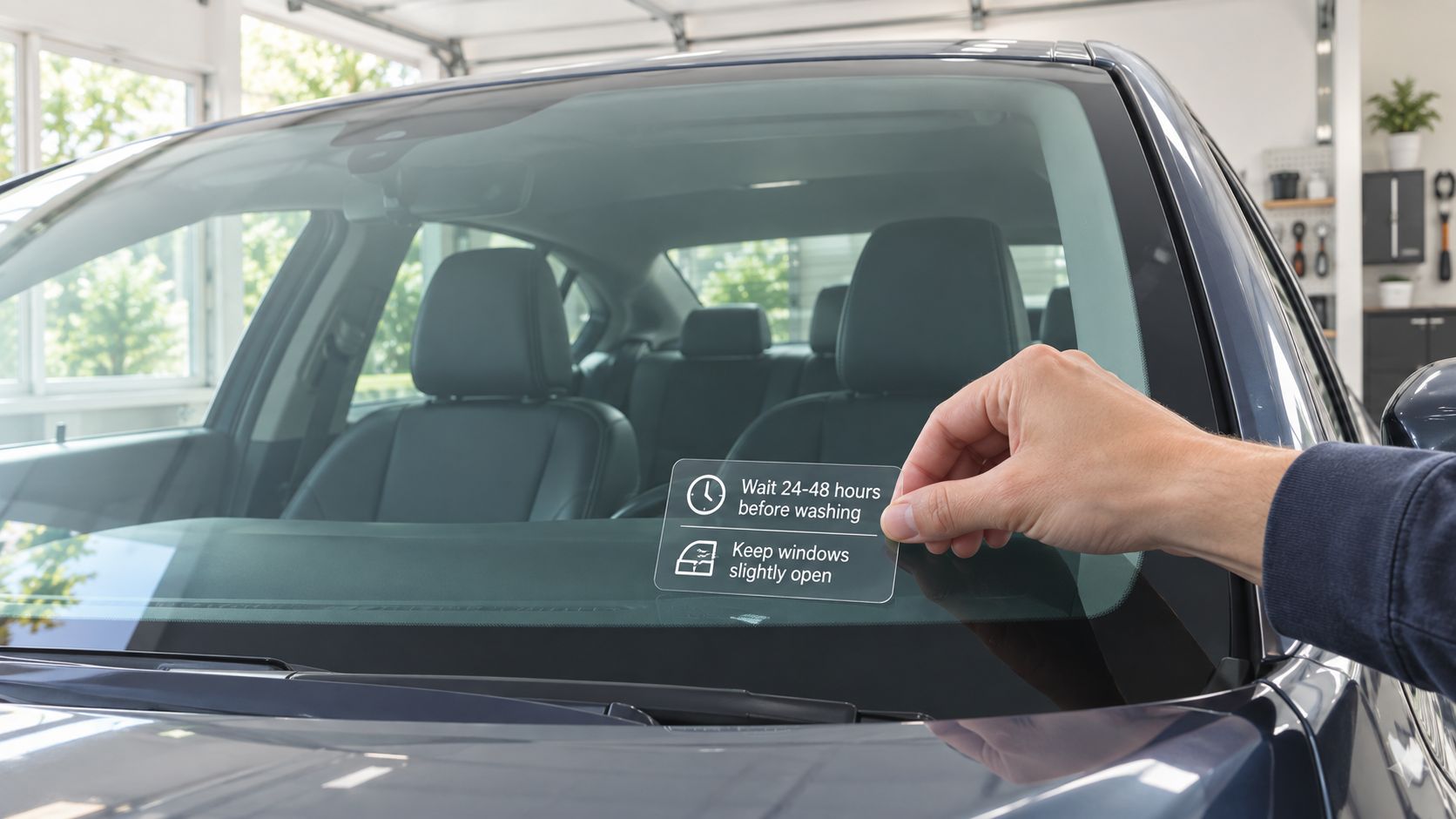
The first day matters more than most people think
Don't blast the car through a wash, don't slam the doors, and don't lean on the fresh glass. A sudden pressure change can disturb a bond that hasn't fully settled yet. If you've ever seen a windshield shift slightly or heard a soft pop after a rough install, that's exactly the kind of headache you're trying to avoid.
If your car has ADAS and the calibration wasn't completed during the glass job, book it right away. A windshield replacement can change the camera's relationship to the road even when the new glass looks perfect, and modern safety systems rely on that alignment to function properly. The best case is that the shop handled calibration as part of the replacement. The next best case is that they told you exactly where to go and what to book next.
A dashboard with no warning light doesn't prove the system is right. It only proves the car hasn't complained yet.
A simple post-install checklist
- Watch the seal line: look for lifted edges, visible gaps, or adhesive squeeze-out that looks uneven.
- Check your cabin for new noise: wind whistle and trim rattles can point to a bad fit.
- Keep your first wash gentle: avoid harsh spray until the bond has had proper time to settle.
- Confirm your camera-based features are behaving normally: lane assist, cruise control logic, and braking aids should feel consistent, not vague or twitchy.
This is the part where careful owners save themselves a second trip. If anything feels off, call the installer while the job is still fresh. Once the car is back in regular use, small fit problems get harder to prove and easier to ignore until they become expensive.
Beyond the Glass Protecting Your Investment with Total Car Care
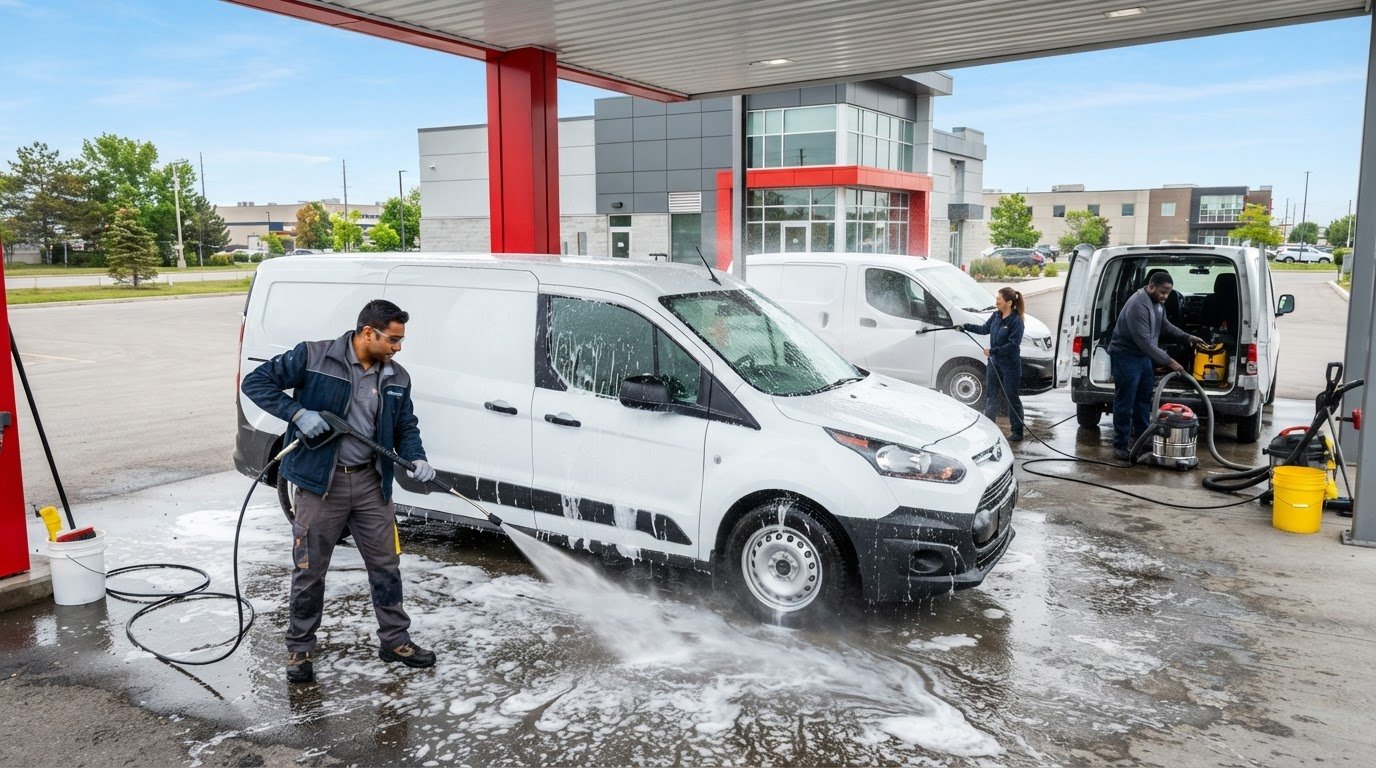
A windshield replacement can leave the car better on the outside and a little messy inside. Fine glass dust, adhesive residue, and trim debris can end up on the dashboard, seats, and centre console. If you're already taking the vehicle in for glass work, it makes sense to think about the rest of the cabin too, because a clean interior helps the car feel finished instead of half-done.

Why the pinchweld deserves attention
The pinchweld, which sits around the windshield opening, is exposed during replacement and can be a weak spot if moisture gets in later. That's why rust protection is worth thinking about while the area is accessible. A well-timed rust proofing service can help protect the frame, especially for GTA drivers who deal with road salt, slush, and winter grime.
There's also a security angle that gets overlooked. When a car is sitting in a driveway or on a lot after a glass job, it can attract attention if the interior is exposed or tools have been left inside. Guides like anti-theft devices and key security are useful reminders that the recovery phase after repairs should include basic vehicle security, not just the new glass itself.
Bundle the recovery, not just the repair
The best car-care move is to treat the windshield replacement as one part of a larger reset. A detailer can clean out the dust and residue, while rust proofing helps protect the area that was just opened up. That combination keeps the car looking better and aging more slowly, which matters if you plan to keep it, trade it, or sell it later.
If you've just gone through the hassle of getting a windshield sorted, don't stop at “good enough.” Clean it up properly, protect the frame, and lock the car down while the work is fresh. Your next errand should be about preserving value, not recovering from the repair.
If your windshield job is done, take the next step and clean the rest of the car properly so the repair feels finished. Visit Nanak Car Wash for interior cleaning, detailing, and rust proofing that pairs well with a fresh windshield replacement, especially when you want the whole vehicle to look and feel right again.

 6600 Finch Ave W, Etobicoke, ON M9V 3Z6
 647-703-8515
 MON – SUN 8 AM to 7 PM