

You know the smell: wet salt on the floor mats, a half-melted Tim Hortons cup rolling under the passenger seat, and dog hair fused into the fabric like it paid rent. In Toronto, that's not a once-a-year embarrassment, it's winter doing what winter does. Interior car cleaning Toronto stops being vanity the moment slush, coffee, and grit start living in the cabin instead of just passing through it.
If your SUV looks fine from the outside but feels grimy every time you buckle in, you're in the right place.
Table of Contents
- Why Toronto Drivers Are Rethinking Interior Cleaning
- How Interior Cleaning Actually Works
- Service Tiers a Toronto Driver Will Actually See
- What Interior Cleaning Really Costs in Toronto
- DIY vs Professional Interior Cleaning
- What Happens During and After a Professional Visit
- Memberships and Ways to Bring the Cost Down
- Choosing the Right Toronto Interior Cleaning Provider
Why Toronto Drivers Are Rethinking Interior Cleaning
Monday morning in the GTA has a way of exposing everything at once. The coffee lid pops, the boots drip slush onto the mat, and the back seat carries yesterday's dog hair into today's commute. That's the point where most drivers realise the cabin isn't just dirty, it's becoming harder to keep under control.
Canadian drivers spend an average of five hours per week in their vehicles, yet 73% clean their car interiors less than once every few months, according to a Canadian Tire survey Canadian Tire survey. That mismatch matters in Toronto, where the car is often a second workspace, a kid shuttle, a rideshare tool, or all three before lunch.
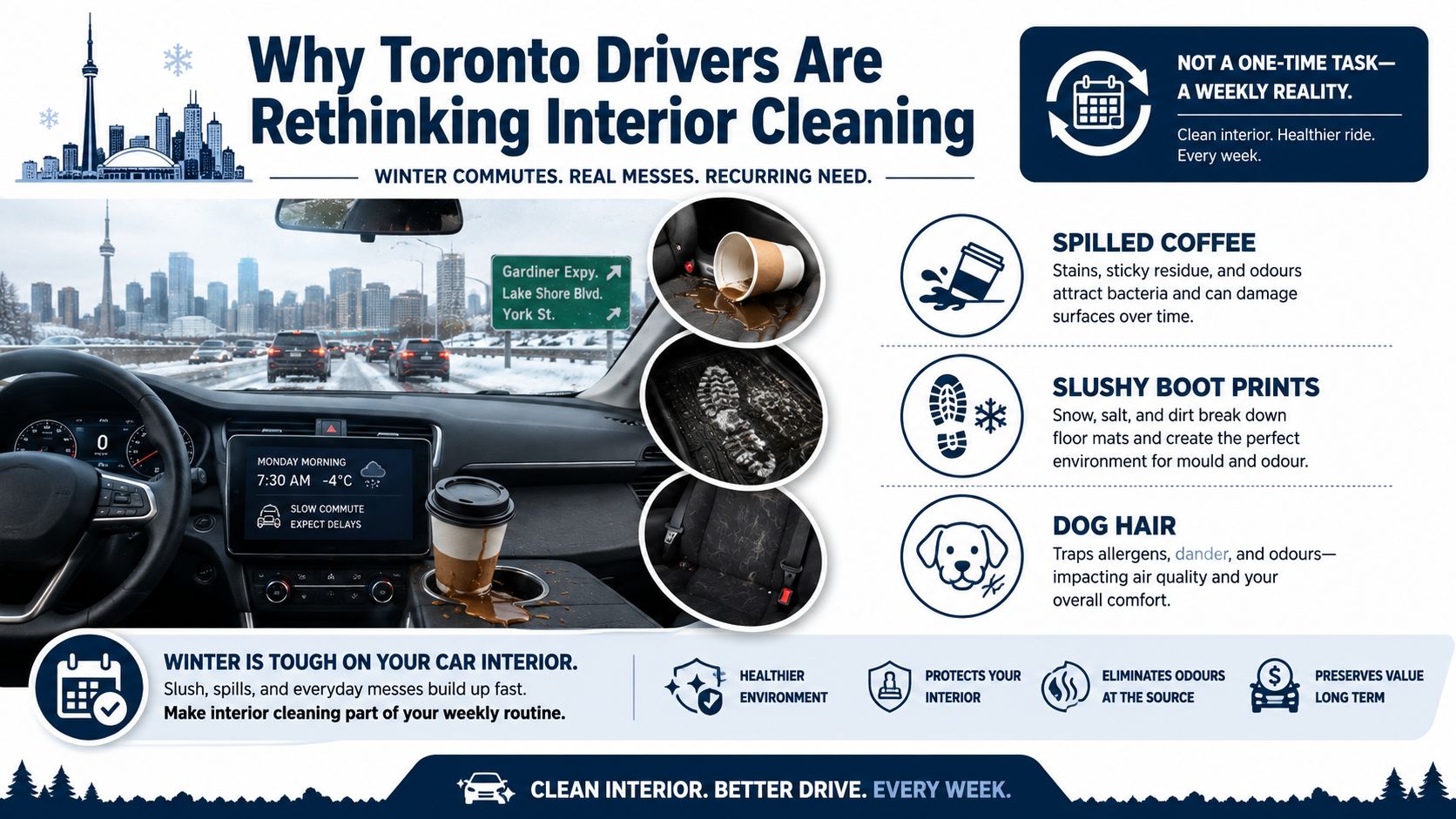
Ontario's interior-cleaning market is built on that reality. IBISWorld estimates provincial industry revenue at $617.2 million in 2026, with 1,478 businesses and 8,146 employees, while the broader Canadian industry sits at $1.7 billion in 2026 with 3,929 businesses IBISWorld Ontario industry report. That isn't niche behaviour, it's a mature service ecosystem with enough volume to support quick washes, full-service clean-ups, and proper interior detailing across the GTA.
Practical rule: if you wait for the cabin to look bad, you're already behind. Salt and crumbs build up long before the car starts looking “dirty.”
A key shift is simple. Toronto drivers are treating interior cleaning like maintenance, not decoration. That means asking seven useful questions before booking anything: which service tier fits the mess, when to schedule it, whether DIY is enough, how quotes are built, what happens on the day, whether a membership saves money, and which provider can handle winter grime without making the upholstery worse.
How Interior Cleaning Actually Works
A proper interior job starts dry. That sounds simple until a rushed cleaning pass turns road grit into grey streaks on plastic and upholstery. The order matters because the cabin is built up in layers, loose debris on the surface, embedded dirt below it, and residue hiding in seams, vents, and cup holders.
Dry removal comes first
The CAA North & East Ontario guide recommends vacuuming the full interior, using attachments for hard-to-reach spots, and cleaning vents and high-touch hard surfaces with microfiber tools. That sequence is practical, not cosmetic. If you wipe before you lift the debris, fine grit gets dragged across the surface and the cleaning pass becomes a scratch pass.
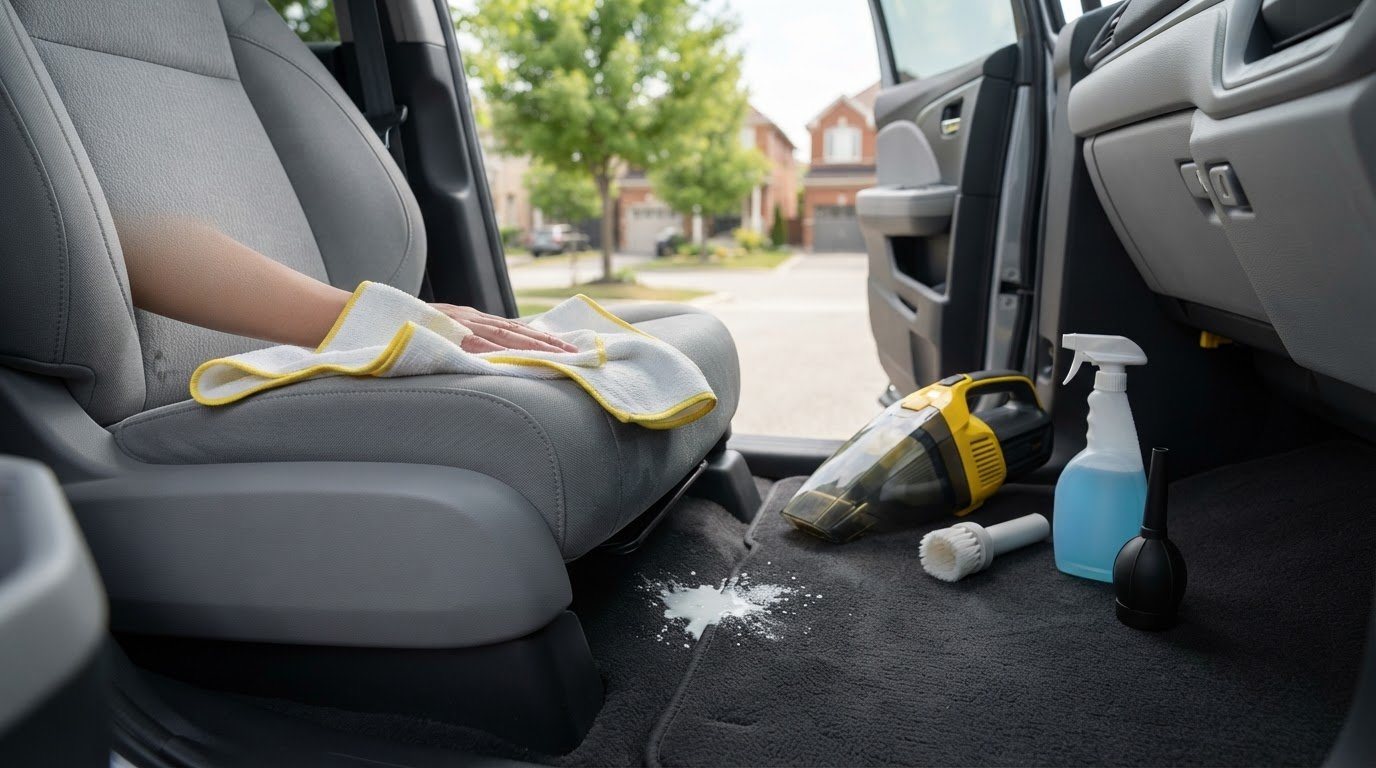
In Toronto winters, that detail matters even more. Salt and sand get tracked in constantly, and once they settle into carpet or seat seams they behave like abrasive filler. A proper detailer will use crevice tools, upholstery attachments, and then compressed air or brush agitation to pull dirt out of the gaps before any wet cleaner touches the material.
Wet cleaning is a separate step
Only after the loose contamination is gone should the cabin get shampoo, interior cleaner, or leather treatment. That is the difference between dry decontamination and true cleaning. A fast wipe-down may make the dash look better, but it does not deal with the dirt sitting in seams, around buttons, and behind trim edges.
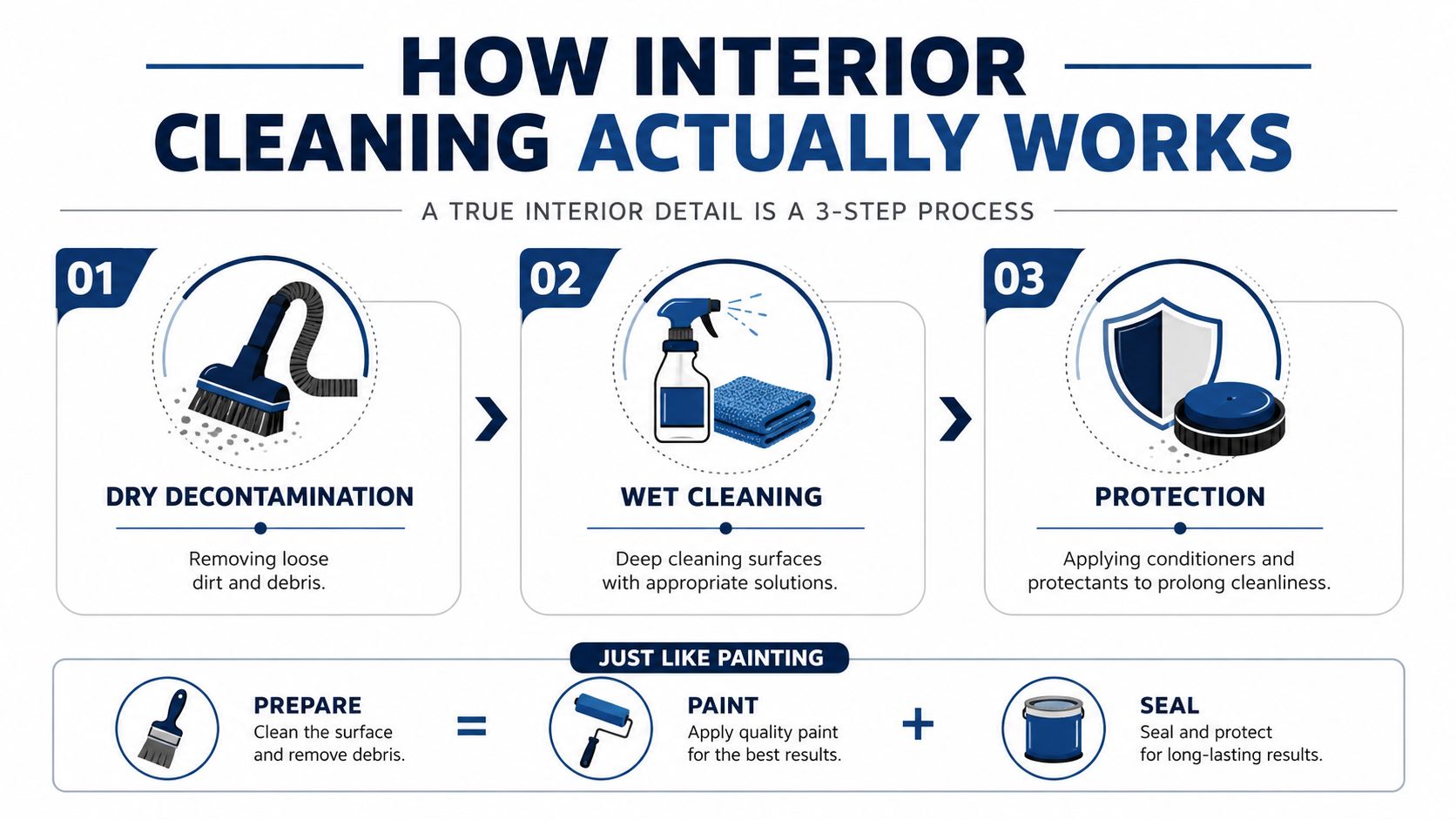
The order is the service. Vacuum, agitate, then clean. Skip the first two and the third one just moves the mess around.
A serious interior service ends with protection, not just appearance. That may mean conditioner on leather, a safe protectant on plastics, or a dry finish that will not pull in new dust the next day. In a city where four seasons get tracked into the cabin on your shoes, the method matters as much as the product.
Service Tiers a Toronto Driver Will Actually See
A Toronto wash counter usually breaks the work into a few tiers, and the difference is less about labels than about how much labour the cabin needs. The budget option handles surface grime and loose debris. The middle option is built for the daily mess commuters and families bring in. The top tier is for salt, pet hair, stains, and the kind of interior that needs a reset, not a quick wipe.
| Service Tier | Starting Price | Typical Duration | What's Included |
|---|---|---|---|
| Express exterior wash | From $9.99 plus tax | Short stop | Presoak soap, foam bath, rinse, drying agent, air blowers |
| Full-service wash | From $29.99 plus tax | Quick visit | Exterior wash and hand dry, interior vacuuming, dashboard and window cleaning |
| Mid-tier full-service | Varies by vehicle and package | Moderate stop | Adds door panels, consoles, cup holders, and tire dressing |
| By-appointment detailing | Package-based | 1 to 4 hours | Carpet and seat shampooing, salt and stain removal, vent and crevice blowout, leather deep cleaning, machine buff and polish |
Nanak Car Wash's full-service packages start from $29.99 plus tax and include an exterior wash and hand dry, interior vacuuming, dashboard and window cleaning, with higher tiers adding door panels, consoles, cup holders, and tire dressing Nanak Car Wash. That is the package most drivers mean when they want the car cleaned inside and out without turning the visit into a full detailing appointment.
Match the tier to the job
A lunch-break stop fits the express or full-service lane. Those packages handle dust, visible crumbs, window film, and the small spillovers that do not need extraction. A Saturday drop-off is a different job. Once the seats need shampooing, the carpet shows salt lines, or the vents smell stale, detailing makes more sense.
Practical rule: if the problem is loose debris, keep it simple. If the problem is embedded contamination, pay for the equipment that can pull it out.
Vehicle type changes the package decision too. SUVs, vans, and trucks usually need more surface area covered, more seats addressed, and more carpet worked by hand. Pet hair is another divider, since it takes agitation and extraction time that a quick vacuum cannot replace.
Toronto winters make the trade-off sharper. If the cabin is already cold and damp, over-wetting upholstery can leave the car foggy inside and slow to dry. That is why the better shops separate light maintenance work from heavier shampoo and extraction, instead of treating every interior the same.
Memberships can make sense for drivers who keep fighting the same salt and slush cycle. If the car comes in dirty every week, a lower-tier wash plan often covers the routine reset, while detailing stays reserved for the mess that needs more time and more tools.
What Interior Cleaning Really Costs in Toronto
A Toronto interior quote can look straightforward until winter grime starts driving the labour. Vehicle size, soil level, and add-ons move the total fast, especially when the cabin holds salt, pet hair, or stains that have had time to bond with the fabric. The number on the menu usually reflects how much work the car needs, not just the word “interior” on the receipt.
The number on the menu is rarely the whole story
The smallest package at the counter is usually about access and maintenance. It covers the quick reset that keeps a cabin presentable, but it does not go far into problem areas. The middle package is where many Toronto drivers land because it combines a visible cleanup with enough interior care to feel worthwhile. The detailing package costs more because it brings deeper cleaning methods, more time, and closer attention to seat joints, vents, and carpet edges.
Nanak Car Wash also lists rust proofing as a separate service with tiered pricing by vehicle size, typically ranging from approximately $119.95 to $149.95 plus tax Nanak Car Wash rust proofing. That is not an interior clean, but in Ontario it belongs in the same decision set because winter salt reaches more than the floor mats. It also explains why some customers bundle services instead of treating every visit as a one-off.
What usually pushes a quote up
- Bigger vehicles: More seats, more carpet, more trim.
- Heavy pet hair: More agitation, more extraction passes.
- Salt and stain buildup: More time at seams, edges, and footwells.
- Deep odour work: Extra cleaning steps, not just fragrance.
Ask what the package includes before deciding whether the price is fair. A low number that skips crevice work, stain treatment, or proper drying can cost more later if the mess comes back. In cold months, that drying step matters because a damp cabin can stay foggy, feel clammy, and leave upholstery vulnerable to over-wetting.
Sanity check: a fair quote should make sense once you know the vehicle size, the condition of the cabin, and whether the job needs extraction or just a reset.
Rust-related winter care belongs in the same budget conversation. Salt does not stay on the surface, and the cost of ignoring it shows up again in repeat clean-ups, smell, and wear that start inside the vehicle and spread beyond the floor mats.
DIY vs Professional Interior Cleaning
A Saturday with a household vacuum can take care of a light mess. A Saturday with stubborn salt stains, wet upholstery, and dog hair worked into the seat fabric usually turns into a lesson in patience. The question is whether DIY gives you a finish that holds up to the problem in front of you.
What DIY handles well
A basic home kit should include a crevice tool, stiff brush, microfiber cloths, interior cleaner, and leather conditioner. That is enough for crumbs, dust, dash film, cup holder residue, and a quick spill response. If the cabin only needs a tidy-up, DIY makes sense because you can move slowly, target one section, and stop before the job turns into a full project.
The limit shows up when debris is lodged in the seams or the stain has already soaked in. Household vacuums usually struggle to pull contamination out of upholstery the way extraction equipment can. They can improve the surface without clearing what is underneath, which matters more in winter when salt and slush dry into the fibres.
Why professional equipment changes the result
Professional shops use stronger vacuuming, compressed air, brush agitation, shampoo extraction, and hand-finishing. That combination matters in Toronto because salt and sand work down into the fabric and carpet fibres. A professional can reach the seam where the mess lives instead of just flattening it.
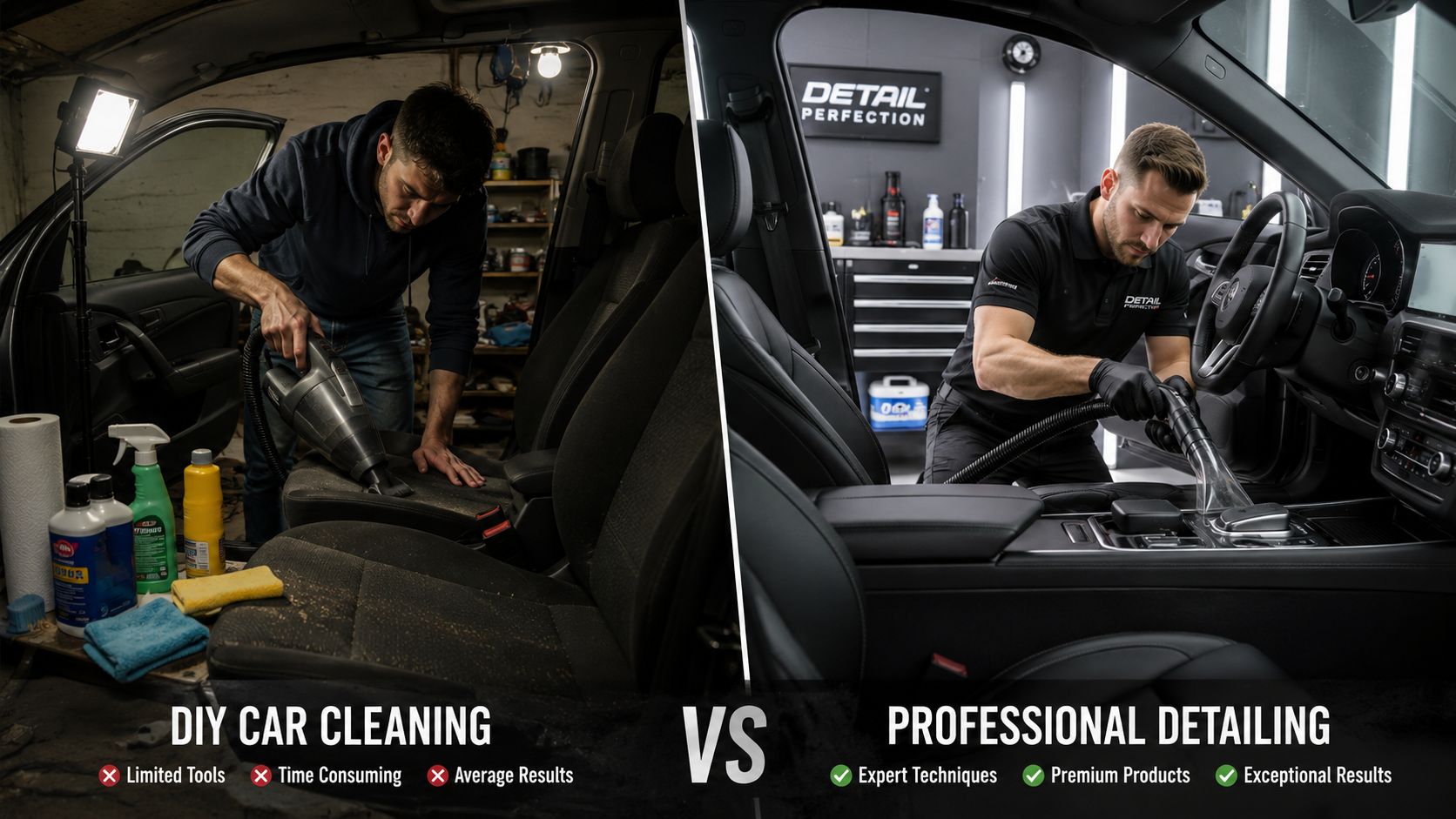
Consumer Reports warns that over-wetting upholstery can trap moisture and cause mildew or damage nearby electronics, and it recommends a second vacuuming after cleaning plus focused attention on joints, vents, and tight seams Consumer Reports interior detailing guidance. That is the part many Toronto drivers miss. A deeper shampoo is not always the better choice in winter if the vehicle cannot dry properly the same day.
If the car sits in a cold garage overnight with damp seats, the smell can come back even when the surface looks clean.
Use DIY for light maintenance, fresh spills, and routine dust control. Call a pro for embedded salt, pet hair, smoke odour, and full-cabin resets. Those jobs need extraction, drying discipline, and enough time to finish the work properly.
What Happens During and After a Professional Visit
A proper appointment starts before the technician opens the first door. Clear out loose items, empty the cup holders, and point out the stains that matter most to you. If there is a dried coffee mark under a child seat, say that up front. Good detailers clean what is present, not the version of the cabin you hope they will find.
The visit usually follows a simple sequence
The vehicle comes in, gets inspected, and then moves through the cleaning stages in order. Vacuuming comes first, then blowout work for vents and seams, then shampoo or extraction if the package includes it. After that, the detailer works through the dashboard, trim, glass, and any leather surfaces that need conditioning.
For a detailing package, the visit is typically 1 to 4 hours. That range reflects the difference between a lightly used sedan and a winter-stained SUV with pet hair and salt packed into the carpet. Bigger jobs take longer because the technician has more surfaces to clean and more drying control to manage.
A Toronto winter changes the job inside the cabin. Salt crystals, slush residue, and damp floor mats all need attention, but over-wetting upholstery can create a worse problem if the vehicle cannot dry properly before it sits in a cold garage. That is why a careful shop balances cleaning power with controlled moisture, especially on seats and carpet that are already holding winter damp.
Drying and final checks matter as much as cleaning
The last step is the one many drivers overlook. A winter detail works better in a heated shop or with same-day pickup, because damp upholstery left to sit can bring back the exact moisture problem you were trying to remove. After the main clean, ask for a walkaround check, test the glass for streaks, and make sure the floor mats are not still holding water.
Bring the car home dry, not just shiny. Clean upholstery that stays damp is a problem waiting to happen.
A second vacuuming after cleaning makes sense because loosened debris can settle back into seams as the interior dries. That matters most after winter work, when salt dust and grit can reappear once the fabric relaxes. It also explains why a shop that rushes the drying stage can leave you with a cabin that looks fine at pickup and feels wrong later in the day.
A first-time customer should keep three things in mind. Remove personal items before drop-off. Ask what gets shampooed versus wiped. Check the cabin before driving away, because the easiest time to fix a missed spot is while the keys are still in the shop.
Memberships and Ways to Bring the Cost Down
If you keep a car in Toronto through winter, the cost question changes quickly. A one-time interior clean helps when the salt buildup gets out of hand, but drivers who come in often usually get better value from memberships, prepaid bundles, or combo visits that reduce the back-and-forth.
Why recurring passes work for Toronto drivers
Recurring passes make sense for cars that see slush, salt, and spring grit on a steady basis. A monthly plan can keep the cabin from slipping into the kind of condition that takes a full reset, and it removes the decision-making that comes with every messy week. That matters when the vehicle is collecting damp floor mats, salt dust, and tracked-in debris from side streets and parking lots.
Nanak Car Wash Unlimited Wash Club monthly passes are promoted with first-month-free offers, no activation or cancellation fees, secure electronic payment, and no long-term contracts stated Nanak Car Wash Unlimited Wash Club. For drivers who want a routine without being locked into a long commitment, that kind of structure is practical. It gives you a predictable way to keep up with winter mess without paying full one-off pricing every time the cabin needs attention.
Some drivers prefer not to commit to a monthly pass. Prepaid multi-wash tickets and combo deals still bring the cost down, and they work well if you only need interior service after especially dirty weeks. You pay ahead, then use the visits when the mats, seats, or cargo area need a cleanup instead of starting from scratch each time.
A useful extra tool for budgeting is reward points for customers, especially if a shop already tracks repeat visits through a simple loyalty setup. Points do not replace solid service, but they can make recurring maintenance easier to justify when you are watching the monthly spend and trying to keep the cabin from slipping into winter buildup.
Where the savings usually come from
- Monthly passes: Best for regular wash routines and steady interior upkeep.
- Prepaid bundles: Better for drivers who want a discount without a contract.
- Combo visits: Useful when you are pairing interior cleaning with exterior care or rust protection.
The simplest breakeven test is straightforward. If you are already paying for repeated washes and interior touch-ups, a pass starts to make sense once your routine becomes predictable. If your car only gets cleaned when the weather turns embarrassing, a prepaid bundle is usually the safer middle ground.
Practical rule: choose the pricing model that matches your habits, not the one that sounds most efficient on paper.
For busy GTA drivers, the other savings are time and convenience. Free vacuums at participating locations shorten the visit, which matters when the only thing standing between you and the next errand is a few minutes and a pile of gravel in the footwell.
Choosing the Right Toronto Interior Cleaning Provider
A good provider should make winter care easier, not more complicated. In Toronto, that means a shop that understands salt, slush, and wet carpets, publishes starting prices, and can handle wash, detailing, and rust protection under one roof. It also helps when the staff knows the difference between a quick vacuum and a real interior cleanup, because over-wetting upholstery in cold months can leave you with lingering dampness and a cabin that takes too long to dry.
Nanak Car Wash has been serving the region since 2004 and combines those services in one network, which makes it easier to keep a seasonal routine going without bouncing between shops.
For operators and marketers who want to understand how a cleaning business positions that kind of service mix, the Polaris Marketing Solutions guide is a useful read because it focuses on how service businesses communicate trust, clarity, and repeat bookings.
The final filter is simple. Match the service to the vehicle and the season. A commuter sedan doesn't need the same cadence as a rideshare car, a fleet van, or a winter-driven SUV. In Ontario, the smartest interior clean is the one timed to salt and moisture, not just the one that makes the cabin look nice for a day.
If your cabin is carrying winter salt, stale moisture, or a month's worth of road life, bring it in before the mess settles in. Nanak Car Wash offers express washes, full-service interior cleaning, detailing, and rust protection, so you can handle the cabin, the exterior, and the winter after-effects in one stop. Book a visit when the mats start telling on the season, and make the next drive feel like yours again.


 6600 Finch Ave W, Etobicoke, ON M9V 3Z6
 647-703-8515
 MON – SUN 8 AM to 7 PM