
You've likely had this happen in your own car. The vents look fine from the outside, but the cabin still smells stale when the fan kicks in, the airflow feels weaker than it should, and the defrost seems to take its time on a cold GTA morning. In a city where road salt, pollen, construction dust, and urban grime get hauled into the cabin every week, a proper vent cleaning service is less about polish and more about making the climate system work the way it should.
Table of Contents
- What Vehicle Vent Cleaning Actually Means
- Signs Your Vehicle Needs Vent Cleaning
- The Vent Cleaning Process at Nanak Car Wash
- Health and Performance Benefits of Clean Vents
- Pricing and Package Options for GTA Drivers
- Locations and Booking Your Appointment
- Common Questions About Vehicle Vent Cleaning
What Vehicle Vent Cleaning Actually Means
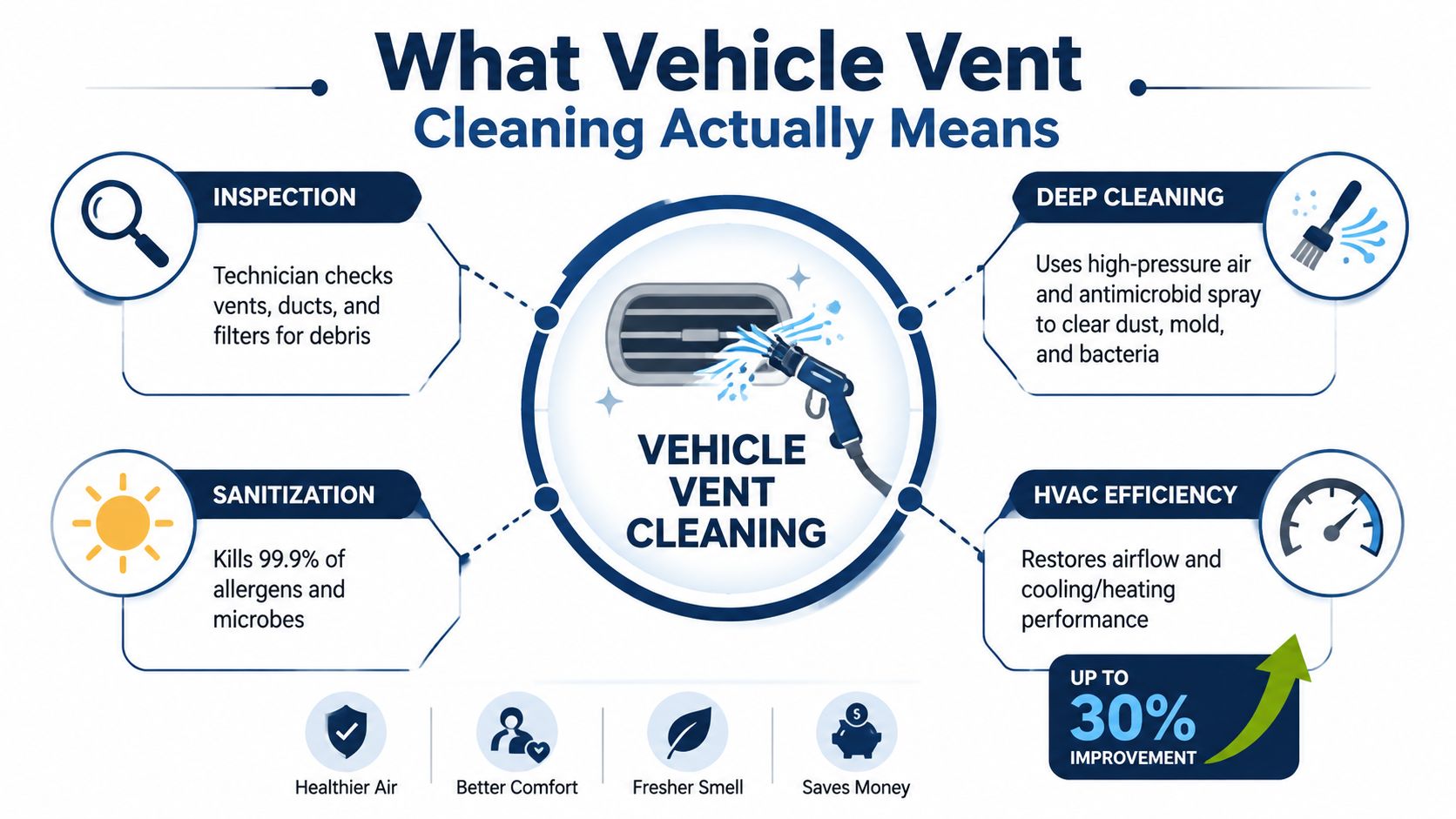
A lot of drivers think vent cleaning means wiping the dashboard slats with a cloth and calling it done. That only handles what you can see. Real vehicle vent cleaning reaches into the registers, duct paths, blower area, cabin filter housing, and the hidden pockets where dust and moisture settle.
On a GTA vehicle, that hidden buildup tends to be more noticeable than it would be in a cleaner climate. Salt spray clings to shoes and mats in winter, pollen rides in during warmer months, and city traffic adds fine grit that gets pulled into the cabin every time the fan runs. The result is a system that can look tidy at the grille while still pushing stale air through the cabin.
What's inside the system
A proper service starts by treating the vents as part of a connected HVAC path, not as individual slats. Air moves through the cabin filter housing, across the blower motor, and into ducts that feed the dashboard, floor, and defrost outlets. If one part of that chain is dirty, the rest of the system carries the contamination.
Practical rule: if the smell changes when you switch from face vents to defrost vents, the issue is probably deeper than the grille itself.
That's why a quick wipe-down rarely solves a lingering odour. The visible plastic may be clean, but the airflow path can still hold lint, dust, and damp residue. In a compact cabin, that contamination is easier to notice because you're breathing the output at close range.
Why cars behave differently from buildings
Vehicle systems are smaller, tighter, and more sensitive to blockage than home systems. A little debris goes a long way when the duct run is short and the cabin volume is limited. That's why drivers often notice the problem first as weak airflow or a musty blast when the fan starts.
The fix isn't magic, and it isn't just cosmetic. It's a targeted interior service that clears the airflow path so the system can move air normally again. For everyday commuting, that matters just as much as a clean dash.
Signs Your Vehicle Needs Vent Cleaning
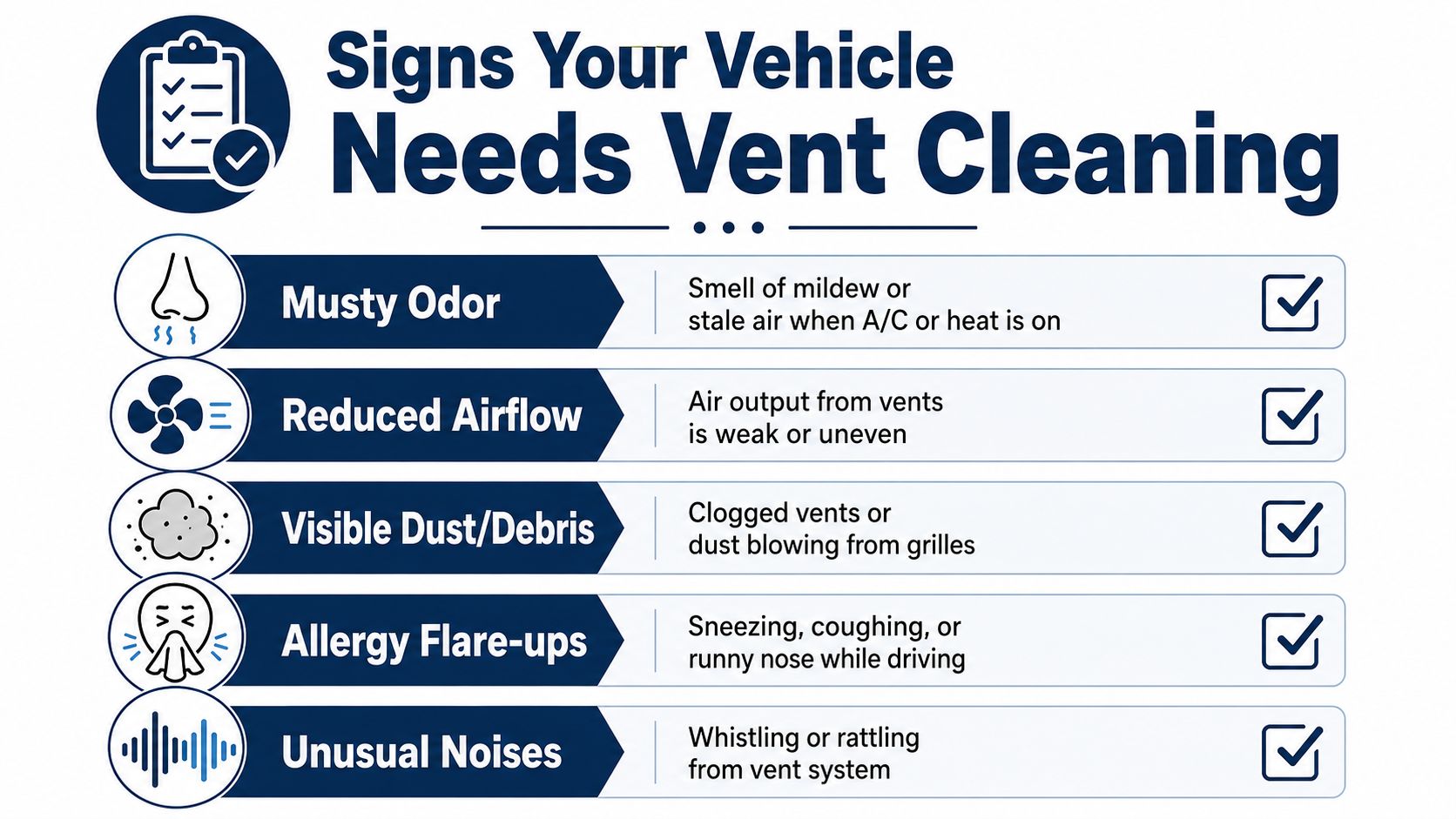
The warning signs are usually obvious once you know what to listen for. The most common one is a musty smell that shows up when the A/C or heat turns on, especially after the vehicle has sat overnight. That smell usually points to moisture, trapped debris, or residue inside the vent path, not a problem you can solve with a hanging air freshener.
Another common symptom is weak or uneven airflow. If one vent pushes harder than another, or the fan sounds busy while the cabin still feels under-ventilated, debris may be restricting movement inside the ducting or around the blower path. Dust blowing out when the system first starts is another clear clue that material has been sitting inside the system for too long.
What the symptoms usually mean
If you're sneezing more in the car than at home, the cabin environment may be the trigger. Dust, pollen, and fine grime get circulated back through the vents, and a cramped cabin keeps that exposure concentrated. That doesn't mean every cough is caused by the vehicle, but it does mean the ventilation system deserves a look.
Unusual noises also matter. A whistling sound can point to restricted airflow, while rattling can indicate loose debris, a shifted filter, or a blower issue that deserves attention before it gets worse. These are the kinds of problems that make a basic surface clean feel temporary.
If the vents smell stale and the airflow feels lazy, don't wait for the problem to become obvious to everyone riding with you.
Drivers who notice mould-like odours or persistent grime in the cabin often ask for deeper interior help, and resources such as mold removal for auto detailers can be useful when contamination has moved beyond simple dust. That kind of issue is different from ordinary vent cleaning, but the early warning signs can overlap.
When the issue is more than cleaning
Sometimes the vent system is dirty, and sometimes the cabin filter is overdue, the blower is struggling, or moisture has been sitting in the system too long. A professional can sort out which of those is happening instead of guessing. The important thing is to treat repeated odours and poor airflow as maintenance signals, not just an annoyance.
The Vent Cleaning Process at Nanak Car Wash
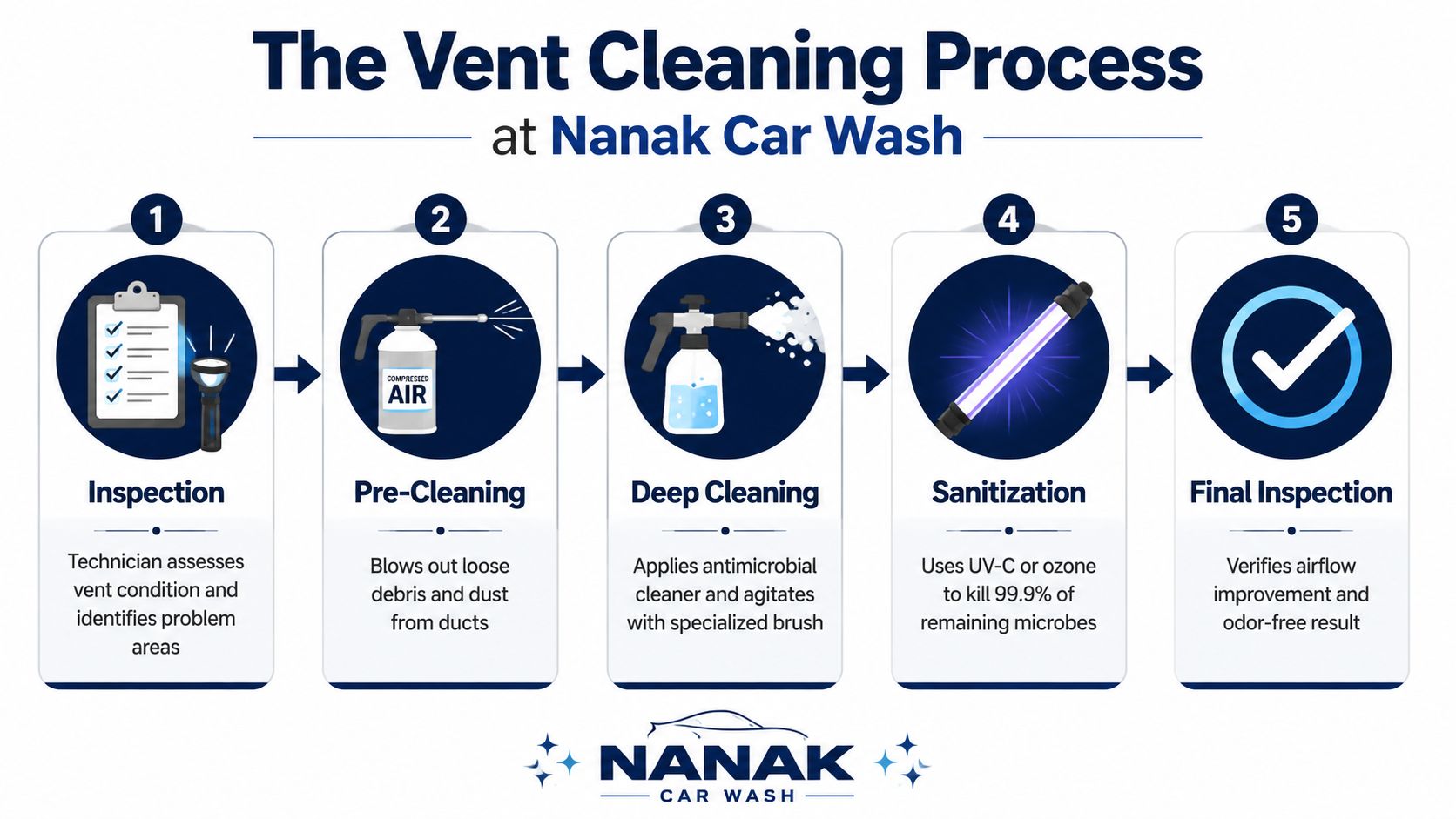
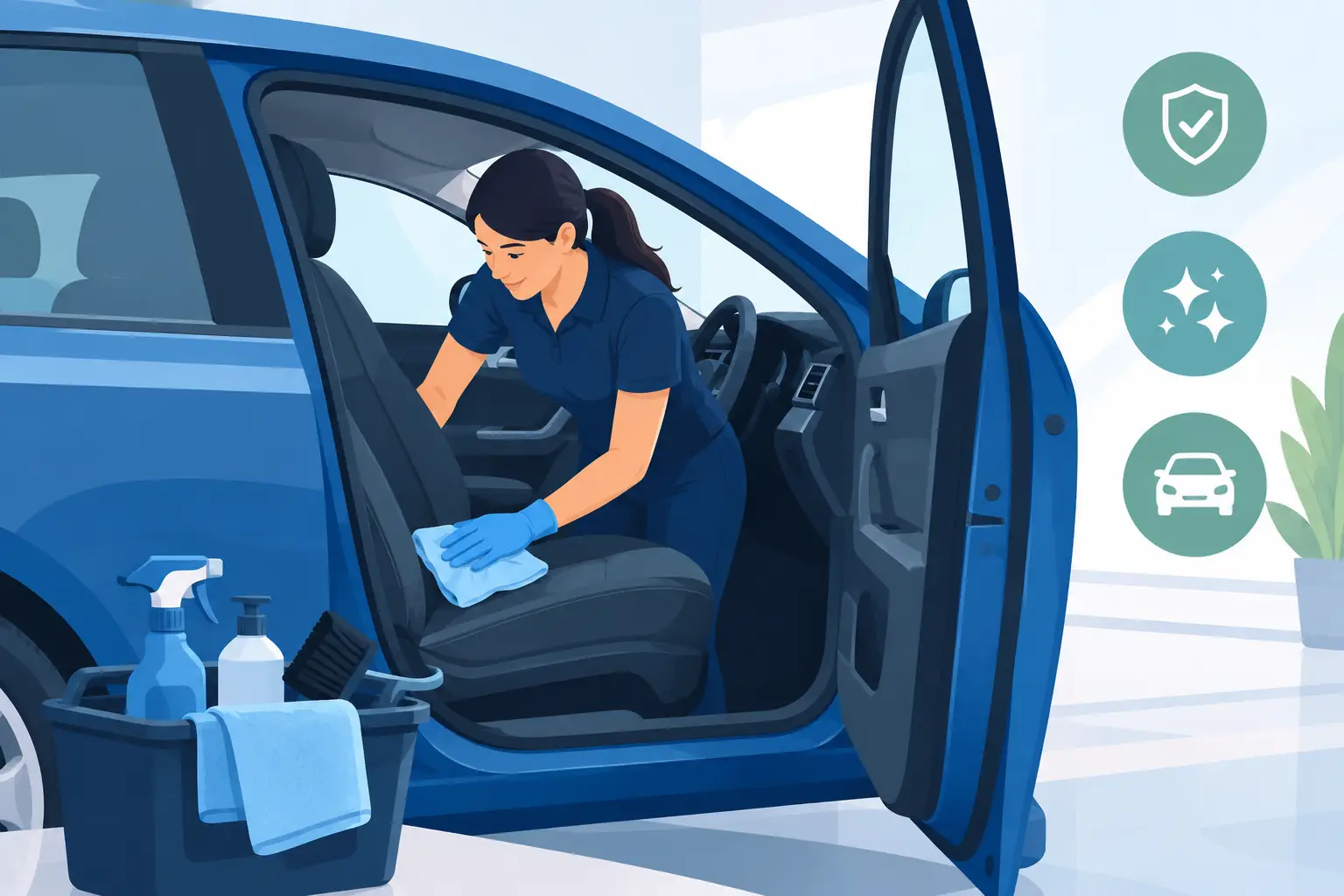
A proper appointment starts with inspection, not spraying. The technician checks the vent openings, looks for heavy debris, and identifies the problem spots that need more than a surface wipe. In a real vehicle, the issue is often uneven, with some vents carrying more dust, lint, or residue than others.
How the work is done
The next step is a compressed air blowout that dislodges loose material from deeper in the duct path. That matters because dust and lint don't always sit where you can reach them with a brush. Once the debris is loosened, a high-powered vacuum extraction captures it before it can settle back into the cabin.
After that, the technician applies a sanitising treatment to reduce odour-causing residue. On a car interior, this is the stage that helps when the complaint is stale air rather than just visible dirt. The aim is not to perfume the vents, it's to remove the source of the smell.
A vent job that only pushes dirt around is wasted effort. Extraction has to come after agitation, or the debris just migrates.
The full process usually takes 30 to 60 minutes depending on vehicle size and contamination level, which is a realistic window for an interior service that targets the duct path, grille areas, and nearby crevices. At Nanak Car Wash, vent and crevice blowout can be included as part of an interior detailing appointment, which makes sense when the cabin needs more than a quick touch-up. That combination works well for vehicles that have picked up winter salt residue, pet hair, or a stubborn cabin smell.
What to expect at pickup
You should leave with cleaner airflow, less visible debris at the vents, and a cabin that smells closer to neutral. What you shouldn't expect is a miracle if the problem is a failing blower, a soaked cabin filter, or a water leak. A serious service improves the vent path, but it can't fix unrelated mechanical faults.
Health and Performance Benefits of Clean Vents
Clean vents do the most visible work where comfort and smell are concerned. They help remove stale residue that air fresheners can only cover up for a short time, and they reduce the amount of loose dust cycling back into the cabin. For drivers who spend a lot of time in traffic, that difference is easy to feel on the first drive after service.
The energy side is more conditional. Mainstream guidance from Wirecutter notes that routine duct cleaning doesn't have strong evidence for air-quality or efficiency gains unless there's a specific problem like visible contamination, pest droppings, or heavy debris, and it also notes that a real job usually involves cleaning the air handler too, not just the ducts, in home systems. That's a useful caution for cars as well, because the benefit comes from solving a real contamination issue, not from treating cleaning as a universal cure. See the discussion in Wirecutter's advice on air duct cleaning services.
What improves first
The first gain is usually odour control. Once the trapped material is removed, the cabin stops recycling that same stale smell every time the fan runs. That's especially noticeable in winter, when windows stay closed and the heating system gets heavy use.
The second gain is airflow consistency. Clean vents don't have to fight through a layer of loose lint or grit, so the cabin can feel more balanced from one outlet to the next. In practical terms, that helps with window clearing and day-to-day comfort.
What cleaning cannot do
Cleaning won't fix a broken blend door, a clogged evaporator, or a cabin filter that's overdue for replacement. It also won't eliminate every allergy trigger in the car, because some irritants come from fabrics, mats, or outside air entering when the doors open. That's why a good shop should explain what the service can solve and what it can't.
Bottom line: vent cleaning is strongest as a comfort and contamination service, not a cure-all for every HVAC complaint.
If the cabin smell is coming from moisture damage, smoke saturation, or a mechanical fault, the answer may be broader interior work. Clean vents help, but only when the issue lives in the vent path or nearby components.
Pricing and Package Options for GTA Drivers
The cost of vent work makes more sense when you compare it to the rest of the interior service market. In North America, professional air-duct cleaning typically runs about $270 to $500, with an average of $389, vents are often priced at about $35 each, and standalone dryer-vent cleaning is commonly $100 to $170 according to the pricing reference from HomeAdvisor's cleaning-service guide (HomeAdvisor cost guide). Car interiors are a different category, but those figures show why vent work is usually sold as part of a bundle rather than as a stand-alone luxury.
How the packages compare
| Nanak Car Wash Interior Service Pricing | Starting Price | Vent Cleaning Included | Typical Duration |
|---|---|---|---|
| Full-service car wash package | $29.99 + tax | Basic interior vacuuming and dashboard cleaning only | Short visit, service-based |
| Interior detailing by appointment | Varies by vehicle and scope | Yes, with vent and crevice blowout | 1 to 4 hours |
| Interior and exterior detailing by appointment | Varies by vehicle and scope | Yes, with vent and crevice blowout | 1 to 4 hours |
The biggest value often comes from combining the vent job with the rest of the cabin work. That's the sensible choice if the car also needs salt removal, seat care, or a more thorough reset after winter. SUV, van, truck, and pet-hair surcharges can apply, so the final ticket depends on vehicle type and contamination level.
Why bundles make sense
A quick wash handles surface grime. A detailing package handles the interior problem more completely. That pairing is useful for drivers who want the vents cleaned as part of a full cabin refresh rather than scheduling multiple visits.
For shop owners and marketers, this kind of bundling also supports a stronger service mix, which is why a practical resource like cleaning company growth strategy can be relevant when building a cleaning business around repeat maintenance work. In the driver's seat, though, the main point is simpler, if the cabin has more than one problem, one appointment is usually better than two.
Locations and Booking Your Appointment
Nanak Car Wash serves drivers across the Greater Toronto Area, which makes vent cleaning easier to fit into a normal week. Locations listed by the company include Etobicoke, Brampton, Concord, Oshawa, North York, Burlington, Cambridge, and Guelph. That spread matters because cabin cleaning is easier to keep up with when you can book near work, home, or a regular commute route.
How to prepare before you arrive
Start by clearing personal items from the centre console, door pockets, and floor area. If you know one vent smells worse than the others, point it out when you arrive so the technician can focus on that area first. The more precise you are about the symptom, the faster the inspection goes.
A good interior appointment begins with a clean, empty cabin, not a trunk full of loose stuff and a vague complaint about “the smell.”
If you're booking a detailing visit instead of an express wash, ask whether the site handles vent and crevice blowout by appointment. Some locations are more express-focused, while others support broader interior work. That distinction matters if you want the cabin and vent path cleaned in the same visit.
What makes a repeat visit easier
Memberships and prepaid bundles are useful for drivers who keep their cars on the road all week, especially rideshare drivers, delivery drivers, and small fleet operators. Free vacuums at participating locations also help when you want to handle loose debris before it turns into a bigger cabin issue. If you already know your vehicle needs rust proofing or another maintenance service, combining it with interior cleaning saves a separate trip.
The cleanest booking is the one that matches the car's actual condition. If it's just dust, a lighter service may be enough. If the vents smell stale and the cabin has winter residue, book the fuller interior option so the technician can treat the whole problem.
Common Questions About Vehicle Vent Cleaning
A lot depends on how the vehicle is driven and what it has been exposed to. A car that spends its time on salted GTA roads, in stop-and-go traffic, or under heavy spring pollen load will usually need attention sooner than a garage-kept vehicle that sees lighter use.
How often should vents be cleaned? There is no single schedule that fits every vehicle. If the vents start to smell stale, collect visible dust, or push air unevenly, the system is already showing you that a cleaning is due.
Does vent cleaning include the cabin air filter? Not automatically. The filter is a separate part, and some services only clean the vent path and surrounding interior areas, so it makes sense to ask whether the filter will be inspected or replaced during the visit.
Can it remove cigarette smoke? It can help reduce the odour, but smoke is one of the tougher contaminants to deal with because it settles into fabric, trim, and the HVAC path at the same time. Vent cleaning works best as part of a broader interior treatment, not as a stand-alone fix for smoke in the cabin.
Is it safe for advanced climate control systems? Yes, as long as the technician uses the right tools and works carefully. The goal is to clear dust, grit, and residue without pushing debris deeper into sensitive components or stressing the vents themselves.
What if I ignore the problem? The cabin usually gets less pleasant to drive in, odours tend to linger, and airflow can keep feeling restricted. In GTA vehicles, moisture, road salt residue, pollen, and urban grime can sit in the system long enough to make the problem harder to clean later, so waiting often turns a straightforward service into a more stubborn interior issue.
If your vents smell stale, blow weak air, or keep pushing dust back into the cabin, book an interior appointment and let the system be cleaned properly. Nanak Car Wash offers vent and crevice blowout as part of interior detailing at GTA locations, along with wash and maintenance options that fit regular driving life, so you can visit Nanak Car Wash and get the cabin back to a cleaner baseline.



 6600 Finch Ave W, Etobicoke, ON M9V 3Z6
 647-703-8515
 MON – SUN 8 AM to 7 PM