

You've just come off the QEW into Niagara Falls after a week of wet roads, slush, and spray. The car looks merely dirty from the driver's seat, but the lower doors are wearing a grey salt film, the wheel wells are packed, and the mats are carrying half the winter into the cabin. A quick rinse will improve the appearance. It won't necessarily deal with what's hiding underneath.
That's why auto detailing in Niagara Falls should be treated as routine vehicle maintenance, not an occasional luxury. The right service depends on how you use the vehicle, how often it sees salted roads, and whether you need a quick reset or a full interior and exterior recovery. This guide focuses on the practical choice, especially for commuters, ride-hailing drivers, delivery operators, work-van owners, and small fleets that care about cost per use rather than a one-day showroom finish.
Table of Contents
- Why Niagara Falls Drivers Need Detailing More Than Most
- Detailing Packages and What They Actually Include
- How Niagara Region's Salt Program Drives Detailing Demand
- Seasonal Timing and How Often to Book
- How to Choose a Niagara Falls Detailer and Red Flags to Avoid
- Pricing Models and What High-Frequency Drivers Should Pick
- Before and After Your Appointment
- Local Questions Niagara Falls Drivers Ask Before Booking
Why Niagara Falls Drivers Need Detailing More Than Most
The local mess starts underneath
A Niagara Falls winter morning can leave three separate problems on one vehicle. Road salt and dirty spray collect along the rocker panels and wheel arches. Moisture stays in seams and underbody pockets. Inside, wet boots, grit, takeaway cups, luggage, and tourist traffic turn the cabin into a work zone.
Niagara Region's winter maintenance program includes Niagara Falls among its road-salt stations, and the region says salt remains effective down to -9 C but loses effectiveness below -18 C. You can check the regional thresholds on the Niagara Region seasonal road operations page. Those conditions create a repeating cycle of wet residue, drying residue, and fresh application.
A daily commuter notices it as dull paint and dirty mats. A weekend driver taking visitors to the Falls sees sunscreen, food crumbs, luggage marks, and muddy footwear. A contractor's van collects road film around hinges, step rails, and cargo areas. The vehicle type changes, but the maintenance problem is similar.
Local rule: If the underside gets salted, the next wash should be planned around the underside, not just the paint.
Tourism adds interior wear
Niagara Falls vehicles often do more than travel between home and work. Family SUVs carry coolers, strollers, sports equipment, and wet clothing. Tour cars pick up passengers with luggage. Ride-hailing vehicles deal with constant foot traffic and spills. A basic exterior wash can leave the cabin looking exactly as tired as it did before the appointment.
Detailing earns its keep when it removes the residue a normal wash misses. That includes salt trapped in carpet fibres, grime around seat rails, dust in vents, and sticky buildup in cup holders and door pockets. The point isn't to chase perfection every time. It's to stop small messes from becoming expensive, unpleasant, or difficult to reverse.
Use a simple inspection after every rough weather spell:
- Look low: Check the wheel wells, lower doors, rocker panels, and visible underbody.
- Feel the cabin: Run a hand over the steering wheel, console, and door pulls for sticky buildup.
- Check the mats: Damp, gritty mats need attention before the moisture spreads into carpet.
- Choose the service: Book a rinse for salt, an interior clean for cabin wear, or a full detail when both have accumulated.
For Niagara Falls drivers, regular cleaning is part of owning a vehicle in a wet, heavily treated road environment. The smart question isn't whether detailing is worth paying for. It's which level prevents you from paying for the wrong job.
Detailing Packages and What They Actually Include
A service menu usually makes sense once you separate maintenance cleaning from restoration work. An express exterior service keeps a usable vehicle presentable. A full detail tackles embedded dirt, stains, and neglected surfaces. Paint correction and ceramic-style protection belong in a different category because they require more preparation and more careful expectations.
Match the package to the condition
Express exterior wash: This is the sensible choice after ordinary road grime or a light salt event. Look for presoak, foam, rinse, drying aids, air blowers, and an underbody option. It should be quick, but don't assume an underbody flush is included unless the menu says so.
Full-service wash: This adds hand drying and basic cabin work, commonly vacuuming, dashboard cleaning, and windows. Higher tiers may cover door panels, consoles, cup holders, and tire dressing. It suits a clean daily driver that needs consistent upkeep, not a vehicle with serious stains.
Interior or exterior detail: Interior work can include vent and crevice blowout, deep vacuuming, carpet and seat shampooing, salt removal, leather cleaning, and conditioning. Exterior work may involve a hand wash, clay treatment, machine polishing, and a hand-applied wax or sealant. Ask whether pet hair, heavy staining, oversized vehicles, and excessive soil carry surcharges.
Machine polish or ceramic-style upgrade: Machine polishing is intended to improve gloss and reduce the appearance of minor defects. It isn't the same as repairing deep chips or repainting damaged panels. Ceramic-style products can add a slick protective finish, but the result depends heavily on preparation, product choice, and curing instructions.
Ask what the menu leaves out
The biggest pricing surprises usually come from labour-heavy add-ons. Pet-hair removal, leather conditioning, headliner cleaning, stain treatment, odour work, engine-bay cleaning, and heavy sand removal may sit outside the advertised package.
Duration also varies with size and condition. A quick wash may be completed during a normal errand. Interior and exterior detailing can take one to four hours, according to the service information provided by Nanak Car Wash's detailing and rust-proofing lineup. A neglected SUV, van, or truck takes longer than a lightly used compact car.
Don't choose by the word “premium”. Ask for four specifics:
- Included surfaces: Seats, mats, carpets, vents, wheels, glass, trim, and underbody.
- Included processes: Vacuuming, extraction, hand drying, clay treatment, polishing, or sealant.
- Extra charges: Pet hair, stains, size, excessive dirt, and missed appointment fees.
- Expected result: Clean and maintained, or corrected and protected.
For a first booking, photograph the car before handing it over and ask the staff member to point out what the package will and won't address. That short conversation prevents most disappointment.
How Niagara Region's Salt Program Drives Detailing Demand
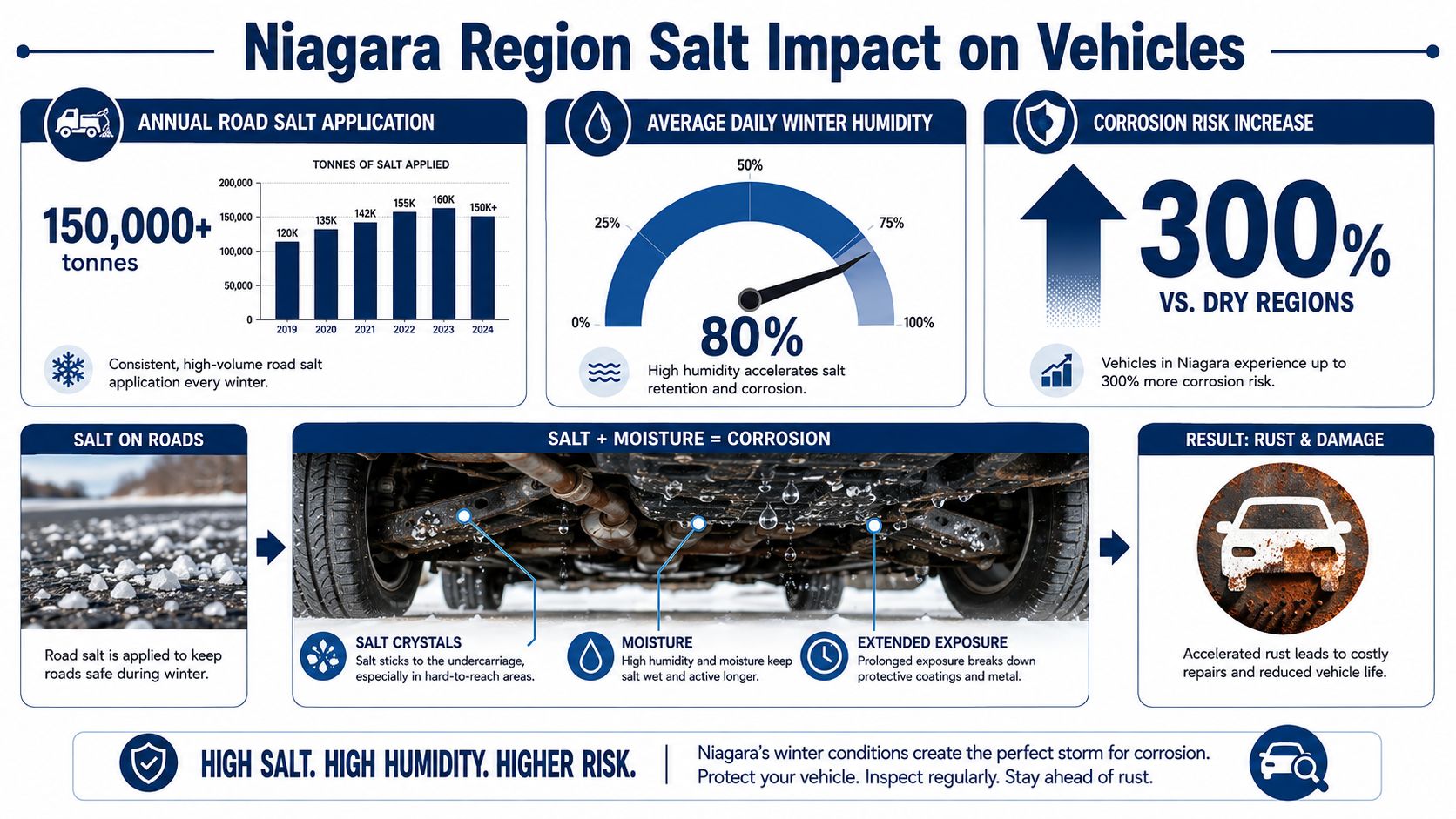
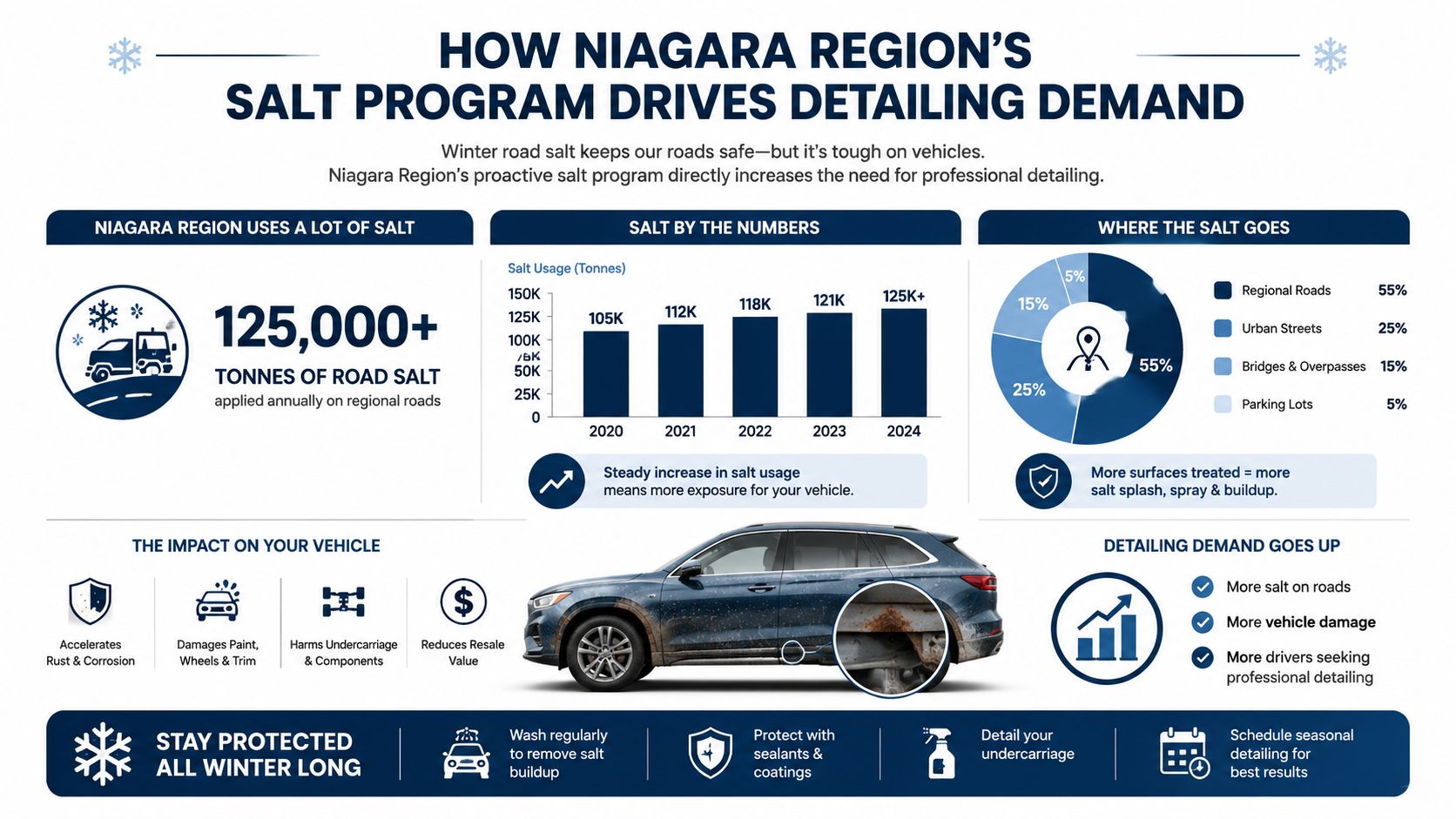
Road salt changes what a Niagara Falls detail needs to accomplish. Once salt dissolves in water, it forms an electrolyte film on exposed steel. While the underside remains wet, that film supports ongoing corrosion. The mechanism is explained in this Ontario road-salt corrosion guide.
The worst exposure often sits beyond the driver's view. Brake lines, fuel lines, exhaust components, subframes, and wheel wells collect spray, while seams, brackets, and drainage pockets hold moisture. A clean hood gives you little information about those areas.
The province sets the context
Environment and Climate Change Canada reported 1,679,395 tonnes of salt used in Ontario in one reporting year, rising to 2,781,677 tonnes in winter 2021–2022, alongside more than 105,000 km of salted road length, as documented in this road-salt reporting document. Niagara Falls operates within that broader provincial system, so local vehicles face more than an isolated dirty stretch of road.
Niagara Region says it voluntarily reports annual salt usage to Environment Canada. Salt application is a continuous, measured operational input tracked year over year. That makes regular rinsing a maintenance decision, not a once-a-season cosmetic treatment.
The City of Niagara Falls added an immediate complication in 2026, stating that a province-wide salt shortage affected local winter maintenance because the city had not received its full annual supply. Drivers should still judge conditions by actual road spray. Reduced supply can change where and when salt is applied, but it does not remove residue from the roads that are treated.
The highest-return habit is simple
Rinse the underbody after meaningful salt exposure, ideally before residue dries into crevices and seams. Dried salt can draw moisture from the air, allowing corrosion to continue even when the surface appears dry.
A spring detail still matters, but it should not carry the entire burden. Weeks of winter exposure come first. For a high-frequency driver, an affordable underbody flush after a major storm can cost less per use than waiting until spring for heavier removal and correction.
Practical rule: Remove salt before paying for shine. Applying protection over contaminated surfaces is a poor substitute for cleaning.
Seasonal Timing and How Often to Book
In Niagara Falls, schedule detailing around salt events and temperature swings, not the date on your calendar. Niagara Region's salt thresholds explain why shoulder months need attention. Salt works effectively down to -9 C and loses effectiveness below -18 C, according to the region's winter maintenance information. Temperatures near those boundaries create repeated wetting, freezing, thawing, and fresh road treatment.
Use this seasonal rhythm
Spring is recovery time. Book an exterior wash that reaches the underbody, wheel wells, rocker panels, and door jambs. Add interior extraction when winter mats have pushed salt into the carpet. If the vehicle went through winter without proper cleaning, spring is the right time for a full detail.
Summer is maintenance season. Dust, pollen, insects, sunscreen, and park or beach debris usually call for express exterior washes and occasional interior resets. A hand wash followed by proper drying removes stuck contaminants before they become harder to clean.
Fall is preparation time. Clean the paint and underside before winter contamination arrives. Wax or sealant can make later washing easier. Rust proofing may suit an older vehicle that will stay in service for several more seasons, but it does not replace regular washing.
Winter calls for touch-ups. Book an underbody flush after major salt exposure. For a high-use vehicle, every one to two weeks in winter and monthly in summer is a practical schedule. A short-trip vehicle driven through wet slush needs more attention than one parked indoors and used occasionally. The 2026 salt shortage makes road conditions less predictable, so judge the vehicle by visible spray and residue rather than assuming fewer applications mean less cleaning.

Move the interior detail forward when needed
Do not wait for spring after a spill, odour, pet hair, or visible salt staining. Book sooner before selling, returning a lease, hosting visitors, or starting passenger work. Interior cleaning improves daily comfort immediately, while paint correction can wait if winter residue still covers the vehicle.
My preferred order is underbody rinse after exposure, routine exterior maintenance, seasonal interior reset, then protection upgrades. For frequent drivers, repeated low-cost cleaning usually costs less per use than one heavy spring recovery detail.
How to Choose a Niagara Falls Detailer and Red Flags to Avoid
A reliable detailer should explain the work before taking your keys. Ask what touches the vehicle, which surfaces the package covers, how wastewater is handled, and what happens if the technician finds damage or contamination beyond the booked service. Those answers reveal more than a polished package name.
Ask questions that expose the operation
Start with the wash system. Ask whether the shop uses fresh water, reclaimed water, or both. Proper reclamation can reduce freshwater demand when filtration, storage, and nozzle flow are configured correctly. Industry coverage describes systems that reuse roughly 50 to 60 percent of wash water, while some closed-loop functions have reported recycling 100 percent with zero discharge. The figures come from coverage of Canadian wash-water reclamation systems. They describe possible system performance, not what every Niagara Falls shop delivers.
Then ask:
- Products: Which shampoo, iron remover, clay media, interior cleaner, leather conditioner, wax, or sealant will you use?
- Hand work: Who handles hand drying, brushing, extraction, and finishing?
- Scope: Is underbody rinsing included, or does it cost extra?
- Protection: Is the product a wax, sealant, ceramic-style coating, or true coating service?
- Damage handling: Will staff photograph chips, scratches, loose trim, and fragile areas before work?
- Insurance: Does the business carry liability coverage for customer vehicles?
- Visibility: Can you see the bay or receive a condition report before approving additional work?
A professional answer may be, “That service isn't included.” Clear limits are preferable to a vague promise followed by an unexplained charge. Those are baseline expectations. Your own questions should still come first.
Walk away from mystery pricing
No posted starting rates do not prove poor workmanship, but they make comparisons harder. Pressure to buy every upgrade, a vague “deep clean” fee, refusal to explain water handling, or a shop that will not show where the work occurs should make you pause.
Look for practical operating signals. A transparent shop explains size-based pricing, identifies labour-heavy extras, assigns trained staff to hand-applied steps, and can coordinate washing, detailing, and rust protection without forcing separate appointments. That matters to commuters and fleet operators who cannot lose several days to vehicle drop-offs.
Nanak Car Wash lists express washes, full-service washes, detailing, rust proofing, prepaid options, and monthly memberships. Its published information also states that it uses 100% fresh water, shows starting rates, and combines hand-applied work with modern equipment. Verify those details directly before booking, especially if frequent salt exposure makes water handling and underbody service part of your regular routine.
Before handing over the keys, confirm:
- Clear scope
- Visible starting price
- Explained add-ons
- Documented condition check
- Straight answer on water and products
- Proof of insurance
- A realistic completion time
Pricing Models and What High-Frequency Drivers Should Pick
The cheapest appointment isn't always the cheapest cleaning strategy. A commuter who washes occasionally can waste money on an unlimited plan. A delivery driver can waste money paying the walk-in rate every time. Choose the model by usage, downtime, and how much interior work the vehicle needs.
Canadian market context supports that shift. One Canadian car wash and auto detailing market estimate places the market near $1.6 billion in 2025, while another projection in the same verified brief points toward roughly US$2.3 billion by 2030. The same brief identifies rising adoption of subscriptions, bundled services, automation, and premium interior detailing. Those figures describe the wider market, not a Niagara Falls shop's price list.
Compare the payment structures
One-off detailing works for seasonal recovery, sale preparation, lease return, or a vehicle that has fallen behind. It gives you flexibility, but weekly exterior cleaning remains pay-as-you-go.
Prepaid multi-wash tickets suit drivers who know they'll wash regularly but don't want an unlimited commitment. They can lower the effective visit cost, though you need to check expiry rules, vehicle-size restrictions, and whether underbody or interior options are included.
Monthly unlimited memberships make sense for vehicles that visit often enough to justify the recurring charge. They're most useful for ride-hailing, delivery, daily commuting, and small fleets, provided the pass covers the wash type you use.
The prompt asks for precise monthly and per-wash calculations for one full detail per quarter plus weekly washes. That calculation can't be completed responsibly without a specific Niagara Falls menu price, membership fee, detail price, and ticket terms. Don't trust a comparison that invents those inputs.
| Service Model | Typical Setup | Approx. Annual Cost | Best Fit Driver |
|---|---|---|---|
| One-off service | Pay for each wash and book details as needed | Depends on actual visits and posted rates | Occasional driver or seasonal user |
| Prepaid bundle | Buy multiple washes in advance, then use them over the permitted period | Depends on ticket price and expiry | Regular driver who wants spending control |
| Monthly membership | Recurring pass for eligible washes, with details booked separately | Monthly fee multiplied by the billing period | High-frequency commuter, ride-hail, delivery, or small fleet |
My recommendation by use
Low-mileage owners should pay as needed and book a proper spring reset. Regular commuters should compare the membership's break-even visit count against their real habits. Ride-hailing and delivery operators should prioritise fast exterior access, underbody capability, and predictable billing over premium paint correction.
Small fleets should negotiate consistency rather than chase the lowest headline rate. A repeatable wash standard, clear vehicle-size rules, and consolidated rust-proofing or interior appointments can reduce administrative work and downtime.
For every model, calculate cost per completed visit, not just the advertised fee. Include travel, waiting, interior add-ons, tax, and the time your vehicle is unavailable. A cheap wash that requires a separate underbody appointment may cost more in practice than a slightly higher bundled service.
Before and After Your Appointment
A detailer's work starts with the condition you present and continues with how you treat the vehicle afterward. Remove clutter before arrival, explain the problem areas, and don't expect a neglected cabin to stay fresh if wet mats and food waste return immediately.
The night-before checklist
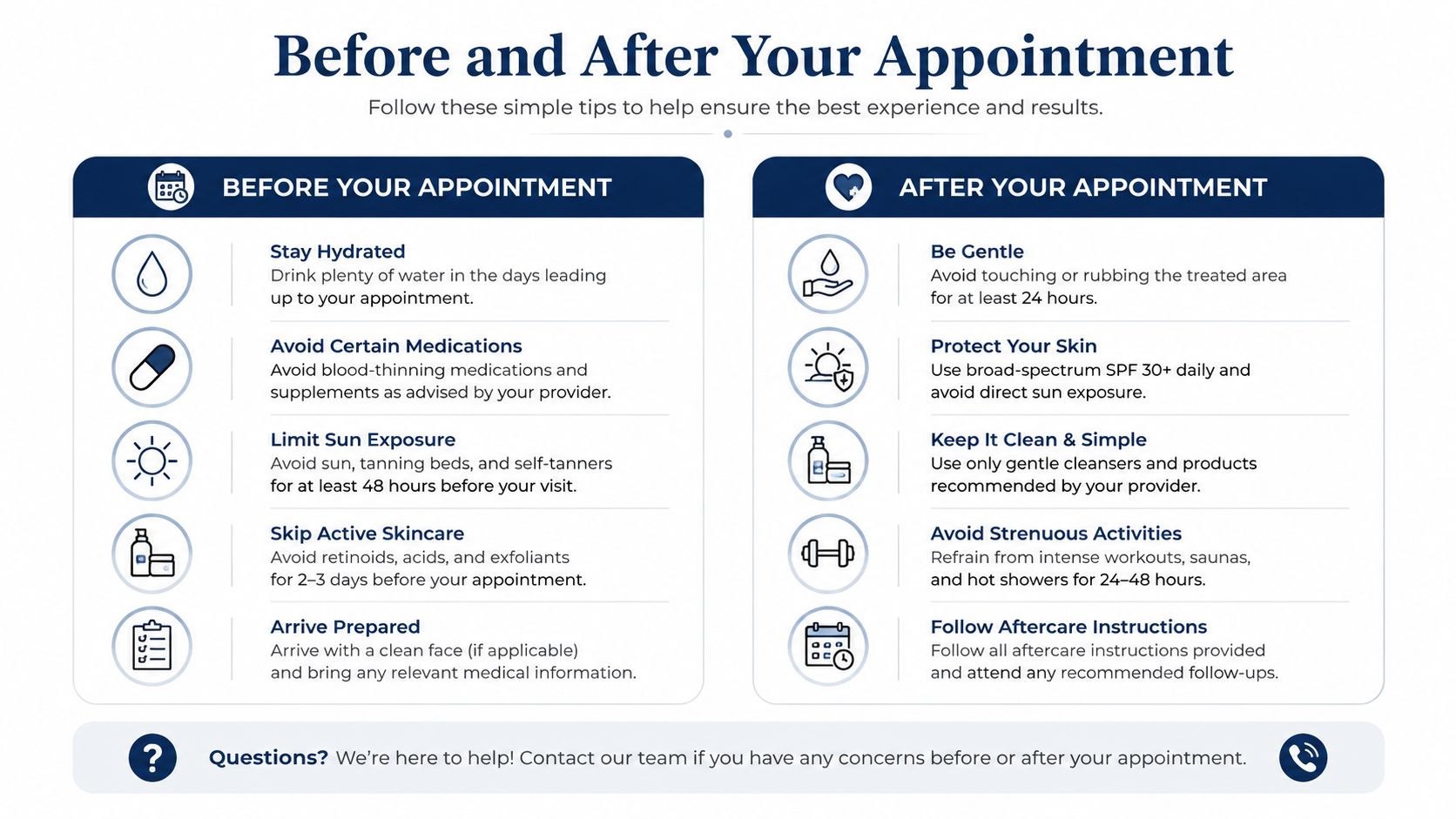
- Empty the vehicle: Remove personal items, child seats if practical, sports gear, tools, paperwork, and rubbish.
- Photograph existing damage: Capture chips, scratches, cracked trim, loose badges, stained upholstery, and scuffed wheels.
- Mark priorities: Tell the shop about pet hair, salt stains, spills, odours, sticky consoles, or a headliner that needs special care.
- Confirm the appointment: Ask about drop-off, collection, keys, payment, weather delays, and whether the vehicle needs to arrive dry.
- Keep expectations realistic: A detail cleans and improves surfaces. It can't guarantee that deep scratches, permanent dye transfer, or damaged fabric will disappear.
Protect the result after pickup
For the first couple of weeks, avoid automatic brush washes that can undo careful paint finishing. Skip parking under trees when possible, because fresh sap can bond to the surface and create another removal job. Don't apply an aftermarket dressing, wax, or interior chemical until you've confirmed it won't interfere with the fresh product.
If the vehicle was detailed during winter, schedule the next underbody flush within 10 to 14 days if salt exposure continues. That timing is a practical aftercare recommendation, not a guarantee of protection. The goal is to remove new salt before it dries into the pockets and seams that hold moisture.
Pay attention to mats and touchpoints during the first week. Shake out grit, dry wet floor coverings, wipe spills promptly, and use a clean microfibre cloth rather than household paper products on sensitive trim. These small actions preserve the finish and reduce the chance that a “new detail” looks worn again in a few days.
Aftercare advice: The detailer can reset the vehicle. You control how quickly new salt, moisture, sap, and cabin clutter rebuild.
Local Questions Niagara Falls Drivers Ask Before Booking
How long does a typical detail take?
A routine wash may fit into an ordinary errand, while an interior or exterior detail can take one to four hours, depending on vehicle size, condition, and the chosen services. A neglected SUV with pet hair and salt-stained carpet will need more labour than a maintained sedan.
You generally don't need to stay on-site. Confirm the drop-off window, collection time, key procedure, and what happens if the technician finds damage or needs approval for an extra service.
Is rust proofing worthwhile on a lease or financed vehicle?
It can make sense if you expect to keep driving the vehicle through repeated Ontario winters and the treatment doesn't conflict with the lease or manufacturer requirements. Check the contract and ask the provider exactly where the compound is applied.
Don't treat rust proofing as a substitute for underbody washing. Salt and moisture still need to be removed, particularly after a season when local maintenance has been affected by supply conditions such as the 2026 salt shortage noted by the City of Niagara Falls.
What should I do about paint chips before polishing?
Photograph and disclose them before the appointment. Machine polishing can improve surrounding gloss, but it won't repair missing paint, exposed metal, or deep scratches. A technician should tell you whether polishing is appropriate and whether touch-up or bodywork should happen first.
Can a mobile detailer match a shop?
A mobile operator can produce excellent work, but confirm access to power, water, drainage, shade, lighting, and a controlled working area. Ask how wastewater is contained and whether the service can perform an effective underbody rinse at your location.
An eco-focused shop should explain its reclaim system rather than using the word “green”. Filtration, reclaim storage, nozzle flow, and grit removal determine whether reused water still supports proper cleaning pressure.
What should high-use drivers book first?
Book the service that removes the problem causing the most repeat damage. For a ride-hailing or delivery vehicle, that usually means frequent exterior and underbody maintenance, with interior cleaning scheduled when touchpoints, mats, and upholstery start showing passenger wear. Save paint correction and elaborate protection for a vehicle whose basic maintenance is already consistent.
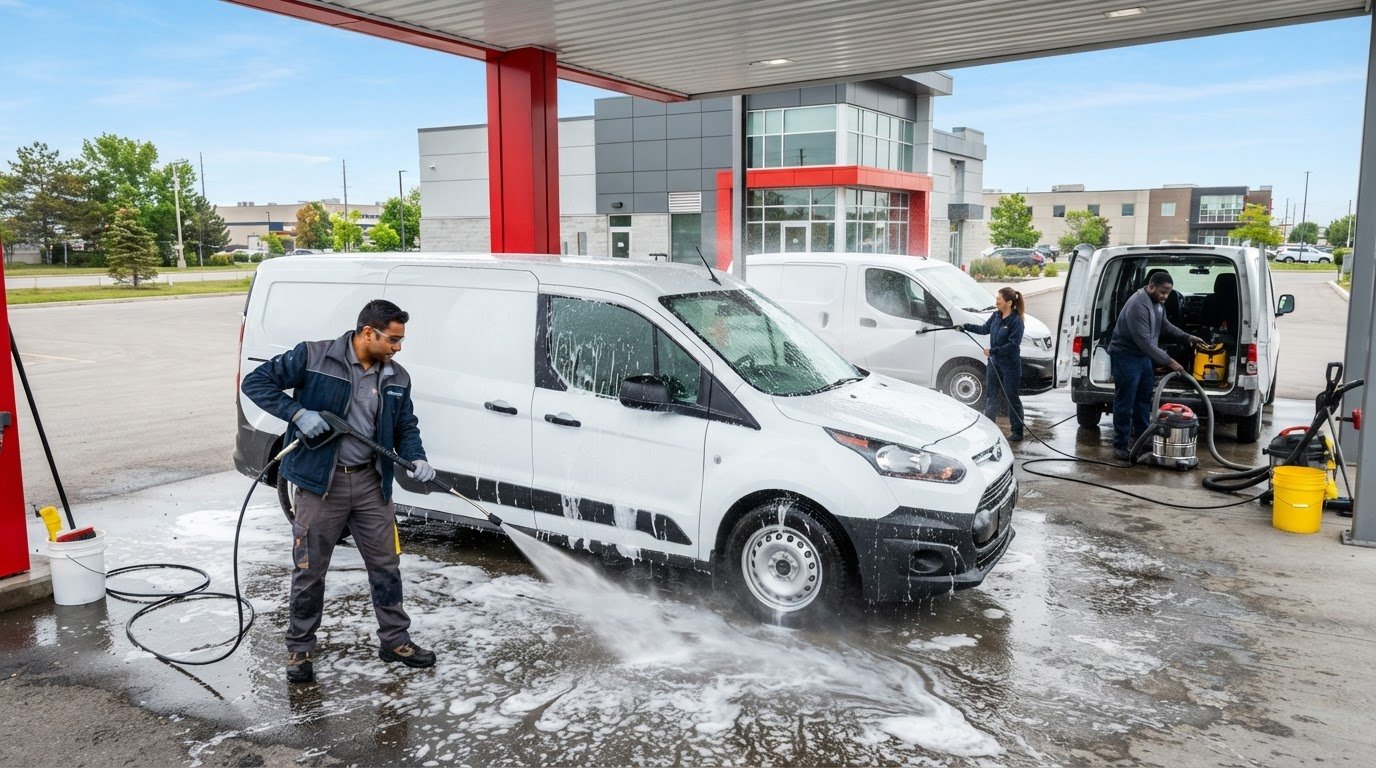
Nanak Car Wash offers express and full-service washes, interior and exterior detailing, rust proofing, prepaid wash options, and monthly memberships for drivers who want a repeatable maintenance routine. If your vehicle is carrying Niagara Falls salt and passenger or work-related interior wear, visit Nanak Car Wash and ask which combination matches your actual frequency, vehicle size, and underbody needs.

 6600 Finch Ave W, Etobicoke, ON M9V 3Z6
 647-703-8515
 MON – SUN 8 AM to 7 PM