
The first serious thaw of the season arrives. You pull into your GTA driveway, spot a small bubble under the rocker-panel paint, and start comparing auto edge rust proofing reviews, prices, star ratings, and “lifetime” protection promises.
Reviews can reveal whether staff communicate well and finish appointments on time. They rarely show how a treatment handles a newer SUV, an already rusty pickup, or a delivery van that spends every winter on salted highways. Vehicle age, existing corrosion, storage, mileage, and daily route should determine your choice.
Ontario road salt remains the primary opponent. Canadian research estimates that about 50% of vehicle corrosion is attributable to road salt exposure (Canadian corrosion research summary). Match the treatment to the vehicle in front of you. A newer, garage-kept SUV may need a different application from a high-mileage work truck exposed to GTA salt every day. That fit matters more than a polished review score.
Table of Contents
- Why Auto Edge Rust Proofing Reviews Miss the Point
- How Ontario Road Salt Destroys Your Undercarriage
- Comparing Rust Proofing Methods Side by Side
- Matching Treatment Type to Your Driving Pattern
- What a Quality Rust Proofing Application Looks Like
- Common Rust Proofing Myths That Cost You Money
- Building a Long-Term Rust Prevention Strategy
Why Auto Edge Rust Proofing Reviews Miss the Point
A five-star review from a garage-kept sedan owner does not answer the question facing someone with a work van running daily through Brampton, Mississauga, Vaughan, or Oshawa. Reviews show whether a shop communicates clearly, finishes on time, and charges what it quoted. They rarely show whether technicians protect rocker cavities, frame rails, seams, pinch welds, brake-line brackets, and the backs of suspension components.
Your driving pattern and vehicle age matter more than the star average. Light winter use on a newer vehicle calls for a different treatment strategy than daily salt exposure in a high-mileage van. A product that works acceptably on open metal may leave boxed sections under-protected if the application does not reach them.
My rule: Choose the application that fits the metal underneath your vehicle, not the shop with the largest review count.
Ontario rust-proofing also has a long operating history. Rust Check says its concept began in 1970, its first centre opened in Hepworth, Ontario in 1973, and the company reports more than 2 million satisfied customers since launch (Rust Check history). That history supports rust protection as an established Ontario service, not a seasonal internet fad.
Use customer feedback, including Pete Nelson Automotive customer feedback, to assess communication and workmanship. Then inspect the service behind the rating. Ask whether the underbody was cleaned first, whether existing corrosion was documented, whether enclosed cavities received treatment, and when renewal is required.
Those answers help match the method to the vehicle. A newer, garage-kept SUV may need less frequent attention than a pickup exposed to salted highways every day, while an older vehicle with active corrosion needs an honest inspection before anyone promises protection. Reviews are useful evidence about service quality, not a substitute for checking coverage, preparation, and fit.
How Ontario Road Salt Destroys Your Undercarriage
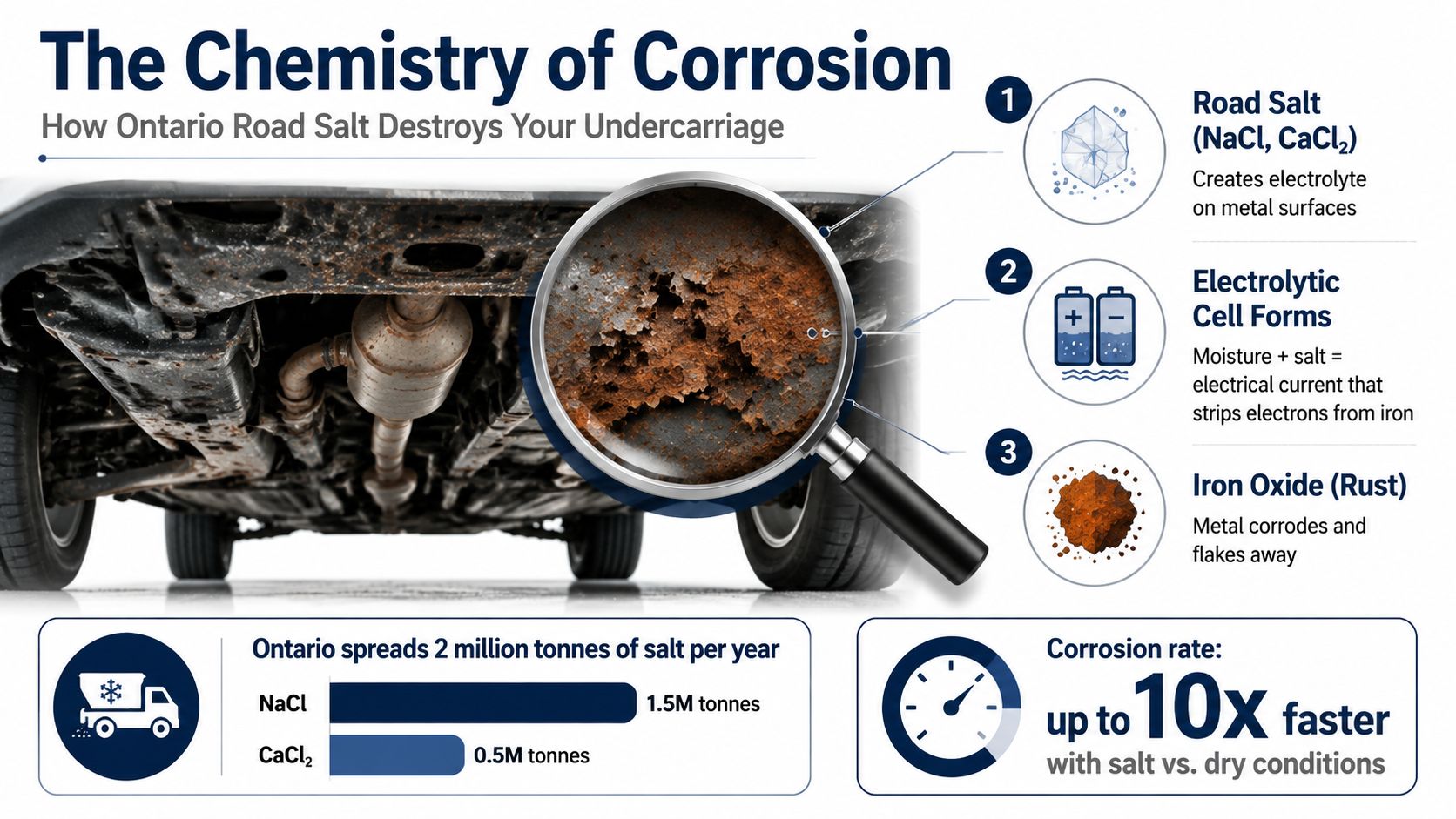
Salt doesn't merely make a vehicle look dirty. It changes the conditions on the metal. Water mixed with sodium chloride or calcium chloride becomes an electrolyte, allowing electrical current to move across the surface. On exposed steel, that current helps iron release electrons, while oxygen and moisture drive the formation of iron oxides, the flaky material we call rust.
Southern Ontario's freeze-thaw pattern makes the problem worse. Wet salt brine enters seams, frame rails, fastener joints, and boxed sections, then freezes and expands. A later thaw moves the moisture deeper. Road spray can dry on the outside while a salty film remains trapped inside a cavity where you can't see it or rinse it easily.
The Transportation Association of Canada's research found average weight loss of about 0.2117% for treated sodium chloride used in the Ontario market, while regular road salt produced the highest corrosion on tested steel samples (Transportation Association of Canada road-salt corrosivity paper). Alternative treatments in that research reduced weight loss to roughly 0.087% to 0.081%, which illustrates why lower-corrosivity materials and physical protection remain relevant in Ontario.
Where the damage usually starts
Brake lines often become an early safety concern because they sit low, collect spray, and develop corrosion around clips and fittings. Subframes, fuel-tank straps, exhaust hangers, suspension bolts, and rocker-panel seams can follow. Modern aluminium components don't rust in the same way as steel, but they can corrode and suffer galvanic reactions where dissimilar metals meet. High-strength steels can also lose section thickness without looking dramatic from a distance.
The practical conclusion is blunt: salt exposure makes undercarriage protection a maintenance issue, not a cosmetic upgrade. The exact treatment still matters, because a coating that never reaches a boxed cavity is only protecting what it touches.
Comparing Rust Proofing Methods Side by Side
Ontario vehicles need different rust-proofing methods because penetration, durability, and service access vary. The main categories are traditional drip oil spray, dripless oil spray, rubberized undercoating, grease-based products, and hydrophobic coatings. Choosing by vehicle age and driving conditions matters more than choosing by marketing label.
Traditional oil sprays remain the strongest penetrators. They creep into seams, fastener areas, and small cavities, which suits newer vehicles and vehicles showing only early surface rust. The drawback is maintenance. Water, dirt, and road spray wear down exposed oil films, so protection requires repeat applications.
Dripless oil sprays suit owners who do not want oil marks on a driveway. They can cover vulnerable areas effectively, but a clean finish does not prove that enclosed sections received enough product. Ask the technician which cavities are accessed, where injection points are located, and whether the application includes rocker panels and door bottoms.
Rubberized undercoating forms a thicker physical barrier after curing. I would not use it over active rust without proper cleaning and preparation. Sealing damp corrosion under the coating can hide the surface while the underlying damage continues.
Grease-based products, including Fluid Film and Woolwax, remain soft and can self-heal around fasteners and seams. They suit older trucks, off-road vehicles, and exposed chassis parts. Their trade-offs are clear: grease attracts grime and can interfere with service work if it is applied heavily around components that need regular access.
| Method | Penetration | Longevity | Avg. Annual Cost (SUV) | Best Use |
|---|---|---|---|---|
| Traditional drip oil spray | Excellent in seams and cavities | About 1 year | Starting around $120 | Newer vehicles, annual GTA commuters, early surface rust |
| Dripless oil spray | Good, depending on access and nozzle work | About 12–18 months | Starting around $130 | Owners who want less dripping and regular coverage |
| Grease spray | Strong surface coverage with self-healing behaviour | About 2–3 years | About $275–$750 | Older trucks, work vehicles, exposed chassis |
| Rubberized undercoating | Limited cavity penetration after curing | About 3–5 years | Starting around $130 | Clean, newer underbodies with proper preparation |
| Hydrophobic coating | Mainly surface water repellence | About 6–12 months | About $80–$150 | Light-use vehicles and short-term surface protection |
These categories are useful for comparison, not promises for every GTA shop. Ontario-focused Canadian guidance discusses the broader infrastructure and vehicle concerns associated with road salt (Canadian rust-protection method guidance), but it does not establish fixed treatment prices or guaranteed service intervals.
For a newer vehicle, prioritize cavity access and annual inspection. For an older truck with exposed metal, grease often makes more sense than a hard coating. Oil reaches places rubber cannot, rubber lasts longer on a properly prepared surface, and grease gives older metal a forgiving self-healing layer. The vehicle's condition and Ontario driving pattern should determine the purchase.
Matching Treatment Type to Your Driving Pattern
A rust-proofing decision should start with three questions: How old is the vehicle? How long will you keep it? How hard does winter use punish it?
The newer long-term keeper
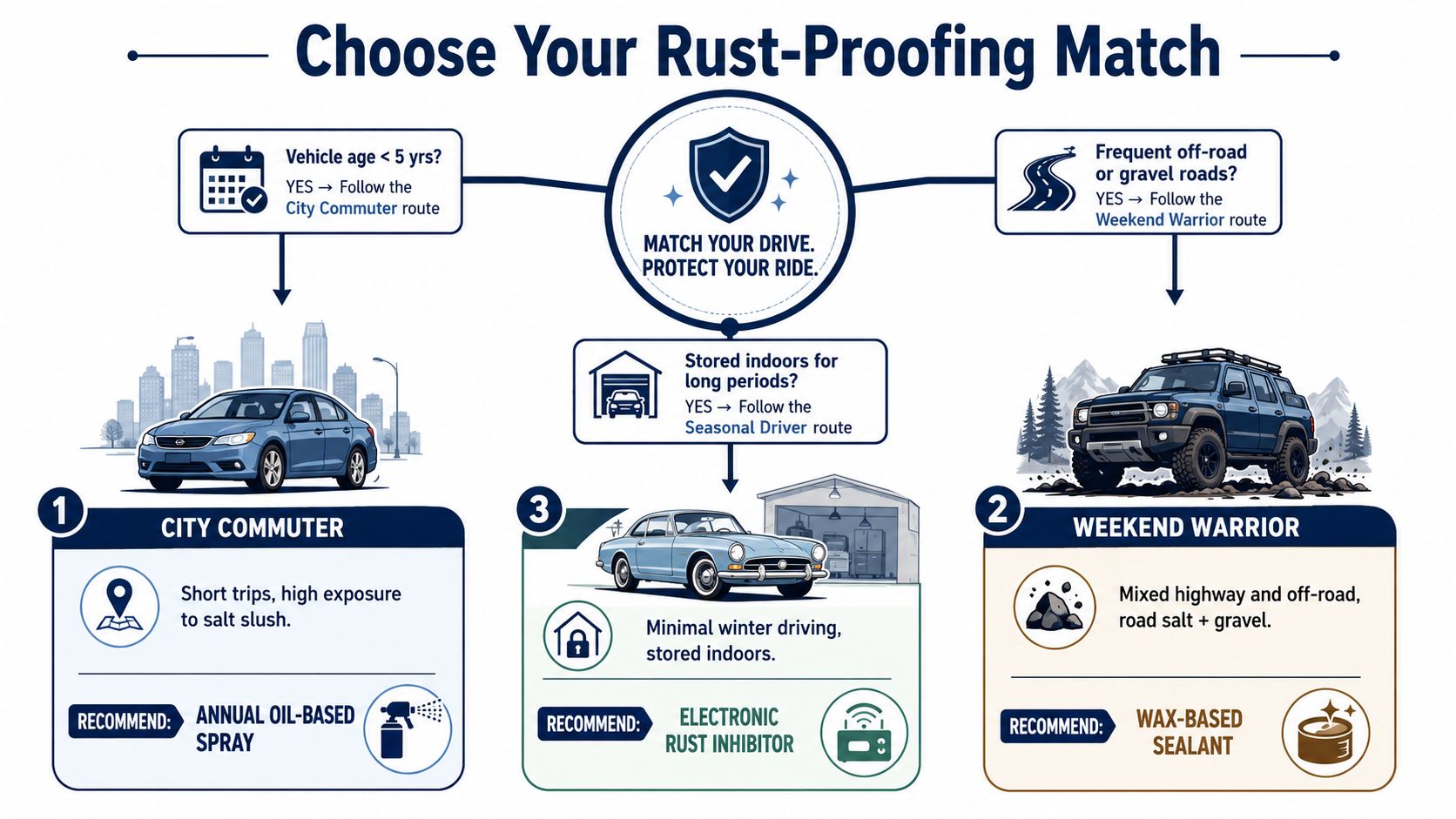
If your vehicle is relatively new and you plan to keep it for years, I'd favour an annual oil-based spray. It gets into seams and cavities before corrosion establishes itself, and the recurring visit creates a chance to inspect damage from stones, jacks, and winter debris.
Don't wait for visible bubbling. The Ontario salt reform briefing notes that chloride corrosion affects vehicles, while Ontario-focused reporting says exposed metal can begin corroding within 48 to 72 hours after salt contact, depending on moisture and temperature. That doesn't mean every new vehicle needs an aggressive coating immediately, but it does mean a new-car warranty isn't a substitute for inspecting vulnerable areas.
The high-mileage 400-series commuter
A daily commuter on the 401, 403, 407, or QEW faces constant brine, spray, and gravel impact. Choose a thorough dripless oil treatment or a properly applied cavity wax system, with attention to rocker panels, door bottoms, frame cavities, and exposed brake-line areas. If the vehicle carries tools or cargo every day, pay for access and inspection rather than a quick exterior mist.
A grease-based treatment can make sense for a truck or SUV with exposed chassis components, especially when the owner accepts a dirtier underbody and longer service intervals.
The older budget vehicle
An older car with surface rust isn't a candidate for blind sealing. Start with an inspection. If the metal remains structurally sound and the rust is dry, an annual oil spray can slow further exposure and help protect seams. If brake lines, subframes, or mounting points are badly weakened, spend the money on repairs first.
Lease owners should keep expectations modest. Protecting a leased vehicle can help preserve condition, but expensive electronic rust modules shouldn't be treated as equivalent to a coating that physically reaches metal. For a short ownership horizon, routine washing and a sensibly priced treatment are usually more rational than a premium package sold through pressure at a dealership.
What a Quality Rust Proofing Application Looks Like
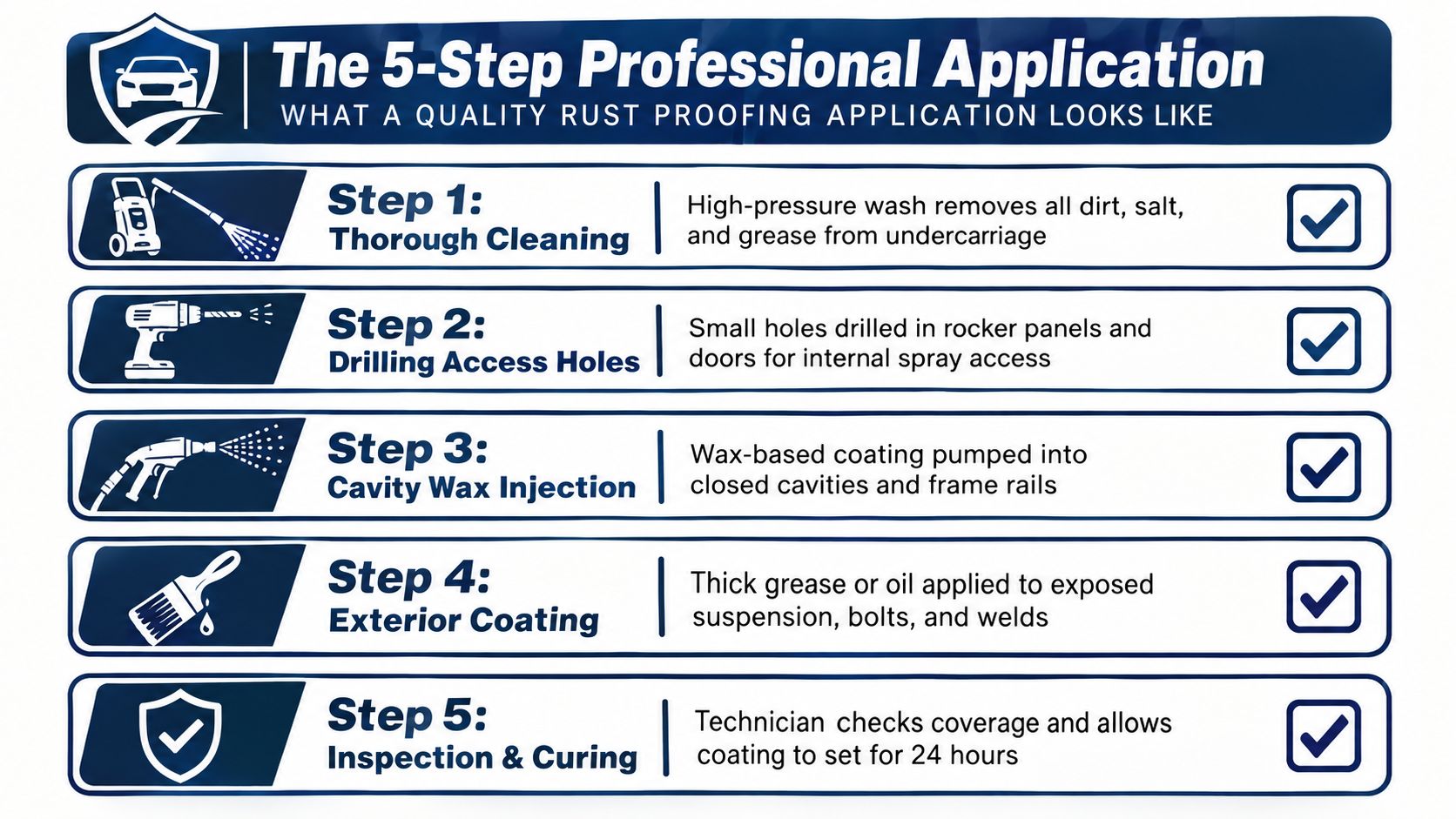
A proper application starts before the spray gun comes out. The technician should wash away salt, mud, grease, and loose road film, then inspect the undercarriage for existing corrosion, damaged lines, missing shields, and areas that need repair rather than coating.
Plastic belly pans should come off when they block meaningful access. Sealed cavities may need carefully placed access holes, followed by correctly fitted rubber grommets. A technician who refuses to discuss access points is selling a surface treatment, not a complete inspection.
The coverage check
Look for treatment on rocker cavities, wheel wells, door bottoms, trunk-lid inner structures, exposed welds, suspension brackets, and fasteners. Electrical connectors, sensors, rubber components, and brake friction surfaces should be masked or protected from contamination.
You don't need to crawl under the vehicle with a flashlight before leaving, but you should ask the shop to explain what it covered and what it deliberately avoided.
Use this departure checklist:
- Preparation: Confirm the underbody was washed and inspected.
- Access: Ask whether belly pans were removed and cavities reached.
- Protection: Verify brake components, connectors, belts, and exhaust heat-sensitive areas were protected.
- Documentation: Request notes or photographs of pre-existing rust.
- Aftercare: Get the recommended reapplication interval and washing advice.
A few drips immediately after an oil treatment aren't automatically a failure. Persistent puddling, untreated pinch welds, a heavy coating over loose rust, or a technician who skips cleaning are serious warning signs. Application quality matters more than the label on the drum.
Common Rust Proofing Myths That Cost You Money
Myth one, a new vehicle doesn't need rust protection. Factory corrosion protection helps, but it doesn't make every seam, fastener, stone chip, or cavity immune to Ontario brine. The Transportation Association of Canada corrosion paper shows why repeated chloride exposure remains a relevant concern even in a modern vehicle fleet.
Myth two, electronic modules provide the same protection as a physical treatment. They don't coat brake lines, reach a boxed rocker panel, or displace moisture from a seam. If a salesperson can't explain what metal the device physically protects and how you can inspect that protection, keep your wallet closed.
Myth three, dripless is always better. A cleaner driveway is convenient, but dripless doesn't automatically mean better penetration. Traditional oil can creep into seams and micro-gaps, while a thicker cured barrier can fail if applied over damp or active corrosion.
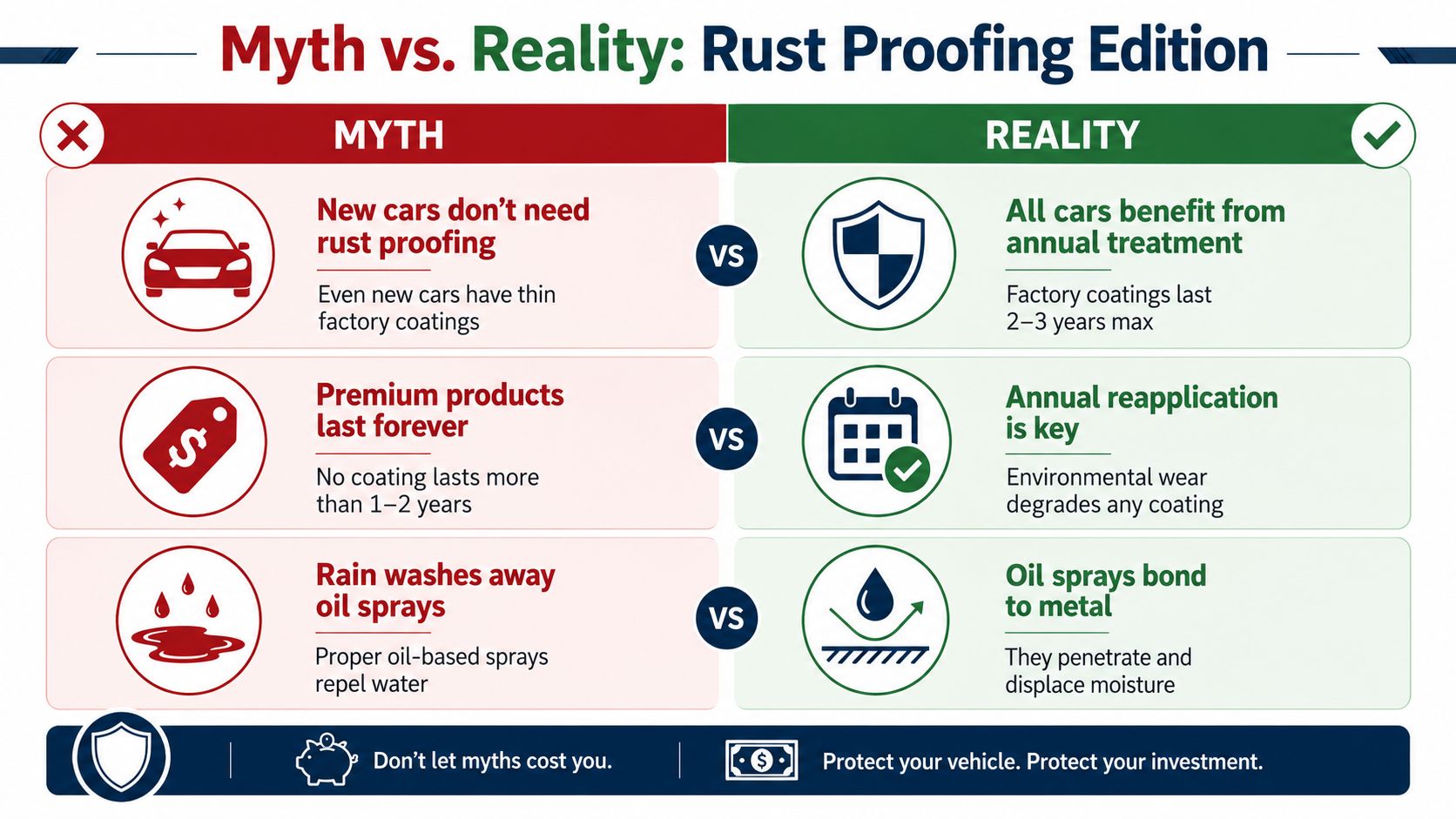
Myth four, one lifetime application ends the maintenance. No coating remains untouched by salt, water, gravel, heat, and mechanical work forever. ISO 11997-3:2022 specifies cyclic corrosion testing for automobiles, using temperature and humidity changes alongside salt spray to better represent corrosion patterns on steel, galvanised steel, and aluminium (ISO cyclic corrosion testing standard). That testing logic matches what I see in the bay: protection needs inspection and renewal.
Building a Long-Term Rust Prevention Strategy
Annual treatment works best when it's paired with regular undercarriage washing. Salt residue can remain in seams and boxed sections after the roads look clean, so a single spring wash doesn't undo a winter of exposure.
Book the main application in late fall, before the first sustained snowfall. During the salt season, use an underbody rinse regularly, especially after slushy highway trips. In spring, flush the undercarriage thoroughly and inspect rocker seams, brake lines, subframes, and fasteners before small problems become expensive ones.
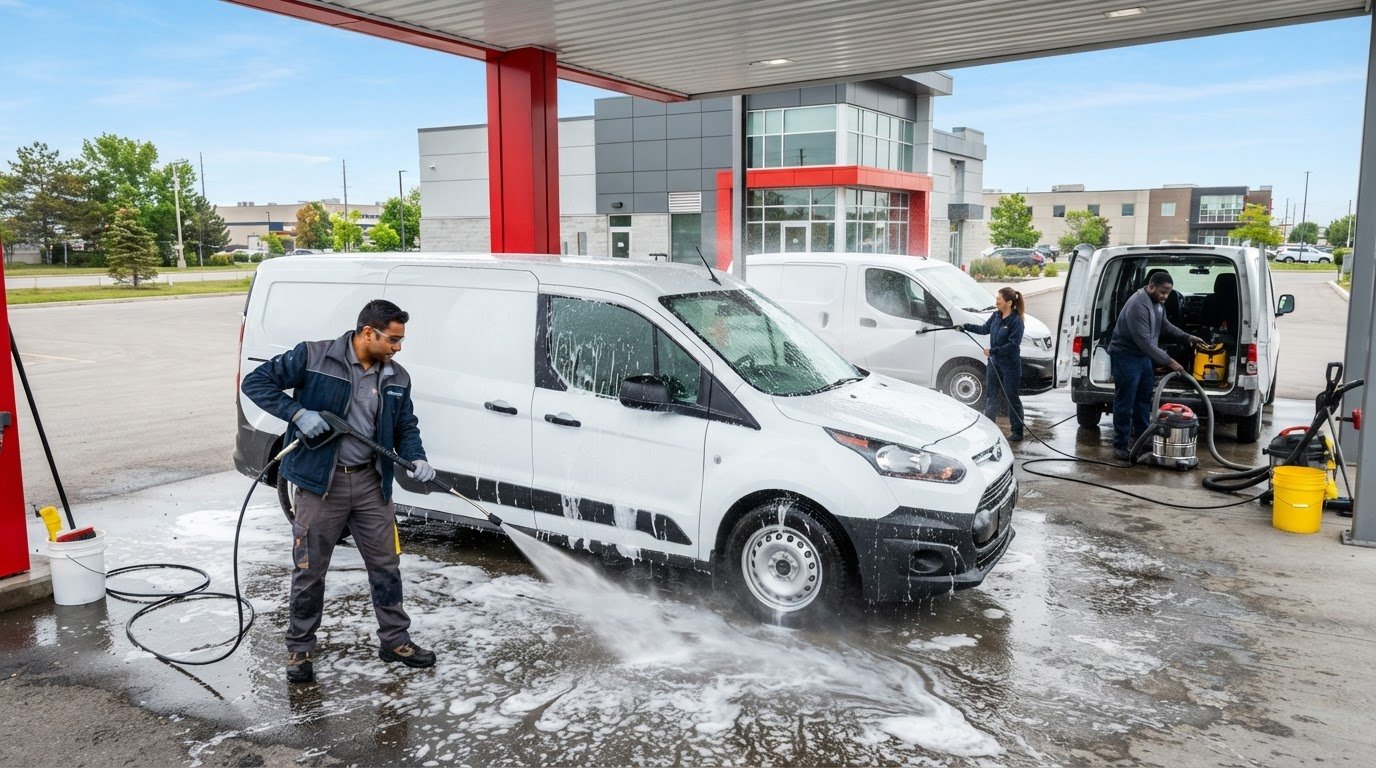
For work vehicles, washing discipline matters even more than product loyalty. A plumber or contractor who uses a van every day should treat underbody cleaning as part of fleet care, alongside the practical checks described in this guide to maintaining work trucks for plumbers.
My recommendation is simple: choose the method based on vehicle condition and usage, apply it before winter, and keep salt from sitting underneath for weeks. Nanak Car Wash offers underbody washing and rust-proofing applications with pricing based on vehicle size, which gives GTA owners an option to combine routine cleaning with corrosion protection at one service provider.
A rust-proofing review can help you shortlist a shop. It can't inspect your frame rails for you. The best strategy is the one you'll repeat, inspect, and support with regular undercarriage washing.
Book an undercarriage wash and rust-proofing inspection at Nanak Car Wash before the next salt season builds up. Ask the team to assess your vehicle's age, existing corrosion, and winter driving pattern, then choose a treatment plan that protects the metal you rely on.

 6600 Finch Ave W, Etobicoke, ON M9V 3Z6
 647-703-8515
 MON – SUN 8 AM to 7 PM