
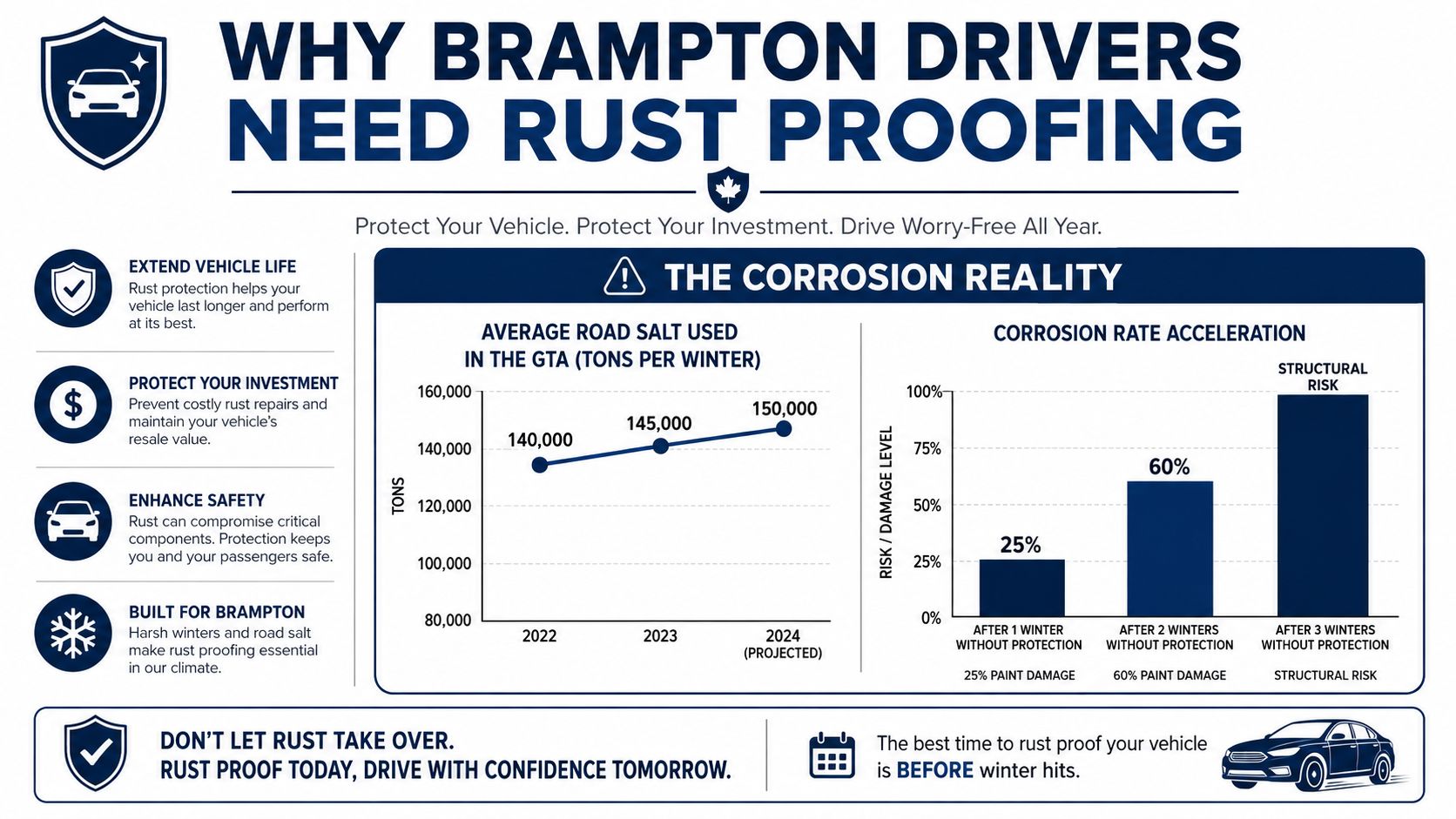
Toronto typically uses 130,000 to 150,000 tonnes of road salt every winter, and salting starts before ice fully bonds to major roads and local streets, according to the City of Toronto's winter road operations information. Brampton drivers share that same GTA winter environment, so salt isn't an occasional nuisance. It's a recurring chemical attack on the underside of every car, SUV, truck, and EV travelling through slush.
That's why car rust proofing in Brampton is best treated as damage prevention, not a cosmetic add-on. The timing still matters, especially if you missed fall service, bought a newer vehicle, or drive daily for work. A spring or mid-winter application can remain useful, provided the vehicle is properly cleaned and inspected first.
Table of Contents
- Why Brampton Drivers Need Rust Proofing
- The Rust Proofing Process Explained
- Rust Proofing Costs and Value Comparison
- Timing Your Rust Proofing Application
- Rust Proofing for Newer Vehicles and EVs
- Nanak Car Wash Rust Proofing Services
Why Brampton Drivers Need Rust Proofing
Brampton vehicles face repeated exposure to road salt, moisture, slush, and freeze-thaw cycles across southern Ontario. The amount applied to any street varies with weather and municipal operations, but the corrosion risk follows the same pattern. Salt keeps moisture active against exposed steel and increases its ability to conduct corrosion.
That makes car rust proofing in Brampton a maintenance decision, not a cosmetic upgrade. If fall service was missed, a spring application can still help after the vehicle is washed, dried, and inspected. Waiting until visible rust spreads usually raises the repair risk, while applying protection to a newer vehicle requires weighing its condition, expected ownership period, and winter mileage.
Rust-proofing compounds form a water-displacing film or protective barrier over vulnerable metal. Penetrating oil products can move into seams, folds, welds, and cavities that a thick surface coating may not reach. They do not repair weakened metal, but they can reduce contact between steel, oxygen, salty residue, and trapped moisture.
Where corrosion starts first
The underside receives the hardest spray, but salt reaches several less visible areas:
- Brake lines, where corrosion can affect a safety-critical hydraulic component.
- Subframes and frame rails, which carry structural loads and collect wet dirt.
- Wheel wells and suspension areas, where road debris chips protective finishes.
- Rocker panels, door bottoms, and seams, where moisture can remain trapped.
- Fasteners and brackets, which may become difficult to remove during later repairs.
Freeze-thaw cycles push water into small gaps and pull it back out repeatedly. Spring warmth can then increase corrosion activity while winter salt remains trapped in seams and underbody grime. The CAA North & East Ontario guidance on stopping rust creep explains why corrosion can continue after temperatures rise above freezing.
Practical rule: If salt has reached the underside, wash the vehicle even when the paint still looks perfect.
Early signs include orange staining, rough fasteners, and bubbling paint. Repeated winters can turn those cosmetic warnings into component or structural problems. For newer vehicles and EVs, inspect first and compare the application cost with the vehicle's age, condition, warranty requirements, and planned time of ownership. Protection works best before serious deterioration begins.
The Rust Proofing Process Explained
A proper service is more than spraying a dark liquid underneath and sending the car home. The quality of the preparation, access to hidden cavities, product selection, and final inspection determine how much useful coverage you receive.
Preparation comes before product
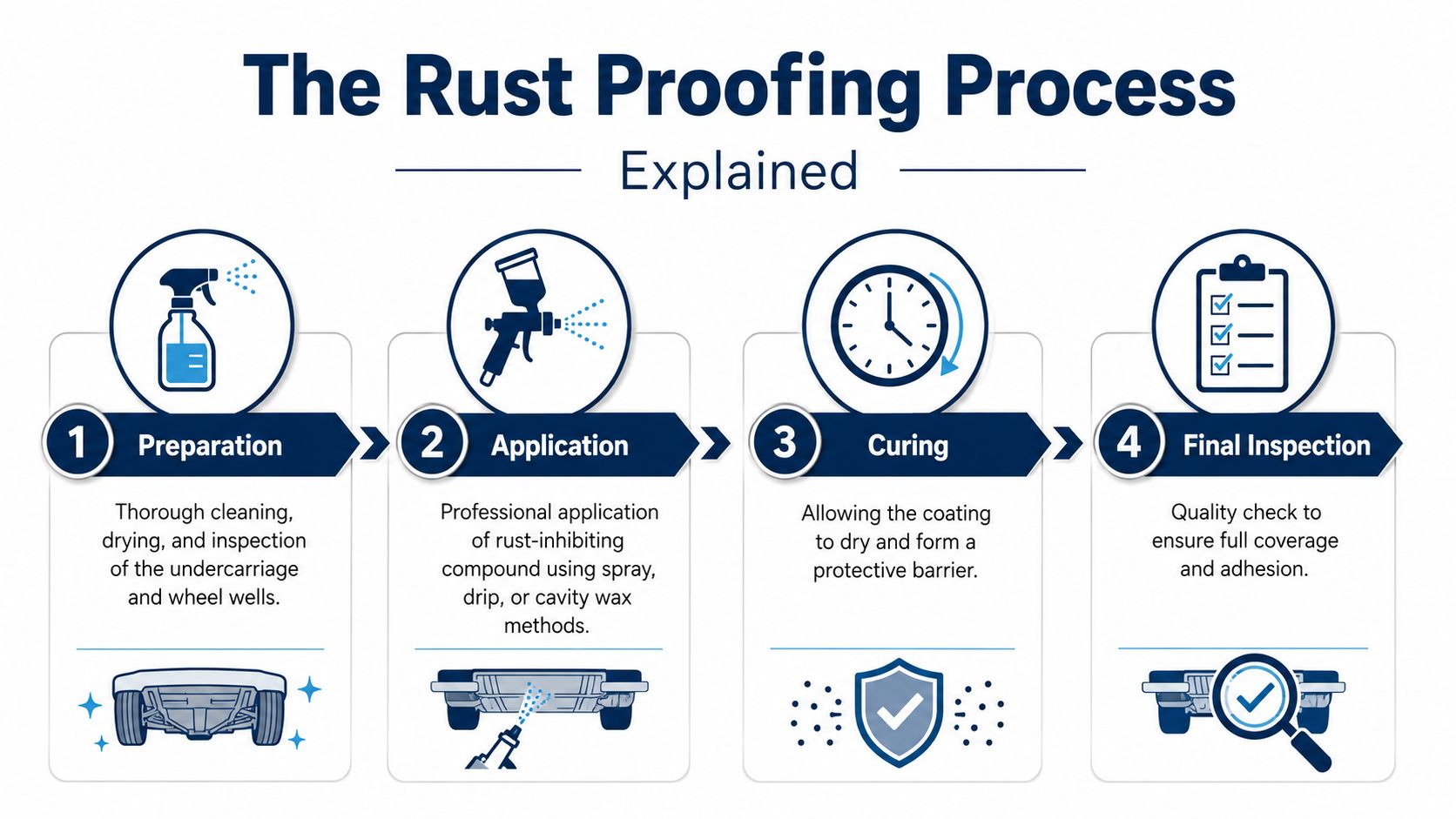
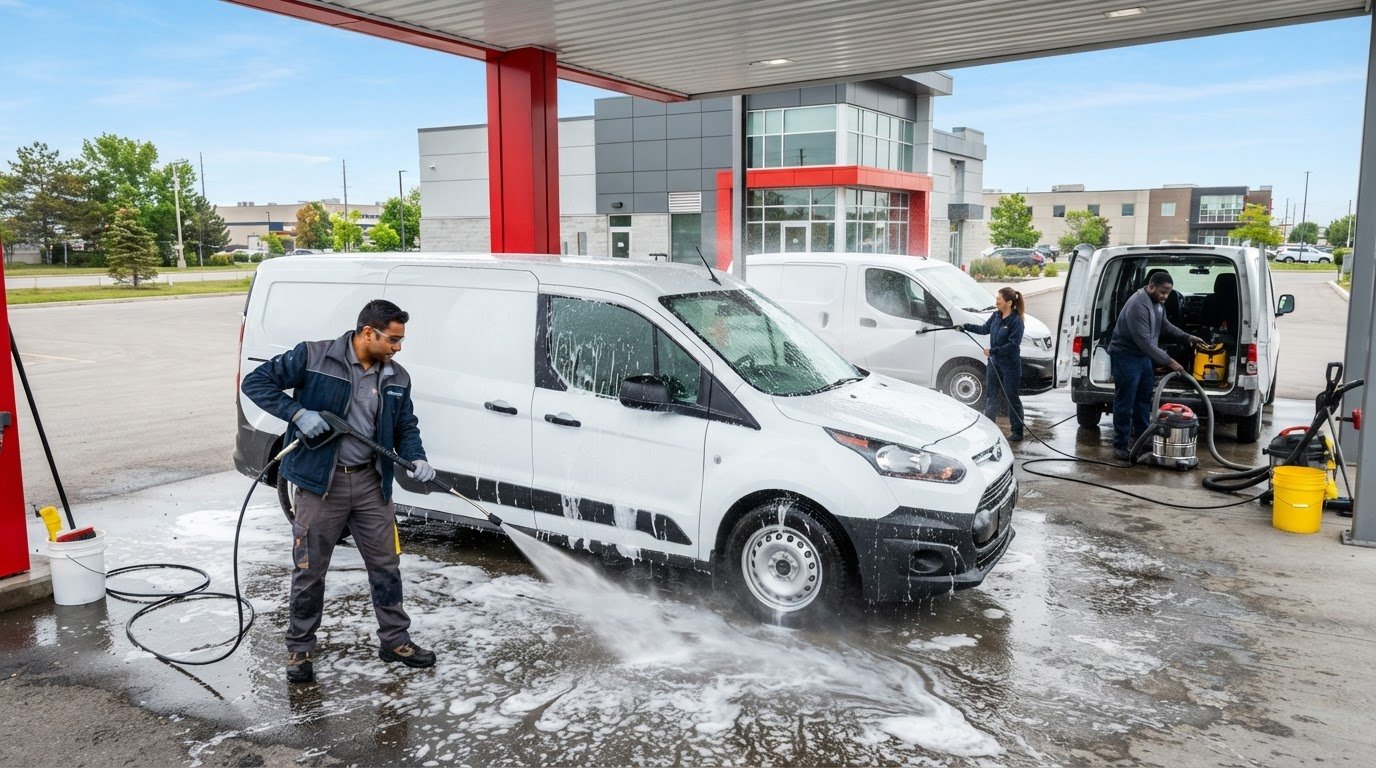
The technician begins by inspecting the undercarriage, wheel wells, frame areas, brake and fuel line routes, and visible corrosion. Salt, mud, and oily road film need to be removed because a compound applied over contamination may sit on grime instead of contacting the metal.
The vehicle is then rinsed and dried as thoroughly as the process allows. This step matters even when the product can displace some moisture. A cleaner surface gives the inhibitor a better chance to flow into seams and form a continuous barrier.
Application is targeted, not random
Professional systems commonly use spray wands, drip-style application, no-drip formulas, or cavity-wax equipment. Oil-based inhibitors are valued for their ability to creep into seams and displace moisture. Wax-based products can provide a more fixed film in suitable areas, while electronic modules use a different theory and don't physically coat the metal.
Technicians should avoid exhaust components, brake friction surfaces, belts, sensors, and other areas that shouldn't receive overspray. The important targets include frame rails, inner panels, door cavities, rocker sections, wheel arches, and exposed underbody metal.
What happens after spraying
The compound needs time to settle, flow, and dry. Oil-based products may remain tacky and can drip briefly from access points or low edges. That isn't automatically a defect, but the shop should explain where dripping may occur and when you can safely wash the vehicle.
Ask these questions before authorising the work:
- What product are you applying, oil-based, wax-based, or another system?
- Which cavities and underbody areas are included?
- How will existing surface rust be handled?
- Which components will be masked or left untreated?
- What are the washing and driving instructions afterward?
A transparent answer tells you what you're paying for. A vague promise of “full protection” without an inspection or coverage explanation deserves caution.
Rust Proofing Costs and Value Comparison
The published vehicle-size pricing for Nanak Car Wash places rust proofing at approximately $119.95 to $149.95 plus tax, with the final amount depending on vehicle size. That range gives Brampton drivers a useful starting point, but a fair comparison must include coverage, preparation, access to cavities, and aftercare, not just the number on the invoice.
| Vehicle Type | Rust Proofing Cost | Potential Repair Costs Without Protection |
|---|---|---|
| Compact car | Approximately $119.95 plus tax, depending on service pricing | Can include brake-line, underbody, fastener, or body-panel repairs |
| Sedan | Approximately $119.95 to $149.95 plus tax, depending on size | Can include corrosion-related mechanical and body repairs |
| SUV | Approximately $149.95 plus tax, depending on size | Larger underbody areas may require more extensive inspection and repair |
| Truck | Approximately $149.95 plus tax, depending on size | Frame, suspension, line, and body corrosion can be difficult to access |
| Van | Approximately $149.95 plus tax, depending on size | Broad underbody and sliding-door areas can collect salt and moisture |
These potential repair categories don't have a universal price because severity, vehicle design, labour access, and replacement requirements vary. A corroded brake line is a different financial problem from bubbling paint, while a compromised subframe is more consequential than a rusty bracket.
Professional service versus DIY
DIY aerosol cans can help with small, accessible touch-ups. They usually provide less consistent coverage inside frame rails, rocker panels, doors, and other enclosed cavities. Professional equipment can use lift access, longer wands, cavity probes, and controlled application, which reduces the chance of missing the areas where corrosion begins.
A hard rubberised coating may look neat, but it can crack or separate and trap moisture if applied over dirty or already corroded metal. A penetrating oil treatment is less visually tidy, yet often more appropriate for an older vehicle with early surface corrosion. Electronic systems don't create the same physical barrier, so they shouldn't be treated as a substitute without understanding their limitations.
A practical break-even test
Ask three questions:
- How long will you keep the vehicle? Long-term ownership gives preventive maintenance more time to deliver value.
- How much winter mileage does it see? Daily commuters, delivery vehicles, and rideshare cars face more repeated exposure than occasional-use vehicles.
- What condition is the underside in now? A clean chassis benefits from prevention, while active corrosion requires inspection and realistic expectations.
For a short-term lease, rust proofing may make less financial sense unless the service helps you avoid condition charges or supports the vehicle's required care. For a vehicle you plan to keep, preventing deterioration in structural and safety-related areas can be more compelling than waiting for a repair bill.
Timing Your Rust Proofing Application
Missing the fall appointment does not mean the vehicle must wait until next autumn. Salt residue remains after roads appear dry, and spring rain and moisture can keep that residue active. Corrosion can continue after temperatures rise above freezing, so timing still matters after winter has started.
If you missed fall
A mid-winter application can help, provided the underside is cleaned and dried first. Spraying over brine-soaked dirt can seal contamination against the metal instead of protecting it. Ask the technician to inspect the vehicle before choosing a product.
For a daily Brampton commuter, use this sequence:
- Book an undercarriage wash and inspection.
- Ask the technician to identify active rust, damaged coatings, and exposed metal.
- Apply a suitable inhibitor to clean, dry areas.
- Follow the shop's instructions for washing after treatment.
Spring service is a practical recovery point when fall protection was missed or the vehicle has carried salty residue through winter. It will not reverse existing rust, but cleaning and treating exposed areas can slow further corrosion through warmer, wetter months. The later application may offer less winter coverage than fall treatment, yet it is still more useful than leaving salt and moisture in place.
Washes are the interim defence
Undercarriage rinses do not replace rust proofing. They remove salt and mud, reducing how long corrosive residue stays against metal. Use them between treatments, especially after heavy slush exposure or extended highway driving.
A clean exterior says little about the chassis. Salt can remain in frame pockets and behind liners while the bonnet and doors look spotless. Delivery drivers, rideshare operators, and frequent commuters face repeated exposure, making regular underbody cleaning more valuable than it is for occasional drivers.
For newer vehicles, compare the treatment cost with your expected ownership period and winter mileage. A vehicle kept for years has more time to benefit from prevention. A short-term lease may offer less financial value unless the service supports required care or helps avoid condition charges.
Spring service is a practical recovery point for a vehicle that has already been exposed.
Rust Proofing for Newer Vehicles and EVs
A newer vehicle has better factory protection than an older neglected one, but age doesn't make exposed metal immune to salt. Brake lines, brackets, suspension hardware, subframes, seams, and fasteners still operate close to wet road spray. Ontario corrosion guidance treats road salt as necessary for winter safety but corrosive to vehicles, which is why Ontario's salt-sensitive-area best practices remain relevant to vehicle owners as well as municipalities.
The decision for a new car should be based on exposure and ownership horizon, not the odometer alone. A lightly used vehicle parked indoors faces a different risk from an SUV driven daily across Brampton, or a delivery car that spends most of winter on treated roads.
EV-specific judgement
EV owners should ask the shop to identify the battery enclosure, high-voltage cables, cooling lines, sensors, and manufacturer-designated exclusion zones before application. Rust proofing must never be sprayed blindly around electrical connectors or the battery pack. A careful technician will use the vehicle's service information and mask areas that must remain free of product.
Rust proofing shouldn't automatically be assumed to void a warranty, but warranty terms vary. Check the owner's manual and ask the manufacturer or dealer about approved treatments, especially if application involves access holes, fasteners, or areas near the battery enclosure.
When the value becomes meaningful
For a newer vehicle, the value calculation has three parts:
- Exposure: frequent salt and slush contact increases the reason to protect early.
- Time: longer ownership gives preventive care more opportunity to avoid deterioration.
- Exit plan: a clean, documented maintenance history can make condition easier to explain at resale or trade-in.
A leased EV may not justify every optional service if the lease term is short and the contract has no relevant condition concern. A high-mileage work vehicle is different. Downtime, inspection problems, seized hardware, and corrosion-related component replacement can cost more than the inconvenience of scheduled prevention, even when the original vehicle is relatively new.
The Rust Check FAQ makes the essential distinction clear: rust proofing can't reverse existing rust, but it can slow continuing corrosion. That limitation applies to new vehicles too. Prevention works best before salt exposure becomes a visible defect.
Nanak Car Wash Rust Proofing Services
For drivers who want to combine cleaning and corrosion protection, Nanak Car Wash lists dedicated rust proofing using a chemical compound applied to the vehicle's underbody and frame. Its published pricing is approximately $119.95 to $149.95 plus tax, with vehicle size determining the tier. Confirm the current price and preparation requirements when booking, since service details can change.
The practical advantage is consolidation. A Brampton driver can pair rust proofing with an underbody rinse, exterior wash, or detailing appointment instead of arranging separate visits. The wider service lineup includes express exterior washes, full-service cleaning, and detailing for salt, stains, carpets, seats, vents, and other interior surfaces.
How the membership fits
Nanak's Unlimited Wash Club is positioned for drivers who need frequent cleaning, with monthly passes, discounted interior cleaning for members, and first-month-free promotions displayed on its site. The publisher also states that memberships have no activation or cancellation fees and no long-term contracts. Check the current terms before joining, particularly if you drive a fleet, delivery vehicle, or rideshare car and expect regular underbody cleaning.
The company has operated in the region since 2004, according to the publisher's supplied business information, and lists locations in Brampton, Etobicoke, Concord, Oshawa, Sheppard and North York, Burlington, Cambridge, and Guelph. That regional spread can be useful for drivers who work across the GTA, although rust proofing availability and appointment requirements should be confirmed at the selected location.
Before visiting, ask whether the service includes an undercarriage wash, drying, inspection, cavity access, and post-treatment instructions. You should also disclose existing rust, aftermarket undercoating, EV ownership, and any areas the manufacturer has identified as sensitive. That conversation helps you compare a complete professional application with a quick surface spray.
If your Brampton vehicle has already faced a season of salt, Nanak Car Wash offers a practical combination of rust proofing and ongoing wash services, with size-based rust proofing pricing and monthly wash options available. Visit Nanak Car Wash to check the nearest location, confirm current service details, and schedule protection before the next round of GTA road salt.

 6600 Finch Ave W, Etobicoke, ON M9V 3Z6
 647-703-8515
 MON – SUN 8 AM to 7 PM