
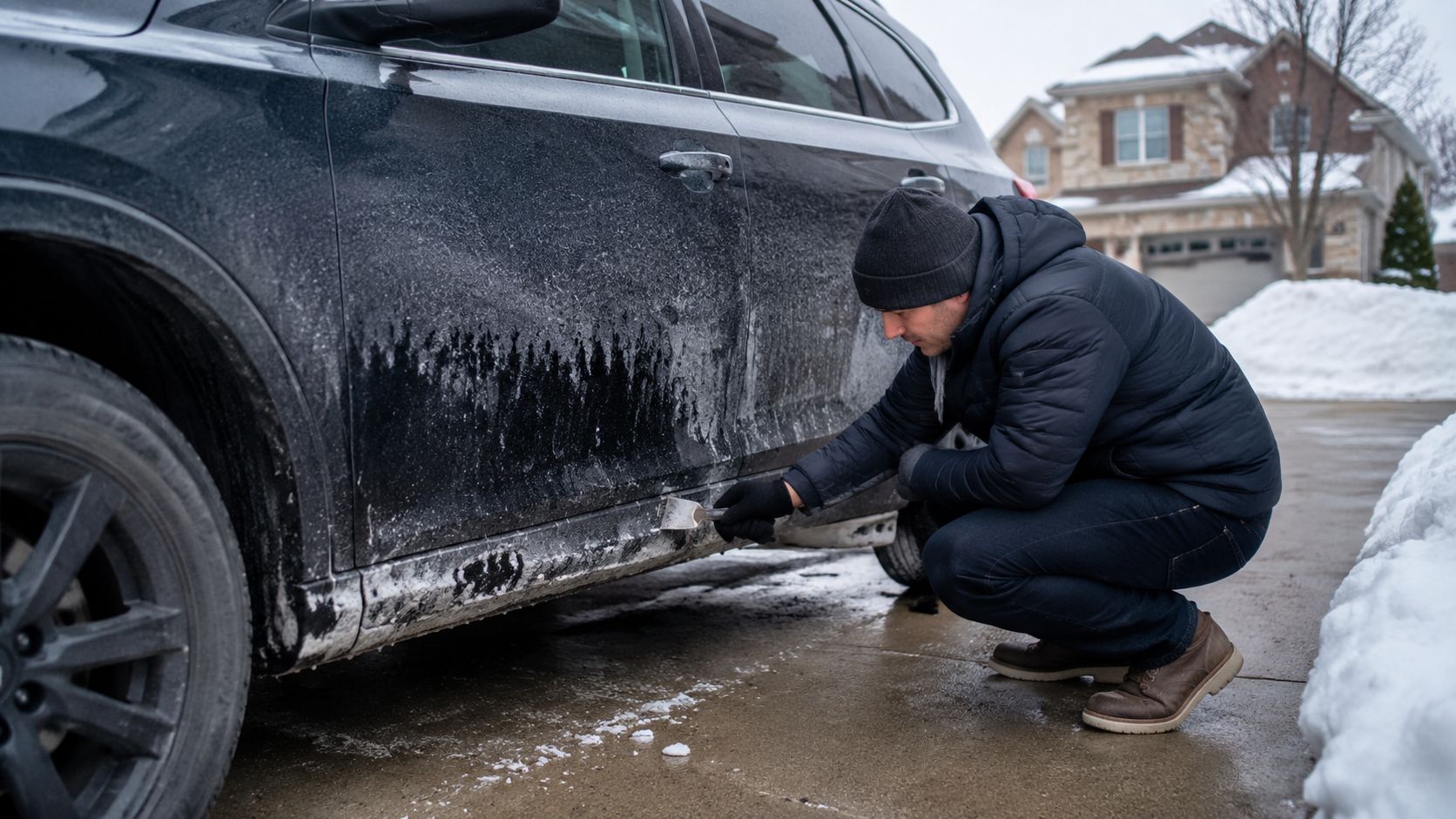
You scrape the salt crust from your rocker panels in a Mississauga driveway, rinse the wheels, and notice the paint no longer looks quite right. The hood has dull patches, the lower doors feel rough, and tiny chips around the front bumper are collecting dark grime. By late February, your car doesn't look neglected. It looks like it has spent months fighting Ontario roads.
That's the paint protection car question for GTA drivers. You're not choosing between shine and no shine. You're choosing how to manage salt, moisture, stone chips, washing, and the cost of repairing neglected paint later. Wax and sealant can work well when you maintain them. Ceramic coatings reduce routine effort. PPF protects against impacts better than any liquid product.
The mistake is buying the most expensive option automatically. A twelve-year-old commuter may need disciplined washing and rust prevention, not a full film wrap. A new vehicle driven daily on the 401 may justify targeted PPF. The right answer depends on where your car lives, how often it sees salted roads, and whether you'll maintain the protection.
Table of Contents
- Why GTA Drivers Need to Think About Paint Protection
- The Four Main Paint Protection Options Explained
- Comparing Wax, Sealant, Ceramic and PPF Side by Side
- Ontario Winter Reality and What It Does to Your Paint
- Maintenance Habits That Make Any Protection Last Longer
- Where Nanak Car Wash Services Fit Into the Picture
- Choosing the Right Level of Protection for Your Vehicle
Why GTA Drivers Need to Think About Paint Protection
A GTA winter attacks a vehicle from several directions at once. Road salt and brines containing sodium chloride and calcium chloride reach the hood, wheel wells, rocker panels, door edges, and underbody seams. Those wet deposits sit in places drivers rarely inspect, then become active again whenever temperatures rise and fall.
Ontario-focused automotive guidance notes that exposed metal can begin forming corrosion within 48 to 72 hours of contact with road salt, depending on temperature and moisture. Hawkeye's explanation of Ontario road salt damage connects that exposure to vulnerable areas such as brake lines, exhaust systems, subframes, body panels, and other metal components. The visible paint defect may be minor while hidden corrosion has already moved further along.
The daily commute changes the calculation
A car that travels through Scarborough, Brampton, Vaughan, or Mississauga every day collects fresh contamination repeatedly. The lower paint takes splash-back from traffic, while the front end receives grit and small stones. Freeze-thaw cycles keep the residue mobile, allowing moisture and chloride to reach chips, seams, and exposed edges.
That's why paint protection in Southern Ontario should begin with salt removal, not a glossy product. Ontario rust-prevention guidance recommends winter washing as often as every 10 days, and more frequently after snow or ice storms. The exact schedule depends on parking conditions and driving, but the principle is simple: don't let wet salt sit undisturbed.
Shop-floor advice: Protection only works if you maintain the surface underneath it. A premium coating on a car that never gets rinsed is a poor investment.
Your main choice is practical. You can spend less up front on regular washes, wax, and sealant upgrades, or spend more initially on ceramic coating or PPF and still keep washing. No product makes a car bulletproof, and no coating replaces an underbody rinse.
The Four Main Paint Protection Options Explained
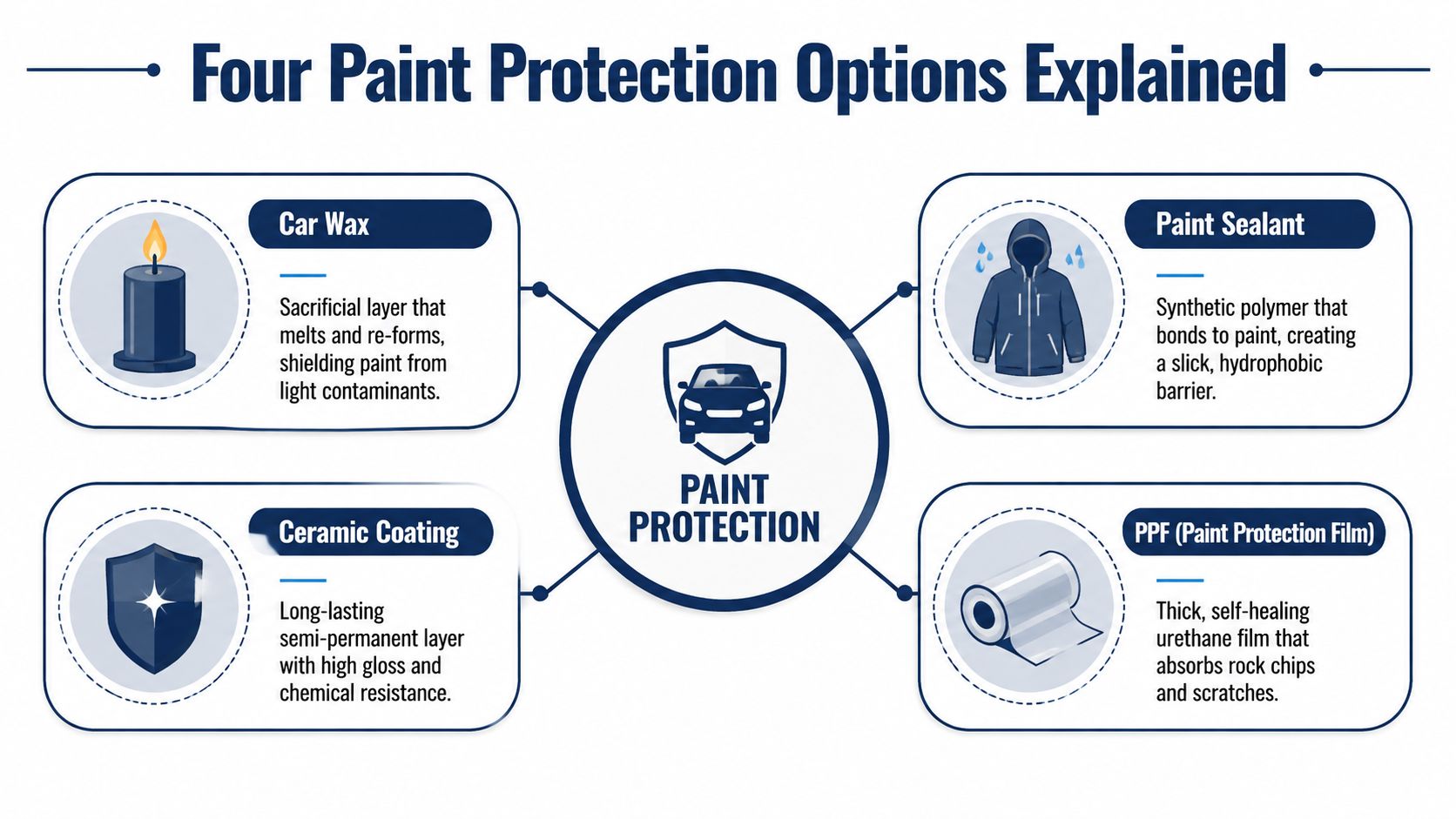
Paint protection comes in layers, and each layer solves a different problem. Wax and sealant help shield the surface from contamination. Ceramic improves chemical resistance and cleaning behaviour. PPF adds physical material between the paint and road debris.
Wax is the maintenance layer
Car wax is like a thin sacrificial candle-wax coat. You apply it by hand or with a machine after cleaning and preparing the paint, then buff away the residue. It adds gloss, improves water behaviour, and gives light protection from contaminants, but it wears down quickly under repeated winter washing.
In GTA conditions, expect roughly 1 to 3 months from a wax application. That lifespan varies with product, preparation, washing method, and exposure. Nanak's wax upgrade belongs in this category, and it makes sense for owners who prefer frequent visits rather than a large up-front installation.
Wax won't stop stone chips, deep scratches, or corrosion inside damaged metal. It also won't rescue paint that already has oxidation or embedded contamination without proper correction first.
Sealant is the synthetic rain jacket
A paint sealant uses synthetic polymers to create a slicker, more durable barrier than traditional wax. It may be applied by hand, although machine application can help spread product evenly after the paint has been cleaned and polished. In real GTA winter use, a reasonable working expectation is 4 to 8 months.
Sealant is the sensible middle ground. It costs more than a basic wax treatment, but it can reduce how often you need to renew surface protection. It still offers no meaningful defence against a stone striking the paint, and harsh washing can shorten its service life.
Ceramic is a bonded surface shell
A ceramic coating is a professionally prepared, semi-permanent layer that bonds to the clear coat. Think of it as a clear glass-like shell, although it isn't a literal sheet of glass. The coating can improve gloss, water behaviour, and resistance to chemical contamination, but installation quality depends heavily on decontamination, polishing, panel preparation, and controlled curing.
A properly installed ceramic coating can last approximately 2 to 5 years in GTA conditions when maintained. It doesn't prevent rock chips. It also doesn't eliminate washing, and it can still be damaged by careless contact or neglected contamination.
PPF is the impact shield
Paint protection film is an invisible urethane layer, similar to a screen protector on a phone. It absorbs impacts from gravel and road debris, which makes it the strongest option for physical protection on high-impact panels. Modern films may also offer self-healing behaviour for minor surface marks when exposed to heat.
Professional installation is the standard because the film must be cut, positioned, stretched, and sealed around complex panels. A realistic GTA lifespan is approximately 7 to 10 years, depending on film quality, installation, exposure, and care. PPF can protect a hood, bumper, mirrors, fenders, or selected rocker areas. Full-body coverage isn't automatically sensible.
Comparing Wax, Sealant, Ceramic and PPF Side by Side
The product price matters, but cost per year of useful protection matters more. A coating may look expensive beside a wax appointment, yet the calculation changes if the coating remains effective for several years. PPF costs more because it provides a physical barrier that wax, sealant, and ceramic can't replicate.
The table below uses practical Canadian market ranges rather than a promise from any specific installer. Quotes vary with vehicle size, paint condition, coverage, preparation, film or coating brand, and labour.
Paint Protection Options Compared for GTA Drivers
| Option | Protection Level | Lifespan (GTA) | Cost Range (CAD) | Application | Best For |
|---|---|---|---|---|---|
| Car wax | Light surface protection and gloss | 1 to 3 months | Varies by service and vehicle | Hand or machine application | Budget-conscious drivers who maintain their cars regularly |
| Paint sealant | Moderate chemical and contamination protection | 4 to 8 months | Varies by service and vehicle | Hand or machine application | Owners wanting a stronger maintenance upgrade |
| Ceramic coating | Long-lasting surface barrier, gloss, and easier cleaning | 2 to 5 years | Varies widely by preparation and installer | Professional preparation and installation | Newer vehicles and long-term owners who want lower-maintenance shine |
| PPF | Strongest protection against stone chips and physical impact | 7 to 10 years | Varies by coverage and film | Professional installation | New, valuable, or highway-driven vehicles |
Wax is the budget daily-driver choice. It's reasonable for an older vehicle, especially when you combine it with consistent winter washing and rust-focused care. Don't buy wax expecting it to stop a rock chip.
Sealant is the balanced upgrade. It suits a driver who wants more durability than wax without committing to a multi-year coating installation. It still needs safe washing and periodic renewal.
Ceramic is for the owner who values a glossy finish and less demanding cleaning. It isn't paint armour, and the car still needs proper washing to prevent salt and grit from becoming abrasive.
Value check: A ceramic installation that lasts several years can work out cheaper per year than renewing premium wax several times annually. That doesn't make ceramic the right choice for every car. It makes the ownership timeline important.
PPF is the physical-protection specialist. Put it on the panels that meet stones first, not automatically across an ageing commuter. Full coverage on a twelve-year-old vehicle is usually overkill unless the owner has a strong personal reason for it.
Ontario Winter Reality and What It Does to Your Paint
Ontario's road treatment makes corrosion prevention a local maintenance issue, not a generic detailing preference. Salt and brine collect in wheel wells, rocker panels, lower doors, brake-line areas, and underbody seams. Those hidden zones often receive less attention than the hood and roof, even though they can hold wet contamination longer.
The corrosion evidence is serious. A Canadian research note from NSERC states that about 50% of vehicle corrosion can be attributed to road salts. The Ontario-focused corrosion discussion explains why salt-laden slush acts differently from ordinary dirt. It forms an electrolyte layer that increases conductivity across chips, seams, and breaks in the clear coat.
A Transportation Research Board study recorded Toronto at 5,108 mg/dm² of atmospheric corrosion over 19 months, placing it among the highest-corrosion locations in that study. The original Transportation Research Board document provides the Ontario-specific context that generic paint-protection marketing usually skips.
Matching the hazard to the product
| Hazard | Carnauba Wax | Synthetic Sealant | Ceramic Coating | PPF |
|---|---|---|---|---|
| Salt residue on paint | Helps temporarily, requires renewal | Better surface durability | Stronger barrier, still needs washing | Protects the covered paint beneath the film |
| Wet contamination in seams | Doesn't address hidden areas | Doesn't address hidden areas | Doesn't address hidden areas | Doesn't replace underbody cleaning |
| Stone chips | Little protection | Little protection | Little protection | Designed for physical impact protection |
| Road grime and easier rinsing | Some improvement | Noticeable slickness | Strong water and cleaning behaviour | Depends on film surface and maintenance |
| Neglected winter washing | Wears quickly | Wears down | Can become contaminated and difficult to maintain | Film can still be stained or damaged |
A winter product should therefore be judged by the problem it solves. Wax and sealant manage surface contamination. Ceramic supports easier maintenance. PPF handles impact. Rust proofing and underbody rinsing address corrosion risk in areas paint products can't reach.
Maintenance Habits That Make Any Protection Last Longer
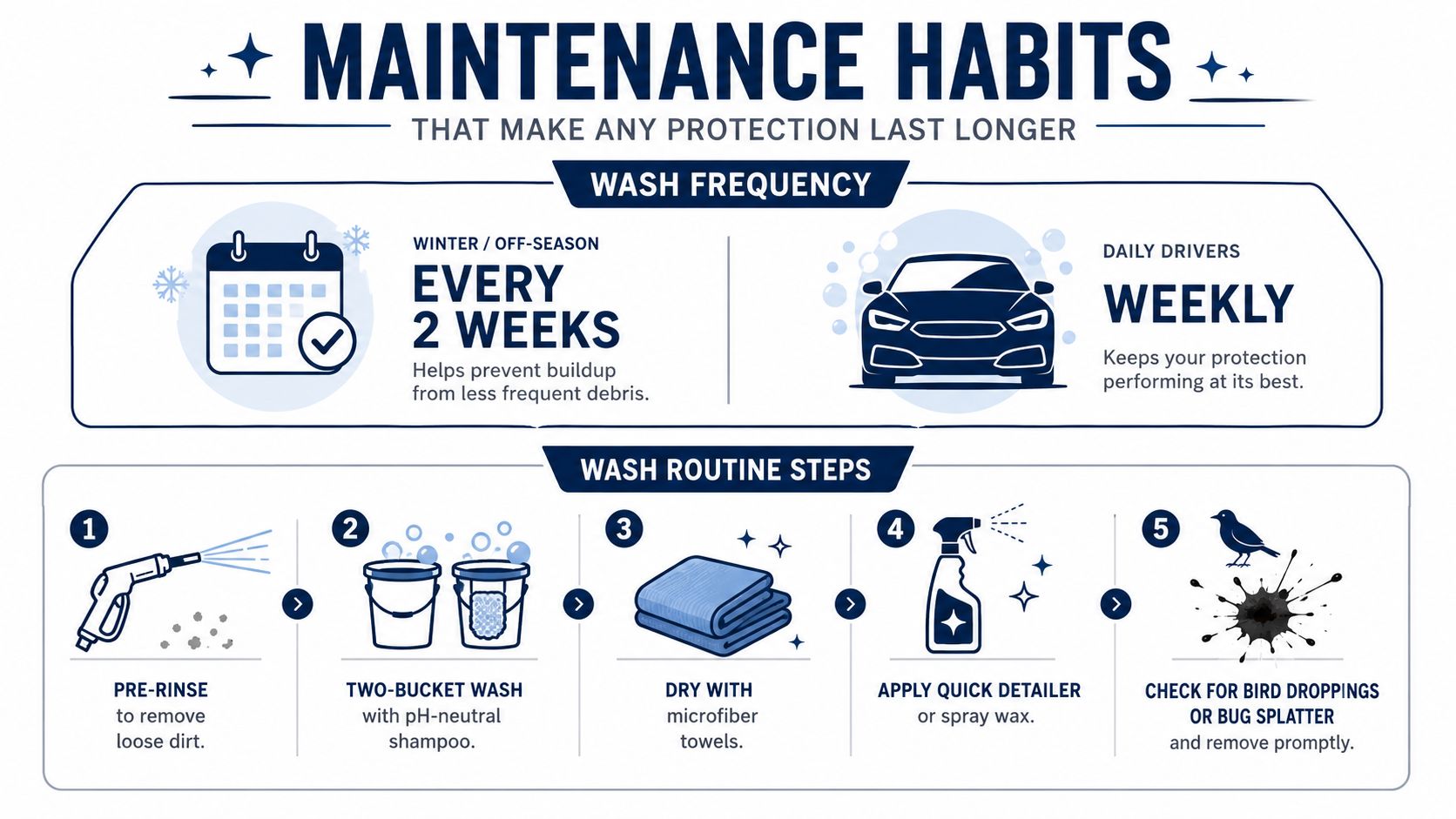
The most useful paint protection car routine is boring, repeatable, and effective. Wash at least every two weeks during salt season, and choose a weekly schedule if you drive daily and park outdoors. Canadian winter-driving guidance recommends regular de-salting and prioritising the underbody because rocker panels, brake-line areas, and lower door structures collect contamination first.
Use a wash method that respects the surface
A brush-heavy automated tunnel can introduce fine marks and strip wax faster than a careful hand wash. Ceramic and PPF aren't immune to poor technique either. Use a strong pre-rinse, a pH-neutral car shampoo, microfibre wash mitts, and separate buckets for clean solution and dirty rinse water.
Work from the roof downward. The upper panels usually carry less abrasive grit than the lower doors, wheel arches, and rocker panels. Rinse the mitt frequently, never scrub a dry salt crust, and use clean microfibre towels for drying rather than letting mineral-rich water evaporate on the finish.
Don't skip the underside
Ask for an underbody rinse during winter visits. Make it a priority after a major snow or ice storm, when brine and slush have had more opportunity to lodge behind trim and around seams. A visible clean hood doesn't tell you whether salt remains packed along the rocker edges or suspension areas.
A spray-on sealant topper between full protection treatments can help maintain water behaviour, but it isn't a substitute for removing salt. The order matters: rinse, wash, rinse again, dry, then apply a compatible topper if the surface is clean.
Inspect before a chip becomes a repair
Check the front bumper, hood leading edge, mirror caps, and rocker panels under good light. Small paint chips should be cleaned and addressed before moisture and chloride reach exposed metal. If you see bubbling, spreading rust, or damage around structural components, book a proper inspection rather than covering it with wax.
Simple rule: Washing removes the threat. Wax, sealant, ceramic, and PPF manage what remains.
Where Nanak Car Wash Services Fit Into the Picture
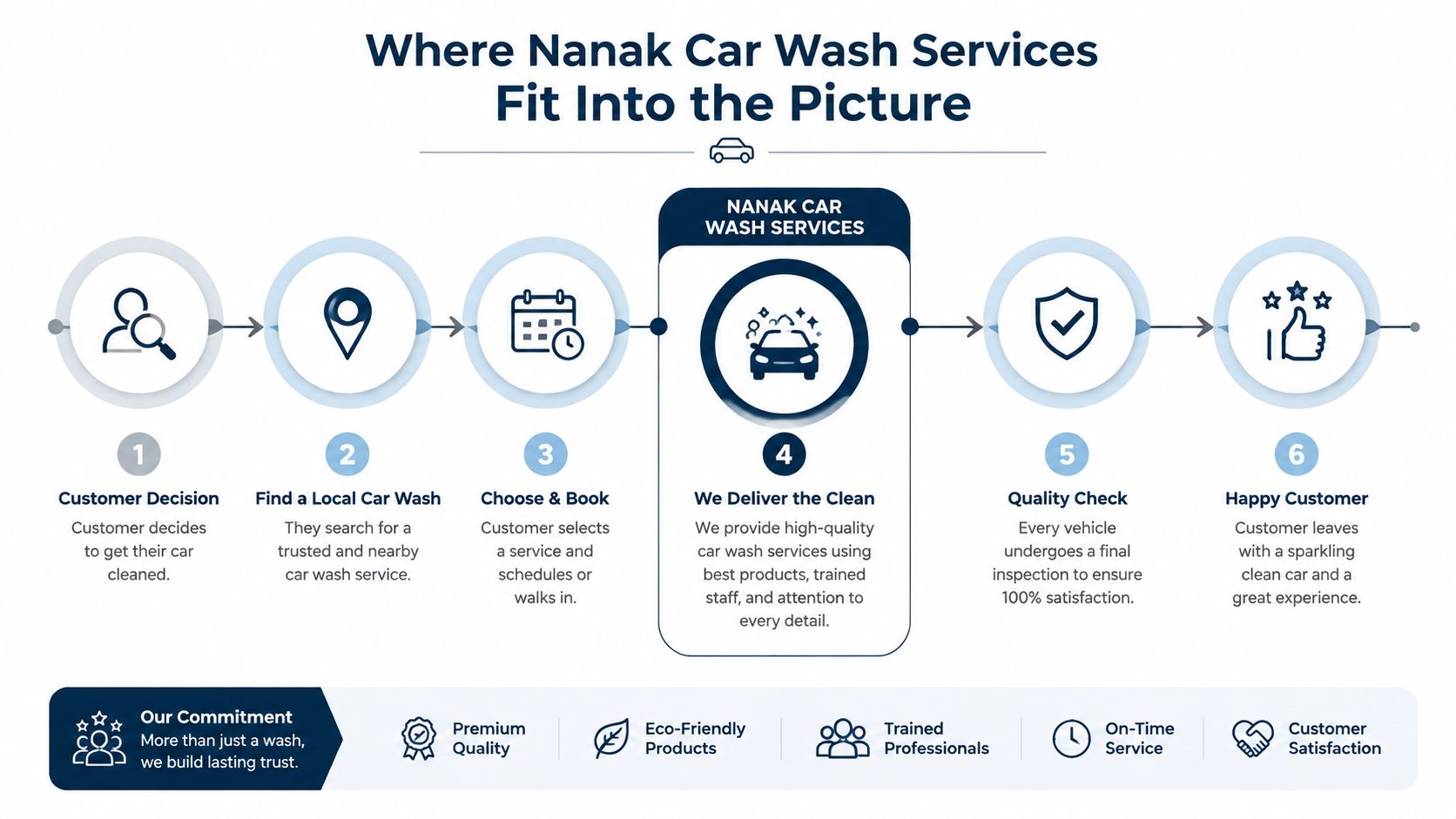
Nanak Car Wash fits the maintenance side of the decision, not every premium installation. Its express exterior washes provide a practical way to remove winter road film, and wash upgrades can add underbody cleaning and wax or sealer protection. That combination suits drivers who want to manage salt exposure without committing to a specialist coating or film appointment.
For a vehicle that needs more than routine washing, the polish and wax route makes sense when the goal is refreshed gloss and short-term surface protection. A hand-applied sealant is the better choice for an owner who wants longer protection between visits while keeping the service straightforward.
Know the boundary before you book
Nanak can handle maintenance-grade cleaning, decontamination, polishing, waxing, and rust-focused services. It doesn't install multi-year ceramic coatings or full PPF wraps, so customers seeking those products should speak with a dedicated installer about paint correction, film coverage, curing, warranty terms, and aftercare.
That separation is useful, not a weakness. A coating specialist should install a coating. A film specialist should install PPF. A wash and detailing provider should keep the vehicle clean, decontaminated, and ready for those services.
For operators building a detailing business around repeat maintenance, practical service packaging also matters. A focused local marketing plan can help service businesses attract profitable jobs rather than chasing every low-value request.
My practical recommendation is to pair a Nanak wax upgrade with annual professional decontamination and clay-bar treatment. If your car already has a ceramic coating or PPF installed by a specialist, use maintenance washes to remove salt safely and preserve the finish instead of asking a wash provider to duplicate specialist installation work.
Choosing the Right Level of Protection for Your Vehicle
Start with the vehicle, not the product brochure. A GTA driver with an older commuter, outdoor parking, and a tight maintenance budget gets more value from consistent washing, underbody rinsing, rust prevention, and periodic wax or sealant than from an expensive full-body film installation.
Three useful driver categories
The budget-conscious commuter should keep the routine simple. If the vehicle is more than five years old and already carries ordinary wear, spend on frequent salt removal and targeted correction rather than trying to make the entire car showroom-perfect. Wax is acceptable when you'll renew it, while sealant makes sense when you want fewer protection appointments.
The enthusiast or newer-car owner has a stronger case for specialist protection. Ceramic suits someone keeping the vehicle long-term and willing to follow maintenance instructions. PPF belongs on high-impact areas when highway driving, gravel exposure, or a flawless front end matters more than the lowest initial spend.
The leased or luxury owner should think about finish damage before the return or resale conversation. A specialist may recommend PPF on the full front or other vulnerable panels, combined with ceramic on uncovered paint. Don't assume a premium badge automatically justifies full-body coverage. Match the coverage to driving and inspection risk.
A hybrid setup is the sensible premium path for many GTA owners: PPF on the bumper, hood leading edge, and front fenders, ceramic on the remaining painted surfaces, then regular maintenance washes. It separates impact protection from surface protection instead of asking one product to do both jobs.

Run this checklist before spending
- Winter exposure: Does the car travel salted GTA roads daily?
- Parking: Does it sit outside, in a garage, or in a mixed environment?
- Impact risk: Does your route include frequent highway or gravel driving?
- Ownership timeline: Are you keeping it long-term, leasing it, or selling soon?
- Maintenance honesty: Will you wash it on schedule?
Choose the least expensive option that solves your real problem. For most older commuters, that means washing and surface protection. For newer highway-driven vehicles, targeted PPF earns its place. For premium finishes, ceramic can reduce maintenance effort, but only when the owner keeps the routine intact.
Nanak Car Wash offers express and full-service washes, detailing, wax and sealer upgrades, underbody cleaning, and rust proofing for GTA drivers dealing with winter salt. Visit Nanak Car Wash to choose a maintenance service that matches your vehicle, driving habits, and protection plan.


 6600 Finch Ave W, Etobicoke, ON M9V 3Z6
 647-703-8515
 MON – SUN 8 AM to 7 PM