
You're standing in a GTA driveway on a damp November morning, looking at a grey film of salt drying across the doors. In one hand, you've got a tub of carnauba wax. In the other, a bottle of paint sealant. Both promise shine. Only one is likely to fit the way you drive.
The car wax vs sealant decision isn't really a brand loyalty test. It's a maintenance choice shaped by Ontario weather, parking conditions, washing habits, and how much time you'll spend reapplying protection. Wax delivers a richer, warmer finish, while sealant generally gives a daily-driven vehicle a longer service interval.
For most GTA commuters, I'd choose a synthetic paint sealant. For a weekend car kept indoors, I'd choose carnauba wax. If neither maintenance schedule fits your life, a hybrid product or professional ceramic coating may make more sense.
Table of Contents
- The Two-Minute Decision Every GTA Driver Faces
- What Car Wax and Paint Sealants Actually Do
- Head-to-Head Comparison Across Five Key Criteria
- How Ontario Winters Change the Math
- The Third Option Most Comparisons Skip
- Matching the Right Product to Your Driving Life
- Myths That Push Drivers Toward the Wrong Choice
- Practical Questions Drivers Still Ask After Reading This
The Two-Minute Decision Every GTA Driver Faces
The first question is simple: how often are you prepared to reapply protection? Canadian detailing guidance places realistic traditional carnauba wax durability at about four to eight weeks under normal daily driving, while synthetic polymer sealants are generally rated around three to six months (Canadian paint protection comparison).
That difference matters more in the GTA than it does in a mild, dry climate. Your vehicle may face salt, slush, freeze-thaw cycles, wet road film, and repeated washing before spring arrives. A product that looks excellent on application day may not remain equally useful after weeks of commuting.
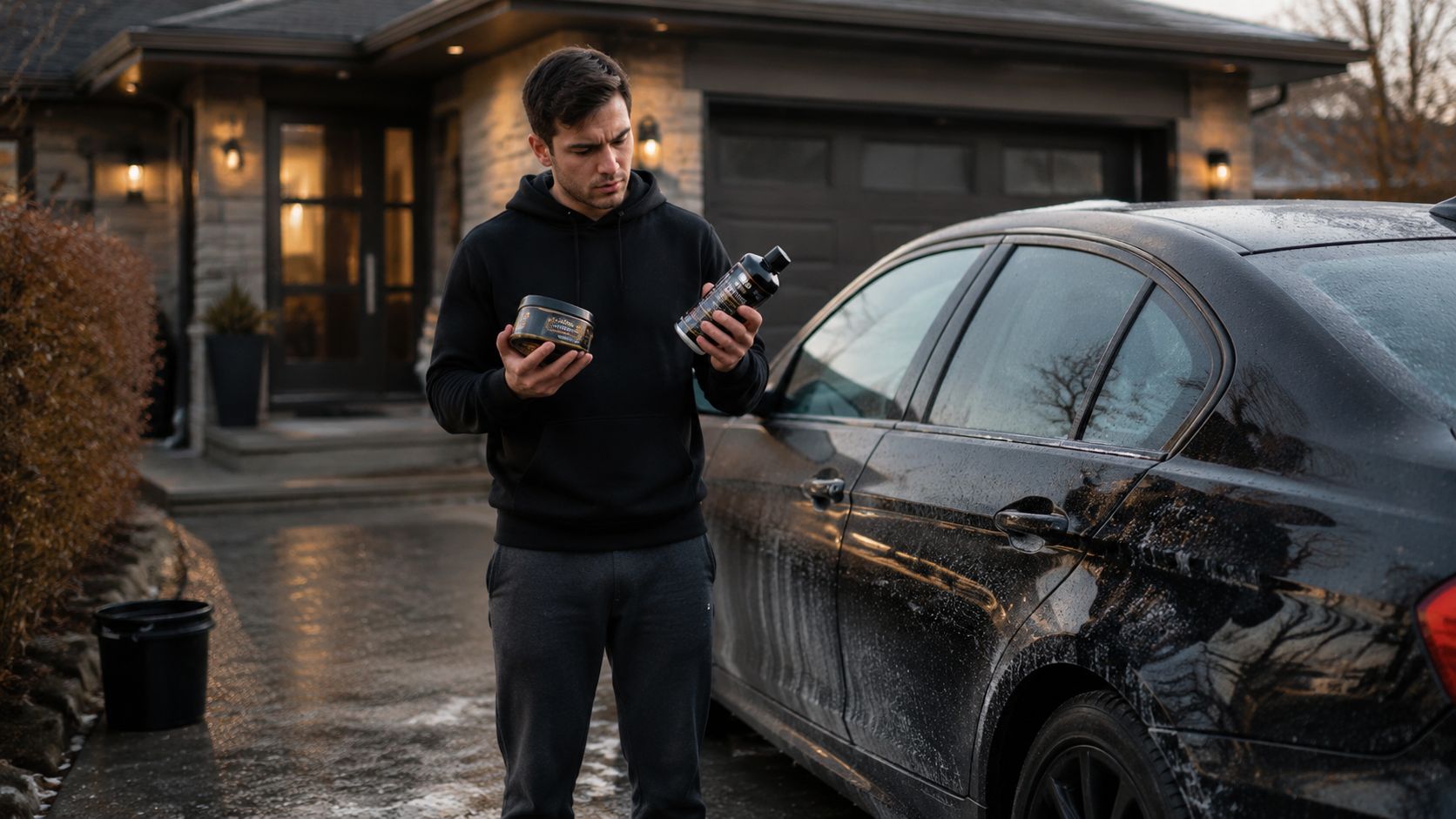
Start with your actual routine
A weekend owner who parks indoors, drives mainly in fair weather, and enjoys detailing can get real value from wax. The shorter life isn't a problem if applying a fresh layer is part of the hobby. That driver is buying depth, warmth, and hands-on enjoyment, not just the longest protection interval.
A commuter who leaves the car outside, drives through salt spray, and uses an express wash regularly needs a different answer. Regional detailing guidance recommends treating waxing as a recurring seasonal task, with applications every two to three months and attention before, during, or after winter stress (Durham Region waxing guidance). That schedule can work, but sealant usually fits the same driver with fewer interruptions.
Counter advice: Pick the product you'll realistically maintain, not the one with the most impressive label.
Shine or durability comes first
Wax wins the appearance argument for many enthusiasts. It gives paint a soft, deep glow that looks especially good on darker colours and freshly polished panels. Sealant tends to produce a cleaner, sharper reflection and better suits someone who wants the vehicle to stay protected between regular washes.
Answer those two questions. If you want to reapply often and chase the warmest finish, choose wax. If you want fewer appointments and stronger resistance to routine contamination, choose sealant.
What Car Wax and Paint Sealants Actually Do
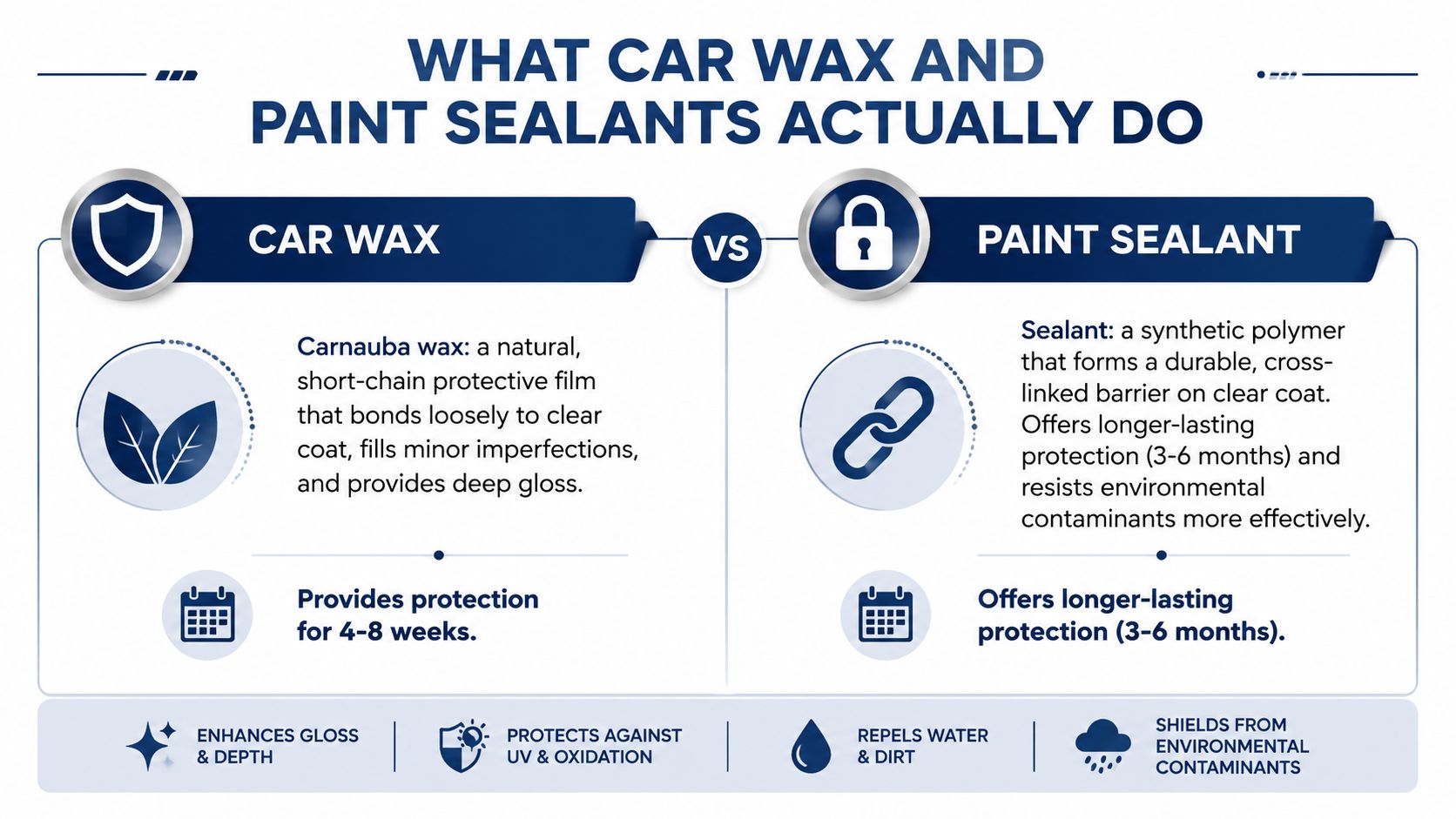
Carnauba wax sits over the clear coat as a thin, visually enhancing layer. It fills very small visual imperfections and changes how light reflects from the surface. The result is a warm, glossy finish that can make polished paint look richer without permanently changing the paint.
Traditional carnauba wax remains a short-duration product. Canadian guidance places its realistic life at about four to eight weeks under normal daily use (Canadian detailing guide to wax and sealant durability). Washing, heat, road grime, salt, slush, and other winter contamination gradually wear down the film. Wax does not prevent washing, but every wash and exposure cycle can leave less protection behind.
Wax is the finish-first option
Carnauba's main advantage is appearance. A clean, properly prepared surface under fresh wax can look unusually deep, with colour that seems to have more body. Wax suits show vehicles, collector cars, and owners who enjoy frequent paint care. It also fits drivers who can avoid harsh express washes and are willing to refresh the protection as the finish fades.
Modern wax products are not limited to old-fashioned hard paste. Canadian retail listings include synthetic wax protectants and wax-sealant blends, combining gloss-focused ingredients with longer-wearing polymers (Canadian Tire polymer paint sealant listing). Check the label before buying. A product marketed as wax may already include sealant chemistry, so the practical result depends on its formulation.
Sealant is the barrier-first option
A paint sealant uses synthetic polymers or resins to form a more durable film over the clear coat. Its finish usually looks cleaner and sharper than a rich wax layer, while the film is designed to remain in place through more washing and environmental exposure.
Canadian comparisons generally place synthetic sealants around three to six months, while a Canadian automotive-care reference describes sealants lasting up to six months under favourable conditions (wax and sealant performance comparison). That protection still depends on surface preparation, application quality, washing methods, storage, and road exposure. Ontario salt and frequent express washes can shorten the useful interval.
The practical choice is direct. Choose wax for stronger immediate visual warmth and hands-on upkeep. Choose sealant for a daily driver that needs a more dependable barrier between washes.
Head-to-Head Comparison Across Five Key Criteria
The better option depends on what your car faces after each wash. GTA commuting, outdoor parking, winter spray, and frequent express washes all change how long the protection remains useful.
| Criterion | Carnauba Wax | Synthetic Paint Sealant |
|---|---|---|
| Protection | Helps shield paint from routine contamination, but offers a shorter service life | Forms a more durable polymer barrier and handles repeated environmental exposure better |
| Longevity | About four to eight weeks in normal daily driving, according to Canadian detailing guidance | Generally about three to six months, though washing frequency and road exposure shorten that interval |
| Shine character | Warm, deep, soft-looking gloss | Bright, crisp, reflective finish |
| Cost approach | Lower entry point in many retail categories, but repeated applications increase the ongoing workload | Higher product pricing can be offset by fewer reapplications. Some sealant products are listed around C$61.99 for 1 L in regional car-care pricing guidance |
| Reapplication | Frequent for daily-driven vehicles exposed to winter roads | Less frequent, although salt, slush, and repeated washing reduce its working interval |
Protection and longevity
Wax suits an owner who will keep up with regular applications. Sealant is the better working choice for outdoor parking, highway spray, and frequent cleaning. A Canadian cold-weather comparison reports wax lasting only three to five weeks in winter use, while a properly applied sealant can last around four to five realistic months (cold-weather protection comparison).
The useful distinction is how the protection declines. Wax can lose noticeable water behaviour and slickness sooner after abrasive express-wash contact, even when the paint still looks glossy. Sealant usually gives a driver more time between applications, but it still needs clean washing and proper surface preparation to perform well.
Shine and cost
Wax wins for show-car warmth. Sealant wins when you count labour, appointments, and missed maintenance. A cheaper application is not cheaper across the season if the owner must keep restoring the layer.
Choose the column that matches the vehicle's routine. Wax is the appearance specialist. Sealant is the daily-driver workhorse.
How Ontario Winters Change the Math
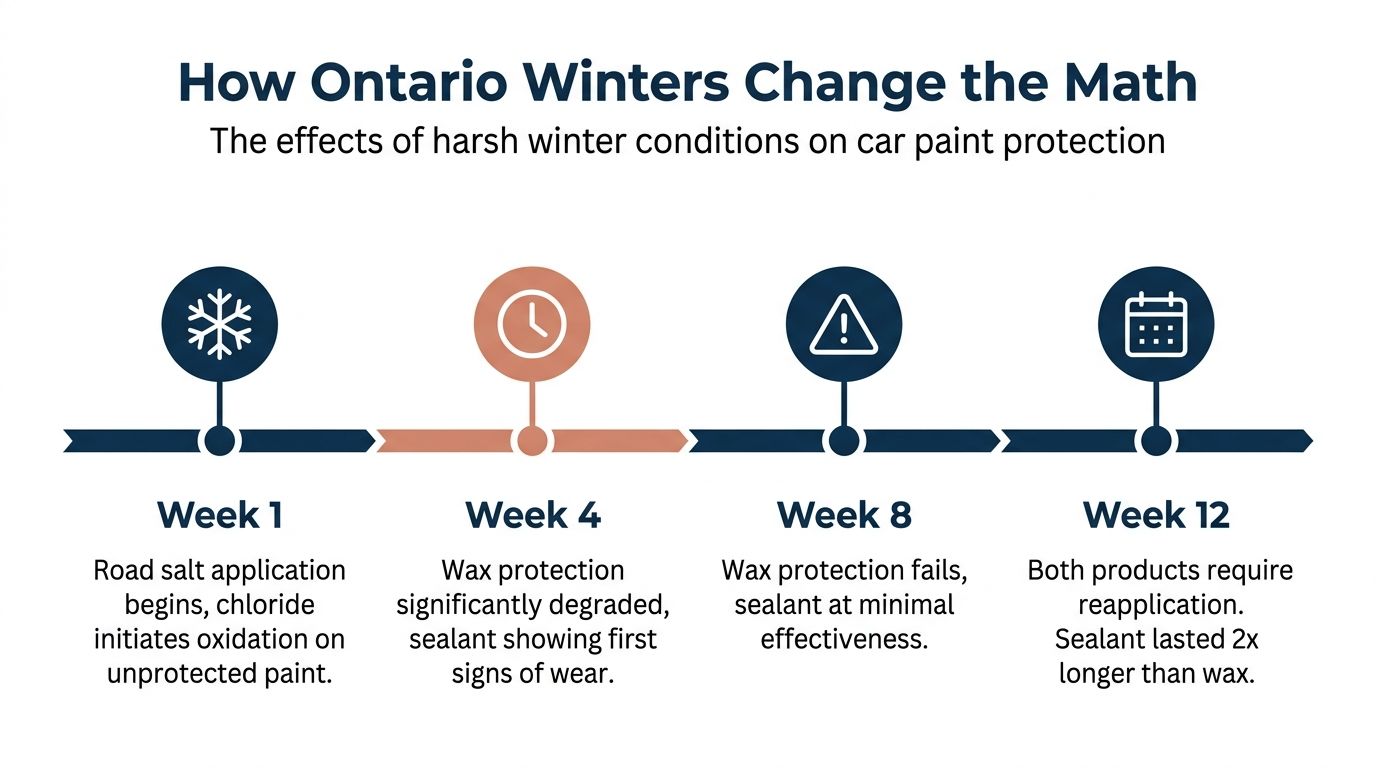
Ontario road salt changes the decision because winter driving brings contamination and corrosion pressure on nearly every trip. NSERC cites road salts as accounting for about 50% of vehicle corrosion (NSERC corrosion information in the cited transport document). The same transportation research reference reports that regular sodium chloride created the highest corrosion on steel rebar compared with treated alternatives. The evidence applies to the winter environment, not as a claim that one commute strips every car of its protection.
GTA drivers should judge wax and sealant against the actual cycle: salt, slush, drying residue, freezing temperatures, and repeated express washes.
The winter cycle works against short-life protection
A typical salt season keeps returning the same stress to the paint:
- Wet contamination: Slush carries salt and road film onto rocker panels, doors, wheel arches, and lower bumpers.
- Drying residue: Evaporating water leaves concentrated grime behind.
- Freeze and thaw: Temperature changes rewet and redistribute contamination.
- Repeated washing: Express washes remove dirt, while detergents and mechanical contact gradually challenge the protective film.
Regional Ontario guidance recommends a waxing starting point of every two to three months, including an application before winter and another during or after winter stress (Durham Region seasonal maintenance guidance). Treat that as a maintenance schedule for a daily driver, not a reason to wait until spring. Frequent washing and outdoor parking can shorten the practical interval.
Sealant gives you more breathing room
Sealant earns its place through a longer working interval. A Canadian winter-focused comparison places properly applied sealant at about four to five realistic months (winter sealant comparison). Wax may need attention while salt and slush are still active, especially on a vehicle washed often.
The wash routine still decides how well either product performs. Remove salt and underbody contamination instead of letting residue sit through repeated freeze-thaw cycles. Nanak Car Wash offers express exterior packages with washing, rinsing, drying, and optional protective upgrades, giving winter drivers a practical maintenance layer.
For a GTA daily driver, choose sealant when fewer reapplications matter. Choose wax when you will maintain it for appearance.
The Third Option Most Comparisons Skip
The old wax-versus-sealant choice misses a practical middle ground. Hybrid protectants combine carnauba wax with synthetic polymers, SiO2 ingredients, or UV-focused additives. They aim to deliver more warmth than a straight sealant while lasting longer than traditional wax.
That combination suits GTA driving because salt, slush, road grime, UV exposure, and frequent express washes all test the surface between appointments. Canadian shelves place wax and polymer sealants side by side, reflecting how closely these categories now overlap (Canadian Tire hybrid and polymer sealant category). The useful question is how much upkeep your routine can handle.
Where ceramic fits
Ceramic coating sits above wax and sealant as a more involved protection system. It is a silica-based coating applied to properly prepared paint, forming a durable layer that can resist environmental contamination and chemical exposure longer than a routine wax or sealant application.
The trade-off is clear. Ceramic requires more preparation, more careful application, and a higher upfront commitment. It does not remove the need to wash. Salt and road film still need regular cleaning, especially after winter driving and repeated freeze-thaw cycles.
The four-way view
| Product Type | Maintenance Burden | Shine Character | Upfront Commitment | Best Fit |
|---|---|---|---|---|
| Carnauba wax | Frequent reapplication and surface preparation | Warm and deep | Lower entry cost | Weekend cars and appearance-focused owners |
| Synthetic sealant | Fewer reapplications, routine washing still required | Bright and sharp | Moderate product commitment | Daily drivers and outdoor parking |
| Ceramic coating | Regular washing, with less frequent protection work | Glossy and reflective | Highest upfront commitment | Owners who want a professional, lower-frequency routine |
| Hybrid protectant | Middle-ground upkeep, product-dependent | Wax warmth with polymer clarity | Middle-ground commitment | Commuters who want visible gloss without wax-level attention |
For cost per month, the cheapest bottle is not automatically the cheaper choice. A low-entry wax can demand more applications, while a sealant or hybrid may spread the work across more of the year. Ceramic makes financial sense only when reducing repeated protection appointments matters enough to justify its preparation and upfront commitment.
Choose hybrid when sealant looks too sterile and wax feels too demanding. Choose ceramic when repeated reapplication has become the problem, not when you want the most dramatic product on the shelf.
Matching the Right Product to Your Driving Life
The same vehicle can need a different answer depending on who drives it. A black coupe that leaves the garage on sunny weekends has almost nothing in common with a commuter crossing the GTA every weekday.
The weekend garage owner
This driver cares about paint depth and enjoys the process. Carnauba wax is the right call because the shorter service interval isn't a burden. Reapply around the six-to-eight-week range when the finish begins losing its glow, using the Canadian detailing comparison as a realistic reference point.
Use a full-service wash when the car needs more than a quick exterior rinse. A careful hand dry and clean surface will help the next wax application perform consistently.
The highway commuter
If you spend your week around Mississauga, Brampton, the 401, or the major GTA corridors, choose synthetic sealant. Highway spray, salt, dust, and frequent washing make durability more important than a short-lived warm glow.
Refresh the protection at a sensible seasonal or maintenance appointment rather than waiting for the surface to feel completely unprotected. An express wash with a protective upgrade can handle routine cleaning, while a full-service visit makes sense when the interior and exterior both need attention.
My recommendation: Daily driver, outdoor parking, winter roads. Start with sealant.
The lease-return owner
A lease return needs more than a quick coat of wax if the paint has accumulated oxidation, stains, swirls, or embedded contamination. Book a detail package that includes paint cleaning and machine polishing before deciding whether ceramic protection is justified.
Ceramic makes sense when you plan to keep the vehicle protected through the remaining ownership period and want a professional application. It's less sensible as a last-minute disguise for neglected paint.
The new-car owner
A new vehicle owner often wants less maintenance without giving up a clean, reflective finish. A polymer-blend protectant applied as part of a regular full-service wash can occupy that middle ground. It won't replace proper washing, but it can reduce the need to choose between frequent traditional waxing and a larger ceramic commitment.
Nanak's express, full-service, and appointment-based detailing options give these profiles different service paths. Choose the menu tier according to the amount of cleaning and paint preparation the vehicle needs, not its age.
Myths That Push Drivers Toward the Wrong Choice
Myth one, sealant is always better than wax. Sealant wins on durability, especially for daily-driven vehicles and winter exposure. Wax still has the stronger argument when the owner values a warm, deep finish and doesn't mind frequent applications.
Myth two, one coat lasts for a year no matter what. Protection claims depend on conditions. Ontario drivers who park outside, wash frequently, and drive through salted slush shouldn't assume a label interval will survive unchanged.
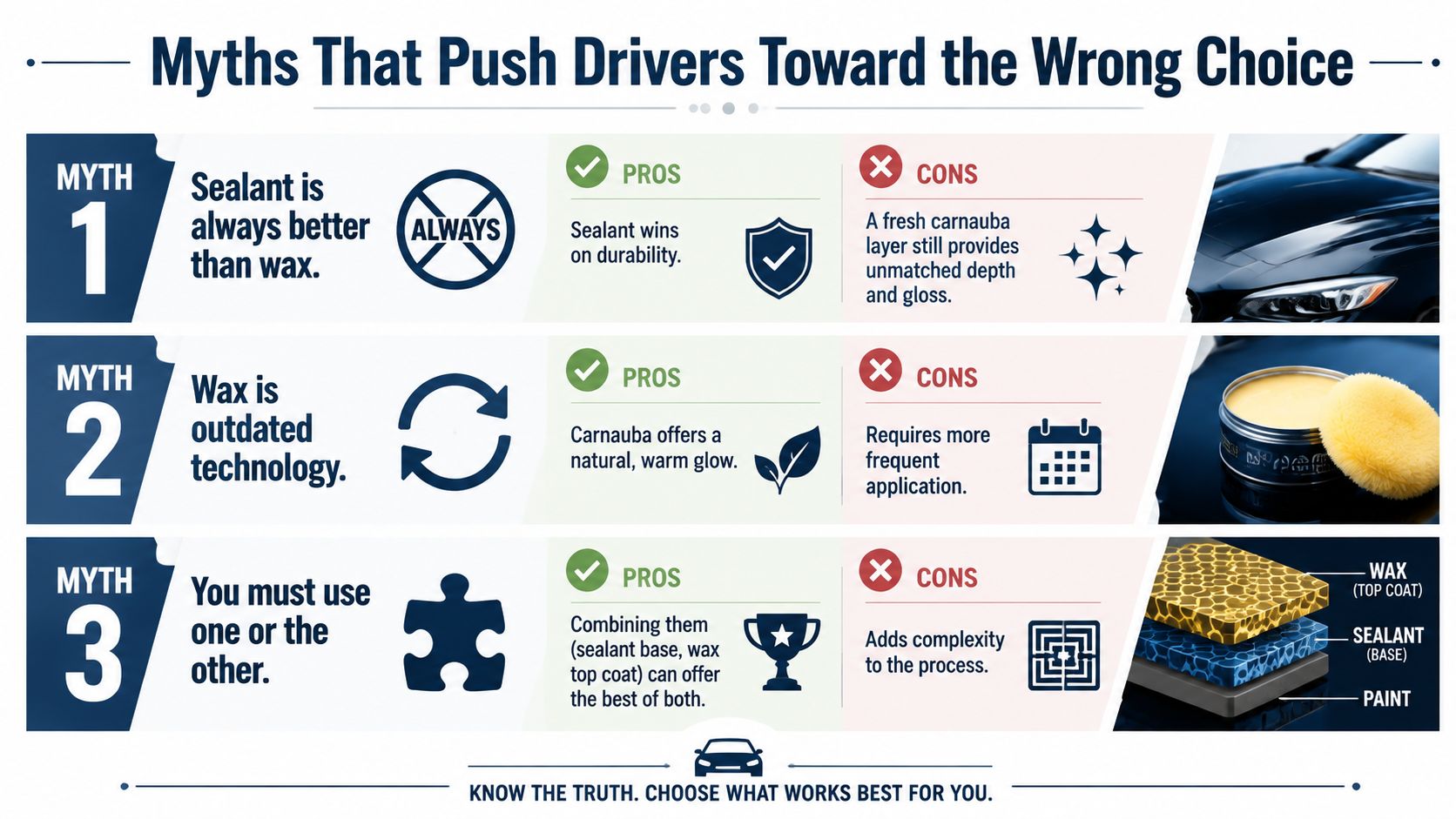
Myth three, wax is outdated technology. Traditional carnauba remains useful for gloss-focused owners, while newer waxes and hybrids add synthetic ingredients that improve practical performance. The category has evolved, so don't judge every wax by the hard paste products many drivers remember.
Your decision framework should stay simple:
- Parking reality: Outside storage increases the case for sealant or hybrid protection.
- Washing frequency: Frequent washing favours a durable product and consistent maintenance.
- Visual priority: Warm depth points toward wax, while crisp reflectivity points toward sealant.
- Available time: If you won't reapply often, don't buy a short-life product.
Practical Questions Drivers Still Ask After Reading This
How often should I reapply protection on a GTA daily driver? Use the Canadian ranges as your starting point. Wax commonly needs attention around four to eight weeks, while synthetic sealant generally works over three to six months under normal conditions (Canadian durability guidance). Shorten the interval during heavy salt exposure and frequent washing, then reassess after winter.
Can I layer wax and sealant? Yes, but apply the sealant first and wax afterwards. The sealant needs clean, prepared paint to form its intended protective layer. Wax works best as the appearance-focused top layer, not as a base beneath sealant.
When should I consider ceramic coating? Upgrade when repeated waxing or sealant applications no longer fit your schedule, especially if the vehicle stays outside and faces year-round contamination. Ceramic still needs washing, so choose it for a more durable maintenance plan, not for a maintenance-free fantasy.
Do spray waxes and ceramic-infused detailer sprays count? Treat them as boosters. They can refresh slickness and appearance between more substantial applications, but they shouldn't replace a properly applied wax, sealant, or coating.
Start with wax if you enjoy the routine. Move to sealant when durability becomes the priority. Choose ceramic when the reapplication cycle no longer matches your driving life.
If your GTA vehicle is collecting salt film, Nanak Car Wash can handle routine exterior washing, full-service cleaning, protective wax and sealer upgrades, and appointment-based detailing for deeper paint care. Visit Nanak Car Wash and choose the wash or detail service that matches how your vehicle is driven, parked, and maintained.

 6600 Finch Ave W, Etobicoke, ON M9V 3Z6
 647-703-8515
 MON – SUN 8 AM to 7 PM