
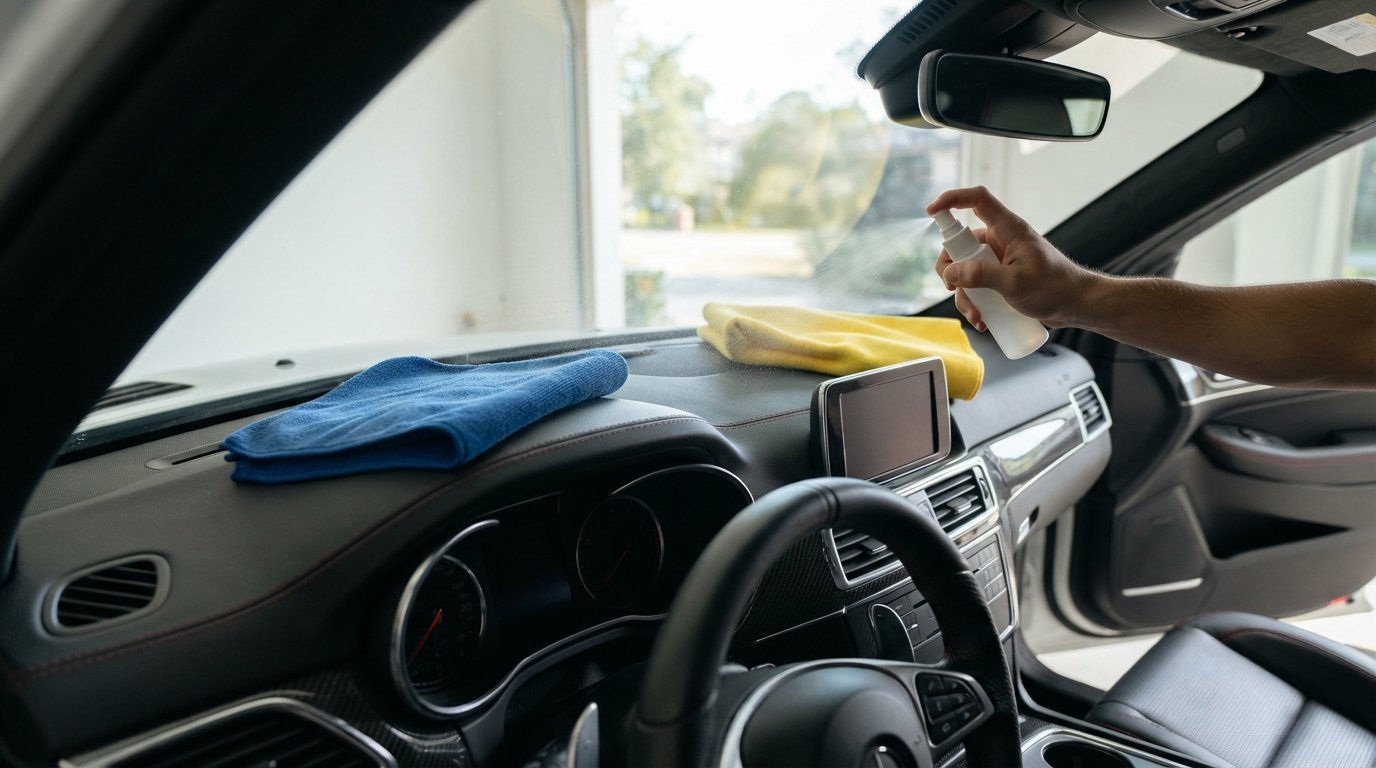
The cleaner isn’t the only thing that causes streaks. To learn how to clean a car’s interior glass without streaks, use an ammonia-free glass cleaner and two clean microfiber cloths: one to wipe and one to buff. If your windows have aftermarket tint, avoid Windex as a precaution, and keep cleaner off leather.
It’s frustrating to finish cleaning, only to spot smears when sunlight hits the windshield. Use a careful, low-overspray method: apply cleaner to a cloth, wipe the interior glass horizontally, then check it from different angles. Choose the right cleaner, turn to fresh cloth surfaces as you work, and distinguish marks on the inside from those on the outside.
Key Takeaways
- Choose an ammonia-free glass cleaner, especially if your windows have aftermarket tint, and protect nearby leather from cleaner.
- Use two clean microfiber cloths: one to wipe the glass and another to buff away residue.
- Wipe the interior windshield horizontally so you can tell whether a stubborn streak is inside or outside.
- Reduce overspray by applying cleaner to the cloth, not directly to the windshield, and clean in the shade.
- Check the glass from different angles and in changing light to catch smudges before you finish.
Can You Use Windex on Car Windows?
Choose your cleaner carefully, especially if the glass has aftermarket tint. A two-microfiber method helps remove residue without spreading it around.
- Start by checking whether your windows have aftermarket tint. If a third party installed the tint, avoid Windex as a precaution. Lexus of Cherry Hill advises this approach for third-party-tinted windows. Choose an ammonia-free glass cleaner instead, which is recommended for tinted glass and is less likely to affect interior finishes.
- Set out two clean microfiber cloths before you start. Use the first with your chosen cleaner to wipe the glass, then use the second, dry cloth to buff away any remaining product. This two-cloth method helps prevent dirt and used cleaner from spreading back across the window. Fold each cloth into thirds to expose fresh surfaces as you work.
-
Choose a Cleaner for Tinted Windows
Choose an ammonia-free automotive glass cleaner, especially for tinted windows. Apply it to a microfiber cloth, then wipe the glass without soaking the edges. This cautious approach reduces the chance of exposing aftermarket tint to an unsuitable cleaner. Keep the cloth under control near the dashboard, door trim, and leather seats.
-
Compare Automotive Cleaner and Vinegar
An automotive glass cleaner, preferably ammonia-free, is a straightforward choice. A vinegar solution is another possible option, but don’t mix it with other cleaners. Apply either solution to a cloth rather than spraying the windshield. This limits overspray and gives you more control near the dashboard and window trim.
-
Assess Windex and Household Cleaner Risks
Avoid Windex as a precaution on aftermarket-tinted windows. Lexus of Cherry Hill also warns that Windex inside a vehicle can dry out or discolour leather seats if it gets on them. Household cleaners may affect tint or interior finishes, so keep product off surrounding surfaces. Wipe rear glass gently around defroster lines; don’t scrape or press hard.
The two-microfiber method helps clean car windows without streaks: one cloth removes residue, while the other buffs the glass dry.
Using microfiber cloths and glass cleaner
Choose a clean, lint-free microfiber cloth instead of paper towels. For smoke film, fingerprints, or greasy residue, use glass cleaner and a fresh cloth surface.
- Prepare two clean microfiber cloths before opening the cleaner. Lexus of Cherry Hill recommends microfiber over paper towels because cloth avoids small paper fibres and is less likely to leave streaks. Keep one cloth for cleaning and the other for buffing. This separation helps prevent used product and loosened dirt from returning to the glass.
- Fold the cleaning cloth into thirds before wiping. Lexus of Cherry Hill recommends this fold because it provides multiple clean sides. Turn to a fresh section as soon as the fabric looks damp or picks up visible grime. A dirty section can drag residue across the window instead of lifting it away.
-
Select a Microfiber Cloth
Pick a soft, clean microfiber cloth with no loose threads or visible lint. Use a cloth reserved for glass, rather than one carrying polish, wax, or interior protectant. Those products can transfer onto the window and leave a haze. Keep the dry buffing cloth separate, and replace either cloth when it becomes soiled.
-
Remove Film and Residue with Glass Cleaner
Apply glass cleaner to the cloth, then clean one manageable area at a time. For smoke film or fingerprints, overlap your wiping passes so you don’t miss a patch. Use a fresh cloth side if greasy residue starts transferring instead of lifting. Avoid soaking the glass, especially near the dashboard and window edges.
- Buff the cleaned area with the second, dry microfiber cloth. Use light pressure and short, overlapping passes to remove leftover cleaner. Lexus of Cherry Hill recommends a separate towel for buffing, which helps stop dirt or used product from spreading over the glass. Check the cloth as you go; switch to a clean section if it shows residue.
- Adjust your technique if the windshield feels warm. Apply cleaner to the microfiber cloth rather than directly onto the glass, as Lexus of Cherry Hill recommends. This helps limit rapid evaporation that can leave streaks. Work across a small section, wipe it, then buff before moving on. Repeat the same process for fingerprints on side windows.
- Inspect each section after cleaning. Look for a cloudy patch, a fingerprint outline, or a greasy smear that catches the light. If residue remains, use a clean cloth section and repeat the wipe-and-buff sequence. Don’t use the buffing cloth to pick up fresh grime, or it may spread the film you just removed.
Wiping interior glass horizontally
Sit in the passenger seat to reach the windshield’s lower corners more easily. Wipe the interior glass horizontally, then compare the streak direction with vertical wipes on the exterior.
- Park safely and make the windshield accessible before wiping. Move the front passenger seat back if it gives you more room. Lexus of Cherry Hill notes that sitting in the passenger seat can make the interior windshield easier to reach. Keep your cleaning cloth within reach, so you don’t twist awkwardly across the dashboard.
- Divide the windshield into manageable areas, such as the driver’s side, centre, and passenger side. Start high and work toward the dashboard, using overlapping horizontal passes across each area. Overlapping helps prevent narrow untreated strips, especially near the centre of the glass.
- Keep each pass level and controlled instead of scrubbing in circles. A horizontal wipe pattern gives the inside a distinct direction. If a streak remains, its direction can help you identify which surface to inspect. Wipe the exterior glass vertically, then compare the marks from inside and outside.
- Use a clean section of microfiber as you move across the windshield. For example, turn the folded cloth when its first surface becomes damp or visibly dirty. A soiled surface can drag residue over glass you’ve already cleaned. Keep the buffing cloth separate, and finish each area with dry horizontal passes.
- Reach the lower corners by shifting your position instead of stretching from the driver’s seat. Sit in the passenger seat, angle your shoulders toward the glass, and guide the cloth into each corner. Use your fingertips to control the cloth along the bottom edge. Avoid pressing against the dashboard or bending the cloth around trim.
- Check each area from the driver’s seat after wiping. Look across the glass at an angle, then change your viewpoint to reveal marks that face-on inspection may miss. If one streak remains, use the horizontal interior pattern to locate it. Check the exterior vertically before repeating the correct side’s cleaning pass.
- Use gentle, even pressure around the rear window’s defroster lines. Follow the glass surface without scraping or dragging a hard object across the lines. On side windows, keep the same horizontal interior pattern. This consistency makes it easier to distinguish an inside streak from an outside one.
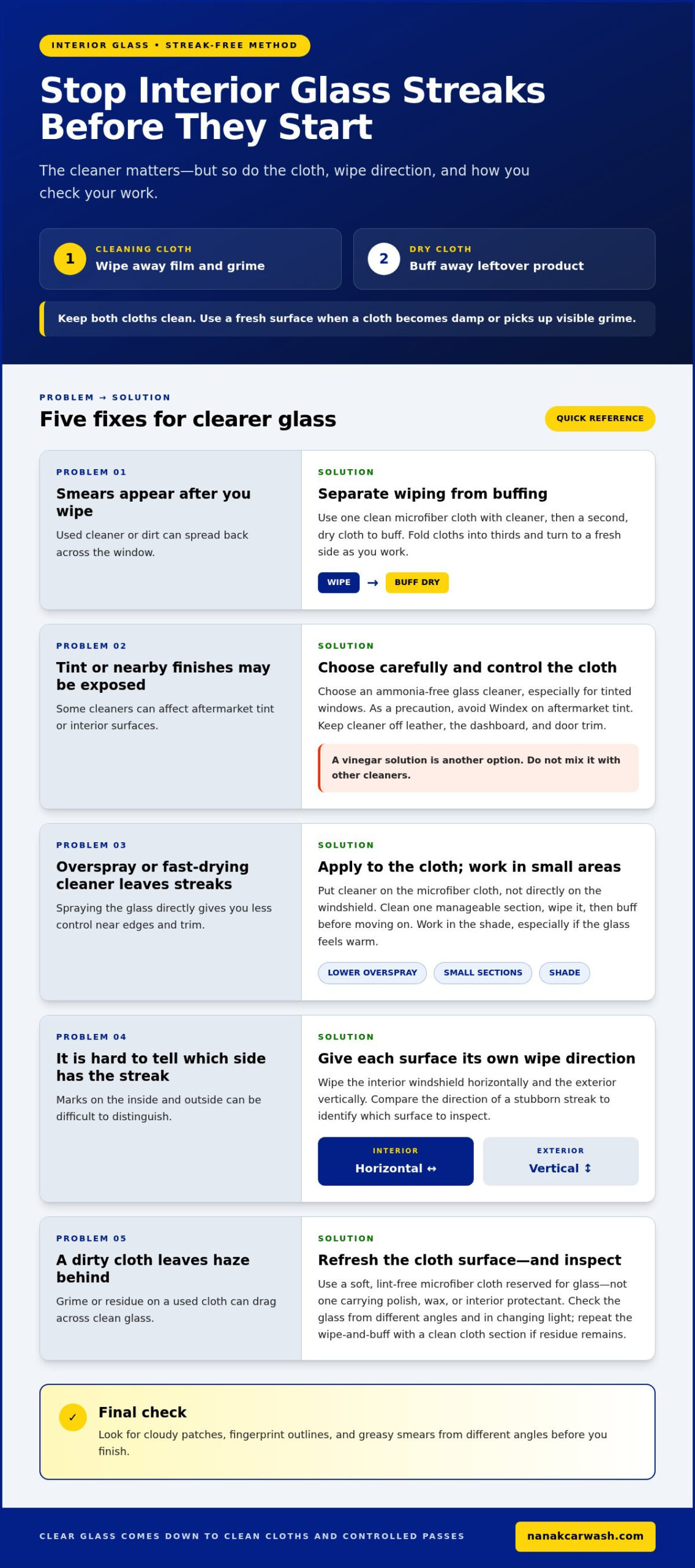
Causes of streaks and smudges on auto glass
Clean cool glass in the shade, since direct sun can evaporate cleaner too quickly. Identify the residue first, then choose the right fix.
- Move the car into the shade before cleaning the windshield. Sunlight can heat the glass and make cleaner evaporate quickly, leaving streaks behind. A cool surface gives you more time to wipe and buff each area. Avoid cleaning immediately after the car has been sitting in direct sun.
- Before repeating a pass, check whether the mark is on the inside or outside. Wipe interior glass horizontally and exterior glass vertically. If a streak follows the horizontal direction, inspect the cabin side first. This simple pattern can help you avoid cleaning the wrong surface and leaving the original mark untouched.
- Look for greasy haze where the windshield meets the dashboard. Interior residue can build up on the glass and appear as a film, especially when light hits at an angle. Clean a small patch, then inspect it from the driver’s seat. If the haze remains, use a fresh cloth surface.
- Replace a cloth section when it looks damp, dirty, or oily. A used surface can move loosened grime across the windshield instead of lifting it away. For example, a cloth that cleaned a fingerprint may leave a smear on clear glass. Turn to a clean section before continuing.
- Use less cleaner if the glass looks wet after wiping. Excess product can leave a visible film, particularly around the edges of each pass. Apply cleaner to the cloth, wipe a manageable area, then buff it dry. Before adding more product, check whether residue is already present.
- Inspect the windshield from more than one viewpoint. Stand outside and look through the glass, then sit in the driver’s seat and shift your angle. Direct and indirect light can reveal different smudges. A mark that disappears when viewed head-on may still show near the edge of your view.
- Clean the windshield when visibility matters, not only when it looks dusty. Dirty glass can reduce visibility, especially at night or in bad weather. Check for cloudy film before driving after rain or at dusk. Clear glass helps you see the road and other vehicles more easily.
- If a streak remains after the first cleaning, compare its direction, location, and appearance before choosing your next step. A horizontal line inside may need a fresh interior pass; a vertical mark outside needs attention on the exterior. This quick diagnosis helps you avoid repeating the same ineffective wipe.
Cleaning interior glass without overspray
Keep cleaner off the dashboard by applying it to your cloth, not the windshield. Work in small areas, then inspect the glass from different angles.
- Prepare before cleaning the interior windshield. Move loose items away from the dashboard and keep your microfiber cloths within reach. Sit in the passenger seat if it gives you better access across the glass. This position also helps you clean the lower corners without stretching over the steering wheel.
-
Limit the Glass Cleaner Amount
Use a light mist on the cloth, just enough to dampen its cleaning surface. There’s no universal measured amount: the area’s size and the cloth’s absorbency affect how much you need. Add a little more only if the cloth stops gliding or residue remains. A soaked cloth can drip onto the dashboard and leave excess product on the glass.
- Keep the spray bottle pointed away from the cabin. Spray the cloth outside the car or low over a protected area, then bring it to the window. This helps prevent droplets from landing on dashboard controls, leather, or door trim. If cleaner lands on a nearby surface, wipe it promptly with a separate cloth.
-
Apply Cleaner Without Overspray
Press the damp microfiber against the glass and wipe one small section at a time. Avoid spraying directly onto the windshield, especially near the dashboard edge. For greasy buildup, use rubbing alcohol on a clean microfiber cloth, as recommended by Lexus of Cherry Hill. Keep liquids away from surrounding interior surfaces.
- Clean the upper windshield before moving down toward the dashboard. Use controlled horizontal passes, keeping the cloth flat against the glass. Near the bottom edge, fold the cloth to create a narrow, manageable cleaning edge. This helps you reach the glass without pushing cleaner into dashboard seams or vents.
- Use a second, dry microfiber cloth to buff each section after wiping. Keep it away from the spray bottle and damp cleaning cloth. If the dry cloth becomes wet, turn to a dry section. A separate buffing cloth helps prevent used product from spreading across the windshield.
- Inspect the glass from the driver’s seat, then shift your viewpoint. Direct and indirect light can reveal different smudges, so look across the windshield rather than only straight through it. If you spot a streak, identify its location and clean that patch with a fresh cloth surface. Avoid spraying extra cleaner across the whole window.
- Finish by checking the dashboard, trim, and lower windshield edge for stray droplets. Wipe any overspray with a separate clean cloth. Keep the glass-cleaning cloth away from those surfaces afterward so it doesn’t transfer cleaner or loosened grime back onto the windshield.
Nanak Car Wash: Car Detailing Packages
Nanak Car Wash offers Car Detailing Packages for drivers who want more than a quick glass touch-up. If residue keeps returning or your vehicle needs broader cleaning, detailing is a practical next step beyond wiping the windshield yourself. Choose a Full-Service Car Wash for a convenient wash option, or an Express Car Wash when you want a quicker wash. Frequent customers can also consider the Unlimited Wash Club.
Keep using this careful glass-cleaning method for routine smudges. For broader vehicle care, choose the service that matches your needs: detailing for intensive interior and exterior cleaning, a full-service wash for regular cleaning inside and out, or an express wash for a quick exterior clean.
Contact Nanak Car Wash to discuss your vehicle-cleaning needs.
Keep Your View Clear for the Road Ahead
A clear windshield is part of a comfortable, well-kept car. Keep a dedicated glass cloth in your cleaning kit, and make interior glass part of your regular vehicle-care routine. Knowing how to clean a car’s interior glass without streaks can make upkeep simpler, while careful cleaning helps keep product off nearby surfaces.
For broader vehicle care, Nanak Car Wash offers Car Detailing Packages, a Full-Service Car Wash, and an Express Car Wash. Choose the type of cleaning that suits your needs, from detailed attention to a quick wash. Book your next cleaning with Nanak Car Wash.
Contact Nanak Car Wash today to discuss your vehicle-cleaning needs. A clean, comfortable drive starts with a simple next step.
Frequently Asked Questions
Do you recommend a product to repel water after cleaning?
Skip water-repellent treatments on interior glass unless the product label specifically approves interior use. These coatings are generally intended for exterior glass, where rain needs to bead and move away. Inside, a coating can leave a visible film or affect clarity. Keep the windshield’s cabin side clean and clear rather than adding a treatment designed for exterior driving conditions.
How Should I Clean Inside Car Windows?
Clean one window at a time, starting with the side glass before tackling the windshield. Lower each side window slightly to reach the narrow strip normally hidden by the seal, then raise it and wipe that exposed edge. Keep the cloth away from window controls and door switches. For a detailed method, use controlled wipes and a final visual check to clean a car’s interior glass without streaks.
Why is it important to clean your windshield?
A clean windshield helps preserve a clear view in changing driving conditions. Interior film can scatter light from oncoming headlights, making night driving more distracting. Smudges can also stand out against low winter sunlight or a grey sky. Check the glass from the driver’s seat before a trip, especially if glare or haze seems to follow your line of sight.
Why should I use different directions to wipe the glass?
Different wipe directions can help locate a streak’s surface. Use one direction inside and another outside, then inspect the mark from the cabin and outdoors. For example, if a line matches the interior wipe pattern, focus your next pass inside. This is a troubleshooting aid, not a rule that every window must be cleaned in a particular direction.
Why should I use two different towels?
Assign one towel to remove cleaner and loosened grime, and reserve another for drying or buffing. This separation matters if the first cloth becomes damp or picks up residue. For example, a buffing towel used to collect dirty product can smear it over clear glass. Keep both towels clean, and switch to a fresh surface if either starts leaving marks.
What supplies are best for cleaning interior car glass without streaks?
Gather a suitable glass cleaner, clean microfiber cloths, and a dry towel for finishing. An ammonia-free cleaner is a sensible option for tinted windows. Avoid using a cloth that has touched dashboard dressing, wax, or household polish, since those products can transfer to glass. Keep a small bag nearby for used cloths so they don’t get mixed with clean ones.
How do you clean the inside of a car windshield step by step?
Park in the shade and clear loose items from the dashboard. Prepare a cleaner and separate cloths for wiping and drying. Clean the windshield in small, overlapping sections, moving from the upper glass toward the lower edge. Use a fresh cloth surface as needed. Finish by sitting in the driver’s seat and checking for haze from more than one angle.
What causes streaks or haze on the inside of car windows?
Common culprits include interior film, oily fingerprints, residue from a dirty cloth, and excess cleaner. A dashboard cloth used on glass can also transfer polish or protectant. Notice where the haze appears: a broad cloudy layer may suggest film, while a distinct mark may point to a touch or wipe. Inspect it under changing light before choosing a cleaning approach.



 6600 Finch Ave W, Etobicoke, ON M9V 3Z6

 647-703-8515
 MON – SUN 8 AM to 7 PM