
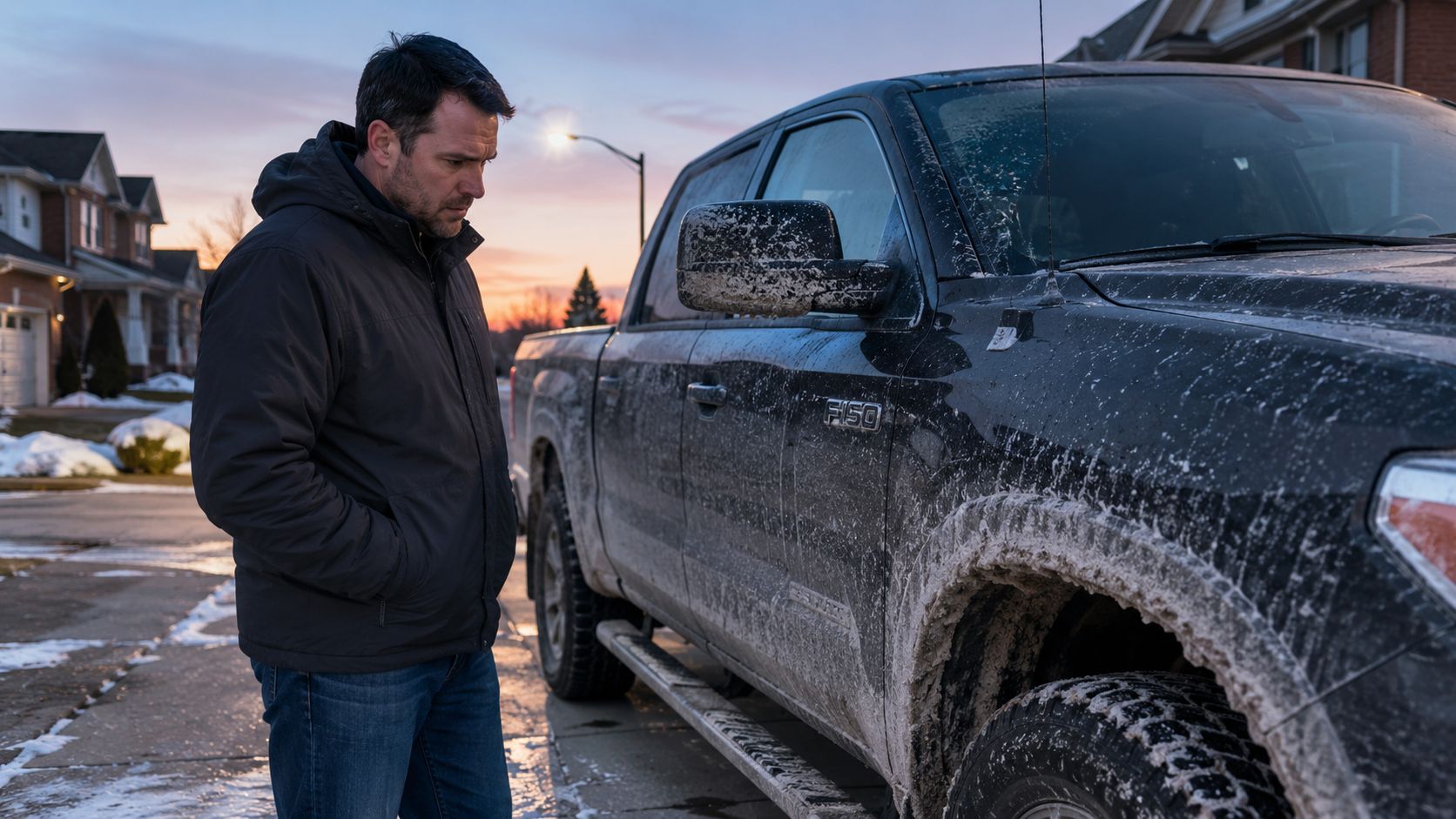
You pull into the driveway after a February commute through Mississauga and see the problem immediately. A crust of salt has climbed into the wheel wells, the dashboard carries a gritty film, and the floor mats have that damp, musty smell that never quite leaves on its own. Your truck may look like it needs a wash, but the more important question is what the brine has reached underneath.
A proper truck detailing service treats that buildup as maintenance. It combines paint decontamination, interior cleaning, underbody rinsing, drying, and protection. In Southern Ontario, that approach makes practical sense because road salt exposure returns throughout the season, not just after one dramatic storm.
Table of Contents
- Why Truck Detailing Matters More Than You Think
- Preparing Your Truck Before the Appointment
- Choosing the Right Detailing Package for Your Truck
- Underbody Cleaning and Rust Protection Workflows
- What to Expect During Your Detailing Visit
- Saving Money with Memberships and Prepaid Bundles
- Aftercare and Seasonal Maintenance Tips
Why Truck Detailing Matters More Than You Think
Ontario's salt problem is large and persistent. One Ontario-focused source estimates that the province spreads roughly 1.5 to 3 million tonnes of road salt each winter, while salt and freeze-thaw exposure can affect vehicles for five to six months each year. The Ontario road-salt corrosion guide also notes that visible undercarriage rust can appear within 3 to 5 years for year-round vehicles in the GTA, while structural rust severe enough to fail a safety inspection may develop within 8 to 12 years.
That timeline changes the way I assess a dirty work truck. The salt crust around a wheel arch is visible, but the more serious residue sits in frame members, brake-line channels, seams, and other areas that owners rarely inspect. A quick exterior rinse improves appearance. It doesn't necessarily remove the chloride-rich film that keeps attacking steel after the truck is parked.
Practical rule: If a truck works through winter, underbody cleaning belongs in the maintenance plan, not just the appearance budget.
Road traffic adds to the exposure. The Government of Canada commercial-vehicle survey information explains that Ontario uses commercial-vehicle data to monitor truck volumes, goods movement, and performance on major roadways. Delivery trucks, contractor pickups, rental vehicles, and small fleets spend long hours collecting road film, construction dust, salt spray, and mud. Their detailing needs are operational because a clean, protected vehicle is easier to inspect, present to customers, and maintain.
The cab deserves equal attention. Grit worked into cloth seats and carpet acts like an abrasive, while damp salt residue can leave odours and degrade interior materials over time. Detailing won't reverse worn fabric or repair rusted metal, but a structured service can remove contamination before it becomes embedded, protect surfaces, and make existing damage easier to spot.
Preparing Your Truck Before the Appointment
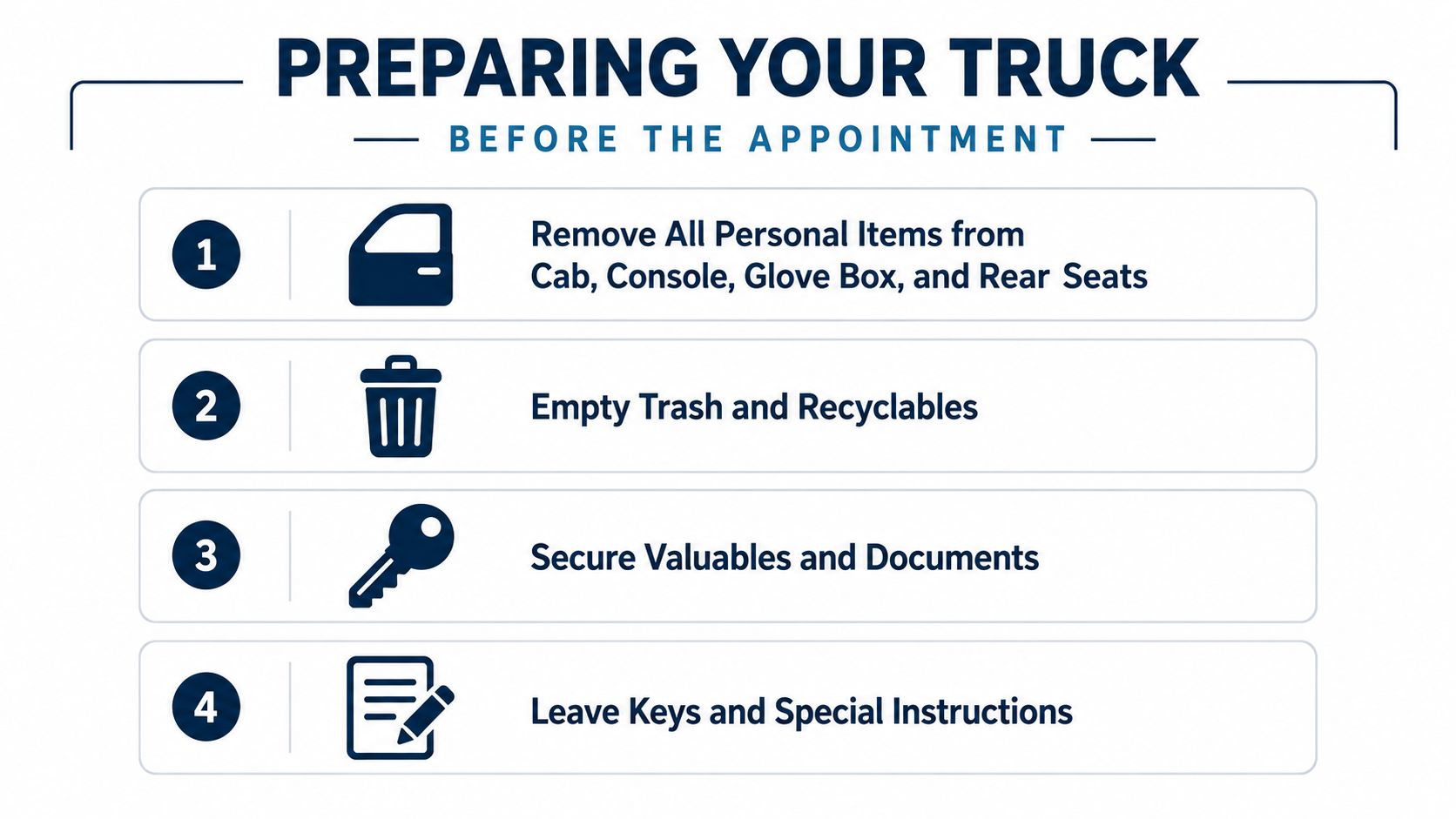
A detailer can only clean the surfaces they can reach. Start by emptying the cab completely, including the centre console, glove box, door pockets, rear seats, and storage compartments. Remove loose paperwork, tools, bottles, chargers, toys, and anything that could shift during vacuuming or steam extraction.
Take out floor mats, child seats, dash cams, GPS mounts, and aftermarket accessories where practical. If a shop has to work around personal belongings, it may leave inaccessible areas untouched, and loose valuables can create an avoidable dispute. Empty rubbish and recycling before arrival rather than expecting the detailer to sort through it.
Document condition and communicate priorities
Walk around the truck in daylight and photograph scratches, dents, paint chips, torn upholstery, and existing stains. This protects both sides by creating a clear starting point. A professional detailer should also perform a walkaround, but your photographs help preserve the condition before the keys change hands.
Be specific about the problem areas:
- Pet hair: Say whether it's concentrated in the rear bench, carpet, or cargo area.
- Worksite debris: Identify construction dust, concrete residue, tar, or sawdust in the bed and liner.
- Odours: Explain whether the smell is mildew, smoke, food, wet clothing, or an unidentified damp odour.
- Paint contamination: Point out tree sap, tar, overspray, and stains that may need more than a standard wash.
If the truck is coated in heavy mud or job-site material, a safe pre-rinse can help. Don't scrub dry grit into the paint, and don't use an aggressive household cleaner. A gentle rinse that loosens loose mud may reduce labour, while an improvised chemical treatment can damage trim or coatings.
Schedule with the shop's workflow in mind. Mid-week mornings are often easier for inspections and clear communication than peak weekend drop-offs. Confirm whether the service is appointment-only, how long the truck will stay, and whether the shop applies a size or soil surcharge before you arrive.
Choosing the Right Detailing Package for Your Truck
The cheapest package isn't automatically the wrong choice. It becomes the wrong choice when the truck's condition and the service scope don't match. A drive-through wash can handle loose surface dirt, but it won't replace a seasonal reset that reaches jambs, wheel wells, upholstery, and underbody areas.
Compare the service tiers
An express exterior wash is suited to routine upkeep. It may use presoak, foam, rinsing, drying agents, and air blowers, but it generally skips deep interior work, detailed door jamb cleaning, and extensive decontamination. Use it when the truck is maintained regularly and needs a quick removal of fresh road film.
A full-service detail sits in the middle. Expect a hand wash, interior vacuuming, window cleaning, more careful work around trim and jambs, and possibly clay-bar decontamination, steam cleaning, or stain treatment. Truck-sized vehicles commonly carry a surcharge because they have more surface area, larger interiors, and heavier soil loads. Ask for the actual quote rather than assuming a sedan price applies.
An appointment-only premium detail is for a neglected, valuable, or heavily used truck that needs concentrated labour. Paint correction, machine polishing, engine-bay cleaning, ceramic protection, and rustproofing may be available, but these aren't interchangeable services. Paint correction improves defects in the finish. It doesn't clean salt from a frame rail, and a coating doesn't repair corrosion that has already started.
| Package Tier | Duration | Key Services | Typical Truck Surcharge | Best For |
|---|---|---|---|---|
| Express exterior wash | Short visit | Presoak, foam wash, rinse, drying, basic exterior cleaning | Ask the operator | Weekly upkeep and light road film |
| Full-service detail | Several hours | Hand wash, interior vacuuming, stain work, windows, deeper exterior cleaning | Ask the operator | Seasonal resets and working trucks |
| Premium appointment detail | Extended appointment | Paint correction, polishing, ceramic protection, engine-bay or rustproofing options | Ask the operator | Neglected trucks, presentation vehicles, and intensive protection |
Pet hair deserves an honest conversation. Embedded hair in cloth seats and carpet often requires rubber brushes, repeated vacuuming, and manual extraction. It may be priced as a separate add-on because the labour is unpredictable. Paying for pet-hair removal makes sense when returning the interior to a clean condition matters. It doesn't make sense to pay for paint correction on a work truck whose main problem is salt packed behind the wheel liners.
Match the package to condition, usage, and season. A daily delivery truck needs repeatable cleaning and underbody attention. A weekend pickup may need less frequent interior work but benefit from paint protection. A truck coming out of a muddy job site needs a different intake conversation from a lightly used vehicle with winter film.
Underbody Cleaning and Rust Protection Workflows
Underbody work fails when technicians rush the order. Salt remains on the metal, a protective product goes over it, and the trapped residue continues working beneath the film. The finish may look dark and protected while the corrosion process carries on underneath.
The sequence matters
A sound workflow begins with an inspection and a controlled underbody pre-rinse. The technician should direct water into wheel wells, frame rails, crossmembers, brake-line areas, and seams without using excessive pressure on vulnerable components, wiring, seals, or damaged coatings.
The Canadian corrosion study available through the Transportation Research Board identifies road salt as a dominant contributor to vehicle corrosion, attributing roughly 50% of vehicle corrosion to road-salt use. The same verified guidance cites Ontario testing in which treated sodium chloride still caused measurable steel mass loss, with an average rebar weight loss of about 0.2117% and regular road salt producing the strongest corrosion signal.
After rinsing, the operator breaks down oily soil and road film with a suitable cleaner. Manual agitation may be needed around frame edges and packed seams. The truck then needs thorough drying before any oil spray, wax, sealant, or other protective treatment is applied.
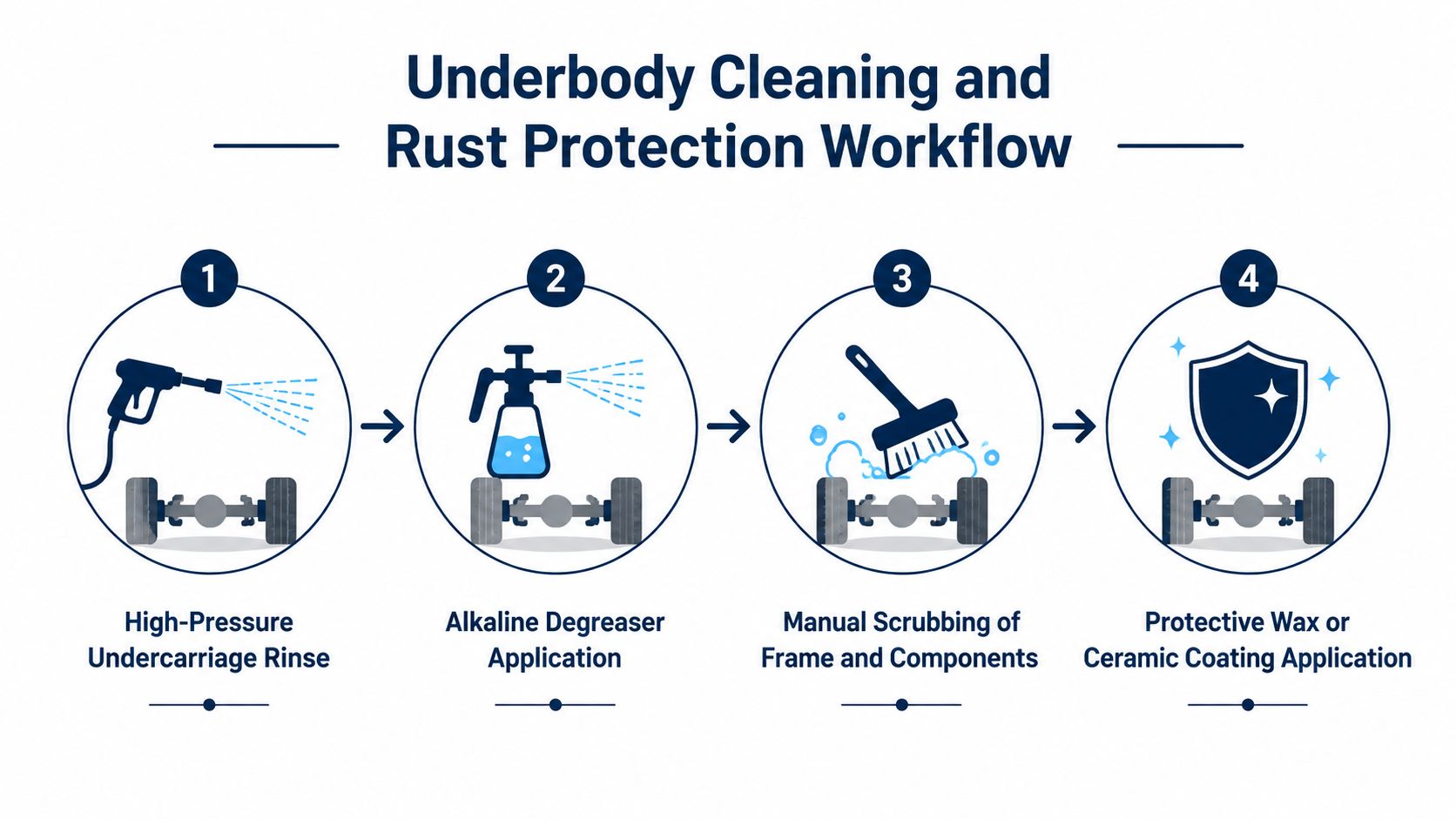
The common winter mistake is applying protection over wet, salty metal. Cleaning removes contamination. Drying makes protection credible.
Oil-based sprays can creep into seams and are often practical for daily-driven work trucks, but they need inspection and reapplication. Rubberized undercoatings create a thicker barrier, yet they can hide existing corrosion if the surface isn't properly assessed. Electronic rust modules are marketed as a different approach, but owners shouldn't treat them as a substitute for physical cleaning, drying, and inspection.
Look for bubbling paint near wheel arches, flaking edges, orange staining around fasteners, and white powdery deposits on aluminium components. Early surface corrosion deserves attention. Once rust has penetrated a seam or weakened a structural component, detailing alone can't reverse it.
A University of Windsor engineering study cited in Ontario rust-proofing guidance found untreated vehicles had 6.8 times more visible body corrosion than vehicles treated with Krown Rust Control, while untreated underbodies had 3.6 times more corrosion than treated underbodies. The cited study reported no statistically significant visible-rust difference up to 6 years, with the gap widening from 7 to 15 years. For a work truck, annual rustproofing and pre-winter underbody cleaning are more defensible than waiting for visible rust to become severe.
What to Expect During Your Detailing Visit
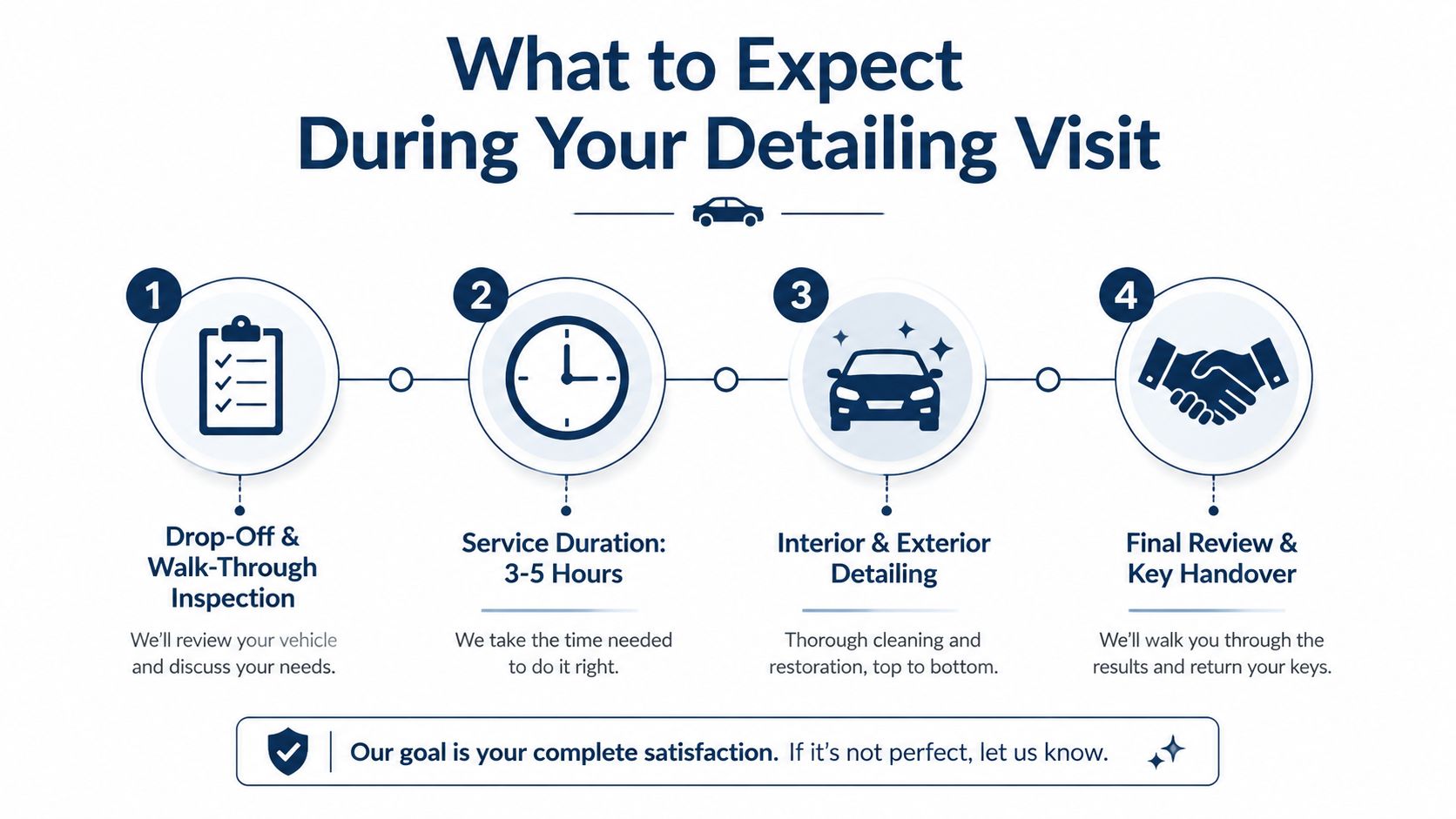
A good appointment starts before the pressure washer turns on. At drop-off, the technician should inspect the truck with you, record existing damage, identify heavily soiled areas, and confirm exactly what the selected package includes. Point out tar on rocker panels, a stained headliner, salt under the mats, or an odour that standard vacuuming won't address.
The exterior process may include a foam-cannon presoak, careful hand washing, wheel and tyre cleaning, decontamination, drying, and polishing where the package allows. Interior work can involve vacuuming, crevice blowout, steam cleaning, carpet extraction, leather cleaning, and glass treatment. The chosen service determines which steps are included, so don't assume that a basic wash includes machine polishing or underbody rustproofing.
Check the result before you leave
Walk around the truck under strong, even lighting. Check the following areas before accepting the keys:
- Lower panels: Look for remaining salt lines, tar, traffic film, and missed rocker-panel sections.
- Access points: Inspect door jambs, tailgate edges, fuel-door surrounds, and cargo sills.
- Cab surfaces: Run a hand over the dashboard and check vents, cup holders, seams, and rear-seat areas.
- Glass and trim: Confirm that windows are clear and that dressing hasn't been left greasy on pedals or steering controls.
- Protection: Ask what product was applied, where it was used, and whether it needs curing time before rain, washing, or heavy work.
Don't judge a wet interior too quickly. Extracted carpet and upholstery may need time to dry, and a shop should tell you how to ventilate the cab. If the truck is being held for a premium service, get a realistic completion window and ask whether additional defects will require approval before extra labour begins.
Saving Money with Memberships and Prepaid Bundles
Frequent truck owners usually waste money in one of two ways. They either buy a premium detail when a routine wash would have handled the condition, or they postpone cleaning until the truck needs expensive labour. A membership or prepaid bundle can solve the first problem by making regular upkeep easier, but only if the terms fit the way the vehicle is used.
Choose the payment model that matches usage
A monthly wash plan suits a contractor, delivery driver, or commuter who needs frequent exterior cleaning. It can keep fresh salt and road film from becoming a thick, labour-intensive layer. Before joining, check whether interior services are included or discounted, whether truck-sized vehicles pay an extra fee, and whether the plan works at the locations you use.
A prepaid ticket bundle is more flexible when your schedule changes. It can work well for a weekend truck enthusiast or a small operator who wants several planned visits without committing to a recurring charge. Ask whether tickets expire, whether they can be transferred between vehicles, and whether premium detailing remains separate.
| Plan Type | Annual Cost | Services Included | Best For |
|---|---|---|---|
| One-off service | Variable | Pay for each selected wash or detail | Infrequent owners and one-time resets |
| Monthly membership | Recurring | Repeated washes, with terms for interior discounts or upgrades | High-mileage drivers and regularly used trucks |
| Prepaid bundle | Paid in advance | A defined number of washes or combinations | Owners seeking planned maintenance with flexibility |
The important comparison isn't just the advertised price. Calculate how often you'll realistically visit, then compare the included service with what you would buy individually. A low-cost plan isn't useful if peak-season exclusions prevent you from washing when salt exposure is highest.
Read the cancellation and renewal language. Watch for automatic renewal clauses, blackout dates, non-transferable passes, and restrictions on larger vehicles. If you're buying a bundle for a work truck, negotiate practical extras before payment, such as priority booking, discounted interior work, or a clear rustproofing add-on. Predictable maintenance beats a cheap plan that you stop using.
Aftercare and Seasonal Maintenance Tips
Professional detailing creates a clean starting point. Aftercare determines how long that result remains useful, especially for trucks that spend every day on GTA roads.
Use the seasons as service reminders
Spring is for removal. Once winter exposure eases, deal with embedded salt, iron particles, brake dust, and grime rather than just adding another layer of dressing. An iron remover and clay bar can help a technician identify contamination that a normal wash leaves behind, while an underbody rinse removes residue from hidden areas.
Summer is for surface protection. Large bonnet and roof panels receive direct sun and collect airborne dirt. A compatible sealant or ceramic spray topper can make routine washing easier, but product compatibility matters. Applying a new product over an unprepared surface gives you a short-lived shine, not durable protection.
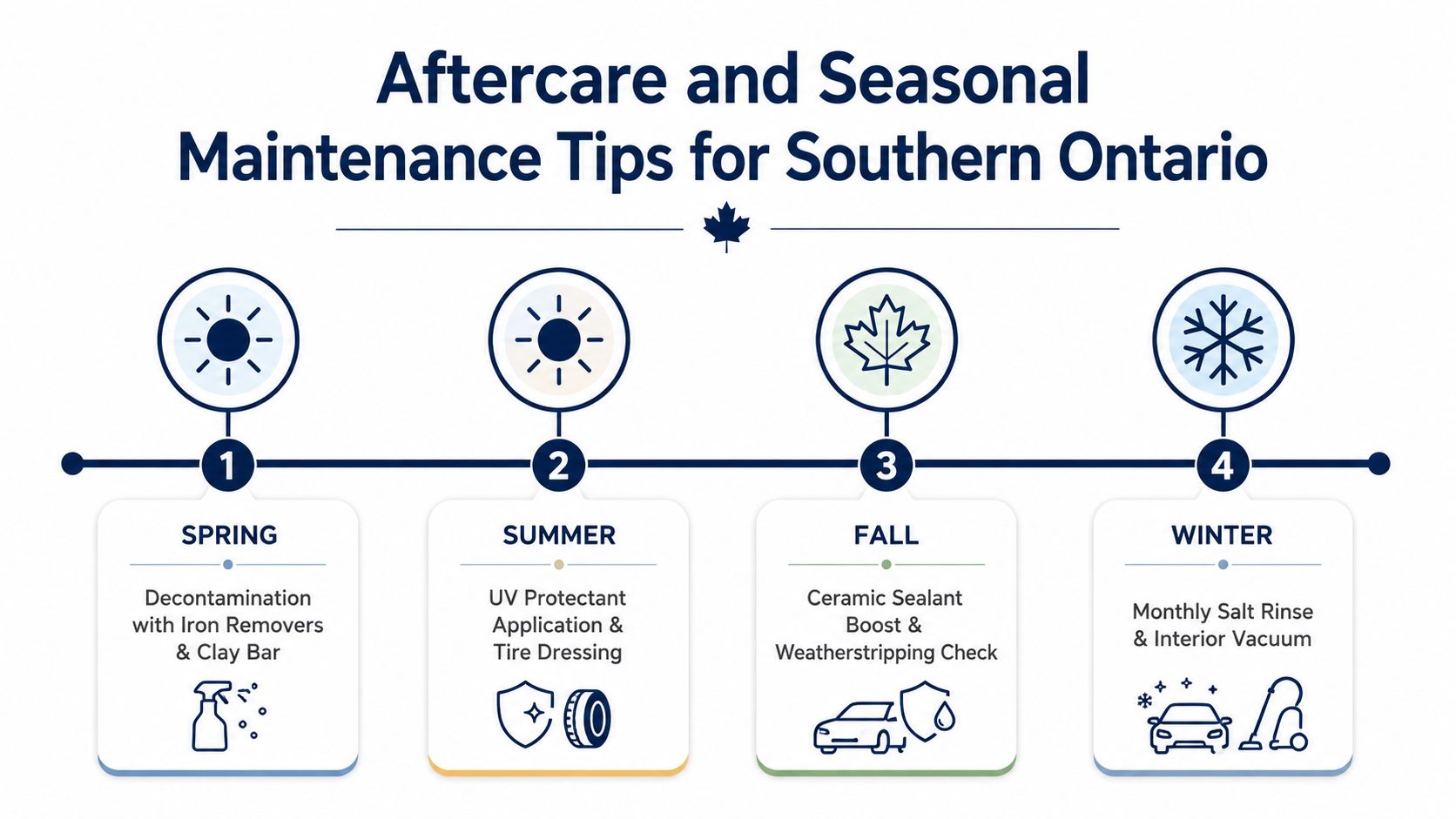
Fall is the planning window. Inspect weatherstripping, clean glass thoroughly, and schedule rustproofing before regular salt exposure begins. Check paint chips on the bonnet, doors, and rocker panels. A small exposed chip is easier to address before moisture and salt reach the underlying metal.
Winter calls for restraint. Use touchless rinsing between deeper appointments when possible, and avoid grinding gritty salt across paint with an old brush or dry towel. Clean rubber mats regularly so wet, salty slush doesn't remain against carpet and seat rails.
Keep the monthly routine simple
- Vacuum the cab: Focus on mats, seat rails, pedals, and the space beneath the rear bench.
- Clean the glass: Clear interior film improves visibility and reveals water spots or residue.
- Inspect the exterior: Look for bubbling paint, new chips, white deposits, and loose trim.
- Rinse the underbody: Give wheel wells and frame areas attention after heavy salt exposure.
- Check the cargo area: Remove soil, wood chips, metal fragments, and moisture before they become embedded.
Toronto's wash-water guidance adds an operational issue many owners never ask about. Toronto's vehicle-wash best-practice document says wash wastewater shouldn't drain to storm sewers, and wash areas shouldn't send untreated water to lakes or streams. Engine-cleaning wastewater may also require separate collection and disposal as special waste. That matters when a contractor wants mobile detailing at a depot, condo, or commercial lot. Ask where the wastewater goes and whether the site is designed for compliant collection, instead of assuming any convenient parking area is suitable.
Nanak Car Wash offers express and full-service washes, appointment-based interior and exterior detailing for SUVs, vans, and pickups, plus automotive rust proofing, memberships, and prepaid options across GTA-area locations. Visit Nanak Car Wash to choose a truck-appropriate service, ask about size-based pricing and runoff handling, and build a maintenance routine that keeps winter contamination from becoming a larger repair problem.

 6600 Finch Ave W, Etobicoke, ON M9V 3Z6
 647-703-8515
 MON – SUN 8 AM to 7 PM