
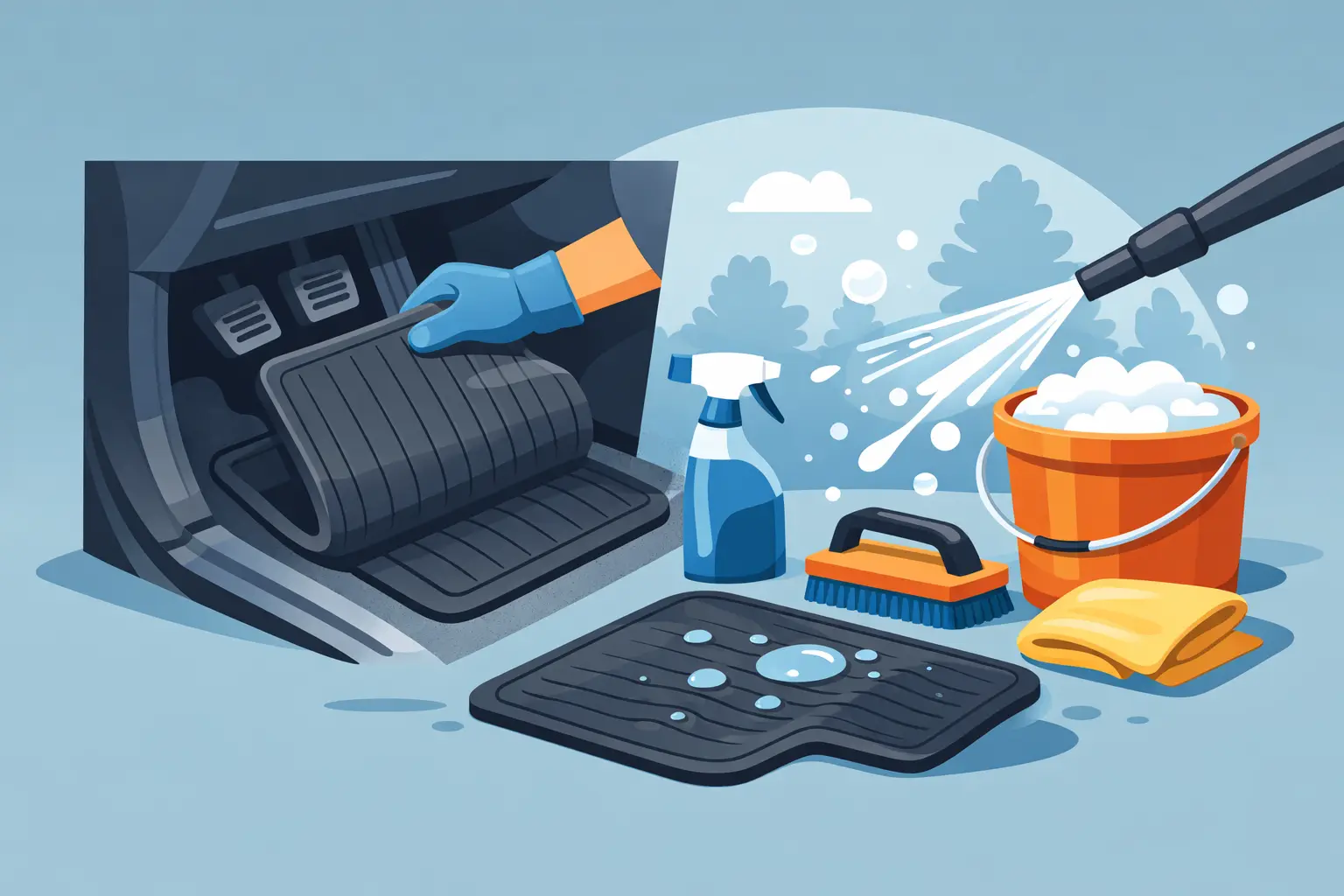
Floor mats take the worst of every drive. They catch wet boots, road salt, coffee drips, pet hair, sand, and whatever the kids tracked in after practice. Knowing how to clean floor mats properly helps your interior look better, smell fresher, and hold up longer – without turning a simple cleaning job into an all-day project.
The right method depends on what is under your feet. Rubber and all-weather mats can handle plenty of water and scrubbing. Carpet mats need a lighter touch and enough drying time before they go back in the car. Start by identifying the material, then clean it thoroughly instead of just shaking off the surface dirt.
Get Your Supplies Ready First
You do not need expensive equipment to get clean results at home. A vacuum, a stiff brush, a bucket, water, microfiber towels, and a mild interior-safe cleaner will handle most jobs. For carpet mats, a carpet or upholstery cleaner can help with set-in stains. For rubber mats, dish soap diluted in water is usually enough.
If you are dealing with winter grime or strong odors, add these useful items:
- A soft detailing brush for tight grooves and mat edges
- A spray bottle with clean water
- Baking soda for odor control on dry carpet mats
- A wet/dry vacuum or extractor for heavily soiled carpet mats
- A clean towel or drying rack for air-drying
Avoid bleach, gasoline, harsh degreasers, and very slick tire-shine products. Strong chemicals can fade carpet fibers, dry out rubber, or leave a slippery film that is unsafe around the pedals.
How to Clean Floor Mats Properly Before You Wash
Take every mat out of the vehicle before you start. Do not spray cleaner or dump water into mats while they are still on the floor. Moisture can reach the carpeting underneath, leading to mildew, musty odors, and a bigger cleanup than you planned.
Give each mat a firm shake outdoors to remove loose dirt, pebbles, and salt. If you have carpet mats, vacuum both sides carefully. Pay extra attention to the driver’s mat, where dirt gets pressed deep into the fibers by shoes. Run the vacuum slowly over the heel area and along the edges instead of making one quick pass.
Check the clips, hooks, or retention holes while the mats are out. A mat that bunches up or slides under a pedal is a safety issue. Clean around the clips and make sure the mat lies flat when it is reinstalled.
Cleaning Rubber and All-Weather Mats
Rubber mats are made for messy weather, so they are usually the easier option. Rinse them with water to loosen mud and road salt. A hose works well, but a bucket and spray bottle can do the job if you are cleaning in a driveway or garage.
Apply a mild soap solution and scrub with a stiff brush. Work into the raised channels, grooves, logos, and outer edges where grime tends to collect. If white salt marks remain after washing, use a light mixture of white vinegar and water on the affected spots, then rinse again. Do not let vinegar sit on the mat for a long time.
Once the surface is clean, rinse away all soap. Leftover cleaner can make rubber feel slippery and attract dust. Shake off excess water, wipe the mats with a microfiber towel, and leave them flat or hang them to dry. They should be fully dry before going back into the vehicle.
Do not use a glossy dressing on floor mats. A clean matte finish looks better than a greasy shine, and it gives your shoes better grip.
Cleaning Carpet Floor Mats Without Soaking Them
Carpet mats need more patience because dirt settles below the surface. After vacuuming, spray a small amount of carpet cleaner onto the dirtiest areas. Let it sit for the time listed on the product label, then agitate the fibers with a brush. Use short strokes rather than aggressive scrubbing, which can rough up the carpet and make it look worn.
For a stain, treat the spot before cleaning the whole mat. Blot liquid spills with a clean towel first. For coffee, food, or muddy shoe marks, use a fabric-safe spot cleaner and work from the outside of the stain toward the center. That helps prevent the stain from spreading.
If the mat is only lightly dirty, wipe it with a damp microfiber towel after brushing and let it air-dry. For a deeper clean, rinse very lightly or use a carpet extractor. The goal is to lift the dirt out, not saturate the backing. Too much water can make carpet mats take days to dry and can cause a mildew smell.
A wet/dry vacuum is useful after shampooing. Make several slow passes to pull out moisture, then press a dry towel firmly against the mat to absorb more water. Hang the mat in a warm, ventilated area or lay it flat in direct sunlight when the weather allows. Never reinstall a carpet mat while it still feels damp underneath.
Remove Salt, Odors, and Stubborn Stains
Road salt is one of the most common problems for drivers in areas with snowy winters. On carpet mats, it often leaves stiff white rings that regular vacuuming will not remove. Mix equal parts white vinegar and warm water in a spray bottle, mist the salt marks lightly, and brush gently. Blot with a towel, then repeat only if needed. Finish by drying the area completely.
For odors, sprinkle baking soda over a dry carpet mat and leave it for several hours. Vacuum it thoroughly afterward. This works well for light musty smells and everyday odors, but it will not solve a serious spill trapped in the mat backing. If milk, pet accidents, or heavily soiled water have soaked into the carpet, professional shampooing or extraction may be the better value.
Grease and oily stains need a different approach. Apply a small amount of upholstery cleaner designed for oil-based stains, blot it up, and avoid rubbing hard. Rubbing can push the grease deeper into the fibers. Test any stronger cleaner on a hidden corner first, especially if the mats have colored stitching or embroidered logos.
Common Mistakes That Make Mats Look Worse
The biggest mistake is putting the mats back too soon. Even if the top feels dry, the underside may still hold moisture. That moisture gets trapped against your vehicle’s floor and can create odors that are much harder to remove later.
Another common problem is using too much cleaner. More soap does not mean a better clean. It can leave residue that attracts fresh dirt, stiffens carpet fibers, or makes rubber mats slick. Use a small amount, scrub well, and rinse or wipe thoroughly.
It also helps to clean both sides. The underside may not be visible, but it collects dust and moisture against the vehicle floor. While the mats are out, vacuum the carpet underneath and wipe the floor area around the pedals, seat tracks, and door sills. Clean mats look much better when the surrounding interior is clean too.
When a Professional Mat Cleaning Makes Sense
Regular at-home cleaning is enough for most vehicles, especially when you stay on top of dirt before it builds up. But a detail service can save time when mats are deeply stained, smell sour, or have been through a full season of salt, slush, pet hair, and daily commuting.
Professional interior cleaning can provide stronger vacuuming, shampooing, extraction, and proper drying for carpet mats. It is also a smart choice for rideshare vehicles, family SUVs, work trucks, and cars being prepared for sale. Nanak Car Wash can help bring heavily used mats and the rest of the interior back to a cleaner, more presentable condition without making you spend your weekend scrubbing.
A quick shake and vacuum every week goes a long way. Give your mats a proper wash whenever they start looking dull, gritty, or stained, and your car will feel cleaner every time you get behind the wheel.


 6600 Finch Ave W, Etobicoke, ON M9V 3Z6
 647-703-8515
 MON – SUN 8 AM to 7 PM