
Ontario applies an estimated 1.5 to 3 million tonnes of road salt to public roads each winter, while Toronto uses about 130,000 to 150,000 tonnes annually, so the right way to use salt to remove stains from your car is to dissolve the residue and extract it, not scrub it deeper into the fabric. In many GTA vehicles driven year-round, visible undercarriage rust can appear within 3 to 5 years because salt meets repeated freeze-thaw cycles for roughly five to six months each year. Ontario road-salt and rust background
You know the scene. After a grey-white drive along the 401, QEW, or Don Valley Parkway, your floor mats develop a pale crust around the pedals, the lower door sill looks chalky, and yesterday's quick wipe seems to have done nothing. By the time the cabin dries, the white mark has returned.
That isn't a normal coffee spill. It's winter brine, mineral residue, and road grit carried in by boots, tyres, wheel wells, and wet mats. I've cleaned plenty of salt-soaked GTA interiors, and the same mistake appears again and again: drivers attack a dry crust with a stiff brush, spread the dissolved residue around, then wonder why it blooms back after drying. The fix is controlled moisture, gentle agitation, and proper extraction, followed by attention to the vehicle's underside.
Table of Contents
- Why Winter Salt Stains Behave Differently in the GTA
- Clearing Interior Carpets and Floor Mats the Right Way
- Handling Salt Marks on Seat Fabric and Washable Trim
- DIY Methods Versus a Professional Interior Detail
- When an Interior Stain Means the Underbody Needs Attention
- Winter Habits That Keep Salt Stains From Coming Back
- Putting It Together for a Cleaner, Healthier Car
Why Winter Salt Stains Behave Differently in the GTA
The first deep freeze changes the road surface almost overnight. Pre-treatment brine and slush turn lane edges grey, boot treads collect the mixture, and every entry into the vehicle leaves a thin film on the mat. Once the water evaporates, the dissolved minerals crystallise into the familiar white crust.
That crust doesn't behave like ordinary dirt. Salt and related de-icing residues can lodge between carpet fibres, then move back toward the surface as moisture shifts through the material. Scrubbing while the area is wet often pushes chloride residue deeper into the weave, while heat can set residues or shrink sensitive fibres. Canadian winter guidance on treating salt stains
Practical rule: If the white mark keeps returning after the carpet dries, you haven't removed the dissolved mineral load. You've only moved it.
Why GTA exposure is hard on metal
The cabin stain is also a useful warning. Toronto and Halifax recorded the highest atmospheric corrosion measurements among the sites in a Canadian transportation corrosion study, at 5,108 and 5,087 mg/dm over a 19-month period. Other locations measured roughly 4,000 mg/dm, and inhibitor use reduced corrosion by about 50%, but the protection remained incomplete. Canadian corrosion study summary
That local exposure explains why I don't treat a salt-stained floor as an isolated housekeeping issue. The same wet road mixture reaching your boots can also reach wheel wells, rocker panels, suspension components, and exposed underbody hardware.

A normal vacuum removes loose grit. It won't dissolve residue that has dried into the pile, and it won't pull liquid from the padding. That's why the reliable method starts dry, adds only enough solution to dissolve the salt, and removes the contaminated liquid before it can dry again.
Clearing Interior Carpets and Floor Mats the Right Way
Start outside the vehicle. Pull out the rubber and carpet mats, shake them thoroughly, and use a vacuum with a brush attachment to lift dry crystals before adding liquid. If you wet the grit first, you'll turn loose particles into a salty paste and drive it into the fibres.
Lightly mist the stained area with cool water, then apply a one-to-one mixture of white vinegar and cool water. Keep the surface damp rather than saturated, especially around carpet edges and seat mounts. Let the solution dwell for three to five minutes, which gives it time to dissolve the mineral deposit without flooding the backing. Canadian-market salt-remover guidance
Work with a soft interior brush, following the carpet weave instead of attacking it in circles. Blot with a clean microfibre towel, turn the towel frequently, and stop when you're lifting residue rather than just creating a larger wet patch.
For deep carpet or heavily affected mats, use a wet-dry vacuum or carpet extractor. The important action is extraction, not foam. A dedicated salt remover may be used according to its label, with product guidance commonly distinguishing full-strength treatment for heavy deposits from a one-to-one dilution for light staining. Leaving that solution behind is a mistake because residue can re-wick and appear as whitening once the surface dries.
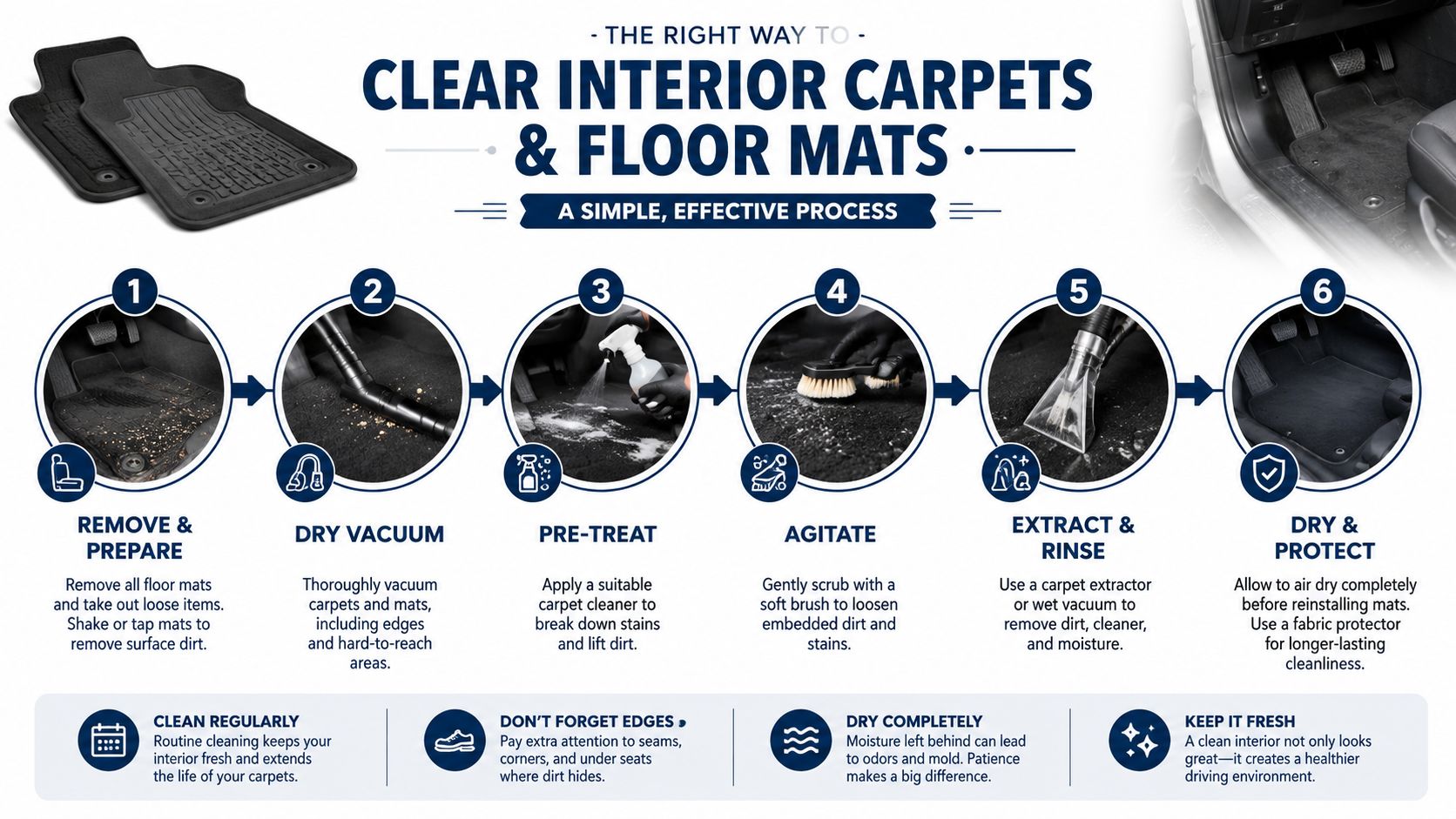
Press dry towels into the carpet and place weight over them briefly, then leave doors open or run airflow through the cabin. Don't finish with steam or hot water at this stage. Heat can set remaining chloride residue, and excessive moisture can leave the pad damp long after the top looks dry.
If the stain is mixed with food, drink, or body oils, use a fabric-safe process rather than treating every mark as salt. A broader guide to carpet and upholstery stain help can help you separate mineral deposits from organic staining before choosing a chemical.
Handling Salt Marks on Seat Fabric and Washable Trim
Cloth seats, removable covers, and entry rugs need a lighter touch than a removable floor mat. Test the vinegar-and-cool-water solution on a hidden seam first. Dyed trim can bleed, and a white salt mark is easier to live with than a new faded patch caused by an aggressive cleaner.
Once the test area is safe, lightly mist the stained panel. Don't soak the seat cushion. Work a soft brush in short strokes along the fabric grain, then blot repeatedly with a clean microfibre cloth. Each pass should transfer less residue. If the towel keeps picking up white material, continue blotting rather than increasing pressure.
Removable covers deserve a proper rinse. After spot treatment, flush them under cool running water so the dissolved salt leaves the fabric instead of drying back into it. Press out excess water without twisting the cover, then air dry it fully before reinstalling.
Keep heat out of the foam. A steamer can push salty moisture beneath the visible fabric, where it becomes harder to extract and slower to dry.
Avoid harsh all-purpose sprays, oxygen bleach on unknown dyes, hot irons, and steamers. These products and tools can create colour, texture, or moisture problems that the original stain didn't cause.
Drying matters as much as cleaning. Prop the doors open when conditions allow, run the cabin fan on fresh-air mode, and don't close the vehicle with a damp seat or rug inside. Trapped moisture can linger under the fabric and encourage unpleasant odours or mildew around the foam.
DIY Methods Versus a Professional Interior Detail
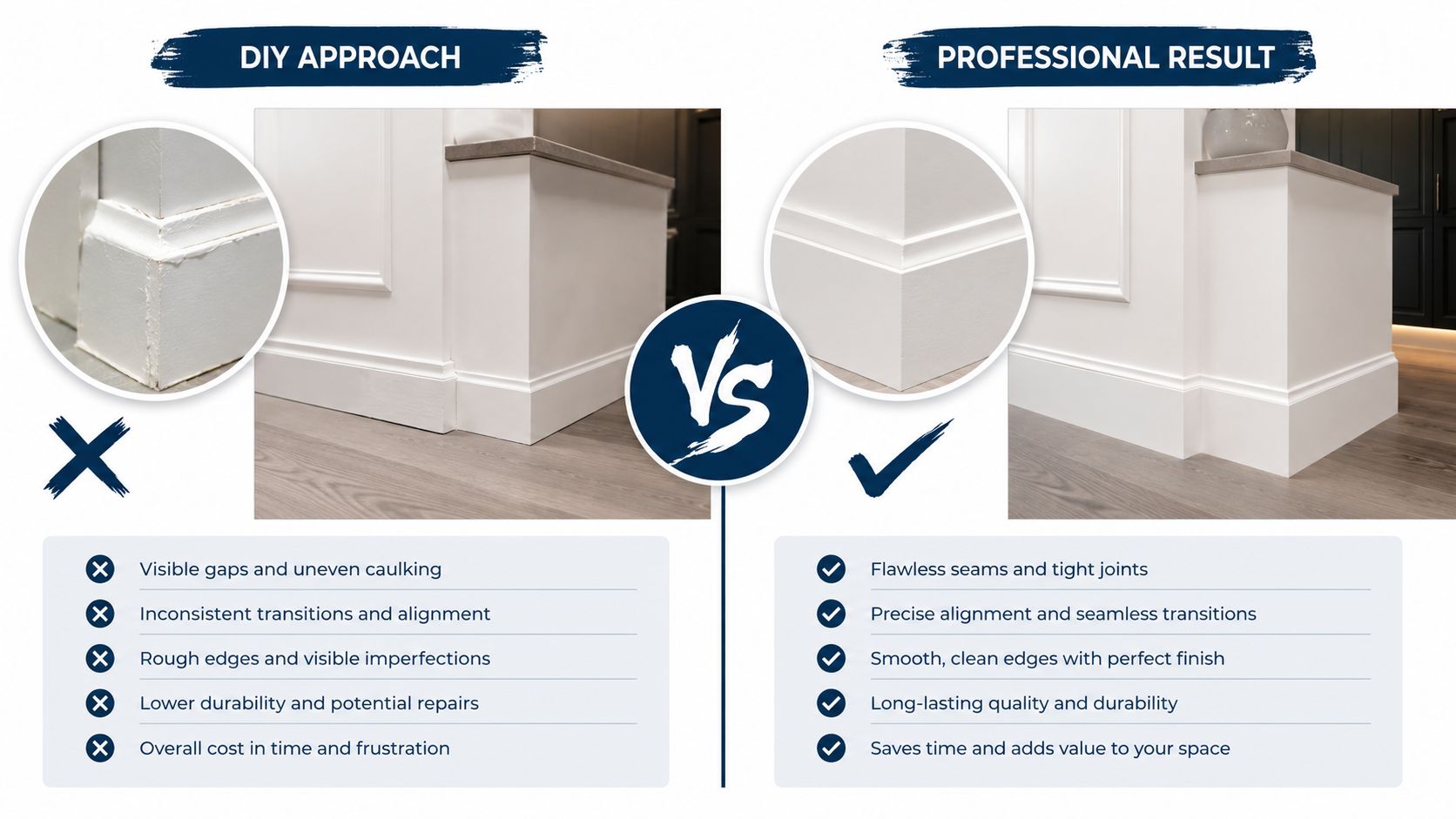
A Saturday-morning DIY job can work when the salt is fresh and the contamination is confined to mats or the upper carpet pile. You need a soft brush, a vacuum, cool water, white vinegar, microfibre towels, and ideally a wet-dry vacuum. That setup can dissolve and remove a fresh salt bloom without turning the cabin into a soaked project.
A professional interior detail earns its place when the residue has travelled below the surface. An extractor can flush and recover more contaminated liquid than a towel, while a technician can reach areas most owners miss, including beneath seat rails, around pedals, along belt receivers, and in tight console seams.
| Situation | DIY is reasonable | Professional cleaning is the better call |
|---|---|---|
| Fresh white bloom | The mark is on a removable mat or surface carpet, and the padding is dry. | The stain returns after you've already treated and dried it. |
| Moisture level | You can control the spray and recover the liquid with a wet-dry vacuum. | The carpet backing or padding feels damp and you can't extract it. |
| Contamination | Salt is the main issue, with little visible grease or odour. | Salt has bonded with body oil, tracked dirt, food, or strong odours. |
| Access | You can remove mats and reach the affected surface safely. | Residue sits under seats, around rails, or in deep carpet contours. |
The decision isn't about pride or convenience. It comes down to dwell time, extraction power, and what the stain has bonded to. Short dwell time and good extraction favour DIY. Long drying cycles, repeated reappearance, and contaminated padding favour a professional appointment.
Don't confuse hot water with better cleaning. Heat can be useful in a controlled professional process, but only when the technician can recover the moisture thoroughly. At home, adding more water without stronger extraction usually extends the problem.
For drivers who want the interior and exterior handled in one visit, Nanak Car Wash offers interior detailing that includes carpet and seat shampooing, salt and stain removal, and crevice cleaning, alongside wash and rust-proofing services. That combination is relevant when the visible cabin residue is part of broader winter contamination.
When an Interior Stain Means the Underbody Needs Attention
A white crust on the driver's floor mat usually isn't an isolated mess. The slush that reached the cabin came from the same winter environment coating the lower doors, wheel wells, and underside. If you only clean the carpet, you've addressed the visible half.
Look behind the front wheels and along the rocker panels. Rust bleed around wheel-well liners, crusty residue behind the tyres, a dull film on suspension arms, and salt tracks on lower door sills all point to exposure beyond the mat. Those areas deserve a rinse before the residue hardens and collects more road film.
Make the maintenance decision immediately
My threshold is simple: if the floor mats show fresh road salt, schedule an underbody rinse as part of the same winter maintenance cycle. That doesn't prove a component has failed, and it doesn't mean every stained mat requires rust proofing, but skipping the underside entirely makes little sense.
Ontario's winter road treatment creates a corrosive environment, and year-round GTA driving can expose a vehicle to salt across repeated freeze-thaw conditions for months. The underbody needs clean water directed into wheel wells and beneath the chassis, not just a quick pass over the painted doors.
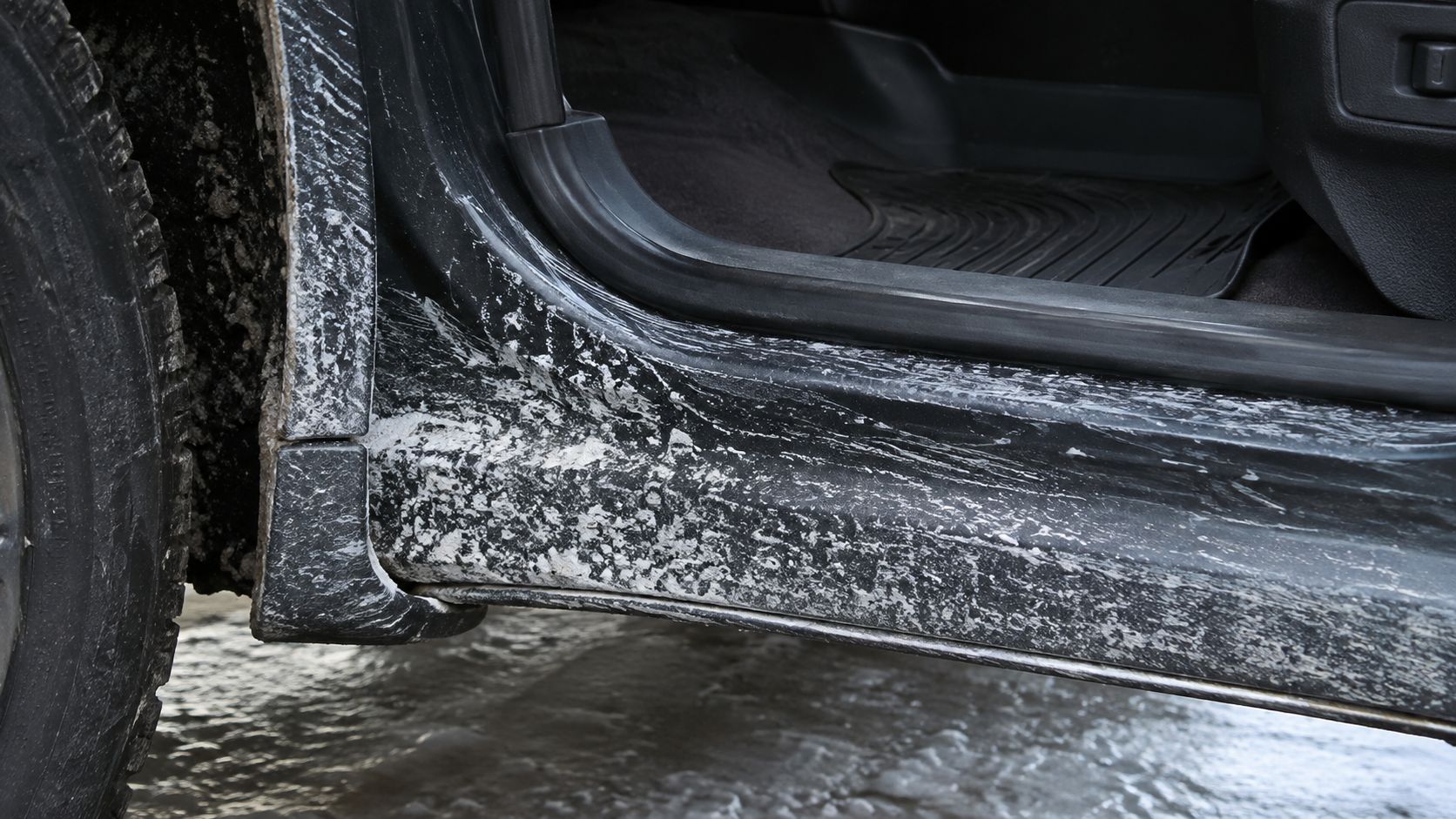
Inspect brake lines, exhaust hangers, subframes, and rocker seams visually, but don't poke aggressively at flaky metal. If you see advanced scaling, wet spots, damaged lines, or loose components, book a proper inspection rather than relying on a wash.
Interior detailing should therefore sit beside, not replace, underbody care. Clean the cabin, rinse the salt from underneath, and consider a suitable rust-protection service when the vehicle's condition and age justify it.
Winter Habits That Keep Salt Stains From Coming Back
Use this as a glove-box checklist. The order matters because preventing grit from entering is easier than extracting it later.
- Brush before opening: Knock loose salt from rocker panels and lower door edges with a soft brush so it doesn't fall onto the sill or carpet.
- Protect the carpet: Keep a fresh set of all-weather mats over the carpet and lift them out at the end of each week.
- Shake before vacuuming: Remove loose crystals outdoors before the shop vacuum turns wet salt into a smear.
- Spot-treat early: Keep a small bottle of white vinegar and cool water available for a controlled response to new marks.
- Dry the cabin: Use airflow and, when practical, a heated garage to dry carpet before residue settles into the backing.
- Rinse below the doors: Wash wheel wells, rocker panels, and the underbody regularly through winter instead of waiting for spring.
- Inspect the sills: Wipe door jambs and lower sills because they catch brine that mats can't protect against.
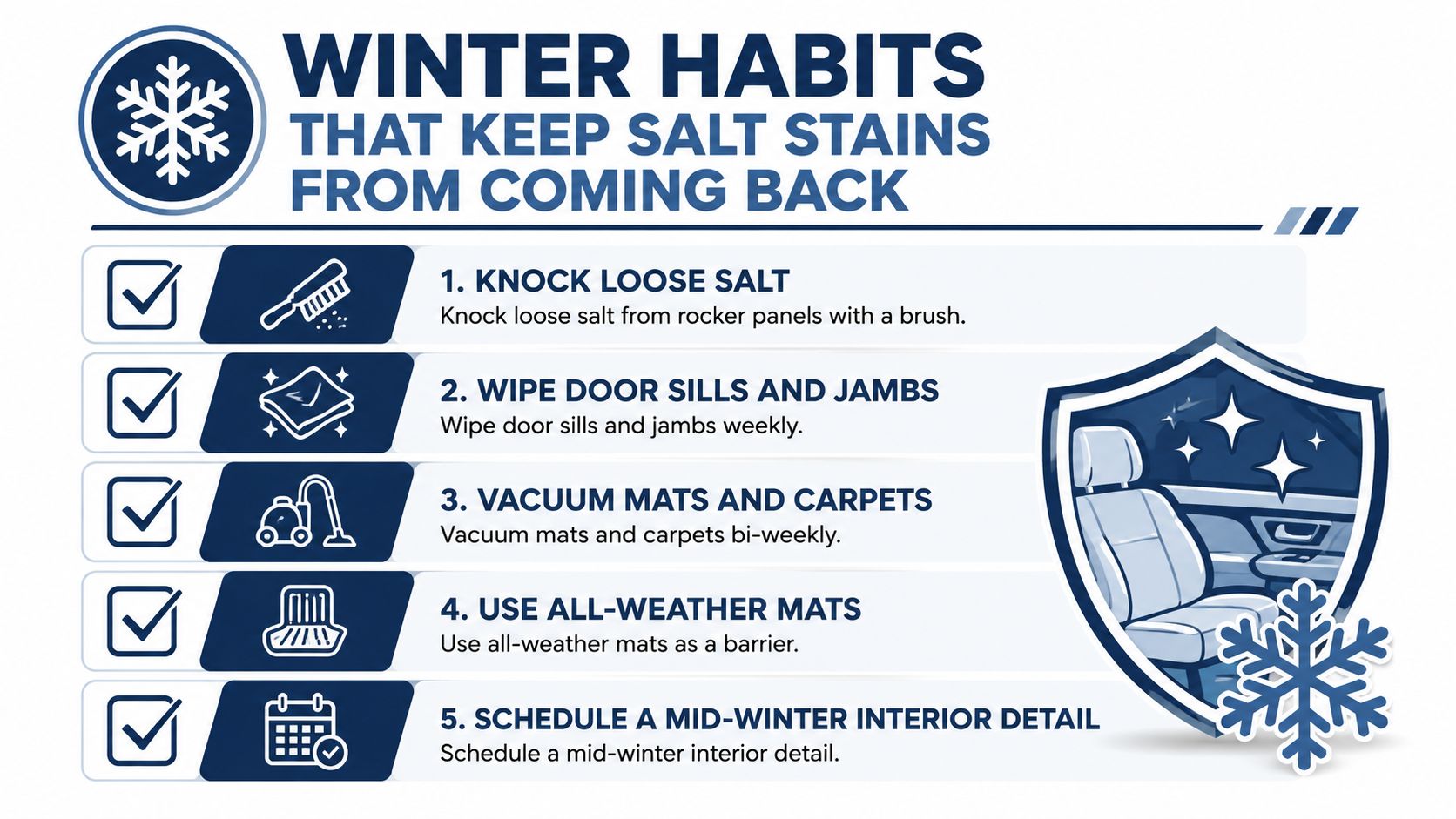
All-weather mats are a barrier, not a cure. Empty them before they overflow, clean their channels, and check the carpet underneath. A trapped puddle can keep the backing damp while the top appears clean.
The same habit applies to rideshare, delivery, and fleet vehicles. Frequent passengers bring in more moisture and grit, so a quick end-of-shift shakeout and regular vacuuming can prevent a small crust from becoming a deep extraction job.
Putting It Together for a Cleaner, Healthier Car
Salt-stain removal works best as a maintenance rhythm, not a spring rescue. Vacuum loose crystals first, dissolve what remains with a cool low-moisture treatment, extract the contaminated liquid, and dry the interior completely. Then inspect the lower doors and underbody, because the cabin tells you where winter exposure has already travelled.
Keep the tasks in separate lanes. Interior work protects fabric and reduces residue, while underbody rinsing and rust protection address the metal outside your sightline. A product that makes carpet look bright won't remove brine from a rocker seam, and an exterior wash won't pull salt from seat foam.
Choose a recurring inspection point
Pick one repeatable moment, such as the first Saturday after a snow event or every fourth fuel fill. Use it to vacuum mats, treat any fresh crust, wipe door sills, and look behind the front wheels. If the stain returns after proper extraction, stop escalating DIY chemicals and book an interior detail.
Consistency beats a stronger cleaner. Small, correct actions prevent residue from drying into the pile, reduce the amount of moisture trapped in the cabin, and give you a better chance of spotting underbody corrosion before it becomes a repair problem.
If your GTA vehicle has white salt crust on the mats, book a visit to Nanak Car Wash for interior salt and stain removal, carpet and seat shampooing, and an exterior wash that can include underbody cleaning. Ask about rust proofing as well if the underside shows persistent winter residue, and make the next clean part of your regular maintenance routine.





 6600 Finch Ave W, Etobicoke, ON M9V 3Z6
 647-703-8515
 MON – SUN 8 AM to 7 PM