
You've just driven through a week of GTA slush. The dark paint on your sedan is now covered in a grey film, the lower doors look chalky, and every rinse seems to reveal another layer of road salt. That mess isn't only cosmetic. Canadian guidance explains that road salt is hygroscopic, so it draws moisture onto the vehicle's surface and helps accelerate rusting, which is why winter protection is applied before snowfall and maintained through the salt season. Ontario winter salt guidance
Ceramic spray wax can help, but it's easy to misunderstand what it does. It isn't permanent ceramic coating, and it won't rustproof your undercarriage. Think of it as a quick, repeatable barrier for painted surfaces, one that fits the reality of commuters, delivery vehicles, ride-hailing cars, and anyone washing through an Ontario winter.
Table of Contents
- What Ceramic Spray Wax Really Is
- How It Differs from Traditional Wax and Ceramic Coatings
- How to Apply Ceramic Spray Wax at Home
- When to DIY Versus Calling a Professional Detailer
- Longevity and Maintenance in Ontario Conditions
- Common Misconceptions Worth Clearing Up
- Building a Realistic Ceramic Spray Wax Routine
What Ceramic Spray Wax Really Is
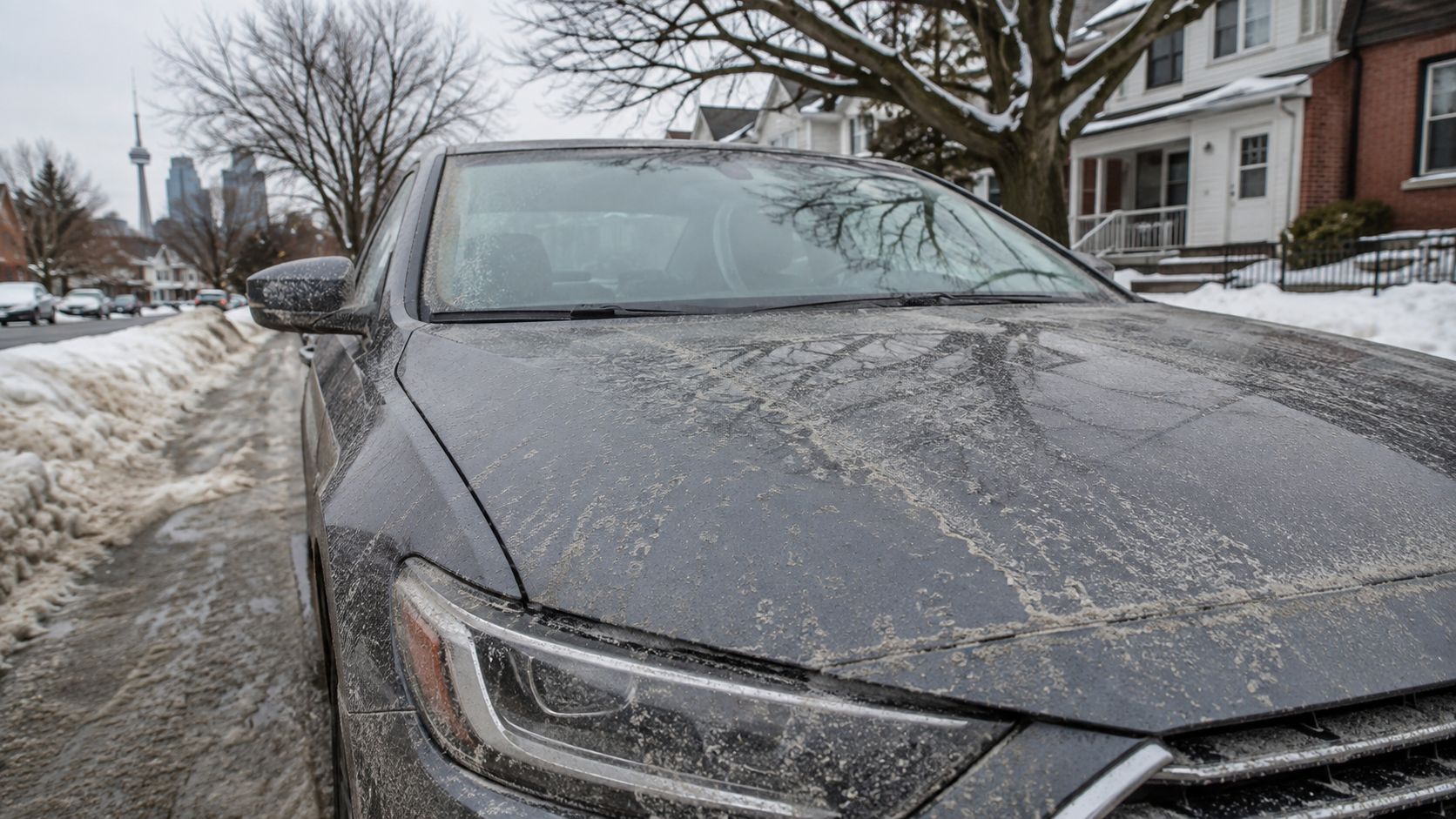
After a GTA commute through slush, salt collects along the lower doors, rocker panels, and rear hatch. A ceramic spray wax does not remove that film. It adds a liquid paint-protection product over the clear coat, giving the next wash a better chance of releasing ordinary road grime before it bonds tightly.
You apply the product with a trigger bottle and towel, an applicator, or, depending on the formula, through a spray-and-rinse process. Many formulas combine silicon dioxide, commonly called SiO2, with polymers or wax-like ingredients. Once spread and buffed, they leave a thin sacrificial film on painted surfaces.
That film works like a rain shell over a jacket. It cannot make the jacket indestructible, but it helps water run off rather than soaking straight in. On automotive paint, the practical results are usually water beading, easier washing, a slicker surface, and a temporary barrier against road film and contaminants.
The chemistry explains why the word ceramic does not mean permanent. Traditional wax relies mainly on wax and polymer ingredients. SiO2-based sprays use ceramic-related chemistry to improve water behaviour and slickness, while leaving a lighter film than a professionally installed coating. The trade-off is intentional. You refresh the protection instead of expecting it to remain untouched for years. Canadian ceramic spray wax durability guidance describes this type of spray wax as lasting about 1 to 3 months under normal use, compared with 3 to 7 years for professional coatings.
What protection means in daily driving
Protection means an added surface layer, not immunity from stone chips, scratches, stains, or rust. A protected door may release salty splash more easily during the next wash, and a hood may shed rain or melting snow more readily. The product can preserve gloss and reduce cleaning effort, but it cannot make weeks of salty buildup harmless.
Frequency matters in Ontario. A vehicle driven daily on salted GTA roads needs more attention than one stored indoors and driven occasionally. Rinse away salt and winter grime before applying another layer, because spray wax works on a reasonably clean surface, not as a substitute for washing.
Ceramic spray wax also does not correct paint. It can make a finish appear brighter after cleaning, but it will not remove swirls or repair damaged clear coat. Heavily oxidised or scratched paint may need polishing before protection.
Shop-floor rule: Treat ceramic spray wax as a maintenance layer, not a one-time winter shield.
The product sits on painted surfaces and does not protect the undercarriage. Ontario winter care still calls for rinsing, underbody cleaning, and rustproofing. Ontario-focused winter rust-prevention advice explains why those tasks belong in the same maintenance plan.
How It Differs from Traditional Wax and Ceramic Coatings
A GTA commuter can apply protection before a winter drive, then find the vehicle coated with salt film after the next highway trip. That experience explains why carnauba paste wax, ceramic spray wax, and a professional ceramic coating should not be treated as interchangeable. All can make paint feel slick, but their film types, preparation requirements, durability, and maintenance routines differ.
A rainwear comparison makes the distinction practical. Carnauba paste wax is a light windbreaker, giving paint a warm appearance but offering limited help during sustained exposure. Ceramic spray wax is a practical rain shell, quick to apply and convenient when conditions change. A professional ceramic coating is closer to a full storm suit, provided the paint has been properly prepared and the coating has been installed and cured correctly.
| Feature | Carnauba Wax | Ceramic Spray Wax | Pro Ceramic Coating |
|---|---|---|---|
| Main role | Warm gloss and basic surface protection | Fast, repeatable hydrophobic maintenance | Long-term surface protection |
| Typical durability | Usually measured in weeks | About 1 to 3 months under normal use | About 3 to 7 years |
| Application | Paste or liquid, worked by hand | Spray, spread, and buff, or spray and rinse depending on the formula | Careful preparation, controlled application, and curing |
| Appearance | Deep, warm glow | Gloss with a slick, modern finish | Strong gloss and pronounced water behaviour |
| Maintenance | Frequent reapplication | Regular refresh coats | Routine washing is still required |
| Best fit | Enthusiasts who enjoy traditional waxing | Daily drivers and busy owners | Owners seeking long-term protection and professional preparation |
The spray format also changes the cost and workflow. Canadian retail listings show ceramic spray wax in different bottle sizes and formulas, including the 750 mL Simoniz ceramic spray wax specifications listed by Canadian Tire. A light-mist product may suit a vehicle that needs frequent refreshes, while a thicker formula can require more product, wiping, and levelling during each application.
Why the layers don't perform the same way
Ceramic spray wax is generally a low-solids, sacrificial SiO2 film. It rests on top of the clear coat rather than chemically cross-linking into it like a professional coating system. That construction makes regular refreshes practical, but it also means the spray layer is easier to wear away through washing, winter grime, and repeated road exposure.
Traditional wax remains useful for a well-kept classic or weekend vehicle. Its warmer visual character appeals to owners who enjoy hand application and do not mind reapplying more often. Ceramic spray wax suits a different routine: quick application, easier washing, and recurring protection during wet, salty GTA weather.
A professional coating demands the most preparation and control. It may suit a newer vehicle or an owner seeking a carefully prepared finish, but the coating does not remove the need for safe washing. Salt, brake dust, and road film still have to be removed before they remain on the paint for extended periods.
Choose the product by the job. Wax prioritises character and hands-on care. Spray wax prioritises speed and repeatability. A coating prioritises longer service life, with more preparation at the start and continued maintenance afterward.
How to Apply Ceramic Spray Wax at Home
A GTA winter commute leaves a predictable trail: salty spray on the rocker panels, gritty film behind the wheels, and contamination around badges and trim. Application starts with removing that material. Ceramic spray wax can protect clean paint, but it will not hide bonded salt, tar, sap, or loose grit. Sealing contamination beneath the film can weaken bonding and leave an uneven finish.
Prepare the paint
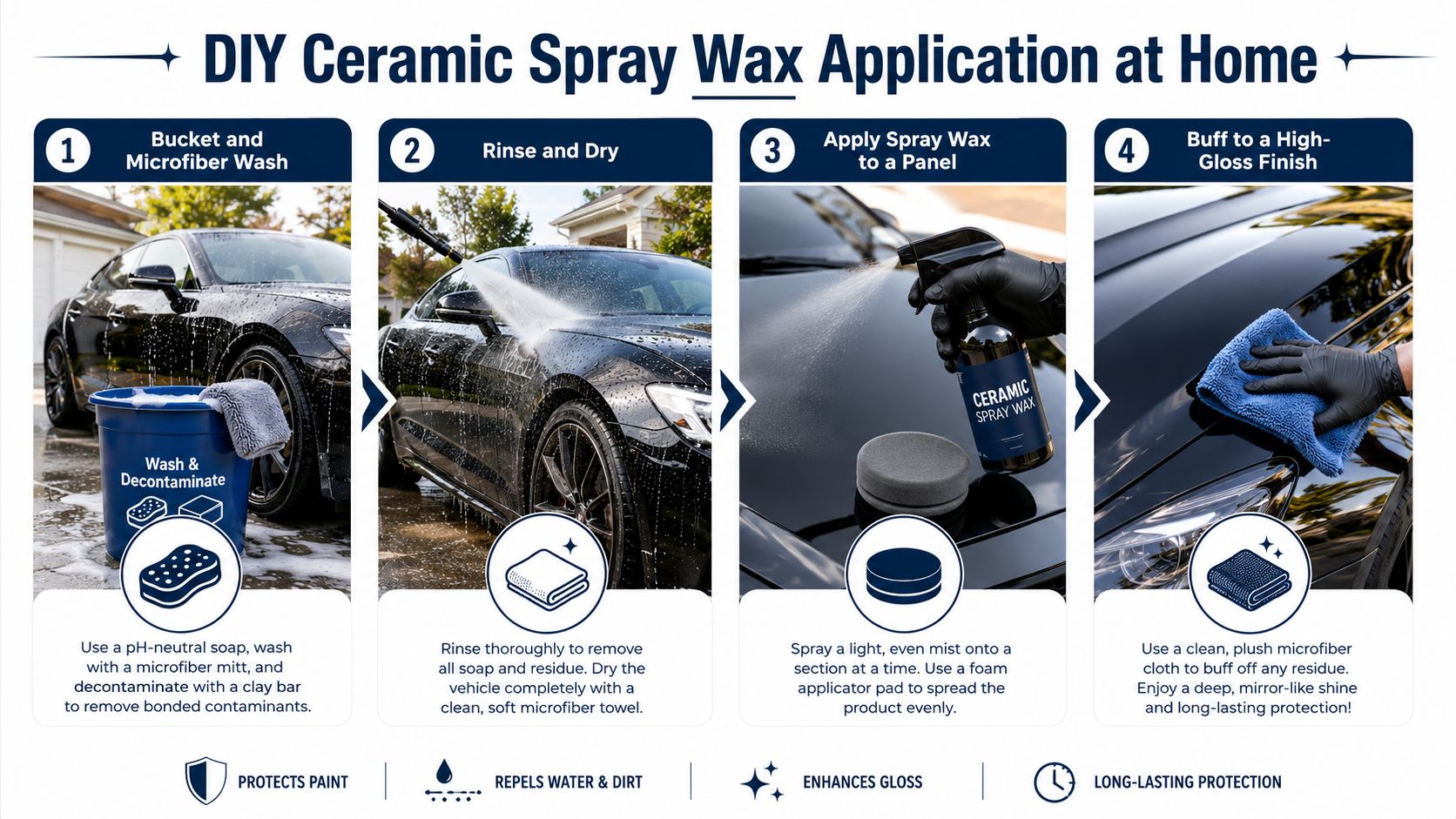
Wash carefully. Use a clean bucket, quality car shampoo, and a microfiber wash mitt. Rinse the lower panels thoroughly, since GTA road film collects heavily there.
Decontaminate when needed. After washing, place your fingertips inside a thin plastic bag and glide them over the paint. A rough feel indicates bonded contamination. Use a suitable clay bar or chemical decontamination product according to its instructions. The goal is smooth paint, not aggressive scrubbing.
Dry completely. Water hiding around badges, mirrors, trim, or panel gaps can dilute the product and cause runs. Pair a drying towel with an air blower where possible.
Choose shade and a cool panel. Direct sun can make the product flash before you level it, especially on dark paint.
Apply a controlled amount
Shake the product if the label requires it. Spray a small amount onto a clean microfiber applicator instead of flooding the panel. This improves control, limits waste, and reduces overspray on glass or trim.
Work on one panel, or one section of a large panel, at a time. Spread a thin, even film with straight or overlapping passes. Immediately use a second, dry microfiber towel to remove residue, rotating to a fresh towel face often. For a medium SUV, the application itself commonly takes roughly 20 to 30 minutes, depending on preparation and panel size.
If you can see a wet, oily layer sitting on the panel, you've probably used too much.
Keep the product out of direct sun, and do not let it dry completely before buffing. Never use a towel that has collected grit from the rocker panels. High spots and streaks usually indicate excess product, delayed wiping, or an unsuitable towel.
Follow the label for curing. Some formulas require a period before rain or road spray, while spray-and-rinse products are intended for use immediately after washing. Canadian retail guidance also covers hybrid ceramic waxes using a wash, rinse, spray, second-rinse process, which shows why product instructions differ. Canadian spray-and-rinse product guidance
When to DIY Versus Calling a Professional Detailer
A GTA driver finishing a salty commute can handle ceramic spray wax at home if the goal is a repeatable maintenance step, not a full correction job. Daily-driven sedans, crossovers, and work vehicles benefit from a clean-and-protect routine that fits into a normal wash. DIY makes sense when you can inspect the paint, control the product amount, work in shade, and accept that Ontario winter exposure will require refreshes.
Call a professional when the difficult part is the paint, the vehicle's size, or your available time. Swirls on dark paint, tall SUV roof panels, and a newer vehicle needing careful preparation can demand more work than spraying and wiping suggests. Ceramic spray wax cannot hide poor preparation for long. The surface underneath controls the final result.
Ask three questions before spending
How long will you keep the vehicle? A short-term owner may prefer simple maintenance. If you plan to keep the vehicle for years, compare repeated spray applications with paying for professional preparation and a more durable coating.
How often do you wash? Frequent washing lets you inspect the finish and refresh a sacrificial layer before salt residue sits on it for weeks. A vehicle left under salty film will not receive the full benefit of any spray product.
Can you tolerate minor streaking? DIY application rewards patience and good lighting. If an uneven finish bothers you, or your parking area offers no shade, professional application may be the calmer choice.
Bottle sizes and product positioning vary, from 500 mL and 750 mL economy formats to premium ceramic sprays, so compare cost per application rather than shelf price alone. As noted earlier, the amount used and reapplication interval affect the cost.
For a busy GTA driver, a recurring wash arrangement may provide more value than buying a stronger product and neglecting it. Choose a service that rinses away winter salt properly, dries without dragging grit across the paint, and occasionally removes bonded contamination. That preparation keeps the surface ready for whichever protection layer you choose.
Longevity and Maintenance in Ontario Conditions
A GTA vehicle can leave a clean driveway and meet salt spray, slush, freeze-thaw cycles, UV exposure, and repeated wash-bay visits before the week is over. Those conditions make ceramic spray wax a consumable maintenance layer, not a set-and-forget finish. The product's useful life depends on how often the vehicle is driven, where it is parked, and how the surface is washed.
Use water behaviour as a practical garage check. Consistent beading and runoff suggest the film is still contributing. Patchy beading, a rough feel, or washing that no longer seems easier signals that the surface needs inspection and a clean refresh. Beading is not a laboratory measurement, but it gives an owner a useful routine check.
As noted earlier, spray wax typically lasts about 1 to 3 months under normal conditions, while professional coatings can reach 3 to 7 years. Ontario salt exposure and frequent wash-bay cleaning may push a spray product toward the shorter end. There is no universal expiry date, because preparation, wash chemistry, parking exposure, and driving frequency all change the result.
| Season | Wash every 1 to 2 weeks | Wash every 3 to 4 weeks | Wash monthly or less |
|---|---|---|---|
| Winter | Refresh when beading becomes uneven, with frequent salt rinsing | Inspect closely after heavy slush and road-salt exposure | Clean the vehicle before assuming protection remains |
| Spring | Decontaminate after winter and apply a fresh layer | Use the first thorough spring wash as a reset | Expect more bonded contamination |
| Summer | Maintain with regular gentle washing | Refresh as surface slickness fades | A neglected film may lose its useful behaviour sooner |
| Fall | Apply before snowfall and monitor lower panels | Reapply after major contamination events | Don't wait until salt has built up to begin protection |
Use a pH-neutral automotive shampoo for routine washing. Strong degreasers, aggressive brushes, and dirty wash media can shorten the useful life of a surface product. A rinse that removes salt without dragging grit across the paint often matters more than applying another layer early.
Winter care also requires attention below the paint line. Ceramic spray wax does not protect the undercarriage, so rinsing underneath and arranging separate rustproofing remain necessary for Ontario driving. Canadian winter corrosion advice
Common Misconceptions Worth Clearing Up
Marketing often turns a maintenance product into a promise of permanent protection. That's where new users get disappointed. Ceramic spray wax can work well, but only when its limits are clear.
Myth one, ceramic means permanent
Fact: The usual product type is a sacrificial film measured in weeks or months, not a permanent finish. Canadian product guidance describes typical durability at about 1 to 3 months, while professional coatings are presented as lasting 3 to 7 years. Canadian product comparison
Myth two, one application covers the winter
Fact: A single application shouldn't be treated as a full-season guarantee. Daily driving, salt exposure, and repeated washes gradually reduce surface performance. Watch the paint and refresh it when water behaviour becomes inconsistent.
Myth three, it replaces rustproofing
Fact: Ceramic spray wax protects the painted surface. It doesn't protect the undercarriage, boxed chassis areas, pinch welds, or exposed underside metal. Ontario winter guidance recommends combining surface protection with regular rinsing and rustproofing. Ontario corrosion guidance
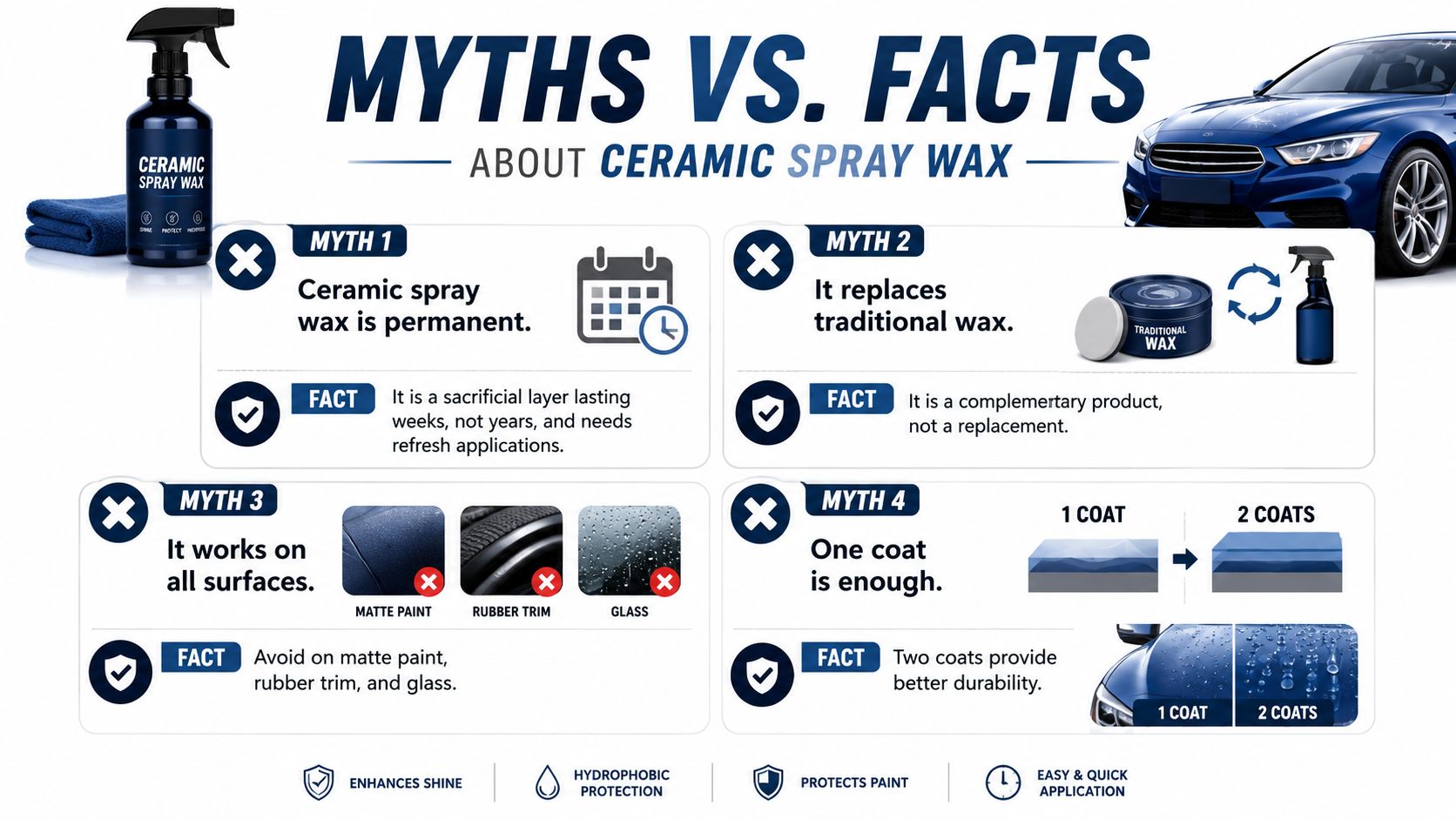
Myth four, it works on dirty paint
Fact: Dirt and bonded contamination interfere with an even application. Wash first, and use clay or another suitable decontamination method when the paint feels rough.
Myth five, more product creates more protection
Fact: Over-application causes streaks, residue, and wasted product. A thin, levelled layer is easier to finish than a soaked panel.
Myth six, it's the same as professional ceramic coating
Fact: Both may use SiO2-related chemistry, but the concentration, film thickness, curing behaviour, and intended service life are different. A spray wax is a convenient topper or maintenance product, not a bottled substitute for every professional coating system.
Building a Realistic Ceramic Spray Wax Routine
A GTA daily driver needs a routine that survives salt, slush, and busy weekdays. Set the schedule around washing, contamination, and changes in water behaviour, rather than waiting until the paint looks neglected.
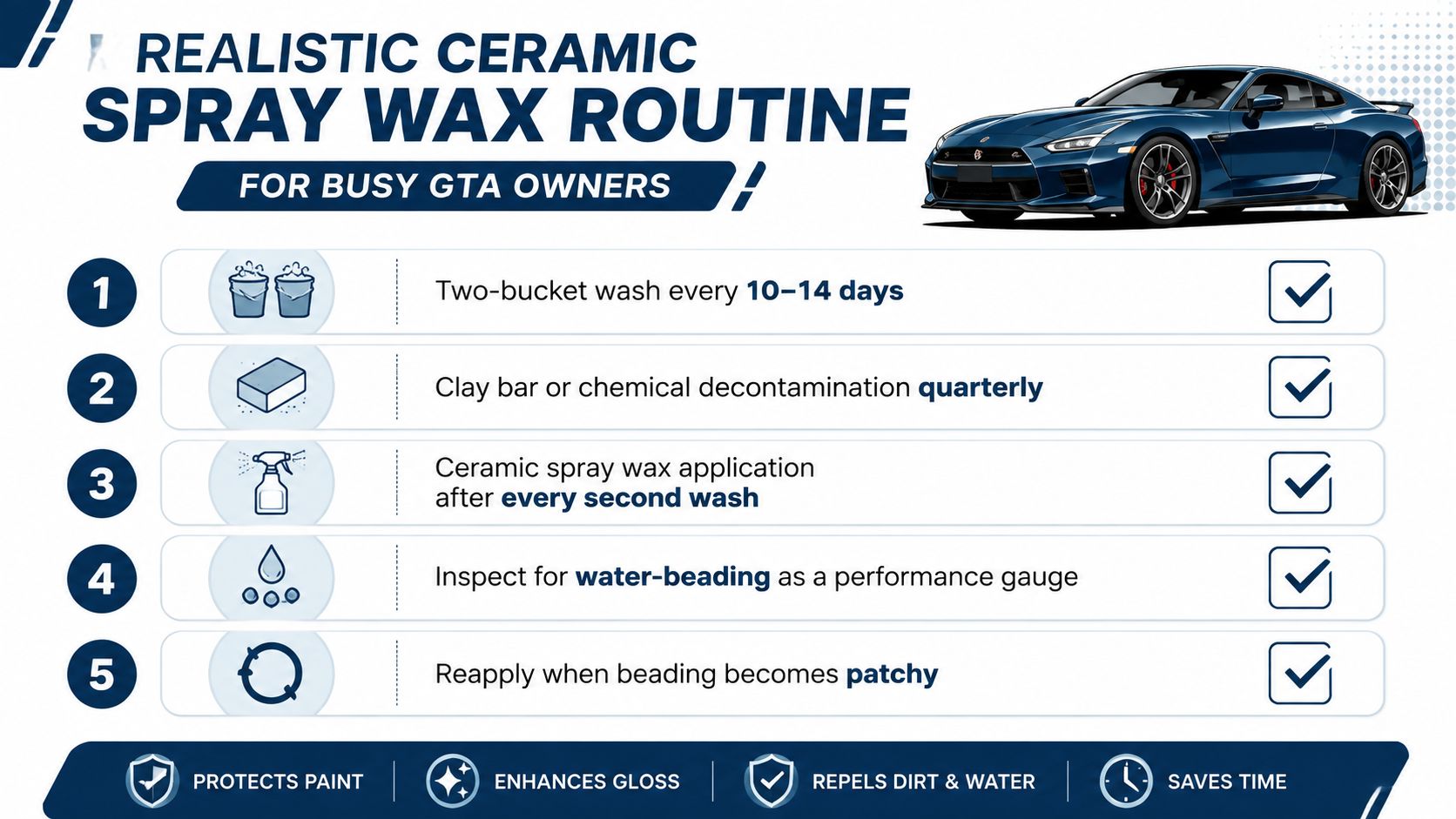
Start with the wash. Using a two-bucket method every 10 to 14 days limits the time salt and road film have to harden. Rinse the wheel wells and lower doors thoroughly, then dry with clean microfiber towels. A wash club can save time, provided the visit includes effective rinsing and hand-drying when available. Inspect the paint rather than assuming every wash provides the same result.
A simple seasonal rhythm
Early spring: Wash and decontaminate after the salt season. Check the lower panels, wheels, and underbody for buildup.
Late spring through summer: Refresh the ceramic spray wax when beading becomes patchy or the paint loses its slick feel. Keep the wash process gentle.
Early fall: Complete a thorough wash and decontamination before the first major snowfall. Apply protection to clean, dry paint.
Winter: Rinse salt from the exterior and underside regularly. Refresh the paint layer when water behaviour drops, instead of following a fixed longevity promise.
Keep one clean applicator, several quality microfiber towels, a pH-neutral shampoo, and a suitable decontamination product together. Having the supplies ready removes the friction that causes owners to postpone the job.
For GTA owners who want washing, interior cleaning, detailing, and rustproofing from one provider, Nanak Car Wash offers express and full-service washes, detailing appointments, rustproofing, and monthly wash memberships at listed regional locations. Choose the service that fits your schedule, then monitor the paint so ceramic spray wax remains a maintenance product rather than an unused bottle.
Return to Nanak Car Wash for a practical wash, hand-drying, detailing, or rustproofing option that fits your GTA driving schedule. If winter salt is the main concern, arrange exterior cleaning and underbody protection, then maintain the surface with regular ceramic spray wax refreshes.



 6600 Finch Ave W, Etobicoke, ON M9V 3Z6
 647-703-8515
 MON – SUN 8 AM to 7 PM