

A typical SUV interior detail costs about CAD $100–$300, and the appointment usually takes 1–4 hours, depending on the vehicle's size and condition. An express interior service can be much quicker, but it won't fix ground-in salt, embedded pet hair, or old spills.
You know the scene. It's Friday afternoon, you're clearing coffee cups, snack wrappers, sports gear, and a child's abandoned hoodie off the passenger seat before someone important gets in. The third row has become a storage locker, the cargo carpet has collected half the driveway, and the cup holders are holding something that may once have been a drink.
That's normal SUV life. A larger cabin has more seats, more carpet, more crevices, and more opportunities for passengers, pets, groceries, and winter boots to leave their mark. In Ontario, road agencies apply roughly 1.5 to 3 million tonnes of road salt each winter, while Toronto alone uses about 130,000 to 150,000 tonnes annually according to Ontario rust-proofing guidance. Salt and slush get tracked into mats, carpets, seat tracks, and cargo areas, so SUV interior detailing is maintenance, not a once-in-a-decade indulgence.
A professional full interior service generally falls within the Canadian market range of CAD $100–$300, with SUVs often priced toward the higher end because technicians have more surface area to clean as outlined in Canadian detailing pricing guidance. Expect the shop visit to take 1–4 hours, while a lighter express package may take less time. The right choice depends on whether you're maintaining a basically clean cabin or trying to recover one that has survived a winter, a dog, and several milk-related incidents.
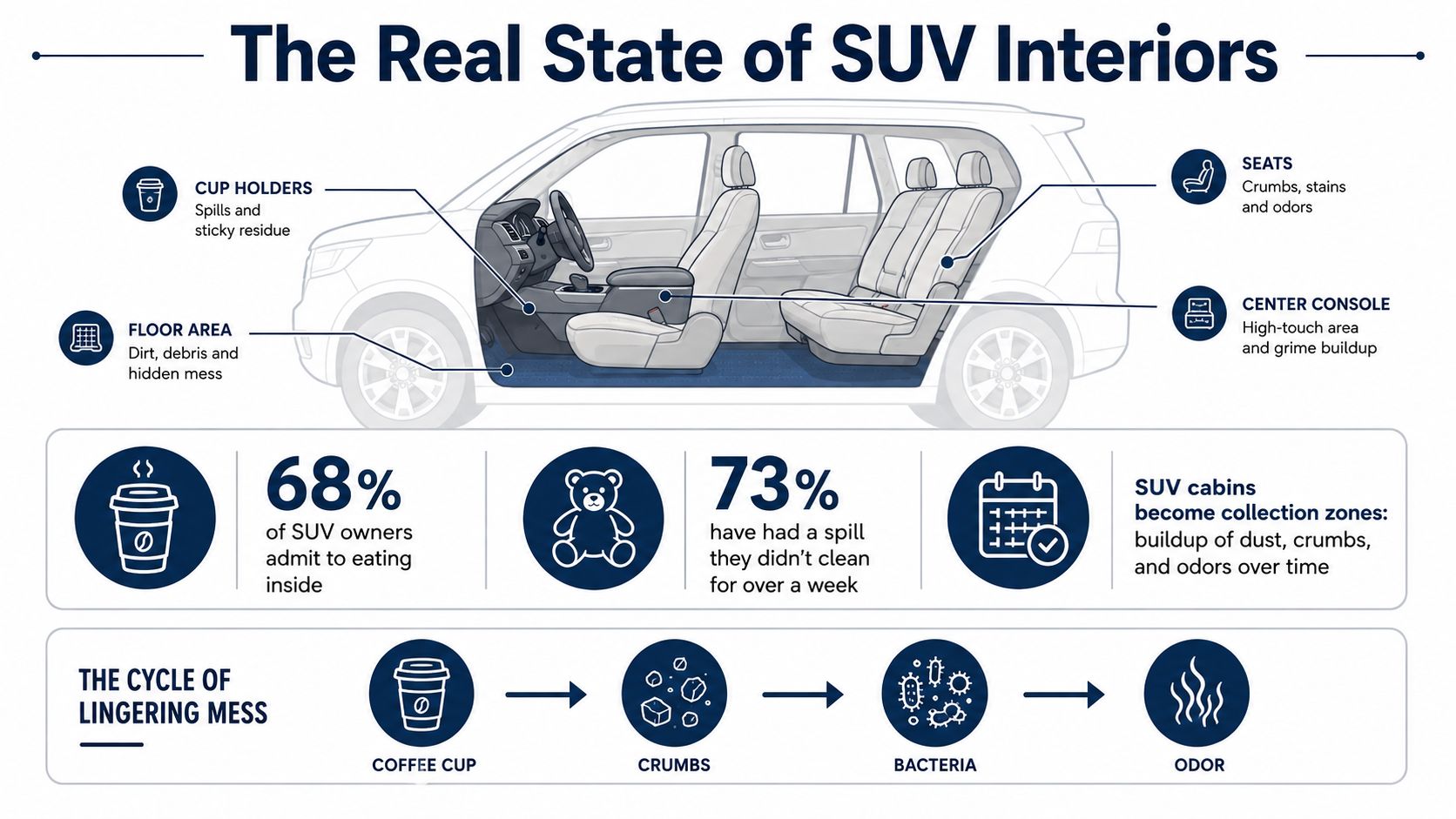
Table of Contents
- The Real State of SUV Interiors and Why It Matters
- What an SUV Interior Detailing Package Actually Includes
- How Much SUV Interior Detailing Costs in Canada
- DIY Interior Cleaning Versus Paying a Professional
- The Sequence Behind a Proper Salt and Stain Detail
- Memberships and Prepaid Bundles Compared to One-Time Visits
- Choosing the Right Approach for Your SUV and Driving Habits
- Putting It All Together for Your Next SUV Detail
The Real State of SUV Interiors and Why It Matters
An SUV doesn't get dirty in one dramatic event. It accumulates mess in layers. Dust settles in the vents, crumbs slide under seat rails, muddy boots grind grit into carpet, and the cargo area absorbs whatever your household, pet, or side business carries around.
That buildup matters more in the GTA because winter moisture and salt return every year. Visible undercarriage rust can appear within 2 to 3 winters, while structural rust can become a serious risk after roughly 8 to 12 years of year-round driving in Ontario conditions as described in regional rust guidance. The interior doesn't rust like the chassis, but salt-laden slush still leaves residue on floor mats, carpeting, seat tracks, and lower door panels.
The cabin is a collection zone
A three-row SUV gives grime more places to hide than a compact car. The third row gets ignored because it's awkward to reach. The cargo area gets treated like a utility tray. The console and cup holders catch sticky residue, while fabric seats hold odours long after the original spill has dried.
Canadian drivers also tend to postpone interior cleaning. A national survey found that 73% of Canadian drivers clean their car interiors less than once every few months, despite spending an average of five hours per week in a vehicle as reported in Canadian vehicle-maintenance coverage. That mismatch is especially obvious in family, commuting, and ride-hailing SUVs.
My practical rule: If you're embarrassed by the cabin before someone opens the door, you've waited too long for an express vacuum.
Treat SUV interior detailing like a recurring home-cleaning task with specialist equipment. Use quick services to control everyday dust and debris, then book deeper extraction when salt, stains, odours, or pet hair have moved beyond what a household vacuum can handle.
What an SUV Interior Detailing Package Actually Includes
A proper technician works through the cabin in a sequence. If the package starts with a quick vacuum, wipes a few visible surfaces, and sends you away without touching the third row or cargo carpet, it's a refresh, not a restoration.
The standard workflow
The first pass is dry vacuuming. Mats come out, seats move forward and back, and the technician reaches beneath the front seats, around seat rails, between cushions, through the third row, and across the cargo area. This stage removes loose grit before moisture turns it into paste.
Next comes agitation and cleaning. Brushes loosen debris from carpet fibres and fabric, while shampooing or hot-water extraction tackles embedded dirt and stains. Steam cleaning can help with hard plastics, vents, buttons, and other high-contact areas, but the operator has to match the tool and pressure to the material.
Leather needs a different approach. A pH-appropriate cleaner removes body oils and grime, followed by conditioner suited to the trim. Vinyl, plastics, dashboards, consoles, and door panels should look clean rather than greasy. If you're dealing with delicate leather, use a technician who understands the difference between cleaning and over-wetting. If you need specialist advice beyond automotive work, choose a leather cleaning pro who can explain how the material should be treated.
| Service Step | Standard Interior Detail | Premium Interior Detail | Elite Interior Detail |
|---|---|---|---|
| Vacuuming | Seats, mats, carpets, and cargo area | Full cabin, crevices, and third row | Full cabin with intensive agitation |
| Fabric cleaning | Spot treatment | Carpet and mat shampooing | Deep extraction on carpets, seats, and mats |
| Hard surfaces | Dashboard, console, doors, and cup holders | Vents, seams, and detailed crevices | Steam-assisted cleaning where suitable |
| Leather and vinyl | Basic wipe-down | Cleaning and conditioning | Deep cleaning and conditioning |
| Glass | Interior glass and mirrors | Streak-free interior glass | Interior glass plus detailed edges |
| Odour work | Basic deodorising | Odour neutralising treatment | Advanced odour treatment, if quoted |
| Add-ons | Usually separate | Pet hair, headliner, or child-seat work | Protective coatings and specialty remediation |
Package names vary, so ask direct questions before booking. Does “interior cleaning” include extraction? Is pet hair included or charged separately? Will the technician clean the third row, cargo carpet, seat tracks, headliner, and door jambs? A clear answer is more valuable than a fancy package name.
How Much SUV Interior Detailing Costs in Canada
Canadian pricing is easier to understand when you stop comparing labels and start comparing labour. A compact two-row SUV with light dust doesn't demand the same appointment as a full-size vehicle with three rows, dog hair, salt crust, and a cargo area used for hockey equipment.
The verified Canadian market guidance places interior detailing around CAD $100–$300, with SUVs and seven-seat vehicles commonly priced higher than sedans because their size and condition affect labour time as outlined in Canadian detailing pricing information. Treat that as a starting band, not a promise. A provider may quote by vehicle class, condition, service tier, or technician time.
What pushes the quote upward
The most common price changes come from pet hair, heavy staining, biohazard contamination, oversized cargo areas, and removable or difficult-to-access third-row seating. A technician may also charge more when seats, child equipment, or cargo accessories need to be removed before cleaning.
Mobile services often quote hourly rates, while fixed-location operators tend to use menus. Neither model is automatically better. Flat pricing gives you predictability, while hourly pricing can be fairer when the vehicle is unusually dirty or the requested work changes during inspection.
| Cost Factor | Typical CAD Range | When It Applies |
|---|---|---|
| Standard SUV interior detail | CAD $100–$300 | Routine cleaning with ordinary dirt and debris |
| SUV or seven-seat surcharge | Varies by provider | Larger cabin, additional seating, or cargo space |
| Pet hair remediation | Quoted separately | Hair embedded in carpet, mats, upholstery, or cargo lining |
| Heavy staining | Quoted after inspection | Set-in food, drink, grease, or winter residue |
| Biohazard cleanup | Special quote | Vomit, urine, bodily fluids, or contaminated materials |
| Third-row or cargo-area work | Size and condition dependent | Hard-to-reach seating and heavily used cargo carpet |
Ask for an itemised quote that separates the base service from surcharges. Urban Ontario markets can cost more than rural locations because operating expenses and demand differ, but the condition of your SUV still matters more than the city name on the receipt.
DIY Interior Cleaning Versus Paying a Professional
DIY cleaning wins when the SUV needs maintenance. Professional detailing wins when the cabin needs recovery. Those are different jobs, and confusing them is how owners spend a Saturday making a stained carpet damp without removing what caused the stain.
A household vacuum, soft brushes, microfiber towels, and a suitable all-purpose cleaner can handle loose dust, crumbs, light marks, and routine wipe-downs. Leather conditioner helps maintain a clean surface, while a glass towel and proper glass cleaner can remove the film that makes a windshield look permanently foggy.
The equipment gap appears when you reach the carpet and upholstery. A professional may use a commercial extractor, steam cleaner, compressed air, specialised brushes, and forced-air drying. That combination reaches deeper than a household vacuum and reduces the risk of leaving wet fabric behind.
Choose DIY for upkeep
DIY makes sense when:
- The mess is fresh: Deal with a new spill before it dries and spreads through the upholstery.
- The surfaces are lightly soiled: Dust, crumbs, fingerprints, and ordinary cabin film don't require a full shop appointment.
- You enjoy the work: If cleaning the SUV is relaxing rather than a chore, the time cost may not bother you.
A basic home kit can include brushes, microfiber cloths, all-purpose cleaner, and leather conditioner. Keep the chemicals mild, test an unseen area, and don't flood seats or carpet.
Pay for extraction when the problem is embedded
Professional work earns its keep with ground-in salt, sour milk, old food stains, stubborn odours, and dog hair tangled into fabric. A detailer can also identify when a stain is permanent, when a material is at risk, and when aggressive scrubbing would cause more damage than it removes.
The honest test: If you need specialised equipment, several hours, and a dry cabin by the end, compare the shop price with the value of your time before reaching for another spray bottle.
The sensible middle path is regular home maintenance with a deeper professional service when the cabin crosses the line from untidy to contaminated. Don't pay for restoration when a wipe-down will do, but don't pretend a quick vacuum is extraction.
The Sequence Behind a Proper Salt and Stain Detail
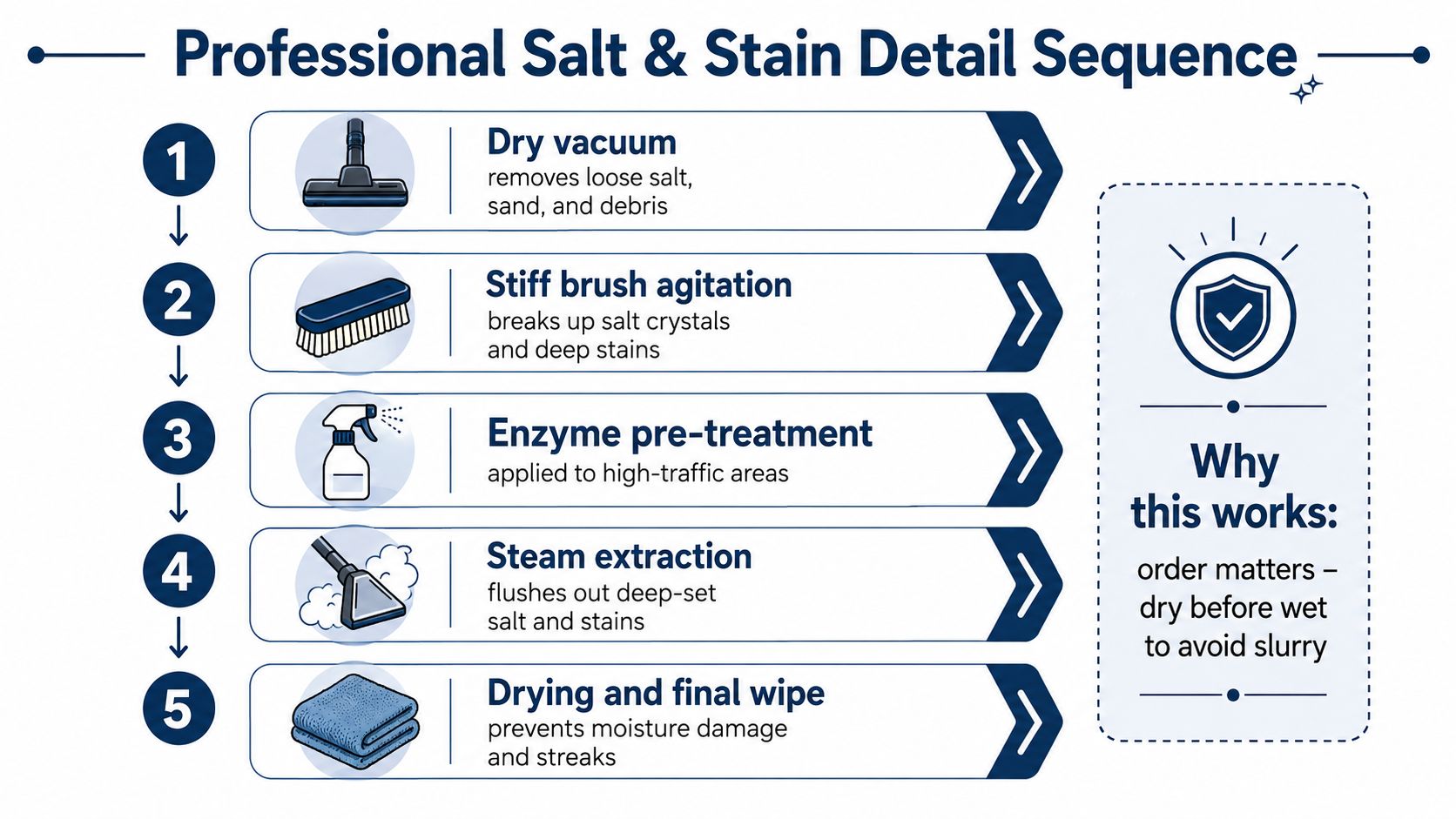
Salt remediation fails when liquid arrives too early. Wetting a carpet full of loose salt creates slurry, which can spread into fibres, seams, and underlay. The technician should remove dry debris first, then introduce moisture in a controlled way.
The correct order
- Dry vacuum first. Remove loose salt, sand, grit, crumbs, and hair from mats, seats, carpets, and the cargo area.
- Agitate crusted areas. A stiff brush breaks salt crystals loose from carpet fibres without relying on water to do the work.
- Apply a neutralising solution. Use a suitable solution, allow a short dwell time of about 3–5 minutes, then proceed to extraction as recommended in Ontario winter salt-removal guidance.
- Extract moisture. A wet vacuum or hot-water extractor pulls dissolved salt and dirty solution out of the material.
- Dry aggressively. Forced air matters because trapped moisture beneath a salt load can create mildew and odour problems. Ottawa-area detailing guidance describes a workflow using heated extraction or steam, controlled dwell time, and forced-air drying in its winter salt-removal process.
Hard surfaces come after the dry debris is under control. A mild cleaner and soft brush work around vents, buttons, seams, and textured plastics. Enzyme products suit organic spills, while grease may need a different targeted cleaner. Leather gets cleaned and conditioned separately, and glass is best left until the end so dust and product overspray don't force you to redo it.
For broader winter protection habits, these Lounge Wagon car care tips are useful alongside professional cleaning. The main lesson is simple: dry before wet, extract instead of spreading, and dry the cabin before you close the doors.
Memberships and Prepaid Bundles Compared to One-Time Visits
One-time detailing is simple. You book when the SUV becomes unacceptable, pay the quoted amount, and leave. That works well for occasional drivers and owners whose cabins stay orderly.
Prepaid bundles suit people who know they'll need repeat visits but don't want to commit to a monthly programme. You pay for several services upfront, usually in exchange for a discount, then use them across the year according to actual need. The catch is expiry rules, location restrictions, and whether the bundle covers deep extraction or only maintenance cleaning.
Monthly memberships work differently. They make sense when the SUV returns often enough that convenience and predictable spending matter more than the lowest single-visit price. A membership may include exterior washes and discounted interior cleaning, but don't assume it covers pet hair removal, full shampooing, leather conditioning, or heavy stain work.
| Model | Typical Cost | Best For |
|---|---|---|
| One-time visit | Market price for the selected service | Occasional drivers and one-off recovery jobs |
| Prepaid bundle | Upfront payment for repeat visits | Owners planning seasonal or recurring details |
| Monthly membership | Recurring monthly fee | Frequent drivers, families, and commercial users |
| Hybrid approach | Membership plus occasional deep detail | Owners needing regular upkeep and periodic restoration |
Compare the real terms
Before joining, ask:
- What service is included: Is it a vacuum and wipe-down, or actual interior extraction?
- How often you'll use it: A cheap membership is wasteful if visits keep getting skipped.
- What costs extra: Pet hair, oversized SUVs, child-seat cleaning, and serious stains may sit outside the base offer.
- Where you can use it: A membership tied to one location may be inconvenient if your driving routes change.
Frequent drivers, pet owners, delivery operators, and ride-hailing drivers usually benefit from a repeat plan. If your SUV sees light use and stays clean, a single visit or prepaid bundle is the more disciplined choice.
Choosing the Right Approach for Your SUV and Driving Habits
The correct cadence comes from usage, not guilt. A family SUV carrying children, snacks, sports equipment, and winter boots needs a different plan from a second vehicle that spends most of its time parked.
Family hauling
Parents should prioritise routine control. Use an express service when the cabin only needs vacuuming and surface cleaning, then schedule a full interior reset when spills, salt, and fabric staining start to accumulate. For allergy-sensitive households, seasonal deep cleaning deserves attention because Ontario conditions bring recurring winter moisture and spring pollen.
Canadian detailing guidance aimed at allergy sufferers recommends deep interior cleaning at least twice a year, with spring cleaning to address winter salt and dampness and another clean in mid-summer for pollen. It also recommends replacing the cabin air filter every 15,000–20,000 km and using rubber mats to reduce moisture retention in its Canada-focused cabin-air guidance.
Pets and commercial driving
Dog hair changes the economics because hair works into carpet, seat seams, and cargo lining. Don't book the cheapest package without confirming whether heavy hair removal is included. A repeat bundle can be sensible when you know the SUV will need several serious cleanups throughout the year.
Ride-hailing and delivery drivers should treat cabin presentation as operating overhead. Riders notice odours, visible debris, dirty door panels, and sticky cup holders quickly, while drivers need short, predictable appointments that don't disrupt their earning schedule. Fleet operators should negotiate consistency across vehicles, not just a low advertised price.
| Use Case | Full Interior Detail | Express Wash | Estimated Monthly Cost (CAD) |
|---|---|---|---|
| Family SUV | Seasonal or recurring deep clean | Between deeper services | Budget according to passenger load and stain risk |
| Pet owner | Repeat deep cleaning as needed | Frequent surface maintenance | Allow for hair-removal charges |
| Ride-hailing SUV | Regular deep clean | Frequent quick refreshes | Treat cleaning as operating overhead |
| Delivery SUV | Periodic extraction | Regular cabin and exterior upkeep | Prioritise downtime and route convenience |
| Small fleet | Scheduled service across vehicles | Repeat maintenance visits | Compare per-vehicle terms and inclusions |
The strongest plan matches mileage, passenger load, pet exposure, and stain risk. Price alone is a poor filter. A cheap service that leaves salt or odour behind moves the expense to the next appointment.
Putting It All Together for Your Next SUV Detail
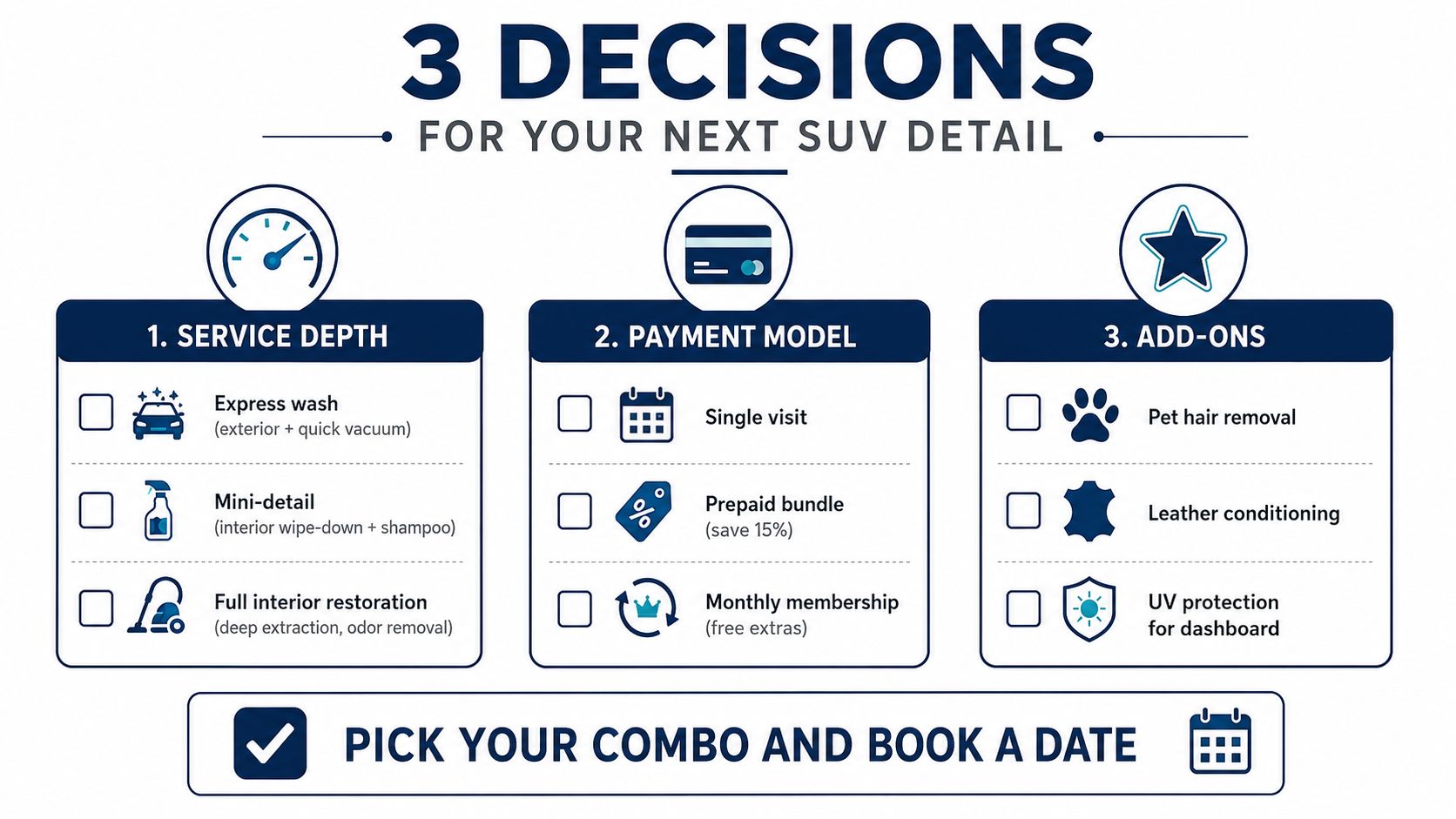
You're making three decisions, not one. First, choose the service depth: an express refresh, a mini-detail, or full interior restoration. Second, choose the payment model: a single visit, prepaid bundle, or membership. Third, choose a cadence that matches how the SUV is used.
Start with one honest baseline detail if the vehicle's condition is unclear. Ask the technician to identify the areas driving the cost, such as salt-crusted carpet, embedded pet hair, stained third-row upholstery, or a cargo area that needs extraction. That inspection gives you a better basis for choosing repeat maintenance than a generic package menu.
Use this booking checklist
- Confirm the vehicle class: Tell the provider it's an SUV and specify whether it has a third row.
- Describe the condition: Mention salt, pet hair, food spills, odours, stains, and child-seat equipment.
- Request itemised pricing: Separate the base service from size, hair, stain, extraction, and specialty charges.
- Ask about drying: Confirm how the technician will remove moisture before returning the vehicle.
- Match the payment plan: Choose a bundle when visits are seasonal, or a membership when regular use is realistic.
- Check the location: A convenient GTA site matters if you're building the service into a weekly route.
Nanak Car Wash offers appointment-based interior and exterior detailing, including vacuuming, carpet and seat shampooing, salt and stain removal, vent and crevice cleaning, and leather care. It also offers express and full-service washes, prepaid options, monthly wash memberships, and locations across the GTA, so you can compare a one-time deep clean with a repeat maintenance routine through Nanak Car Wash before booking.
Visit Nanak Car Wash to check current SUV detailing availability, location-specific pricing, and membership terms. Bring the vehicle in for a proper baseline clean, then choose the service depth and payment option that fits your actual driving habits.


 6600 Finch Ave W, Etobicoke, ON M9V 3Z6
 647-703-8515
 MON – SUN 8 AM to 7 PM