
You open the truck door and get hit by the smell before you notice the mess. Road salt has dried into the floor mats, coffee has marked the seat, pet hair is woven into the seams, and the steering wheel feels tacky despite the air freshener hanging from the mirror. A quick vacuum at the car wash might remove loose crumbs, but it won't reset a cab that works as an office, lunchroom, storage area, and daily transport.
Truck interior detailing is a restoration process built around soil removal, stain treatment, controlled moisture, and careful work around the surfaces you touch most. Ontario conditions make the job more demanding, especially when winter salt, slush, mud, and wet clothing keep bringing contamination back into the cab.
Table of Contents
- Why Your Truck Interior Needs More Than a Quick Vacuum
- What Professional Truck Interior Detailing Actually Covers
- Tackling Ontario Road Salt and Winter Contamination
- Pricing Factors and What to Expect on Your Invoice
- How to Prepare Your Truck Before the Detailing Appointment
- Building a Maintenance Routine Between Professional Details
- Booking Your Truck Interior Detail and Next Steps
Why Your Truck Interior Needs More Than a Quick Vacuum
A work truck collects a different kind of dirt from a lightly used passenger car. Boots carry grit across the floor, tools shed dust into storage pockets, drivers eat and drink inside the cab, and passengers bring in additional debris. A dog can leave hair under the seats and along the door panels, while winter moisture settles into mats and carpet backing.
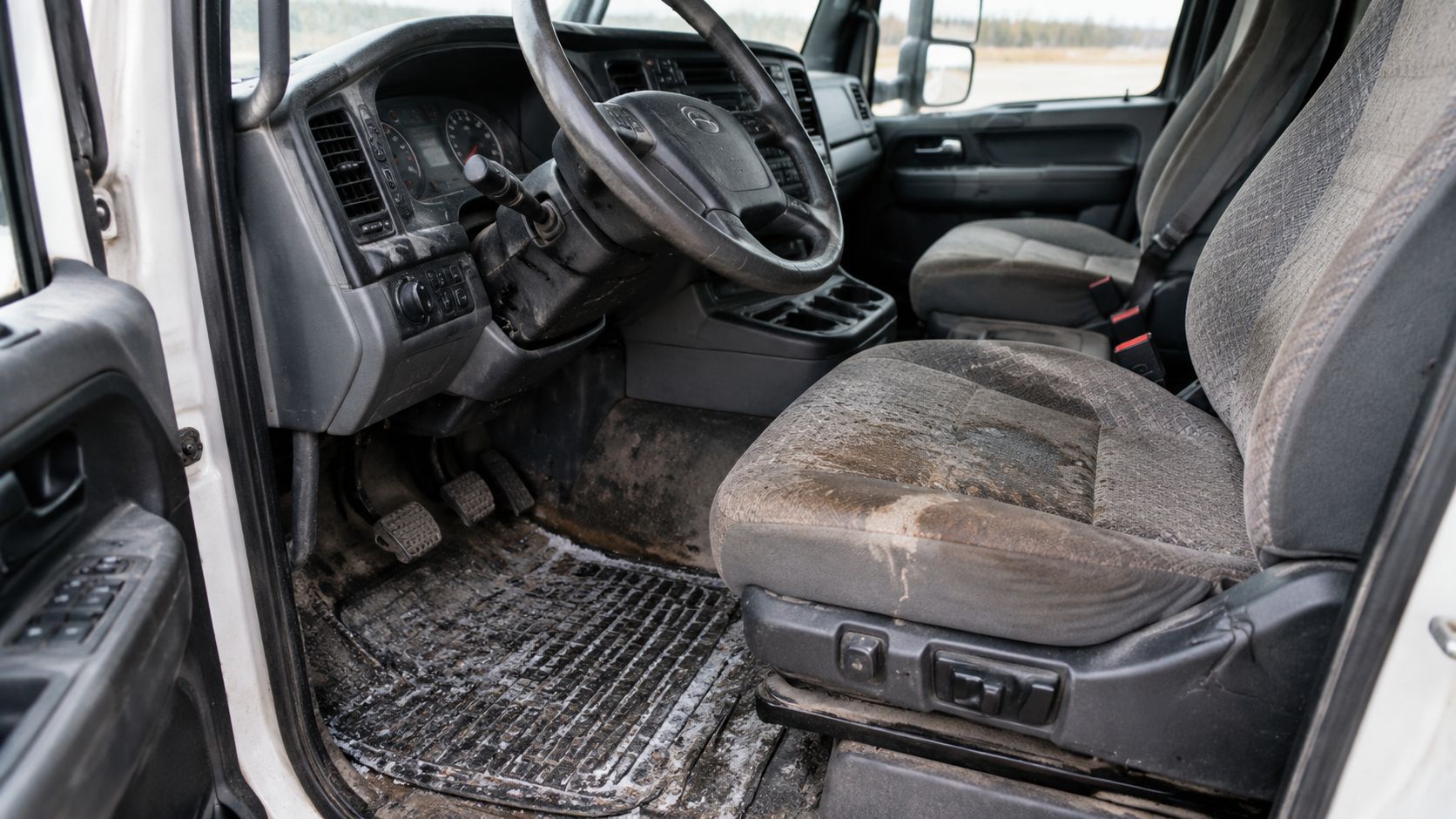
A standard wash-facility vacuum is useful for maintenance, but it usually focuses on accessible surface debris. It won't necessarily remove salt lodged in carpet seams, hair wrapped around seat rails, residue inside vents, or odour-causing contamination beneath mats. A technician needs to move through the cabin methodically, often using brushes, compressed air, crevice tools, interior-safe cleaners, and extraction equipment.
Appearance is only part of the job
Ontario's truck-cleaning demand sits within a mature janitorial-services environment. The province's janitorial-services market was estimated at $3.2 billion in 2026, with 15,117 businesses and 59,553 employees, and businesses and employment both grew between 2021 and 2026, according to IBISWorld's Ontario janitorial-services market profile. That broader ecosystem matters because commercial interior cleaning depends on trained labour, scheduling, supply chains, and consistent standards.
A proper detail also addresses high-touch points. Ontario safety guidance identifies steering wheels, gear shifters, dashboards, gauges, windows, and door handles as surfaces that require frequent cleaning, with Ontario vehicle-cleaning guidance from the Infrastructure Health and Safety Association recommending detergent-and-water cleaning for many cab areas, followed by disinfectant wipes and drying where appropriate.
Practical rule: A clean-looking cab isn't necessarily a clean cab. The technician's process matters more than the fragrance left behind.
The difference becomes obvious after a deep service. Mats come out, loose salt is removed before moisture is introduced, seams are agitated, stains are treated according to the material, and wet areas are dried rather than left to air out slowly. That takes more time than a quick vacuum, but it also gives the truck owner a realistic reset instead of a temporary improvement.
What Professional Truck Interior Detailing Actually Covers
A professional service should have a defined sequence, not a collection of random wipe-downs. The exact products vary by material, but the work generally moves from loose debris to embedded contamination, then from cleaning to drying and protection.
Start with dry removal
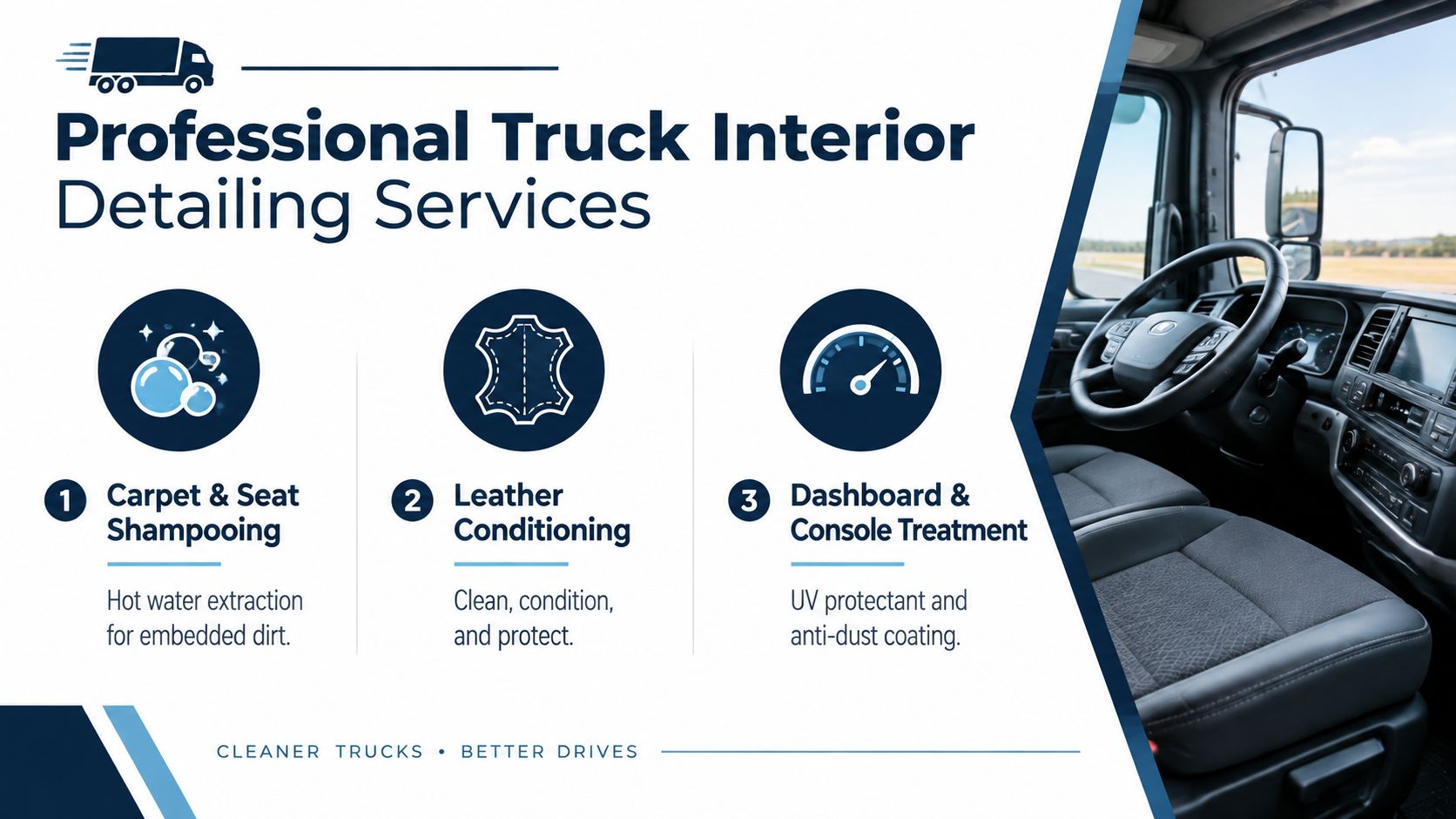
The first pass usually includes removing mats, opening storage compartments, and vacuuming floors, seats, door pockets, consoles, and gaps around the rails. A technician may use a crevice attachment, soft detailing brush, and compressed air to move debris out of tight areas before collecting it.
This order matters. If loose grit is still present when liquid cleaner is applied, it can turn into abrasive slurry and spread across the upholstery. Air blowout is particularly useful around vents, switches, seat tracks, stitching, and the folds where ordinary vacuum heads can't make proper contact.
Treat carpets, seats, and stains according to their material
Carpet and fabric seats may need agitation followed by hot-water extraction. The extractor lifts suspended soil and pulls much of the cleaning solution back out, but it isn't a magic eraser. Old oil, dye transfer, permanent discolouration, and damaged fibres may improve without disappearing completely.
Leather needs a different approach. A technician should clean the surface with a leather-safe product, remove residue, and apply a suitable conditioner when the finish calls for it. Saturating leather or using an overly glossy dressing can leave an unpleasant surface and may make future soil stick more readily.
For owners who want a broader reference on vehicle systems and repair-related questions, Safety Restore's FAQ for mechanics can be useful alongside a detailing consultation, particularly when interior work intersects with seats, restraints, or other installed components.
Hair, vents, and touchpoints need separate attention
Pet hair is labour-intensive because it catches in seams, carpet loops, seat edges, and fabric texture. A rubber pet-hair brush, pumice-style tool used cautiously, vacuum, and repeated passes may be needed. Hair removal should be discussed before booking because it can change the labour involved and the final invoice.
The finishing work includes cleaning steering wheels, gear selectors, door pulls, armrests, buttons, screens, cup holders, dashboards, and climate controls. Glass gets cleaned with a dedicated automotive glass product and a lint-free towel. The best result is clean and low-sheen, not a greasy dashboard that reflects sunlight into the driver's eyes.
Tackling Ontario Road Salt and Winter Contamination
Salt removal isn't a normal shampoo job. Crystals arrive with boots, clothing, floor mats, and melting snow, then settle into carpet fibres and seams. If a technician wets the area immediately, loose crystals can dissolve and spread before they can be recovered.
The dry pass comes first
The process should begin with a deep vacuum pass. The technician removes loose salt, sand, grit, and dried soil while the material is still dry. This is more than a quick sweep over the visible floor because contamination often hides under mat edges, beside seat rails, and along the carpet's raised seams.
The Ottawa fleet-detailing guidance recommends a pH-balanced neutralizer after dry removal, a short dwell period, and controlled extraction. Its process specifies hot steam extraction at approximately 340°F, or 171°C, for 15 to 30 seconds per zone, followed by forced-air drying, as described in Detaling Lab's fleet-detailing guidance for salt removal.
Neutralize, extract, and dry
A neutralizer helps address the residue left after salt contamination, but dwell time needs control. Leaving a product sitting indefinitely doesn't make the treatment more professional. It can increase moisture exposure or affect sensitive materials, so the technician should work in manageable zones.
Steam or hot-water extraction then removes the loosened residue. The operator has to balance cleaning strength against the carpet backing, underlay, wiring, and drying conditions. Excess water is a common failure point. A cab can appear clean on top while retaining moisture underneath the carpet.
Forced air is therefore part of the treatment, not an optional flourish. The Ottawa guidance warns that trapped moisture under carpet can contribute to mildew within a week if drying is neglected. A competent detailer should use air movers, extraction passes, or focused air tools and should tell the owner when the vehicle needs additional drying time.
Salt protocol: Remove crystals while dry, neutralize the residue, extract in controlled zones, and force air through the cleaned area. Skipping the first or last step undermines the middle of the process.
Salt treatment often costs more than a standard interior clean because it adds inspection, product control, extraction, and drying. It also makes sense to clean mats separately where possible, since mats can hold a heavy concentration of salt and may need more aggressive agitation than the fixed carpet.
Pricing Factors and What to Expect on Your Invoice
A fair invoice reflects labour, vehicle size, contamination, and requested finish. The lowest advertised interior price may cover a light cabin with ordinary dust, while a truck carrying tools, pets, food, and winter salt needs more preparation and more technician time.
The service provider should ask about the vehicle before quoting. Useful details include the truck's size, number of seats, carpet condition, upholstery type, salt load, odour, stains, and whether pet hair is embedded in the interior.
| Factor | Impact on Cost | Typical Range |
|---|---|---|
| Vehicle size | Larger cabins and additional floor area require more labour and solution | Varies by provider |
| Soil level | Heavy mud, grease, drink spills, and embedded grime add preparation and extraction time | Varies by condition |
| Road salt | Salt neutralization, extraction, and forced-air drying may be priced as a specialized treatment | Often an added service |
| Pet hair | Hair in seams, carpet, vents, and seat edges requires repeated mechanical removal | Common surcharge |
| Upholstery type | Leather, fabric, vinyl, and delicate trim need different products and techniques | Varies by material |
| Service format | One-time details, prepaid bundles, and memberships distribute cost differently | Depends on plan |
Time depends on condition, not just the booking name
A light interior service can move quickly, while a neglected cab can require substantially more attention. Nanak Car Wash lists interior and exterior detailing with typical duration of 1 to 4 hours, and its service information notes that SUV, van, truck, and pet-hair surcharges apply. That is a useful reminder to ask whether the quoted price includes the actual condition of your vehicle, not just its body style.
Pet hair deserves direct discussion. A vacuum alone won't remove hair wrapped around fabric fibres, and a technician may need to brush, blow, vacuum, and repeat the process. If the truck carries a dog regularly, disclose that before arrival instead of treating the surcharge as an unexpected penalty.
Compare packages by outcome
A one-time detail suits a neglected cab or a seasonal reset. A prepaid bundle may make sense for an owner-operator who wants predictable visits. A monthly membership can reduce the per-visit burden for a truck that needs frequent upkeep, but it won't replace a deep salt extraction or major stain treatment when the interior has already deteriorated.
Ask three questions before approving the work:
- What is included? Confirm whether mats, vents, glass, leather, stains, odour, and salt are part of the quoted service.
- What costs extra? Ask specifically about truck size, pet hair, severe contamination, and extraction.
- What happens after cleaning? Clarify drying time, limitations on stain removal, and whether the vehicle can be driven immediately.
How to Prepare Your Truck Before the Detailing Appointment
Preparation saves time and protects your belongings. A technician can't properly clean beneath a tool bag, around loose paperwork, or inside a console filled with receipts and charging cables.
Empty the working areas
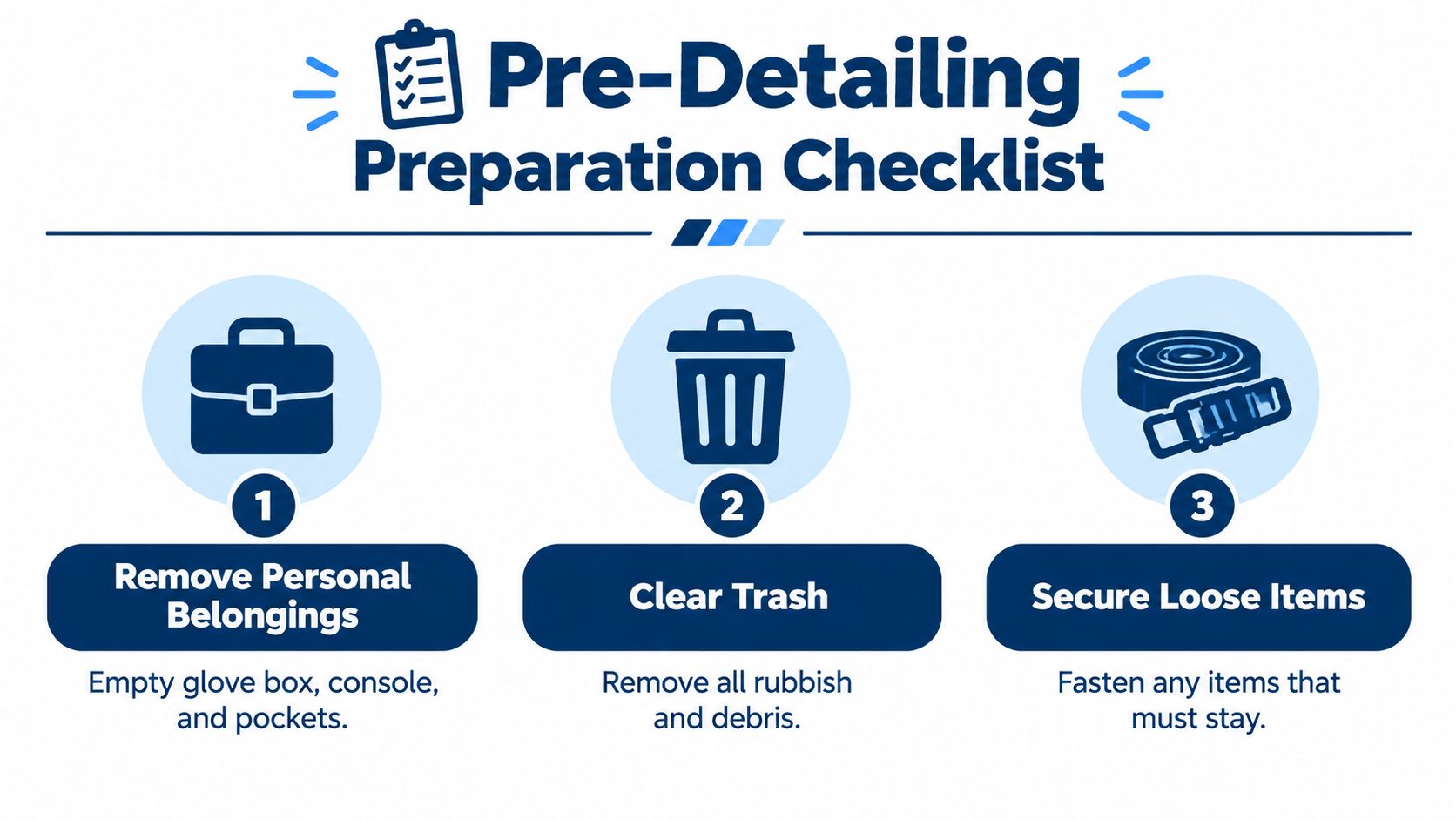
Remove personal items from the seats, floor, door pockets, glove box, centre console, and rear storage spaces. Take out rubbish, food containers, drink cups, loose receipts, and anything that could be damaged by moisture or misplaced during cleaning.
Floor mats should be removed if the detailer has asked you to bring them out separately. Aftermarket seat covers, cargo liners, organizers, and rubber trays can hide soil, so tell the technician whether you want them cleaned or set aside.
A short preparation list helps:
- Clear the cabin: Remove tools, clothing, paperwork, child items, and personal electronics.
- Empty storage: Open the glove box, console, door pockets, and under-seat areas.
- Secure essentials: Fasten any equipment that must remain in the truck so the technician can work around it safely.
- Separate removable pieces: Identify mats, covers, liners, and organizers that need their own treatment.
Describe the problems accurately
Tell the detailer where the coffee spilled, which seat carries pet hair, and whether the smell comes from wet gear, food, smoke, or an unknown source. Odour treatment depends on the source. A fragrance may mask a smell briefly, but it won't solve contamination inside carpet, seat foam, vents, or a damp cargo item.
Also disclose salt damage, old stains, sticky controls, cracked leather, loose trim, aftermarket electronics, and sensitive screens. A technician can then choose appropriate products and avoid flooding vulnerable components. The goal isn't to make the truck sound worse. It's to prevent a mismatch between the service booked and the work the cab needs.
Plan for drying and access
Ask where to leave the truck and whether the detailer needs access to power, water, or a covered work area. If extraction is involved, confirm when the seats and carpets will be ready for normal use. Bringing the truck in with low fuel isn't necessary, but bringing it empty enough for the technician to move seats and reach storage areas is helpful.
Building a Maintenance Routine Between Professional Details
Private vehicles and work trucks don't need the same schedule. A truck used for deliveries, crews, tools, or shared driving receives repeated contact from several people and carries more material into the cab. A one-size-fits-all monthly detail can leave a heavily used work interior dirty for too long, while it may be more than a lightly used personal truck needs.
Government guidance for taxi and rideshare vehicles prioritizes frequent cleaning of high-touch points, including door handles, seatbelts, armrests, buttons, touchscreens, dashboards, steering wheels, and gear shifts, as outlined in the Canadian Centre for Occupational Health and Safety vehicle-cleaning publication. That principle transfers well to shared-duty trucks.
Use a hybrid cadence
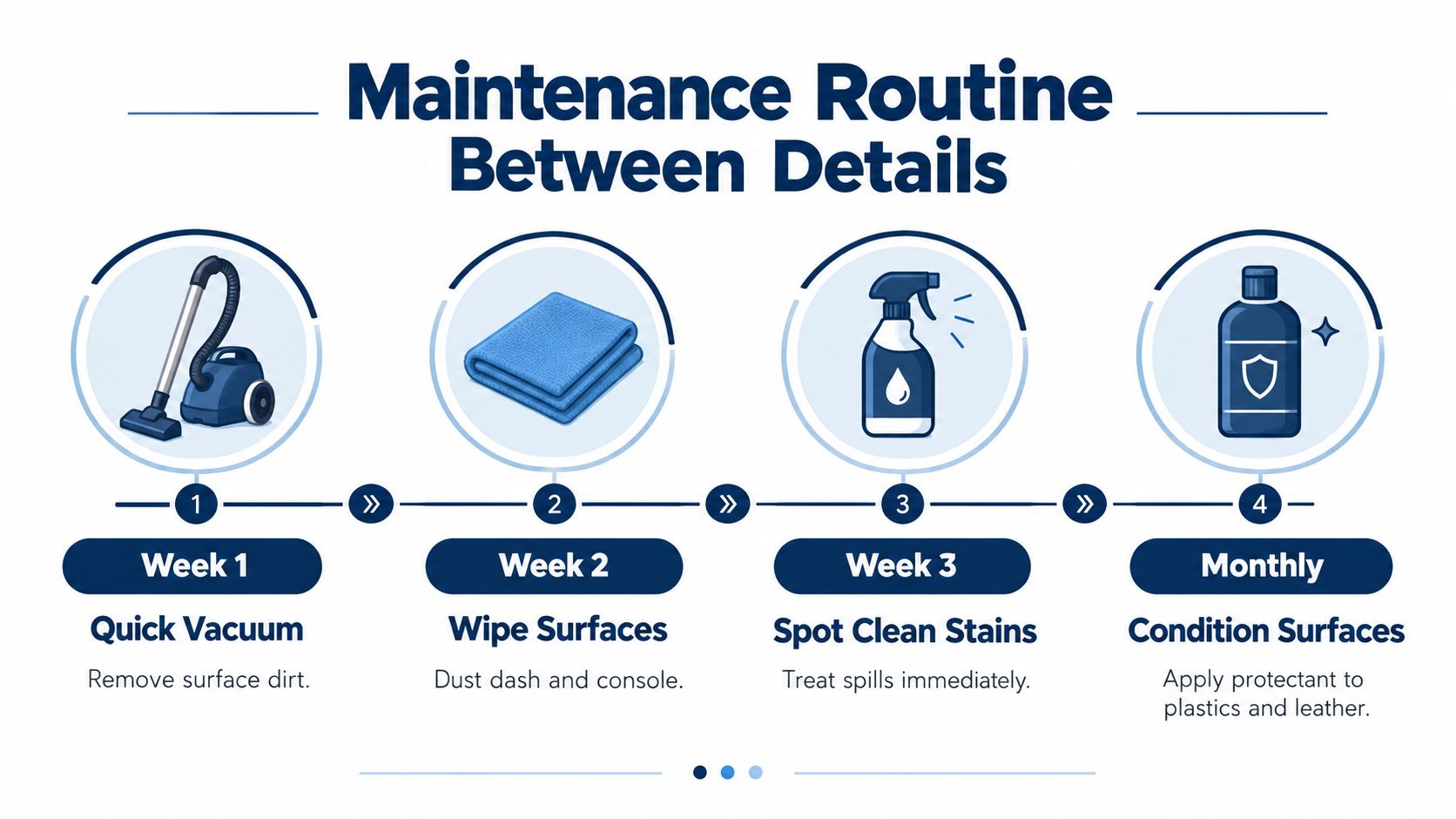
A practical routine separates fast contamination control from periodic restoration:
- Daily or at shift change: Wipe the steering wheel, gear selector, door handles, armrests, radio and climate controls, seatbelt latches, and touchscreen with products compatible with the surface.
- Weekly: Vacuum floors, mats, seat seams, door pockets, and under-seat areas. Remove visible crumbs and grit before they become embedded.
- After spills: Blot immediately, remove the contaminant, and avoid scrubbing a liquid deeper into fabric.
- Periodically: Book a professional interior service when salt, stains, odour, hair, or ground-in soil no longer responds to routine cleaning.
Make the routine fit the truck's work
A delivery truck may need quick wipe-downs at the end of each workday because many hands touch the same controls. A contractor's truck may need more frequent floor vacuuming because boots bring in stone dust, soil, and salt. A personal pickup that carries a dog or sports equipment may need targeted hair and cargo-area cleaning even if the driver's seat remains tidy.
Keep a small maintenance kit in a sealed container: microfiber cloths, a soft brush, a crevice tool, surface-appropriate cleaner, disposable waste bags, and a compact vacuum if available. Don't use household glass cleaner, harsh degreasers, or heavy silicone dressing on every surface. Screens, leather, textured plastics, and steering wheels can react differently, and a slippery steering wheel is an unacceptable trade-off for shine.
The cheapest deep clean is the one you postpone by maintaining the high-contact and high-soil areas before they become embedded.
Fleet operators can improve consistency by assigning responsibility at shift changes and using the same approved products across vehicles. That approach turns cleaning into a repeatable workflow rather than relying on the next driver to decide whether the cab looks acceptable.
Booking Your Truck Interior Detail and Next Steps
Book truck interior detailing as a dedicated appointment, not as an afterthought attached to an express wash. The technician needs enough time to inspect the cab, remove loose contamination, treat stains, address hair, clean high-touch surfaces, and dry extracted areas properly.
Before you schedule, describe the truck. Mention winter salt, pet hair, drink spills, odours, leather, aftermarket accessories, and whether the cab is used by multiple drivers. Ask for an itemized explanation of the base service and any truck, pet-hair, salt, or severe-condition surcharge.
A sensible booking decision rests on four points:
- The service scope: Confirm that the listed work matches the result you want.
- The condition assessment: Make sure the quote accounts for the actual interior, not just the vehicle category.
- The drying plan: Ask how extracted carpets and seats will be handled before pickup.
- The maintenance option: Consider prepaid visits or a membership if your truck needs regular cleaning, but keep deep seasonal work separate when contamination demands it.
Nanak Car Wash provides express and full-service washes, appointment-based interior and exterior detailing, and rust-proofing options at locations across the Greater Toronto Area. Its detailing services include carpet and seat shampooing, salt and stain removal, vent and crevice blowout, and leather cleaning, giving truck owners a way to combine routine washing with a more involved cabin reset.
The right result isn't an artificially scented cab that looks clean for a day. It's a dry, usable, better-maintained interior with a cleaning routine that matches how the truck works.
If your truck is carrying Ontario salt, pet hair, stains, or worksite grime, visit Nanak Car Wash to review available detailing options and arrange an appointment. Clear the cab first, disclose the problem areas, and ask for a service plan that covers the condition of your truck rather than a generic interior wipe-down.

 6600 Finch Ave W, Etobicoke, ON M9V 3Z6
 647-703-8515
 MON – SUN 8 AM to 7 PM