

You open the car door on a bitter GTA morning and find the familiar evidence of winter everywhere: white salt crystals on the mats, grey slush along the door sills, grit pressed into the carpet, and a stale damp smell that wasn't there a few weeks ago. A quick drive-through wash may brighten the outside, but it won't remove what your boots have carried into the cabin.
For a rideshare driver, that residue builds through constant passenger traffic, food spills, and wet footwear. For a weekend adventurer, it may be mixed with mud, pet hair, sports equipment debris, and moisture trapped under all-weather mats. Both vehicles need more than a casual vacuum, but they may not need the same level of service. The right interior detailing service depends on the condition of the cabin, the materials inside it, and how quickly you need the car ready.
Table of Contents
- Introduction to interior detailing service
- Understanding the key concepts of interior detailing service
- Key components of interior detailing service
- Exploring service tiers in GTA detailing
- Time and cost expectations for interior detailing packages
- Membership and prepaid detailing options
- Examples of interior detailing service scenarios
- Conclusion and choosing your ideal service
Introduction to interior detailing service
On a bitter GTA morning, you may find salt dust on the mats, damp grit beside the pedals, and a stale smell inside the cabin. That buildup is not only a cosmetic annoyance. Ontario spreads roughly 1.5 to 3 million tonnes of road salt each winter, while vehicles face corrosive freeze-thaw conditions for about five to six months of the year, as described in this Ontario road-salt and vehicle corrosion guide.
Boots, clothing, groceries, sports bags, and floor mats carry that residue indoors. In carpet and trim, salt can act like fine grit, hold moisture, and reappear after a quick wipe. A visible spot may be only the surface of the problem, much like a muddy footprint that has soaked into a rug.
Practical rule: If winter contamination has reached the carpet backing, seat seams, or door sills, cleaning the visible mark isn't enough. The residue needs to be loosened, extracted, and dried properly.
Choose the service by condition and use. A lightly used vehicle may suit pay-per-service cleaning when a seasonal reset is enough. A rideshare or family vehicle exposed to wet footwear and frequent spills may benefit from a membership, provided regular visits match its actual upkeep needs. In either case, a professional interior detailing service separates loose debris from embedded soil, uses products suited to each material, and treats drying as part of the work.
Understanding the key concepts of interior detailing service
A vehicle cabin collects contamination in layers, much like upholstery in a small room. A household cleaner would remove crumbs before applying product, choose treatment according to the fabric, extract dirty moisture, and let the material dry. A careful interior detailing service follows that sequence rather than making the cabin merely look wet and clean.
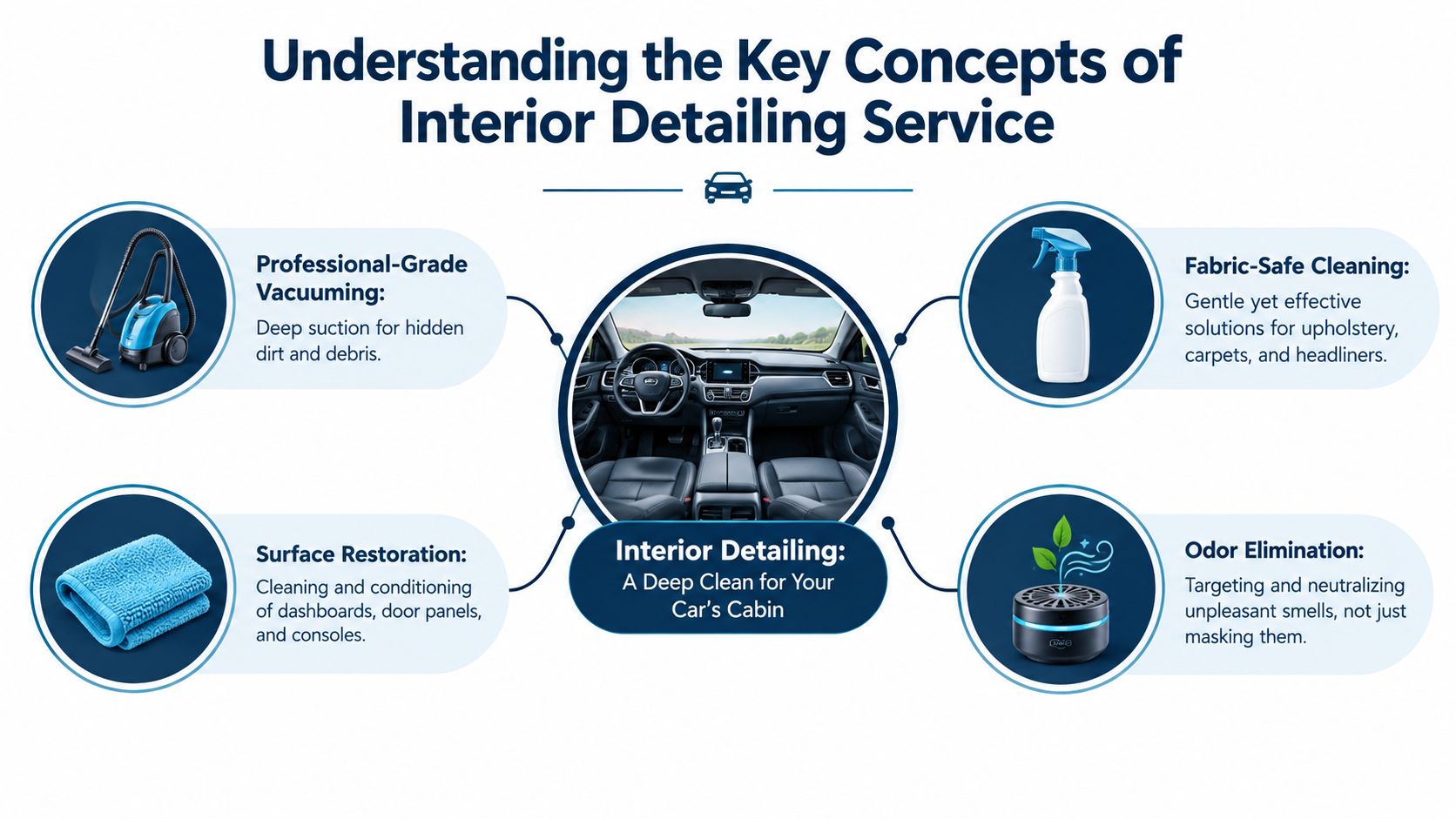
The four ideas behind a proper cabin clean
Remove loose dirt first. Professional-grade vacuuming lifts grit, hair, crumbs, and salt crystals from carpets, mats, seat gaps, and cargo areas. If liquid reaches loose salt too early, the particles can become a paste and spread farther into the fibres.
Match the cleaner to the surface. Fabric, leather, vinyl, plastic, rubber, and headliners react differently to moisture and agitation. A technician may use fabric-safe chemistry, a leather cleaner, or a pH-balanced dashboard product, while controlling how much liquid reaches each material.
Clean and condition as separate steps. Soil is removed from dashboards, consoles, steering wheels, door panels, and trim first. Suitable leather or vinyl can then receive conditioning to maintain its appearance. A non-greasy finish also helps prevent the steering wheel and controls from becoming slippery.
Treat odour at its source. Air freshener can mask a smell briefly. Food residue, damp carpet, and contaminated mats need direct cleaning and proper drying before odour control can last.
Ontario's winter conditions make this work protective as well as cosmetic. Salt residue is abrasive, moisture-retaining, and persistent once it enters fabric and trim, so interior service supports winter vehicle preservation, not only visual improvement. As noted earlier, salt carried into the cabin can remain after a quick wipe and affect areas that are difficult to see.
A practical package check has two parts: contamination removal and moisture control. Ask whether the service removes embedded residue and dries the treated materials. A carpet that looks clean but stays damp beneath the surface has only received part of the treatment. For a vehicle used through wet GTA winters, that distinction helps determine whether occasional pay-per-service cleaning or a regular membership better fits the cabin's actual condition.
Key components of interior detailing service
The order of operations is more critical than commonly understood. A technician who starts with heavy wet cleaning before removing loose salt can push contamination into the carpet instead of lifting it out. Professional winter detailers use a sequence that resembles clearing a blocked filter before rinsing it.
Start dry, then work wet
The first stage is a thorough dry vacuum. Mats are removed, seats are moved or reclined where appropriate, and tools reach under seats, around rails, inside cup holders, and along seat seams. Compressed air and detailing brushes can help dislodge particles from vents and narrow crevices, but loosened debris still needs to be captured rather than redistributed.
The next stage uses a controlled, low-moisture neutralizer. The technician applies enough product to address the residue without flooding the backing, then uses extraction to remove the dissolved contamination. This is especially important in footwells, where winter brine can collect beneath mats.
A professional winter salt-removal process recommends dry vacuuming first, followed by low-moisture neutralizing, extraction, and forced-air drying. Under a salt load, inadequately dried carpet can develop mildew within about a week, so the drying stage isn't a finishing flourish. It's part of the cleaning process.
Match the treatment to the material
A full service may include carpet and seat shampooing, stain extraction, leather-safe cleaning, plastic and vinyl care, glass cleaning, and vent or crevice detailing. The right method changes with the surface:
- Carpet and cloth seats: Agitation and extraction help lift embedded grime, but the technician must avoid saturating the underlying foam.
- Leather: Cleaning should remove body oils and winter residue without stripping the surface, followed by a suitable conditioner where appropriate.
- Vinyl and plastic: A controlled cleaner removes the dull film that develops on high-touch areas, while a restrained finish avoids a greasy feel.
- Headliners: Light, targeted treatment is safer than soaking the fabric or adhesive layer.
DIY work can still help between appointments. A crevice tool, soft brush, microfiber cloth, and careful vacuuming will remove loose contamination. What home cleaning often can't replicate is the combination of controlled chemistry, extraction equipment, and forced-air drying after a deeper treatment.
Exploring service tiers in GTA detailing
The GTA has a broad car-wash ecosystem. A 2025 business listing counted 2,003 car washes in Ontario, a figure that signals an established market for regular vehicle cleaning and helps explain why interior detailing is commonly offered as a specialized add-on to routine washing, according to this Ontario car-wash market listing.
The practical question isn't which tier sounds most impressive. It's whether the package matches the amount and type of contamination inside your vehicle.
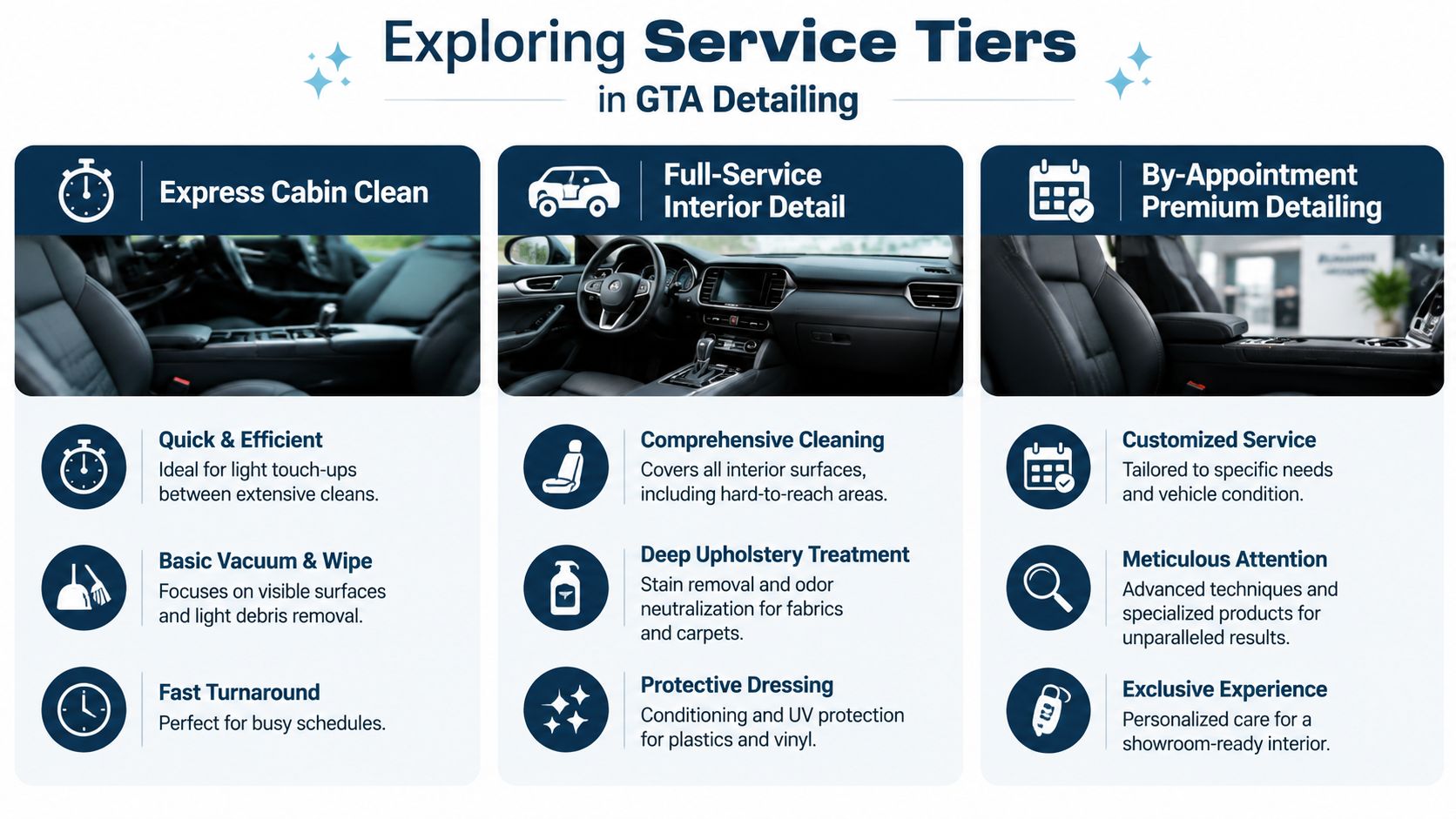
Express cabin clean
This option suits a cabin that receives regular maintenance but has accumulated light dust, crumbs, and surface debris. Expect basic vacuuming, mat attention, and wiping of visible hard surfaces. It's useful between deeper appointments, especially for a commuter or rideshare driver who needs a quick reset.
It won't usually be the right choice for heavily embedded salt, set-in stains, strong odours, extensive pet hair, or damp carpet beneath the mats. Ask exactly whether stain treatment and extraction are included before assuming they are.
Full-service interior detail
This is the more appropriate middle ground for a typical Ontario winter recovery. The work can cover carpets, upholstery, mats, door panels, consoles, cup holders, vents, crevices, and hard-to-reach areas. Shampooing, stain removal, odour neutralization, leather cleaning, and protective dressing may be included depending on the provider.
SUVs, vans, trucks, third-row vehicles, and severe pet-hair jobs often require additional labour. Confirm those conditions at booking, rather than discovering a surcharge when you arrive.
By-appointment premium detailing
Premium detailing is built around vehicle condition and owner priorities. You might request focused stain recovery, delicate leather work, heavy pet-hair removal, odour treatment, or a more detailed inspection of difficult areas. The appointment format also gives the technician more room to adapt the process instead of rushing through a fixed checklist.
A useful booking question is: “Will you tell me what can't be safely removed before you begin?” Honest scope-setting protects both the material and your expectations.
Time and cost expectations for interior detailing packages
A GTA driver booking interior detailing is paying for labour, vehicle size, cabin condition, and drying time, not just a package label. A small refresh may fit into a tight schedule. A winter recovery clean takes longer because the technician may need to inspect, treat, extract, and dry salt-affected materials. Nanak Car Wash describes interior and exterior detailing appointments as typically lasting one to four hours, with SUV, van, truck, and pet-hair surcharges, according to its detailing service information.
Use this table to plan the appointment, then confirm the quote with the provider.
| Service Tier | Typical Duration | Starting Price |
|---|---|---|
| Express cabin clean | Short appointment, based on light condition | Confirm with the provider |
| Full-service interior detail | 1 to 4 hours, depending on scope and condition | Confirm with the provider |
| By-appointment premium detailing | Extended appointment based on customization | Confirm with the provider |
Condition often changes the price more than the vehicle's age. A sedan with crumbs needs a different process from a family SUV containing salt-loaded carpet, sticky drink residue, dog hair, and stains in the seat seams. Size matters too. An SUV or van has more carpet, seating, cargo space, and trim for the technician to clean.
A useful comparison is a laundry load. Light surface dirt may need a quick wash, while embedded salt and moisture require treatment, extraction, and time to dry.
Drying changes the appointment decision
Deep cleaning can leave moisture in fabric, foam, and carpet backing. That matters during an Ontario winter, when a damp carpet beneath accumulated salt can develop mildew within a week if it is not fully extracted and dried, as noted in this Ontario interior detailing guide.
Ask these questions before booking:
- Drying method: Will the provider use forced air after extraction?
- Pickup timing: Will the vehicle be ready for normal use the same day?
- Material guidance: Do leather, cloth, and heavily padded areas receive different treatment?
- Weather planning: Should you leave the windows open or park in a controlled environment?
A low quote can change once stain treatment, pet-hair removal, extraction, or drying appears as an extra. Compare the actual process and inclusions, especially after winter driving, rather than choosing by package name alone.
Membership and prepaid detailing options
If your vehicle collects winter contamination repeatedly, a membership or prepaid bundle can make more sense than treating every visit as a separate decision. Nanak Car Wash lists an Unlimited Wash Club, prepaid multi-wash tickets, combo deals, and discounted interior cleaning for members. Its site also shows membership features such as secure electronic payment and no long-term contract language, while specific offers can change.
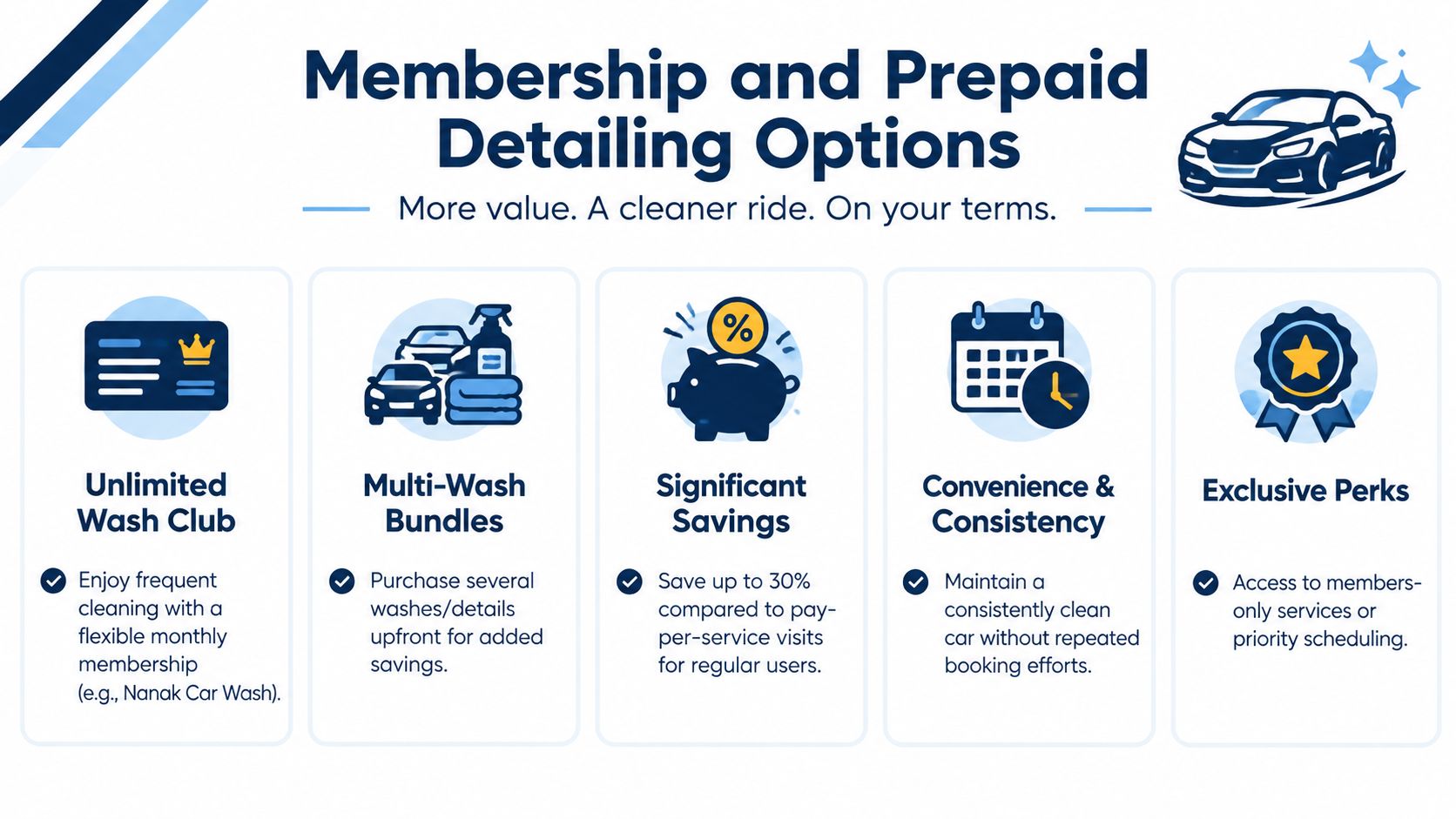
Membership versus pay-per-service
Pay-per-service works well when your cleaning needs are occasional or unpredictable. You choose a package when the cabin becomes visibly dirty, and you avoid paying during periods when the vehicle sits unused.
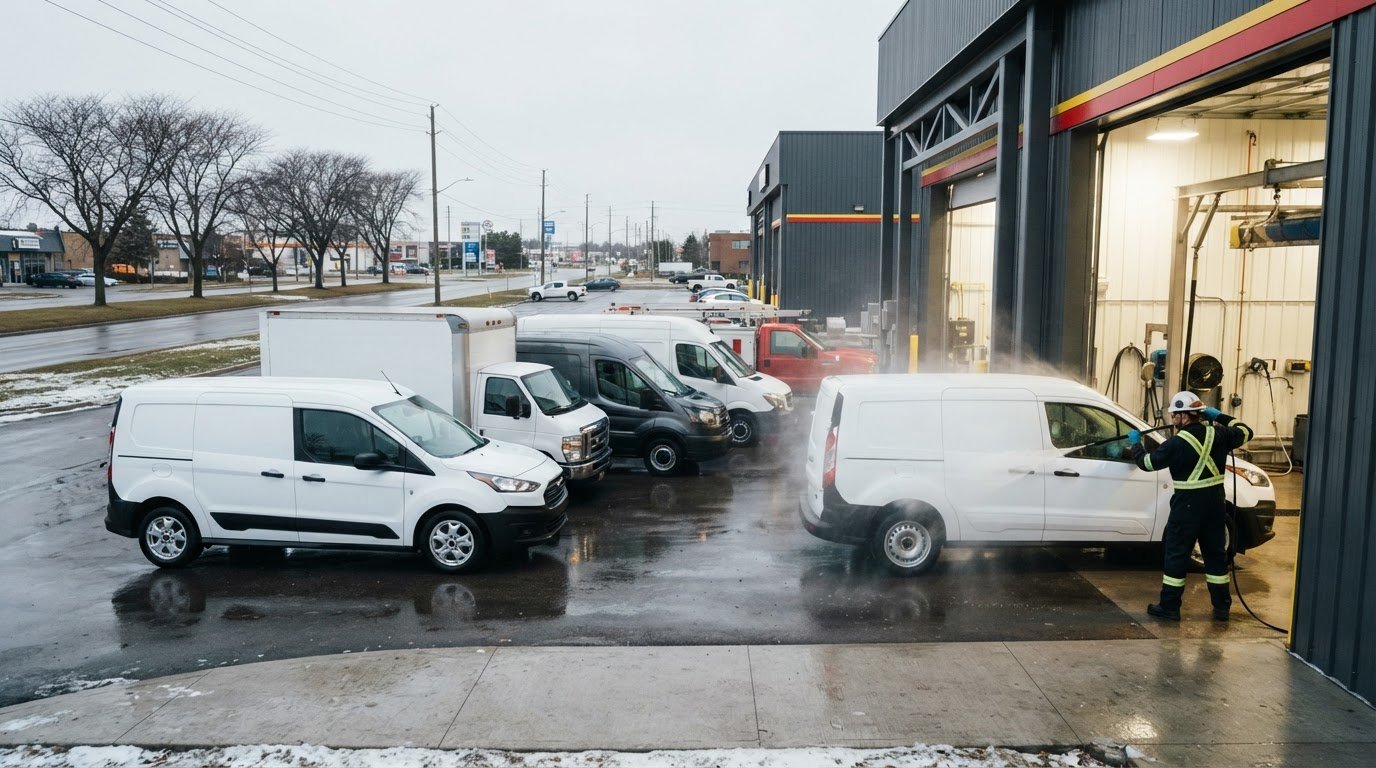
A membership suits drivers who wash frequently and value routine. Commuters, rideshare operators, delivery drivers, and small fleet managers may prefer predictable access to exterior washing, then book interior detailing when contamination reaches a level that a standard wash can't handle.
Prepaid tickets sit between the two. They can reduce repeated payment decisions while avoiding the commitment of a recurring monthly charge. Combo offers may also make sense when the outside and inside need attention during the same visit.
Judge the plan by your habits
Before signing up, ask:
- What's included: Does the recurring benefit cover only exterior washing, or does it reduce the cost of interior services too?
- How often you'll visit: A plan only makes financial sense if you'll use it consistently.
- What needs appointments: Membership access may not mean premium interior work is available without booking.
- What changes in winter: Salt exposure may require deeper extraction rather than more frequent quick washes.
For operators building a repeat-service programme, the broader principles in this guide to powerful retention techniques for SMBs can help clarify how convenience, reminders, and predictable value influence customer decisions. The same logic applies to your own car-care routine: a simple system is easier to maintain than a series of last-minute bookings.
Examples of interior detailing service scenarios
Three GTA drivers can face completely different cabin problems, even when they travel through the same winter weather.
A rideshare driver starts each shift with a clean-looking interior, but passengers bring in wet boots, crumbs, and road grit throughout the day. An express cabin clean may be useful for visible debris between deeper appointments, while a full service becomes more suitable when salt begins to mark the carpet or odours remain after vacuuming. The driver should ask whether the visit includes extraction and how long the cabin needs to dry before accepting passengers.
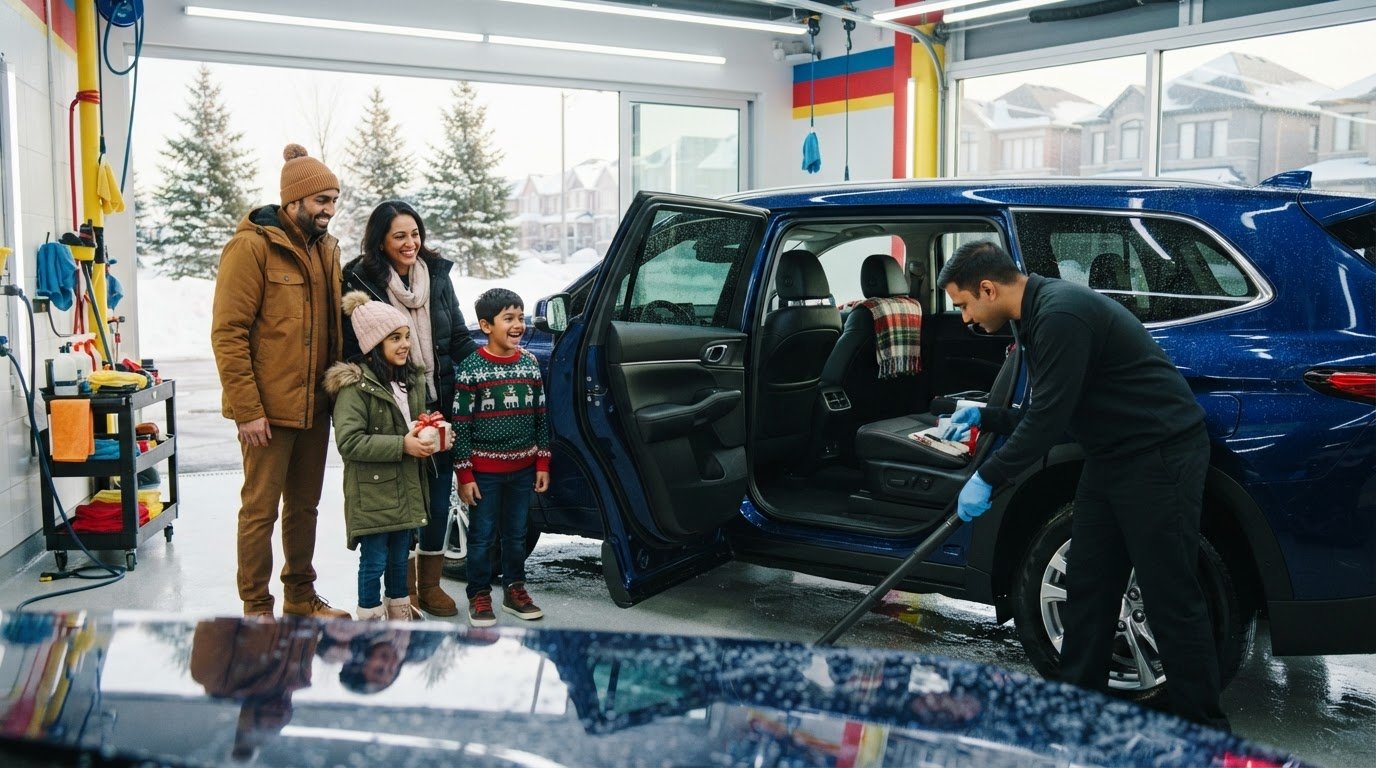
A family SUV has a different pattern. Hockey bags, muddy boots, snack wrappers, and damp clothing create contamination in the second row and cargo area. A full-service interior detail is more likely to fit because it can address mats, upholstery, stains, odours, and the less visible areas beneath removable floor coverings. If pet hair is embedded in the carpet, the owner should request a condition-based quote rather than assume standard vacuuming will remove it.
A weekend road-tripper owns a larger SUV and wants the cabin ready before carrying passengers and luggage. By-appointment premium detailing gives the technician room to inspect seat seams, cargo trim, cup holders, and hard-to-reach areas, then tailor the work to the vehicle's materials and condition.
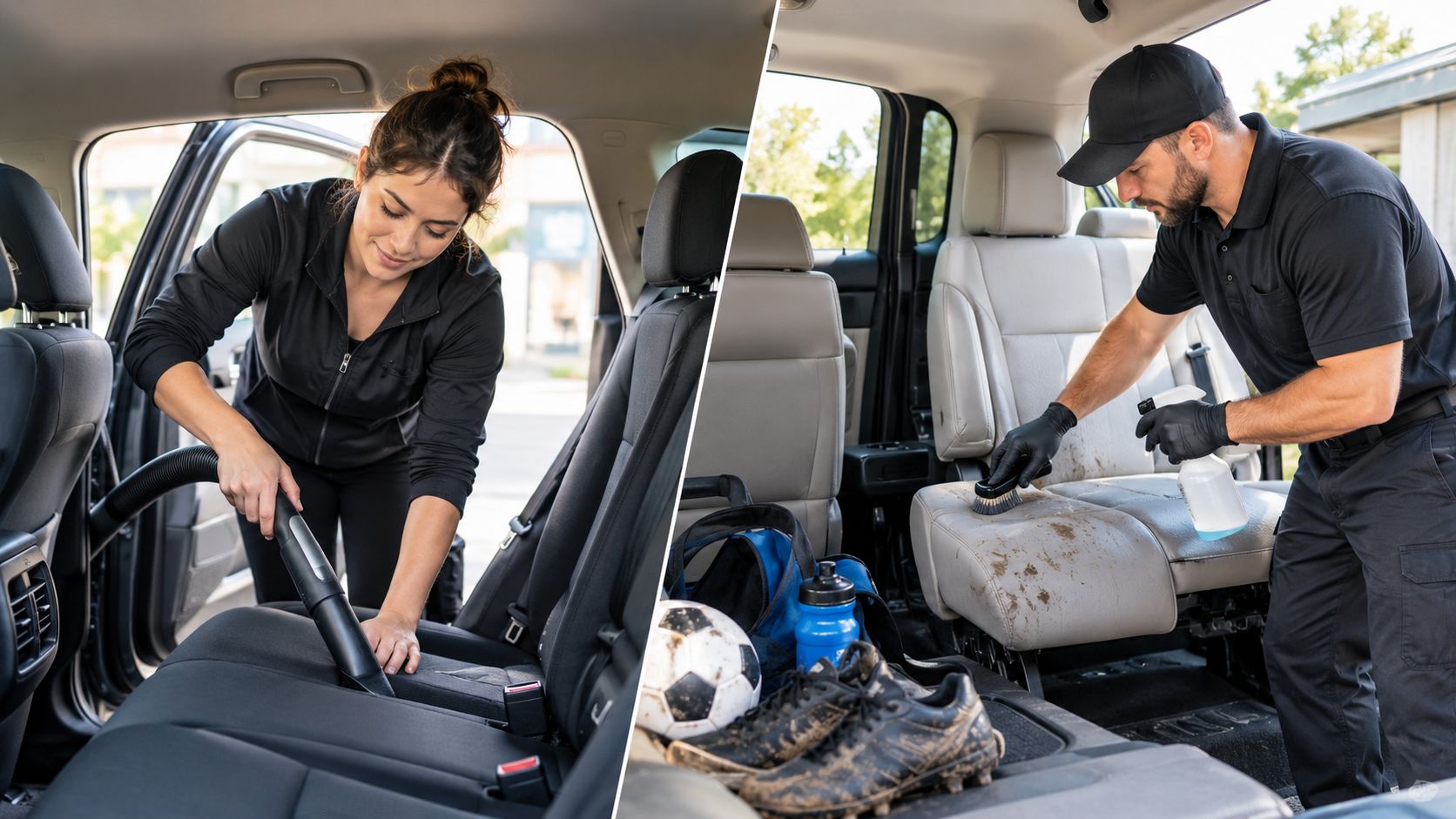
Salt stains often need controlled treatment rather than aggressive soaking. A commonly used expert method combines a 1:1 vinegar-and-water solution, a 3 to 5 minute dwell time, followed by blotting and extraction, as explained in this GTA salt-stain removal guide. The technician should still confirm that the method suits the specific material and finish.
Conclusion and choosing your ideal service
Choosing an interior detailing service becomes easier when you use three filters.
First, assess exposure. Frequent GTA commuting, rideshare work, family use, pets, and winter sports equipment all increase the amount of contamination entering the cabin. Salt-loaded carpet and damp mats call for more than a surface refresh.
Second, assess condition. Light dust and loose crumbs may suit an express clean. Stains, odours, embedded grit, leather buildup, and moisture concerns point toward full-service or appointment-based detailing.
Third, assess routine. Occasional owners may prefer pay-per-service visits. Drivers who clean frequently can compare memberships, prepaid tickets, and combo offers, checking whether the benefits cover the interior work they need.
The most useful booking questions are simple: What steps are included? Is extraction part of the treatment? How is the cabin dried? Are vehicle-size or pet-hair charges separate? Will the provider explain which stains or materials may not respond safely?
A clean cabin feels better, but the deeper value comes from interrupting the cycle of salt, moisture, abrasion, and odour before winter contamination becomes harder to remove.
For GTA drivers, Nanak Car Wash offers express and full-service cleaning, appointment-based interior and exterior detailing, salt and stain removal, carpet and seat shampooing, and options such as prepaid bundles and memberships. Review the available services and visit Nanak Car Wash to choose a practical next step for your vehicle's winter-worn interior.

 6600 Finch Ave W, Etobicoke, ON M9V 3Z6
 647-703-8515
 MON – SUN 8 AM to 7 PM