
You step into the car on a February morning in Brampton or Mississauga and see the usual evidence of GTA driving: a white crust of road salt on the floor mats, damp grit worked into the carpet, and a faint dog smell lingering behind the second row. Then there's the coffee ring beside the centre console that has survived two quick wipes. You're looking for the best carpet shampoo, but the bottle that works on household carpet isn't automatically the right choice for a vehicle.
Automotive carpet faces a harsher routine. Wet boots, salt, road film, pet hair, food, clothing oils, and trapped moisture all meet in a small cabin. The carpet is fitted around seat rails, wiring, seatbelt buckles, and tight contours, so over-wetting can create a much bigger problem than a dirty floor.
The right formulation matters more than a flashy label. Use this quick comparison before choosing a bottle or booking an extraction service.
| Carpet shampoo formulation | Best automotive use | Main strength | Main caution |
|---|---|---|---|
| Enzymatic | Pet urine, vomit, milk, food residue | Breaks down organic contamination | Needs dwell time and careful drying |
| pH-balanced | Routine cleaning and salt film | Gentle maintenance with lower residue risk | May need a separate spotter for heavy stains |
| Odour-neutralising | Smoke, mildew, musty interiors | Treats odour molecules instead of covering them | Fragrance alone isn't odour removal |
| Stain-remover surfactant | Coffee, ink, grease, dye | Cuts localised oily or coloured marks | Stronger chemistry needs controlled use |
Table of Contents
- Why Car Interiors Need a Different Carpet Shampoo
- Understanding the Main Carpet Shampoo Formulations
- Comparing Enzymatic, pH-Balanced, Odour, and Stain Shampoos
- How to Shampoo Car Carpets the Right Way
- Matching the Right Shampoo to the Right Mess
- DIY Bottle Versus a Professional Detailing Service
- When to Hand the Job to a Detailing Pro
- Carpet Shampoo Questions GTA Drivers Keep Asking
Why Car Interiors Need a Different Carpet Shampoo
A car carpet isn't a small living-room carpet. Most automotive carpets use short, tight fibres, commonly nylon or polyester, designed to tolerate foot traffic while fitting around the vehicle's floor shape. That construction holds fine salt and oily grit beneath the visible surface, especially around pedals, door openings, and the rear footwell.
Household carpet is usually stretched and secured across a relatively open floor. Automotive carpet sits over padding and a metal floor pan, with moisture able to remain in contours that are difficult to reach. Under-seat areas can stay damp long after the surface feels nearly dry. That's why a vehicle may look clean at noon and smell musty again by evening.
Practical rule: In a car, cleaning performance includes how quickly you can recover moisture and remove residue, not just how bright the fibres look immediately afterward.
Ontario winter makes the problem more obvious. Salt arrives as crystals, slurry, and dirty meltwater. A household shampoo may create plenty of foam, but foam doesn't equal extraction. If the solution leaves a sticky film, the carpet can attract fresh road dirt quickly and force you to clean the same area again.
Pet accidents create another automotive complication. Liquid can move through the carpet into the backing and padding, then remain below the reach of a light surface wipe. A scented shampoo might improve the cabin briefly while leaving the source of the odour underneath.
What the fibres are holding
The mess under your shoes usually contains more than loose dust:
- Mineral residue: Winter salt and dirty meltwater leave a visible film and can collect in the backing.
- Organic contamination: Pet urine, food, milk, and vomit require chemistry that can break down biological material.
- Oily marks: Skin oils, grease, makeup, and road grime respond better to targeted surfactants or solvents.
- Odour molecules: Smoke and mildew need neutralisation, not a stronger fragrance.
The useful question isn't which product has the highest rating. It's which formulation can break down the contaminant in automotive fibres without soaking the padding, damaging colour, or leaving residue behind.
Understanding the Main Carpet Shampoo Formulations
Carpet shampoos generally fall into four useful families. Each one has a different job, and a good detailer chooses based on the contamination rather than reaching for the same bottle every time.
Enzymatic shampoos
Enzymatic formulas are designed for organic messes. Their enzymes help break down proteins and other biological residues associated with pet urine, vomit, milk, blood, and food. Soap can lift some of the surface material, but it may not remove the source that continues producing an odour.
These products usually need dwell time and warmth to perform properly. They're slower than a quick spray-and-wipe approach, but they're the sensible starting point for a dog accident in the rear footwell or a child's spilled milk that has soaked through the carpet.
pH-balanced shampoos
A pH-balanced shampoo suits routine maintenance. It's intended to clean common automotive nylon and polyester fibres without aggressive chemistry that can affect colour or finishes. This is the bottle I'd reach for when the interior needs a general refresh after winter, rather than treatment for one severe contamination.
Low foam and easy rinsing are valuable traits. A product that cleans adequately but extracts cleanly is often more useful than one that produces dramatic suds.
Odour-neutralising shampoos
Odour products should do more than add fragrance. Formulas using technologies such as cyclodextrin encapsulation or zinc compounds aim to trap or neutralise odour molecules, which is more useful for smoke, mildew, and old musty interiors.
A heavily perfumed product can make a cabin smell cleaner while leaving the original odour underneath. In a closed vehicle, that fragrance can also become tiring quickly, especially for passengers sensitive to strong scents.
Stain-remover surfactant shampoos
Surfactant-focused products are built for localised marks such as coffee, lipstick, grease, ink, and dye. Stronger detergents and solvents can cut oily or coloured contamination that enzymes won't address.
Use this category carefully. A concentrated spotter applied to a small area can be effective, while soaking an entire carpet with aggressive chemistry creates unnecessary residue and drying risk. Always test an inconspicuous area first, particularly on dyed fabric or older carpet.
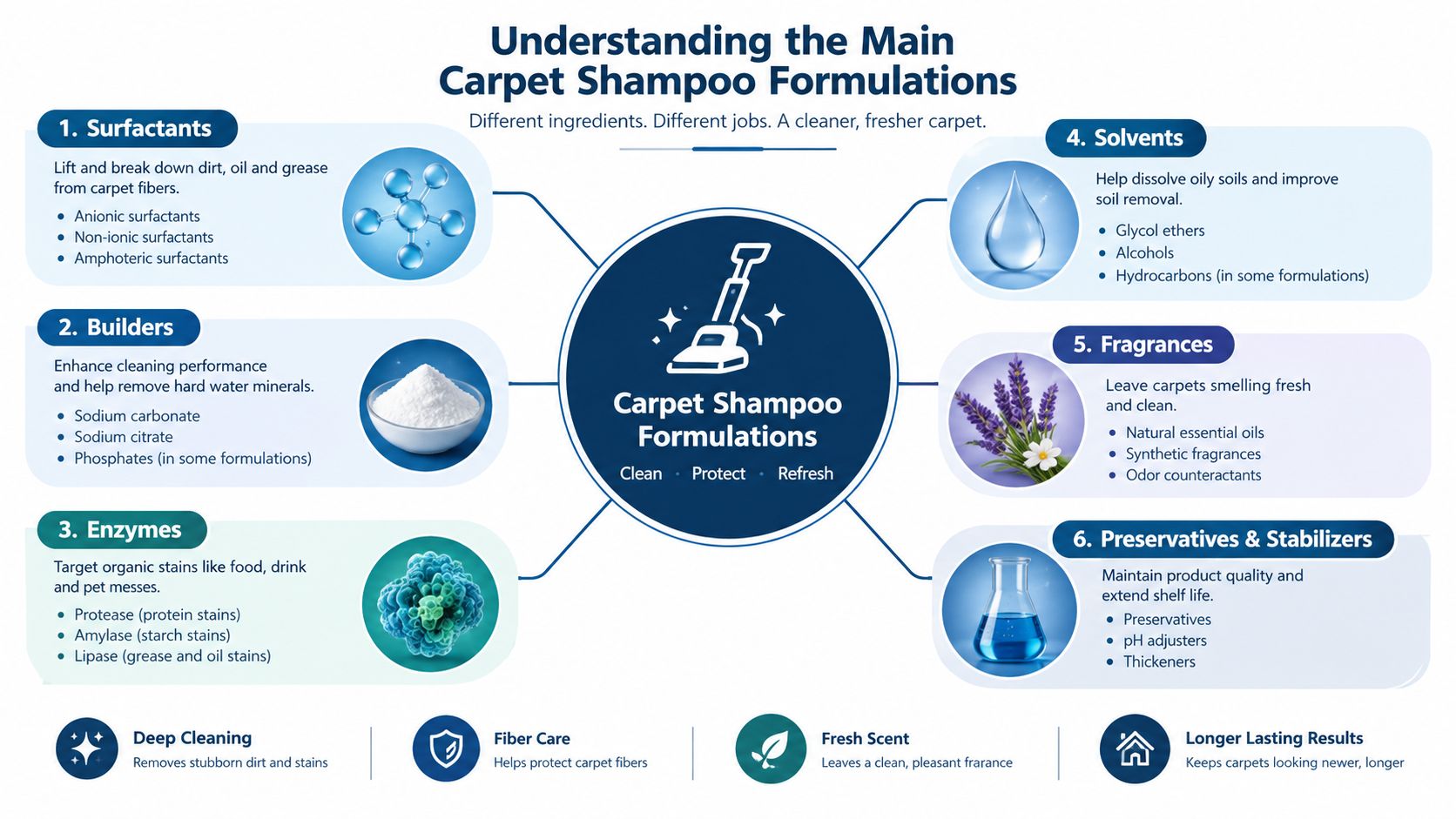
Generic household carpet shampoo often performs poorly in vehicles because it may foam heavily, rinse slowly, and leave a strong fragrance in a small cabin. Automotive use rewards controlled moisture, moderate foam, and clean recovery.
Comparing Enzymatic, pH-Balanced, Odour, and Stain Shampoos
The best carpet shampoo depends on the mess sitting in front of you. A pet owner with a recurring rear-seat odour needs a different product from a commuter removing winter salt or a used-car buyer dealing with cigarette smoke.
| Formulation | Best for | Chemistry in one line | Dwell time | Residue risk | Price tier |
|---|---|---|---|---|---|
| Enzymatic | Pet and food contamination | Breaks down organic residue | Longer | Moderate if over-applied | Mid |
| pH-balanced | Regular interior maintenance | Cleans fibres with mild chemistry | Short to moderate | Lower when rinsed well | Low to mid |
| Odour-neutralising | Smoke and musty smells | Encapsulates or neutralises odour molecules | Moderate | Moderate | Mid |
| Stain-remover surfactant | Ink, coffee, grease, and dye | Cuts oily or coloured marks | Short to moderate | Higher if overused | Mid to high |
Choose based on the problem
Enzymatic shampoo is the genuine choice for pet accidents, especially when the smell returns after a normal clean. Apply enough product to reach the affected area, allow the formula to work, and extract thoroughly. A rushed surface treatment rarely solves contamination that has travelled into the backing.
pH-balanced shampoo belongs in the regular-maintenance category. It's suitable for a clean vehicle that needs a spring refresh, a post-winter clean-up, or removal of ordinary foot traffic. It won't replace a specialised spotter for ink or deep grease, but it's less likely to create trouble when used across a larger area.
Odour-neutralising shampoo makes sense for smokers, used-car buyers, and vehicles that have developed a stale smell after moisture entered the cabin. Look for an actual neutralising or encapsulating mechanism rather than choosing by fragrance strength.
Stain-remover surfactant is for sharp, localised marks. Treat coffee, lipstick, ballpoint ink, or grease at the spot instead of spreading strong chemistry over the whole floor. That approach limits residue and gives you better control over agitation and extraction.
For the Brampton or Mississauga winter scene, start with a pH-balanced cleaner for general salt film, then move to an enzymatic or stain-focused product only where the contamination calls for it.
How to Shampoo Car Carpets the Right Way
A professional interior clean starts before the shampoo touches the carpet. Most failures happen because loose grit remains in the fibres, the operator applies too much liquid, or the product isn't extracted completely.
Follow the shop-floor sequence
Dry vacuum first. Use a strong vacuum with a crevice tool around seat rails, pedal edges, door sills, and the gap beneath the front seats. Pull out salt grit, pet hair, sand, and loose debris before adding moisture.
Pre-treat the worst areas. Apply a dedicated spotter to heavy stains, oily marks, or biological contamination. Keep the treatment local. A coffee ring may need a surfactant spotter, while pet urine calls for an enzymatic product.
Agitate gently. Work with a soft interior brush in overlapping strokes. The aim is to lift the film from the short carpet loops, not grind it deeper or spread it into a larger halo.
Allow a controlled dwell. Give the shampoo 5 to 10 minutes to break down the soil before extraction. Don't let the area dry during this stage, and follow the product label if it specifies a different contact time.
Extract while wet. Use a wet-dry vacuum or carpet extractor to recover the solution, loosened dirt, and moisture. Make slow extraction passes, then use additional dry passes without spraying more product.
Dry with airflow. Open doors where safe and use fans or a dehumidifier. Air movement is preferable to blasting the carpet with heat, which can set rings or push odours deeper into foam backing.
The vacuum stage deserves more attention than it usually gets. Salt crystals and pet hair consume cleaning solution, clog extractors, and turn into a muddy slurry when they're left in place.
Shop-floor warning: If you can still feel dampness under the carpet or hear water shifting near the padding, the job isn't finished. Keep extracting and improving airflow.
Mistakes that bring the dirt back
Over-wetting is the most common error. Carpet padding can hold a surprising amount of liquid, and moisture near seat wiring or floor electronics creates avoidable risk. Another mistake is leaving surfactant behind. The surface looks impressive at first, then the sticky film catches new dirt and the cleaned track darkens again.
Parking in direct sun isn't a complete drying strategy. Heat may warm the surface while deeper padding remains damp, and water rings can become more visible as the carpet dries unevenly.
Matching the Right Shampoo to the Right Mess
Salt stains look dramatic, but they're not the same problem as pet urine. One is primarily a mineral residue issue, while the other is biological contamination that can move below the visible carpet. Choosing by stain colour alone leads to the wrong chemistry.
GTA messes and practical treatments
White salt crust usually responds to a pH-balanced surfactant cleaner, gentle brushing, and thorough extraction. Vacuum first so you're not turning loose crystals into paste. If the stain has travelled into the mat or carpet backing, repeated light passes are safer than flooding the area.
Coffee and food spills need quick action. Blot fresh liquid, use a suitable surfactant spotter, and consider an enzymatic formula when milk, meat, or other organic material has soaked into the carpet. Colour and sugar can remain after the visible liquid disappears, so extraction matters.
Pet urine is the strongest case for an enzymatic shampoo. Apply it generously enough to reach the affected fibres and give it time to work. If the accident has entered the padding, a surface shampoo may improve the smell without removing the source.
Smoke and mildew call for an odour-neutralising formulation. Cyclodextrin or zinc-based approaches can be more useful than heavy fragrance, but persistent mildew may indicate moisture elsewhere in the vehicle that needs investigation.
Ink, dye, and grease are spot-treatment jobs. Use a stain-remover surfactant or solvent-tipped product sparingly, test first, and avoid aggressive scrubbing that can spread dye or roughen the carpet.
| Mess type | Best shampoo family | Why it works | Dwell time |
|---|---|---|---|
| Winter salt | pH-balanced | Loosens mineral film with manageable residue | Short to moderate |
| Coffee or food | Enzymatic or surfactant | Targets organic or oily components | Moderate |
| Pet urine | Enzymatic | Breaks down biological residue | Longer |
| Smoke or mildew odour | Odour-neutralising | Treats odour molecules instead of masking them | Moderate |
| Ink, dye, or grease | Stain-remover surfactant | Cuts concentrated coloured or oily marks | Short to moderate |
The order matters too. Treat the source before deodorising the cabin. Otherwise, you may end up layering fragrance over contamination and mistaking temporary improvement for a finished clean.
DIY Bottle Versus a Professional Detailing Service
A bottle of concentrated shampoo can be sensible for light maintenance, isolated stains, and owners who already have a wet-dry vacuum. Canadian retail listings show concentrated carpet shampoos in the 3.7 to 3.78 litre class at roughly C$21.98 to C$22.99 per container, or about C$5.80 to C$6.00 per litre before tax, as shown by Canadian carpet shampoo listings at Home Depot. The label price matters less than the dilution ratio, rinse behaviour, and how effectively your equipment recovers the water.
The Canadian carpet and upholstery cleaning sector is an established service category. Innovation, Science and Economic Development Canada industry data reports average revenue of $249.7 thousand in 2024 and says 79% of firms were profitable, while Statistics Canada recorded 1,506 business locations for carpet and upholstery cleaning services in December 2023. Those figures don't tell you which bottle will clean your vehicle, but they do show that professional fibre care is a commercial service rather than an occasional novelty.
Where the money calculation changes
DIY looks attractive until you add the equipment and time. A suitable wet-dry vacuum, extractor, interior brushes, towels, spotters, and drying setup can narrow the gap quickly. Consumer equipment may also recover less water than commercial equipment, leaving you with a damp vehicle and a longer interruption to your week.
Professional extraction makes more sense when the problem is widespread, soaked, or tied to resale preparation. It also reduces the risk of applying too much liquid around seat rails, wiring, and other interior components.
Owners of cleaning companies who are building visibility may also find cleaning business map ranking tips useful when evaluating how local service providers present themselves online. For a driver, the practical point is simpler: compare the complete job, not just the bottle.
A shop service includes process control. The technician can vacuum dry soil, choose a spot treatment, agitate without damaging the fibres, extract repeatedly, and direct airflow where the moisture is concentrated. DIY is still the right call for a contained coffee mark or routine upkeep, but it becomes less economical when the same odour keeps returning.
When to Hand the Job to a Detailing Pro
A bottled shampoo is appropriate when the contamination is light, visible, and confined to a small area. It's also practical for regular spring maintenance when you can control the moisture and allow the vehicle to dry fully.
Book professional interior work when the contamination has moved beyond the surface:
- Deep pet accidents: Urine soaked into padding or around seat rails needs more than a fragrant topcoat.
- Saturated salt contamination: Salt and dirty meltwater that have reached the backing are difficult to flush safely without strong water recovery.
- Returning mildew odours: If the smell comes back after extraction, the vehicle may have a hidden moisture source or contaminated padding.
- Dye transfer: Jeans, child seats, and coloured materials can leave marks that require controlled spot treatment.
- Limited drying time: A busy work week makes a damp cabin a poor DIY project.
Nanak Car Wash offers interior and exterior detailing by appointment, including carpet and seat shampooing, salt and stain removal, vent and crevice blowout, and related interior cleaning. The service is available across its GTA-area locations, with treatment adjusted for vehicle size and condition.
A professional appointment isn't automatically an upsell. It's the appropriate tool when the problem requires deeper extraction, controlled drying, or inspection around sensitive interior components. Keep isolated stains and light clean-outs in the driveway. Move chronic odours, soaked padding, and resale preparation to a detailing bay.
Carpet Shampoo Questions GTA Drivers Keep Asking
How long will the carpet take to dry?
Drying depends on airflow, humidity, temperature, and how much water the carpet and padding absorbed. The surface should feel dry rather than cool or damp before pets and children return to the vehicle. Use fans, open doors in a safe location, and a dehumidifier when necessary.
Why did the carpet get dirty again so quickly?
Sticky surfactant residue is a common reason. If the carpet looks clean briefly and then darkens in the same traffic lanes, perform a second extraction pass with plain water and recover as much moisture as possible. More shampoo usually makes the problem worse.
Are enzymatic and odour products safe around pets and children?
Follow the product label, spot-test dyed fabrics, ventilate the cabin, and keep animals and children out until the carpet is fully dry. A dry, aired-out interior is the basic safety threshold, regardless of the product category.
How often should Ontario drivers shampoo the interior?
Daily drivers benefit from light maintenance as needed, especially after winter. Pet owners and vehicles exposed to frequent spills need attention sooner, while a thorough spring extraction helps address the season's accumulated salt and grime.
Nanak Car Wash provides interior detailing with carpet and seat shampooing, salt and stain removal, and vent and crevice cleaning across GTA locations. For a vehicle carrying winter residue, pet odour, or set-in spills, visit Nanak Car Wash to book a professional interior service.

 6600 Finch Ave W, Etobicoke, ON M9V 3Z6
 647-703-8515
 MON – SUN 8 AM to 7 PM