
At 6:40 a.m. in Mississauga, a rideshare driver is watching Tim Hortons coffee spread through the passenger footwell while a Brampton commuter climbs into the back seat. A towel can lift the surface liquid, but it can't pull coffee from the foam beneath the carpet. The cabin is cold, the next fare is waiting, and leaving the mat damp all morning is a poor way to start a workday.
The same recovery problem appears in an Etobicoke family SUV after a golden retriever shakes melted slush into the cargo area. It appears in a Scarborough basement when a dog tracks grey February salt lines across the carpet. These aren't stain problems. They're moisture-management problems, and the best carpet shampooing machine is the one that cleans while recovering as much water as possible.
Table of Contents
- When the Coffee Hits the Floor Mat
- The Four Specs That Actually Matter
- Automotive Extractors vs Home Uprights vs Commercial Units
- Drying Time in an Ontario Winter
- Matching the Machine to Your Cleaning Reality
- Buy the Machine or Book the Detail
- The Practical Bottom Line for GTA Owners
When the Coffee Hits the Floor Mat
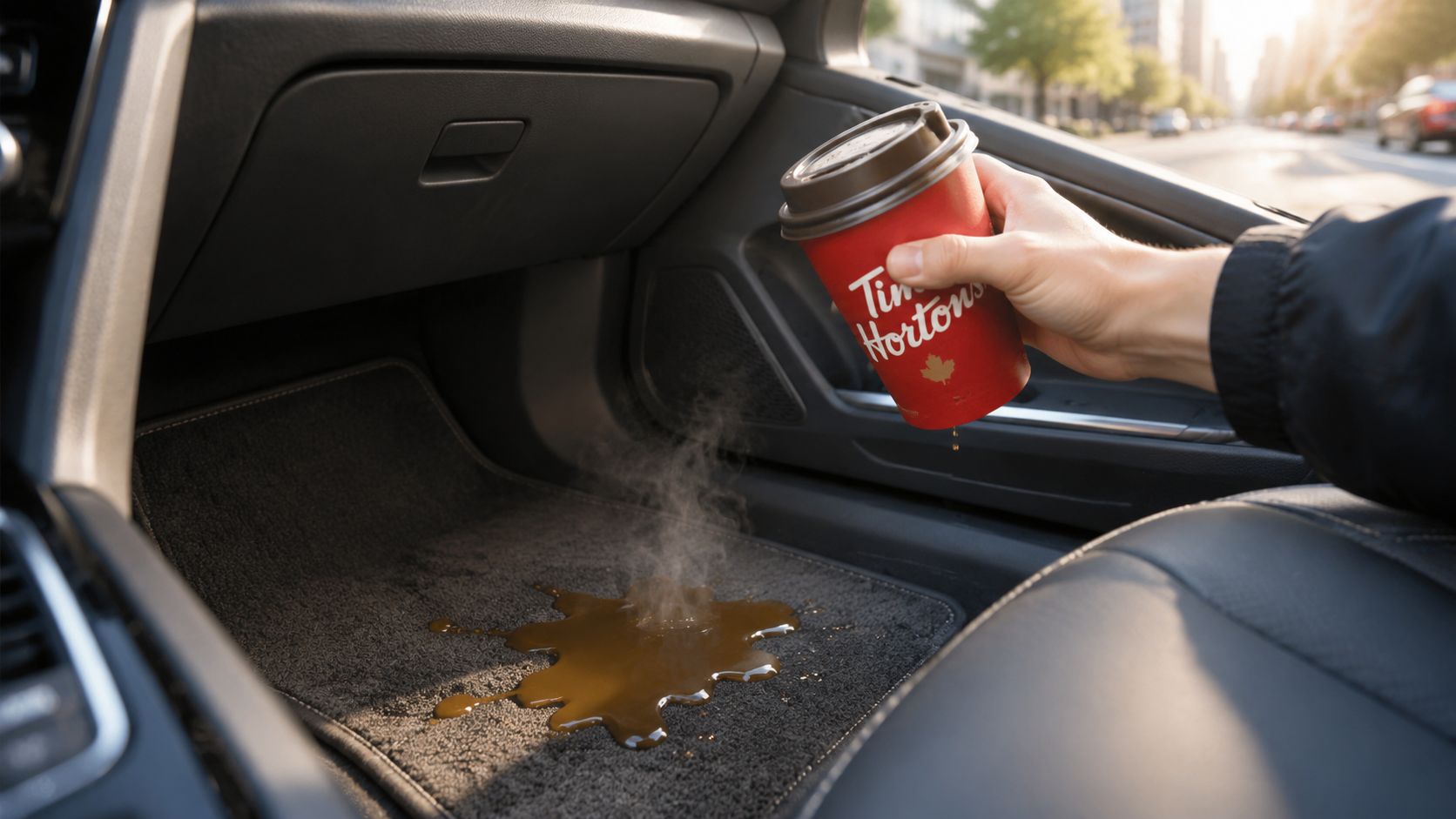
Coffee on a floor mat looks like a stain, but the harder problem sits underneath. A microfibre towel and household spray may improve the surface while leaving the backing wet. In an Ontario garage, that trapped moisture holds odour, softens carpet structure, and makes the vehicle unpleasant to use.
A proper extractor handles the spill in the right order. It injects solution, agitates carpet or upholstery, then pulls the dirty liquid into a recovery tank. That final pass matters most in cold weather. Cleaning action loosens coffee, road salt, pet residue, and grime, while water lift and airflow remove the liquid carrying those contaminants.
I judge a machine by the water it recovers, not by how dramatic the brush looks. A compact tool that leaves a mat damp can create more work than it saves. A machine with a useful nozzle, sealed hose, and adequately sized recovery tank can complete several controlled passes without repeatedly stopping to empty or refill.
The same issue appears at home
Basement carpet creates the same moisture problem with less ventilation. During an Ontario cold spell, a saturated carpet has fewer ways to release water. Furniture, pets, and family members may need to stay off the area until it feels properly dry.
Canadian retail guidance commonly treats drying time as a practical concern, with the result varying by machine and climate. The buying lesson is straightforward: the machine's recovery performance matters as much as its cleaning action.
Practical rule: In a GTA garage, buy for water recovery first and stain drama second.
That rule applies across floor mats, cloth seats, cargo carpets, and basement rooms. The right machine removes soil without leaving a damp interior behind. In this guide, I compare automotive extractors, home uprights, and commercial units by how well they control moisture in cold Canadian conditions.
The Four Specs That Actually Matter
A machine can spray aggressively and still leave a mat wet for hours. In a GTA garage or basement suite, I judge the equipment by how quickly it recovers moisture after cleaning, not by the length of its feature list. Four specifications show whether it can produce a controlled dry time.
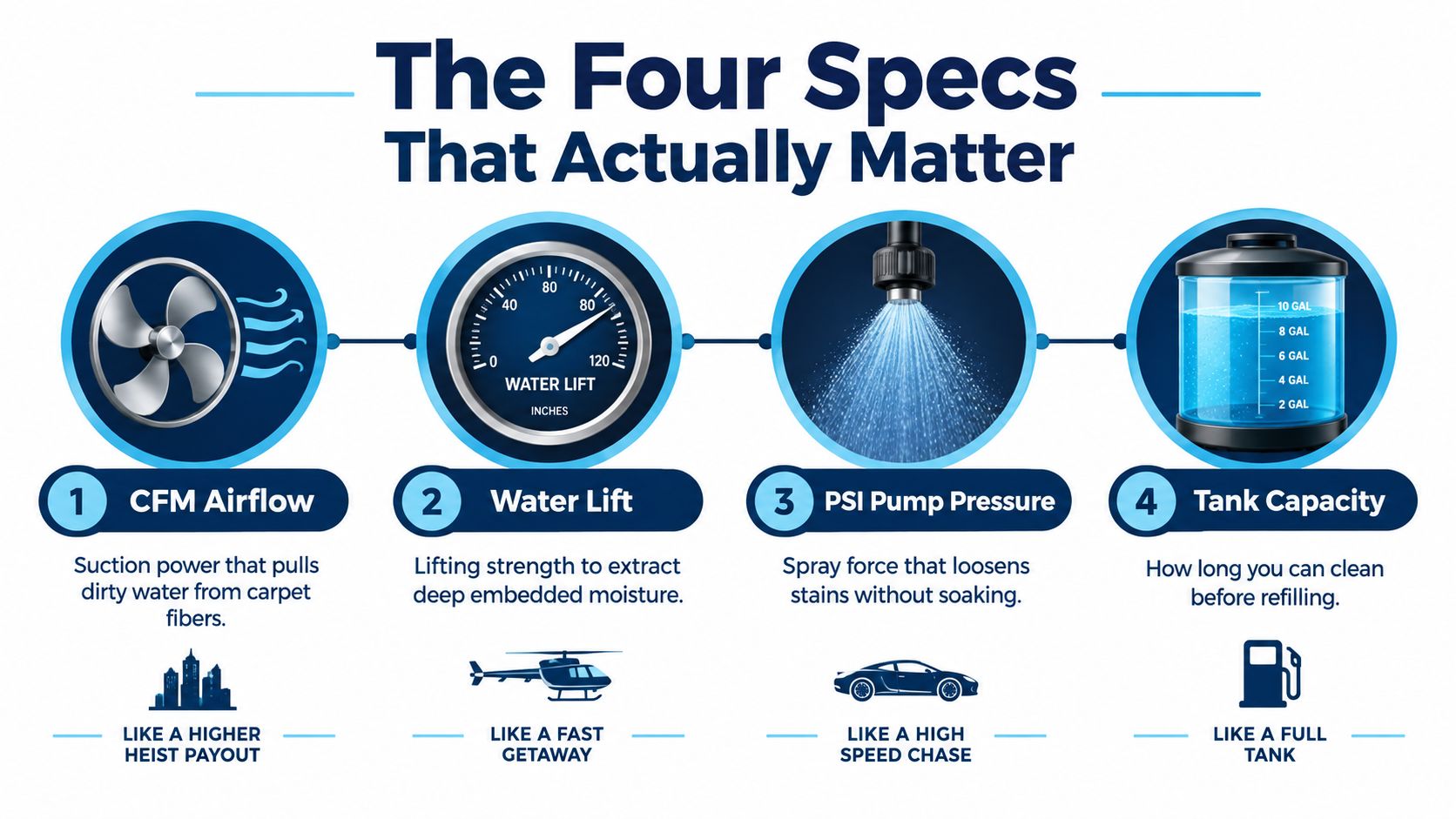
Airflow pulls moisture from the fibres
CFM, or cubic feet per minute, represents airflow. It measures the volume of air moving through the nozzle to carry recovered water away from carpet fibres. Higher airflow gives the recovery pass more force when the hose, seals, nozzle, and upholstery tool preserve that capacity.
I want a published airflow figure. A listing that gives only watts, heat, or motor size leaves out the information that matters at the tool. In cold Canadian conditions, that omission can mean a vehicle interior stays damp longer than expected.
Water lift maintains suction against resistance
Water lift measures the machine's ability to pull against resistance. It matters when moisture reaches dense carpet, seat foam, or a mat backing. Airflow moves volume, while water lift helps maintain extraction as the material pushes back.
For vehicle work, I choose a balanced combination rather than one dramatic figure. Strong lift with weak airflow can make broad areas slow to recover. High airflow without enough lift may leave saturated padding behind.
PSI controls how much solution enters the carpet
PSI, or pounds per square inch, describes spray pressure. Pressure helps loosen soil, but higher pressure can force solution deeper into backing and foam. If recovery cannot keep up, the machine creates a longer drying cycle.
Use controlled passes. Apply enough solution to suspend the dirt, then release the trigger and make a deliberate recovery pass. That technique often matters as much as the printed PSI rating.
Tank capacity sets the working rhythm
Fresh-water and recovery-tank capacity determine how often you stop. A compact tank works for a few mats or a small upholstery job. A larger paired tank suits repeated room cleaning or several vehicle interiors, provided the machine still delivers useful lift and airflow.
The Kärcher Puzzi 10/1, listed for the Canadian market, combines 114 CFM airflow, 82 inches of water lift, 14.5 psi spray pressure, and a 2.6-gallon fresh-water tank. Its listed noise level is 68 dBA, and its weight is 23 lb. The Canadian specification sheet gives an area performance range of 215 to 270 ft²/hr. These figures appear in the Kärcher Puzzi 10/1 technical sheet.
The right machine needs at least two strong recovery characteristics, a controlled spray system, and tanks suited to the job. For Ontario winter work, prioritize water lift and airflow before chasing brush features or headline wattage.
Automotive Extractors vs Home Uprights vs Commercial Units
A coffee spill in a footwell, a basement carpet, and a full day of customer vehicles demand different machines. The right choice depends on how quickly you need to recover moisture, how far you must carry the unit, and how often it will run in a cold GTA garage or basement suite.
| Feature | Automotive Extractor | Home Upright | Commercial Unit |
|---|---|---|---|
| Best setting | Seats, floor mats, footwells, spot work | Bedrooms, stairs, broad household carpet | Repeated vehicle or carpet jobs |
| Handling | Compact, hose-led, easy to move around seats | Wider body, less convenient inside vehicles | Heavy-duty body, often moved with a van or trolley |
| Recovery priority | Controlled spray and fast dry passes | Tank capacity and broad coverage | High airflow, water lift, serviceability, and runtime |
| Main drawback | Smaller tanks and slower room coverage | Awkward around rails, consoles, and seat edges | Cost, storage, transport, and setup |
Automotive extractors
For drivers, commuters, and mobile detailers, a compact extractor is the practical starting point. A hose reaches under seats and around rails, while a narrow tool limits overspray in footwells. That control matters in winter, when excess water can leave fabric cold and damp for hours.
Choose this class when portability and moisture recovery matter more than covering an entire house. A small tank means more stops, but the machine is easier to position, empty, and move between vehicles.
Home uprights
An upright makes sense for broad household carpet. Its wider head covers rooms efficiently, and the standing format reduces bending during repeated floor passes. Inside a sedan, that same body becomes awkward around pedals, seat rails, consoles, and door sills.
For homes with pets or several carpeted rooms, an upright is usually a better fit than a compact automotive unit. For rideshare interiors or vehicle spot work, choose the hose-led extractor instead.
Commercial extractors
Commercial equipment earns its storage space when cleaning runs frequently enough to justify dedicated maintenance. The Tennant R3, available through Canadian distribution, lists 99 CFM, 86 inches of water lift, 65 psi output, 19 L solution and recovery tanks, a 69 dB operating noise level, and a 15-inch cleaning path. Those specifications appear in the Tennant R3 Compact Carpet Extractor listing.
That combination suits repeated vehicle packages and larger carpet runs. The larger tanks reduce refill and dump interruptions, while airflow and lift determine how much water remains after the recovery pass. In a cold Ontario workspace, that difference directly affects when the vehicle or room can return to use.
For business owners comparing equipment with other operating tools, compare Purple vs Stampede and apply the same test here: judge the purchase by daily workflow, storage, service needs, and turnaround, not by a headline feature alone.
Drying Time in an Ontario Winter
A carpet can look clean and still hold enough water to stay damp through a cold Ontario evening. Dry time begins at the nozzle. Spray loosens contamination, while airflow and water lift determine how much moisture the recovery pass removes.
The Canadian benchmark is roughly 2 to 6 hours for shampooed carpet, with results changing according to machine power and climate, as described in Best Buy Canada's carpet-cleaner guidance. A heated, ventilated room can shorten that window. A closed January garage or basement suite can extend it, especially when wet mats and upholstery have little airflow around them.
| Spec | Low Performance | Mid Performance | High Performance |
|---|---|---|---|
| Airflow | Slow recovery, more moisture left behind | Acceptable for small jobs | Faster dry-pass and better moisture removal |
| Water lift | Struggles with dense backing and seat foam | Handles ordinary mats and carpet | Pulls more confidently from resistant materials |
| Spray pressure | May not loosen embedded soil well | Suitable for controlled cleaning | Strong cleaning action, but demands disciplined recovery |
| Tank capacity | Frequent refills and dumps | Practical for limited vehicle work | Better for repeated rooms or multiple interiors |
How I use the numbers
A large tank does not make a machine dry carpet faster. It only lets you work longer before refilling or dumping. Water lift and airflow determine whether the recovery pass removes moisture, so a weak extractor can carry more water while leaving more behind.
The Puzzi 10/1's 114 CFM airflow and 82 inches of water lift provide a useful compact-unit benchmark. The Tennant R3 lists 99 CFM and 86 inches of water lift, paired with much larger 19 L solution and recovery tanks. Those figures point to different workflows, not a guaranteed dry time. For a GTA garage, I would prioritize recovery performance before tank capacity unless the machine will handle repeated interiors or rooms.
The two-pass technique
Use a slow spray pass to wet and clean the section. Release the trigger, then make a slower recovery pass with the tool flat and moving steadily. Spend extra time on mats, seat foam, and dense carpet backing, where retained water extends the turnaround.
Ventilate the space with a fan or dehumidifier where appropriate, and leave a damp vehicle open rather than sealing moisture inside. Cold air does not remove water just because it feels dry. Give the recovered moisture a route out of the garage or basement before returning the vehicle or room to service.
Matching the Machine to Your Cleaning Reality
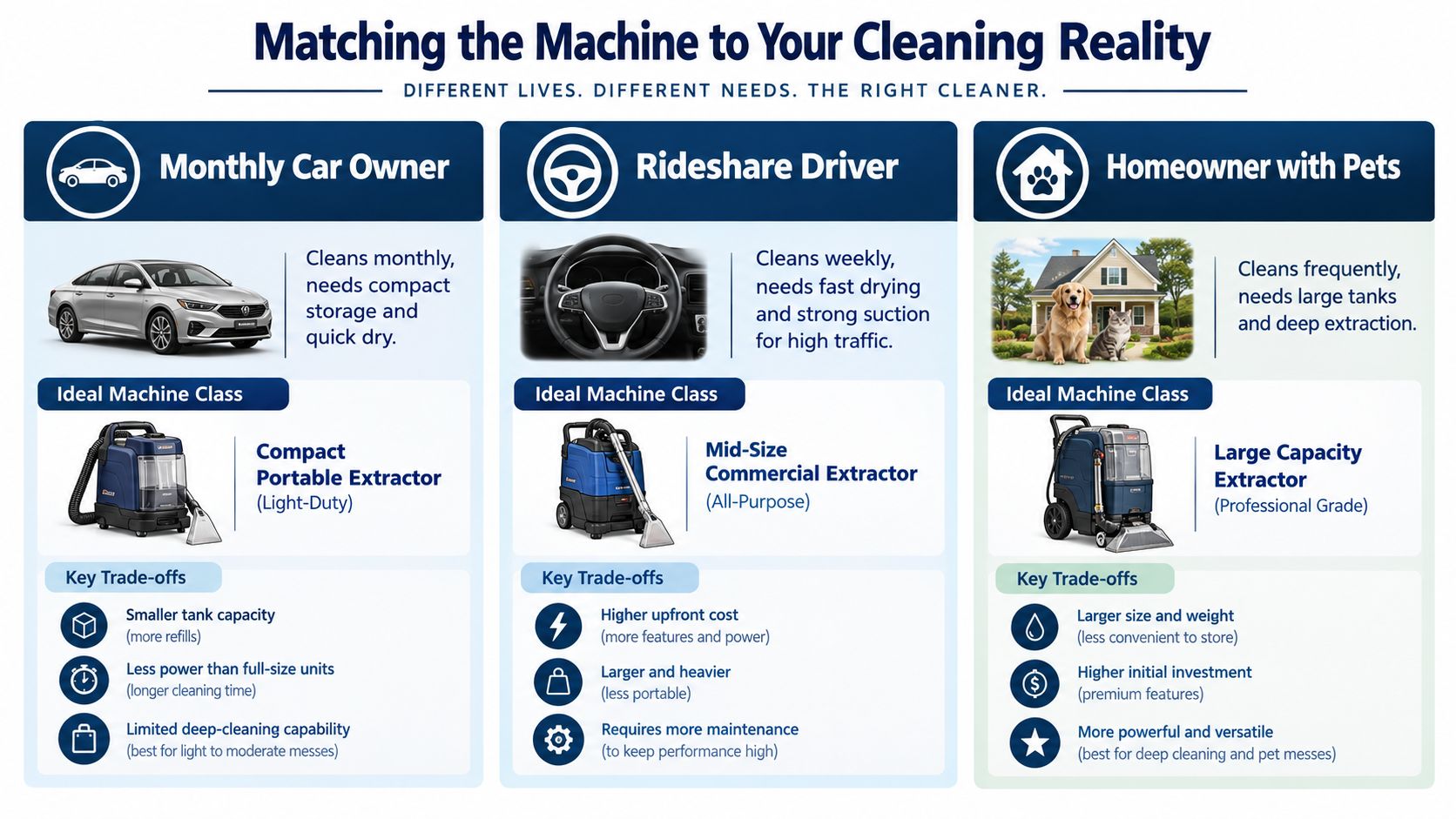
A machine should match the work waiting in your GTA garage or basement suite. Occasional coffee spills and winter salt on floor mats call for a different setup than daily rideshare interiors or pet-stained rooms. Judge each option by moisture recovery, storage, and how quickly you can return the surface to service.
The occasional car owner
For coffee, muddy mats, and seasonal touch-ups, choose a compact automotive extractor. A Puzzi-class machine provides a hose, upholstery tool, and recovery-focused design suited to seat wells, footwells, and narrow carpet sections. It is easier to store and set up than a commercial unit, which matters when the machine handles occasional work.
Prioritize these features:
- Tool access: Choose a nozzle that reaches seat rails, footwells, and the rear bench without awkward repositioning.
- Recovery performance: Compare published airflow and water-lift figures. Motor wattage alone does not show how much moisture the machine removes.
- Storage: An accessible extractor gets used. An oversized unit often sits untouched in the garage.
Avoid commercial tank capacity for occasional spills. Extra volume only extends the time between refills and dumps. It does not compensate for poor water recovery or a setup that makes you postpone the job.
The rideshare or fleet driver
Daily contamination, food spills, and salt exposure justify a sturdier professional portable unit. A compact extractor can still work, but frequent operators need faster recovery, simpler emptying, and equipment that tolerates repeated use.
Choose high airflow, dependable lift, a practical hose, and easy tank emptying. The Puzzi's listed 215 to 270 ft²/hr area-performance range gives compact equipment a useful comparison point, although vehicle interiors require slower, more precise passes than open carpet. In a cold GTA garage, the winning workflow is the one that cleans the affected section, pulls out the rinse water, empties the recovery tank, and gets the vehicle back into service without leaving damp foam behind.
The SUV or pet household
A pet-heavy home needs broad coverage and controlled drying. An upright extractor moves across full rooms more efficiently than a small automotive tool, while a larger tank reduces interruptions during a floor clean.
Choose an upright for muddy paws, pet accidents, and high-traffic rooms. Keep it moving, limit repeated wet passes, and prepare ventilation before spraying. Consistent extraction and workable tank capacity matter more than a commercial label. In Ontario winter, use a fan or dehumidifier where appropriate, and keep the room open so recovered moisture can leave instead of settling back into carpet and underlay.
The best carpet shampooing machine is the one that matches your cleaning rhythm, not the one with the biggest motor label.
For mixed vehicle and household use, choose a portable extractor with strong recovery. It can handle mats and upholstery without requiring full-upright storage, while giving you more control than a single-purpose spot cleaner.
Buy the Machine or Book the Detail
Buying makes sense only when the machine will see regular use. Canadian retail options range from basic household shampooers, such as the Canadian Ewbank 280 listing at about CA$89.98, to professional and commercial equipment in the CA$1,600 to CA$2,800 range. Those machines serve different workflows, especially when moisture recovery and winter drying time matter.
A low-cost unit can handle occasional spot work. A commercial extractor earns its storage and maintenance demands when frequent cleaning, less outsourcing, and faster recovery justify the investment. In a GTA garage or basement suite, stronger water lift and a useful recovery tank can reduce the damp period after each job.
Count uses before counting features
Start with your expected cleaning frequency. Occasional users should book a professional service rather than store equipment, buy solution, empty tanks, rinse hoses, and learn how much moisture the carpet can tolerate.
Frequent users have a clearer case for ownership. Rideshare drivers, small fleets, dealerships, and pet-heavy homes generate enough repeat work for convenience and consistent drying to matter. Include these costs:
- Cleaning solution: Ongoing chemical use increases the purchase cost.
- Maintenance: Brushes, seals, hoses, and tools eventually need attention.
- Labour: Setup, filling, emptying, rinsing, and drying consume time.
- Storage: A commercial machine needs a dry, accessible place, not a damp garage corner.
A machine that sits unused ties up money while stains and odours remain.
When outsourcing wins
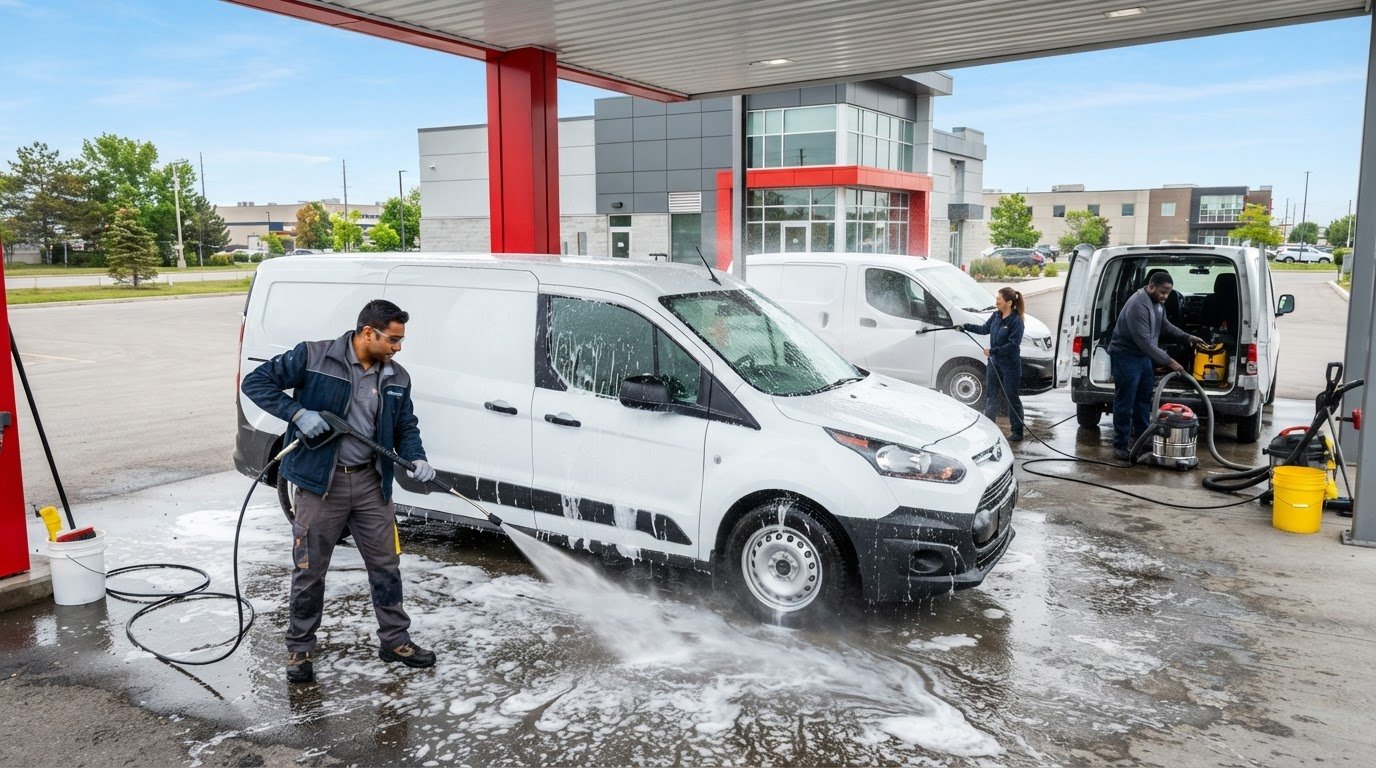
Professional detailing is the better choice for set-in salt, severe odours, delicate upholstery, and a full interior reset. Nanak Car Wash offers interior and exterior detailing with carpet and seat shampooing, salt and stain removal, vent and crevice blowout, and leather cleaning. Its listed detailing appointments typically run 1 to 4 hours, with vehicle-size and pet-hair surcharges noted in the service information.
The Hoover Power Scrub Deluxe Canadian listing shows why the job should determine the purchase. A home-oriented upright suits broad carpet coverage, while a professional portable extractor gives better control for repeated vehicle work, tighter spaces, and moisture recovery. Book the detail when drying conditions are poor or the interior needs restoration rather than a quick maintenance clean.
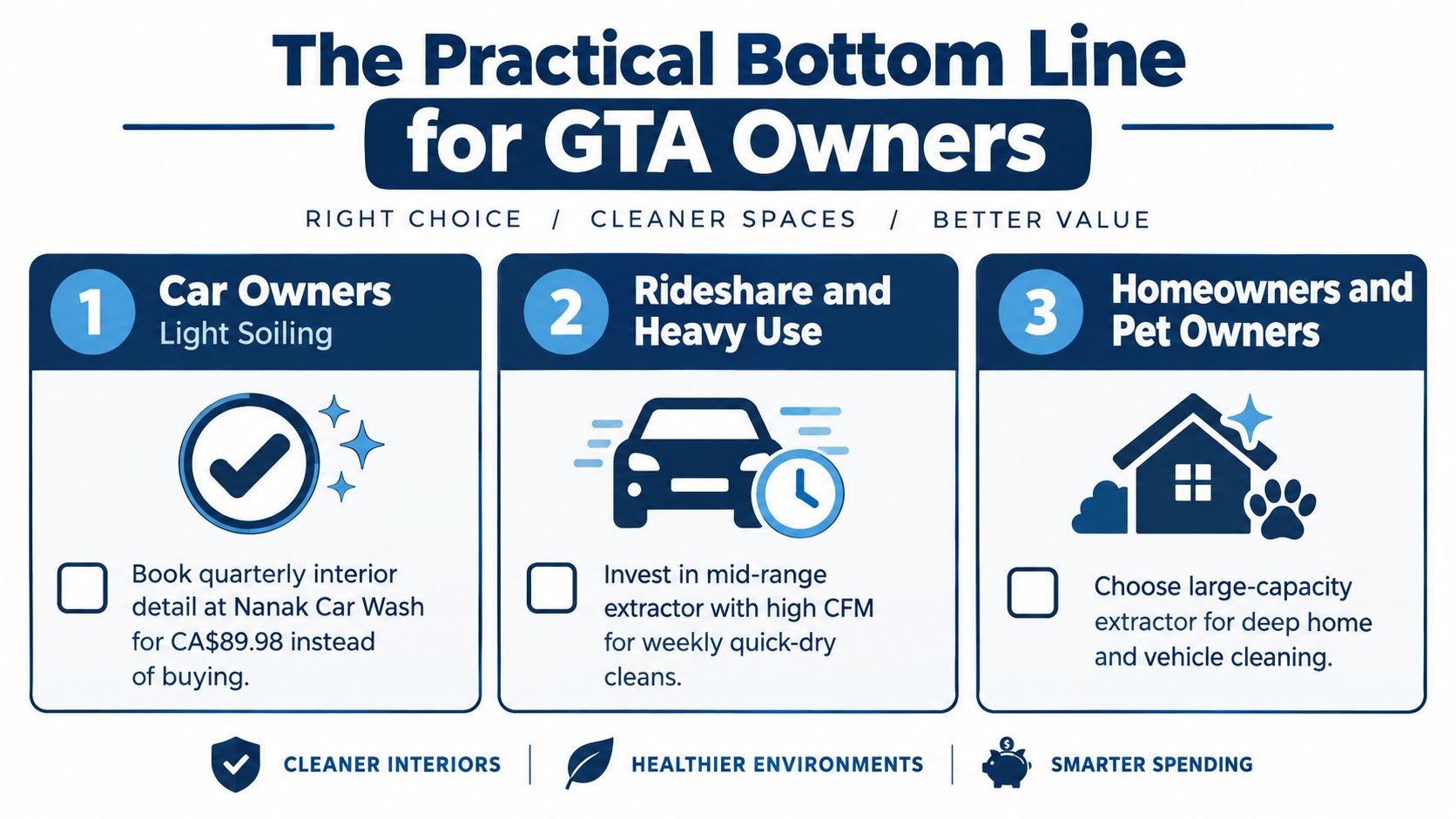
The Practical Bottom Line for GTA Owners
A wet vehicle mat in a cold GTA garage changes the buying decision. The machine must recover water efficiently, because slow drying leaves upholstery damp and can turn a routine cleanup into an odour problem.
For light-use car owners
Book a professional interior clean when the vehicle needs a proper reset. Nanak Car Wash lists carpet and seat shampooing, salt and stain removal, and detail work among its appointment-based services. For occasional coffee or mud, a compact extractor is enough. A large commercial unit adds storage, maintenance, and drying demands without improving an infrequent job.
For frequent drivers and small fleets
Buy a portable professional extractor with published airflow, water lift, controlled spray pressure, and a recovery tank. Use the Puzzi 10/1 and Tennant R3 benchmarks noted earlier to judge whether a machine can remove enough moisture for repeat vehicle work. Specifications matter because airflow and water lift affect recovery, while tank capacity determines how often work stops for refilling or emptying.
Run extra recovery passes after spraying, especially on mats and dense seats. In a cold garage, that technique can matter as much as the machine's headline power.
Choose a commercial compact unit when multiple vehicles need regular work and refilling becomes the main interruption. The Tennant R3 offers a more production-oriented setup, while the Puzzi remains a useful compact reference. Compare both with your available ventilation and expected turnaround, not with tank size alone.
For homes with pets
Choose a home upright for broad carpet areas cleaned regularly. Pair it with fans or controlled ventilation, and stop spraying once the carpet has received enough solution to release soil. The tank only helps when recovery passes keep pace with the spray. In a basement suite, leave more time for drying and avoid saturating the backing.
What I'd skip
- Unverified spec sheets: If CFM and water lift are missing, you cannot judge moisture recovery.
- Single-tank designs: A machine without a genuine recovery system is a poor fit for wet carpet and vehicle upholstery.
- Oversized commercial equipment: Do not pay for van-scale capacity when the job is a few mats and a seat.
- Aggressive spraying without recovery: PSI can loosen soil, but excess solution becomes tomorrow's damp smell.
For GTA conditions, moisture recovery should decide the purchase. Choose a compact or commercial extractor with transparent specifications for repeat interior cleaning. For a low-frequency deep clean, book a professional appointment instead of storing equipment that may leave your basement or vehicle wet.
Nanak Car Wash offers GTA interior detailing with carpet and seat shampooing, salt and stain removal, upholstery care, and related exterior services. For a winter reset, review the available options at Nanak Car Wash and arrange an appointment.


 6600 Finch Ave W, Etobicoke, ON M9V 3Z6
 647-703-8515
 MON – SUN 8 AM to 7 PM