
You get home, drop your keys on the counter, and catch it before you even take off your shoes. There's a sharp urine smell near the hallway runner, or perhaps in the carpeted footwell of the car. You've already scrubbed that spot, maybe more than once, but the odour comes back after the carpet dries, especially when the air turns damp.
The wrong carpet shampoo makes this maddening. It can lift the visible mark, leave behind a floral scent, and still miss the contamination underneath. The best carpet shampoo for pet urine isn't the one with the strongest perfume or the most aggressive suds. It's the product, method, and extraction process that reach the urine below the fibre surface and break down the compounds responsible for the recurring odour.
That distinction matters in both homes and vehicles. A carpeted floor mat, trunk liner, hallway runner, and wall-to-wall carpet can all hide contamination below the surface. This guide gives you a practical way to choose an enzyme-based product, recognise when shampoo won't be enough, and decide when professional interior detailing is the smarter move.
Table of Contents
- The Recurring Stain That Won't Quit
- Why Pet Urine Beats Most Carpet Shampoos
- Enzyme Chemistry Versus Surfactant Cleaning
- Step by Step Remediation That Actually Works
- Top Carpet Shampoo Picks Compared
- When Shampoo Is Not Enough
- Choosing the Right Product for Your Situation
The Recurring Stain That Won't Quit
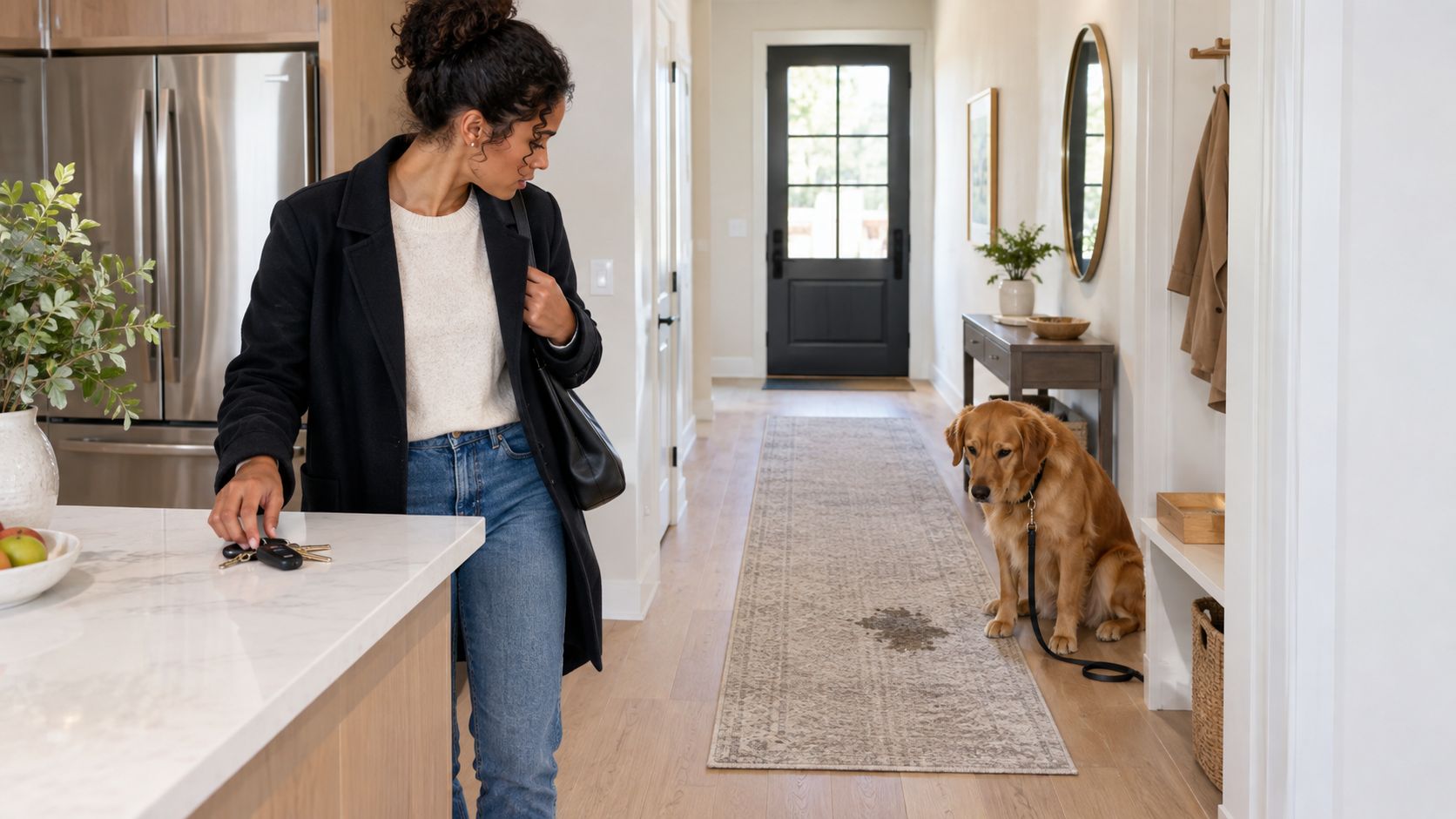
A dog owner comes home, notices a faint hallway mark, and catches the ammonia-like odour before reaching the next room. The spot has already been scrubbed twice this month. It seems manageable while the carpet stays dry, then humidity brings the smell back within hours.
That pattern points to contamination below the carpet face. Pet urine can move through carpet backing and into the subfloor within about two hours, while odour-causing bacteria can double every 20 minutes if treatment is delayed, according to independent Canadian pet-stain guidance.
Why the smell returns
Drying does not remove every urine residue. Moisture and humidity can reactivate what remains, so a carpet may smell clean after treatment and turn sour again during Southern Ontario's damp seasons.
Cars have the same failure point. An accident may begin on a removable mat, yet liquid can reach the carpet underneath or the padding below a trunk liner. Heat cycling inside a parked vehicle can bring residual odour back after a partial clean, especially when the product reaches only the visible surface.
A rental-machine pass can make the result look convincing. The carpet brightens, the wet patch disappears, and fragrance masks the odour temporarily. Fragrance is not neutralisation, and surface agitation is not deep remediation.
Practical rule: If the odour returns after drying, stop buying stronger-scented shampoo. Check whether the product reaches the contaminated layer and contains enzymes for organic residue.
Fresh accidents often respond to immediate blotting followed by an appropriate enzyme treatment. Dried spots, repeated accidents, and broad contamination demand more: enough solution to reach the affected material, adequate dwell time, and several extraction cycles. The Carpet and Rug Institute's pet urine guidance recommends immediate blotting, cool or warm water with mild detergent, rinsing, and thorough drying. It also warns against heat and automatic dishwasher or laundry detergents.
For a removable mat, enzyme shampoo may be sufficient. If urine has soaked padding or the vehicle carpet, shampoo alone may leave the source behind. At that point, padding replacement or professional interior detailing is the more sensible repair.
Why Pet Urine Beats Most Carpet Shampoos
A carpet can look clean and still fail the smell test after drying. Ordinary shampoos are made for tracked-in soil. They loosen dirt, suspend particles, and help an extractor remove surface grime. Pet urine requires a different standard because residue may sit beneath the visible pile, where a routine wash cannot reach or chemically break down.
Shampoo depth matters more than foam or fragrance. A top-layer application can brighten carpet while leaving the odour source in the backing, padding, or vehicle carpet underneath. As noted earlier, contamination that reaches those layers needs treatment that follows the same path, not another pass over the surface.
Dried urine also reactivates when moisture and humidity return. That explains the familiar pattern of a carpet smelling acceptable when dry, then turning sour after damp weather. A vehicle can behave the same way after a detailing visit, especially when warmth draws residual odour back into the cabin.
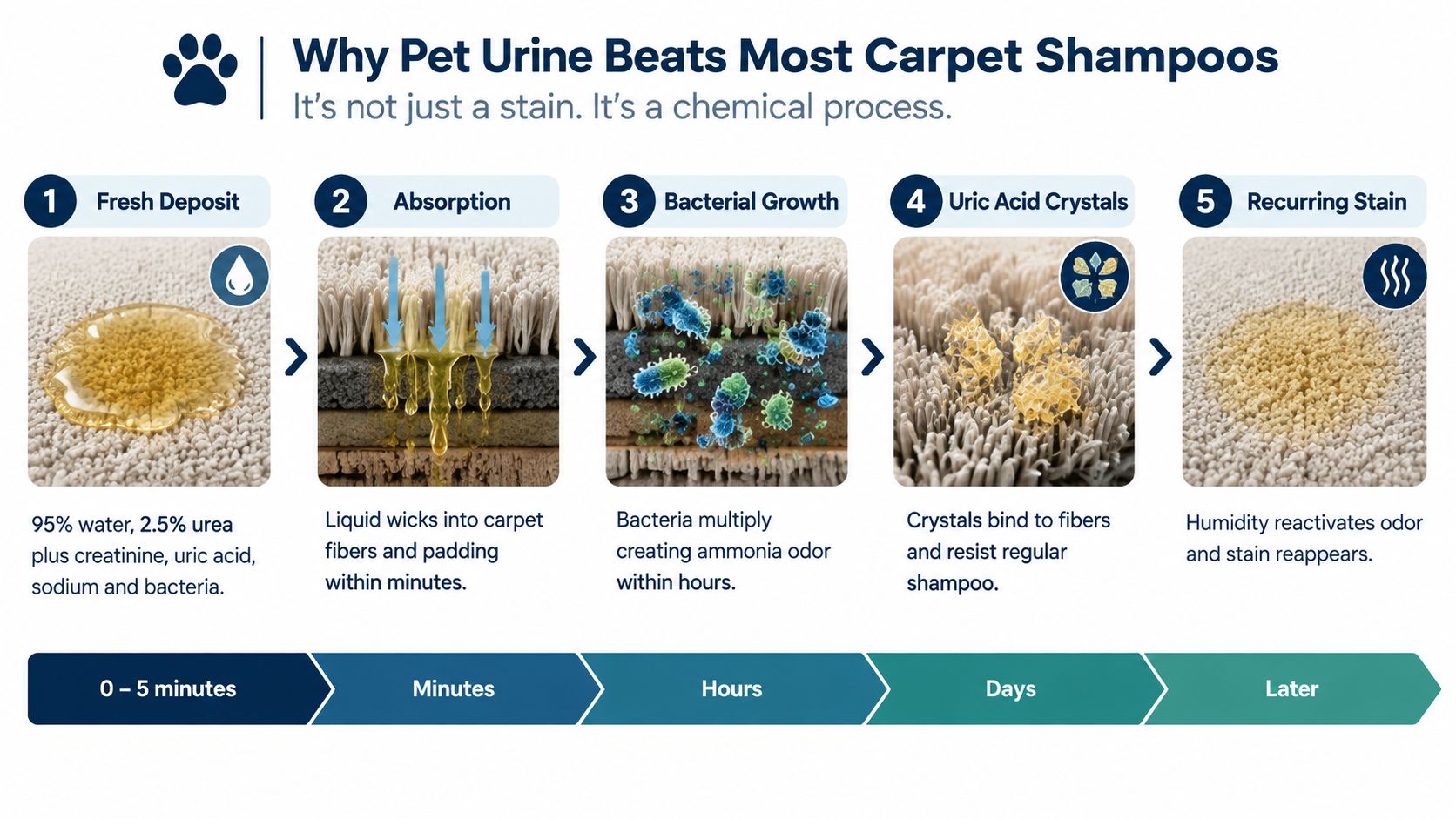
Surface cleaning versus source removal
Floral fragrance changes the smell in the room, not the residue below the carpet. Brightening agents can hide yellowing, yet visual improvement says little about whether urine has been removed. If the padding is contaminated, the carpet face may be the easiest part of the job.
Use one practical test: let the treated area dry completely, then check whether the odour remains gone. Consumer Reports' enzyme-cleaner coverage separates urine-targeted cleaners from generic products and stresses treating the affected area to the depth of the contamination.
Established stains need controlled contact, not a casual spray-and-wipe routine. Extended dwell time under plastic sheeting, followed by repeat extraction, may be required for set-in residue, according to Canadian pet-stain treatment guidance. Keep the treatment in contact with the affected material, then remove the loosened residue thoroughly.
The same rule applies inside a vehicle. Washable mats are manageable with enzyme shampoo when contamination has not spread. If the carpet or padding holds the odour, replace the affected padding or call a detailing shop equipped to remove and extract the interior properly. A deodorising spray is a finishing step, not remediation.
Enzyme Chemistry Versus Surfactant Cleaning
A carpet can look clean while dried urine remains in the backing or padding. Read the back label before trusting the front. Choose a product made for pet urine and odour, then confirm that it explains dwell time, extraction, fibre testing, and application deep enough to reach the affected material.
Enzyme cleaners are the first choice for organic urine residue because they target the compounds responsible for recurring odour. Canadian consumer guidance recommends leaving an enzyme formula on the stain for at least 10 to 15 minutes. Older or set-in spots may require several hours or overnight damp contact, according to PetSmart's stain and odour removal guide. A quick spray followed by immediate wiping gives the chemistry too little time to work.
Surfactants perform a separate job. They loosen and suspend soil so an extractor can lift it from the carpet. That makes them useful during final cleaning, but a general shampoo can leave urine residue behind if it lacks a urine-specific treatment.
| Chemistry | Dwell Time | Residue | Best For |
|---|---|---|---|
| Enzyme cleaner | At least 10 to 15 minutes, longer for dried contamination | Usually low when extracted correctly | Organic urine residue and recurring odour |
| Surfactant shampoo | Usually short, based on label instructions | Can remain if over-applied or poorly rinsed | General soil and surface cleaning |
| Oxygen cleaner | Product-specific contact time | Can leave oxidised residue if overused | Brightening and odour support on compatible fibres |
What each category can and can't do
Enzymes come first. Apply enough solution to reach the contaminated zone and keep that area moist for the labelled contact time. Treating only the visible ring misses urine that has travelled into the backing or padding.
Surfactants support the process. They improve the carpet's appearance and remove surrounding soil, but they do not replace a urine-specific presoak. Foam and fragrance can make a product feel powerful without resolving the source.
Oxygen cleaners require caution. They may brighten compatible fibres and support odour control, but colourfastness and substrate compatibility must be checked. Peroxide-based products can be unsuitable for wool, silk, velvet, vinyl, or leather, as noted in testing of pet odour products by Bob Vila.
For most synthetic residential and automotive carpet, use an enzyme presoak first, then an extraction-compatible shampoo if the label permits it. If the padding still smells after complete drying, stop repeating surface treatments. Replace the affected padding or use a detailing shop that can remove and extract the interior properly.
Step by Step Remediation That Actually Works
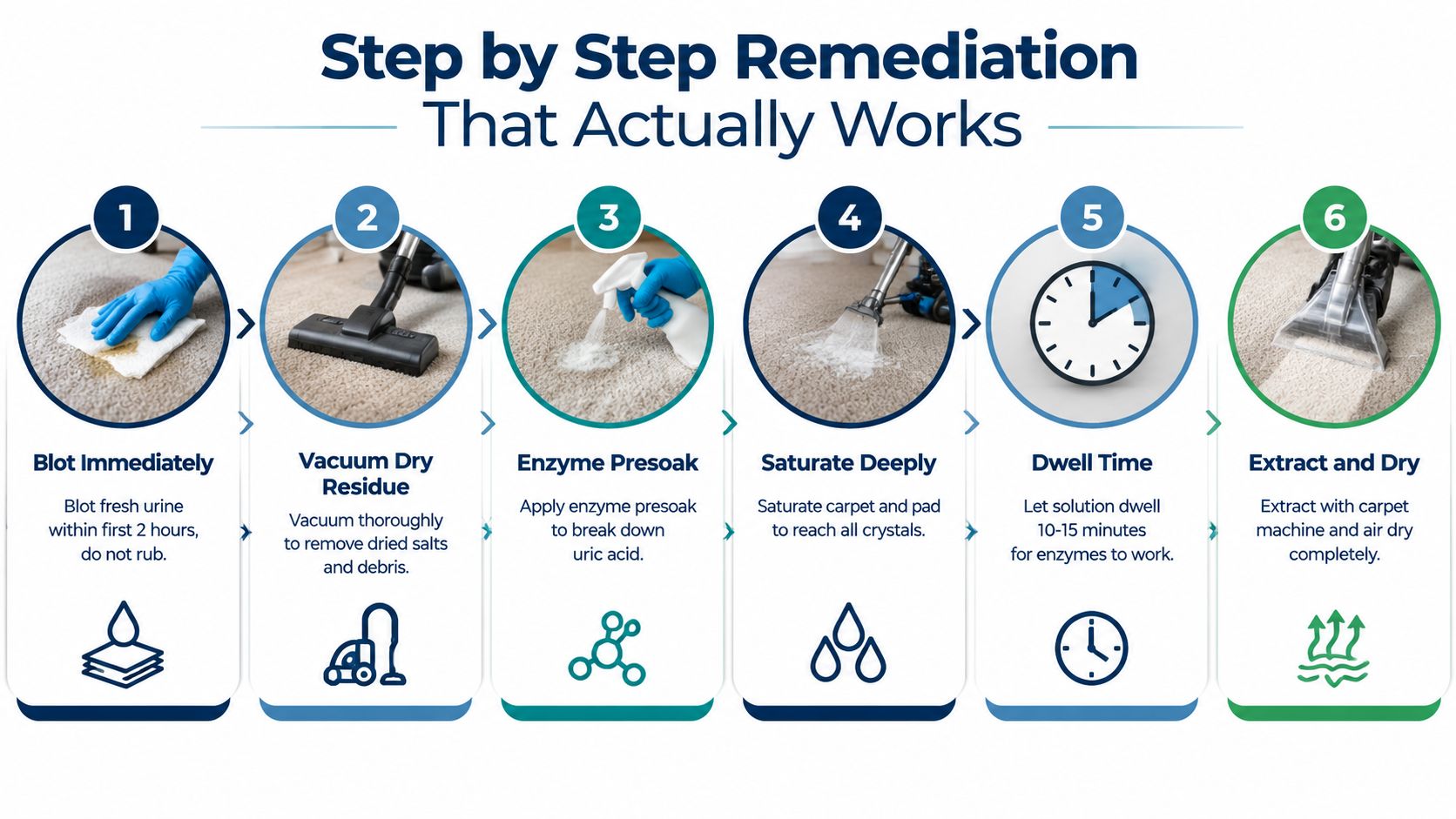
A urine stain can look gone while the backing and padding still hold the odour. The cleaning order matters as much as the product. Apply an enzyme formula thoroughly, keep it wet for its stated contact time, then extract the dissolved residue instead of masking it with fragrance.
Start before the urine dries
Blot fresh urine as soon as you find it. Press clean towels into the area and replace them when saturated. Rubbing spreads liquid sideways and pushes it deeper into the pile.
For dried residue, vacuum first to remove loose salts and debris. In a vehicle, take out the floor mat, vacuum the carpet underneath, and inspect the edges where liquid may have travelled. A small cabin spill can reach the underlay just as easily as a household accident can reach carpet padding.
Use the right treatment order
Test first. Apply a small amount to a hidden area. Check for colour transfer, fibre damage, or changes to the backing.
Apply an enzyme presoak. Treat the suspected contamination, not only the visible outline. If urine reached the backing, the solution must reach that depth too.
Maintain wet contact. Keep the area damp for at least 10 to 15 minutes, following the product directions. Dried or heavy contamination may require much longer contact, including several hours or overnight. Do not let the enzyme product dry before its treatment time is complete.
Extract thoroughly. Use a wet vacuum or carpet extractor to remove the treatment and dissolved residue. Make several slow passes. Repeatedly flooding the carpet without removing the liquid only drives contamination deeper.
Dry with airflow. Use fans, open windows where practical, or a dehumidifier. Judge the result only after the carpet is fully dry, since moisture and fragrance can conceal remaining odour.
The common errors are predictable. Rubbing spreads the stain, steam cleaning before addressing the urine chemistry can set up a frustrating repeat, and excess shampoo leaves a sticky film that attracts soil. Heat alone does not remove uric residue. In a car, stop treating the surface if the smell returns after drying. Persistent odour usually points to contaminated padding or insulation, where a detailing shop may be the smarter call than another round of shampoo.
Wool, sisal, and silk rugs need a different method. Use a pH-neutral formula, limit water, and follow the fibre manufacturer's care instructions. If the fibre or dye stability is unknown, use a rug-cleaning professional rather than risking an expensive piece.
The final smell test
Check the area only after it is completely dry. Smell it close to the carpet, then from standing height, and inspect it again during humid conditions. If the odour returns, the treatment missed part of the contamination depth or the pad remains affected. At that point, enzyme shampoo has reached its limit. Replace the affected padding or have the interior removed and extracted properly.
Top Carpet Shampoo Picks Compared
Brand recognition does not remove urine. Choose by active chemistry, dwell instructions, extraction compatibility, and substrate safety. Formulas change, so read the current label and follow it instead of forcing every product into the same cleaning routine. The right choice also depends on whether you are treating a household carpet, a vehicle's carpet, or upholstery where excess moisture can reach padding and insulation.
| Product | Active Chemistry | Recommended Dwell Time | Safe Substrates | Best Use Case |
|---|---|---|---|---|
| Rocco and Roxie | Enzyme-based urine and odour treatment | Follow the label, with longer contact for dried spots | Test on synthetic carpet and upholstery first | Targeted treatment for recurring pet spots |
| Nature's Miracle Advanced | Pet-stain and odour treatment chemistry | Follow the label and keep the area wet as directed | Compatible, colourfast carpet and upholstery after testing | Household spot treatment and established accidents |
| Bissell Professional Pet Stain and Odor | Extraction-oriented pet-stain cleaning formula | Use the machine and bottle instructions | Carpet and compatible extractor-safe surfaces | Hot-water extraction and broader carpet cleaning |
| Biokleen Bac-Out | Bio-enzymatic cleaning approach | Allow contact time according to the label | Test carpet, rugs, and upholstery before broad use | Lower-fragrance presoak and maintenance treatment |
| Woolite Pet Stain | Pet-stain chemistry, with some variants using oxygen-based ingredients | Follow the product label | Check fibre restrictions carefully, especially on delicate materials | Quick spot cleaning and surface odour support |
My practical ranking
For recurring urine odour, start with Rocco and Roxie or Nature's Miracle Advanced when the label permits use on your carpet or upholstery and you can keep the product wet for the required dwell time. Enzyme treatment fits dried urine better than a generic shampoo designed mainly to lift surface soil.
For machine cleaning, choose Bissell Professional Pet Stain and Odor if you already have a compatible extractor. It suits a larger carpeted area and can remove loosened residue, but machine compatibility does not mean it will fix contamination buried in padding. Use a targeted presoak when the urine is old or concentrated.
For a lower-foam presoak or maintenance treatment, Biokleen Bac-Out is a sensible option. Its bio-enzymatic approach suits owners who want less fragrance, provided the application and surface-testing instructions match the job. In a vehicle, keep the application controlled. Saturating seat carpet or insulation can create a second problem.
Use Woolite Pet Stain selectively. Oxygen-based or peroxide-containing variants can support surface stain and odour work, but fibre restrictions matter. Test first, especially on delicate rugs, dyed materials, or upholstery with uncertain care requirements.
Do not pay for prestige alone. A less expensive enzyme product applied to the contaminated depth, kept wet long enough, and extracted properly can outperform a premium bottle misted over the surface. If the smell returns after thorough treatment, stop changing shampoos. The carpet may be clean while the pad or vehicle insulation still holds urine, which calls for removal, replacement, or professional extraction rather than another surface application.
When Shampoo Is Not Enough
A carpet shampoo cleans fibres, not damaged structure. If urine has travelled through the carpet into the padding, the pad can keep releasing odour while the carpet surface looks clean. Pad replacement may be the most effective solution once contamination reaches that layer. A blacklight inspection can also expose spots that ordinary cleaning missed.
Escalation signs
- The urine is old and set in. Moisture can reactivate dried residue, creating an expensive cycle of repeated surface cleaning.
- The pad is saturated. A dark underside, wet seams, or odour beneath lifted carpet indicates contamination below the fibres.
- The smell returns after two proper treatment cycles. After using an enzyme product, allowing contact time, and extracting thoroughly, recurring odour means the contamination lies deeper or the method is unsuitable.
- The subfloor shows discolouration. Wood or another subfloor material may require cleaning, drying, and an appropriate sealing treatment.
- Sensitive occupants react to the room. Persistent residue needs proper removal, not perfume or a temporary cosmetic improvement.
Steam cleaning alone is a weak answer for deep urine contamination. Heat and water can loosen or redistribute residue without breaking down its underlying chemistry, especially without an enzyme presoak.
The same principle applies inside a vehicle. Polishing the surface of a rusted panel does not repair the corrosion underneath. You remove the affected material when required, then restore and protect the surface. Urine in carpet, seat fabric, or insulation deserves the same level of honesty.
For home carpet, a professional can lift the carpet, replace contaminated padding, treat the subfloor, and extract the carpet separately. Choose that route when the odour persists after correct enzyme treatment or when the pad is visibly affected.
A detailing shop is often the smarter call for a vehicle with urine in mats, carpet, seats, seams, or trim. Technicians can remove accessible panels, control moisture, clean crevices, and dry the interior properly. Avoid saturating seat foam or insulation with another shampoo application, because trapped moisture can create a second problem.
For a plain-language overview of how to get rid of dog urine, use the companion guide. It supports basic odour treatment, but it does not replace padding removal, subfloor work, or professional interior remediation when contamination has travelled below the surface.
Choosing the Right Product for Your Situation
The right product depends on four facts: the accident's age, the material involved, who uses the space, and how far the urine travelled.
Fresh urine on sealed automotive carpet or a removable floor mat is the simplest case. Blot it immediately, apply an enzyme spray, and lift the liquid with a microfiber towel instead of rubbing it deeper. Let the area dry fully. If the odour stays gone, a machine is unnecessary.
Dried indoor stains need more reach. Wall-to-wall carpet usually requires a machine-extractable enzyme treatment, enough solution to reach the affected backing, and at least 15 minutes of dwell time before extraction. Older contamination may need several hours or overnight contact. Follow the product label and avoid extracting before the enzyme has had time to work.
| Situation | Recommended Category | Why It Works |
|---|---|---|
| Fresh spot under a day old | Enzyme spray and blotting towels | Limits spread before the urine dries into residue |
| Dried carpet stain | Enzyme presoak plus extraction shampoo | Provides contact time and removes dissolved contamination |
| Vehicle floor mat or trunk liner | Automotive-safe enzyme treatment | Reaches fabric without relying on fragrance |
| Recurring cat-marking area | Enzyme soak plus blacklight inspection | Helps locate missed contamination beyond the visible mark |
| Odour below carpet or in padding | Professional remediation | Addresses the substrate rather than repeatedly cleaning the face |
| Delicate rug | Fibre-specific, pH-neutral treatment | Reduces the risk of colour or fibre damage |
Homes with children or cats that lick floors should use formulas with clearly published safety information and follow label directions after extraction. “Natural” does not mean universally safe. Test delicate fibres before using oxygen bleach, and skip it when the material cannot tolerate it.
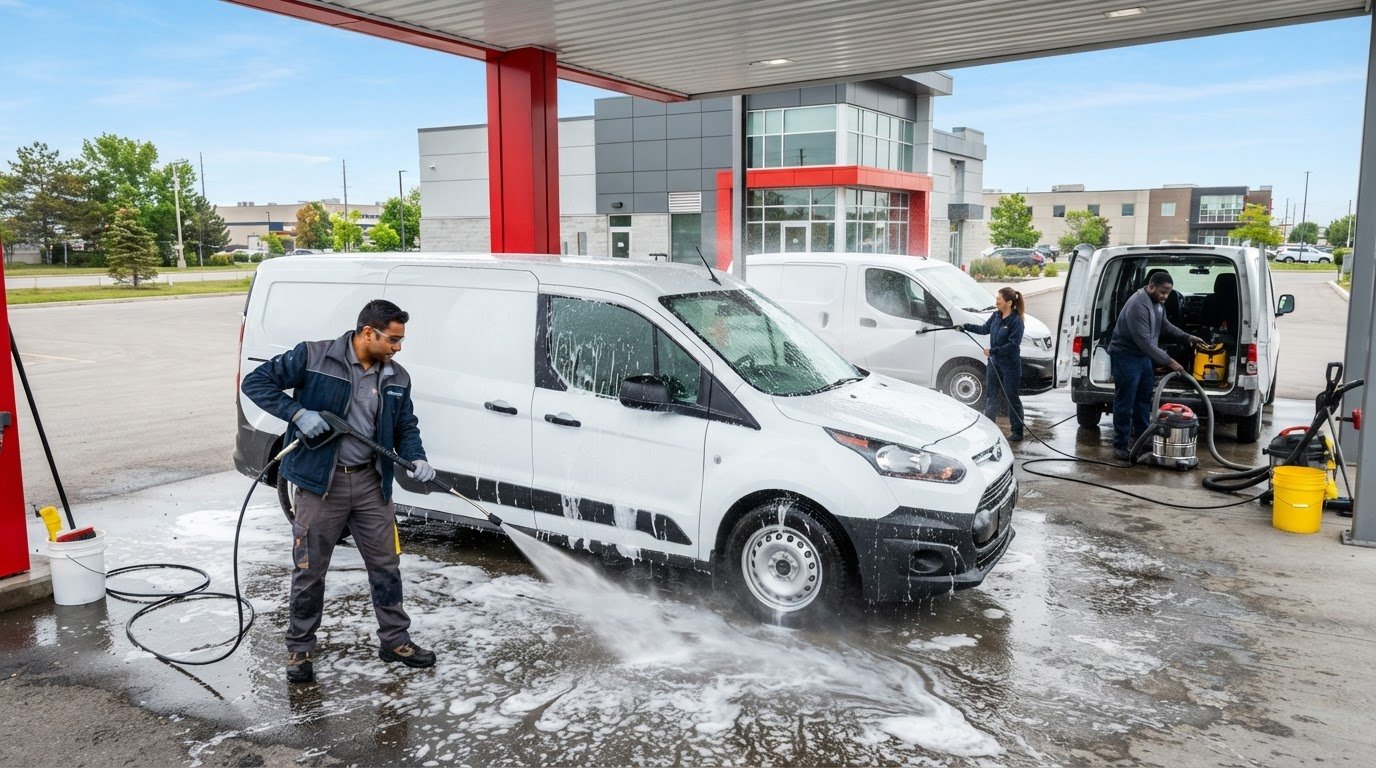
For a vehicle with persistent pet odour, Nanak Car Wash provides interior detailing that includes carpet and seat shampooing, stain and salt removal, vent and crevice cleaning, and machine extraction. A detailing shop is the smarter choice when urine has entered seat foam, insulation, seams, or tight trim gaps. Repeatedly wetting a contaminated cabin can trap moisture and leave behind more residue.
Choose an enzyme spray for fresh accidents, an enzyme shampoo for established stains, and a professional carpet or vehicle detailer when the pad, subfloor, or hidden interior structure is involved. If the odour returns after proper treatment and drying, stop buying scented products. Inspect below the carpet or have the interior assessed.
If pet urine has reached your vehicle's carpet, mats, seats, or crevices, visit Nanak Car Wash for interior cleaning and detailing that includes carpet and seat shampooing, stain removal, and machine extraction. Bring the vehicle in before repeated DIY treatments add more moisture and residue to the problem.


 6600 Finch Ave W, Etobicoke, ON M9V 3Z6
 647-703-8515
 MON – SUN 8 AM to 7 PM