
You turn the dial after a salty GTA commute, expecting warm air. Instead, the vents deliver a tiny brown snowstorm and a smell that suggests your dashboard has been storing gym socks. A similar surprise arrives in spring, when the first blast of air-conditioning carries dust, pollen, or a musty note straight toward your face.
That moment is why a car vent cleaning service deserves more attention than a quick wipe with a cloth. The visible slats are only the entrance. Behind them are air passages, a cabin filter, and the HVAC housing, where debris and moisture can collect out of sight.
This guide breaks down how the system works, why GTA driving conditions add to the mess, what professional cleaning includes, and how to choose between vent cleaning, a broader interior detail, and an odour-focused treatment. You'll also see how appointments and packages work at Nanak Car Wash, so you can book with a clear idea of what the service can and can't solve.
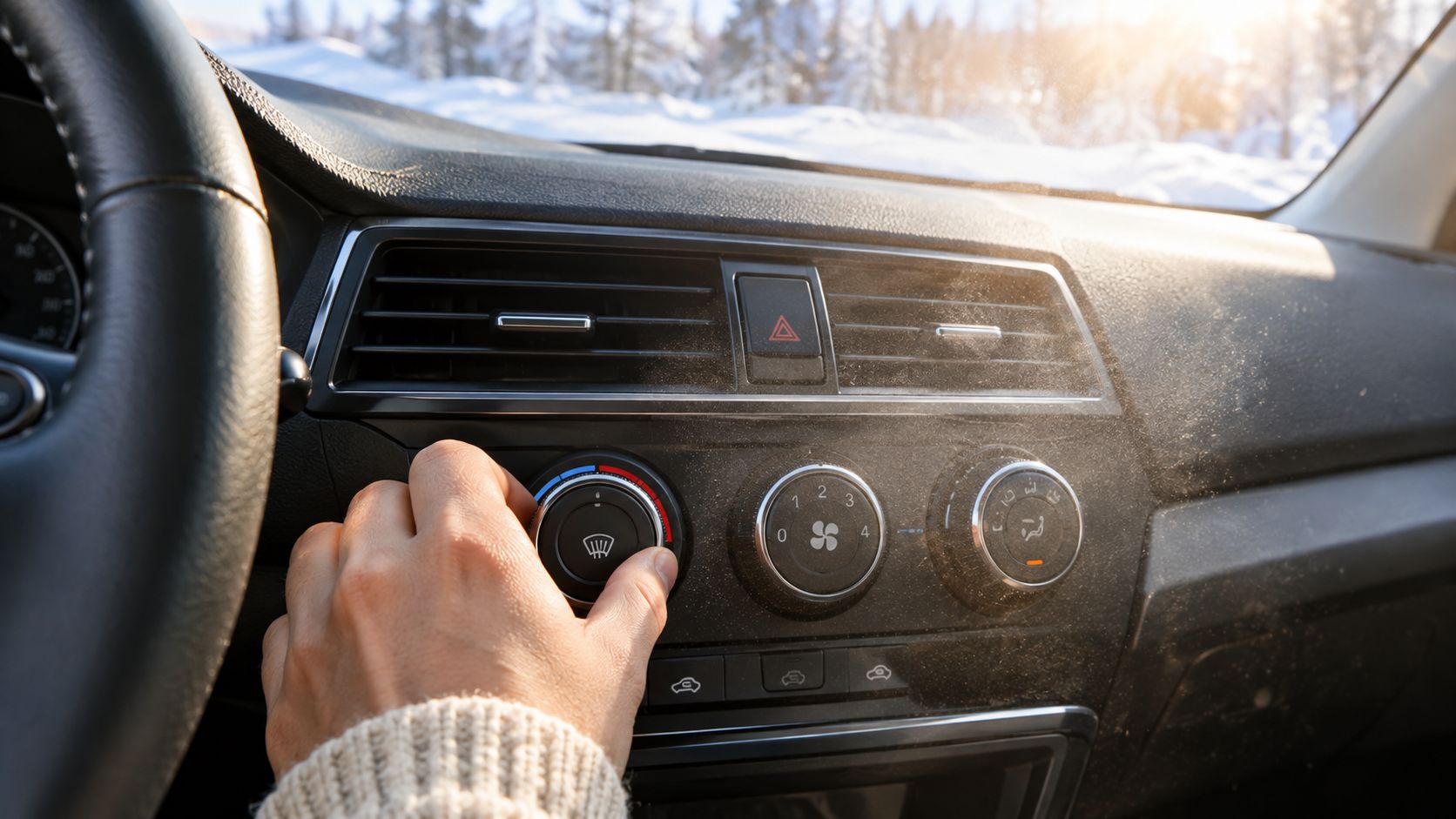
Table of Contents
- Introduction Why Your Car Vents Deserve Attention
- How Car Vents and Cabin Air Systems Actually Work
- Why GTA Driving Makes Vent Cleaning More Important
- What a Professional Car Vent Cleaning Service Includes
- Benefits You Will Actually Notice After Cleaning
- Pricing Packages and Membership Options at Nanak Car Wash
- What to Expect on Visit Day and How to Keep Vents Fresh
Introduction Why Your Car Vents Deserve Attention
A dusty vent isn't automatically a crisis. Sometimes it's just a dusty vent. The trouble starts when drivers treat every air-quality complaint as a cosmetic problem, because a brush can clean what you see while leaving the filter, duct edges, and HVAC box untouched.
Think of your car after a typical Ontario week. You track slush into the footwell, drive behind traffic on a wet road, park under pollen-heavy trees, and carry fine dust into the cabin on clothing and shoes. Each time the fan runs, the ventilation system moves air through that environment. The result may be a light layer on the dashboard, uneven airflow, a sneeze-inducing puff, or an odour that returns after the air freshener gives up.
The useful question isn't only “Do my vents look dusty?” It's “What is travelling through the air system when I turn it on?”
This guide is for GTA drivers who commute year-round, transport children or pets, notice recurring smells, or want a sensible explanation before paying for an interior service. You'll learn where contamination tends to collect, why a cabin filter matters, what technicians do, and when a vent-only clean is unlikely to be enough.
The tone here is practical because the service should be practical. You don't need a chemistry lesson to decide whether your car needs a dry blowout, filter replacement, low-moisture cleaning, or a deeper HVAC assessment. You need to understand the route the air takes and match the treatment to the problem.
How Car Vents and Cabin Air Systems Actually Work
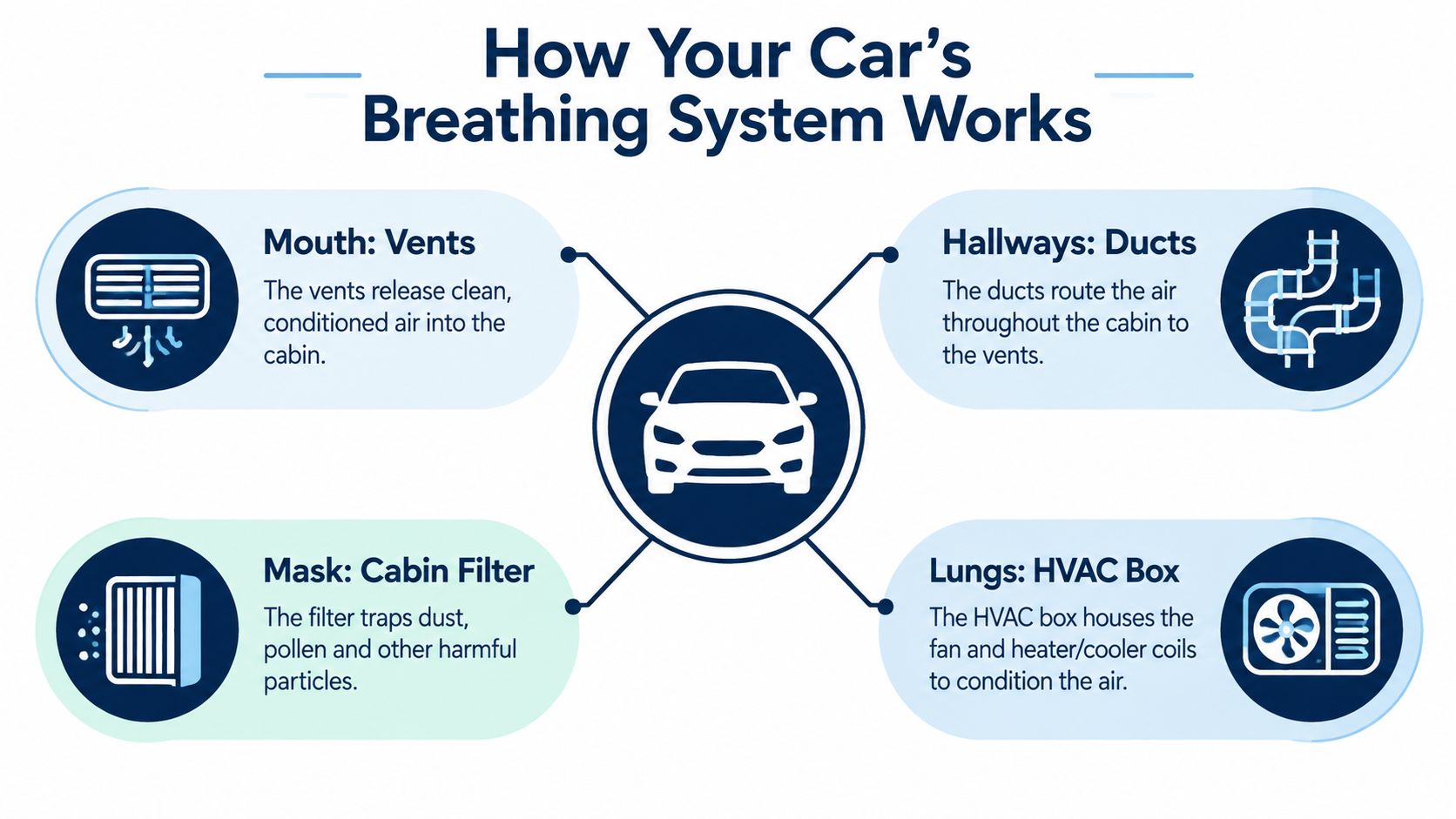
Your car's ventilation system is easier to understand as a breathing setup.
The vents are the mouth. They're the part you see, and they direct conditioned air into the cabin. The ducts are hallways, carrying air behind the dashboard. The cabin air filter is a mask, catching much of the incoming dust, pollen, smoke, and exhaust before air travels deeper. The HVAC box is the lungs, containing the components that heat, cool, blend, and move air.
Follow the air path
Outside air enters through the fresh-air intake. This opening is usually near the base of the windscreen, where it can encounter road dust, pollen, leaves, and other airborne debris.
The cabin filter catches part of that load. A filter in good condition helps reduce fine particulate matter and traffic-related pollution entering the passenger space, as described in Canadian guidance on cabin air filter maintenance.
The HVAC box conditions the air. Depending on your settings, the system heats or cools it, adjusts the blend between warm and cool air, and sends it through selected routes.
Registers distribute the air. These are the directional openings you adjust with your fingers. They're the final exit, not the whole system.
Recirculation changes the route. Instead of repeatedly pulling outdoor air through the intake, the system reuses more cabin air. That can help the car cool or heat faster, but it also means the same interior air keeps moving through the system.
A vent brush reaches the mouth. It doesn't automatically clean the hallways, check the mask, or address residue inside the lungs. Dust can settle around vent mechanisms, behind register fins, in dashboard gaps, and near the HVAC intake. That's why a professional service combines agitation, air movement, vacuuming, and carefully controlled moisture rather than relying on a single swipe.
Why GTA Driving Makes Vent Cleaning More Important
GTA cars live in a rotating soup of seasonal contaminants. Winter brings salt and brine. Spring brings pollen. Summer creates dry road dust, while autumn adds leaves and organic debris around intake areas. Stop-and-go traffic keeps vehicles close to exhaust, wet spray, and the fine film lifted from busy roads.
Ontario's winter salt use gives this issue a particularly local flavour. Provincial road maintenance applies roughly 1.5 to 3 million tonnes of salt each winter, while Toronto uses about 130,000 to 150,000 tonnes annually on city streets, according to this Ontario road-salt and vehicle exposure overview. Salt residue doesn't need to fly directly into a dashboard vent to matter. Wet contamination enters on footwear, carpets, clothing, and road spray, then contributes to dampness and grime inside the cabin.
The seasonal load is cumulative
A driver might notice the problem in spring, but the buildup often reflects months of use.
- Winter: Salt crystals and brine arrive through slush, floor mats, door openings, and wet clothing. Moisture can linger in carpets and nearby surfaces.
- Spring: Pollen enters through fresh-air intake routes and settles on dashboards, filters, and interior surfaces.
- Summer: Dry dust becomes easier to stir up when the fan starts, especially if the cabin filter and vents already hold debris.
- Fall: Leaves and fine organic material can gather around intake areas and damp interior edges.
This isn't just an appearance issue. The Ontario Society of Professional Engineers transportation guidance treats vehicle cabin air as an engineering and public-health concern. It recommends an equivalent clean air delivery rate of 10 litres per second per person and advises continuous ventilation, non-recirculation when occupied, and high-efficiency filtration. The same guidance explains that efficient filtration can mitigate exposure to fine particulate matter, especially near busy roads.

Who should pay closest attention
Year-round commuters, allergy sufferers, families, and drivers who carry pets tend to notice cabin contamination quickly because the vehicle's HVAC system runs often and the interior sees heavy use. If the air smells stale, the fan airflow feels uneven, or dust keeps reappearing after the dashboard is wiped, inspect the filter and the surrounding ventilation path instead of polishing the symptom.
What a Professional Car Vent Cleaning Service Includes
Professional vent cleaning should feel less like dusting a shelf and more like clearing a narrow, delicate air route. The technician has to remove loose contamination without forcing it deeper into the dashboard, then use moisture carefully so dampness doesn't become the next odour problem.
The inspection comes first
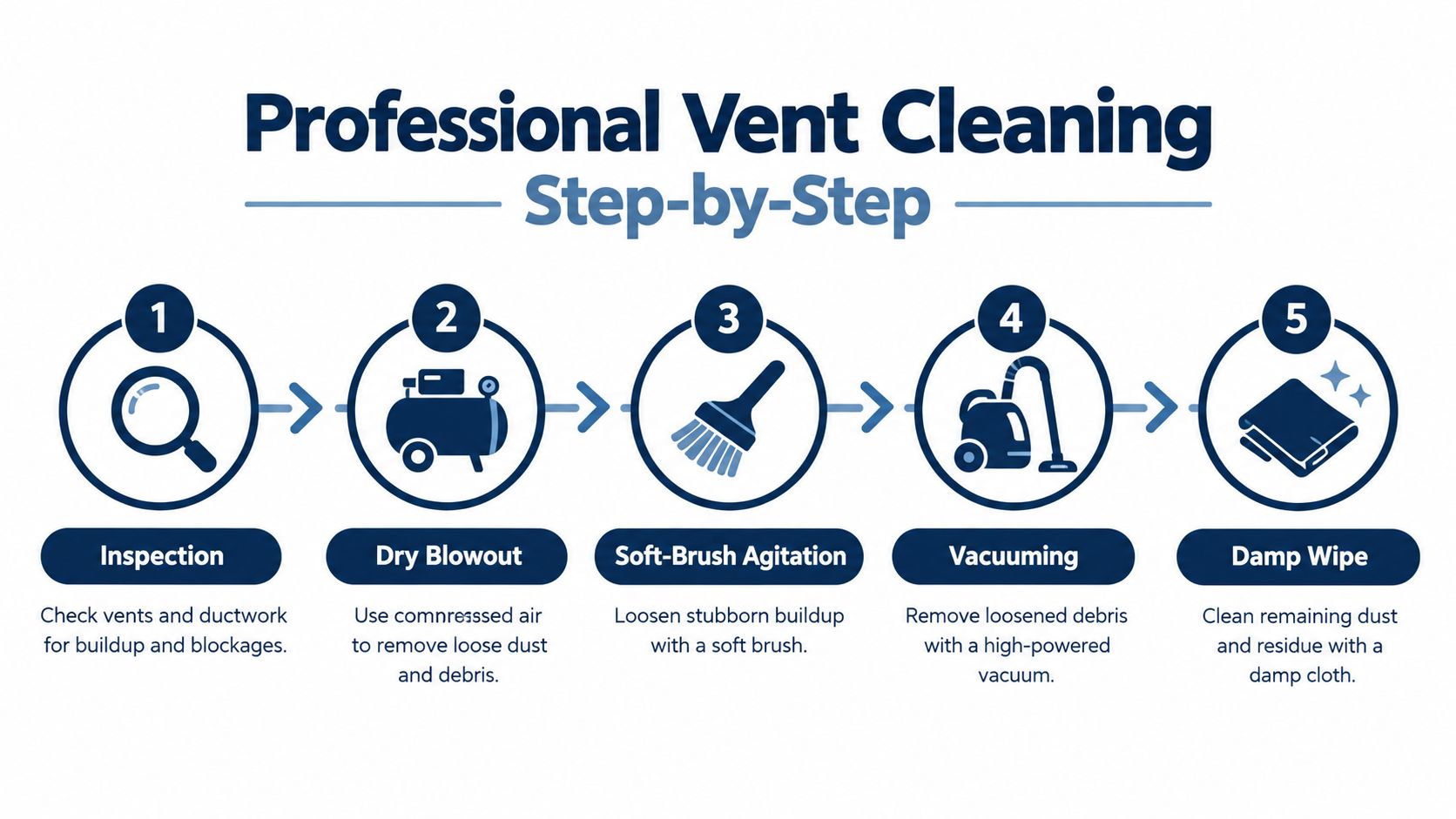
A proper visit begins with an inspection of the registers, dashboard gaps, intake area when accessible, cabin filter condition, visible staining, and odour pattern. The technician may also check whether the complaint changes with fresh-air mode, recirculation, heat, or air-conditioning.
That distinction matters. A light coating on the vent slats calls for a different response than a persistent musty odour, weak airflow, damp carpet, or a visibly dirty filter.
Dry debris gets removed before liquid
The usual sequence includes a dry blowout with controlled compressed air, soft-brush agitation, and vacuuming. Air loosens particles from fins and crevices, while a brush lifts material from surfaces that are too delicate for aggressive scrubbing. Vacuuming then captures the debris instead of allowing it to settle elsewhere.
This order reflects a practical moisture-control rule. Regional service guidance recommends removing dry contamination first, followed by low-moisture extraction and complete drying rather than heavy soaking, especially where winter salt and brine may already be holding moisture in the cabin. The winter contamination and cabin moisture guidance also connects regular underbody washing, door-jamb attention, and clear drain paths with limiting corrosive residue and airborne grime.
Then comes the controlled wipe
After dry removal, the technician can use a damp microfibre cloth, soft detailing brush, or HVAC-safe cleaner on suitable surfaces. The aim is to lift remaining film from the registers, dashboard edges, and reachable crevices without flooding the system.
Steam or disinfectant steps may be considered when odour is the main complaint, but they shouldn't be treated as automatic upgrades. A chemical treatment that doesn't match the source can leave residue, push moisture deeper, or disguise a filter, drain, or HVAC problem that needs mechanical attention.
The finish is an airflow check
The technician should confirm that the vents open, close, and direct air normally. The fan and temperature settings can reveal whether the original complaint was surface contamination or something beyond detailing, such as a blocked filter or an HVAC fault.
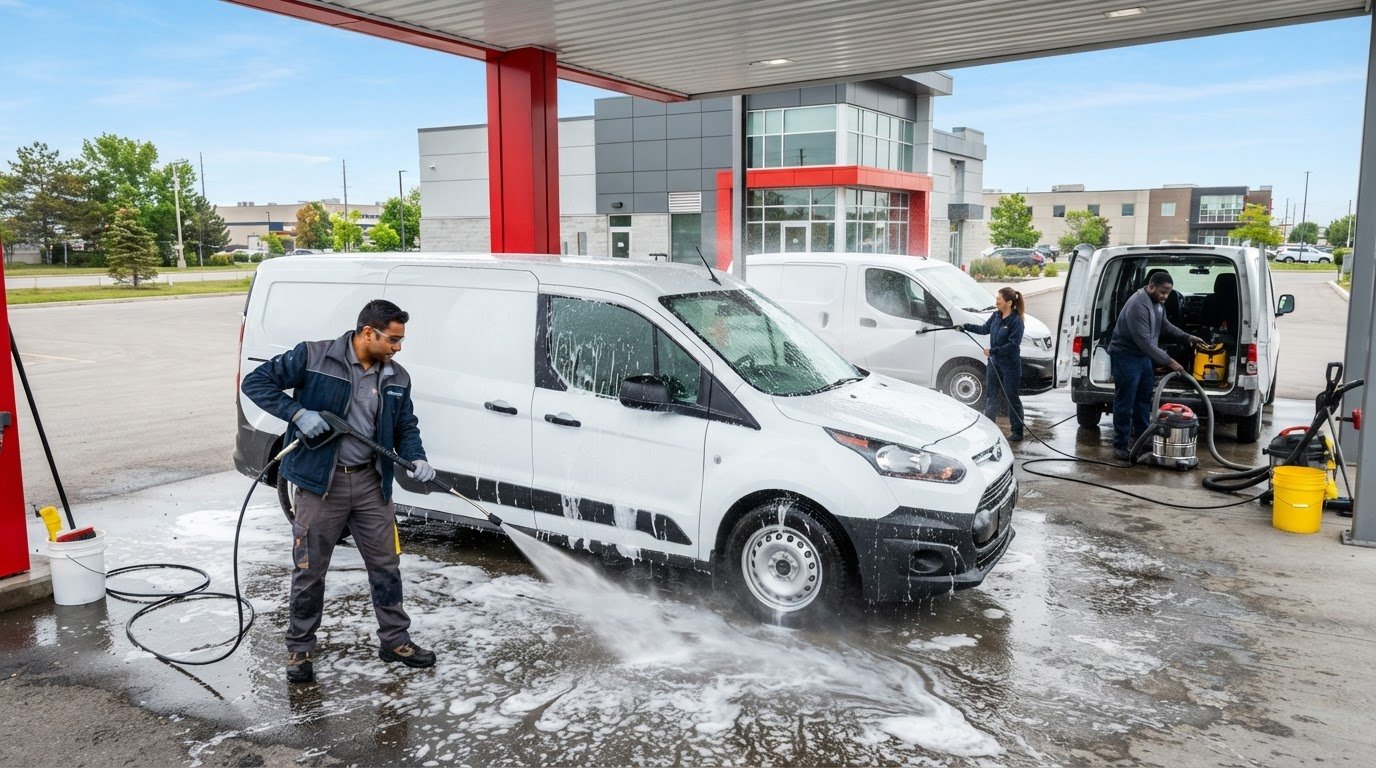
At Nanak Car Wash, interior and exterior detailing appointments can include vent and crevice blowout, shampooing, salt and stain removal, and leather care. The publisher lists typical detailing appointments at 1 to 4 hours, with vehicle-size and pet-hair surcharges where applicable, as shown in its detailing service information. A vent-focused task may fit within a broader appointment, but the actual time depends on vehicle layout, contamination, and the selected package.
Benefits You Will Actually Notice After Cleaning
The first noticeable change is often the startup experience. Instead of a puff of visible dust or a stale scent, the air can feel cleaner and the dashboard may stay presentable for longer. You may also notice that airflow reaches the intended direction more evenly when debris is no longer crowding the register fins.
For allergy-sensitive drivers, the comfort benefit is more important than the shine. Removing surface dust won't guarantee that every airborne irritant disappears, and a detailing appointment isn't a substitute for medical care. It can, however, reduce the amount of loose contamination sitting at the point where air enters the cabin, especially when technicians also inspect the filter and clean nearby surfaces.
A vent clean improves the part of the system it reaches. A filter check and HVAC assessment determine whether the deeper air-quality problem needs more attention.
Vent-only cleaning versus a full interior detail
A vent-only service suits a vehicle with visible dust around the registers, light debris in the dashboard crevices, and no persistent odour or dampness. It's the tidy-up option for the air outlets and nearby surfaces.
A full interior detail makes more sense when road salt, pet hair, food residue, stains, or damp carpets are contributing to the cabin environment. Shampooing and low-moisture extraction address contamination that a vent brush cannot reach, while leather cleaning protects a different set of surfaces.
An odour-focused HVAC treatment is a separate decision. A recurring musty smell may involve the cabin filter, trapped moisture, or contamination inside the HVAC path. The vehicle HVAC cleaning guidance from AutoNiche discusses vent cleaning alongside filter replacement, interior dust removal, and deeper steam-based approaches, which is useful when the complaint is “dirty air” rather than “dusty slats.”
For broader interior-cleaning ideas, the interior car cleaner guide is a useful companion resource because it separates everyday surface care from deeper cabin cleaning tasks. That distinction helps you avoid paying for the wrong treatment.

Check the cabin filter before judging the result
The filter is the system's first defensive layer. Service guidance for Ontario-area driving commonly recommends inspection every 15,000 to 24,000 kilometres, with shorter intervals around 16,000 kilometres in urban or high-pollution driving, as described in this cabin air filter maintenance reference. Those figures are service guidance, not a promise that every filter lasts the same length of time.
A packed filter can restrict airflow and keep debris moving through the system. If a vent clean looks excellent but the air remains weak or smelly, the filter deserves attention before another surface treatment.
Pricing Packages and Membership Options at Nanak Car Wash
Vent cleaning is usually most useful as part of a larger interior service rather than an isolated luxury add-on. A light contamination problem may fit a full-service wash with interior vacuuming and dashboard cleaning, while salt, stains, pet hair, or persistent odours call for an appointment-based detail.
Nanak Car Wash lists express exterior washes starting from $9.99 plus tax and full-service washes starting from $29.99 plus tax. Its detailing options include vent and crevice blowout, carpet and seat shampooing, salt and stain removal, leather deep cleaning, and polishing. Pricing can change with the vehicle and scope, so ask which steps cover the vents and whether SUV, van, truck, or pet-hair charges apply.
| Service Option | Best For | Vent Cleaning Included | Starting Price |
|---|---|---|---|
| Express exterior wash | Drivers who mainly need road film removed | Not listed as an interior service | From $9.99 plus tax |
| Full-service wash | A routine exterior wash with basic interior attention | Interior cleaning is included, but confirm vent blowout | From $29.99 plus tax |
| Interior and exterior detailing | Dust, salt, stains, pet hair, odours, and deeper cabin care | Vent and crevice blowout included in the detailing scope | Appointment quote |
| Unlimited Wash Club | Frequent washers who want repeat exterior visits | Interior discounts are available for members, while vent scope should be confirmed | Membership pricing varies |
| Prepaid tickets and combo deals | Drivers planning several visits | Depends on the selected service | Package pricing varies |
Match the option to your actual problem
Choose a routine wash when the cabin is generally clean and the issue is mostly exterior salt or road film. Choose detailing when the dashboard, carpets, seats, vents, and crevices all show the same story of heavy use.
The Unlimited Wash Club includes first-month-free promotions shown on the site, discounted interior cleaning for members, and no long-term contracts stated. Prepaid multi-wash tickets and combo deals can suit drivers who prefer a planned bundle. Free vacuums are available at participating locations.
The choice resembles a rewards programme decision. If you're comparing membership models or trying to understand how repeat-visit incentives can shape customer behaviour, this resource on boosting customer engagement with rewards provides useful background. For your car, the simple test is frequency. Occasional drivers may prefer one detail, while commuters, delivery drivers, and multi-car households may value repeat-wash options.
Locations listed by Nanak include Etobicoke on Finch Avenue West, Brampton, Concord, Oshawa, Sheppard and North York, Burlington, Cambridge, and Guelph. Confirm the selected location and service scope before booking, particularly if you need a vent blowout rather than general vacuuming.
What to Expect on Visit Day and How to Keep Vents Fresh
Book the appointment with a clear description of the complaint. Say whether you're dealing with visible dust, weak airflow, a musty smell, salt residue, pet hair, or all of the above. That gives the team a better starting point than just requesting “a clean.”
For detailing, expect hand-applied steps supported by modern equipment, with typical appointment duration ranging from 1 to 4 hours depending on the vehicle and scope. Nanak also states that its washes use 100% fresh water, and its locations combine washing, detailing, and rust protection, which can reduce the need to organise separate visits.
Keep the cabin cleaner between appointments with a few sensible habits:
- Inspect the filter: Follow the vehicle maker's schedule, and consider earlier inspection if you drive through heavy traffic, dusty areas, or high-pollen conditions.
- Use recirculation thoughtfully: It can help with temperature control, but fresh-air ventilation matters when the cabin needs an exchange.
- Dry winter moisture: Remove wet mats and deal with damp carpets instead of letting moisture become a permanent passenger.
- Wash the underbody: Winter residue on the underside can keep returning to the cabin through wet road spray and tracked contamination.
- Watch recurring odours: If a smell returns quickly after cleaning, ask for a filter and HVAC assessment rather than repeatedly wiping the registers.
The memorable checklist is simple: clean the mouth, check the mask, respect the lungs, and dry the cabin. That approach turns vent care from cosmetic dusting into a practical routine for comfort, odour control, and cleaner-feeling air.
Nanak Car Wash offers interior detailing that includes vent and crevice blowout, along with washes, memberships, and bundled services across GTA locations. When your vents are dusty after winter or your cabin air feels stale, visit Nanak Car Wash to explore the right appointment or wash option for your vehicle.


 6600 Finch Ave W, Etobicoke, ON M9V 3Z6
 647-703-8515
 MON – SUN 8 AM to 7 PM