
You're standing in the service bay, watching a technician prod the underside of your vehicle with a screwdriver. The tool disappears into a rusty frame section, followed by that awful crunch nobody wants to hear. Suddenly, the “small rust spot” you ignored last winter has become a structural repair problem.
That's the reality of owning a vehicle in the GTA. Ontario applies roughly 1.5 to 3 million tonnes of road salt each winter, and Toronto alone uses about 130,000 to 150,000 tonnes annually, according to regional information on Ontario road salt and vehicle rust. Rust protection for car owners here isn't a fancy detailing add-on. It's a practical defence against a climate and road system that work against exposed metal every day.
Table of Contents
- The Silent Killer Lurking Under Your Chassis
- How Road Salt Wages Electrochemical Warfare
- Choosing the Right Armour for Your Vehicle
- Why Professional Application Beats the DIY Route
- The Nanak Car Wash Rust Proofing Process
- Building a Year-Round Corrosion Defence Strategy
- Securing Your Vehicle Before the First Snow
The Silent Killer Lurking Under Your Chassis
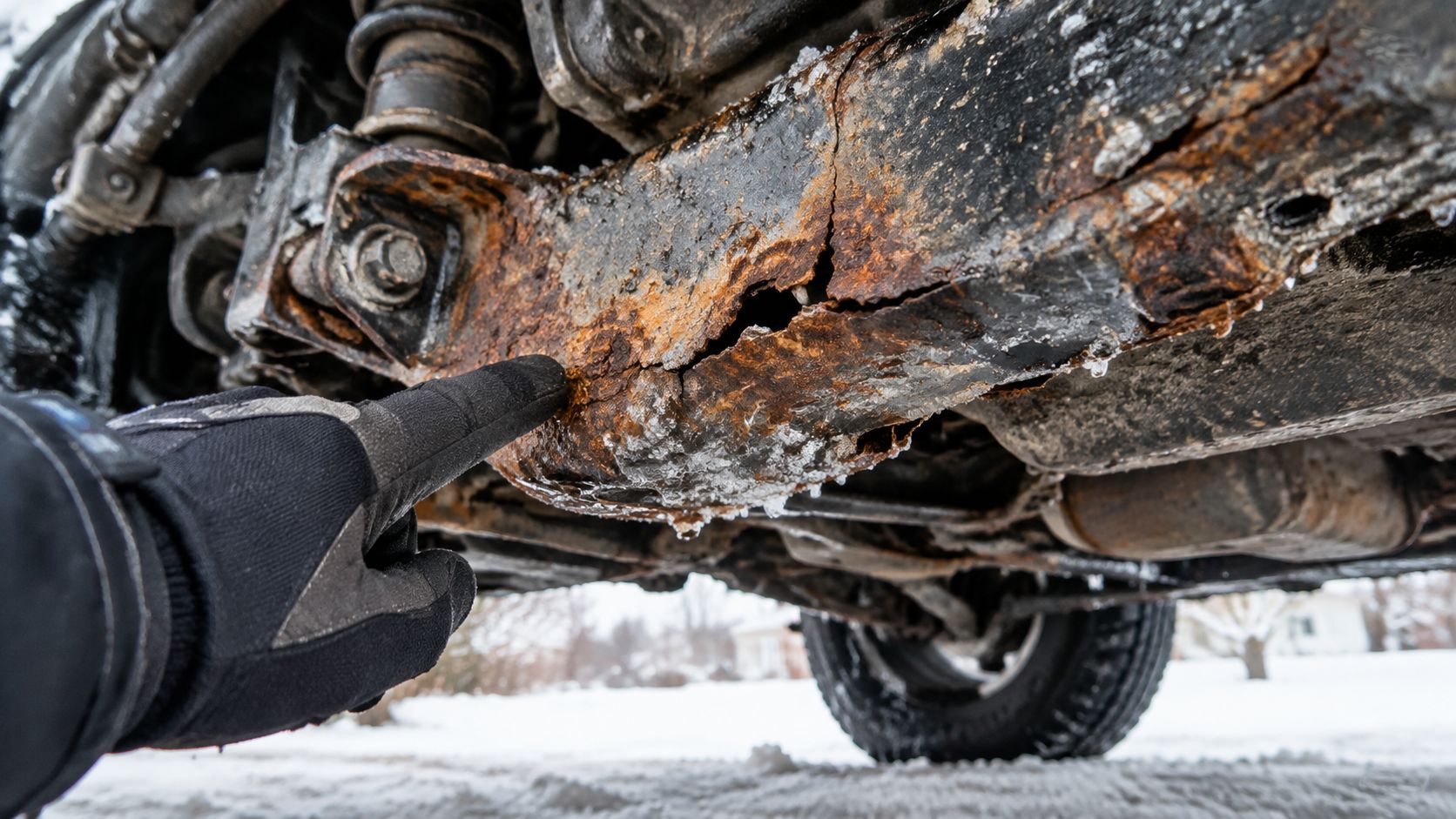
A vehicle can look respectable from the driver's seat while corrosion works underneath. The panels may shine and the cabin may smell like fresh coffee. Beneath them, salt paste settles inside frame rails, wheel wells, pinch welds, brake-line brackets, and suspension mounts.
A clean exterior proves very little. GTA roads leave behind wet salt, slush, grit, and grime that ordinary washing misses. On an unprotected vehicle, undercarriage rust can show within a few winters, while serious structural corrosion can develop after years of year-round driving, as described in this Ontario rust guide.
Where the damage starts
Rust starts where moisture and salt remain hidden:
- Wheel wells, where tyres fling brine onto seams and fasteners.
- Pinch welds, where layered metal edges trap contamination.
- Frame rails, where access is limited and drainage may be poor.
- Brake lines and suspension hardware, where corrosion can affect safety-related systems.
- Electrical grounds and connectors, where oxidation causes faults before body damage becomes obvious.
SUVs, pickups, and vehicles driven frequently on salted roads deserve close inspection because their underbodies collect heavy winter contamination. Low sedans are not safe by default. Their undersides sit close to slush, spray, and packed snow.
Modern vehicles also combine different metals, coatings, fasteners, and exposed steel. Once calcium chloride brine reaches a damaged coating or trapped seam, moisture and oxygen keep the corrosion process active. A surface spray alone cannot protect every cavity, rail, and contact point. Effective rust protection for car owners requires cleaning first, then applying compatible protection to the areas most likely to retain brine.
Practical rule: If you can see salt crust underneath the vehicle, assume more is hiding where you cannot see it.
Spring reveals the damage, but winter starts it. Remove contamination during the salt season and apply protection before corrosion gets a firm grip. For exterior paint protection, Titan Coatings ceramic coatings for cars explains how ceramic coatings differ from underbody treatments. They are separate jobs, and treating them as interchangeable is how owners leave the chassis exposed.
How Road Salt Wages Electrochemical Warfare
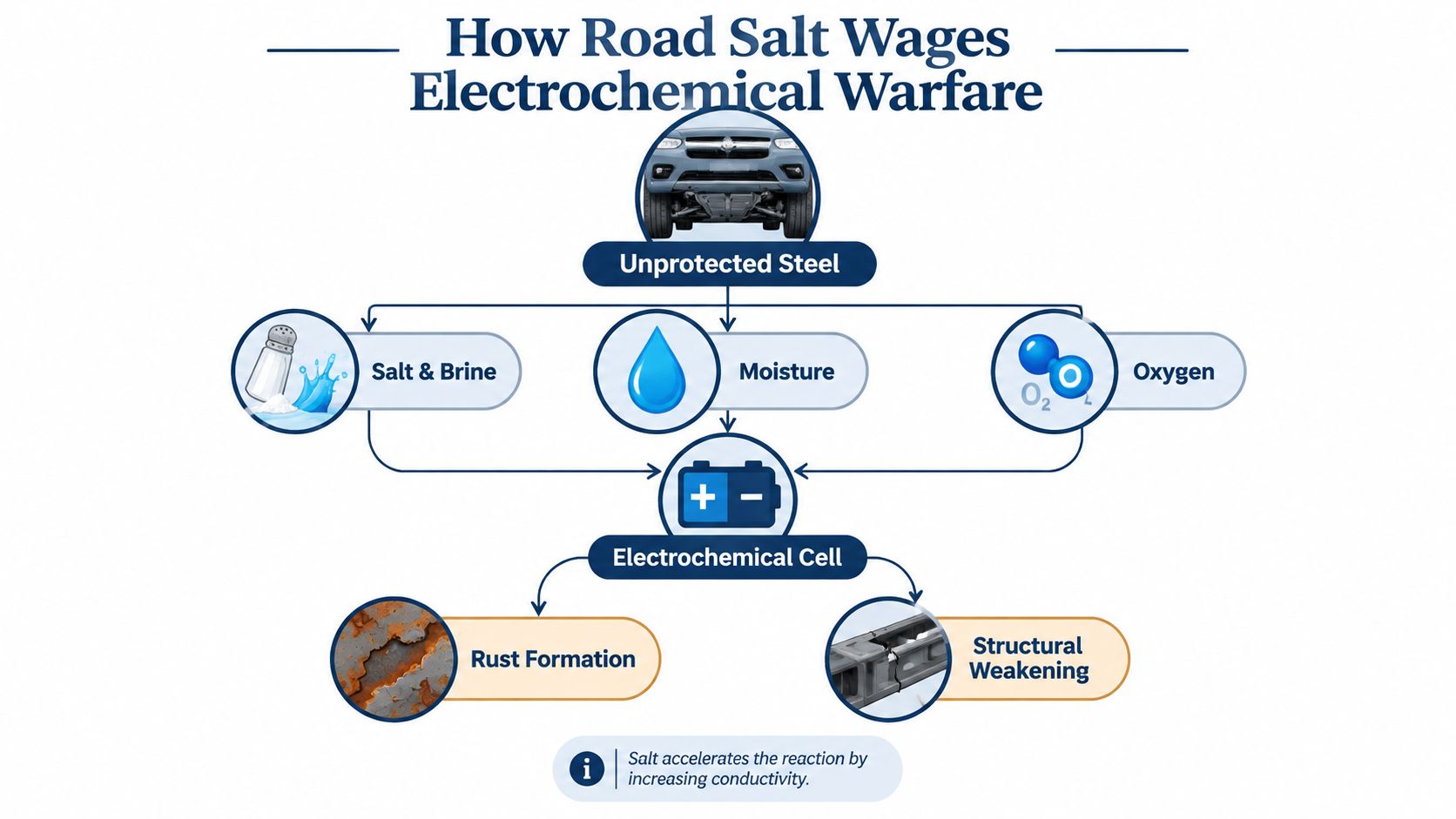
Rust isn't dirt sticking to metal. It's an electrochemical reaction, and Ontario's winter roads provide nearly everything that reaction needs: exposed metal, moisture, oxygen, and a conductive salt solution.
Think of the underbody as an accidental battery. When water reaches bare or damaged steel, tiny areas of the metal become electrically different from one another. One area releases metal ions, another supports the reduction reaction, and moisture provides the path between them. Salt makes that path much more effective because it increases water's conductivity.
Why brine is worse than dry salt
Dry salt sitting on a clean, dry surface is unpleasant but comparatively inactive. The trouble begins when road salt dissolves into slush, snowmelt, or spray. That brine clings to metal, creeps into seams, and remains conductive as long as moisture is present.
The vehicle's movement spreads the solution. Heat cycles move it through cavities. Freeze-thaw conditions repeatedly wet and dry the same areas, leaving concentrated residue behind when water evaporates. A quick drive through a salty intersection can therefore contaminate places that a casual hose rinse never reaches.
Canadian guidance recommends targeted undercarriage washing during the salt season, often weekly or biweekly, with attention to wheel wells, pinch welds, frame rails, and hidden cavities. Those recommendations are summarised in Canadian rust-proofing guidance, which also explains why salt accelerates corrosion by increasing water conductivity and helping moisture cling to exposed metal.
Modern materials haven't cancelled corrosion
Modern vehicles use galvanised steel, aluminium, coatings, adhesives, and mixed-metal assemblies. Those materials improve efficiency and durability, but they create a more complicated corrosion environment. Different metals can interact when moisture and electrolytes connect them, especially around fasteners, seams, brackets, and damaged coatings.
Calcium chloride deserves special attention in Ontario. Regional Canadian guidance notes that its use below about -21°C can be especially corrosive to aluminium, a material increasingly found in lightweight vehicle structures and components. That means a newer SUV, truck, or EV still needs a material-aware protection plan. “It's new” isn't a corrosion strategy.
The practical conclusion is straightforward. A protective compound should reach vulnerable surfaces, displace moisture, and remain compatible with the vehicle's material mix. Washing then removes the salt that would otherwise keep feeding the reaction.
Choosing the Right Armour for Your Vehicle
There's no universal rustproofing spray that suits every vehicle. An older steel-bodied sedan, an aluminium-rich SUV, a pickup with exposed frame sections, and an EV with a sealed battery enclosure all present different access points and material concerns.
The worst choice is often the thick black coating that looks reassuring in the shop. Traditional tar-like undercoatings can crack, separate, and trap moisture against metal. The surface appears sealed while corrosion continues underneath, hidden until a technician finds soft metal or a failed mounting point.
Compare the common options
| Method | Pros | Cons | Best For |
|---|---|---|---|
| Oil-based sprays | Creep into seams, displace moisture, and reach hidden cavities | Can require careful reapplication and may look wet after treatment | Daily-driven vehicles, frame rails, cavities, and mixed-metal assemblies |
| Dripless wax coatings | Cleaner appearance and a more fixed protective film | May not penetrate every narrow cavity; damaged areas can remain vulnerable | Owners prioritising a tidy finish and planned maintenance |
| Electronic modules | Non-invasive installation and no sprayed residue | They don't physically rinse away salt or guarantee coverage of exposed components | Owners considering an additional layer, not a replacement for cleaning and inspection |
| Thick tar-like undercoatings | Can create a tough-looking exterior layer | May crack or trap moisture, hiding corrosion underneath | Limited situations where a specialist confirms the substrate is clean and suitable |
Oil-based chemical compounds generally make the most sense for a working GTA vehicle because they can creep into seams and displace existing moisture. That doesn't mean every oil spray is equal. Application quality, chemical compatibility, coverage, and access matter more than the label on the can.
A coating that misses the frame rail is not protecting the frame rail.
Match protection to the vehicle
For galvanised steel, protection still matters at cut edges, chips, welds, fasteners, and damaged coating. Aluminium components need a treatment selected with mixed-metal contact and calcium chloride exposure in mind. EV owners should ask the applicator to identify safe treatment zones around battery enclosures, high-voltage components, connectors, and underbody shields rather than allowing indiscriminate spraying.
Brake lines, suspension hardware, grounds, and connectors deserve a deliberate inspection. Corrosion can affect function long before the vehicle looks dramatically rusty. A proper service should protect exposed metal without blocking drainage paths, contaminating friction surfaces, or covering defects that need repair first.
Why Professional Application Beats the DIY Route
A driveway aerosol can't duplicate a professional inspection or full-coverage application. You need a safe lift, proper lighting, access behind shields, and equipment capable of delivering compound into cavities without coating the wrong components.
Most DIY attempts fail in predictable ways. The owner sprays what's visible, misses the hidden areas, and assumes the job is complete. The underside remains dirty, moisture stays trapped behind a splash guard, and the product never reaches the pinch welds or internal sections where corrosion has already started.
Precision matters more than enthusiasm
Professional technicians can inspect before applying anything. That distinction matters because rustproofing isn't a substitute for structural repair. A weak frame section, perforated brake-line bracket, or damaged suspension mount needs assessment first. Spraying over it only makes the problem harder to see.
Technicians also know that drainage holes are part of the vehicle's design. Plugging a door drain or rocker-panel opening can trap water inside the structure, turning a protective appointment into a moisture-retention experiment. The same applies to body cavities, hatch seams, and underbody shields.
A sound application process should include:
- Underside access: The vehicle is lifted or positioned so technicians can inspect more than the outer edges.
- Targeted cleaning: Salt, mud, and loose residue are removed before treatment.
- Cavity coverage: Frame rails, rocker panels, doors, and seams receive attention where the product is appropriate.
- Component awareness: Brakes, belts, exhaust surfaces, sensors, connectors, and high-voltage areas are kept clear.
- Drainage protection: Factory drain paths remain open so water can escape.
- Final inspection: Missed areas and overspray are corrected before the vehicle leaves.
Why the product alone isn't the service
A can of compound is only one part of the job. The value comes from knowing where to apply it, how much to use, and what to leave untouched. A sloppy application can create mess, obscure inspection points, or interfere with maintenance.
DIY makes sense for small, accessible touch-ups when the owner understands the material and the component layout. Full vehicle rust protection is different. If you're protecting a daily driver from Ontario's salt, pay for access and precision rather than buying the biggest can on the shelf.
The Nanak Car Wash Rust Proofing Process
Nanak Car Wash offers rust proofing with a dedicated chemical compound and vehicle-size pricing. The published tiers range from approximately $119.95 to $149.95 plus tax, as listed in the supplied Nanak Car Wash service information. The price difference reflects the practical reality that a compact car, a full-size SUV, and a pickup don't present the same amount of surface area or access work.
What the appointment should involve
Inspection comes first. Technicians identify exposed areas, existing corrosion, vulnerable underbody sections, and components that shouldn't receive product. Vehicle type and material mix matter. A newer vehicle still needs a careful look at fasteners, brackets, lines, seams, and exposed steel.
Cleaning prepares the surface. Salt, road film, mud, and loose old material interfere with coverage. Removing that contamination gives the inhibitor a better chance to contact the metal and reach the places where moisture collects.
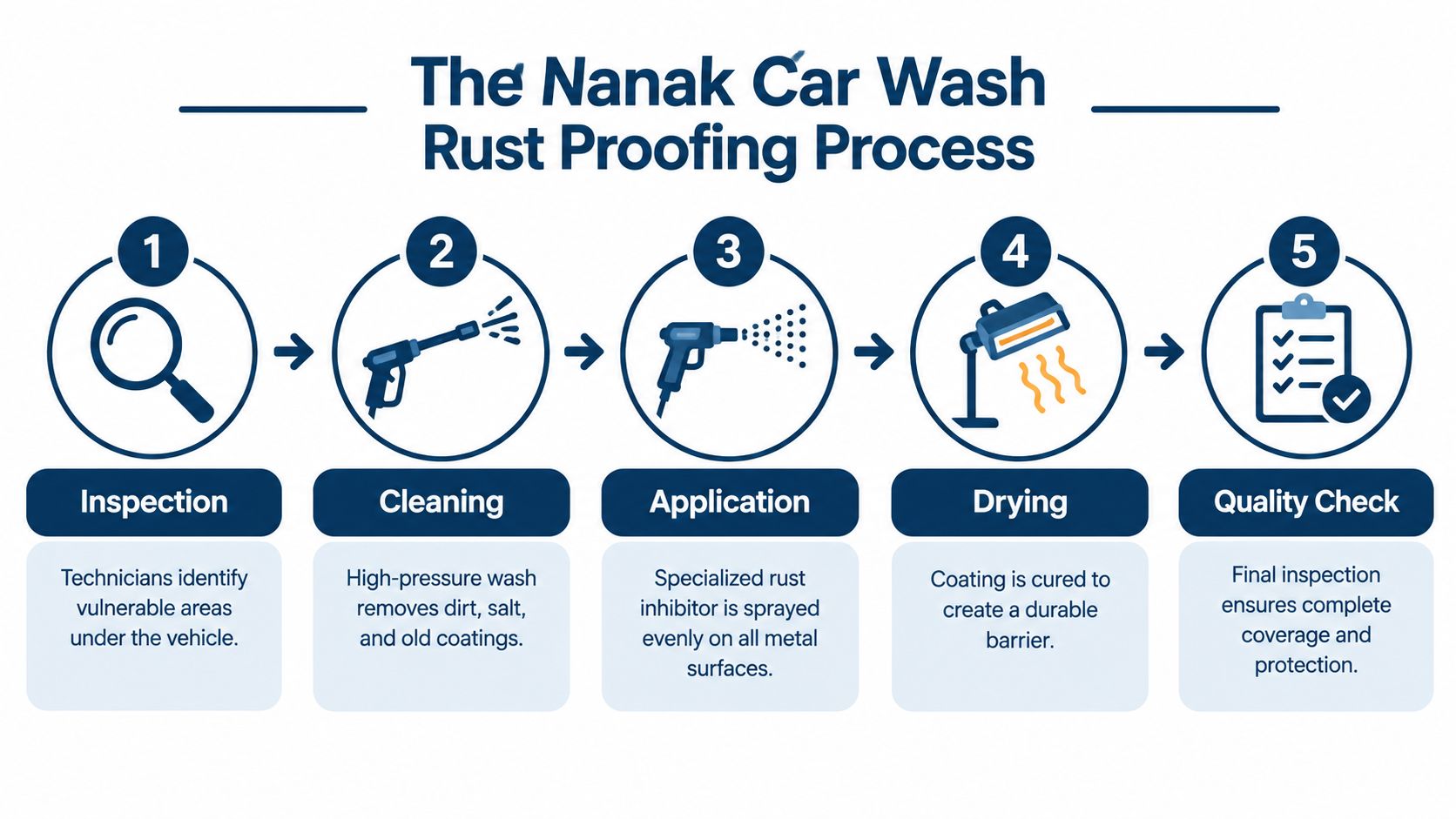
Application is the technical heart of the service. A dedicated rust-inhibiting compound is applied to appropriate metal surfaces and hidden areas. Its job is to form a moisture-resistant film and help separate vulnerable metal from salty water. It doesn't magically rebuild metal that has already disappeared, so existing structural corrosion still needs an honest assessment.
Drying and checking complete the work. The vehicle needs time for the treatment to settle and form its protective film. A final check helps confirm that coverage is even, drainage paths remain open, and sensitive components haven't been contaminated.
Why cleaning knowledge still matters
Rust protection works better when owners understand the preparation behind it. If you're dealing with loose corrosion on a removable metal component or want background on surface preparation, this guide on how to clean rusty metal offers useful general maintenance context. It doesn't replace a vehicle inspection, but it reinforces the central lesson: dirt and loose rust must be addressed before a protective layer can do its job.
Nanak Car Wash has operated since 2004, according to the supplied business information, and combines washing, detailing, and rust proofing across GTA-area locations. That consolidation can be useful for owners who want the underside cleaned before protection rather than booking disconnected services with different providers.
Building a Year-Round Corrosion Defence Strategy
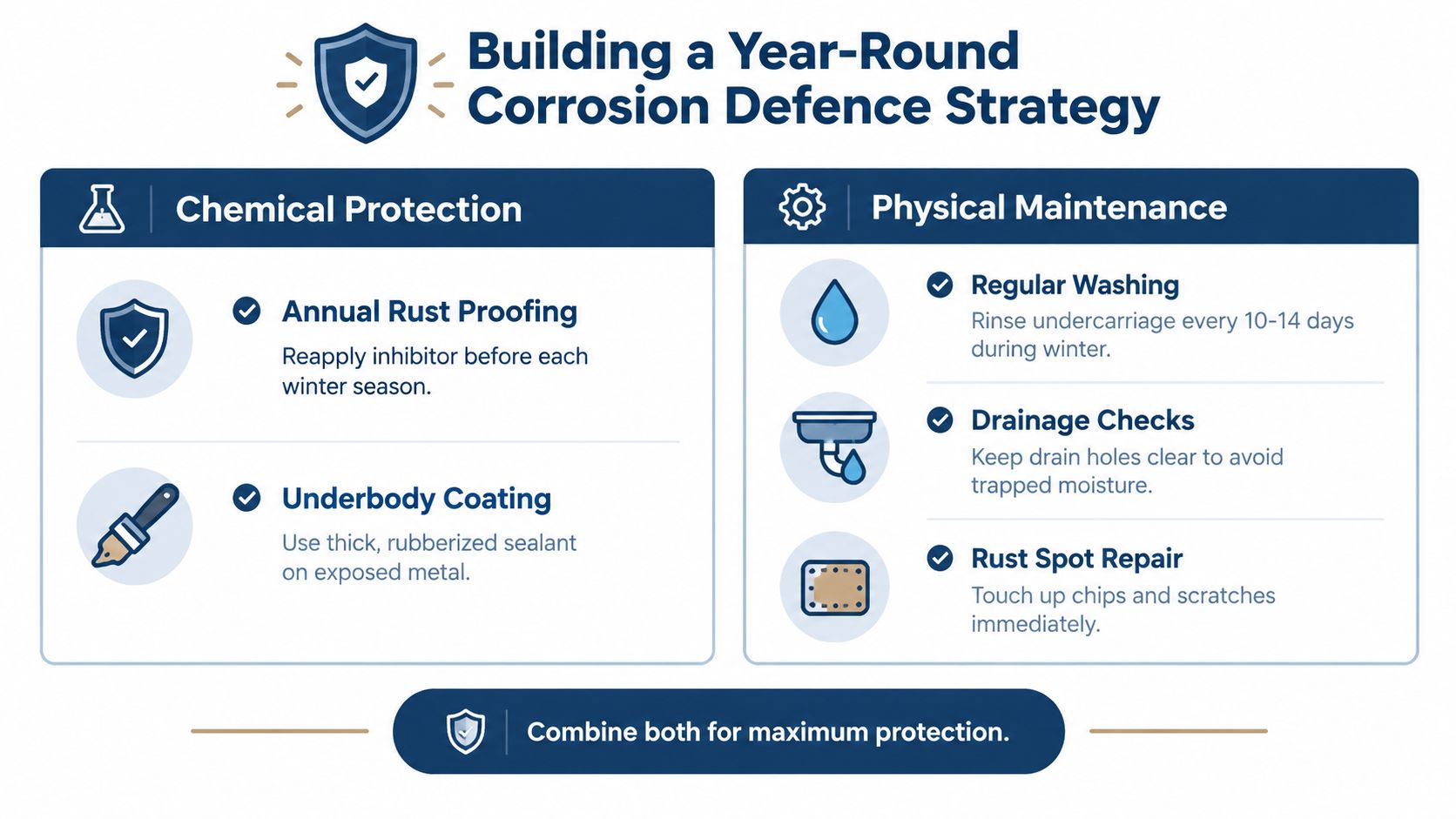
Rustproofing is one layer. Washing is the other. Skip either one and you leave the salt with an open invitation.
A protective film can slow contact between metal and brine, but it can't remove the contamination building on top of it. Salt accumulates around wheel wells, suspension components, frame edges, and underbody shields. Regular rinsing physically removes that material before it can keep the electrochemical reaction supplied.
Chemical protection needs physical support
Schedule the rustproofing before the salt season, then maintain the vehicle throughout winter. Canadian guidance commonly recommends targeted underbody washing weekly or biweekly during the salt season, with special attention to the areas named earlier. Use that as a practical maintenance rhythm, adjusting for driving conditions, storms, and visible buildup.
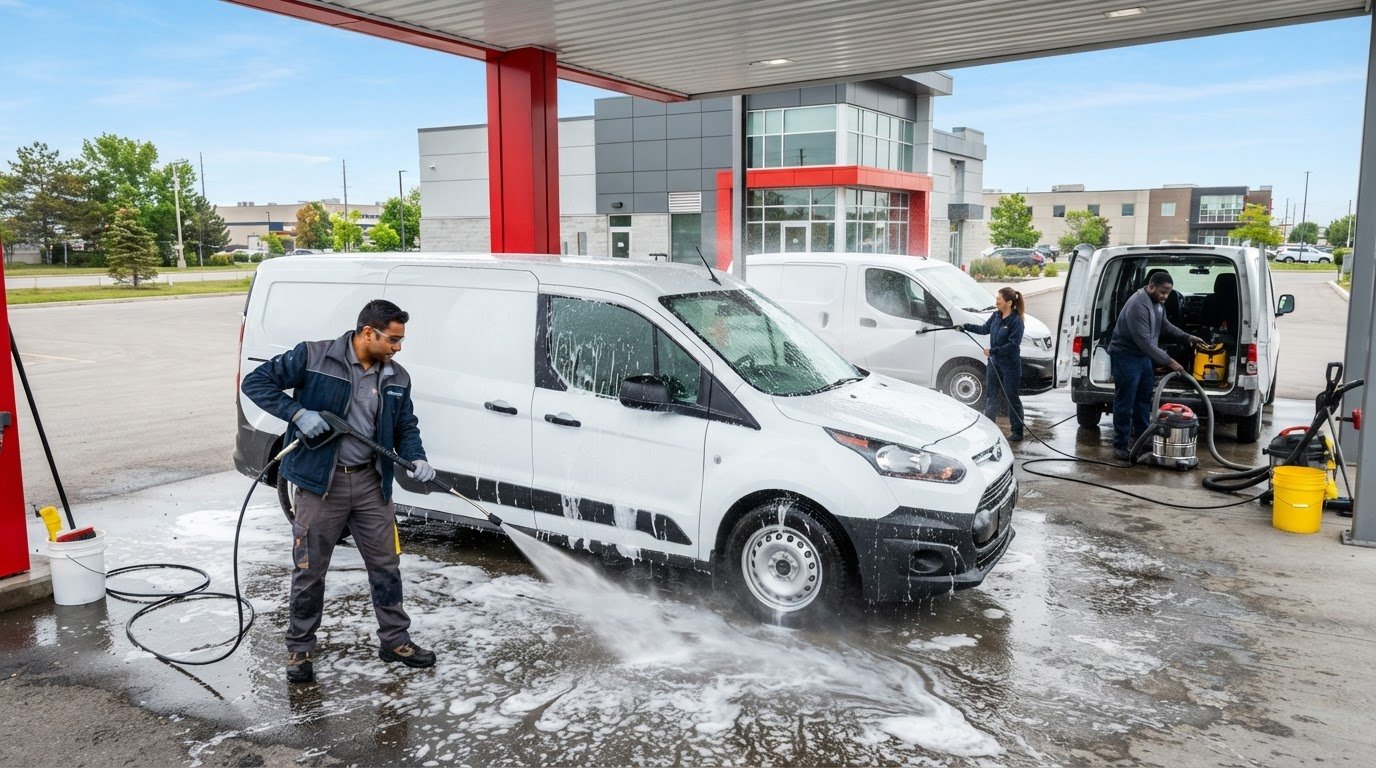
Nanak Car Wash's express exterior wash options include underbody wash upgrades, and the supplied business information states that the operation uses 100% fresh water. That matters because the purpose of the visit is to flush away salt and brine, not make the bonnet look shiny under the petrol-station lights.
Make the routine easy enough to follow
The best maintenance plan is one you'll use. Keep these habits in place:
- Rinse after heavy salt exposure: Prioritise the underbody and wheel wells, especially after slushy commutes.
- Keep drain paths open: Clear debris from door and rocker-panel drains so moisture doesn't sit inside the body.
- Repair chips promptly: Exposed edges and scratches give corrosion an easy starting point.
- Inspect during service visits: Ask for a quick look at brake lines, mounting points, frame sections, and suspension hardware.
- Use a repeat-wash plan: An Unlimited Wash Club or prepaid wash bundle can make frequent winter cleaning easier to budget and remember, based on the options listed by Nanak Car Wash.
The goal isn't cosmetic perfection. It's reducing the time salt spends touching vulnerable metal. A clean, treated underbody gives you a much better chance of finding small defects while they're still manageable.
Securing Your Vehicle Before the First Snow
Don't wait for January. By then, the first applications of salt and brine have already reached the underside, and packed contamination may be sitting in places you can't inspect from the kerb.
Before booking rust proofing, prepare the vehicle so the technician can work efficiently:
- Remove personal items from the trunk and cabin. This keeps the appointment focused on the vehicle rather than a last-minute cleanout.
- Wash away heavy mud and salt if possible. A relatively clean underbody makes inspection and application more useful.
- Mention previous treatments. Tell the technician whether the vehicle has oil spray, wax, rubberised coating, or visible old material underneath.
- Report known issues. Flag damaged splash guards, loose panels, warning lights, leaks, or areas that have already been repaired.
- Ask about material-sensitive areas. Owners of EVs, aluminium-rich vehicles, SUVs, and pickups should confirm how the service handles battery enclosures, connectors, lines, and mixed-metal components.
- Choose a maintenance follow-up. Plan regular underbody rinses throughout the salt season instead of treating rust proofing as a one-time miracle.
Nanak Car Wash locations listed in the supplied business information include Etobicoke, Brampton, Concord, Oshawa, Sheppard and North York, Burlington, Cambridge, and Guelph. Pick a location you can realistically revisit, because consistent rinsing will protect your investment better than a single appointment followed by months of salty neglect.
Book before the first serious snowfall, not after the first rusty fastener refuses to move. Your vehicle doesn't need another winter pep talk. It needs a clean underside, compatible protection, and a maintenance routine you'll stick with.
Nanak Car Wash offers vehicle-size rust proofing with a dedicated chemical compound, plus exterior washes with underbody-cleaning options for ongoing salt removal. Visit Nanak Car Wash to choose a GTA location and arrange protection before Ontario winter gets another chance to eat your car.

 6600 Finch Ave W, Etobicoke, ON M9V 3Z6
 647-703-8515
 MON – SUN 8 AM to 7 PM