
You've opened the rear door of your SUV and found a second upholstery system made entirely of fur. The seats have a grey fuzz, the cargo carpet has a felt-like coating, and a few heroic strands are clinging to the headliner as if they've signed a lease. Add Toronto winter salt and sand, then wait too long before cleaning, and a simple vacuum job becomes a proper extraction project.
That's the GTA reality for pet owners and ride-hail drivers. A good pet hair remover can handle loose shedding, but embedded hair needs the right order of operations, suitable tools, and a realistic decision about when DIY stops being worth your time. This guide covers what works, what wastes effort, and when a professional interior service makes more sense.
Table of Contents
- Why Pet Hair Clings to Your Car Interior
- Pet Hair Remover Tools That Actually Work
- How to Remove Pet Hair Without Missing a Spot
- Tackling Stubborn Hair in Carpets Seams and Headliners
- When DIY Is Enough and When to Book Detailing at Nanak Car Wash
- Keep Your Car Fur Free Longer With Simple Habits
Why Pet Hair Clings to Your Car Interior
A dog climbs into the back seat after a walk near Etobicoke Creek. Grit comes in on its paws, fur drops from its coat, and the fabric holds both. By the end of the ride, those hairs have threaded through the seat weave, wrapped around carpet fibres, and settled in seams that a vacuum nozzle cannot reach.
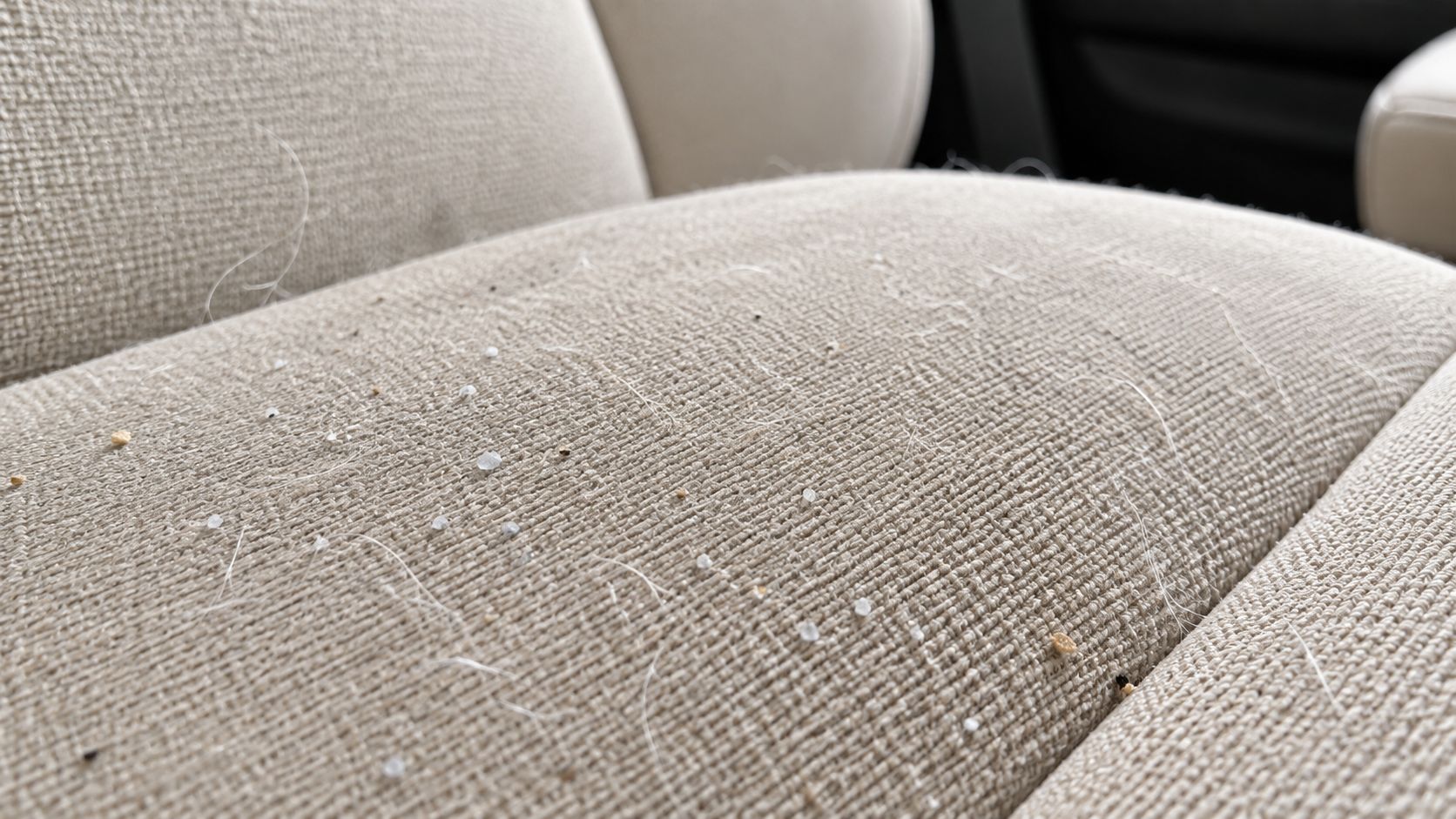
Car upholstery is built to retain fur. Fabric creates friction, static keeps fine hairs in place, and seat contours provide hiding spots. Carpeted cargo areas are tougher still. Pets shift during the trip, shed continuously, and press loose hair deeper into the fibres. A rideshare SUV can collect that buildup quickly, especially when the interior is cleaned only between busy shifts.
Why winter makes the mess nastier
Ontario winter adds salt, sand, and road grime from boots, paws, carriers, and blankets. Mixed with fur, those particles form a gritty layer that behaves like compacted debris rather than loose dust. One Ontario detailing service groups pet-hair removal with sand and salt removal, with that service starting at $50 (Tilbury Auto Shine's interior-detailing service).
The delay matters. A few hairs on a vinyl seat are a quick maintenance job. A matted coat worked into an SUV's third-row carpet, combined with winter grit, takes brushing, repeated collection, and careful work around seams. That difference explains why professional shops treat heavy pet hair as an interior-detailing add-on instead of ordinary vacuuming.
For a ride-hail driver, lost time is part of the calculation. DIY makes sense when the hair is loose, the vehicle is lightly soiled, and the owner can work through each surface methodically. A neglected SUV with salt-stiffened carpet may justify booking Nanak Car Wash, particularly when removing the buildup by hand would take the vehicle out of service for too long.
If shedding is heavy at home and in the vehicle, prevention reduces the incoming coat. A practical guide to managing heavy-shedding dogs can help limit loose fur before the next trip. It will not make a husky hairless, but it can keep the back seat from developing its own weather system.
Pet Hair Remover Tools That Actually Work
The best tool depends on hair severity, surface type, and how quickly you need the vehicle back in service. A rubber brush is usually the sensible starting point because it gathers hair without attacking the upholstery. A lint roller is excellent for finishing, but it's a poor choice for a cargo area covered in embedded fur. You'll burn through sheets and patience at the same time.
| Tool | Best For | Effort and Cost | Watch Out For |
|---|---|---|---|
| Rubber upholstery brush | Fabric seats, carpets, light to heavy surface hair | Low equipment cost, moderate effort | Aggressive scrubbing can roughen delicate fabric |
| Rubber squeegee or scraper | Broad carpeted areas and cargo mats | Low cost, efficient on larger surfaces | Don't press hard against seams or trim |
| Pumice stone | Dense, stubborn hair in durable carpet | Low cost, high control required | Can snag or damage delicate upholstery |
| Lint roller | Final pickup on seats, door panels, and clothing | Easy, recurring consumable cost | Too slow for deep buildup |
| Fabric shaver | Loose fuzz and pills on suitable fabric | Moderate cost, quick on surface fuzz | It removes fabric fibres, not just pet hair |
| Handheld vacuum with pet attachment | Lifted hair and loose debris after brushing | Moderate equipment cost, moderate effort | Vacuuming alone often misses embedded hair |
| Compressed air | Seat tracks, vents, cracks, and tight crevices | Useful if equipment is available | Blows hair elsewhere unless you vacuum immediately |
The practical trade-offs
Rubber wins for most interiors. Short strokes create friction and pull hair into manageable rolls or clumps. It's especially useful before vacuuming because it loosens what the nozzle would otherwise skim over.
Pumice is a specialist tool. On durable carpet, it can pull out hair that has become part of the pile. Use a light touch and test an inconspicuous area first. A pumice stone has no sympathy for fragile upholstery, loose threads, or a trim piece that's already having a difficult day.
Compressed air is a helper, not a remover. It dislodges hair from seat rails and vents, but it doesn't make the hair disappear. Blow first only when you can follow with a vacuum, otherwise you've distributed the evidence across the cabin.
For a quick rideshare turnaround, keep a rubber brush, crevice tool, and lint roller together. For a large SUV cargo area, add a stronger vacuum and a tool suited to the carpet. Don't buy every gadget in the aisle. The correct sequence matters more than a crowded toolbox.
Practical rule: If the hair is sitting on top, roll or vacuum it. If it's woven into the fabric, loosen it before asking the vacuum to finish the job.
How to Remove Pet Hair Without Missing a Spot
A husky ride in a GTA winter can leave more than fur behind. Salt dust works into the carpet, moisture makes loose hair cling, and an SUV that goes weeks between cleanings takes longer to reset. Start with a completely dry interior. Wet hair clumps and sticks, so fabric cleaner at the beginning usually creates more work. Remove the floor mats, open the doors, and clear loose items from the cargo area.
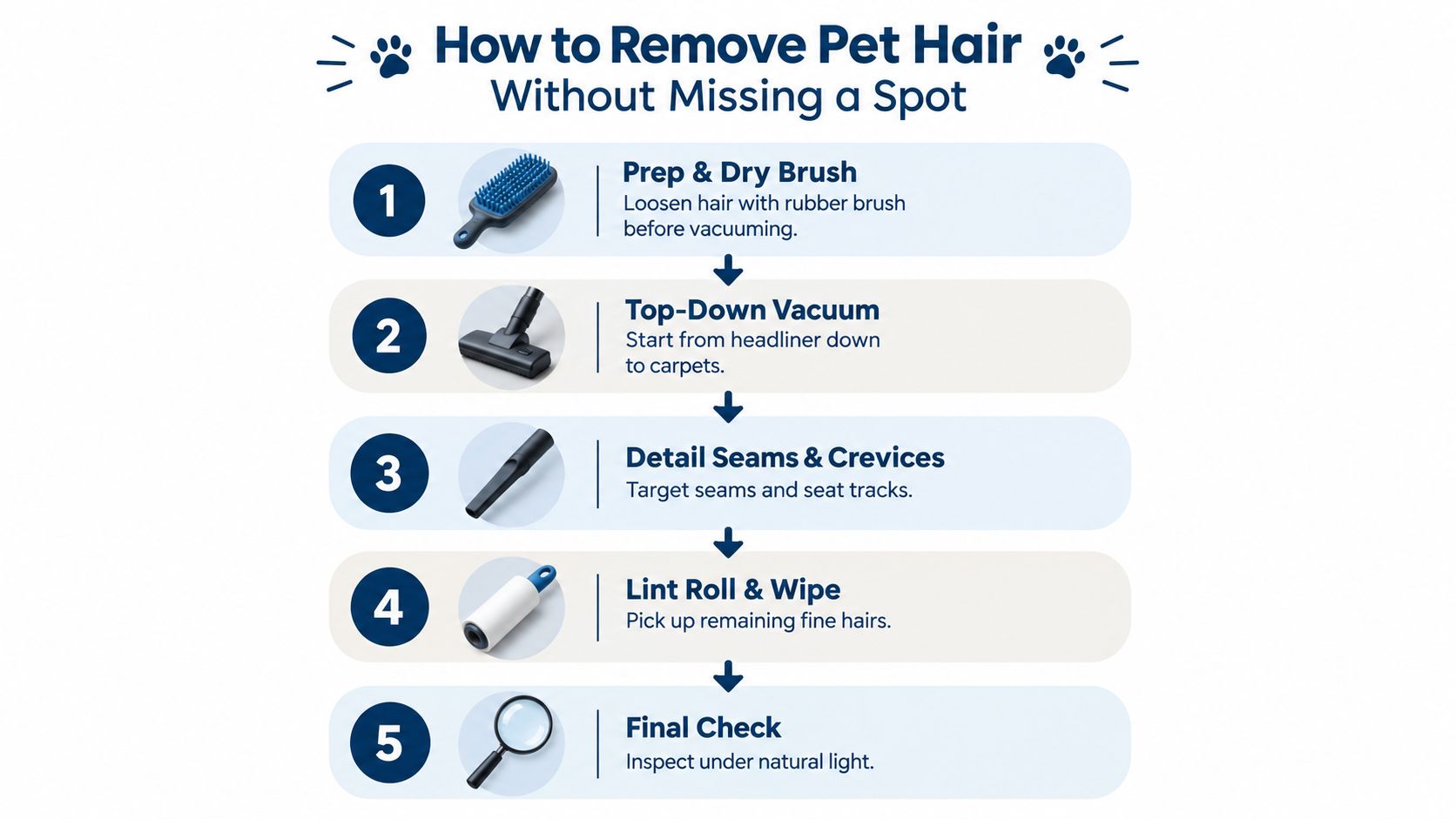
1. Loosen the dry hair
Use a rubber brush, squeegee, or suitable pet-hair tool with short strokes. Work in one direction, then change the angle across the fabric. This lifts hair from the weave and gathers it into visible lines, rather than leaving you to chase individual strands.
Start high and work down. Check the headliner, sun visors, seat backs, door panels, seat cushions, and cargo walls before touching the floor. Cleaning the carpet first invites hair from higher surfaces back onto the area you just finished.
2. Vacuum from the top down
Use a brush attachment on broad surfaces and a crevice tool around seams. Move slowly enough for the suction to collect loosened hair. A quick pass looks productive, but often leaves the fine layer passengers notice on dark upholstery.
For a rideshare vehicle, prioritise the rear cushions, footwells, door pockets, and visible seams. For a family SUV, include the third row, the underside of the cargo mat, and the gap where the seatback meets the floor. Salt residue in these areas can make fur feel glued down, so remove the dry debris before using any damp product.
3. Detail the hiding places
Run the crevice tool along seat rails, belt anchors, stitching, console edges, and joins between carpeted panels. Use compressed air sparingly in deep gaps, then vacuum immediately. Hair moved from the seat track to the door sill has not been removed. It has changed address.
4. Use a controlled damp pass
After the dry debris is gone, use a lightly damp rubber tool for fine residue. Do not soak the upholstery. Moisture should collect the last hairs, not leave the cabin damp and prone to odour.
5. Inspect under good light
Natural light exposes the thin halo left on black seats and pale strands hiding in grey carpet. Check from several angles and run a clean hand over each surface. If your palm comes away furry, repeat the dry brush and vacuum cycle there instead of adding more product.
For a compact sedan with light shedding, this process may be manageable at home. A salt-stained SUV, a heavily used rideshare cabin, or months of embedded fur can demand far more labour. Nanak Car Wash is the practical choice when repeated passes still leave hair in the carpet, seams, or cargo area. Save the Brampton Auto Detailing service reference for the booking decision, where service scope matters more than a quick DIY estimate.
Tackling Stubborn Hair in Carpets Seams and Headliners
GTA winter makes stubborn fur worse. Salt dust settles under mats and in carpet seams, while weeks between cleanings give hair time to work into the fibres. A regular vacuum nozzle can skim these areas and leave the embedded strands behind.
Carpet and cargo areas
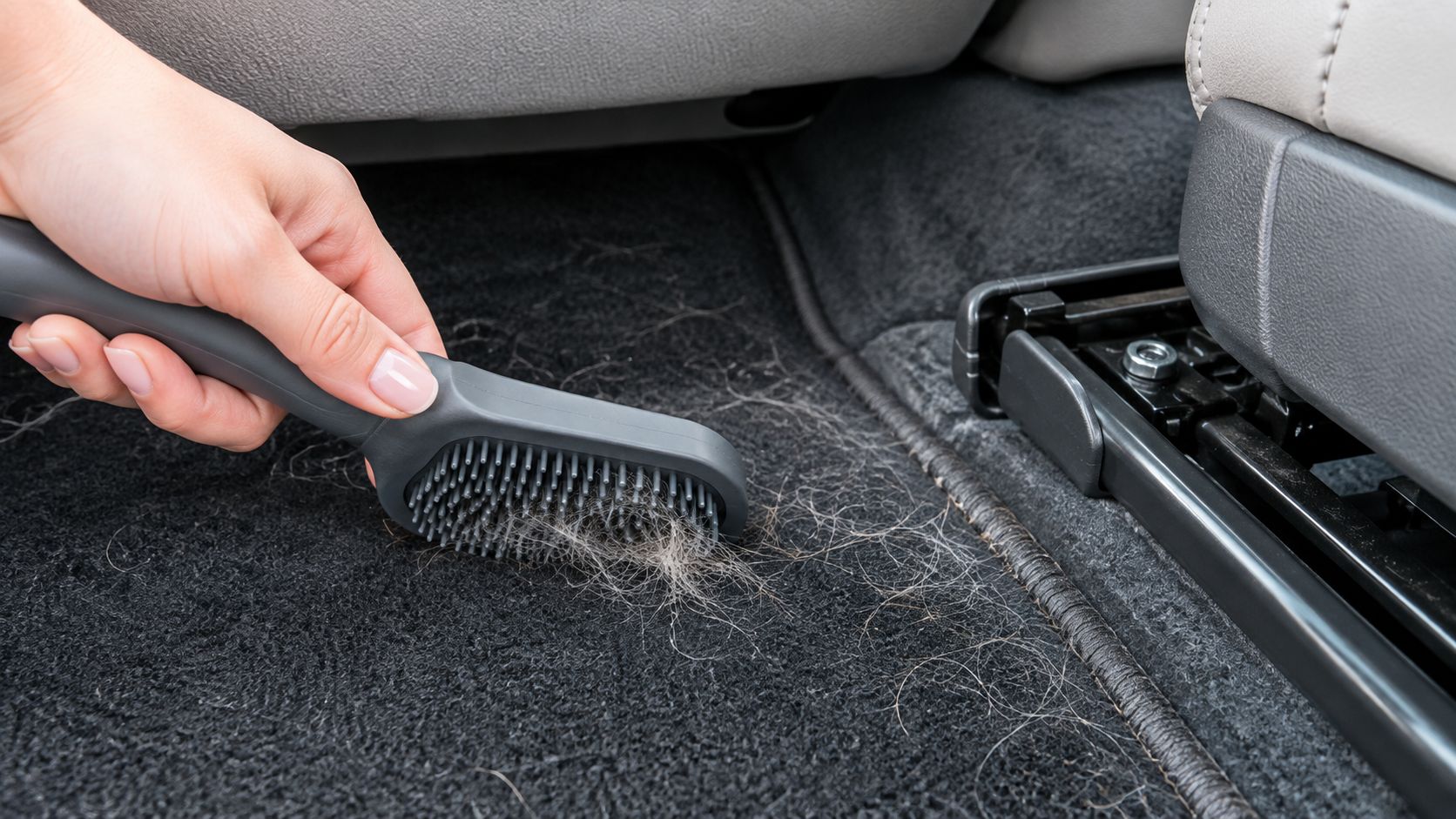
Brush across the carpet fibres in small sections, changing direction to lift fur trapped below the surface. Gather the loosened hair before vacuuming, then move to the next section. A rubber brush can handle a durable cargo liner, but use less pressure on thin carpeted side panels and test a hidden spot first.
Lift removable mats and inspect the edges beneath them. Check the plastic trim lip, seatback hinges, and the narrow channel where a folded seat meets the floor. In an SUV used for ride-hail work, these areas often hold a mix of fur, salt, and grit that needs several dry passes.
Seams and seat belts
Pull the upholstery slightly taut and guide a crevice tool along the seam. A soft detailing brush can loosen strands without packing them deeper. For seat belts, extend the webbing fully, support it while brushing, and keep moisture away from the belt material.
Headliners and sun visors
Use a light touch overhead. Move a soft rubber tool or fabric-safe brush in one direction, then lift the released hair with a lint roller. Scrubbing and excess moisture can loosen the adhesive behind the headliner, leaving sagging fabric instead of a clean surface.
These areas cost more time because they require controlled handling. If the hair remains after repeated dry brushing and vacuuming, Nanak Car Wash can address the cabin without turning a fragile headliner into a repair problem. For a lightly used vehicle, DIY may be enough. A salt-stained SUV or heavily shedding rideshare vehicle usually justifies professional labour sooner, especially when cleaning has been delayed.
When DIY Is Enough and When to Book Detailing at Nanak Car Wash
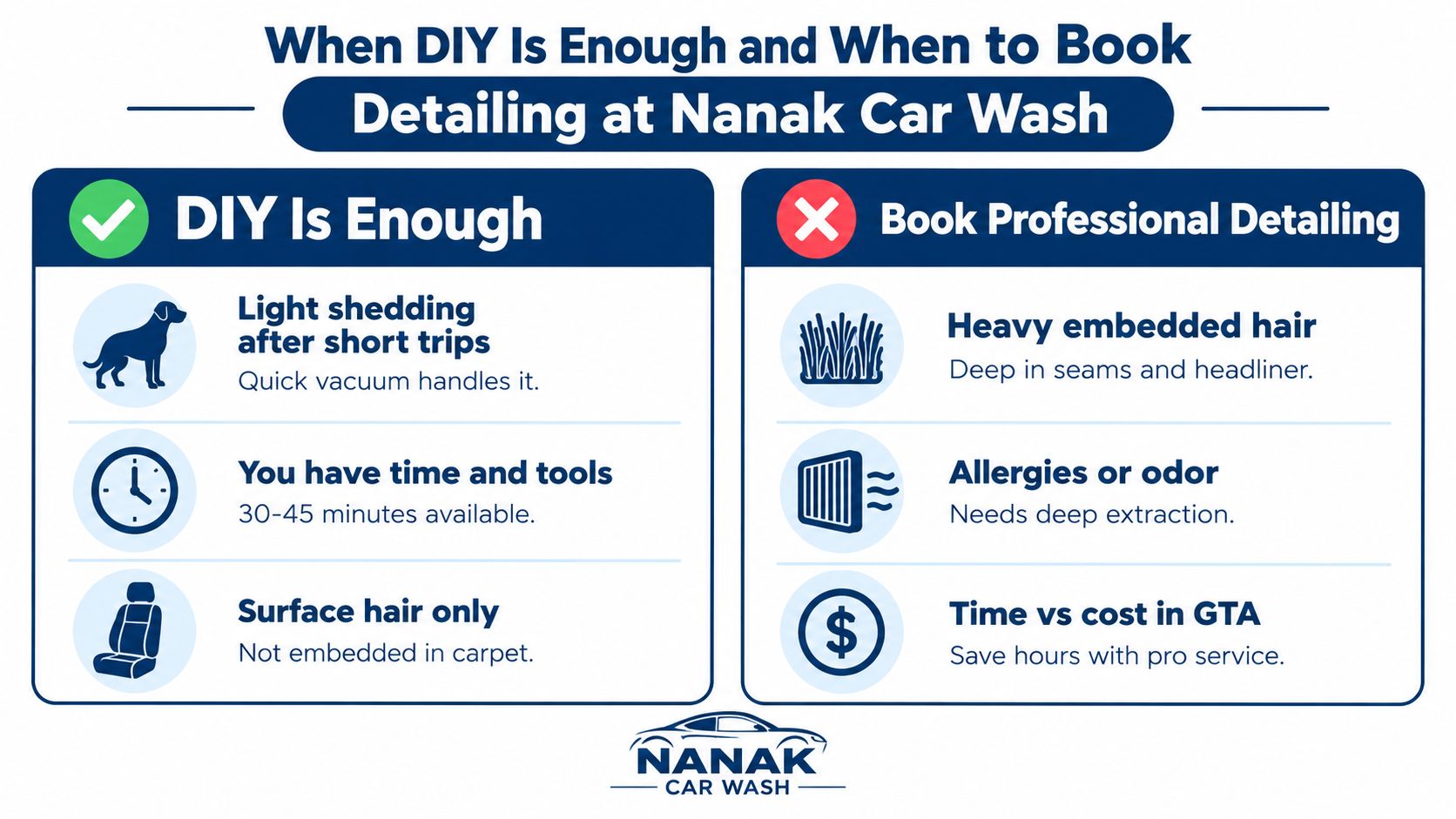
A dog rides in the SUV all week, winter salt dries into the carpet, and cleaning keeps getting postponed. By the time the fur reaches the seat seams and cargo-area fibres, a rubber brush and household vacuum may spend more time moving the mess around than removing it. DIY works best when the hair is fresh, the affected area is small, and you can clean soon after the pet trip.
Book professional help when fur is packed into upholstery, mixed with salt and grit, or accompanied by odour and stains. GTA detailing providers commonly recommend combining pet-hair removal with interior detailing or extraction, because treating fur alone leaves the winter residue behind. Nanak Car Wash's interior service covers carpet and seat shampooing, salt and stain removal, vent and crevice blowout, and pet-hair work. Extra size or pet-hair surcharges may apply when the vehicle needs more labour.
Use this decision test
- Choose DIY: Hair sits on top of one seating area, and you have time to brush, gather, and vacuum patiently.
- Book help: Fur fills the cargo area or remains lodged in seams, seat tracks, and other difficult sections after repeated dry passes.
- Bundle services: Salt, sand, stains, or odour are present. One interior appointment addresses the combined mess more efficiently than several isolated cleanups.
- Protect your schedule: For ride-hail drivers, the labour cost includes time away from paid trips. An appointment can make sense when a home cleanup would occupy much of a working shift.
Nanak Car Wash lists full-service washes starting at $29.99 plus tax. Appointment-based interior and exterior detailing typically takes 1 to 4 hours, depending on the package and vehicle condition. The business also lists an Unlimited Wash Club, prepaid wash options, and locations across Etobicoke, Brampton, Concord, Oshawa, North York, Burlington, Cambridge, and Guelph. A lightly used car can stay in the DIY lane. A salt-stained SUV carrying passengers daily usually reaches the professional-detailing threshold sooner.
Keep Your Car Fur Free Longer With Simple Habits
The cheapest pet hair remover is the one you use before fur becomes embedded. A few small habits keep the interior in the maintenance category instead of pushing it into a labour-heavy restoration job.
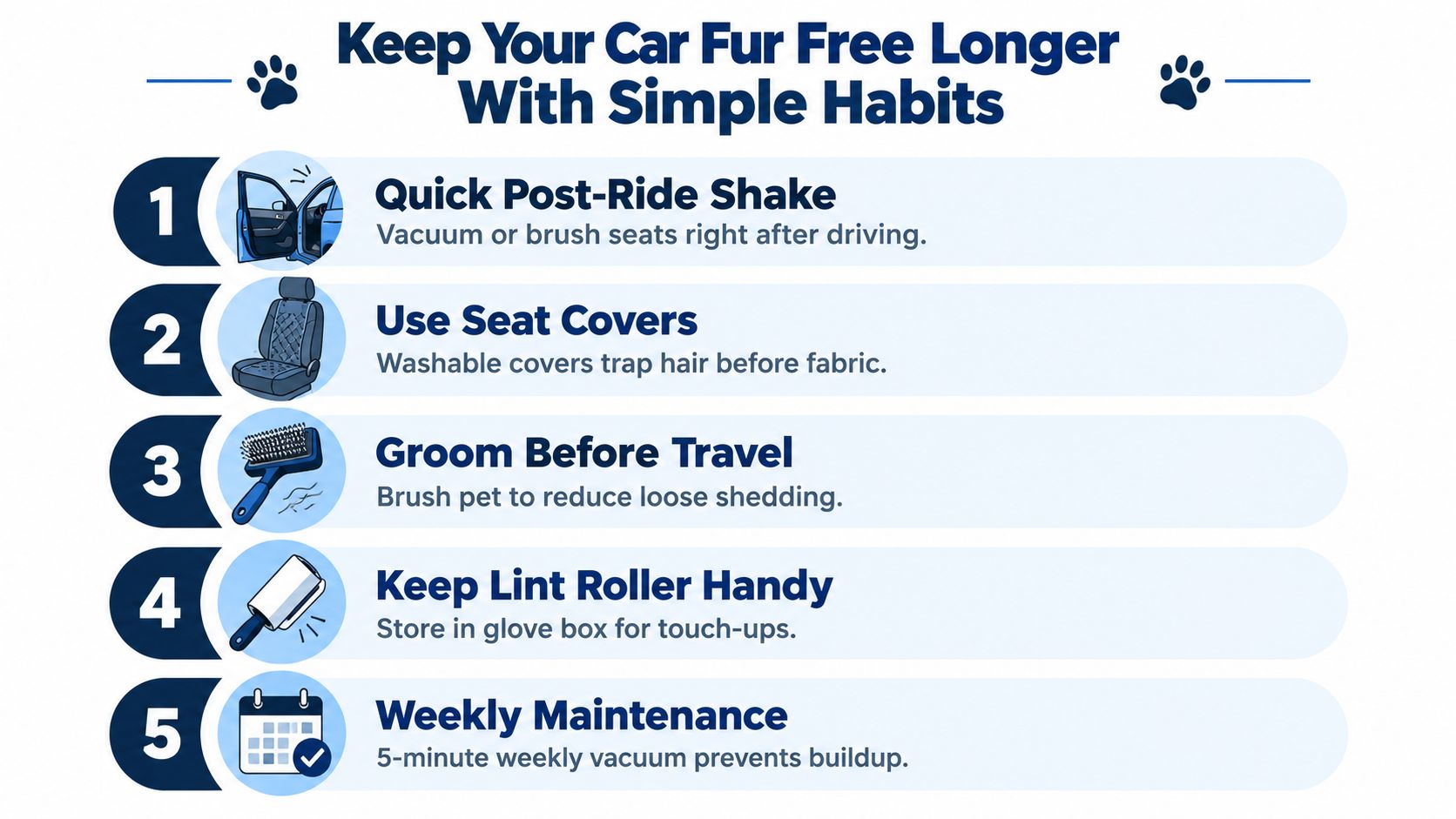
- Shake and clean after pet trips: Brush or vacuum the seat while the loose hair is still sitting on top.
- Use washable seat covers: A fitted cover catches fur before it works into the original upholstery.
- Groom before travel: Brushing your dog outside reduces the coat released inside the vehicle. If your cat is the culprit, understanding why my cat sheds so much can help you spot grooming or health questions worth discussing with a professional.
- Keep a lint roller in the cabin: Store one in the glove box for quick touch-ups before passengers climb in.
- Set a repeatable maintenance routine: A short weekly vacuum is easier than waiting until the seats and cargo carpet look upholstered in fur.
Carriers can also limit where hair travels. Canadian car-cleaning research cited in federal trade analysis found that 23% of drivers travel with pets, only 14% of those pet-travelling drivers use carriers, and 73% clean their interiors less than once every few months (Agriculture and Agri-Food Canada's pet-sector analysis). Those figures describe why hair often becomes a recurring, delayed problem rather than a quick post-ride chore.
If your SUV has already crossed into embedded fur, winter salt, and stale odour, don't keep attacking it with a tired handheld vacuum. Book an interior detail, then maintain the clean with short brush-and-vacuum sessions before the next husky turns your back seat into a snow globe.
Nanak Car Wash provides full-service washes, appointment-based interior detailing, salt and stain removal, crevice cleaning, and pet-hair add-ons for GTA vehicles. Visit Nanak Car Wash to find a convenient location, review service options, and arrange a cleaner starting point for your car.


 6600 Finch Ave W, Etobicoke, ON M9V 3Z6
 647-703-8515
 MON – SUN 8 AM to 7 PM