

A white crust on your floor mats, streaks along the doors, and dull paint near the wheel wells are not just signs of a messy winter commute. Road salt sticks to nearly every part of a vehicle. So, can detailing remove salt stains? In most cases, yes. A proper detail can remove fresh salt residue from carpets, mats, upholstery, paint, wheels, and door jambs. The catch is that salt left too long can stain, dry out materials, or contribute to corrosion that cleaning alone cannot reverse.
For drivers who deal with snow, slush, and salted roads, regular cleaning is one of the lowest-cost ways to keep a vehicle looking better and avoid bigger repair bills later.
Can Detailing Remove Salt Stains Completely?
Detailing removes salt by using the right cleaning method for the surface. Salt is water-soluble, but it often mixes with dirty meltwater, sand, oil, and winter grime. That is why a quick wipe with a dry towel usually leaves a cloudy mark behind instead of solving the problem.
On interior carpets and cloth mats, a detailer can loosen salt deposits with a fabric-safe cleaner, agitate the fibers, extract the residue, and dry the area properly. On painted panels, glass, wheels, and plastic trim, a thorough wash and hand-finished cleaning can remove the chalky film that normal driving leaves behind.
Fresh stains respond best. If the white marks appeared after a few snowy days, professional cleaning can often make the area look close to new. Older stains are less predictable. Repeated salt exposure can leave discoloration in light-colored carpet, create water marks in leather, or dull unprotected exterior trim. The salt can be removed, but the surface may still show wear.
Why Road Salt Is Hard on Your Vehicle
Road salt helps make winter roads safer, but it is rough on cars. Moisture keeps salt active, and slush carries it into places a standard exterior wash may miss. Door sills, wheel wells, underbody seams, brake components, and carpet fibers can all hold salty moisture for longer than you think.
The visible white stain is usually the easy part. The bigger concern is what is happening where you cannot see it. Salt and moisture speed up corrosion on exposed metal. It can also make rubber seals dry out faster and leave interiors smelling damp if soaked mats are not cleaned and dried.
A detail is especially useful after weeks of winter driving because it addresses both the obvious mess and the buildup in high-contact areas. Vacuuming alone will not pull hardened salt out of carpet fibers. A good interior service needs cleaning solution, agitation, extraction, and drying time.
What a Detail Can Clean and What It Cannot Repair
A professional detailing service can make a major difference, but it is not magic. The result depends on how long the salt has been sitting, the type of surface, and whether physical damage has already started.
Interior carpet, mats, and upholstery
This is where salt stains are most common. White rings form when wet snow melts into the carpet, then dries and leaves minerals behind. Shampooing and extraction can remove most fresh rings and improve older marks significantly. Rubber floor mats are usually easier because they can be washed thoroughly without trapping residue in fibers.
If carpet has been soaked many times, the backing underneath may still hold moisture or residue. In that case, the detail may require more than one treatment, and deep discoloration may not disappear 100 percent. Getting the carpet fully dry matters just as much as getting it clean.
Leather, vinyl, and interior plastic
Salt can leave a dull haze on leather seats, door panels, center consoles, and dashboard surfaces. A gentle interior cleaner can lift the residue, followed by a suitable conditioner or protectant where needed. Harsh household products are a poor choice here. They may remove the stain but leave leather dry or make interior plastics look greasy.
Paint, glass, wheels, and trim
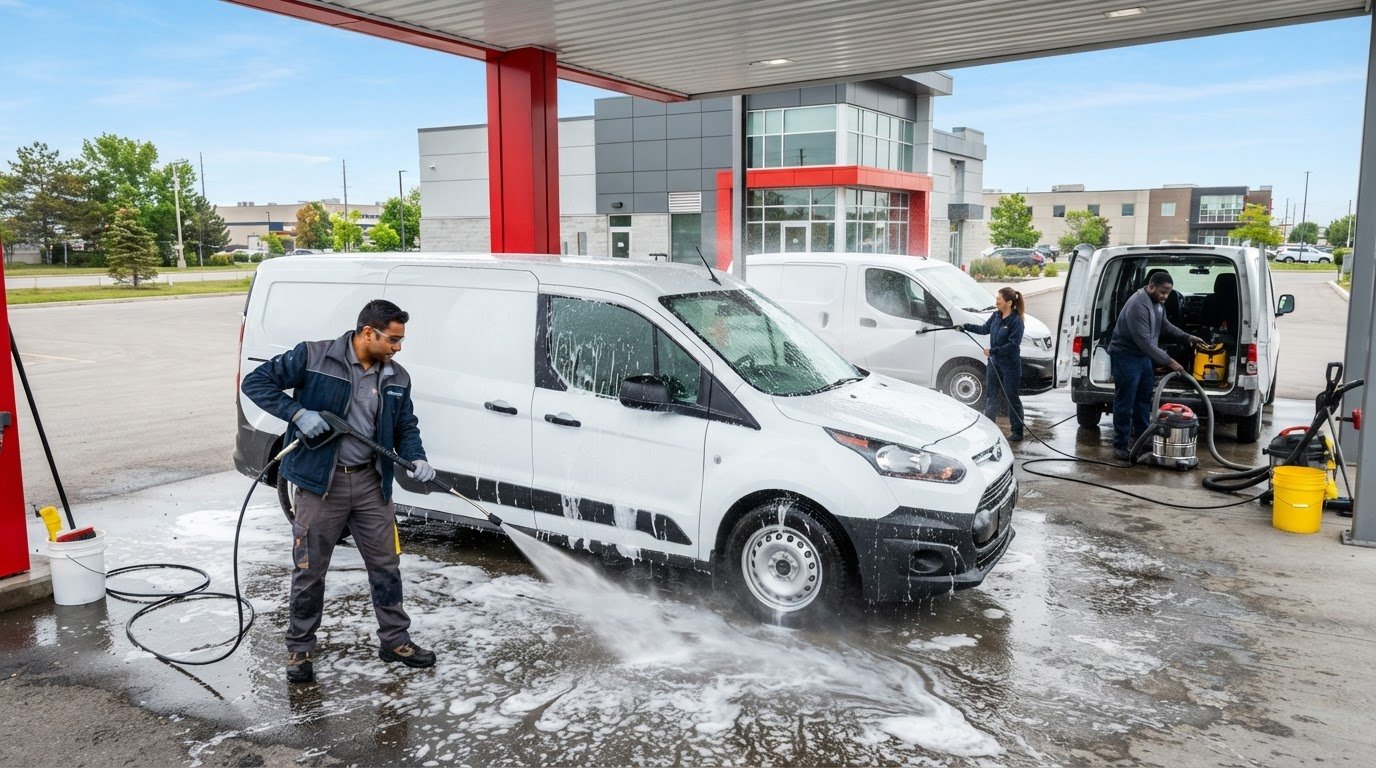
Exterior salt film usually comes off with a quality wash, especially when the vehicle is cleaned before the residue bakes on or mixes with months of grime. Wheels and lower body panels need extra attention because they receive the most spray from the road.
Detailing can also improve dull-looking paint with polishing, but polishing is for surface defects, not rust repair. If salt exposure has already caused bubbling paint, chipped metal, or corrosion around a wheel arch, cleaning can stop more grime from sitting there but cannot restore the damaged metal.
Undercarriage and hidden areas
An exterior wash may clean what you see, while salt remains in wheel wells, suspension areas, underbody seams, and inside door jambs. An underbody rinse is valuable during winter because it flushes away buildup before it stays wet against metal parts.
For long-term protection, rust proofing is a separate service from detailing. Detailing cleans existing contamination. Rust proofing helps protect vulnerable metal areas from moisture and salt moving forward. For a vehicle that sees heavy winter use, the two services work well together.
When Salt Stains Become Permanent
Salt itself does not always cause permanent staining, but time changes the equation. The longer salty moisture sits, the more likely it is to affect the material underneath. Carpet dyes can fade or become uneven. Leather can stiffen if it is repeatedly exposed and never conditioned. Bare metal can corrode beneath chipped paint.
Watch for signs that cleaning may not be enough: orange or brown spots around paint chips, bubbling paint near rocker panels, a musty smell after mats have dried, cracked leather, or white residue that quickly returns after cleaning. Returning residue can mean salt is still trapped deeper in the carpet or mat backing.
A detailer can assess the surface and tell you whether the issue is removable buildup, staining, or actual material damage. That honest distinction helps you avoid spending money on a cleaning service when the vehicle needs paint repair, carpet replacement, or rust treatment instead.
How to Keep Salt From Building Up Again
The best approach is not waiting until spring. Winter salt is easier and cheaper to remove when it has not had months to settle in.
Use rubber or all-weather floor mats during snowy weather, and empty melted snow from them whenever possible. Keep a small towel in the vehicle for obvious wet spots, but do not rely on wiping alone for deep carpet stains. Schedule regular exterior washes with an underbody rinse when roads are heavily salted, especially after slushy commutes or highway driving.
Inside the car, vacuuming regularly prevents sand and debris from grinding into carpet. When you see white rings starting to form, book an interior cleaning before they spread. Families, rideshare drivers, and commuters who are in and out of the car all day will usually save money by keeping up with smaller cleanings instead of waiting for a major restoration job.
At Nanak Car Wash, a hand-finished detail can target the salt that a quick cleanup leaves behind, while regular washes help keep winter grime from piling up. The right service depends on whether you need a fast refresh, deep carpet shampooing, or protection for the months ahead.
A clean vehicle is not only about appearance after a Canadian winter. Removing salt early gives your carpets, paint, wheels, and underbody a better chance of lasting longer. If the white marks are showing now, deal with them before the next thaw carries even more salt into your car.



 6600 Finch Ave W, Etobicoke, ON M9V 3Z6
 647-703-8515
 MON – SUN 8 AM to 7 PM