
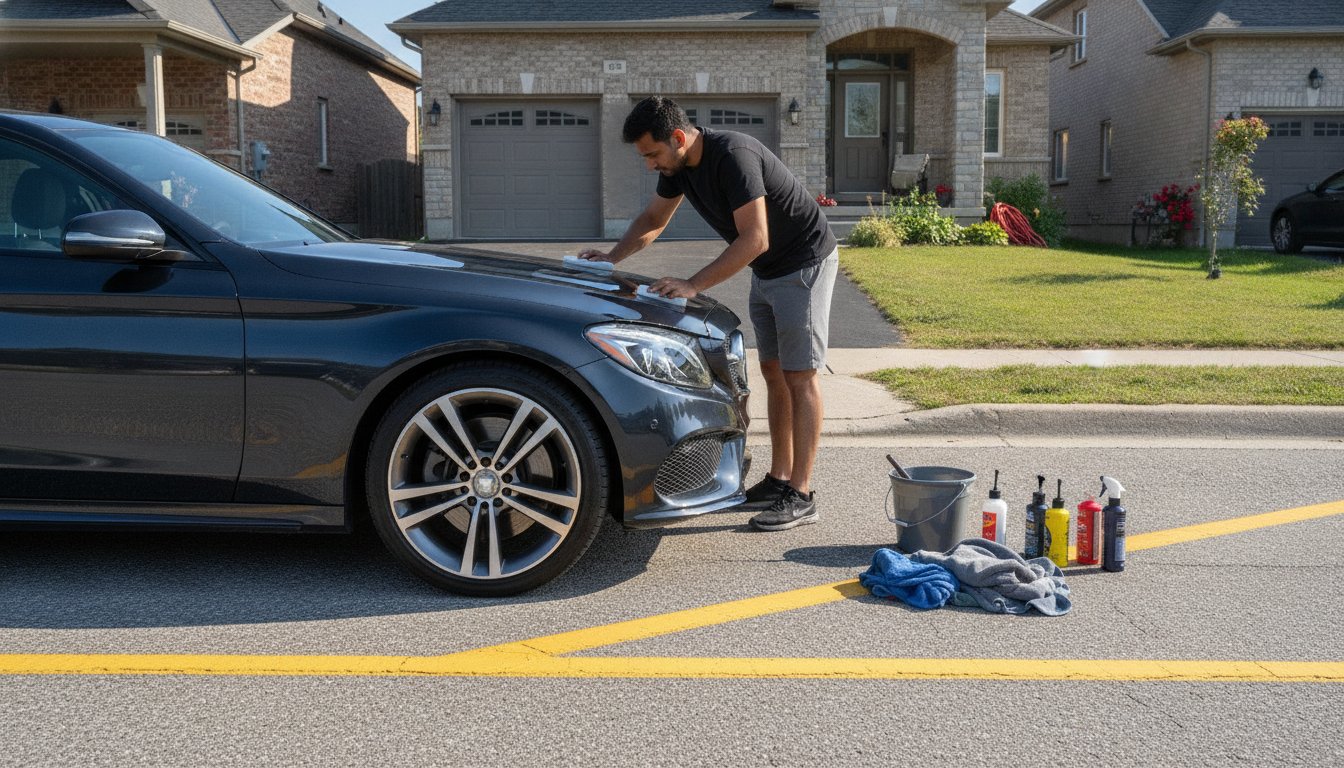
You just drove through a fresh construction zone and heard that dreaded pinging sound against your wheel wells. You pull over and see it; bright yellow streaks are drying fast on your clean fenders. It’s a nightmare scenario for any driver in Brampton. Don’t panic. Learning how to remove road paint from a car doesn’t have to mean an expensive trip to the body shop or a ruined finish. Most drivers fear they’ll scratch their clear coat or use the wrong chemicals. With the right approach, you can save your paint and your wallet.
We understand the anxiety of seeing stubborn splatters on your vehicle. It feels like permanent damage, but it’s not. This guide delivers the exact steps to safely strip away road paint without hurting your car’s exterior. We’ll start with gentle DIY methods you can try at home. Then, we’ll cover professional detailing techniques for those tougher, dried-on spots. You’ll learn how to restore that showroom shine and keep your car protected from future road work hazards. Let’s get your car back to looking its best for less.
Key Takeaways
- Act fast with a high-pressure rinse to stop fresh road paint from bonding to your vehicle’s finish.
- Soften dried splatters safely using common household items like WD-40 or cooking oil before scrubbing.
- Learn how to remove road paint from a car using a clay bar for a smooth, contaminant-free surface.
- Protect your clear coat by avoiding dangerous chemicals like gasoline or nail polish remover that cause permanent damage.
- Restore your vehicle’s shine with professional Car Detailing Packages for stubborn, industrial-grade paint removal.
What is Road Paint and Why is it So Hard to Remove?
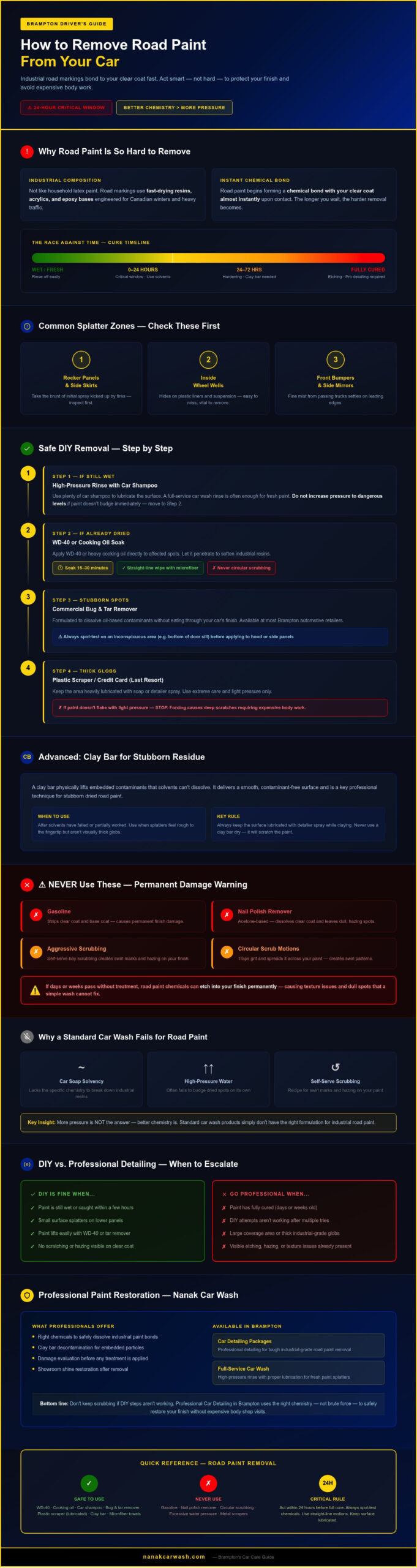
Road paint isn’t like the latex paint you use in your house. It’s an industrial-grade product engineered for maximum durability and visibility. Whether you hit fresh white lane lines or yellow divider streaks, these road surface marking materials are designed to withstand heavy traffic and harsh Canadian winters. This specialized composition is exactly why learning how to remove road paint from a car is such a high-stakes task. Most road paints contain fast-drying resins, acrylics, or even epoxy bases that create a chemical bond with your vehicle’s clear coat almost instantly.
Speed is your best friend in this situation. Think of this as a race against time. You have a critical 24-hour window before the paint fully cures and hardens. Once it reaches a full cure, the removal process becomes much more difficult and risky. If you leave these splatters for days or weeks, the chemicals can actually etch into your finish. This causes permanent texture issues and dull spots that a simple wash can’t fix. You need to act before the bond becomes permanent.
Common Areas for Road Paint Splatter
Splatter rarely stays in one spot. It usually hits the lower half of your vehicle where tires kick up wet material. Check these areas immediately if you suspect you’ve driven through wet paint:
- Lower rocker panels and side skirts: These usually take the brunt of the initial spray from the tires.
- Inside wheel wells: Paint often hides on plastic liners and suspension components, making it hard to see but vital to remove.
- Front bumpers and side-view mirrors: Passing trucks can kick up a fine mist of paint that settles on your car’s leading edges.
Why a Standard Car Wash Often Fails
You might think a quick trip through an express wash will solve the problem. Unfortunately, standard car soaps aren’t strong enough. They lack the specific solvency needed to break down industrial resins. High-pressure water alone often fails to budge dried spots. In fact, aggressive scrubbing at a self-serve bay is a recipe for swirl marks and “hazing” on your paint.
Removing these stubborn contaminants requires a targeted approach. If your DIY attempts don’t work, don’t keep scrubbing. You risk doing more damage than the paint itself. Professional Car Detailing Packages in Brampton offer the right chemicals to safely dissolve the bond. Knowing how to remove road paint from a car starts with understanding that more pressure isn’t the answer; better chemistry is. Keep your finish safe and act fast.
Safe DIY Methods to Remove Road Paint From Your Car
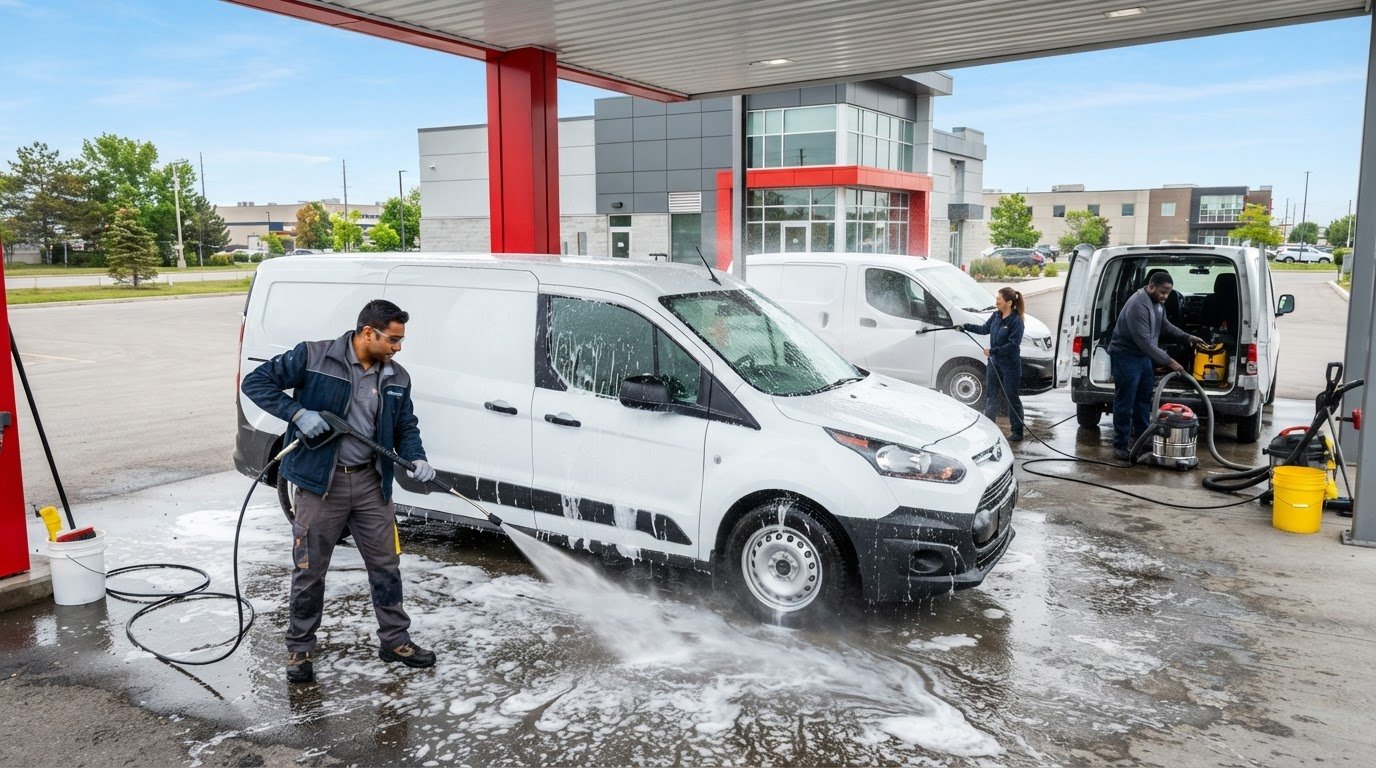
Speed is essential. If you catch the splatter while it’s still wet, a high-pressure rinse at a Full-Service Car Wash is often enough. Use plenty of car shampoo to lubricate the surface during the process. This gentle approach is the most effective way to address how to remove road paint from a car without risking your clear coat. If the water doesn’t move the paint immediately, don’t increase the pressure to dangerous levels. Move to a softening method instead.
The WD-40 Soak Technique
When the paint has already dried, you need a lubricant to penetrate the bond. Apply WD-40 or a heavy cooking oil directly to the affected spots on your fenders or rocker panels. Let the product sit for at least 15 to 30 minutes. This gives the solvent time to soften the industrial resins used in road markings. Wipe the area gently with a fresh microfiber towel using straight-line motions. Never use a circular scrubbing motion as this traps grit and creates swirls. Once the paint is gone, wash the area with soap to remove any oily residue.
Using Commercial Bug and Tar Removers
Dedicated tar and sap removers are your safest chemical bet for stubborn spots. You can find these at most Brampton automotive retailers. These products are formulated to dissolve oil-based contaminants without eating through your car’s finish. Always perform a spot test on an inconspicuous area, like the bottom of a door sill, before applying it to the hood or side panels. This ensures the chemical is compatible with your specific paint type. After the paint dissolves, rinse the panel thoroughly to prevent any chemical staining or “hazing” from the solvent.
For thicker globs of paint that won’t dissolve, you might need a mechanical aid. Use a plastic scraper or a credit card with extreme care. Keep the area heavily lubricated with soap or detailer spray while you work to minimize friction. If the paint doesn’t flake off easily with light pressure, stop immediately. Forcing the issue will cause deep scratches that require expensive body work. If these DIY steps feel risky, our team at Nanak Car Wash in Brampton can help evaluate the damage before you accidentally ruin your finish.
Advanced Removal: Using a Clay Bar for Stubborn Residue
If solvents didn’t finish the job, it’s time for a mechanical approach. A clay bar is a specialized resin compound. It’s designed to “grab” and pull contaminants off your clear coat. This tool is the gold standard for how to remove road paint from a car when the splatter has fully bonded. It shears off the paint particles without the need for heavy, dangerous pressure. You get a glass-smooth finish without the risk of deep scratches.
Lubrication is non-negotiable. Never use a clay bar on a dry surface. Doing so will cause marring, which looks like dull, grey streaks on your finish. Use a dedicated detailer spray or a rich mix of car shampoo and water. You’ll feel the clay “tug” as it hits the road paint. Once the clay glides effortlessly across the panel, you know the residue is gone. It’s a tactile process that gives you instant feedback on your progress.
Step-by-Step Clay Bar Instructions
Follow these steps for the best results. Don’t rush. Precision leads to a better shine.
- Knead the clay: Warm it up in your hands and flatten it into a palm-sized patty.
- Spray liberally: Soak the affected panel with lubricant. The surface should be dripping wet.
- Glide the clay: Use light pressure and move in straight, back-and-forth motions.
- Check your work: Wipe the area with a fresh microfiber towel. Feel for any remaining bumps.
When to Replace Your Clay
Keep your clay clean to avoid scratching your finish. If you see yellow or white paint particles embedded in the resin, fold the clay to reveal a fresh side. This keeps the grit away from your clear coat. Knowing when to stop is just as important as knowing how to start.
- The “drop rule”: If you drop your clay on the pavement, throw it out immediately. It will pick up tiny rocks that will ruin your car.
- Saturation check: Replace the bar if it becomes dark or feels gritty even after kneading.
Claying is effective, but it strips away your protective wax. You must re-wax the area immediately after treatment. This seals the clear coat and restores the deep shine you expect. If this process feels too technical, our Car Detailing Packages include professional clay bar service. We handle the stubborn spots so you don’t have to. Get a showroom finish in Brampton without the DIY stress.
When DIY is Dangerous: Avoiding Permanent Damage
DIY methods aren’t always the answer. Sometimes, trying to figure out how to remove road paint from a car at home leads to a bigger bill. Aggressive scrubbing is the most common mistake. It creates friction and heat. This results in “hazing,” which is a cluster of tiny scratches that make your paint look dull and cloudy. Once you damage the clear coat, a simple wash won’t fix it. You’ll need professional paint correction to restore the shine—a service that auto refinishing experts like NW Houston Auto Repair and Collision routinely provide for vehicles with heavily compromised surfaces.
Watch out for bad advice regarding solvents. Never use gasoline or nail polish remover on your vehicle. Gasoline is a fire hazard and leaves a permanent smell. Nail polish remover contains acetone, which is designed to dissolve paint. It will eat through your car’s finish in seconds. Similarly, avoid using high-heat tools. A heat gun can reach temperatures that bubble your factory paint. If the road paint doesn’t move with gentle heat from a hair dryer, it’s time to put the tools down.
Signs You Should Stop Immediately
Know when to walk away. If you see any of these signs, stop your DIY attempt before the damage becomes permanent:
- Cloudy clear coat: If the area looks milky or hazy, you’ve started to strip the protective top layer.
- Color transfer: If your microfiber towel shows the color of your car’s paint, you’ve gone too deep.
- Textured plastic trim: Road paint on black plastic bumpers or side mirrors is nearly impossible to remove at home. Solvents often turn the plastic white or grey permanently.
The Cost of a Mistake
A small mistake can lead to a massive bill. Repainting a single door or fender in Brampton can cost hundreds of C$ at a body shop. In contrast, professional car detailing is a value-driven alternative. Detailing experts use specialized chemicals and tools that are safe for automotive finishes. This expertise is especially vital for high-end vehicles with delicate paint jobs.
Don’t risk a full repaint over a few paint splatters. Choosing a professional service is the pragmatic way to protect your investment. If your DIY efforts have stalled, visit us at Nanak Car Wash. Our team provides efficient, high-quality results that save you money in the long run. Check out our Car Detailing Packages to see how we can restore your vehicle’s finish today.
Professional Paint Restoration at Nanak Car Wash
Ontario road markings are built to survive heavy snowplows and corrosive road salt. This industrial durability makes them a nightmare for your vehicle’s finish. If your DIY attempts have stalled, don’t panic. Nanak Car Wash is the top choice in Brampton for tough exterior restoration. Our team understands the specific chemistry of local road paints. We know exactly how to remove road paint from a car using professional-grade solvents and high-speed polishers. This isn’t just a basic wash; it’s a precision service. We provide high-quality results at a price that makes sense for every driver.
Our experts use specialized tools that retail kits simply don’t include. High-speed polishers allow us to buff out imperfections and residue with total control. We also use professional solvents that dissolve paint bonds without eating into your clear coat. Brampton drivers trust us because we focus on efficiency and value. We get the job done right the first time, saving you from the stress of a failed DIY project. Your car’s shine is our priority.
What to Expect From a Professional Detail
Our professional approach is thorough and designed for maximum impact. We start with a full decontamination wash. This step is vital to strip away road salt, tar, and hidden grime that standard washes miss. After the surface is prepped, we move to safe mechanical removal. Our technicians lift the paint splatters without harming the underlying finish. We then use professional polishing to bring back the clarity. This step removes any “hazing” or dullness left behind by the paint. You get a showroom finish that lasts.
Protecting Your Paint for the Future
Keeping your car clean is a smart financial decision. A fresh layer of wax or sealant acts as a safety shield. It prevents paint and tar from bonding directly to your clear coat in the future. Our Unlimited Wash Club is the most cost-effective way to stay protected year-round. It allows you to catch fresh splatters immediately before they have time to fully cure. Regular car cleaning preserves your vehicle’s resale value and keeps it looking new. Trust our Car Detailing Packages for a deep clean that restores and protects. Visit us in Brampton today for fast, reliable service.
Restore Your Showroom Shine Today
Don’t let road paint splatters ruin your vehicle’s value. Acting fast is the secret to success. Whether you use a gentle pressure rinse or a specialized clay bar, the goal is always a safe removal. You now have the knowledge of how to remove road paint from a car without causing permanent clear coat damage. Avoid harsh chemicals and trust the process. A clean car is a protected car.
STUCK WITH STUBBORN ROAD PAINT? SAVE BIG with our specialized Detailing Bundles. As the Top-Rated Car Wash in Brampton, we have expert detailers on site ready to handle the toughest industrial markings. We use professional-grade tools to ensure your finish is flawless. Skip the DIY stress and get guaranteed results today. BOOK A FULL DETAILING PACKAGE IN BRAMPTON NOW!
Get back on the road with confidence and a vehicle that looks brand new. We look forward to seeing you at Nanak Car Wash!
Frequently Asked Questions
Is road paint permanent on a car?
Road paint is not permanent, but it can cause lasting damage if you don’t act quickly. The industrial resins in road markings are designed to bond with surfaces almost instantly. If left for more than 24 hours, the paint can etch into your car’s clear coat. This leads to dull spots or texture issues that require professional polishing to fix. Speed is your best defense against permanent stains.
Will WD-40 damage my car paint if I use it to remove road paint?
WD-40 is generally safe for modern automotive clear coats when used as a temporary lubricant. It helps soften the bond of dried splatters so they can be wiped away. However, you must wash the area thoroughly with soap and water immediately after the paint is gone. Leaving oily residue on your finish can attract dirt or cause staining over time. Always perform a small spot test on an inconspicuous area first.
Can a touchless car wash remove road paint?
A touchless car wash is usually not strong enough to remove dried road paint. These systems rely on high-pressure water and chemicals that lack the solvency needed to break down industrial-grade resins. While it might help if the paint is still wet, dried spots require a mechanical or chemical intervention. For effective results, consider a full-service car wash or a specialized detailing package that targets tough exterior contaminants safely.
How much does it cost to have road paint professionally removed?
The cost for professional removal depends on the severity of the splatter and how long it has been curing. Factors like the number of affected panels and the type of paint involved will influence the final price. Most detailing experts in Brampton will evaluate the damage before recommending a specific package. Professional removal is a value-conscious choice compared to the high cost of a full repaint at an auto body shop.
What is the best household item to remove dried road paint?
Cooking oil and WD-40 are the most effective household items for softening dried road markings. These lubricants penetrate the industrial paint, making it easier to wipe away with a microfiber cloth. You should avoid using abrasive items like kitchen sponges or steel wool, as these will ruin your clear coat. Always follow up with a thorough wash to remove any oily film and restore the shine to your vehicle’s exterior.
Will a clay bar remove yellow road paint from wheel wells?
A clay bar is excellent for removing yellow road paint from smooth surfaces like painted fenders or metal components. It grabs the paint particles and shears them off without damaging the finish. However, if the paint is on textured plastic wheel well liners, a clay bar will be less effective. These porous surfaces often require specialized professional solvents. Learning how to remove road paint from a car using a clay bar is a great skill for any owner.
Can I use a pressure washer to get road paint off?
You can use a pressure washer if the road paint is still very fresh and hasn’t bonded yet. However, you must be careful not to use excessive pressure on a single spot. High-intensity water can actually strip away your car’s clear coat or force the paint deeper into the finish. If you are unsure how to remove road paint from a car safely, it’s better to use a chemical softener first.
Is road paint damage covered by car insurance?
Road paint damage is often covered under the comprehensive section of your auto insurance policy. Since this is considered a non-collision incident, you might be able to file a claim for professional removal. However, you should check your deductible first. In many cases, the cost of a professional car detailing package in Brampton is lower than your insurance deductible. It’s often more pragmatic to pay for a detail than risking a premium increase.

 6600 Finch Ave W, Etobicoke, ON M9V 3Z6
 647-703-8515
 MON – SUN 8 AM to 7 PM